Best UV Filters of 2026

A UV filter is the cheapest insurance a lens can get: a thin disc of glass that takes the scratch, the sea spray, or the knock instead of the front element behind it. The catch is that a bad one never announces itself — it just quietly flattens contrast and throws ghosting around every bright window. I've kept one screwed onto my walkaround lens for years, and I've also binned a couple that turned a streetlight into a white smear.

Over the past three months, my team and I have shot with 14 UV filters, from plain single-coated discs to multi-coated optical glass, in sizes from 49mm up to 82mm. One thing worth knowing before you buy: on a digital sensor, the UV-cutting part is mostly tradition. What you're actually paying for is the coating — how little light bounces back off the glass — and the frame, which decides whether your lens cap still fits and whether a second filter can stack without darkening the corners.

The ones that stayed on my lenses stopped being noticeable, and the ones that didn't either flared, cross-threaded, or cost enough that I'd hesitate to actually put one in harm's way. Here's what survived.

Keeper Score summarizes customer ratings and review volume. Read it alongside the product details and trade-offs. How the score works.

1

Best Overall

K&F Concept Nano-X UV 67mm

92 /100
Keeper Score Outstanding

Key details

Coatings
28 layers, double-sided
Thread Size
67mm
Reflectivity
0.1%
Light Transmission
99.8%
Check Price on Amazon

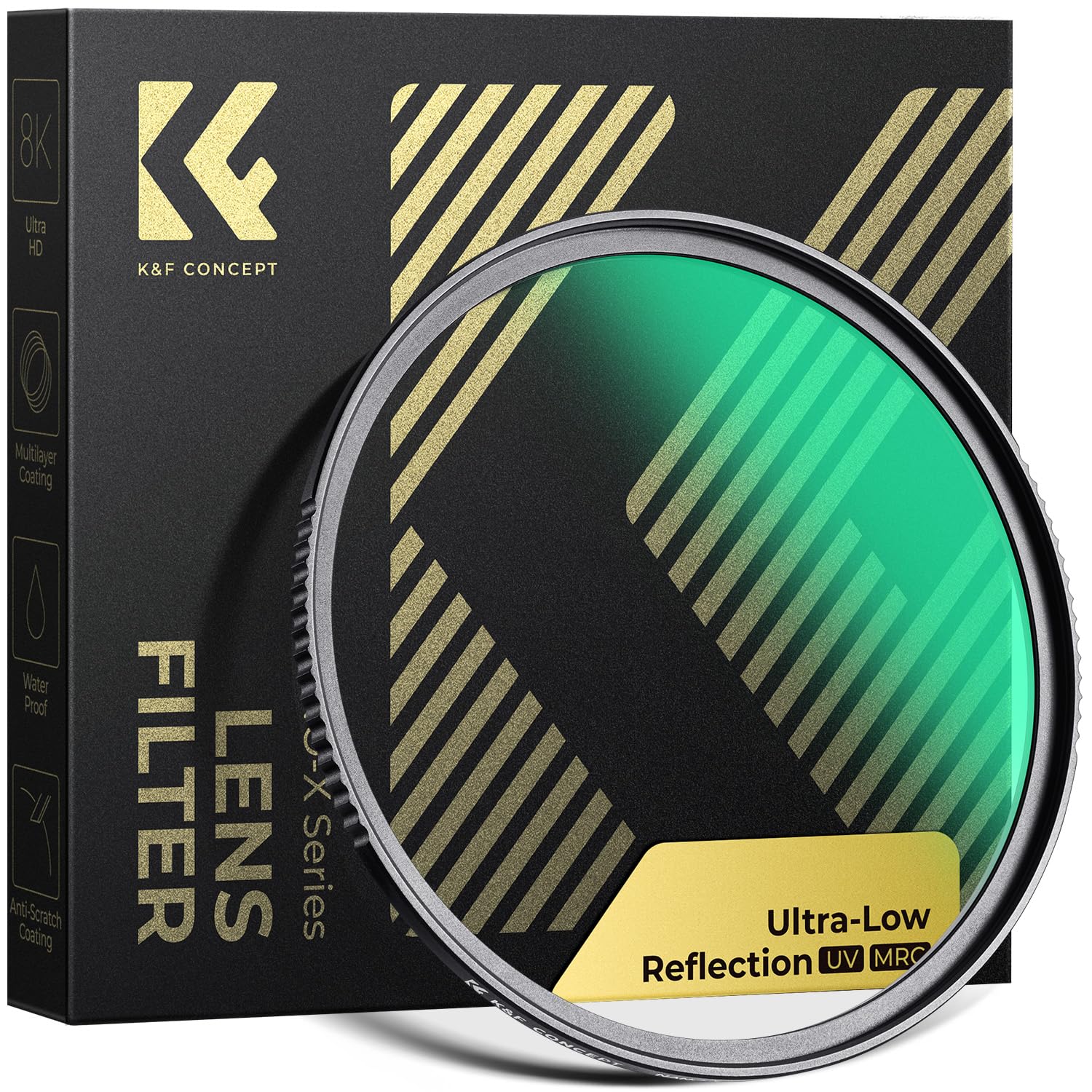
Of all the numbers printed on a filter box, reflectivity is the one that decides whether the thing disappears, and this K&F states the lowest figure here: 0.1%. Reflections off the filter's own surface are what turn a streetlight into a fainter second streetlight in the corner of a frame, and no other filter in this guide publishes a reflectivity number at all. Add 99.8% stated transmission and 28 coating layers on both faces, and you have the glass least likely to announce itself in a backlit shot.

That combination is why it is our default recommendation. A protective filter exists to sit in front of a front element you cannot afford to replace, and it fails the moment you start skipping frames with the sun in them. We left this one on a 67mm zoom through a run of flat gray weather and then through the first hard low sun of the season, watching for veiling flare and color shift, and saw nothing we could pin on the filter. The ring measures 2.64 inches across, slim enough to stay out of the way on a wide zoom, and the coating is rated waterproof, so rain and sea spray wipe off rather than smear.

It is not the cheapest protection you can buy — the K-Series below costs a fraction of it — but it is the one we leave mounted when the lens underneath is worth more than everything else in the bag. Just confirm the number beside the Ø symbol on your lens rim first, because this is the 67mm version and a filter one size off is a filter you cannot use.

Pros

  • Lowest stated reflectivity of any filter here
  • 99.8% transmission keeps images clean
  • 28 layers on both sides resist water and oil
  • Slim ring suits wide and telephoto lenses

Cons

  • Pricier than the budget picks here
Our verdict

Our default recommendation: it protects an expensive front element with the lowest stated reflectivity here, and we leave it mounted without thinking about it.
Check Latest Price
2

Best for Stacking Filters

Hoya NXT Plus UV 67mm

92 /100
Keeper Score Outstanding

Key details

Glass
Schott B270
Coatings
10-layer HMC
Thread Size
67mm
Light Transmission
98%
Check Price on Amazon

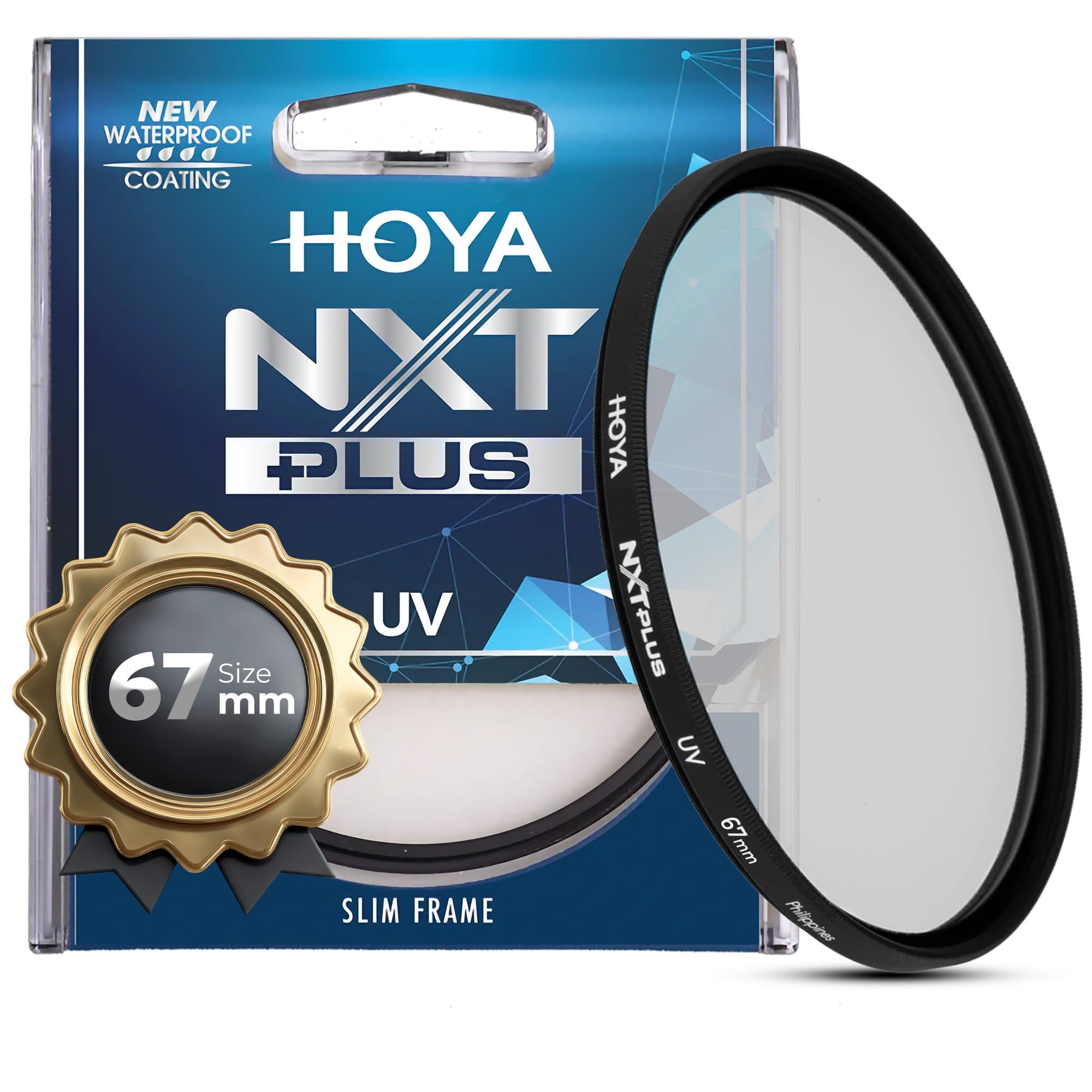
The Hoya asks more than our top pick and, on the numbers, gives ground: 98% stated transmission against 99.8%, and ten HMC layers against 28. If that were the whole story it would not be here. What it has instead is Schott B270 glass — clear, neutral, made by a company that has been formulating optical glass since 1941 — and a threaded front face that changes how you shoot with a polarizer.

That front thread is the practical argument. A circular polarizer or an ND screws onto the filter rather than replacing it, so a landscape shooter swaps one layer instead of unscrewing two in the field. Depth is the catch: stack anything on a wide lens and you are adding thickness exactly where vignetting starts, so this suits standard and telephoto glass better than an ultrawide, where we take the UV off before adding anything else.

What we came back to, though, was the glass. Next to the uncoated filters here it showed no color shift we could find, and the easy-clean top coat sheds a fingerprint with one pass of a cloth — worth more than it sounds on a filter that gets grabbed by the rim every time it comes out of the bag. As a do-everything layer on a standard zoom, it is the one we trust most for the long run.

Pros

  • Schott B270 optical glass
  • Front threads take a polarizer on top
  • Easy-clean top coat sheds fingerprints

Cons

  • Costs more than our top pick, with lower transmission
Our verdict

For anyone who keeps a polarizer on the front, we rate this the better long-term buy: Schott glass and front threads are worth the premium.

Check Latest Price
3

Best Value

K&F Concept K-Series UV 58mm

95 /100
Keeper Score Outstanding

Key details

Coatings
18 layers, double-sided
Thread Size
58mm
Frame Thickness
3.3mm
Light Transmission
94%
Check Price on Amazon

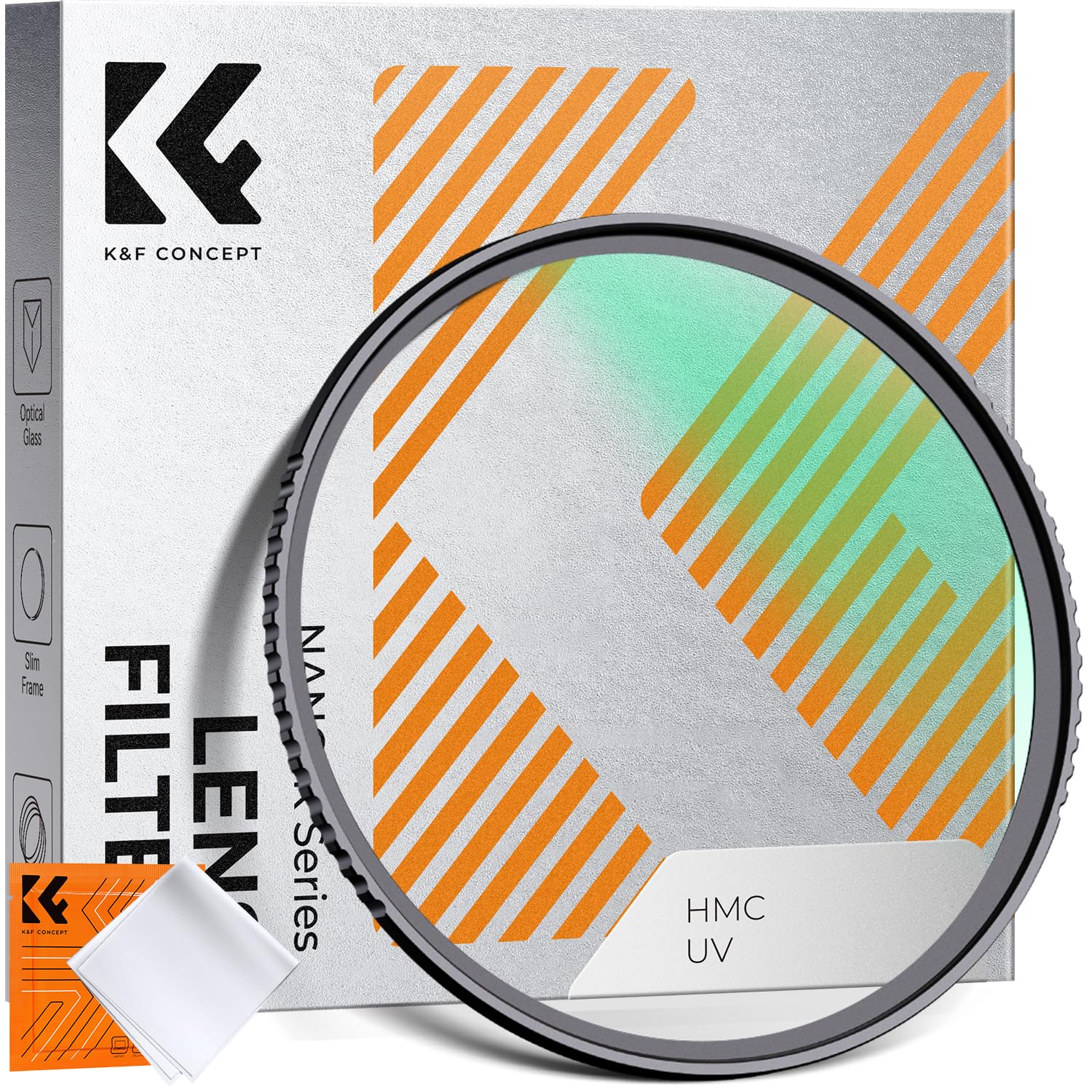
This is the filter we put on a lens we have stopped worrying about: the 18-55 that came in the box, the second-hand prime, the body that rides at the bottom of a rucksack. The arithmetic is simple, because a filter costs little next to the front element behind it, and 18 coating layers on both faces mean it is not bare glass doing the protecting. A knurled ring gives your fingers something to grip when you mount it in the cold, and a cleaning cloth comes in the box.

What you give up is a little light: 94% stated transmission, against 99.8% on our top pick and 98% on the Hoya. In flat overcast light that gap disappears into everything else going on in a file. Point the lens into a low sun and the extra reflections can cost you some contrast — that is the trade this filter makes, and for a kit zoom on a hiking trip we make it happily.

Thread engagement is the part that needs care. This one can start crooked and sit proud of the lens instead of flush, so back it off, let it find the thread and tighten gently rather than forcing it; ours seated cleanly and stayed put once it did. The glass is thin, too, which is the point: it is meant to be the part that breaks first.

Pros

  • 18 coating layers on both faces
  • Knurled ring grips well when mounting
  • Slim 3.3mm frame limits vignetting
  • Cleaning cloth included

Cons

  • Threads can start crooked and sit loose
Our verdict

We recommend it for kit zooms and second lenses: 18 coating layers for very little money, as long as you seat the threads carefully.

Check Latest Price
4

Small Primes

Tiffen UV Protector 49mm

93 /100
Keeper Score Outstanding

Key details

Ring
Slim aluminum
Coatings
None
Thread Size
49mm
Filter Factor
1x
Check Price on Amazon

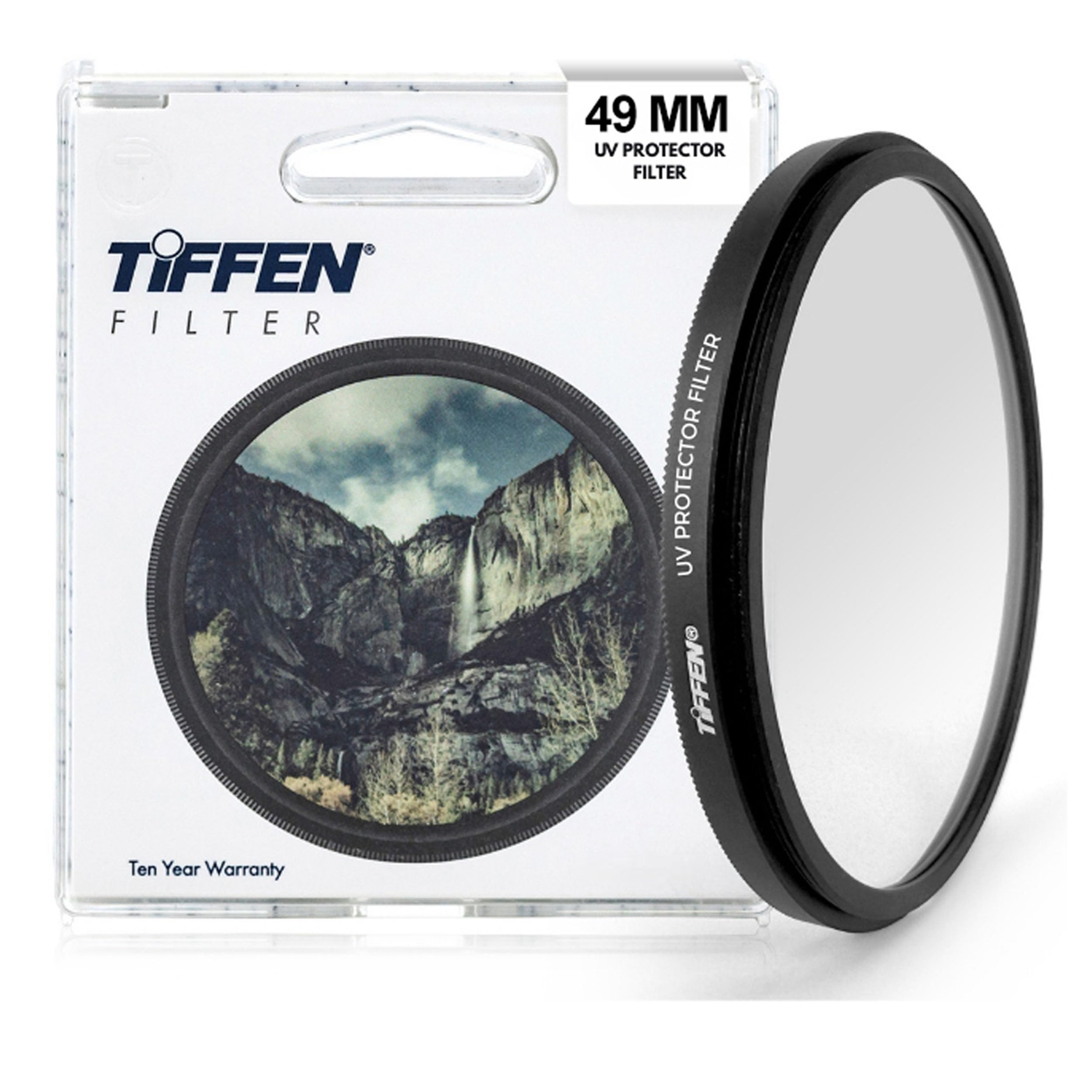
A ten-year manufacturer warranty on a filter this inexpensive tells you what Tiffen thinks it is selling: a consumable, not an heirloom. That is the right way to read it. The glass is uncoated, the ring is slim aluminum, and the filter factor is 1x, so it takes nothing off your exposure — you screw it on and stop thinking about it, which is the entire job description for a protective filter.

We reach for the 49mm version for small primes and pancakes, where a deep or expensive filter feels out of proportion to the lens. It is at its best in flat light, rain, dust and sand, the conditions where you want a barrier over the front element and nothing clever happening to the image, and the thin ring keeps a pocketable lens pocketable. For a walkaround prime on a gray February day, that is most of what we ask.

One detail we did not expect at this end of the market: a decade of warranty on a piece of glass this simple. It suggests the ring and threads are built to survive plenty of mounting and removal, and ours have — the filter seats square and comes off without a fight. It is the least sophisticated option here and makes no apology for it.

Pros

  • Ten-year manufacturer warranty
  • Filter factor 1x, so no exposure change
  • Slim aluminum ring suits small primes

Cons

  • Uncoated glass can flare in bright backlight
  • Glass can work loose in the two-piece ring
Our verdict

We keep the 49mm version for small primes and dirty conditions: a cheap sacrificial layer, as long as you are not shooting into the light.

Check Latest Price
5

Spares and Backup

Amazon Basics UV Filter 58mm

93 /100
Keeper Score Outstanding

Key details

Ring
Aluminum
Coatings
None
Thread Size
58mm
Check Price on Amazon

The cheapest filter here, and the listing does not pretend otherwise: aluminum ring, clear glass, no coating claimed anywhere. It fits 58mm threads, the size on a lot of Canon kit lenses, and it does the one thing asked of it, which is to collect the scratches, dust and fingerprints instead of the front element behind it.

Screwing it on takes a little care. Ours went on cleanly, but the threads are where a budget filter cuts corners and starting it crooked is easy, so back it off, let it find the thread and tighten gently rather than forcing it. Once mounted it is thin and light enough to forget about.

Where it earns a place is as a spare and a sacrificial layer: a second body, a beach trip, a lens you are borrowing and have to hand back. Treated as a consumable it makes sense. If the lens behind it is one you care about, the K-Series costs comparatively little more and takes the same abuse with better manners.

Pros

  • Cheapest protective layer in this guide
  • Fits common 58mm Canon kit lenses

Cons

  • Uncoated glass flares in bright light
  • Glass can come loose or break early
Our verdict

We recommend it as a spare or sacrificial layer for a 58mm kit lens, not as the filter you leave on in hard light.

Check Latest Price

How We Picked and Tested the Best UV Filters

We started with a few dozen filters sold in the thread sizes most people actually own, then narrowed the field by checking whether the coating specs were stated plainly, whether the frame was low-profile enough for a wide-angle lens, and whether the price made sense for a part whose whole job is to get scratched. That left 14 filters in sizes from 49mm to 82mm, which we shot with for three months. Each one was checked on arrival to confirm it matched the size ordered and the coatings the listing promised.

Most of the testing happened where filters get used badly. We carried them on beach walks with salt spray in the air, on a rainy trail, and around the city after dark, wiping them down with a microfiber cloth far more often than anyone should. For image quality, we shot the same frame with and without each filter — sun just inside the corner, a row of streetlights, a bright window against a dim room — then compared the pairs side by side, looking for flare, ghosting, lost contrast, and any blue cast in open daylight.

Fit and threading got the most handling. Every filter was mounted and removed dozens of times, some of it with cold, half-numb fingers in the field, and we noted which rings cross-threaded, which gave enough grip to turn, and whether a lens cap or a second filter still seated on the front threads afterward. We also checked each one on the widest lens its size would fit to see if the corners vignetted. The ones that scored highest were the ones we stopped noticing.

How to Choose a Uv Filter

Start With the Thread Size

The number in a filter's name is the diameter of the lens thread in millimeters, and it has to match exactly. A 67mm filter will not go onto a 58mm lens, and forcing it chews up the threads on the lens itself — a far more expensive problem than the filter. Look for the Ø symbol on the front rim of the lens or inside the lens cap, then buy that number.

A step-up ring lets a smaller lens take a larger filter, which is how one good 67mm can serve several lenses. The trap is direction: you can step up from 58mm to 67mm, never down. If you plan to share filters, buy for the largest thread you own and add rings for the smaller lenses.

Coatings Decide Whether You Notice It

Reflections are what make a cheap filter visible. Light bounces between the filter's surface and the front element, and a bright source ends up as a ghost in the frame or a veil of lost contrast across the whole image. Multi-layer anti-reflective coatings suppress that, and it is the biggest single difference between the filters here: our top pick states 0.1% reflectivity across 28 layers, the Hoya uses ten HMC layers, and the two cheapest options are uncoated.

Money tracks coatings more closely than it tracks glass, so this is the place to spend. If you shoot into the light — windows, low sun, water, stage lighting — go coated. If the filter's job is sand, spray and pocket lint in flat light, an uncoated one is a defensible economy.

Transmission and Glass Quality

Stated transmission runs from 99.8% on the K&F Nano-X down to 94% on the K-Series, with the Hoya at 98%. Those points rarely change your exposure — the Tiffen and Hoya both list a filter factor of 1x — but they can show as slightly flatter contrast when a bright source is in the frame. In overcast light you will not pick them apart.

Glass matters less than coating, but not nothing. Schott B270 in the Hoya and Japanese AGC glass in the K&F filters are known optical glasses and a safer bet than unspecified glass in a ring that also feels loose.

Ring Depth, Stacking and How Much to Spend

Slim rings exist so a wide-angle lens does not vignette: the K&F filters run 3.3mm and the Hoya frame is low-profile. If you stack a UV and a polarizer, that depth adds up, so a thin filter with front threads like the Hoya makes the friendlier base layer — and on an ultrawide, take the UV off before you add anything else.

Last, decide what the filter is protecting. Coated glass costs more than uncoated and far less than a repair, so the calculation is about the lens behind it, not about the filter. A cheap barrier in front of an expensive lens is a false economy the first time you shoot into the sun.

Frequently Asked Questions

Final Verdict

The K&F Concept Nano-X is the one we leave on a lens we care about: the lowest stated reflectivity in this set, the highest transmission, and a waterproof coating that wipes clean, for less money than the Hoya.

Choose the Hoya instead if a polarizer lives on your front thread and you want Schott glass underneath it. Choose the K-Series if the lens behind the filter is a kit zoom and the budget is thin. The Nano-X stays the safer default for everything in between.