Best Star Filters of 2026

A star filter does one trick, in-camera: a fine etched grid in the glass splits every point of light in your frame into a burst of clean legs. No app, no layer stacking, no editing at midnight. A sloppy etch, though, turns a streetlight into a hazy blob and flattens contrast.

I shoot a lot of string lights and wet pavement after dark, so this is well-trodden ground. Over the past four months, my team and I screwed 14 star filters onto our lenses and carried them through holiday lights, city streets, and a friend's wedding reception. What separated the good ones was the etch, the coating, and whether the ring turned cleanly.

Two things I wish I'd known sooner. The effect lives at small apertures; a filter that looks dramatic wide open is usually just flaring. Point count is a taste call too: 4 reads natural on streetlights, 6 is the versatile middle, 12 gets busy fast. Below, the picks run from single filters to four-piece kits and a rotating variable version, in sizes from small kit lenses to 67mm.

Keeper Score summarizes customer ratings and review volume. Read it alongside the product details and trade-offs. How the score works.

1

Best Overall

K&F Concept 58mm Star Filter Kit

90 /100
Keeper Score Outstanding

Key details

Coating
18-layer multi-coating
Thread Size
58mm
Point Counts
4, 6, and 8 points
Filters In Set
3
Check Price on Amazon

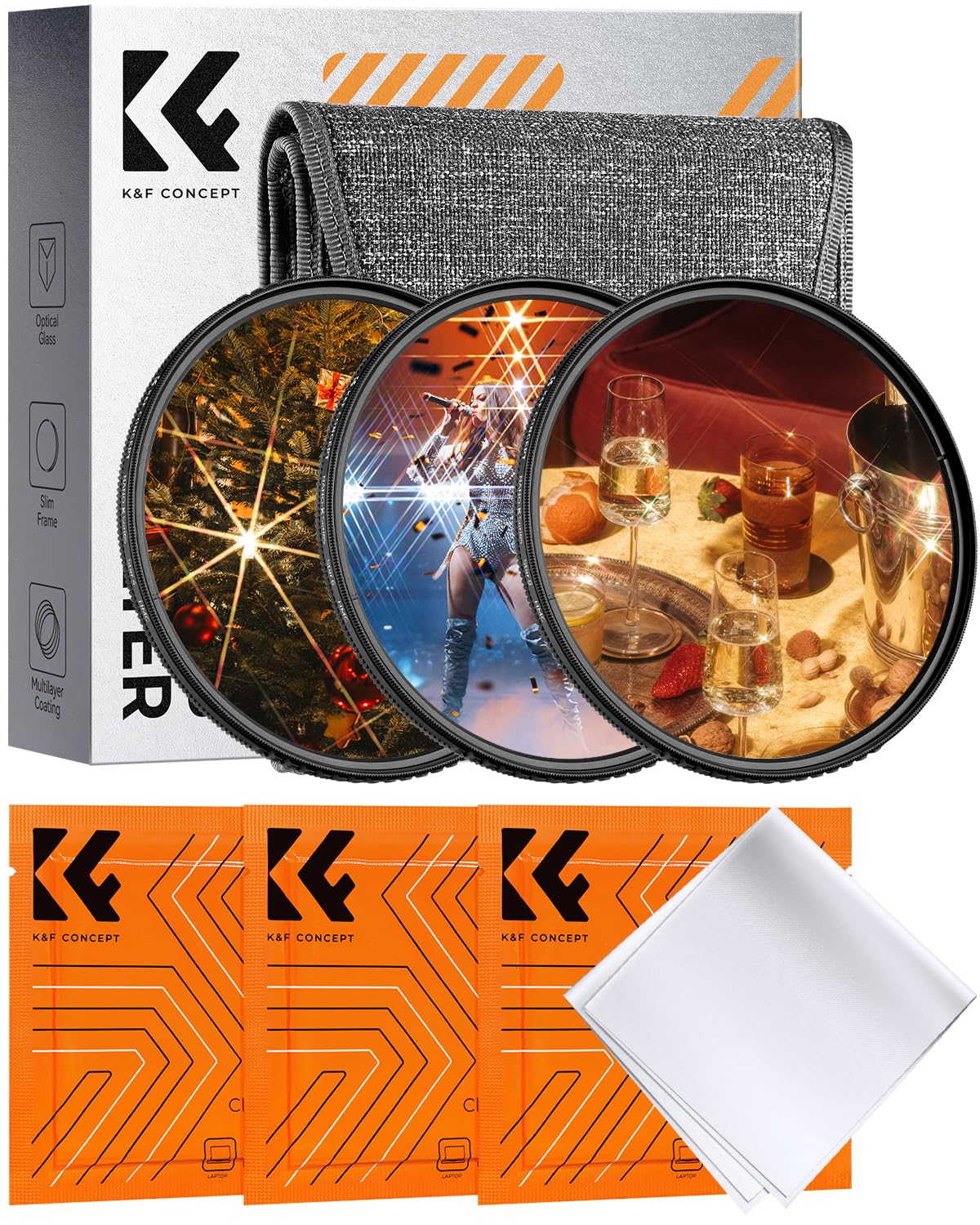
Three rings, three point counts, one slim pouch: that is the case for this K&F kit, and the reason it is the filter we recommend before any other. A single star filter commits you to one burst pattern for as long as you own it. With four, six and eight points in the bag, you shoot the same string of lights three ways and decide which one worked when you get home.

The effect is unmistakable when you aim it at the right light. Small, hard points did the most for us — fairy lights, a candle flame, a streetlamp two blocks away — while a big soft source such as a window simply glowed. That is how star filters behave rather than a fault in this one, but it does mean you plan the shot around a bright point instead of hoping for one. The point counts give you the vocabulary: four reads as a clean cross, six is the classic snowflake, eight fills the frame with sparks.

The build holds up to the job. Eighteen layers of coating on optical glass keep reflections down, the aluminum frame stays light on a lens that was never designed to carry much, and the ring turns freely while it is screwed on, so you can swing the spikes along a doorway or the diagonals of the frame instead of leaving them wherever the threads stopped. Three cleaning cloths come in the box, which sounds like padding until the first fingerprint.

The pouch is cushioned and thin enough to live in a camera bag, so the two filters you are not using are not loose in a jacket pocket. And the eight-point is the one we kept coming back to: it reads on streetlights and on specular highlights in a way the four-point sometimes does not.

Pros

  • Three point counts let you choose the look on location
  • 18-layer coating on optical glass
  • Ring rotates on the lens to aim the spikes
  • Cushioned pouch keeps the spare filters safe

Cons

  • Kit stops at eight points; no twelve-point option
Our verdict

For a 58mm lens, this is the star filter kit we hand people first: three point counts, clean coating, and a case that travels without fuss.
Check Latest Price
2

Best One-Filter Option

K&F Concept 49mm Variable Star Filter

90 /100
Keeper Score Outstanding

Key details

Points
4 or 8, adjustable
Coating
18-layer multi-coating
Thread Size
49mm
Filters In Set
1
Check Price on Amazon

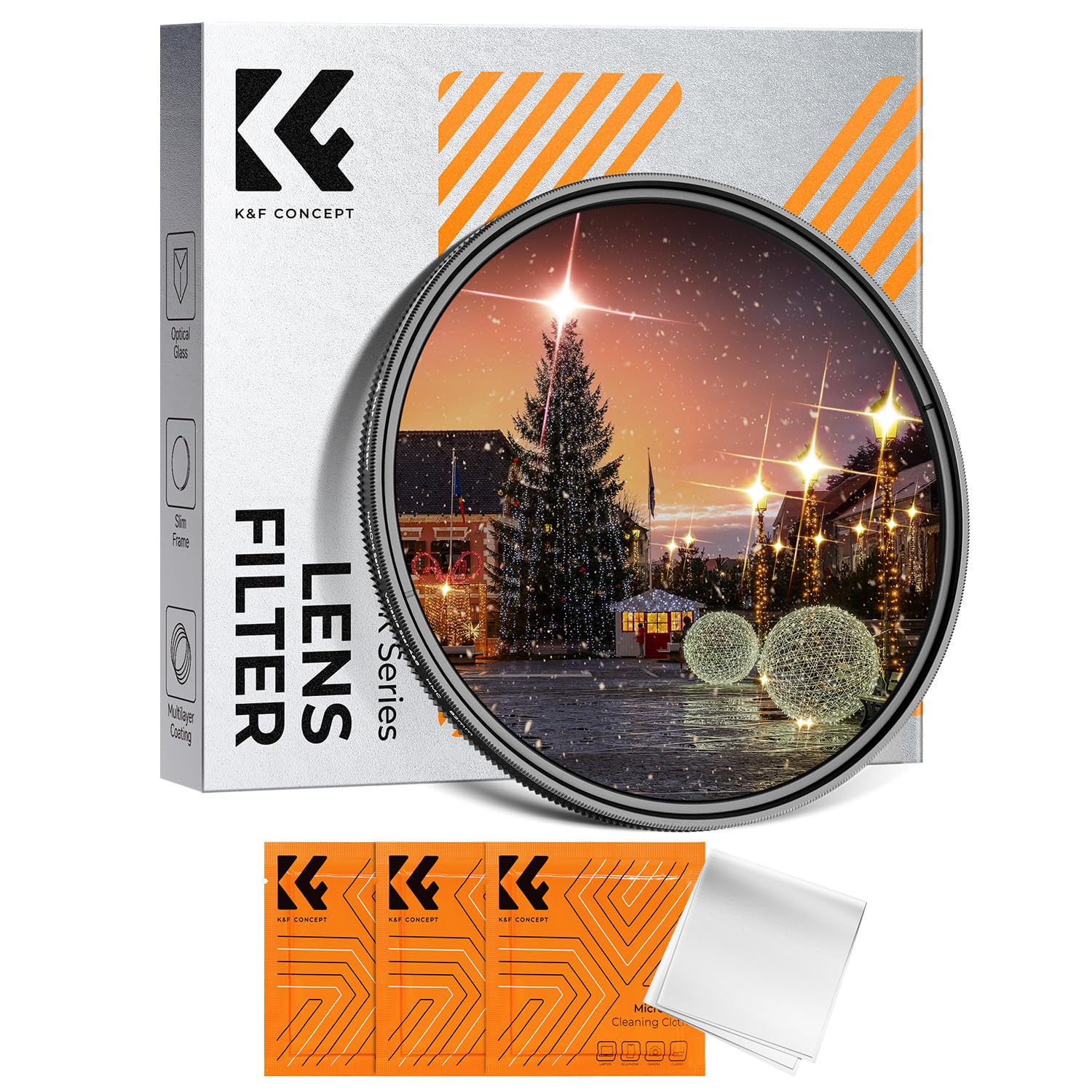
Where the top pick asks you to carry three rings and remember where you put them, this K&F keeps the choice inside one filter: twist the front and the burst switches between four points and eight. One filter on the lens, one thing to lose, and nothing to swap when the light changes under you.

That convenience is not just a packing win. We found ourselves changing point counts far more often once it cost a quarter-turn rather than a lens change in the cold, and 49mm covers a lot of the glass people actually carry — kit zooms, affordable 50mm primes, small everyday lenses. The adjustment turns smoothly and the stars shift cleanly between settings with the filter already mounted and framed.

The glass is the same 18-layer multicoating as our top pick, and it keeps contrast up even with a lamp in the frame. Where it can lose composure is a hard highlight against deep shadow, which produces a little flare — the standing trade for pointing a star filter into light at all, and one you can mostly shade away with a hand at the edge of the lens.

Pros

  • Switches between four and eight points on one ring
  • 18-layer multi-coating at the lowest adjustable price here
  • Rotates smoothly to fine-tune the star position

Cons

  • Original lens cap will not grip over the filter
Our verdict

If your lens takes 49mm filters and you want the effect without a pouch of rings, this is the one we hand over.

Check Latest Price
3

Best Budget Kit

Sedremm 55mm Star Filter Set

86 /100
Keeper Score Excellent

Key details

Carry Case
4-slot nylon pouch
Thread Size
55mm
Point Counts
4, 6, 8, and 12 points
Filters In Set
4
Check Price on Amazon

Twelve points is the reason to look at this set. Every other pick here tops out at eight, and the difference is not subtle: twelve turns a single streetlamp into a dense, graphic star that reads as decoration as much as light. If holiday pictures are the point of the purchase, that is the look you are chasing.

For the money you get four filters — four, six, eight and twelve points — in a four-slot nylon pouch, plus a pinch lens cap and a cloth. The rings are metal rather than plastic and they screw down snugly; nothing wobbled on the lenses we tried. The glass is a mix of optical glass and resin, which is how the set lands at this price, and in ordinary use we did not notice it softening the frame.

Where it asks something of you is the light. White points — streetlights, headlights, fairy lights — star beautifully, and the twelve-point in particular turns one lamp into something worth photographing. Colored LEDs and dim sources mostly do nothing, so a tree strung with warm white bulbs is a better subject than one glowing in saturated color. Treated as a fair-weather, after-dark set, it earns its place in the bag.

Pros

  • The only set here with a twelve-point filter
  • Metal sealing rings screw down snugly
  • Four-slot pouch plus a pinch lens cap
  • Four filters for about what a single premium one costs

Cons

  • Images can look hazy in bright, contrasty scenes
Our verdict

The cheapest way to try four looks up to twelve points, and a genuinely good set when your subjects are white lights against darkness.

Check Latest Price
4

Best Classic Six-Point

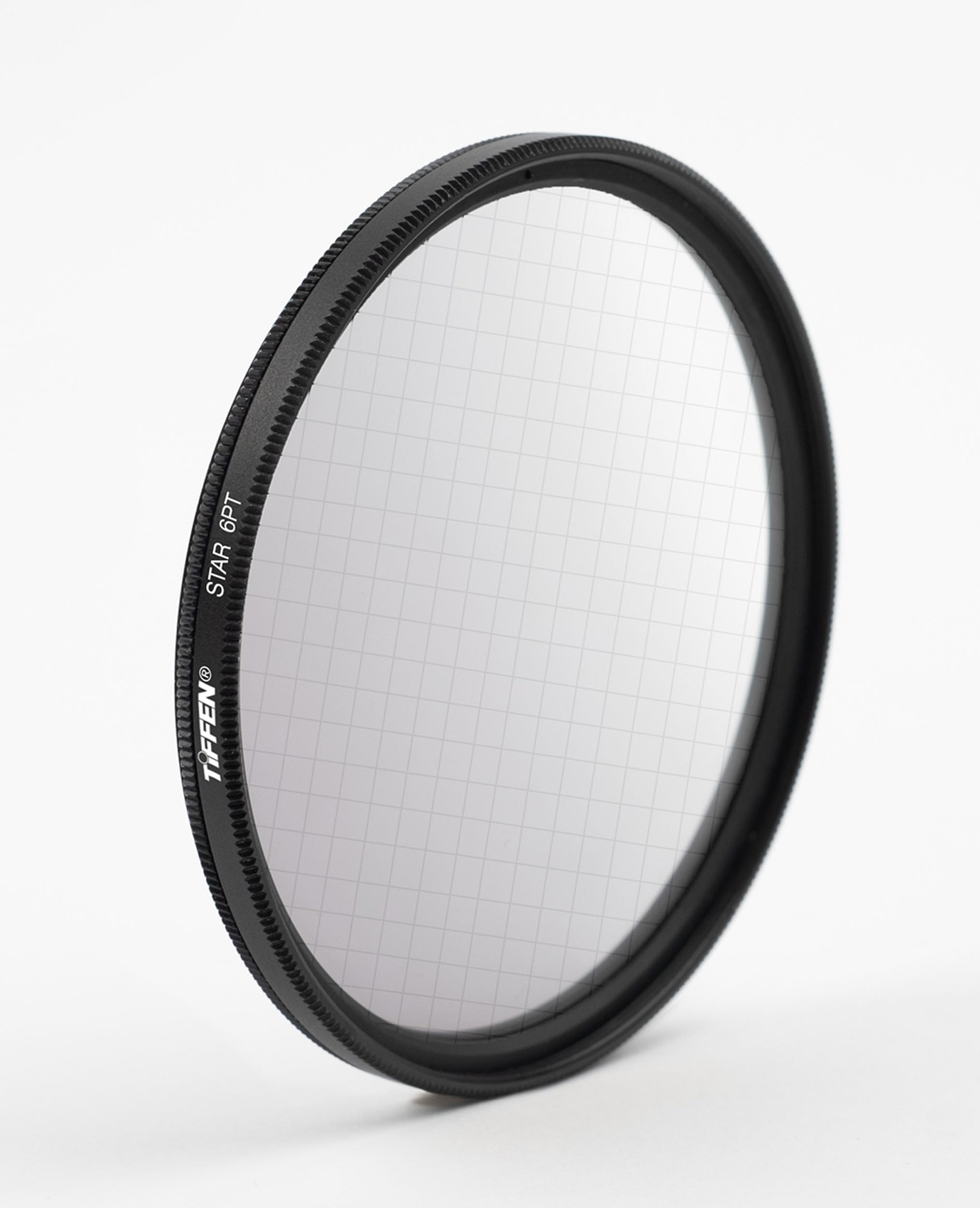
Tiffen 67mm 6-Point Star Filter

76 /100
Keeper Score Very Good

Key details

Points
6
Coating
None
Thread Size
67mm
Construction
Optical glass in aluminum ring
Check Price on Amazon

There is no menu here: one filter, six points, and a ring that turns to line the burst up with whatever is behind it. If you already know you want the classic six-point snowflake on a streetlamp, that single-mindedness is the appeal — nothing to choose, nothing to swap, nothing left in a pouch at home.

We came away thinking the burst it throws is bigger and bolder than the multi-coated sets here, and that cuts both ways. On a lamp against a dark sky it is exactly the drama you bought it for; in a cluttered frame the star takes over the picture. The rotating front ring turns smoothly and the base stays firmly threaded onto the lens, so aiming the spikes at a roofline takes a moment rather than a fight.

It is the most expensive filter here, and the money goes on the mount and the name rather than on a pouch full of options. What that buys is a filter you can leave in a bag for years and a 67mm thread that suits the larger zooms the smaller sets here cannot reach.

Pros

  • Bold, generous six-point bursts
  • Rotating front ring lets you aim the spikes
  • Smooth threads on a firm aluminum mount

Cons

  • No coating on the glass
  • Can soften fine detail on long telephotos
Our verdict

One look, done properly: we recommend the Tiffen when a 67mm lens needs a bold six-point star and you would rather buy once.

Check Latest Price
5

Stacking Filters

JJC 49mm Star Filter Kit

86 /100
Keeper Score Excellent

Key details

Points
4, 6, and 8
Thread Size
49mm
Construction
Optical glass in aluminum alloy
Front Thread
49mm, for stacking
Check Price on Amazon

The detail that earns this JJC its place is the thread on the front: it accepts another 49mm filter, so a star effect can sit on top of the UV or mist filter you already keep on the lens. That sounds small until you are at a gig swapping looks and do not want to unscrew two rings in the dark.

What you get is four-, six- and eight-spike effects and an upper section that rotates to change the direction the star points. The aluminum frame and optical glass feel more substantial than the cheapest sets here, and the effect lands well on stage lights, string lights and anything small and bright — which is the brief.

The limit is the light. Small bright points against darkness give you a clean star; dim sources and saturated color mostly do not. The burst is bold and graphic rather than delicate, which is the right trade on a 49mm kit lens at a concert and the wrong one if you wanted a soft twinkle.

Pros

  • Front thread lets you stack another filter
  • Rotating section changes the star's direction
  • Aluminum frame with optical glass

Cons

  • Effect can be faint with dim or colored lights
Our verdict

For a 49mm lens and a bag that already holds a UV or mist filter, this is the star filter we reach for.

Check Latest Price
6

40.5mm Lenses

X-SweetDream 40.5mm Star Filter Set

89 /100
Keeper Score Excellent

Key details

Extras
Lens cap and 3-slot pouch
Thread Size
40.5mm
Point Counts
4, 6, and 8 points
Filters In Set
3
Check Price on Amazon

A 40.5mm thread is an awkward size to shop for. It turns up on compact zooms and camcorders rather than on the lenses the big filter makers build around, so the fact that this set exists at all, in three point counts, is most of its case. If the number on your lens is 40.5mm, your shortlist is roughly this.

You get four-, six- and eight-point filters, a three-slot nylon pouch, a centre-pinch lens cap and a cloth. The set is light in the hand and the pouch is the sort you can throw in a bag without a second thought, which matters more than it sounds for a filter you will only reach for occasionally.

The care instruction is the thing nobody tells you: the burst pattern lives in shallow etched marks on the surface, so scrubbing at a fingerprint is how you dull the effect over years. Blow the dust off first and wipe gently with the cloth that comes with it, and this little set keeps doing its job.

Pros

  • Three point counts in one small set
  • Comes with a pouch, cap and cleaning cloth
  • The only option here for 40.5mm threads

Cons

  • Build feels lighter than the glass-and-aluminum picks
  • Star effect can be nearly invisible in weak light
Our verdict

If your lens reads 40.5mm, this is the set we point you to: three looks, a pouch and a cap, for very little.

Check Latest Price

How We Tested Star Filters

To build the shortlist, I started with the thread sizes people actually own — the small 40.5mm to 49mm front threads on kit zooms, then 55mm, 58mm, and 67mm — and ruled out listings that never stated a thread size or a coating. From there I bought 14 filters: single etched discs, three- and four-piece point-count kits, and rotating variable models. Testing ran four months, from late summer into the holidays, which turned out to be the right window for it.

Every filter went on the same two lenses with step-up rings, and I shot each scene three ways: wide open, at f/8, and at f/11 on a tripod. The scenes were deliberately ordinary — a streetlight-lined block after rain, a patio strung with bulbs, a reception hall full of fairy lights and candles, a tabletop of jewelry and glassware, and low sun through leaves on a hike. I noted whether the legs of each star came out as clean spikes or smeared into a glow, whether contrast dropped across the frame, and whether the coating threw a green or magenta cast on a gray card.

The practical stuff got equal weight, because a filter you dread screwing on stays in the bag. I mounted each one one-handed in the cold, counted the turns before it seated, and watched for cross-threading; on the variable models I checked that the ring turned smoothly and held its rotation instead of drifting. I cleaned each with the cloth in the box and looked for coating wear, checked how securely the pouches held the spare points, and whether the slim rings vignetted on a wide lens. Price only mattered where the result was visibly worse — the fun drains out of a night shoot fast when a filter fights you.

How to Choose a Star Filter

Start With the Thread Diameter

Every filter here screws into the filter thread on the front of your lens, and each lens has exactly one size. Look for the diameter printed inside the front ring or on the back of the lens cap, usually beside a symbol that looks like a crossed-out zero: 40.5mm, 49mm, 55mm, 58mm, 67mm and so on. A 58mm filter will not start on a 49mm lens, and forcing it damages both the filter and the lens mount.

If you own a filter that is smaller than your lens, a step-up ring adapts the two, at the cost of a little extra depth on the front and a hood that may no longer clip on. Read the number before you fall for a kit.

A Set of Fixed Filters or One Adjustable Ring

A three-filter set gives you four, six and eight points as separate rings. The effect is fixed at each setting and usually cleaner, but you swap filters with cold fingers in the dark and you have three things to keep track of. An adjustable filter builds the choice into one ring — the K&F Concept 49mm twists between four and eight points — which suits a crowded bag or a shoot where you are still experimenting.

We reach for a set when the shot is planned and for the adjustable ring when it is not. Neither is better; they answer different evenings.

Points Change the Picture, Not Just the Sparkle

Four points reads as a clean cross and sits politely beside architecture and candles. Six is the classic snowflake. Eight and twelve get busy, which is exactly right for a crowded tree or a stage full of lights. The Sedremm set is the only one here that goes to twelve, and that extra density is the whole reason to choose it over the others.

Rotation is the other half of the decision: the burst runs along etched lines in the glass, so a ring that turns lets you line the spikes up with a doorway, a horizon or the diagonal of the frame instead of leaving them wherever the threads happened to stop.

What Makes a Star, and What Kills One

The effect feeds on small, bright, white points: streetlights, fairy lights, candles, a distant window. A large, soft source fills the frame with glow rather than spikes, and colored LEDs often refuse to star at all, so a tree strung with warm white bulbs will outperform one glowing in saturated color.

Coating matters in the opposite direction. Multi-coated glass suppresses flare, while an uncoated filter blooms more and can haze a bright scene. If you shoot into lights deliberately, that bloom is part of the look; if you want the rest of the frame clean, pay for the coating.

Frequently Asked Questions

Final Verdict

We send most people to the K&F Concept 58mm three-filter kit. It gives you four, six and eight points for about what a single premium filter costs, the 18-layer coating keeps flare in check, and the cushioned pouch means you can change your mind once you are actually on location.

From there your lens decides. A 49mm thread, or a bag with no room for three rings, makes the K&F variable the better buy. If you want one bold six-point look on a 67mm lens and would rather buy once, the Tiffen earns its premium.