Best Pentax DSLRs of 2026

Pentax shooters usually arrive by accident. Someone hands them a body with a film-era lens bolted on, the files come back with color they can't get anywhere else, and the system clicks: the stabilization lives in the sensor, so every lens you mount is stabilized, and the mount hasn't changed in decades, so old glass still fits. The trade-off is autofocus that rewards patience more than speed. We've spent nine months shooting with eight Pentax DSLRs, from an older 10-megapixel body up to the full-frame one, and the differences that matter are not the ones printed on the box.

Megapixels are the least useful number here. What separates these bodies is how each sensor renders color at high ISO, how the build holds up in weather, and how much camera your money buys now that most of them are sold used, which makes condition, shutter count, and sensor cleanliness as important as the model name. Features and value vary more than the badges suggest, too.

The picks below are the ones that held up across all of it, whether you're after a first body or a second one you can knock around.

Keeper Score summarizes customer ratings and review volume. Read it alongside the product details and trade-offs. How the score works.

1

Best Overall

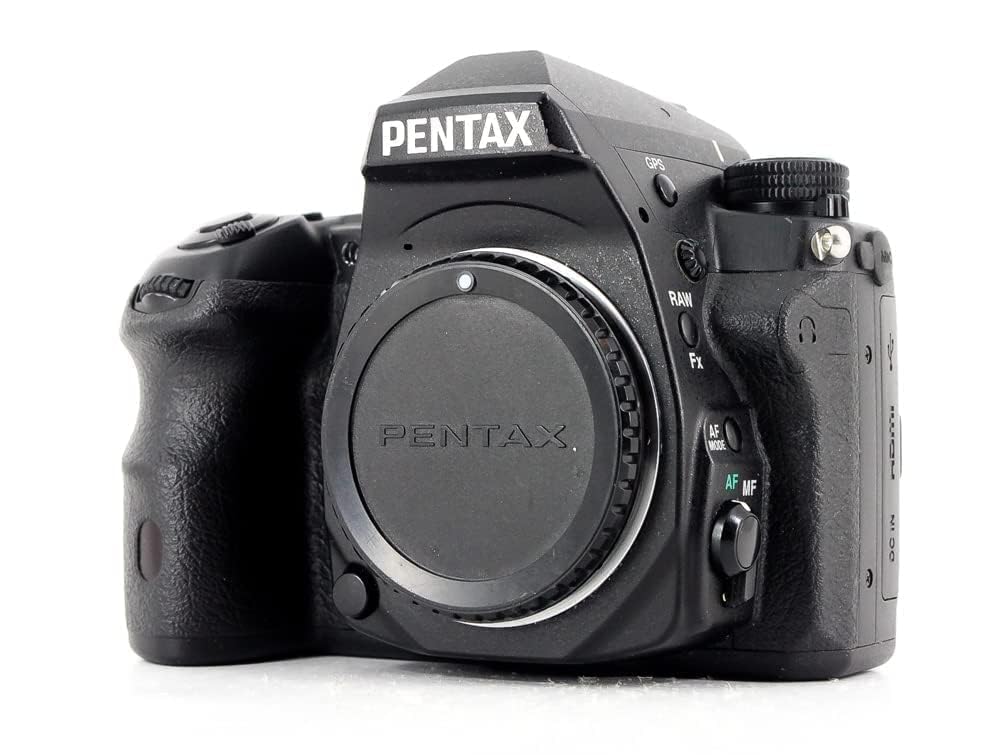
Pentax K-3

79 /100
Keeper Score Very Good

Key details

Sensor
24MP APS-C CMOS
Autofocus
27-point AF
ISO Range
80–51,200
Continuous Shooting
8.3 fps
Check Price on Amazon

Twenty-seven autofocus points, twenty-five of them cross-type. That ratio is why the K-3 sits at the top of this list: a cross-type point reads detail in both directions, so the camera locks onto a flat, low-contrast subject instead of sliding past it. Against the 11-point modules in the older bodies here, it's the difference between catching a moving child and missing them. Add 24 megapixels and an anti-aliasing filter you can switch off for maximum detail, and this is the most capable APS-C Pentax in the group.

The body keeps up with the sensor. Continuous shooting runs at 8.3 frames per second, the fastest here, and two SD slots mean a second card lives in the camera rather than your bag. ISO runs from 80 to 51,200, and the 3.2-inch screen at 1,037,000 dots is the sharpest in this roundup — useful when you're checking focus at 100 percent instead of squinting at a thumbnail.

Sealing is the other half of the argument. The K-3 is a camera you keep shooting with when the sky turns and everyone else packs up, provided there's a WR lens on the mount. The price is weight: at 1.8 pounds it's the heaviest APS-C body here, and you feel it by the end of a long day. We pay that willingly for a body that shrugs off a shower.

Pros

  • 27 autofocus points, 25 of them cross-type
  • 24MP sensor with switchable anti-aliasing filter
  • Two SD card slots
  • Fastest burst here at 8.3 fps

Cons

  • Fixed rear screen with no articulation
Our verdict

We recommend the K-3 as the one Pentax body that covers everything: the best autofocus here, 24 megapixels, two card slots and full weather sealing.
Check Latest Price
2

Best for Landscape and Night Skies

Pentax K-3 II

78 /100
Keeper Score Very Good

Key details

GPS
Built-in, with Astro Tracer
Sensor
24.3MP APS-C CMOS
Card Slots
Dual SD
Stabilization
Sensor-shift with Pixel Shift
Check Price on Amazon

The K-3 II is a K-3 with two things added, and whether they matter depends on what you point the camera at. The first is Pixel Shift Resolution: the sensor takes four exposures, shifting by a single pixel between each, then combines them into one file with finer colour and less noise than a single frame manages. On rock, architecture and a studio set it's superb. On a windy hillside it falls apart, because anything that moves between the four exposures arrives as a ghost.

The second addition is GPS, and with it a compass and Astro Tracer, which shifts the sensor during a long exposure to follow the stars so they stay points rather than trails. For night-sky work that's a real convenience, and it's the reason we point landscape and astro shooters here rather than at the plain K-3. The foundation is unchanged: 24.3 megapixels, the same 27-point array with 25 cross-type points, 8.3 frames per second and two SD slots.

What doesn't change is the weight or the screen, and Pixel Shift still wants a tripod to be worth the effort. If your subjects hold still and your trips end under a dark sky, the additions buy something you'll use. If you shoot handheld and nothing in your frame stays put for four exposures, the K-3 does the same job.

Pros

  • Pixel Shift resolution for static subjects
  • Built-in GPS with compass and Astro Tracer
  • Dual SD slots and 8.3 fps

Cons

  • Pixel Shift needs a tripod and a still subject
Our verdict

Choose the K-3 II if your photography happens on a tripod under a night sky — Pixel Shift and Astro Tracer are genuinely useful there, and irrelevant elsewhere.

Check Latest Price
3

Best Compact

Pentax K-5

86 /100
Keeper Score Excellent

Key details

Sensor
16.3MP APS-C CMOS
Weight
1.6 lb
Autofocus
11-point SAFOX IX+
ISO Range
80–12,800
Check Price on Amazon

At 1.6 pounds the K-5 is the lightest of the sealed bodies here, and that gap against the K-3 isn't a spec-sheet curiosity — it's the difference between a camera that goes into the daypack and one that stays in the car. The body is fully weather-sealed and coldproof, and the 16.3-megapixel sensor with ISO 80–12,800 handles a grey afternoon without drama.

Speed isn't the compromise you might expect. Seven frames per second is close to the K-3's 8.3, the in-body shake reduction stabilizes every K-mount lens you mount — including the manual focus glass that makes Pentax interesting in the first place — and the 3-inch, 921,000-dot screen is sharp enough to confirm focus. Video is there when you need a clip, at 1080p and 25 frames per second.

Autofocus is where the years show. The 11-point SAFOX IX+ system is a step behind the 27-point array in the K-3 and hunts on flat, low-contrast subjects in a way the newer body doesn't. For travel, street and landscape work that rarely matters, because you're focusing on something with an edge. It's the Pentax we hand someone who wants one camera to carry every day, and the one we take when the forecast is bad and the walk is long.

Pros

  • 1.6-pound fully weather-sealed body
  • 7 fps and ISO 80–12,800
  • Shake reduction works with any K-mount lens

Cons

  • Video limited to 1080p at 25 fps
Our verdict

The K-5 is the Pentax we hand someone who will actually carry it: 1.6 pounds, fully sealed, and quick enough for most of what a day out asks.

Check Latest Price
4

Best Full Frame

Pentax K-1

87 /100
Keeper Score Excellent

Key details

Sensor
36.4MP full-frame CMOS
Weight
2.2 lb
Autofocus
33-point AF
ISO Range
100–204,800
Check Price on Amazon

Thirty-six point four megapixels on a full-frame sensor makes the K-1 the only body here that doesn't crop your wide lenses. Every K-mount lens mounts, from current full-frame glass back to manual focus primes from the film era, and Pixel Shift pulls more detail and colour out of a static scene than a single exposure can.

The rest of the camera is built for the tripod work it encourages: 33 autofocus points, 4.5 frames per second, ISO up to 204,800, a cross-tilt rear screen for awkward angles, and GPS with a compass and Astro Tracer. It is not a small camera.

Autofocus is the compromise. Thirty-three points sounds generous, but the system is at its best with a subject that holds still, and tracking something moving toward you is where the K-1 feels its age. Landscape, architecture, studio and portrait work never ask it to do anything else.

Framed that way it's easy to recommend and just as easy to rule out. This is the highest-resolution body in the roundup and the one that makes the most of a drawer of old Pentax glass, and for that work it earns every ounce. If your photography involves wildlife, sport or fast children, the K-3's autofocus serves you better and your shoulders will notice.

Pros

  • 36.4MP full-frame sensor, the highest here
  • Pixel Shift and 33 autofocus points
  • Cross-tilt LCD and built-in GPS

Cons

  • Heavy 2.2-pound body
Our verdict

For landscape and studio work the K-1 is the best camera here — 36.4 megapixels of full-frame detail — provided you never need it to track something moving.

Check Latest Price
5

Best for Detail and Low Light

Pentax K-5 IIs

82 /100
Keeper Score Excellent

Key details

Sensor
16.3MP APS-C, no AA filter
Autofocus
11-point SAFOX X
ISO Range
80–51,200
Continuous Shooting
7 fps
Check Price on Amazon

The K-5 IIs is the specialist of the K-5 family, and we mean that as a compliment. Pentax removed the anti-aliasing filter, the optical layer that blurs fine detail very slightly to prevent moiré, so per-pixel sharpness goes up — visibly at 100 percent — and so does the chance of fringing on fabric weave, window blinds and rooftop tiles. That's the whole trade, and it's deliberate.

Everything else is K-5: the same 16.3-megapixel sensor, the same 1.8-pound sealed body, the same 7 frames per second. What changes is the autofocus module, which moves to the 11-point SAFOX X — the more capable of the two 11-point systems here and noticeably better at finding focus in dim light. ISO stretches to 51,200 rather than 12,800, which matters more than it sounds at dusk without a tripod.

We reach for the K-5 IIs when the subject has texture and the light is going, and for the plain K-5 when the frame is full of fine repeating patterns. The magnesium alloy shell over a stainless chassis is the same on both, and so is the pleasure of a body that small with a real pentaprism in it.

Pros

  • No anti-aliasing filter for maximum detail
  • SAFOX X autofocus with ISO to 51,200
  • Magnesium alloy over a stainless chassis

Cons

  • Moiré can appear on fine repeating patterns
  • 16.3MP leaves little room to crop
Our verdict

Buy the K-5 IIs for the sharpest files of the K-5 line and the best low-light focusing of the three, and accept the moiré risk that comes with the missing filter.

Check Latest Price
6

Best Budget Kit

Pentax K-50

79 /100
Keeper Score Very Good

Key details

Sensor
16MP APS-C CMOS
Kit Lens
DA L 18–55mm WR
ISO Range
100–51,200
Weather Sealing
81 seals
Check Price on Amazon

The lens in the box is the argument. The K-50 kit ships with the DA L 18–55mm WR, a sealed zoom that pairs with the 81 weather seals in the body, so the camera is rain-ready on day one with nothing else to buy. That combination is why we point first-time buyers here when they want to shoot outdoors rather than in a studio.

Underneath is a 16-megapixel APS-C body with ISO up to 51,200, six frames per second and an 11-point autofocus system. At 1.4 pounds it's the lightest camera in this roundup, which sounds like a dull specification until you've carried a bag for six hours.

The controls are the part that surprises people. Two dials put shutter speed and aperture under separate fingers, so exposure becomes something you feel rather than a menu you page through, and the settings that matter sit on buttons instead of three levels deep.

That's why we recommend it as a first DSLR: it teaches the fundamentals without getting in the way of them, and it keeps shooting in weather that sends cheaper bodies running for cover. The sealed kit lens is what makes the package worth having — you buy one box and you're equipped for the outdoors.

Pros

  • Sealed 18–55mm WR lens included
  • 81 weather seals on the body
  • Light 1.4-pound body with dual dials

Cons

  • Entry-level 11-point autofocus
  • 16MP sensor trails the 24MP bodies
Our verdict

The K-50 is the first DSLR we point beginners to: a sealed body and a sealed kit lens in one box, with two dials that make exposure click.

Check Latest Price
7

Color-Rich Stills

Pentax K20D

80 /100
Keeper Score Excellent

Key details

LCD
2.7-inch
Body
Weather-resistant
Sensor
14.6MP APS-C CMOS
Autofocus
11-point SAFOX VIII
Check Price on Amazon

There's a reason the K20D still has a following, and it isn't nostalgia. The 14.6-megapixel CMOS sensor renders colour in a way later bodies smoothed out, and the files need remarkably little work before they look right — skin tones especially.

We like it as a second body or a first step into the K-mount. It's weather-resistant, the sensor-shift shake reduction stabilizes any lens you mount, and the control layout follows the same logic Pentax has used for years, so what you learn here transfers to the newer bodies. Live View and a 2.7-inch screen round out a package that feels older than the K-5 but not primitive.

The limits show up when the subject moves or the light gets complicated; the autofocus is from an older generation and makes you work for a lock in dim rooms. For landscapes, portraits and slow deliberate work, none of that matters — that's the ground where the colour earns its keep.

Pros

  • 14.6MP CMOS with admired colour rendition
  • Weather-resistant body and shake reduction
  • Live View on a 2.7-inch screen

Cons

  • Slow 3 fps continuous shooting
  • Small, low-resolution 2.7-inch screen
Our verdict

The K20D earns its place on colour and character — a second body or a first K-mount camera for slow, deliberate work, as long as you don't need speed.

Check Latest Price
8

Budget Outdoor Stills

Pentax K200D

78 /100
Keeper Score Very Good

Key details

LCD
2.7-inch
Body
Weather-resistant
Power
Four AA batteries
Sensor
10.2MP APS-C CCD
Check Price on Amazon

Four AA batteries. That one decision changes how the K200D travels: a fresh set is in every grocery store and every airport kiosk, rechargeables work without complaint, and a spare set weighs almost nothing in a bag.

The rest is a 10.2-megapixel CCD sensor, a weather-resistant body, sensor-shift shake reduction that works with any K-mount lens, and a 2.7-inch screen. It's the oldest architecture here and the files show it: the sensor's comfort zone ends well before the light does.

Where it earns a place is as a knockabout outdoor camera. At 1.5 pounds it's lighter than the K-5 and far lighter than the 24-megapixel bodies, it takes a beating, and the CCD output has a look worth getting attached to. If you want a camera for wet hikes that you never have to fuss over, this is the one.

Pros

  • Runs on four AA batteries
  • Weather-resistant body with shake reduction
  • Light 1.5-pound body

Cons

  • 10.2MP files leave little room to crop
  • 2.96 fps burst is slow for action
Our verdict

The K200D is the knockabout outdoor body: AA batteries you can buy anywhere, weather sealing, and a CCD look worth getting attached to.

Check Latest Price

How We Chose and Tested the Best Pentax DSLRs

I built the shortlist from Pentax bodies sold both body-only and in kits, filtering by mount, sensor format, and what they realistically sell for used, then bought eight of them — a couple of new old stock, the rest genuinely used, because that's how most people buy these now. Nine months of shooting followed: weekend hikes, a couple of indoor school events, a wet backyard, and a week-long trip where the camera lived in a daypack and came out constantly.

Autofocus was the first thing I judged, since it's the one place these cameras ask something of you. I shot a dog running toward me in late light, a kid on a swing, and a dim living room, and counted how many frames actually locked versus hunted. For image quality, I photographed the same brick wall and the same backlit tree at every ISO setting, then compared shadow noise, highlight roll-off, and whether the JPEG colors held up straight out of the camera.

Build quality got the least gentle treatment: I carried each body through rain and dust, wiped them down, and checked whether the seals, dials, and card doors still felt tight afterward. To test stabilization, I hand-held each camera at shutter speeds I'd normally avoid and kept score of sharp frames. Condition checks on the used bodies meant pulling a shutter count, shooting a blank wall at a small aperture to look for sensor spots, and pressing every button and dial. Value came last: what each body cost against what it delivered, and whether the kit lens was worth taking over body-only.

How to Choose a Pentax Dslr

Resolution and Sensor Size

Resolution runs from 10.2 megapixels in the K200D to 36.4 in the K-1, and the number you need depends on what happens to the files. If your photographs live on a screen or in a photo book, 16 megapixels isn't the limit you'll hit first. Crop hard or print large and the 24-megapixel bodies give you room, while the K-1's full-frame sensor gives you the most.

Full frame changes more than the count: the same lens covers a wider view, and the shallower depth of field at a given aperture is why portrait shooters still pay for the bigger sensor. Everything else here is APS-C, where a 50mm lens behaves like a short telephoto.

Autofocus Is the Real Dividing Line

Point counts here run from 11 to 33, but the number that matters is how many of those points are cross-type. A cross-type sensor reads both horizontal and vertical contrast, so it locks onto flat subjects instead of hunting past them, and the K-3's 25 cross-type points are why it handles movement better than the 11-point bodies.

One trap: a DSLR focuses fastest through the viewfinder, using phase detection. Switch to live view and the camera falls back on a slower contrast-based method, so if you plan to shoot off the rear screen, expect the pace to drop.

Sealing Only Counts With a Sealed Lens

A weather-sealed body with an ordinary lens is not a rain camera. The seals meet at the lens mount, so the lens has to be sealed too — the K-50 kit's DA L 18–55mm WR is the simplest way to get there, and Pentax's WR and DA* lenses are the ones to look for.

The flip side is that in-body shake reduction works with every K-mount lens, sealed or not, including manual focus glass. That's the Pentax advantage in one line: stabilization for lenses that were never stabilized.

Weight, Screens and Everyday Handling

The bodies span 1.4 pounds to 2.2, and the gap matters by hour six of a hike. All of these use fixed rear screens, so there's no tilting the LCD for a low angle — you crouch, or you use the viewfinder. Screen resolution runs from 230,000 dots on the older bodies to 1,037,000 on the K-3, which is the difference between checking focus and guessing at it.

Buying One Used

All of these are long out of production, so the listing is where the risk lives. Ask for the shutter count, test the sensor by shooting a plain wall at a small aperture and looking for dark spots, and budget for a fresh battery on any body old enough to have sat in a drawer. A camera sold with its WR lens included is worth more than a bare body.

Frequently Asked Questions

Final Verdict

The K-3 is the Pentax DSLR we point most people to: 24 megapixels, a 27-point autofocus array with 25 cross-type sensors, two card slots and full weather sealing, in a body that still feels like a camera rather than a computer.

If your work happens on a tripod under a night sky, the K-3 II's Pixel Shift and Astro Tracer earn the step up. If full-frame resolution is the whole point, the K-1 is the one — provided your subjects hold still.