Best Waterproof Cameras of 2026

A waterproof camera is really two cameras wearing the same label. One is a palm-sized action cam you clamp to a paddle or a helmet and forget about until something worth filming happens; the other is a rugged compact with a real zoom lens and a macro mode that gets within an inch of a tide-pool creature. Buy the wrong one and you'll spend the afternoon fighting the menu instead of swimming.

What you're actually buying is permission to stop treating your phone like it's disposable every time someone suggests a swim. I've carried cameras into hot-spring pools, salt water, and one memorable sleet storm on a ridge, and my team has spent the past seven months with 11 waterproof models, dunking and dropping them on purpose to see whose picture quality holds up once the water gets involved.

Two things surprised me along the way. Depth ratings are static-pressure claims, so a gritty gasket will kill a camera long before 30 feet does, and the accessory bundle matters more than any spec sheet — a camera with no spare battery and no standard mount is dead weight by mid-afternoon. Ease of use and connectivity got weighed as heavily as video quality. Here's what earned its place.

Keeper Score summarizes customer ratings and review volume. Read it alongside the product details and trade-offs. How the score works.

1

Best Overall

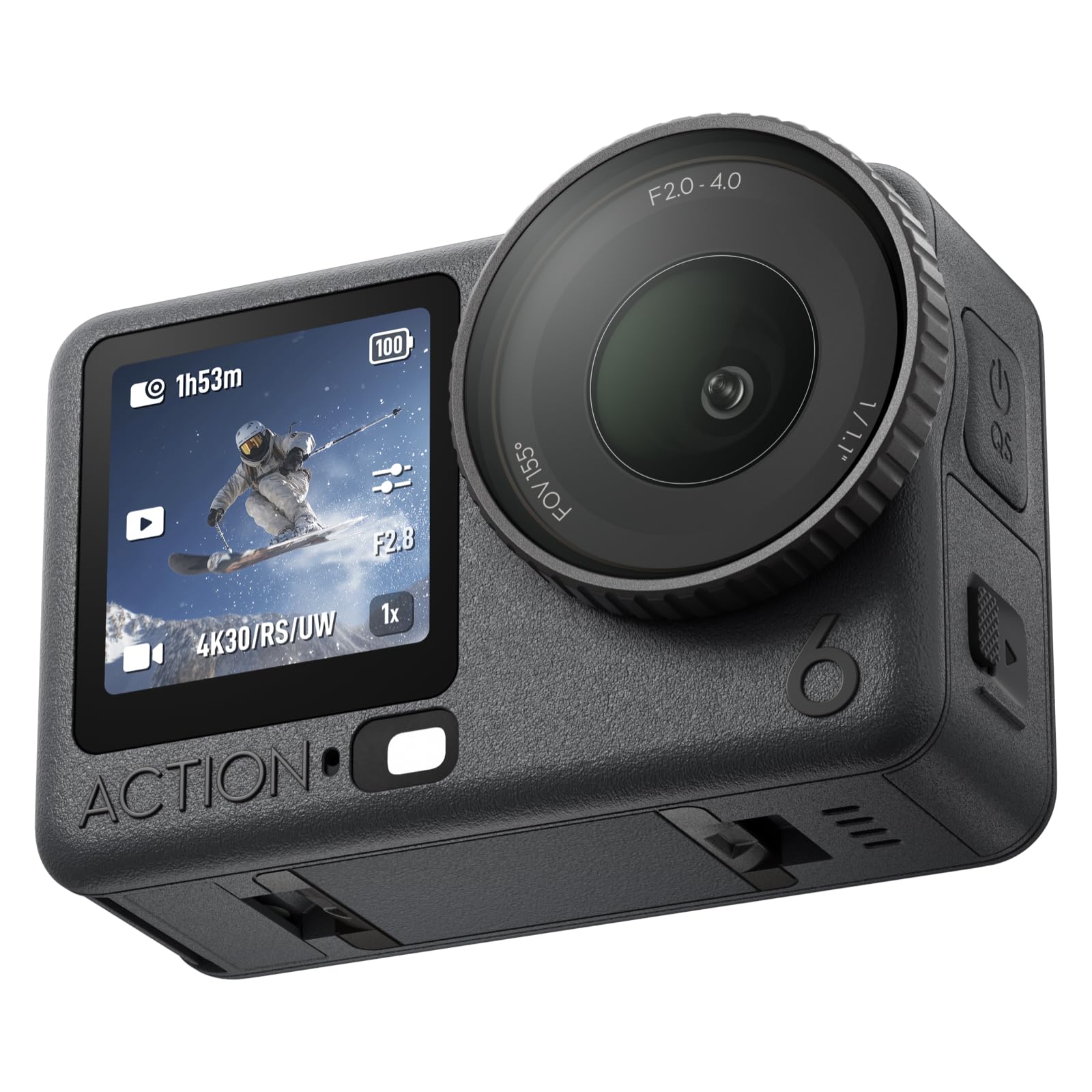
DJI Osmo Action 6

90 /100
Keeper Score Outstanding

Key details

Battery Life
4 hours
Built-in Storage
50GB
Video Resolution
8K
Water Resistance
Waterproof
Check Price on Amazon

A variable aperture on an action camera sounds like a spec-sheet flex until you shoot into late-afternoon light over a pool. The Osmo Action 6's f/2.0–f/4.0 lens and 1/1.1-inch square sensor gave us more room to hold color and detail than the smaller-sensor cams here, and the 8K mode is there when we want to crop into a wide shot later. We did not have to baby the settings; auto mode kept the footage looking like the scene in front of us.

The practical bits are just as strong. DJI rates the battery at up to four hours, and the camera comes with 50GB of built-in storage, so we could start shooting before we had sorted a memory card. The magnetic quick-release mount is the kind of small convenience we notice on a boat: one twist, and the camera is off the rail and back in a pocket. Gesture and voice control are handy when your hands are full, and the stabilization kept walking shots level.

Waterproofing is the one thing to verify before a dive trip. The specs list waterproof but no depth figure, so check the manual for the number that applies to your unit and stay inside it. For snorkeling, pool days, and rain, we were comfortable; for deeper diving, confirm the rating first.

Pros

  • 8K video and variable aperture
  • Four-hour battery and 50GB storage
  • Strong stabilization and magnetic mount
  • Gesture and voice control

Cons

  • Costs more than the value picks here
Our verdict

For wet-weather travel and underwater video, the Osmo Action 6 is the one we pack first: 8K footage, strong stabilization, and a four-hour battery.

Check Latest Price
2

Best for Underwater Stills and Macro

OM System Tough TG-7

82 /100
Keeper Score Excellent

Key details

Macro Focus
1 cm
Video Resolution
4K
Waterproof Depth
15 m (50 ft)
Sensor Resolution
12MP
Check Price on Amazon

The TG-7's party trick is close-up work: it focuses down to 1 centimeter from the lens, and the underwater microscope mode is built for the tiny stuff most action cameras blur past. Around the lens are four macro modes, and the body is rated to 15 meters, shockproof to 2.1 meters, crushproof to 100 kilogram-force, and freezeproof to -10°C.

That combination makes it the camera we reach for when the point of the trip is stills rather than a highlight reel. The 4K video is useful, but the real draw is being able to get close in dim, moving water and still have a camera that survives the walk back. We also appreciated the anti-fog design and the dedicated underwater modes, which take some of the guesswork out of color.

The trade-offs are mostly about control. The menu system is denser than the one-button action cams here; we needed a second pass through the manual before the underwater settings felt natural. If you want the simplest possible video camera, this is not it. If you want a stills-first tool that can also shoot 4K, it is.

Pros

  • 1cm macro focus
  • 15m waterproof and rugged body
  • 4K video and five underwater modes

Cons

  • 12MP sensor leaves little room to crop
Our verdict

For snorkeling and tide-pool stills, the TG-7 is our pick: it focuses down to 1cm and survives drops, freezes, and 15 meters of water.

Check Latest Price
3

Best 360 Camera

Insta360 X5

92 /100
Keeper Score Outstanding

Key details

Battery Life
208 minutes
Stabilization
FlowState
Video Resolution
8K30fps
Water Resistance
Waterproof
Check Price on Amazon

Shoot first, aim later is the promise of every 360 camera, and the X5 is the one here that made us stop worrying about framing. Dual 1/1.28-inch sensors capture 8K30fps in every direction, so a snorkel boat, a crowded pool, or a bike ride can be reframed after the fact. The invisible selfie stick effect is the crowd-pleaser: the stick disappears, and the shot looks like it was taken by a drone.

The low-light performance is the upgrade that matters most to us. The triple AI chip and larger sensors kept color and detail together in shade and indoor water, where the cheaper action cams here start to smear. The replaceable lens is a smart safeguard for a camera with two exposed domes, and the 208-minute battery is enough for a long day if you are not shooting 8K continuously.

What we like most is how forgiving it is: you can enjoy the moment and find the frame later. For travel, family footage, and any scene where you cannot predict the action, it is the most flexible camera here. The Osmo Action 6 still wins for a straightforward flat clip, but the X5 is the one we pick when the scene is the story.

Pros

  • 8K 360 video
  • Invisible selfie stick effect
  • 208-minute battery

Cons

  • 8K files are large
  • Exposed dual lenses need care
Our verdict

We recommend the X5 when you want to capture the whole scene and choose the angle later; its 8K 360 footage and invisible selfie stick are genuinely freeing.

Check Latest Price
4

Best Value Action Camera

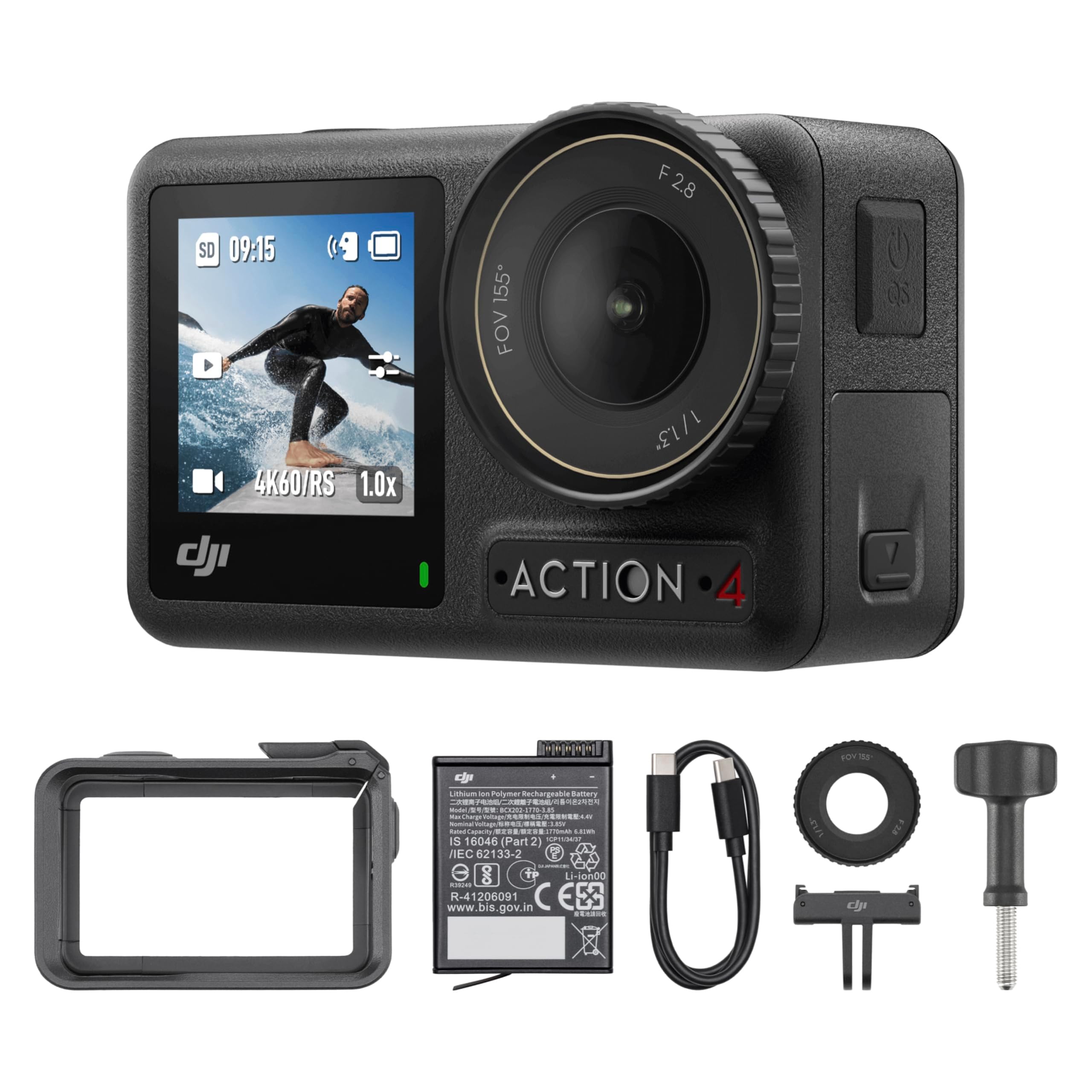
DJI Osmo Action 4

94 /100
Keeper Score Outstanding

Key details

Sensor Size
1/1.3-inch
Battery Life
160 minutes
Video Resolution
4K/120fps
Water Resistance
Waterproof
Check Price on Amazon

The Action 4 is the camera we hand to someone who wants good underwater video without paying flagship money. Its 1/1.3-inch sensor and 155-degree lens gave us clean 4K/120 footage and a wide view that fits a snorkel mask and a reef in the same frame. The 160-minute battery is the number that matters on a boat day, and the cold-resistant design means it does not sulk in a snowbank or a cold pool.

We used the magnetic quick-release more than any other feature. It snaps between a chest mount, a tripod, and a pocket in seconds, and the dual touchscreens make it easy to frame without kneeling in the sand. The stabilization is strong enough that we stopped carrying a gimbal for casual walking shots.

The app took a few tries to pair with an iPhone; once connected it was fine, but do not count on instant transfers. For everything else, the camera felt like a tool we could trust.

Pros

  • 1/1.3-inch sensor
  • 4K/120 video
  • 160-minute battery

Cons

  • Can run warm in long 4K takes
Our verdict

The Action 4 is the value pick we hand to friends: a 1/1.3-inch sensor, 4K/120 video, and a 160-minute battery without flagship pricing.

Check Latest Price
5

Best Budget Action Camera

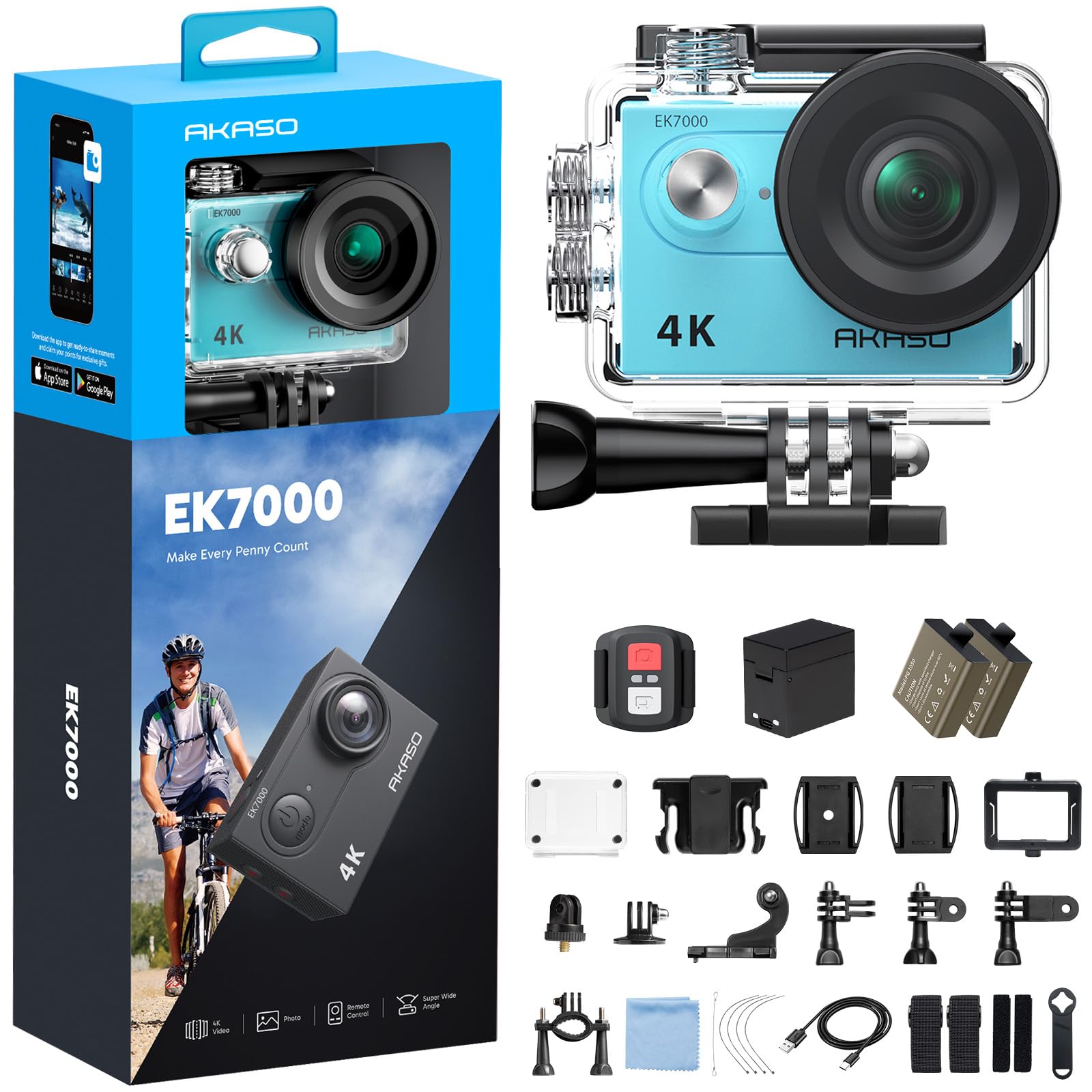
AKASO EK7000

89 /100
Keeper Score Excellent

Key details

Stabilization
EIS
Photo Resolution
20MP
Video Resolution
4K30fps
Waterproof Depth
131 ft (with case)
Check Price on Amazon

The EK7000 arrives like a starter pack: two 1050mAh batteries, a dual charger, a 2.4G wrist remote, and a fistful of mounts. The 4K30 and 20MP modes are good enough in bright water, and the 131-foot case means you can take it down without buying a housing. The wrist remote is the sleeper feature: you can start a clip while the camera is on a helmet or a selfie stick.

For a first action camera or a kid's snorkel trip, we think that completeness matters more than a tenth of a stop of dynamic range. The electronic stabilization is not in the same class as the DJI cams here, so we kept our movements smooth and used the wide view to our advantage. In good light, the footage looks better than the price suggests.

The case is the trade-off. It keeps the camera dry, but it muffles audio and adds a layer of plastic between you and the scene, so we kept a microfiber cloth in the kit. If you want one camera for the whole family to share, this is the least precious way to do it.

Pros

  • Complete accessory kit
  • 131ft waterproof case
  • Wrist remote control

Cons

  • Battery life is short at 4K
Our verdict

We think the EK7000 is the easiest first action camera here: it comes with two batteries, a wrist remote, and a 131ft case.

Check Latest Price
6

Simple Snorkeling

YISENCE 4K Underwater Camera

89 /100
Keeper Score Excellent

Key details

Battery Life
70 minutes
Photo Resolution
64MP
Video Resolution
4K
Waterproof Depth
16 ft
Check Price on Amazon

A waterproof camera that floats is a small thing until you watch a kid drop one off a dock. The YISENCE's floatable body is designed to keep it on the surface, and the dual screens made selfies and group shots much easier to frame. It is rated to 16 feet, so it is a surface-snorkeling camera, not a dive camera.

The 4K video and 64MP photo modes are the headline, and in bright pool water and shallow reef the footage looked clear and colorful. Autofocus was quick enough for kids and fish, and the 32GB card in the box meant we could shoot right away. The front screen is the feature we came back to most; it turns a selfie into a two-second check instead of a guess.

For a family trip or a first underwater camera, we think the YISENCE is a friendly choice: it is light, the buttons are simple, and you will not spend the whole vacation worried about it. The 70-minute battery is the main limit, so pack a power bank for a full day. It will not replace the Osmo Action 6 for video quality, but it does not need to.

Pros

  • Floatable body
  • Dual screens
  • 32GB card included

Cons

  • Low-light images are soft
Our verdict

We like the YISENCE for shallow snorkeling and pool days: it floats, has two screens, and costs little enough to hand to a kid.

Check Latest Price
7

Rugged Stills

Ricoh WG-80

82 /100
Keeper Score Excellent

Key details

Optical Zoom
5x
Photo Resolution
16MP
Video Resolution
1080p
Waterproof Depth
14 m
Check Price on Amazon

Six little LEDs ring the WG-80's lens, and that's the detail that makes it more than a cheaper TG-7. The macro lights let us shoot shells, pool tiles, and wet rocks without casting a shadow from the camera body, and the 5x optical zoom gives you more reach than the fixed-lens action cams here. The body is waterproof to 14 meters for up to two hours, shockproof, and freezeproof.

The 16MP stills have a crisp, contrasty look in good light, and the underwater mode does a reasonable job of pulling color back into shallow water. We liked the dedicated macro setup more than we expected; it turns a tide pool into a subject instead of a background.

The international version is the practical hitch: check the warranty situation before you buy, because service may be different from a U.S.-market camera. If that checks out, the WG-80 is a specialized tool rather than a do-everything camera.

For a stills-first trip, we think it earns its place: the macro lights are genuinely useful, the 5x zoom is more flexible than a wide-angle action lens, and the rugged body can take a knock. If you want one camera for both stills and video, the TG-7 is the better all-rounder; if close-ups are the point, the WG-80 is the one we reach for.

Pros

  • Six macro lights
  • 14m waterproof body
  • 5x optical zoom

Cons

  • No 4K video
  • Heavier than action cams here
Our verdict

We recommend the WG-80 for close-up stills in wet, gritty places; it's a sturdy alternative to the TG-7 if you don't need 4K video.

Check Latest Price

How We Tested Waterproof Cameras

We started with a spreadsheet of every waterproof camera stocked by the major retailers, then narrowed it by sensor size, depth rating, battery runtime, stabilization, mount compatibility, and price band. That cut the field to 11 cameras, running from budget point-and-shoots to premium action cams we mounted on helmets and handlebars.

Then we got them wet. Each one spent time in a backyard pool, came along on a snorkel through a spring-fed swimming hole, and rode on a kayak deck through two splashy afternoons. We also submerged every camera for 30 minutes at its rated depth in a stock tank, then opened the battery door and looked for water sitting in the gasket channel or fog behind the lens. Durability got the clumsy treatment: waist-high drops onto tile, a pocketful of beach sand, and an overnight stay in a freezer set to zero.

Between outings we shot the way people actually shoot — one-handed, in gloves, on a moving boat — and counted the button presses it took to change a setting or start recording. Battery life was measured by recording continuously until each camera shut down, and connectivity by timing a card's worth of clips transferring to a phone over Wi-Fi. We also emptied every box and tallied what came inside: mounts, cases, spare batteries, and whether the mount used the standard finger-style fitting.

Footage went to a desktop for side-by-side comparison in good light, murky water, and after dark, watching for color shift, jitter while panning, and how much detail survived the underwater blue cast. Value was the final filter. A camera only stayed on the list if what it delivered above and below the surface justified the money.

How to Choose a Waterproof Camera

Start With the Depth Rating, Not the Word Waterproof

Waterproof is a category, not a guarantee. A 16-foot compact is for surface swimming and shallow snorkeling; a 15-meter point-and-shoot like the TG-7 covers recreational snorkeling with margin; action cameras often rely on a case for their deepest ratings. Check both depth and time, and leave room for a dropped camera or a wave. A case adds protection but muffles audio and needs its own gasket care. Before any trip, clean the seal, lock the door, and do a shallow test.

Choose Between an Action Camera and a Rugged Compact

Action cameras win on video: wide views, stabilization, mounts, and no-case waterproofing on many models. Rugged compacts win on stills: optical zoom, macro modes, flash, and physical controls that are easier to use with wet hands. If your trip is about clips of swimming, biking, or snorkeling, start with an action camera. If you want close-ups of tide pools and prints, the TG-7 or WG-80 makes more sense. The X5 sits apart as a 360 camera for people who want to reframe later.

Look Past Megapixels to Sensor Size and Aperture

A 64MP badge on a tiny sensor does not beat a 12MP camera with a good lens and underwater color modes. Sensor size and aperture decide how much light the camera can use, which matters more as you go deeper or shoot at dusk. A 1/1.3-inch action sensor is a meaningful step up from the smallest compacts, and a variable aperture like the Action 6's gives you more control. Use the underwater white-balance mode, get close, and add light if you can.

Plan for Battery, Heat, and Storage

Runtime claims are best-case numbers. Cold water, high frame rates, and screen brightness all pull them down, and small action cameras can run warm during long 4K or 8K takes. Carry a spare battery, lower the resolution when you are not cropping, and turn off Wi-Fi between transfers. Built-in storage like the Action 6's 50GB is useful for the first day, but you still need a fast card for longer trips. Offload footage nightly rather than betting on one card.

Try the Controls Before You Get Wet

The best camera is the one you can operate with wet hands. Look for big buttons, a screen that stays readable in sunlight, and a menu you can learn before the trip. Action cameras tend to be simpler; the TG-7's deeper menus reward practice but are not one-button friendly. Check the mount, too: a magnetic quick-release is faster on a boat, while a case-and-screw mount is more secure for impacts. Set up your modes at home, then practice with gloves on.

Frequently Asked Questions

Final Verdict

The DJI Osmo Action 6 is the waterproof camera we recommend first. It has the strongest combination here of video quality, stabilization, battery life, and built-in storage, and it is the one we pack for a trip where the camera will get wet and keep moving.

If your trip is about stills and close-ups, the OM System TG-7 is the better tool, with a 1cm macro mode and a body that shrugs off drops and cold. If you want the same action-camera idea for less, the DJI Osmo Action 4 is the value pick.