Best Vlogging Cameras of 2026

A vlogging camera is really three things bolted together: a sensor that decides how the footage looks, a stabilizer that decides whether anyone can watch it, and a screen you can see yourself in while you talk. Get one of those wrong and you'll spend an afternoon re-shooting the same three-minute clip. I've done that on a windy pier, which is why I now care more about autofocus and battery life than megapixels.

My team and I have spent the past six months carrying 12 of these cameras around — in jacket pockets, on bike handlebars, on tripods in a dim kitchen at 11 p.m. — and the differences are not subtle. A few were a genuine pleasure to shoot with. One or two made me want to leave them on the pier.

First-time buyers overrate resolution and underrate how a camera behaves when the light drops, plus how long it runs away from an outlet. Small is lovely, but only if the controls still make sense in your hand. Each pick below earned its spot on footage, ease of use, reliability, and value.

Keeper Score summarizes customer ratings and review volume. Read it alongside the product details and trade-offs. How the score works.

1

Best Overall

DJI Osmo Pocket 3

89 /100
Keeper Score Excellent

Key details

Video
4K/120fps
Screen
2-inch rotatable touchscreen
Sensor
1-inch CMOS
Stabilization
3-axis mechanical gimbal
Check Price on Amazon

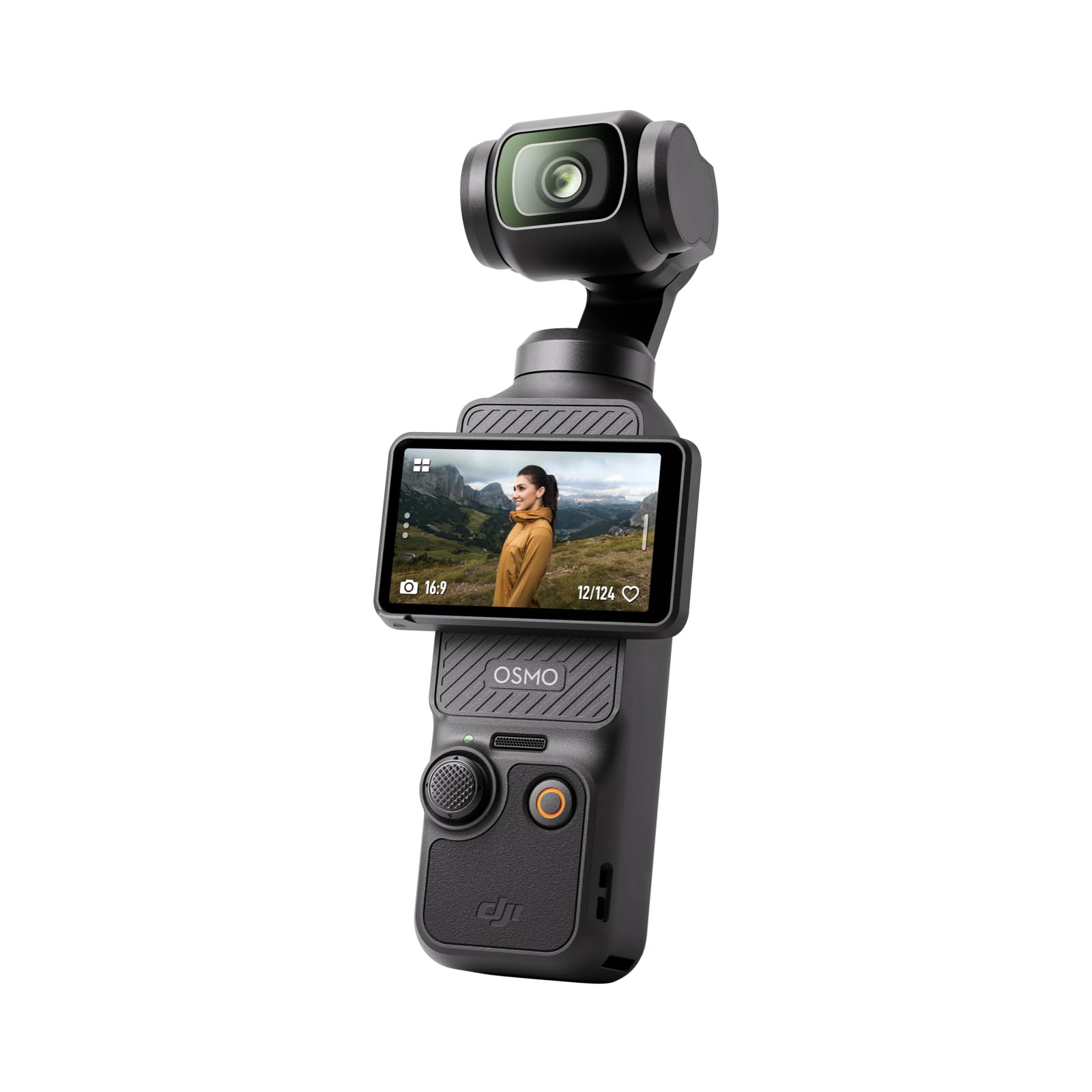
The Osmo Pocket 3 makes its case the first time you walk while talking to it. The three-axis gimbal absorbs the bounce that turns phone footage into a shaky mess, and the 1-inch sensor keeps the frame cleaner when the light drops. We also like that the 2-inch screen rotates rather than flipping out, so self-framing stays compact in horizontal or vertical shooting.

The 4K/120 mode is there when you want slow motion, but the everyday win is how little effort the camera takes. ActiveTrack keeps a subject centered on a tripod, and the autofocus locks on quickly enough for a moving vlog. The 20mm wide lens leaves room for a second person at arm's length. At 179 g it goes into a jacket pocket without a bag, which is the difference between carrying a camera and leaving it at home.

The caveat is long-term reliability. There are units that stop powering on or develop gimbal faults, so buy from a seller with a clear return window and test the gimbal in the first week. The built-in battery is rated at 166 minutes; a long day still calls for a power bank. Those are real ownership notes, not reasons to overlook the best all-around vlogging camera here.

Pros

  • Gimbal-smooth walking shots
  • 1-inch sensor handles low light
  • Rotating screen suits vertical video
  • Pocketable at 179 g

Cons

  • No weather sealing
  • Premium price for a pocket camera
Our verdict

Our top pick for solo vloggers, the Pocket 3 pairs a 1-inch sensor with a true three-axis gimbal and a rotating screen that makes self-framing feel effortless.

Check Latest Price
2

Best 1-Inch Value

Xtra Muse

88 /100
Keeper Score Excellent

Key details

Video
4K/120fps
Screen
2-inch touchscreen
Sensor
1-inch CMOS
Stabilization
3-axis gimbal
Check Price on Amazon

The Xtra Muse is openly built around the Pocket 3 formula: a 1-inch sensor, a three-axis gimbal, a 2-inch touchscreen, and 4K/120 video. The first difference we noticed is weight. At 281 g it feels more substantial in the hand, but it is not as easy to slide into a jeans pocket as the DJI. The screen still switches between horizontal and vertical, which suits social clips.

That trade is easier to accept when you look at the footage tools. The Muse records 10-bit X-Log, which gives more room to grade color than most budget pocket cameras, and the gimbal does the same job of smoothing a walking shot. We think it is the value pick for someone who wants 1-inch footage and gimbal stability without paying top-pick money.

The compromises are practical. It does not work with DJI's wireless mic system, so you need a mic that connects through its own input. The rated 161-minute battery is an upper bound rather than a promise for a full 4K shoot, and the 2-inch screen is fine for framing but not a substitute for a larger monitor. For a first gimbal camera, those are manageable; for a daily carry, the weight is the thing to feel before you commit.

Pros

  • 1-inch sensor and 4K/120 video
  • 3-axis gimbal steadies handheld shots
  • 10-bit X-Log for grading
  • Lower price than the top pick

Cons

  • No DJI wireless-mic compatibility
Our verdict

We reach for the Xtra Muse when the Pocket 3 formula is right but the budget is tighter: 1-inch footage, a 3-axis gimbal, and 10-bit X-Log.

Check Latest Price
3

Best for Wide Selfies

Sony ZV-1F

90 /100
Keeper Score Outstanding

Key details

Lens
20mm ultra-wide
Audio
3-capsule directional mic
Screen
3-inch side-articulating touchscreen
Sensor
1-inch CMOS
Check Price on Amazon

The Sony ZV-1F earns its place with one lens choice: a 20mm ultra-wide that fits you and a friend at arm's length without a selfie stick. The side-articulating screen flips out so you can see yourself, and the 1-inch sensor with an f/2 lens gives the camera more low-light headroom than the small-sensor budget picks. We like that it feels like a camera rather than a gadget.

The trade is stabilization. Sony uses digital stabilization here, so a walking shot still needs a careful hand; this is not the gimbal-smooth footage you get from the Pocket 3. The 3-capsule directional mic is a genuine help for talking-head clips, and the wind screen is the sort of small accessory that makes outdoor vlogging less frustrating. The 3-inch touchscreen is easy to frame with, and the controls are friendly to a first-time vlogger.

Battery life is the weak point. Plan on a spare for a long day, especially if you are shooting 4K rather than short clips. If your vlogs are seated or on a tripod, the stabilization gap matters much less. The ZV-1F is the traditional-camera choice for a beginner who wants a wide selfie lens and simple controls, not the most stable walking camera here.

Pros

  • 20mm lens fits arm's-length selfies
  • 1-inch sensor and f/2 aperture
  • Side-articulating screen
  • Directional 3-capsule mic

Cons

  • Fixed lens, digital zoom only
  • No built-in viewfinder
Our verdict

For arm's-length selfies and a familiar camera body, we pick the ZV-1F; its 20mm lens and side-flipping screen make solo framing simple.

Check Latest Price
4

Best Premium 8K

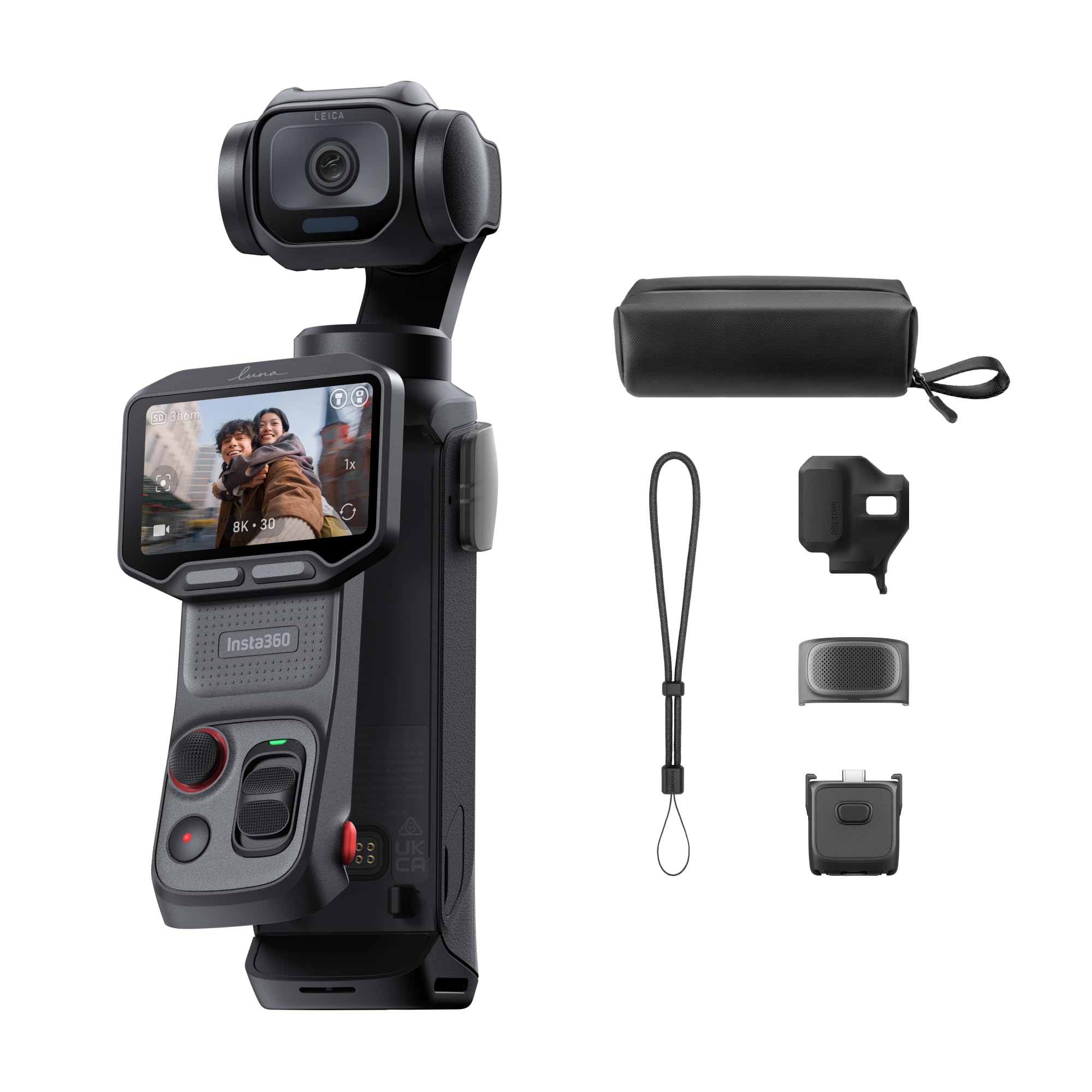
Insta360 Luna Pro

92 /100
Keeper Score Outstanding

Key details

Video
8K/30fps Dolby Vision
Screen
Detachable 2-inch OLED touchscreen
Sensor
1-inch 8K
Battery
4-hour runtime
Check Price on Amazon

The Insta360 Luna Pro's detachable screen is not a gimmick. You can set the camera on a tripod and use the 2-inch OLED as a remote preview and control from up to 20 m away, which is exactly what solo vloggers need when the camera is not in arm's reach. It also twists for vertical 4K30 capture, so the frame is ready for social without a crop.

The rest of the kit is premium: a 1-inch 8K sensor, 8K30 with Dolby Vision, 14 stops of dynamic range, Leica color profiles, and 4x HighRes zoom. The 4-hour rated runtime is the number we care about most, because a camera that runs out mid-shoot is not a camera you trust. The 2x lossless and 4x HighRes zoom let you reframe without moving the tripod, and the image pipeline gives you more room to crop and grade than the 4K pocket cameras here.

The Luna Pro is still a single-lens camera, so it cannot match the Luna Ultra's telephoto reach. For most solo vloggers, though, the combination of a remote screen, long runtime, and 8K detail is the premium package that makes the most sense.

Pros

  • Detachable 2-inch OLED screen
  • 8K30 Dolby Vision footage
  • Rated four-hour runtime
  • Leica color profiles

Cons

  • 8K files demand storage and processing
  • Detachable screen adds a part to manage
Our verdict

The Luna Pro is what we choose for premium vlogging: 8K detail, a detachable screen, and a rated four-hour runtime in one pocketable body.

Check Latest Price
5

Best Budget Pocket

Lmzour 4K Vlogging Camera

85 /100
Keeper Score Excellent

Key details

Lens
330-degree rotating
Screen
1.72-inch touchscreen
Sensor
1/2.5-inch CMOS
Battery
1.5 hours
Check Price on Amazon

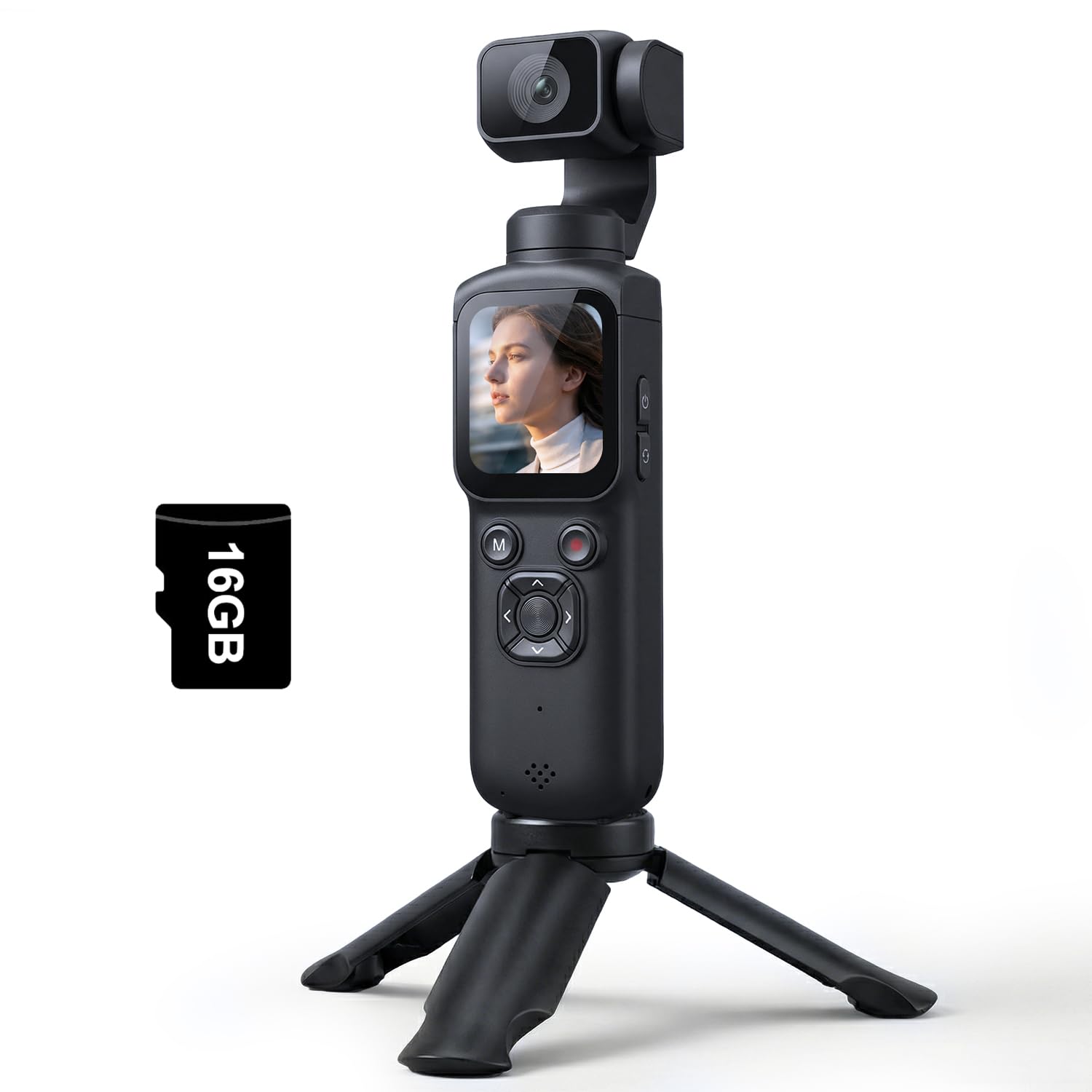
The Lmzour is a budget camera that gets the self-filming part right. Its lens rotates 330 degrees, so you can point it at yourself without flipping the whole body around, and the 1.72-inch touchscreen gives you enough of a preview to check framing. It is not a pocket gimbal in the DJI sense, but the rotating head is the useful idea.

At this end of the market, that design matters more than the resolution badge. The Lmzour records 4K, uses digital stabilization, and comes with a 16GB card, mini tripod, and carrying bag, so a beginner can start without another shopping list. We think it is the right pick for casual travel clips, social posts, and someone who wants to try vlogging before spending on a 1-inch camera.

The limits show up in low light and movement. The 1/2.5-inch sensor needs a bright room or daylight, and digital stabilization cannot smooth a full walking stride the way a mechanical gimbal can. At 360 g it is heavier than the pocket cameras here, and the 1.5-hour battery rating means a power bank is sensible. For short, well-lit clips, those are fair trade-offs.

Pros

  • 330-degree rotating lens
  • Simple 4K pocket setup
  • Includes card, tripod, and bag
  • Affordable entry point

Cons

  • Small sensor struggles in low light
  • Digital stabilization only
Our verdict

We see the Lmzour as the low-cost way into self-filming, with a rotating lens and simple 4K setup that suit casual, well-lit clips.

Check Latest Price
6

Best Starter Bundle

Yatao 6K Vlogging Camera

79 /100
Keeper Score Very Good

Key details

Lens
Dual lens, 16x digital zoom
Video
6K
Screen
3-inch 180-degree flip
In The Box
Microphone, fill light, 64GB card
Check Price on Amazon

The Yatao arrives as a box of answers for a first-time vlogger: the camera, a 64GB card, two batteries, a microphone, a bi-color fill light, and a lens hood. That bundle is the point. Instead of matching a camera, card, mic, and light one by one, you can open the box and start filming.

The 3-inch screen flips up 180 degrees for selfies, and the dual-lens setup covers a wide view plus a macro option. WiFi handles transfers, and USB-C webcam mode is useful if you also want to stream. The 16x digital zoom is a convenience, not a reason to buy; digital zoom softens quickly.

We think the Yatao makes sense for beginners who value the included mic and light more than a large sensor. The 1/2.7-inch chip is the limiter: low-light clips get noisy, and the footage will not have the depth of the 1-inch cameras. Battery life is another area to manage, though the second battery in the box helps. The 6K resolution is the headline, but the flip screen and included audio gear are what make it easier to publish a first video.

Pros

  • Includes mic, fill light, and 64GB card
  • 180-degree flip screen for selfies
  • Two batteries in the box
  • USB-C webcam mode

Cons

  • Small sensor limits low-light quality
  • Digital zoom only
Our verdict

Our starter-kit recommendation is the Yatao: the included mic, fill light, two batteries, and flip screen remove the usual first-purchase headaches.

Check Latest Price
7

Budget 5K

VENOPTIX 5K Pocket Camera

83 /100
Keeper Score Excellent

Key details

Video
5K
Screen
2.2-inch rotating touchscreen
Battery
90+ minutes
Stabilization
Dual-axis gimbal
Check Price on Amazon

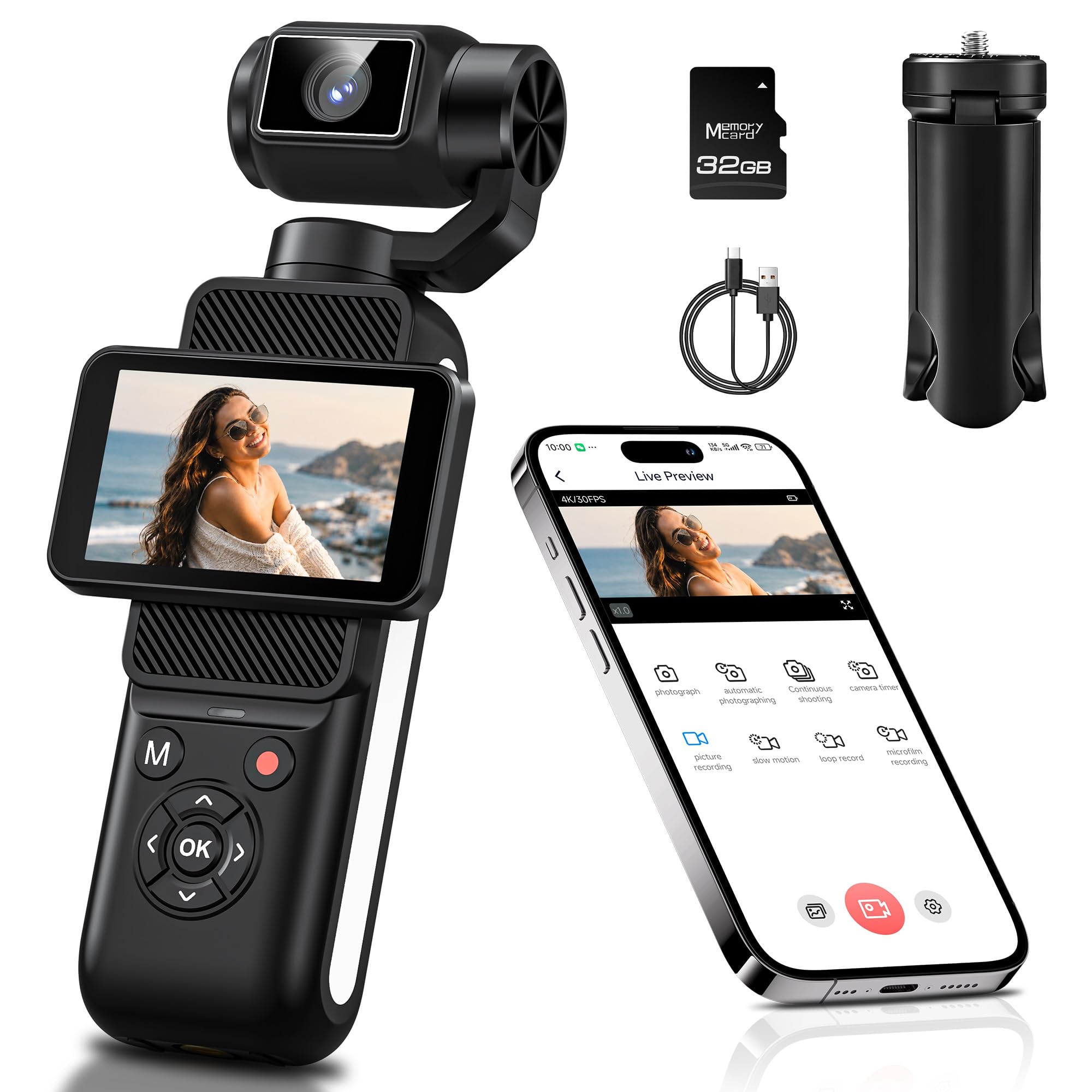
The VENOPTIX 5K is built around a rotating head: the lens turns 330 degrees horizontally and 120 degrees vertically, so you can frame yourself without moving the camera body. That is the feature that makes a budget pocket camera feel purpose-built for vlogging, and it is paired with a dual-axis gimbal and 6-axis gyro.

The 2.2-inch touchscreen rotates up to 90 degrees, which helps with low-angle and portrait framing. At 180 g it is light enough to carry all day, and the kit includes a 32GB card and a tripod. The removable 1550mAh battery is rated for more than 90 minutes of recording.

The 1/2.5-inch sensor is the limiter. In good light the 5K footage has detail, but indoors or at dusk it will not match a 1-inch camera, and the 18x digital zoom is best left alone. We also treat the 5K badge as a capture option rather than a reason to shoot everything at maximum resolution; the files get large fast.

We think the VENOPTIX is a smart budget step-up for someone who wants the rotating-lens convenience and a stabilized pocket camera, as long as most filming happens in decent light. It is not the pick for audio-first or low-light vlogging, but it gives the budget category a more capable feel.

Pros

  • Dual-axis gimbal and 330-degree rotation
  • 5K video capture
  • 2.2-inch rotating touchscreen
  • Includes 32GB card and tripod

Cons

  • Small sensor is for good light
  • Digital zoom only
Our verdict

We like the VENOPTIX for budget shoppers who want 5K and a rotating gimbal lens, provided most of the filming happens in good light.

Check Latest Price
8

Long-Range Zoom

Insta360 Luna Ultra

87 /100
Keeper Score Excellent

Key details

Zoom
12x, 6x lossless
Video
8K/30fps Dolby Vision
Screen
Detachable 2-inch touchscreen
Sensor
1-inch main + 1/1.3-inch telephoto
Check Price on Amazon

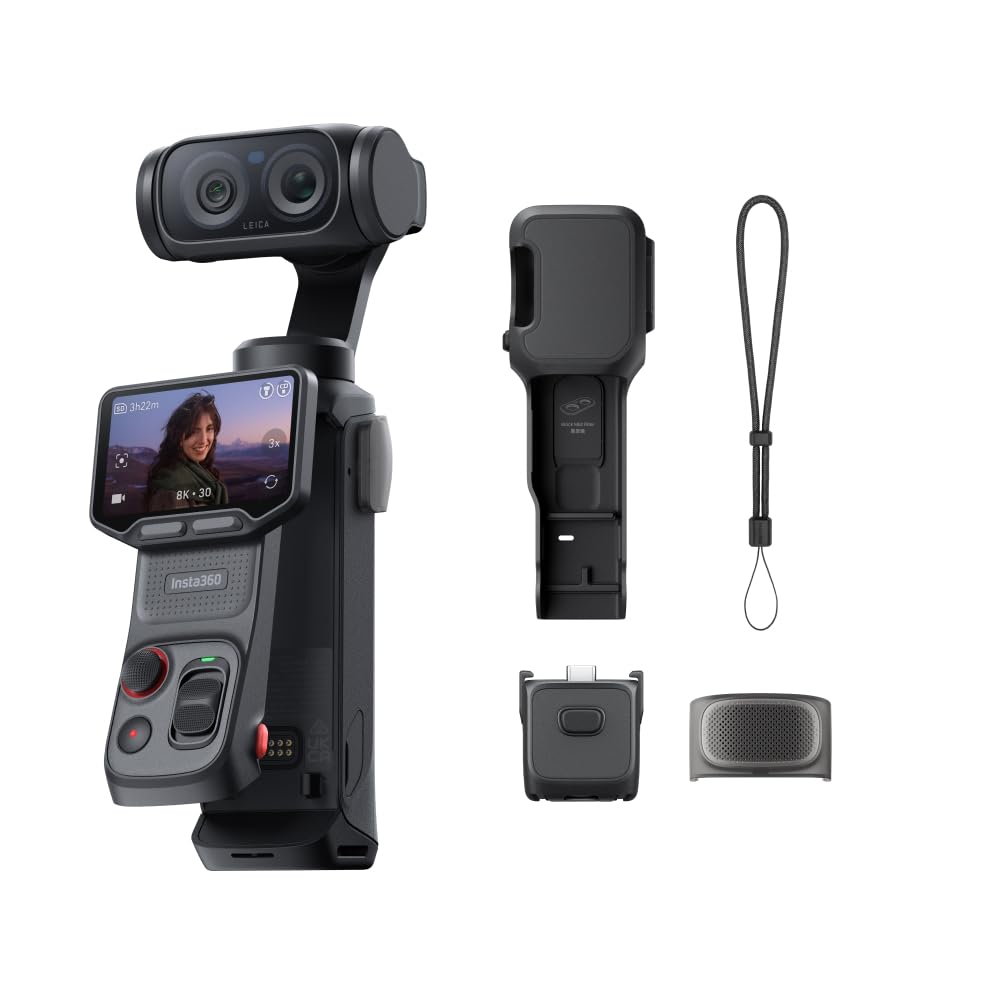
The Luna Ultra's second lens is the reason to look at it. A 1-inch main sensor is paired with a 1/1.3-inch telephoto, giving 6x lossless and 12x total zoom. For travel, events, or any vlog where you want to punch in without walking closer, that reach is a genuine advantage over the single-lens Luna Pro.

The rest of the package is equally ambitious: 8K30 with Dolby Vision, 14 stops of dynamic range, Leica color profiles, and a detachable 2-inch touchscreen that can be used remotely. The image quality is the headline, and the dual-lens setup makes the Ultra feel more like a compact production camera than a one-trick vlogging gadget.

The cost is size and power. The extra lens makes it bulkier than the Pro, and battery life is one of the areas that can fall short on a long shoot, so a power bank or a shorter shot list is sensible. The 12x zoom is useful, but the 6x lossless range is where the image holds up best.

We think the Ultra is the pick for vloggers who know they need reach. If your videos are mostly talking-head clips and walk-and-talk, the Luna Pro's longer runtime and simpler single lens make more sense. The Ultra earns its place when the shot depends on getting closer without moving.

Pros

  • Dual Leica lenses with 12x zoom
  • 8K30 Dolby Vision video
  • Detachable touchscreen remote
  • 14 stops dynamic range

Cons

  • Battery life can fall short
  • Extra lens adds bulk
Our verdict

Choose the Luna Ultra if your vlogs need reach; we think its dual Leica lenses and 12x zoom justify the extra bulk for travel and event work.

Check Latest Price

How We Chose and Tested These Vlogging Cameras

We started with a running list of every pocketable vlogging camera we could find, then narrowed it to models that shoot at least 4K, build stabilization in rather than selling it as an add-on, and give you a screen you can frame yourself in. That filter alone cut the field roughly in half. Twelve cameras made it through, spanning the price range most people shopping this category actually consider, and each one became our only camera for at least two weeks so nothing got a single flattering afternoon.

In practice that meant walking-and-talking takes on sidewalks and through a farmers' market, filming while riding a bike over brick, propping each camera on a kitchen counter at night to see how the footage held up once the overheads were off, and stuffing it into a jacket pocket between shots. We watched for autofocus hunting when someone crossed behind us, gimbal drift on slow pans, and how much of our face the tracking lost when we turned away.

We also timed battery life by recording continuously at the highest frame rate each camera offered until it shut down, and logged whether it could charge over USB while shooting. Reliability showed up in smaller ways: an app that dropped the file transfer half the time, a screen that washed out in direct sun, a stabilization mode that fought the pan we were trying. For compatibility we checked mounts, card formats, and whether the thing worked as a webcam when a laptop was all we had. Anything we couldn't trust on a second outing didn't make the list.

How to Choose a Vlogging Camera

Put Sensor Size Before Resolution

Resolution is the easiest number to advertise and the least useful place to start. A 1-inch sensor gives you cleaner footage indoors and at dusk, plus more separation between you and the background; the DJI Osmo Pocket 3, Sony ZV-1F, Xtra Muse, and both Insta360 models use one. The Lmzour, Yatao, and VENOPTIX rely on much smaller chips, so their 4K or 5K badges need daylight to look their best. If most of your vlogging happens in a living room or after work, put sensor size ahead of a higher resolution.

Match Stabilization to How You Move

Think about how much you move. A mechanical gimbal, like the three-axis systems in the DJI Osmo Pocket 3 and Xtra Muse, counteracts your stride and makes walking-and-talking footage look composed. Digital stabilization, used by the Sony ZV-1F and Lmzour, smooths some shake but often crops the frame and still leaves a visible bob. The VENOPTIX adds a dual-axis gimbal at the budget end. If your vlogs are seated, digital is fine; if you film while moving, a gimbal is worth the extra bulk.

Choose a Screen That Lets You Frame Yourself

The screen decides how easy it is to film alone. A rotating lens, as on the Lmzour and VENOPTIX, lets you point the camera at yourself without flipping the body. A side-articulating screen, like the Sony ZV-1F's, is familiar and easy to angle. A detachable screen, as on the Insta360 Luna Pro and Luna Ultra, is best when the camera sits on a tripod across the room. Check weight and a standard 1/4-inch tripod mount too; a camera that feels heavy after ten minutes will stay in the bag.

Budget for Power and Audio

Battery and audio are where budget vlogging kits separate themselves. Rated runtimes of 90 to 180 minutes sound generous until you shoot 4K continuously, so a spare battery or power bank belongs in the bag. The Yatao kit includes two batteries, a microphone, and a fill light; the Sony has a three-capsule directional mic; the Xtra Muse does not work with DJI's wireless mic system. If clean voiceover matters, confirm the mic input or wireless compatibility before you buy, not after.

Decide How Much Resolution You Actually Need

4K is the sensible baseline for vlogging. It gives you room to crop for vertical video and enough detail for most social platforms. Higher resolutions have their place: the DJI Osmo Pocket 3's 4K/120 is useful for slow motion, while the Insta360 Luna Pro and Luna Ultra push 8K for heavy cropping or larger displays. Those files need faster cards, more storage, and a computer that can edit them. Choose the higher resolution only when you know which shot or crop it unlocks.

Frequently Asked Questions

Final Verdict

Our default is the DJI Osmo Pocket 3. It puts a 1-inch sensor and a real three-axis gimbal in a pocketable body, and the rotating screen makes solo framing almost automatic. If you want a more traditional camera and a wider lens for arm's-length selfies, the Sony ZV-1F is the easier fit; if you want 8K and a detachable screen, the Insta360 Luna Pro is the premium step. Buy the Pocket 3 unless one of those specific needs pulls you away.