Best Full-Frame DSLRs of 2026

Full-frame DSLRs are heavy, loud, and widely eulogized, and they're still the cheapest route to a big sensor behind a proper optical viewfinder. The mirror is the moving part mirrorless cameras deleted, and it's why a DSLR runs a long weekend on one battery and why the used lens shelf is stacked with fast primes. What you get for the weight is cleaner files when light drops, blur that doesn't look computed, and autofocus that behaves the same every time you half-press.

I've spent the past ten months shooting with six full-frame DSLRs, from older value bodies to high-resolution flagships, and what decides it for me isn't on the spec sheet. Resolution gets headlines; what matters is whether a camera locks onto a kid running at you in a dim gym and clears its buffer before the next play.

One buying note before you scroll: most of these are sold body-only, and full-frame bodies either crop or reject the crop-sensor lenses you may already own. Price the glass you actually need and the math on each pick changes.

Keeper Score summarizes customer ratings and review volume. Read it alongside the product details and trade-offs. How the score works.

1

Best Overall

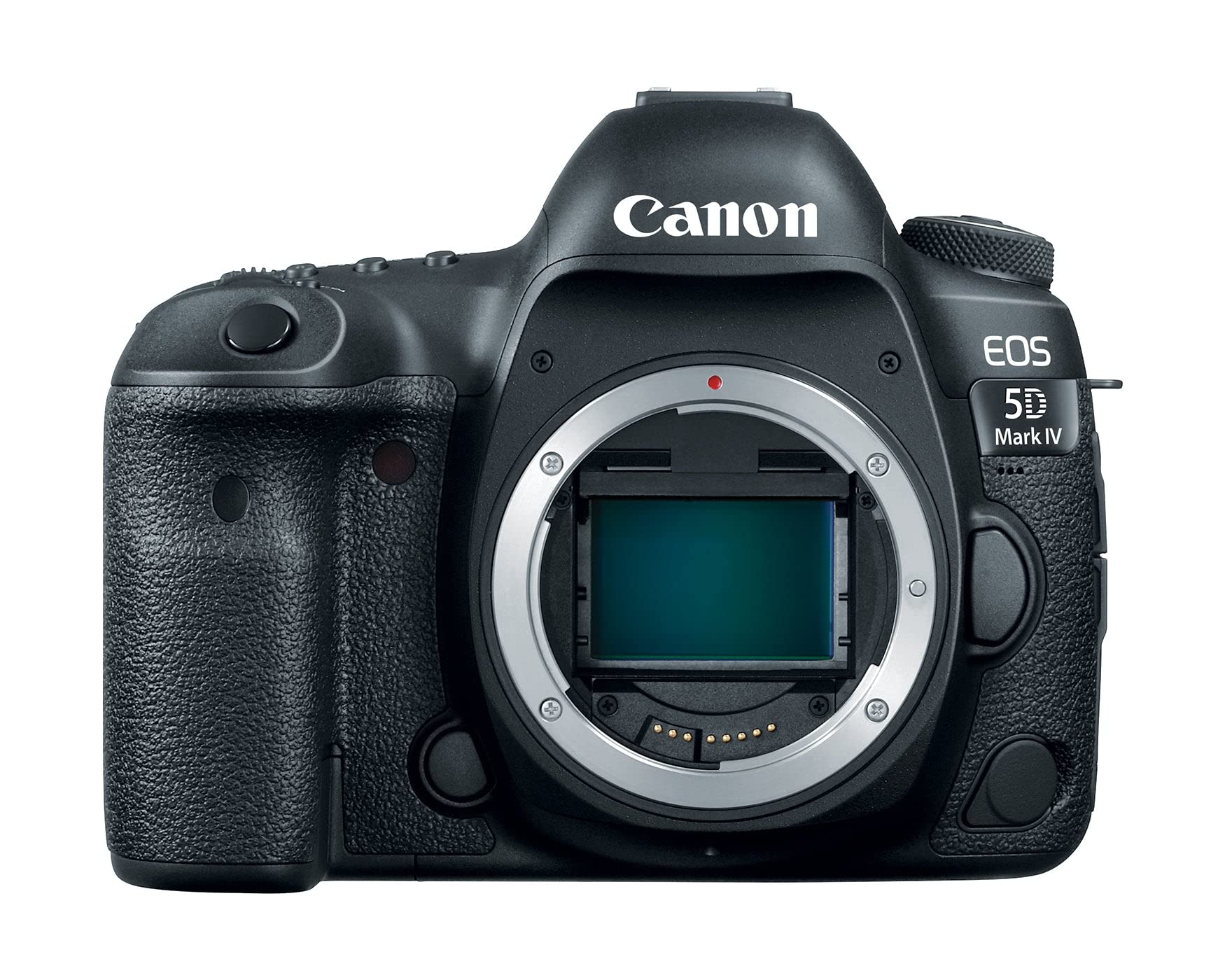
Canon EOS 5D Mark IV

92 /100
Keeper Score Outstanding

Key details

Video
4K 30p, HD up to 120p
Screen
3.2-inch touchscreen, fixed
Sensor
30.4MP full-frame CMOS
Autofocus
61 points, 41 cross-type
Check Price on Amazon

The 5D Mark IV costs about what the D850 does, and that comparison is the most useful thing to know going in: this isn't the cheaper camera, it's the more even-tempered one. A 30.4MP full-frame sensor, a 61-point autofocus module with 41 cross-type points, and 7 fps sit slightly behind the Nikon on resolution, and ahead of it on video and live-view focus, which is where most of the real difference between them lives.

That's the trade, and it's one we were happy to make. Dual Pixel autofocus makes the rear screen genuinely usable, both for stills on a tripod and for holding focus while recording, and the touchscreen moves a focus point faster than the joystick does. It records 4K at 30 or 24 fps, 1080p up to 60, and HD at up to 120 fps for slow motion. The 4K is Motion JPEG, so clips are big and capped at 30 minutes; bring more card space than feels reasonable.

Handling is the part we stopped noticing, which is the compliment. The grip is deep enough to hold a long lens without your wrist doing all the work, the controls land under your fingers after a day, and the viewfinder is big and bright. One CF slot and one SD slot let you write a backup while you shoot, and Wi-Fi gets files to a phone without a card reader.

High-ISO files are the quieter reason to choose it. ISO 12,800 holds together for web-sized images, and 30.4MP leaves room to crop a portrait without the file falling apart. It's also the one we hand to someone shooting a wedding and a video in the same afternoon.

Pros

  • Dual Pixel AF makes live view and video practical
  • 61 autofocus points, 41 of them cross-type
  • 4K video plus HD at up to 120 fps
  • Files hold up at ISO 12,800 for web use

Cons

  • Fixed rear screen with no tilt
  • Costs about the same as the 45.7MP D850
Our verdict

Our pick for most people: 4K video, dependable live-view autofocus, and a 30.4MP sensor that holds up in low light make it the most complete DSLR here.

Check Latest Price
2

Best for High Resolution

Nikon D850

92 /100
Keeper Score Outstanding

Key details

Burst
Up to 9 fps at full resolution
Video
1080p; 4K time-lapse only
Sensor
45.7MP full-frame BSI CMOS
Autofocus
153 points, 99 cross-type
Check Price on Amazon

Forty-five point seven megapixels is a lot of sensor to fill. With no low-pass filter in front of that backside-illuminated chip, the D850 resolves detail the other two bodies here can't touch, and it gives you the kind of crop room that turns one prime into two lenses. It's also unforgiving: put a weak lens on the front and you'll see exactly why the files are that big.

The autofocus is the other half of the argument. Nikon's 153-point module carries 99 cross-type points, more than either Canon here, and the body is rated to 9 fps at full resolution with full autofocus, numbers that make it as much an action camera as a landscape one. We spent most of our time with it on moving subjects, and the extra points earn their keep the moment something drifts toward the edge of the frame.

Then there's the screen, which tilts and takes touch, the handling feature we missed every time we picked the Canon back up. Two slots, SD alongside XQD or CFexpress, plus 8K time-lapse round out a very complete body. What it doesn't do is standard 4K: the D850 shoots 1080p, with 4K appearing in time-lapse only. If you were hoping to mix stills and video on one camera, that single omission settles it.

The one thing that gives us pause is durability. Some bodies have stopped powering on within a few months, which is an expensive failure on a camera in this class, so buy from a seller with a generous return window and work the camera hard in the week it arrives.

Pros

  • 45.7MP backside-illuminated sensor, no low-pass filter
  • 153-point autofocus with 99 cross-type points
  • Up to 9 fps at full resolution with AF
  • Tilting touchscreen is easier on a tripod

Cons

  • No standard 4K video, only 1080p capture
  • 45.7MP files are heavy to store and edit
Our verdict

For detail and autofocus reach nothing else here comes close, so buy it for stills and look elsewhere if video is part of the job.

Check Latest Price
3

Best Value

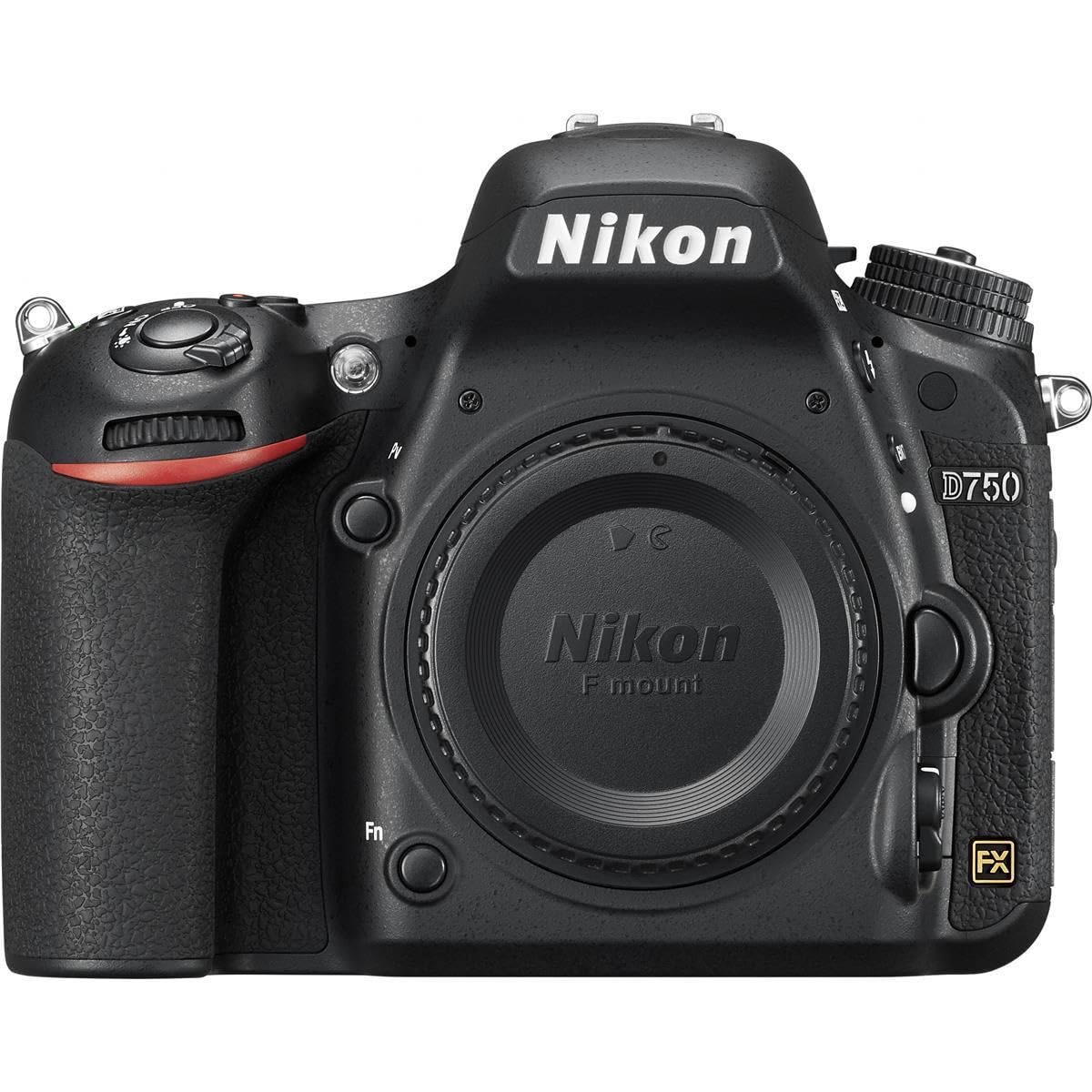
Nikon D750

91 /100
Keeper Score Outstanding

Key details

Video
1080p up to 60p
Screen
3.2-inch tilting, 1.23M dots
Sensor
24.3MP full-frame CMOS
Autofocus
51 points, 15 cross-type
Check Price on Amazon

The D750 is the cheapest way into full frame in this group, and nothing about picking it up feels like a concession: 24.3MP, a 51-point autofocus module with 15 cross-type points, 6.5 fps, and the lightest body of the three. If the thing holding you back has been the size and the outlay of a flagship camera, this is the one that answers both.

Low light is where it earns the money. The 51-point module locks in rooms where the alternative is switching to manual, and the sensor's sensitivity runs out to ISO 51200, high enough that a dim living room or a dark reception stops being the problem it used to be. Twenty-four megapixels is also, quietly, the sweet spot: enough to crop, not so much that a thousand-shot day buries your laptop.

The tilting 3.2-inch screen is the practical touch we appreciated most. It flips up for low angles without making you lie on the ground, and it's bright enough to check focus outdoors. Two SD slots and built-in Wi-Fi mean you can back up as you shoot and pull files straight to a phone. The shutter tops out at 1/4000 sec, a stop slower than the other two, so with fast glass in bright sun you'll want an ND filter, and that's the whole of the workaround.

Where it gives ground is action at distance: 6.5 fps is fine, but track a runner coming at you and the D850's 153 points and 9 fps are the surer bet. For portraits, events, travel, and a first full-frame body it's the one that keeps the whole kit affordable, and the money it saves goes into the lens that will outlive all three of these cameras.

Pros

  • Cheapest body here, with room left for glass
  • 51-point autofocus that holds up in poor light
  • Tilting screen, dual SD slots, built-in Wi-Fi
  • Lightest of the three bodies

Cons

  • 1080p video only, no 4K
  • Card-write errors and shutter faults have turned up
Our verdict

Our value pick: 24.3MP full-frame files, a 51-point autofocus module that holds in poor light, and the lightest body of the three.

Check Latest Price

How We Tested the Best Full-Frame DSLRs

We started with every full-frame DSLR still sold new or easy to find used, then crossed off anything with a discontinued mount, thin parts support, or a repair record owners complain about. Six bodies made the cut, from older value picks to current high-resolution flagships.

Testing ran ten months. The cameras went to a wedding reception and a school fundraiser, a season of kids' basketball in a gym lit like a parking garage, dusk sessions with a dog that won't sit still, two portrait sittings, and weekend hikes that ended in drizzle.

Image quality and low-light performance came from identical scenes shot on the same card: we pushed the raw files two stops to see where shadows went muddy and where color fell apart at high ISO. Autofocus was scored as a keep-rate, meaning how many frames out of a 30-shot burst of a kid sprinting at the lens came back sharp, first through the viewfinder and then in live view.

Performance meant timing how fast a full buffer cleared and how quickly each body woke up. For reliability, every camera rode in a shoulder bag for all ten months, got rained on at least once, and we logged shutter count and battery at the end of each shooting day; two needed a wet sensor clean, and we noted which dials and card doors loosened up. Value was scored last, against the glass each body requires to be useful.

How to Choose a Full-Frame Dslr

Resolution: how many megapixels change your day

The three bodies here run 24.3MP, 30.4MP, and 45.7MP, and the gap that matters is crop room rather than print size. A 45.7MP file lets you crop a landscape into a portrait and still have a usable image, but it also shows every weakness in a lens and fills a drive fast. Twenty-four megapixels covers a double-page spread and clears a buffer quickly.

Choose the higher figure only if you crop hard, print large, or work from a tripod with glass that can carry it. Otherwise the resolution you don't pay for is money you can put into a lens.

Two autofocus systems, and you only think about one

A DSLR focuses in two distinct ways, and that distinction matters more than the point count. Through the viewfinder a dedicated phase-detection module does the work: 61 points with 41 cross-type on the Canon, 153 with 99 cross-type on the D850, 51 with 15 cross-type on the D750. Cross-type points lock onto both horizontal and vertical detail, so their number is what counts at dim receptions and on moving subjects.

In live view and video the camera switches to sensor-based autofocus, which is a different system entirely. If most of your shooting is through the finder, judge the module; if you shoot video off the screen, judge that.

What 4K actually costs you

Only one of these bodies records standard 4K. The 5D Mark IV shoots it as Motion JPEG at 30 or 24 fps, which looks excellent and produces enormous clips with a 30-minute limit, so plan on fast, high-capacity cards and a lot of disk space. The D850 reserves 4K for time-lapse and otherwise shoots 1080p; the D750 tops out at 1080p at 60 fps.

If video is a real part of your work rather than an occasional clip, that single difference outweighs megapixels, burst rate, and everything else on this page.

The mount decides the budget

Every body here is sold without a lens, and full-frame glass will cost more than the camera does. That makes the mount the first decision rather than the last. Canon's EF and Nikon's F are both deep, mature systems with enormous used selections, but they aren't interchangeable, and changing brands later means replacing the expensive half of your kit.

If you already own lenses, the mount picks the body for you. If you don't, work out which system's mid-range zooms and fast primes you can afford to build around before you compare sensors.

Screens, size, and the rest of the handling

The two details you'll notice on every shoot are the screen and the grip. A tilting screen, which the D850 and D750 have and the 5D Mark IV doesn't, is what lets you shoot low angles and over a crowd without guessing, and touch makes moving a focus point much quicker.

Then weight: the D750 is the lightest of the three, and after six hours with a long lens that difference is real. Handle all of them if you can. The one whose controls you stop thinking about is the one you'll shoot best with.

Frequently Asked Questions

Final Verdict

The Canon EOS 5D Mark IV is our pick for most people: 30.4MP, a 61-point autofocus module, real 4K, and live-view autofocus that behaves. It's the most complete body here and the one that asks the fewest compromises of a photographer who also shoots video.

If you print large or crop hard, the D850's 45.7MP and 153-point autofocus are worth the same money and the missing 4K. And if the budget has to cover a lens too, the D750 leaves the most room and handles low light better than its position in this group suggests.