Best Full-Frame Compact Cameras of 2026

For years, full frame meant a body the size of a hardcover book and a bag with its own shoulder strap. The sensor that gives you clean shadows at ISO 6400 and that soft background at f/1.8 came with a tax on your back. Compact full-frame mirrorless cameras exist to cancel that tax — same big sensor, a body small enough that you stop debating whether to bring it.

I've hauled a full-frame body through enough airports to know the difference. Over eight months, my team shot with six of these cameras at family dinners, on weekend trips, and through one very dim wedding reception. What separated them wasn't megapixels — it was autofocus that held a subject's eye in bad light, and a menu you can navigate without cursing. Resolution is the spec shoppers overrate; the menu is the one they underrate, and you'll fight a bad one far more often than you'll need more pixels.

What follows is the short list I'd hand to a friend without a caveat, running from the easiest first full-frame body to the deliberately minimalist ones that ask a little more of you.

Keeper Score summarizes customer ratings and review volume. Read it alongside the product details and trade-offs. How the score works.

1

Best Overall

Sony Alpha 7C II

90 /100
Keeper Score Outstanding

Key details

Sensor
33.0MP full-frame CMOS
Weight
15.2 oz
Autofocus
759 points with AI subject recognition
Stabilization
5-axis sensor-shift
Check Price on Amazon

Thirty-three megapixels inside a body that disappears into a jacket pocket is the trick the a7C II pulls off, and nothing else in this group manages the same combination. The sensor and BIONZ XR processor are joined by a dedicated AI chip for subject recognition, which is what turns 759 autofocus points into tracking that holds a face, an eye, an animal or a vehicle while you get on with framing. Files this size let you shoot loose and crop later without the picture falling apart, and that's the practical version of a bigger sensor.

The size is paid for at the back of the camera. Viewfinder magnification is 0.70x against the Nikon Z 5's 0.8x, so manual focus takes more of a squint than it should, and Sony's menus take an evening to learn. Neither bothered us much once the custom buttons were set up. What your fingers find instead is the exposure compensation dial and the vari-angle screen, and the body balances a mid-size zoom well enough that you stop noticing the grip.

Video is where it pulls away from the cheaper bodies: 4K at up to 60p, 10-bit 4:2:2, no crop. The limits are honest ones. Continuous recording caps at 40 minutes, and the burst tops out at 10 frames per second, well behind the Canon EOS R8's 40 fps electronic shutter. If your subject is a running child or a striker, read the R8 entry before committing to this one.

Fit one of the compact f/2.5 primes and the whole kit vanishes into a shoulder bag; bolt on a 70-200 and the balance changes completely. That's the trade this camera offers, and it's the right one for anyone who wants a single body for a paid job on Saturday and a walk on Sunday.

Pros

  • 33MP full-frame sensor in a genuinely small body
  • AI-assisted subject recognition across 759 points
  • 10-bit 4:2:2 4K recording up to 60p
  • Five-axis sensor-shift stabilization

Cons

  • 0.70x viewfinder is modest beside the Z 5's 0.8x
  • Burst tops out at 10 frames per second
Our verdict

This is the compact full-frame camera we recommend to most people: 33 megapixels, dependable subject tracking and 10-bit 4K in a body that travels easily.

Check Latest Price
2

Best Value

Nikon Z 5

89 /100
Keeper Score Excellent

Key details

Sensor
24.3MP full-frame CMOS
Weight
1.3 lb
Autofocus
273-point hybrid, eye detection
Stabilization
5-axis sensor-shift
Check Price on Amazon

Two SD card slots and five-axis sensor-shift stabilization are the two things that make the Z 5 feel more expensive than it is. Around them sits a 24.3MP full-frame sensor, a 1/8000-second shutter, USB power delivery and 273-point hybrid autofocus that recognizes human, dog and cat eyes and keeps tracking them around the frame.

Stabilization is what we kept noticing. Handheld at dusk, sensor-shift buys back the shutter speed you'd otherwise have to find with a faster, heavier lens, and it does the same job for handheld video — which is exactly where the cheaper Canon EOS RP asks you to make a different choice. The body is the most comfortable of the six, too: real depth to the grip, dials that land under your thumb without looking, and enough mass to steady a zoom.

USB power delivery is the sleeper feature: a power bank keeps the camera running through a long timelapse or a slow afternoon away from an outlet. And because the Z 5 spends its money on stabilization and card slots rather than resolution, it's the one here that leaves the budget for the lens that actually makes the pictures.

Pros

  • Five-axis sensor-shift stabilization
  • Two SD card slots
  • USB power delivery while shooting
  • 273-point hybrid AF with animal eye detection

Cons

  • 4.5 fps burst is the slowest here
  • Tilting screen won't swing forward
Our verdict

We think of the Z 5 as the value pick of this group: stabilization, two card slots and the most comfortable body of the six.

Check Latest Price
3

Best for Video

Canon EOS R8

91 /100
Keeper Score Outstanding

Key details

Burst
40 fps electronic
Video
Uncropped 4K up to 60p
Sensor
24.2MP full-frame CMOS
Autofocus
Dual Pixel CMOS AF II, 1,053 zones
Check Price on Amazon

Dual Pixel CMOS AF II covers up to the whole frame with 1,053 zones and recognizes people, animals and vehicles, and the electronic shutter fires at 40 frames per second with that autofocus still working. Around it sits a 24.2MP full-frame sensor and DIGIC X processor, an OLED viewfinder refreshing at up to 120 fps, a vari-angle touchscreen, and uncropped 4K at up to 60p oversampled from 6K with Canon Log 3 for grading.

Forty frames per second isn't a number most people need, but it explains the camera. This is the one here built for subjects that won't hold still, with subject detection doing the tracking while you keep the framing. We're also glad Canon didn't crop the 4K or cap recording at half an hour: the R8 runs to two hours, which puts it in a different class from the EOS RP for interviews and events. It's Canon's lightest full-frame RF body, and it handles like something larger.

Heat is the thing to watch. A body this small has to shed the same workload as a bigger one, and long continuous takes are where a camera like this can call time on itself — run your longest realistic take once at home before you trust it on a paid job. Otherwise the R8 is the straight answer to what happens when you want to shoot both, with the most action-tuned autofocus of the group and the deepest video feature set, for less than the Sony pair.

Pros

  • Uncropped 4K at up to 60p
  • 1,053-zone Dual Pixel AF II with subject detection
  • 40 fps electronic burst

Cons

  • Battery life is short for a full day
Our verdict

Buy the R8 if your subjects move and your video matters: it has the deepest feature set here for both, in Canon's lightest full-frame body.

Check Latest Price
4

Best Travel Kit

Sony Alpha 7C

90 /100
Keeper Score Outstanding

Key details

Sensor
24.2MP back-illuminated full frame
Kit Lens
28-60mm collapsing zoom
Autofocus
693-point hybrid with eye tracking
Stabilization
5-axis sensor-shift
Check Price on Amazon

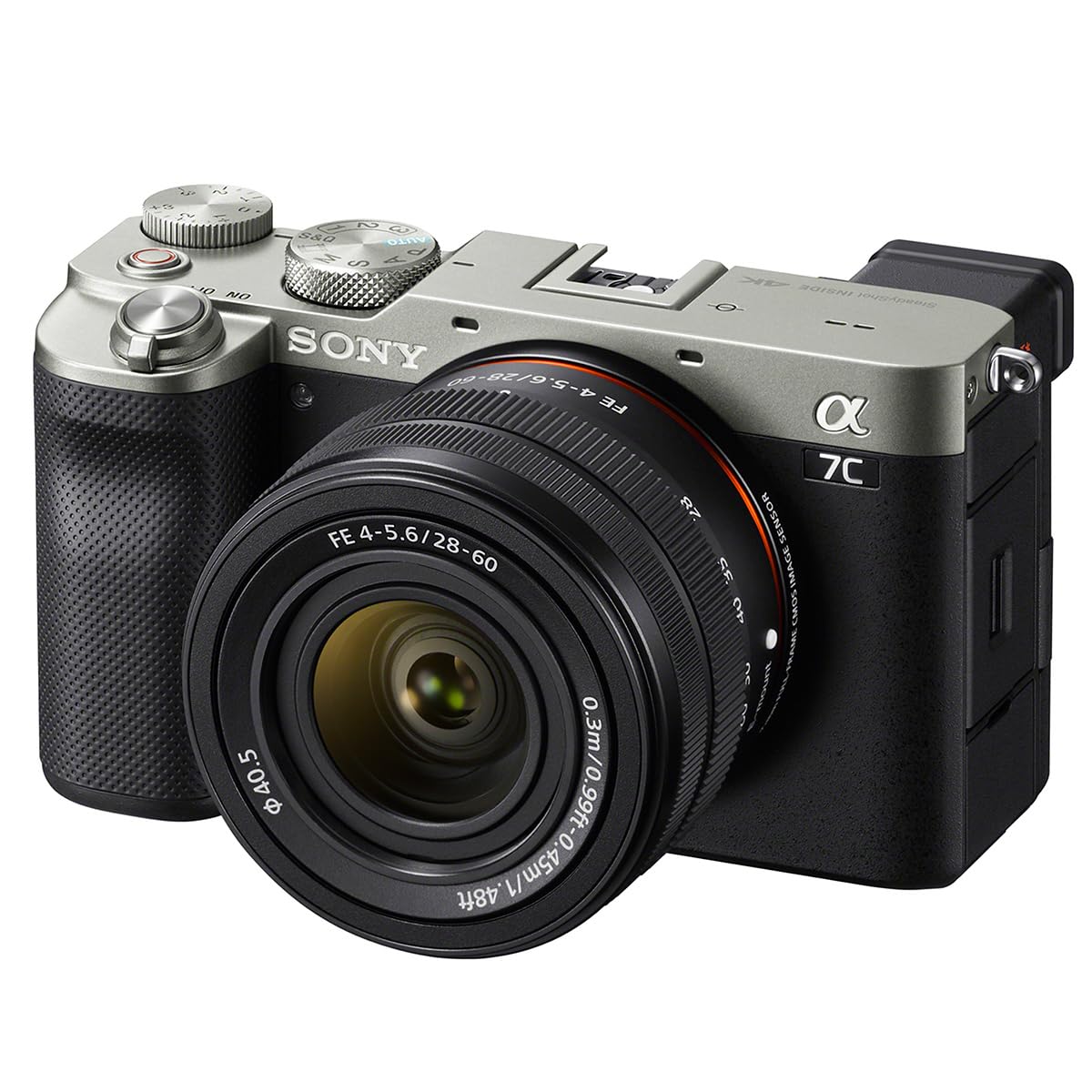
Sony built the a7C around a bet: a full-frame camera is only compact if the lens on it is compact too. The 28-60mm in this kit is the smallest full-frame standard zoom Sony makes, and it collapses toward the body when parked, so the pair covers wide to short telephoto without the usual bulge in a bag.

That's why it stays on this list while newer bodies come and go. Inside there's a 24.2MP back-illuminated sensor, five-axis stabilization, 693-point hybrid autofocus with real-time eye tracking, and 4K video with full pixel readout and no crop. The silver-and-black body is a matter of taste; what isn't is how little you notice carrying it. This is the camera we tuck into a sling when the point of the trip isn't photography.

The mark II above does more — more resolution, Sony's newer tracking, better video — and costs accordingly. If your output is stills, travel and the occasional clip, 24.2MP is more than enough, and the difference in money is a lens. What you give up is the newer processing rather than image quality, and on a camera this size that's a fair trade.

Pros

  • Collapsing 28-60mm kit zoom
  • 693-point hybrid AF with real-time eye tracking
  • Five-axis stabilization in the compact body

Cons

  • 0.59x viewfinder is the smallest here
  • Single card slot
Our verdict

Our travel pick: the collapsing 28-60mm turns full frame into something you can carry without thinking about it.

Check Latest Price
5

Budget Entry

Canon EOS RP

90 /100
Keeper Score Outstanding

Key details

Mount
Canon RF, EF/EF-S with adapter
Screen
3-inch articulating touchscreen
Sensor
26.2MP full-frame CMOS
Stabilization
Digital
Check Price on Amazon

The RP is the camera that shows you what you're paying for elsewhere. There's no sensor-shift stabilization, only digital; there's one card slot; and the autofocus is Dual Pixel rather than the newer Dual Pixel II in the R8. None of that makes it a bad camera. It makes it a specific one.

What you get is a 26.2MP full-frame sensor, an articulating touchscreen that swings around to face you, and the RF mount, which takes EF and EF-S lenses with an optional adapter — the practical way to bring a bag of older glass onto a modern body. It's Canon's smallest and lightest full-frame EOS, light enough that carrying it all day never becomes a decision.

The 30-minute recording limit is the one we end up explaining most often. Recording stops at the half-hour mark by design, which is a limit rather than a fault, and anyone filming longer needs a different body. For portraits, street and travel the RP does the job, and 26MP files take the same editing as anything else here. Just decide up front whether you need stabilization, because no firmware update will add it.

Pros

  • Articulating screen swings to face forward
  • Canon's smallest, lightest full-frame EOS body
  • Takes EF and EF-S lenses with an adapter

Cons

  • No in-body stabilization
  • Battery life falls well short of the others
Our verdict

A sensible first full-frame body for stills, provided you accept that the stabilization lives in your hands and not in the camera.

Check Latest Price
6

Gimbal Work

Sigma fp

76 /100
Keeper Score Very Good

Key details

Mount
Leica L
Sensor
24.6MP full-frame BSI CMOS
Weight
14.9 oz
Stabilization
Electronic only
Check Price on Amazon

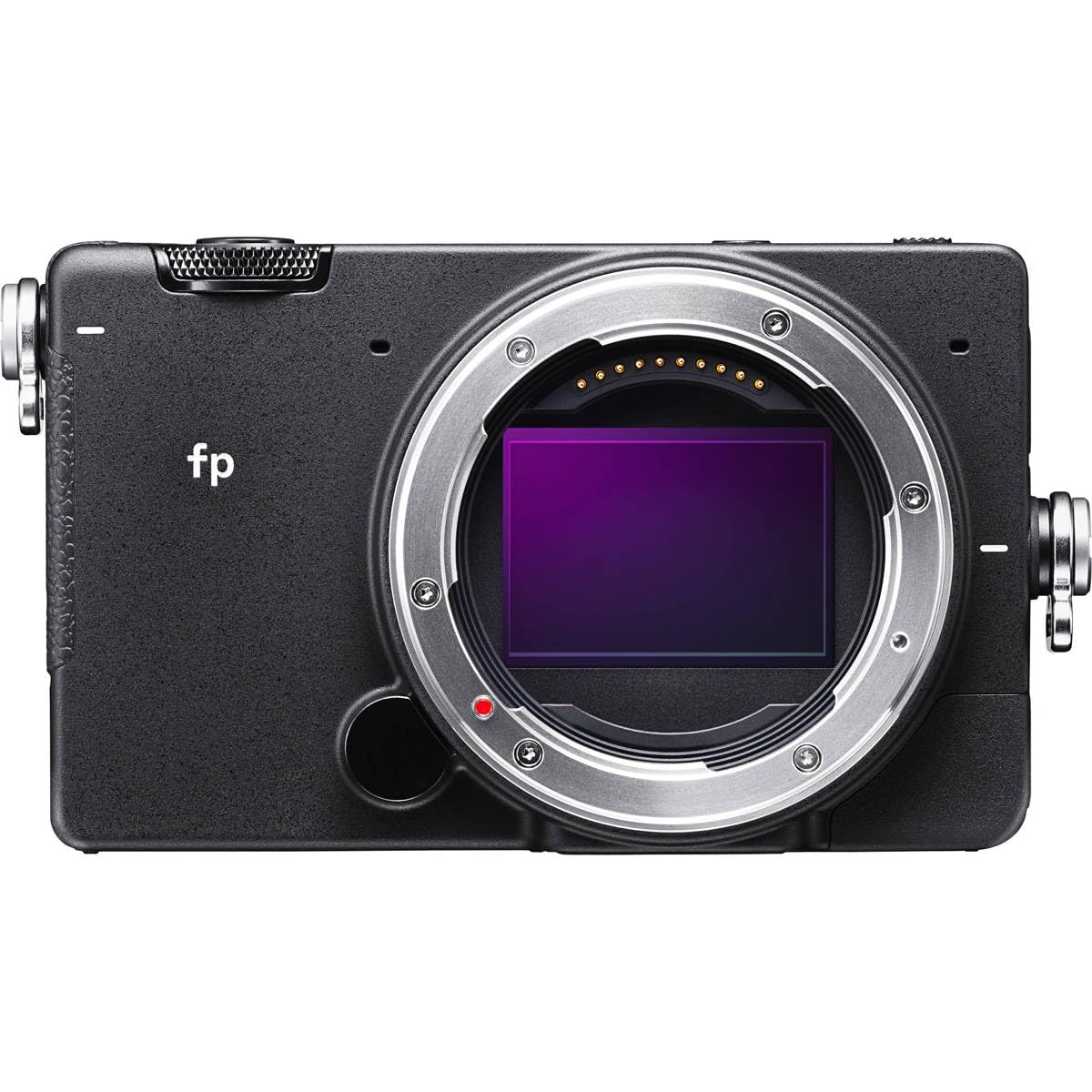
At 422 grams the fp is the lightest camera here and the smallest full-frame body in this group. Sigma spends that budget on a 24.6MP back-side-illuminated sensor, 4K UHD recording at up to 30p, 18 frames per second, and a sealed aluminum body that shrugs off weather. Put a small prime on it and the whole thing weighs less than some full-frame bodies do with a battery fitted.

The compromises are specific. Autofocus is contrast detection with 49 points — fine for a stationary subject and for manual glass, not for a dog running at you. Flash sync is 1/30 second, which rules out daylight fill flash for portraits, and with stabilization handled electronically rather than in the sensor, slow handheld work wants a brace. Set against that, this much camera in a jacket pocket is a trade nothing else here offers, and for gimbals and deliberate shooting the fp makes its case.

Pros

  • 422 grams, the lightest body here
  • 24.6MP BSI sensor with 4K UHD recording
  • Sealed aluminum body

Cons

  • Electronic stabilization only
  • Contrast-detection autofocus with 49 points
Our verdict

The fp is for gimbal work, manual glass and anyone who measures a camera in grams; its contrast-detection autofocus is the price.

Check Latest Price

How We Tested the Best Compact Full-Frame Cameras

We started with every full-frame mirrorless body a manufacturer markets as compact or lightweight, then filtered by sensor size, mount ecosystem, price, and one blunt question: will this fit in a small shoulder bag with a lens attached? That left six cameras, all bought at retail rather than loaned, and we shot with them for eight months.

Each one came to a Saturday farmers market, a dusk soccer game, a friend's wedding reception, and a dim restaurant where I was too polite to use a flash. We shot raw and compared files at ISO 3200 and 6400 side by side, watching shadow noise, color shift, and how much highlight detail survived. For autofocus, we tracked a dog running straight at the lens, a kid on a bike, and subjects moving behind a chain-link fence, noting how often the camera grabbed the background instead of the face.

Battery life we counted rather than guessed: frames per charge through the viewfinder versus the rear screen, plus how much drained overnight inside a bag. For menus, we handed each camera to someone who had never shot that brand and timed how long it took to change ISO and format a card. Controls got a glove test and a one-handed test. Build quality we judged after months of real use — sticky dials, a card door that popped open, a body that froze once and needed the battery pulled. Value came down to what was in the box against what it cost.

How to Choose a Compact Full-Frame Camera

The Body Is Half the Kit

Buy the smallest body available and hang the biggest zoom on it and you've built a heavy camera with extra steps. The Sony a7C kit is the clearest illustration: its 28-60mm collapses toward the body, so the pair stays small enough to carry all day, which you can't say about the same camera with a fast f/2.8 zoom mounted.

Decide which lens will live on the camera before you decide on the body. A compact 24mm, 35mm or 40mm prime is what makes a small full-frame body worth owning; if you need a fast zoom for your work, buy it anyway and accept that compactness stops at the body.

Stabilization You Can Feel

Sensor-shift stabilization is the least glamorous feature here and one of the most useful. The Nikon Z 5 and both Sony bodies move the sensor to cancel handheld shake, which buys back shutter speed in dim rooms and steadies handheld video. The Canon EOS RP lists digital stabilization instead, and the Sigma fp relies on electronic stabilization, both of which help video more than they help stills.

If you shoot handheld at dusk or film without a gimbal, make sensor-shift a requirement rather than a bonus. It's the single specification on this page most likely to change how many of your pictures come out sharp.

Video: Frame Rates, Crop and the Clock

Three numbers decide whether a body suits video. Frame rate: the Canon EOS R8 shoots uncropped 4K at up to 60p, while most of the others top out at 30p in 4K. Crop: a cropped 4K mode quietly turns your wide lens into a normal one, so check before you buy a wideangle for filming. And the recording clock — the Nikon Z 5 and EOS RP stop at 30 minutes, the Sony a7C II at 40, the R8 at two hours.

A half-hour stop is usually a design limit rather than a fault, but it decides whether you can film an interview in one take. Test your longest realistic clip at home before a job depends on it.

Match the Autofocus to the Subject

Sensors don't move; subjects do. The Canon R8's subject detection with a 40 fps burst, the Sony a7C II's AI-assisted tracking across 759 points and the Nikon Z 5's 273-point system with human, dog and cat eye detection cover most of what people actually photograph. The Sigma fp's 49-point contrast-detection system is the outlier, and it tells you that camera was built for deliberate work.

If your subjects are children, dogs or athletes, buy on autofocus and burst. If they're landscapes and buildings, put the money into glass instead; a slow, accurate single point is all you need.

Batteries, Cards and the Small-Body Tax

A small body means a small battery. Every camera here will get through a day of unhurried stills, and none of them is a camera you'd take to a wedding without spares, so budget for two extra cells before you budget for a second lens.

Cards are the other place compactness shows. The Nikon Z 5 takes two SD cards; the Sony a7C and Canon EOS RP each take one. If you shoot anything you can't reshoot, two slots are worth more than a fraction of an inch of body depth.

Frequently Asked Questions

Final Verdict

The Sony Alpha 7C II is the camera we point most people toward. It is the only one here that combines 33MP files, genuinely dependable subject tracking and 10-bit 4K in a body that goes everywhere without a second thought.

Buy the Nikon Z 5 instead if cost is the deciding factor and your subjects hold still — you get sensor-shift stabilization and two card slots, and you give up resolution and speed. Choose the Canon EOS R8 if video and moving subjects come first, or the a7C kit if one small zoom is all you want to carry.