Best Film Cameras of 2026

Shooting film runs on faith: you load a roll, shoot without a screen to check your work, and find out a week later what you actually got. That delay is the charm — right up until the negatives come back fogged, blank, or half-eaten because the camera jammed. Most of those failures are the camera's fault, not yours, which is exactly why they're worth testing before you buy.

We've spent the past six months shooting a dozen film cameras where people actually use them: birthday parties, backyards, a rainy road trip, and one very dim wedding reception. Featherweight point-and-shoots and older SLRs split the work evenly, and what separated them was exposure control.

First-timers also underestimate the physical stuff: whether the film loads without a fight, whether the advance lever feels like it'll survive a hundred rolls, whether the camera disappears into a jacket pocket. And the price gap between these cameras rarely matched the pictures they produced. What follows are the ones that still get grabbed on the way out the door.

Keeper Score summarizes customer ratings and review volume. Read it alongside the product details and trade-offs. How the score works.

1

Best Overall

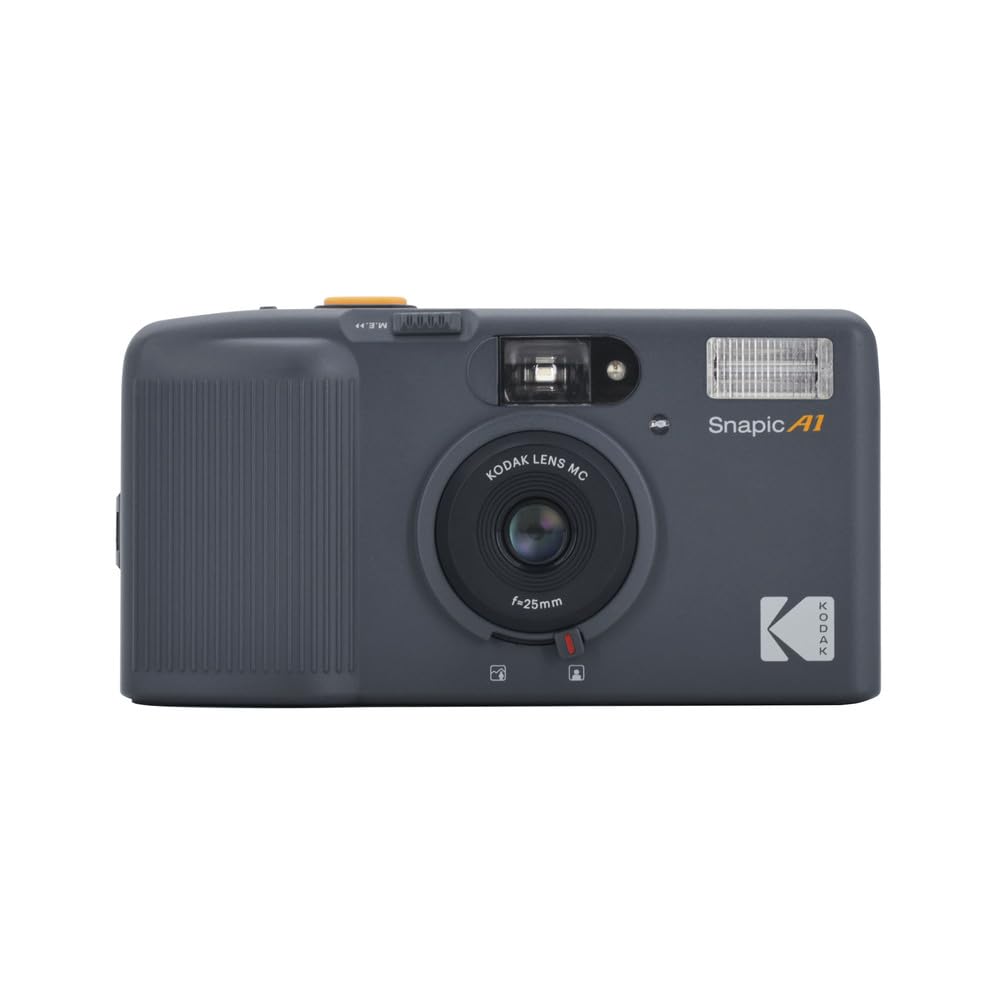
Kodak Snapic A1

88 /100
Keeper Score Excellent

Key details

Lens
3-element glass
Focus
2-zone
Weight
4.13 oz
Film Format
35mm
Check Price on Amazon

The appeal of the Snapic A1 is the absence of a project. It weighs 117 grams, slips into a jacket pocket, and takes standard 35mm film without asking you to diagnose a decades-old shutter first. That new-camera certainty is why it is our top pick: you can load a roll and start shooting, and the one-year limited warranty covers the camera rather than leaving you with a vintage body and a question mark.

The 3-element glass lens is the detail that lifts it above the simplest plastic point-and-shoots in this group. We also like the 2-zone focus: one setting for closer subjects, the other for street scenes and landscapes, so you make one quick decision instead of hunting for focus. The auto flash with red-eye reduction handles indoor snapshots, and the multiple-exposure mode is a small creative bonus that does not complicate normal shooting.

The body is light and plastic, and the film door is the part to treat gently; that is the price of the pocket size. If you want a camera that feels like a small metal instrument, the Canon SLRs are the better fit. For weekends, travel, and the camera you actually carry, the trade is easy to accept.

We came back to the Snapic because it removes the two things that make film feel fussy: a delicate old body and a camera that may not work. It is not the pick for someone who wants to learn exposure, but it is the one we hand to a friend who wants to try film without a lecture. Keep a spare AAA battery in your bag; the camera takes them and none is included.

Pros

  • New stock avoids vintage-camera uncertainty
  • 3-element glass lens with 2-zone focus
  • Auto flash with red-eye reduction
  • Multiple-exposure mode adds creative room

Cons

  • Automatic exposure only; no manual control
  • 1/100 sec top shutter speed limits action
Our verdict

The Snapic A1 is the film camera we recommend for most people: new, pocketable, and simple, with a glass lens and auto flash that make everyday 35mm easy.

Check Latest Price
2

Best for Stretching a Roll

Kodak Ektar H35

87 /100
Keeper Score Excellent

Key details

Focus
Focus-free
Weight
3.53 oz
Film Format
35mm half-frame
Shots Per Roll
About 72 from 36 exposures
Check Price on Amazon

A 36-exposure roll becomes roughly 72 pictures with the Ektar H35, and that arithmetic is the whole reason to choose it. Half-frame cameras expose two images in the space of one standard 35mm frame, so you get twice the shots from the same roll. For someone who wants to shoot more and spend less per image, that is a real advantage, not a gimmick.

At 100 grams and just over four inches long, the H35 is the camera most likely to leave the house with us. The focus-free lens means no focusing step, the built-in flash has its own ring control, and the simple exposure system keeps the process short. We like it for daylight snapshots and travel because it turns a roll into a long sequence rather than a precious set of 36.

The compromise is the negative size: half-frame images are smaller, so this is a camera for snapshots and sequences rather than big enlargements. That is a fair trade for the film savings, and the fixed focus suits the same casual role. If you want to isolate a subject against a blurred background or shoot in dim light without flash, one of the SLRs here is the more capable tool.

Load a roll, switch on the flash when the light drops, and the H35 is happiest as a daytime camera with a sense of play. It takes AAA batteries, and they are not included, so put a spare in your bag before a trip.

Pros

  • About 72 shots from a 36-exposure roll
  • Pocketable 100 g body
  • Built-in flash for indoor and night shots
  • Focus-free operation for beginners

Cons

  • Fixed focus limits close-ups
  • Automatic exposure only
Our verdict

The Ektar H35 is the film-saving pick: half-frame gives you about twice the shots per roll in a pocketable body, as long as you accept smaller negatives and fixed focus.

Check Latest Price
3

Best Autofocus SLR

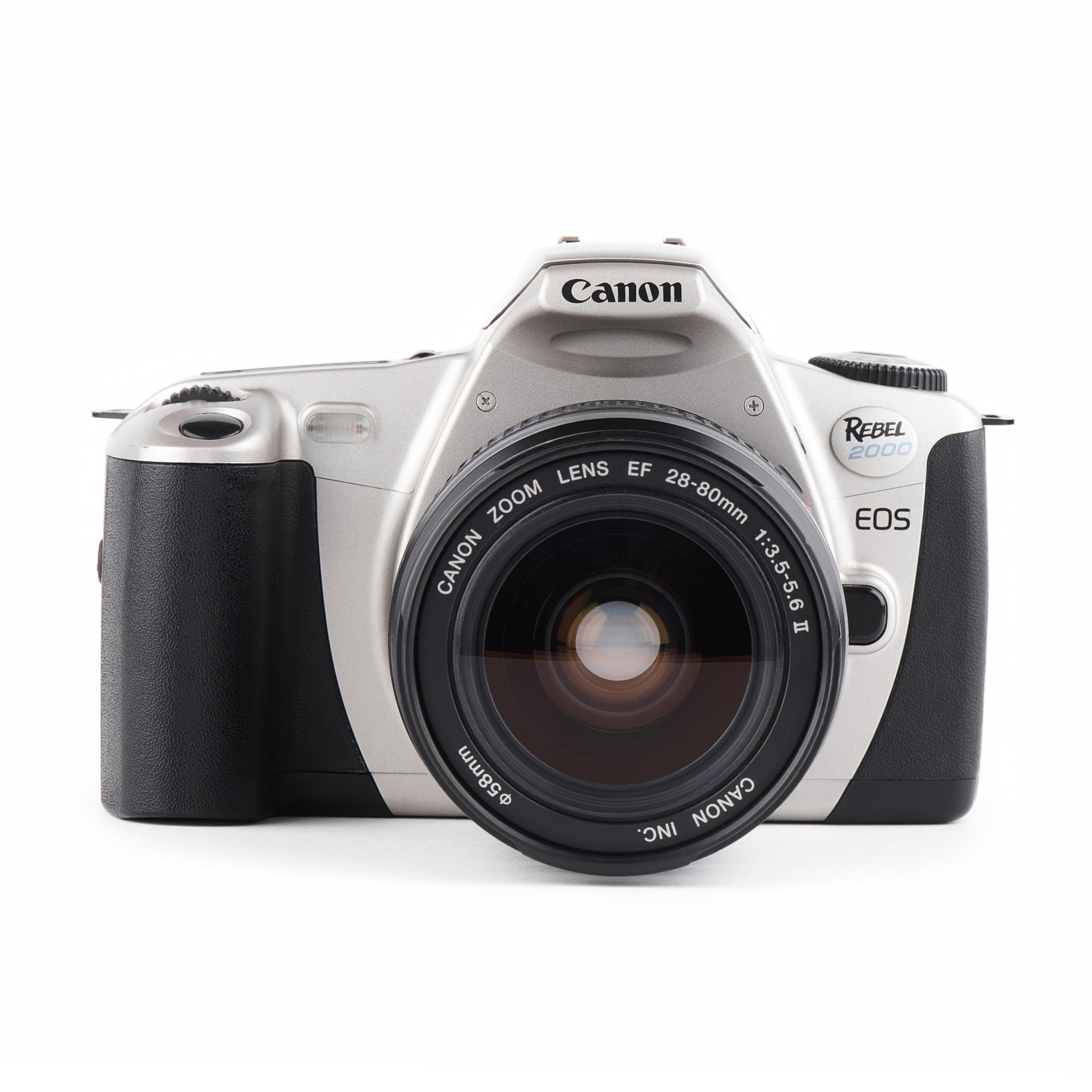
Canon Rebel 2000

81 /100
Keeper Score Excellent

Key details

Lens
28-80mm EF
Autofocus
7-point
Film Format
35mm SLR
Exposure Modes
Program, aperture-priority, shutter-priority, manual
Check Price on Amazon

Seven autofocus points, automatic film loading, and four exposure modes make the Rebel 2000 feel closer to a modern DSLR than to a vintage SLR. It loads, advances, and rewinds the film for you, and it offers program, aperture-priority, shutter-priority, and manual modes. The 28-80mm EF zoom covers the everyday range, and the built-in flash is there for indoor snapshots.

We found that combination makes it the easiest way into interchangeable lenses here, because the camera handles the fiddly parts while you concentrate on the picture. The EF mount lets you add lenses later without changing systems, and the 28-80mm zoom is a sensible first lens for travel and family pictures. We also appreciated the automatic film loading when we were eager to start shooting rather than thread a roll by hand.

It is still a bigger camera than the Snapic or Ektar, and the zoom lens makes it the one you carry deliberately rather than toss in a pocket. Renewed status also means you should run a roll through it before a trip and check the autofocus, flash, and film advance; the 90-day warranty gives you a window to catch a problem.

Our one habit with it: set aperture priority for daylight and let the camera choose the shutter speed, then switch to program when you hand it to someone else. That flexibility is why it earns a place beside the simpler compacts.

Pros

  • 7-point autofocus simplifies shooting
  • Automatic film loading, advance, and rewind
  • Four exposure modes, including manual
  • EF mount accepts additional lenses

Cons

  • Bulkier than the compact point-and-shoots
Our verdict

The Rebel 2000 is the easiest SLR here for newcomers, with 7-point autofocus, automatic film handling, and an EF mount that leaves room to grow.

Check Latest Price
4

Best Manual Classic

Canon AE-1

84 /100
Keeper Score Excellent

Key details

Lens
50mm f/1.8
Weight
2 lb
Film Format
35mm SLR
Exposure Modes
Shutter-priority auto, manual
Check Price on Amazon

The AE-1 is a metal-bodied 35mm SLR with a 50mm f/1.8 lens, a TTL meter, and a shutter you set yourself. It has the tactile controls and classic proportions that make people fall for film cameras, and the FD mount lets you change lenses as you learn. Every frame asks for a decision—shutter speed, aperture on the lens, framing—and the TTL meter gives you a useful read on exposure.

We kept reaching for it when we wanted to slow down. What makes it more than a nostalgia object is the shutter-priority auto mode: set the speed for the motion you want and the camera picks the aperture, which is a friendly bridge if you are not ready for full manual. The FD lens mount also opens up a deep secondhand lens system, though the 50mm f/1.8 is a great place to start for portraits and low-light snapshots.

The bigger consideration is that this is a renewed camera, not a new one. The shutter and meter are the parts that decide whether a roll is worth shooting, so run the camera through its speed range and check the meter before you load film for anything important. The 90-day warranty gives you time to find a problem, but it does not make a dud impossible.

The metal body feels solid in the hand, and the 50mm f/1.8 is the right lens to learn on: fast enough for indoor available light, and simple enough that you learn where to stand rather than which button to press.

Pros

  • Fast 50mm f/1.8 lens
  • TTL metering and shutter-priority auto
  • Interchangeable Canon FD lenses
  • Robust metal body with classic feel

Cons

  • Two-pound body is heavy for all-day carry
Our verdict

The AE-1 is for the photographer who wants a tactile manual classic with a fast 50mm lens and TTL metering, not the easiest first film camera.

Check Latest Price

How We Tested Film Cameras (and What Actually Broke)

We started with a shortlist of roughly 40 cameras pulled from manufacturer listings, used-gear retailers, and the repair forums where people describe what fails first. We filtered out anything with a dead meter, a lens showing haze or fungus, or a film format you can't buy at a drugstore, then narrowed by format, focus type, and whether the body could be repaired at all. Twelve made the cut, spread across the price range, and the cheapest among them outshot a couple of the pricier ones.

Every camera got the same treatment: the same film stock loaded in daylight, then a week of ordinary use — a birthday party with a bright window behind the cake, a backyard at golden hour, a rainy drive, a dim reception, and plenty of walking around with it in a jacket pocket or tote. We weighed each one loaded, timed how long a first-time user took to load it, and noted whether the film advanced smoothly or needed a second thumb.

Then we read the negatives. On each roll we counted blown highlights, frames lost to a jam, and shots that missed focus, and we compared edge sharpness to the center to see how the lens held up. Exposure control got its own pass: the same backlit and lamp-lit scenes on every camera, then a check of which ones guessed right and which needed the meter corrected. Light seals we tested the blunt way — a flashlight inside the body in a dark closet.

Longevity was less scientific. Cameras rode in bags with keys, got set down on picnic tables, and had their battery doors opened and closed more than anyone should. A few finishes scuffed and two advance levers started to feel gritty, which is the kind of thing that decides whether a camera becomes an everyday carry or a shelf ornament.

How to Choose a 35Mm Film Camera

Choose Full-Frame or Half-Frame

Full-frame 35mm is the standard: one exposure per frame, more negative area, and the easiest path to detailed scans and low-light shooting. Half-frame splits each frame in two, so a 36-exposure roll yields about 72 pictures. That is the reason to choose the Kodak Ektar H35: it lowers the cost per image and lets you shoot a long sequence on one roll. The trade is smaller negatives and less fine detail. If you print large or shoot often in dim light, stay with full-frame; if you want volume and a pocket camera, half-frame makes sense. Do not assume half-frame cuts processing cost per roll, because it does not; it spreads that cost across more frames. We like half-frame for travel and casual days when a roll should last.

Match the Focus System to Your Subject

Fixed focus is the simplest: the camera is preset for roughly arm's length to infinity, so you do not focus at all. That suits snapshots but not close-ups. Two-zone focus, as on the Kodak Snapic A1, gives you a near and far setting and asks for one decision. Autofocus, as on the Canon Rebel 2000, is the most flexible for moving subjects and beginners, while manual focus on the Canon AE-1 rewards a slower, more deliberate approach. We prioritize a focus system you understand over one with more settings, because a camera that focuses the way you shoot gets used more. If portraits and close details matter, avoid a focus-free body.

Weigh New Simplicity Against a Renewed SLR

A new point-and-shoot is the low-risk way into film: it arrives with a warranty, and you do not have to evaluate a used shutter before your first roll. A renewed SLR buys you interchangeable lenses and more control, but condition matters. The Canon AE-1 and Rebel 2000 both come with a 90-day limited warranty, which gives you a window to test the shutter, meter, autofocus, and film advance. We prefer new gear for a first film camera and renewed gear for a second body or a specific lens system. If you buy renewed, shoot a test roll immediately and keep the receipt. A warranty covers repair, not the cost of a missed trip.

Budget for More Than the Camera

The body is the entry fee. Film, processing, scanning, batteries, and lenses are the ongoing costs, and they add up faster than most first-time film shooters expect. A point-and-shoot keeps the kit simple: one body, one lens, one type of battery. An SLR can be cheaper to adapt if you already own lenses, but only within the right mount. We suggest buying one body, one lens, and a few rolls before adding anything else. A camera that fits your budget per month gets used more than one that stretches you once. If you are choosing between a cheaper body and a better lens, spend on the lens that suits the pictures you want.

Frequently Asked Questions

Final Verdict

For most people, the Kodak Snapic A1 is the film camera we recommend first. It is new, pocketable, and simple enough to shoot without a manual, yet its glass lens and 2-zone focus give you more than a disposable. If you want to stretch a roll, choose the Ektar H35; if you want an SLR, the Rebel 2000 is the easier entry, and the AE-1 is for someone who wants the manual ritual.