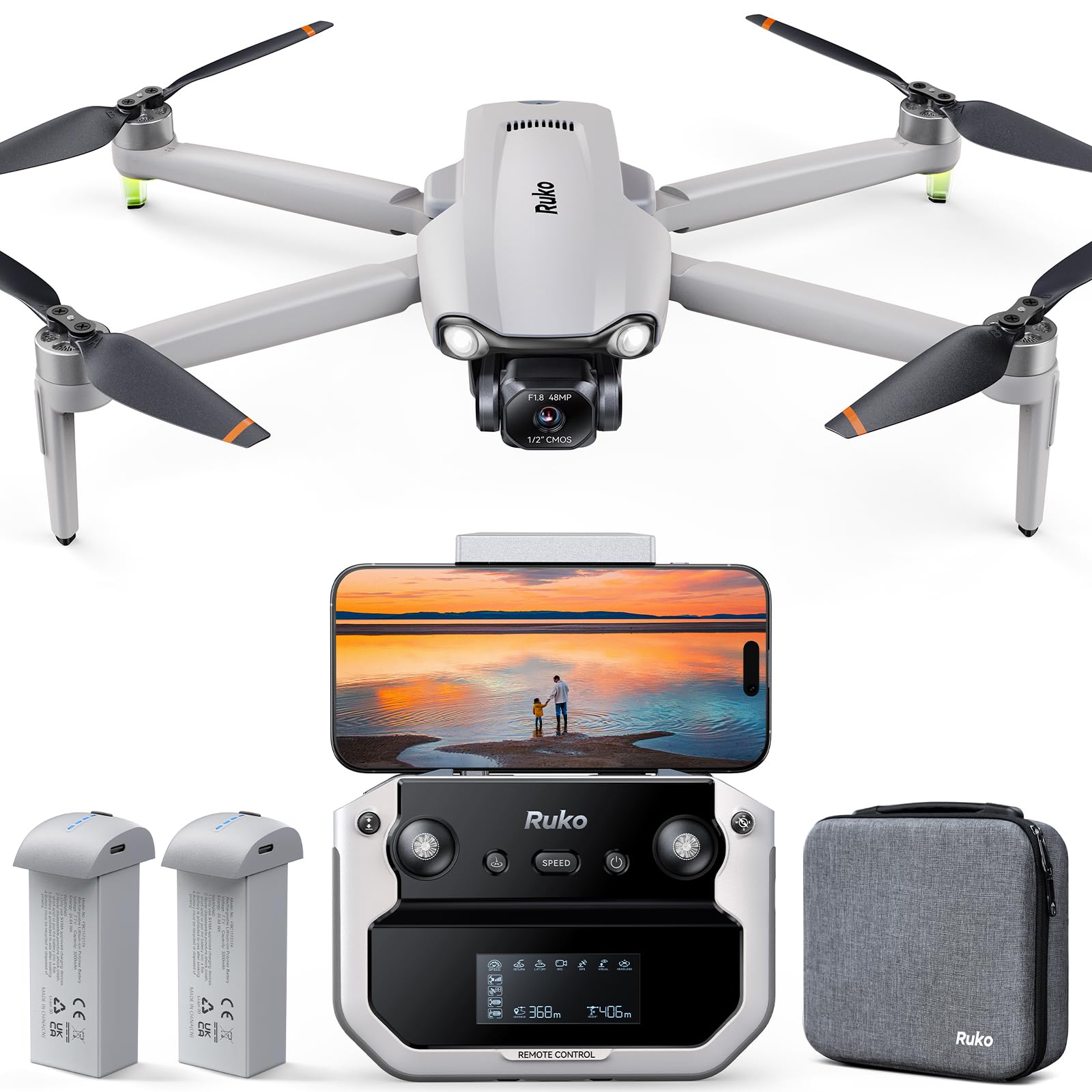
Best Drones for Real Estate Photography of 2026

Anyone can get a drone in the air over a house. What's harder is coming back with the frames a listing actually needs: windows you can see through instead of white rectangles, a horizon that's straight on the first try, and a slow push-in that doesn't wobble at the end. In this category the spec sheet rarely predicts which one you get. The gimbal, the sensor's dynamic range, and how the aircraft behaves in a breeze do. That's what these picks are built to deliver — a usable set of exterior and neighborhood shots before the battery starts complaining.

My team flew eight drones for this piece over the past seven months, from sub-250-gram folders to larger dual-camera rigs, and one thing surprised me: ease of use and image quality have mostly stopped being a trade-off. Several of the beginner-friendly models came back with bracketed exposures I'd have been glad to deliver. We also watched the unglamorous things, like how much flight time survives a long hover, how quickly the aircraft returns home when it loses signal behind a roofline, and how much scuffing it picked up riding in a camera bag between showings. The picks below are the ones I'd hand to a brand-new agent and to a working photographer without changing my answer.

Keeper Score summarizes customer ratings and review volume. Read it alongside the product details and trade-offs. How the score works.

1

Best Overall

DJI Air 3S Fly More Combo

92 /100
Keeper Score Outstanding

Key details

Video
4K/60fps HDR
Stills
50MP
Cameras
1-inch wide plus medium tele
Obstacle Sensing
Omnidirectional, LiDAR at night
Check Price on Amazon

Two cameras on one aircraft is the reason this is the drone we hand anyone who shoots listings for money. The 1-inch wide sensor takes the establishing shots and the rooms where window light and shadow fight each other; the medium tele compresses a roofline or a fireplace detail from a hover that never gets near the glass. Switching takes a tap, and both come out of the same battery.

The sensing is where the working value sits. Forward-facing LiDAR plus the vision sensors keep it clear of walls and branches after dark, and the return-to-home logic picks its own route back, which matters most when you're orbiting a house and the link dips behind the chimney. In wind it holds a line well enough that the footage looks deliberate rather than salvaged.

The Fly More kit is the version to buy: three packs is a morning's work across a couple of properties, and the charging hub means you're not chasing a single charger between flights. Nothing else here pairs a 1-inch sensor with a second lens. The free panorama mode is a small bonus that saves stitching a wide frame afterwards.

Where it pulled ahead for us is coverage: one flight, one battery, a wide frame and a compressed detail from the same hover. That's the difference between a gallery of near-identical angles and a set that reads like a brochure.

Pros

  • Two cameras, one aircraft
  • 1-inch sensor for bright exteriors and dark rooms
  • LiDAR and night-capable omnidirectional sensing
  • Three batteries and a charging hub in the kit

Cons

  • 724 g means registration and a bigger bag
  • 10-bit files want a grading step
Our verdict

For work where the images are the deliverable, this is the drone we recommend: a 1-inch sensor, a second lens for detail, and sensing that keeps it off the house.
Check Latest Price
2

Best for Travel

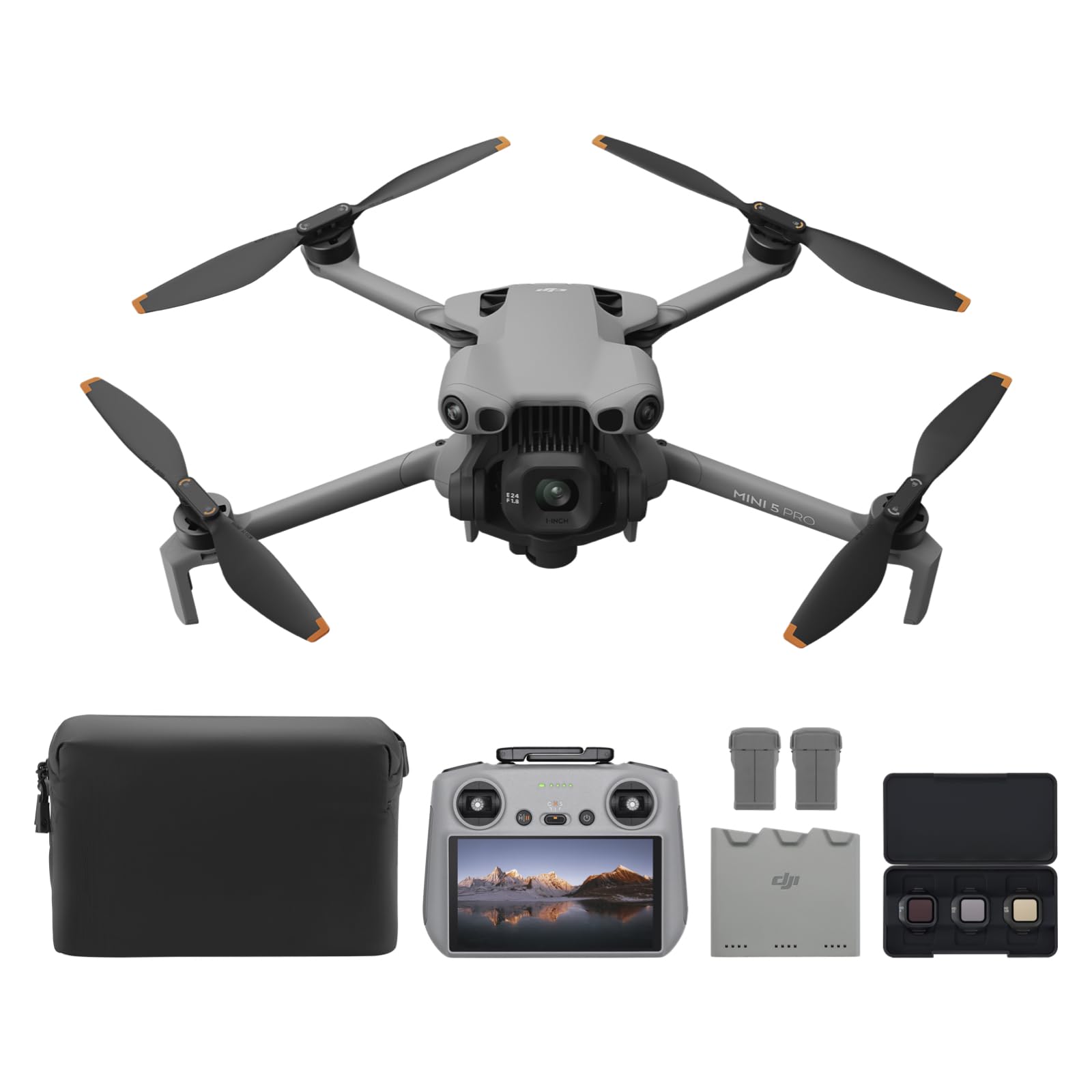
DJI Mini 5 Pro Fly More Combo

87 /100
Keeper Score Excellent

Key details

Video
4K/60fps HDR
Camera
1-inch CMOS
Stills
50MP
Takeoff Weight
8.78 oz
Check Price on Amazon

The interesting thing about the Mini 5 Pro is how little you surrender to stay small. A 1-inch sensor, 50MP stills, and 4K/60 HDR in a body that folds into a jacket pocket is the same camera class as the Air 3S, minus the second lens.

What won us over is the gimbal range. Two hundred and twenty-five degrees of roll means true vertical framing without re-rigging anything, and vertical clips are what teasers and social posts are made of. Add 42GB of internal storage and you can shoot the first house of the day before you've found a memory card.

Sensing is close to the bigger DJI's: LiDAR forward, vision all round, and night detection that lets you finish a dusk exterior without flying blind. That capability pays for itself the first time you skim a gutter and nothing happens.

One thing to sort out before you fly it: the kit ships with the high-capacity Plus packs, and a bigger battery can push an airframe past the 250 g line. The weight that matters is the one you actually take off with, so check the configuration you'll use rather than the headline number.

Pros

  • 1-inch sensor and 50MP stills in a pocket body
  • 225° gimbal rotation for true vertical video
  • LiDAR-backed night omnidirectional sensing
  • 42GB of internal storage

Cons

  • No second lens
  • Battery experience varies between packs
Our verdict

The one we pack when the shoot is a drive and a hike away: 1-inch image quality and omnidirectional sensing in something the size of a lens.

Check Latest Price
3

Best for Beginners

Potensic ATOM

91 /100
Keeper Score Outstanding

Key details

Video
4K/30fps
Gimbal
3-axis mechanical
Stills
12MP JPEG
Takeoff Weight
8.5 oz
Check Price on Amazon

A mechanical gimbal is the line between aerial video you can use and footage you delete, and the ATOM is the least expensive way over that line here. It's the drone we point people toward when they want to find out whether property work suits them before spending real money on it.

The flying is the part that surprised us. Visual tracking, QuickShots that fly the arc while you watch the screen, and a hover steady enough to frame a doorway and hold it while you check the light — none of that is a given at this price.

At 241 g it stays under the registration line for recreational flying, and the 6 km transmission is well past anything you'll use around a subdivision. The range figure is really about holding a solid link when a house blocks the signal, which is the part that matters on a wooded lot.

What it gives up is editing latitude. Stills are 12MP JPEG only, so the shadow recovery that rescues a dark interior on a bigger camera simply isn't there — expose for the windows and let the room fall where it does. The gimbal and the hover are what matter most on a first listing, and those it gets right.

Pros

  • Three-axis gimbal at a budget price
  • 6 km transmission
  • 241 g takeoff weight
  • Visual tracking and QuickShots built in

Cons

  • One battery in the standard kit
  • 12MP JPEG stills leave little to crop
Our verdict

The drone we hand a first-timer: a real three-axis gimbal, honest range, and 4K footage for the least money in this group, with 12MP JPEG stills as the trade.

Check Latest Price
4

Best Value

Ruko F11PRO 2

89 /100
Keeper Score Excellent

Key details

Gimbal
3-axis mechanical
Stills
19MP
Batteries
2, 70 min total
Max Range
10,000 ft
Check Price on Amazon

Seventy minutes is the number that got our attention: two packs and a total of 70 minutes between them, which covers a house, its lot, and a walk-around video without hunting for a charger.

On a tight budget that endurance is worth more than a slightly sharper lens, because running out of battery mid-orbit is the mistake that costs you a reshoot. GPS return-to-home plus follow, circle, and waypoint modes mean the automated passes a listing video needs are all covered.

The 10,000 ft control range is the shortest in this group, and on a rural acreage or a long waterfront lot you may find the link thinning before you've framed the far boundary. Keep the aircraft closer than the spec suggests and the limitation stops mattering.

Stills are better than the money suggests: 19MP effective with a 6K photo mode, enough to crop a roofline or a house number without the frame falling apart. The carrying case is included, which sounds like a small thing until you're loading a car in the rain.

Pros

  • Two batteries, 70 minutes total
  • Mechanical three-axis gimbal
  • GPS return plus follow, circle, and waypoint modes
  • 19MP stills with a 6K photo mode

Cons

  • Over the 250 g registration line
Our verdict

The value pick: two packs, a mechanical gimbal, and dependable GPS return for small and mid-size listings, with more airtime per dollar than anything else here.

Check Latest Price
5

Large Rural Lots

Ruko F11PRO 2 Plus

89 /100
Keeper Score Excellent

Key details

Video
4K/30fps
Stills
48MP
Batteries
2, 74 min total
Max Range
20,000 ft
Check Price on Amazon

Resolution is the pitch: 48MP stills from a 1/2-inch sensor, the highest still count in this group outside the 1-inch DJI pair, with a night mode aimed at the hour after sunset when a lit house photographs best.

Whether that matters depends on how you deliver. For portal-sized images and a slide deck, 48MP is more than you need; for cropping into a detail or printing a hero shot for a brochure, the extra pixels give you room a 12MP frame doesn't.

The practical advantages are range and time. Twenty thousand feet of transmission and 74 minutes across two packs turn a large lot or a rural acreage into a normal job rather than a planning exercise, and that's the case this drone is built for.

The catch is consistency. Connection and GPS dropouts can interrupt a flight, and a drone that loses its link over a client's roof is a conversation nobody wants to have. Fly it on your own time first, keep your passes conservative, and buy where returns are straightforward.

Pros

  • 48MP stills from a 1/2-inch sensor
  • 74 minutes across two batteries
  • 20,000 ft transmission

Cons

  • Connection and GPS dropouts can interrupt a flight
  • Charger not included
Our verdict

For big lots and big prints: 48MP stills, 20,000 ft of range, and the most flight time in the group, provided you shake it down before a paid shoot.

Check Latest Price
6

Casual Aerial Clips

Holy Stone HS360S

86 /100
Keeper Score Excellent

Key details

Video
4K UHD
Stills
8MP
Flight Time
20 min
Takeoff Weight
7.51 oz
Check Price on Amazon

Eight megapixels is the number to start with. That's the stills resolution on the HS360S, and it tells you what this drone is for: quick aerial clips and neighborhood context, not the stills that carry a listing.

As a first aircraft it's hard to argue with. GPS return, follow modes, a 213 g body, and a controller that pairs with a phone in a couple of steps make it the least intimidating thing here, and the 4K footage is what most people will actually use.

The honest ceiling is that this is a first aircraft, not a second one. There's no path from here toward the repeatable, editable files a listing shoot needs, so most people who get serious will end up buying again — which is fine if the point was to find out whether they'd get serious.

Pros

  • Easy to fly, with GPS return and follow modes
  • 213 g, under the recreational registration line
  • 4K footage at the lowest outlay here

Cons

  • About 20 minutes per battery
Our verdict

The cheapest way to find out whether aerial property shots are for you: easy to fly, light enough to skip registration for recreational flying, and honest about its 8MP stills.

Check Latest Price

How We Tested These Drones on Real Listings

We started by pulling every drone marketed for aerial photography that had a mechanically stabilized gimbal, a return-to-home function, and some form of obstacle sensing, then cut the ones whose owner feedback repeatedly described losing signal near buildings. That left eight aircraft, each of which we flew for seven months. We also logged what shipped in every box, since battery count and controller style vary enough to change the value math.

Most of that flying happened on real listings rather than a test field: a ranch house with a mature maple crowding the front elevation, a cul-de-sac of new construction at golden hour, a waterfront lot on a gusty afternoon, and several interior walkthroughs where the drone had to pass through a doorway and hold steady over a kitchen island. Every aircraft flew the same three-house loop so the comparisons stayed honest.

For image quality, I shot the same bracketed set of each elevation and blended the exposures afterward, the way listing photography actually works, watching for whether the windows held any view at all and whether the horizon stayed level through a slow yaw. We flew on purpose in fifteen-mile-an-hour gusts to see which cameras started hunting. We timed every battery from launch to the low-charge warning while hovering, not racing, and we pushed each drone behind a tree line or roofline to watch how it recovered.

Two colleagues who had never flown anything took the controls for a full battery apiece; I counted how long it took them to get from bag to first usable frame and how often they had to ask me for help. Everything traveled in the same camera bag next to a tripod all season, and I checked props, arms, and gimbal locks after every session, because a drone that lives in a car between showings takes a beating no spec sheet mentions.

How to Choose a Drone for Real Estate Photography

Start With the Sensor

A house exterior is several stops brighter than the rooms behind the glass, and the sensor decides whether you keep both. A 1-inch chip holds highlight and shadow together and leaves something to lift in editing; the smaller sensors on budget drones make you choose. The Air 3S and the Mini 5 Pro sit at the top of that scale in this group, and you can see the difference the moment a white garage door and a shaded porch share a frame.

Stills resolution matters for a different reason. Twelve megapixels is plenty for the images a listing portal actually displays; the extra pixels on a 48 or 50MP camera are for cropping a roofline, straightening a wide frame, or printing a brochure. Buy the sensor you can afford, then decide how you'll deliver.

One Lens or Two

A wide lens establishes the property and shows the lot, and it's what you use when you need to include the whole facade in a single frame. A second, longer lens changes the work more than any other feature at this level: it compresses a front elevation, isolates a detail, and lets you get the shot from thirty feet back instead of six, which is safer near a roof, a chimney, or a tree.

The Air 3S is the only pick here with two cameras, and on a day of back-to-back properties it saves flights rather than just frames. If you shoot one listing a month, one good lens is enough.

Weight, Batteries, and the 250 g Line

Weight classes are about paperwork as much as packing. Under 250 g, recreational flight in the U.S. skips registration and Remote ID; above it, you register the aircraft. The trap is the battery: a high-capacity pack can take the same airframe over the line, which is why the figure that counts is the takeoff weight of the configuration you actually fly.

Weigh the drone with the pack installed, note the number, and treat every kit decision after that as a weight decision. It's a two-minute check that saves an awkward conversation at a job site.

Gimbals, Sensing, and Coming Home

Electronic stabilization can smooth a hover, but a three-axis gimbal is what makes a slow orbit look like a dolly move, and it's the one feature we refuse to give up. Sensing is the other half. A tight orbit around a house means trusting the aircraft near gutters, wires, and landscaping, and omnidirectional sensing plus a return-to-home that plans its own route is worth more than an extra megapixel.

If you fly close to structures for a living, buy sensing before you buy resolution. If your shots are all wide establishing passes from a comfortable distance, put the money into batteries instead.

Plan the Shoot, Not the Spec Sheet

Three packs is roughly one property with margin; one pack is a demo. Charge times are long enough that you'll want a multi-battery hub, and some kits in this group ship without a charger at all. Range figures deserve skepticism in the other direction: the 6 km and 20 km numbers describe link robustness behind a roof, not distance you'll be allowed to fly.

Judge a drone by how many usable angles it gets you per battery. That number, not the headline spec, is what turns a listing shoot into a morning's work.

Frequently Asked Questions

Final Verdict

If listing photography is the job, the DJI Air 3S is the drone we recommend without much hedging. The 1-inch sensor and the second lens cover a property in fewer flights, the sensing is good enough to finish at dusk instead of rescheduling, and the three-pack kit is what makes a morning of shooting possible. One pack is a demo; three is a shoot.

If the drone has to travel in a carry-on, the Mini 5 Pro gets you the same sensor class in a body you'll actually bring along. And if you're still deciding whether aerial work is worth the effort, start with the Potensic ATOM — it will tell you, for the least money here, whether you have the eye for it.