Best Follow-Me Drones of 2026

The shot you actually want on a hike is the one with you in it, and there's never anyone around to hold the camera. A follow-me drone fixes that: it locks onto you and moves when you move, trailing you down a trail while you keep both hands free. It's a simple promise and a hard one to deliver — two drones with near-identical spec sheets can come home with wildly different footage.

My team and I spent seven months flying 10 of them, from palm-launch minis to GPS quads with three-axis gimbals, and the pattern came down to behavior under pressure: whether tracking held when I stepped behind a tree, whether auto-return actually came home, whether the battery reading told the truth.

One thing worth knowing before you shop: sub-250-gram drones skip FAA registration, and that weight ceiling quietly sets the terms for everything else — flight time, wind stability, how much camera the drone can carry. The picks below are the ones I'd hand to a nervous first-timer and the ones I'd trust with a shot we only get once.

Keeper Score summarizes customer ratings and review volume. Read it alongside the product details and trade-offs. How the score works.

1

Best Overall

DJI Neo 2

93 /100
Keeper Score Outstanding

Key details

Video
4K
Weight
5.33 oz
Tracking
ActiveTrack
Obstacle Sensing
Omnidirectional
Check Price on Amazon

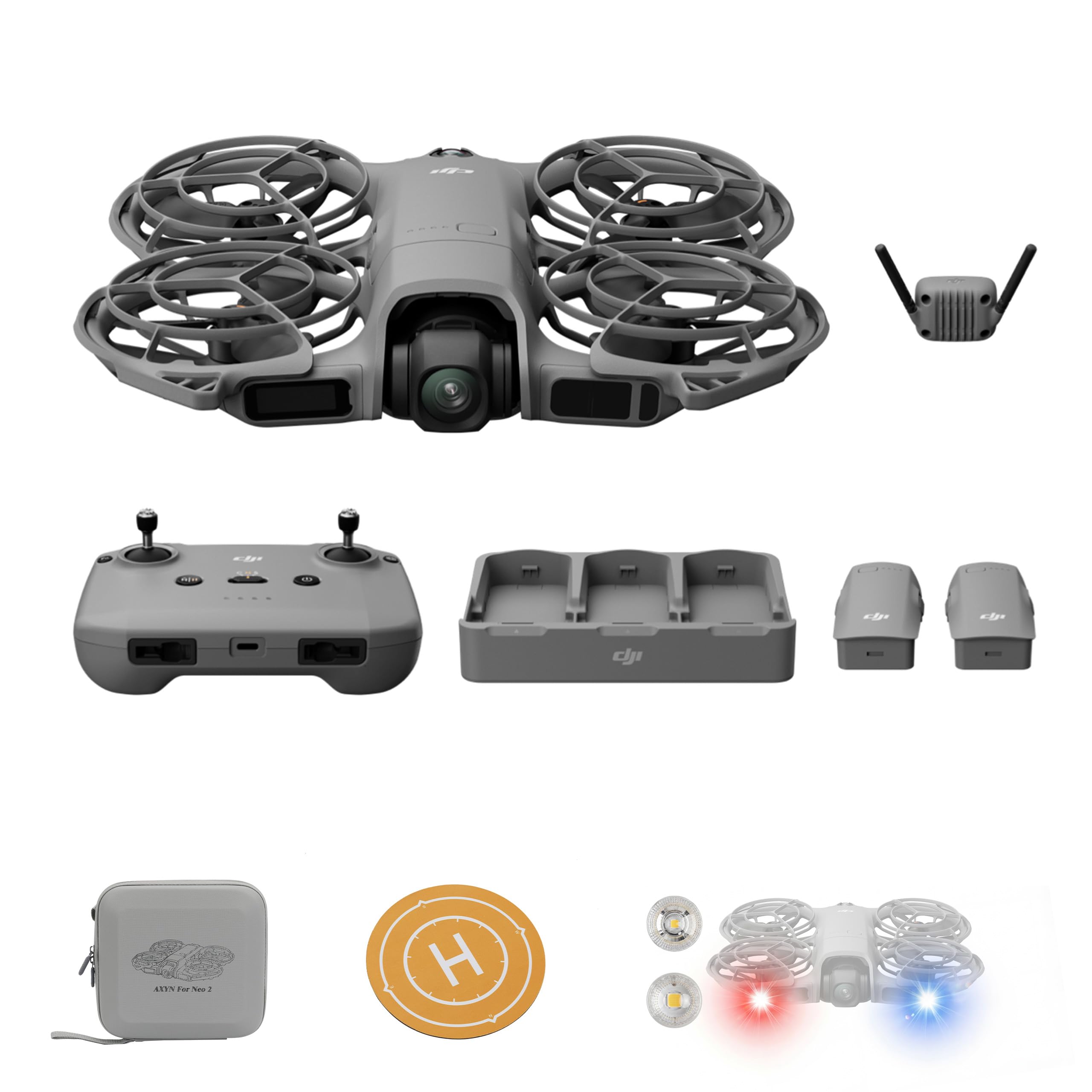
The Neo 2 is the pick that asks the least of you. Press the button on top, hold out a palm, and it lifts off and starts looking for a subject — no controller, no phone, no checklist before the first shot. Nothing else in this guide gets that close to a self-flying camera, and at 151 g with full propeller guards it's the one we're most comfortable handing to someone who has never flown.

ActiveTrack is what earns it the top spot. Point it at a person and it keeps them framed while you walk, run, or ride, and the omnidirectional obstacle sensing is the safety net that makes the hands-off part worth trusting. We think the gesture controls are more than a demo, too: with the drone hovering at head height, a gesture is enough to send it away or bring it back, so you're not digging a phone out between takes. An Apple Watch can mirror the live feed and take voice commands, which sounds like a gimmick until both your hands are occupied.

Video runs to 4K with 12 MP stills, which is the right amount for the social and travel work this drone is built for, and SelfieShot turns it around on you with a tap. Fast flight is part of the package as well, which matters for following anything quicker than a walk — this is not a drone that gives up halfway down a hill.

What we can't wave away is consistency. Some units arrive unable to hold a link to the controller, and a drone that won't connect is not a drone, however good the specification looks on paper. Buying somewhere with a straightforward return window is worth more here than a small discount elsewhere, and the first three flights should happen somewhere you can walk to the car.

Pros

  • Palm launch and gesture control, no controller needed
  • ActiveTrack with omnidirectional obstacle sensing
  • 151 g with full-coverage propeller guards
  • 4K video and 12 MP stills

Cons

  • Battery life is the weakest part of the package
Our verdict

For hands-free following with almost no setup, this is the drone we hand people: palm launch, real tracking, and obstacle sensing at 151 g.
Check Latest Price
2

Best for Cinematic Footage

DJI Mini 5 Pro

87 /100
Keeper Score Excellent

Key details

Video
4K/60fps HDR
Sensor
1-inch CMOS
Weight
8.78 oz
Tracking
ActiveTrack 360°
Check Price on Amazon

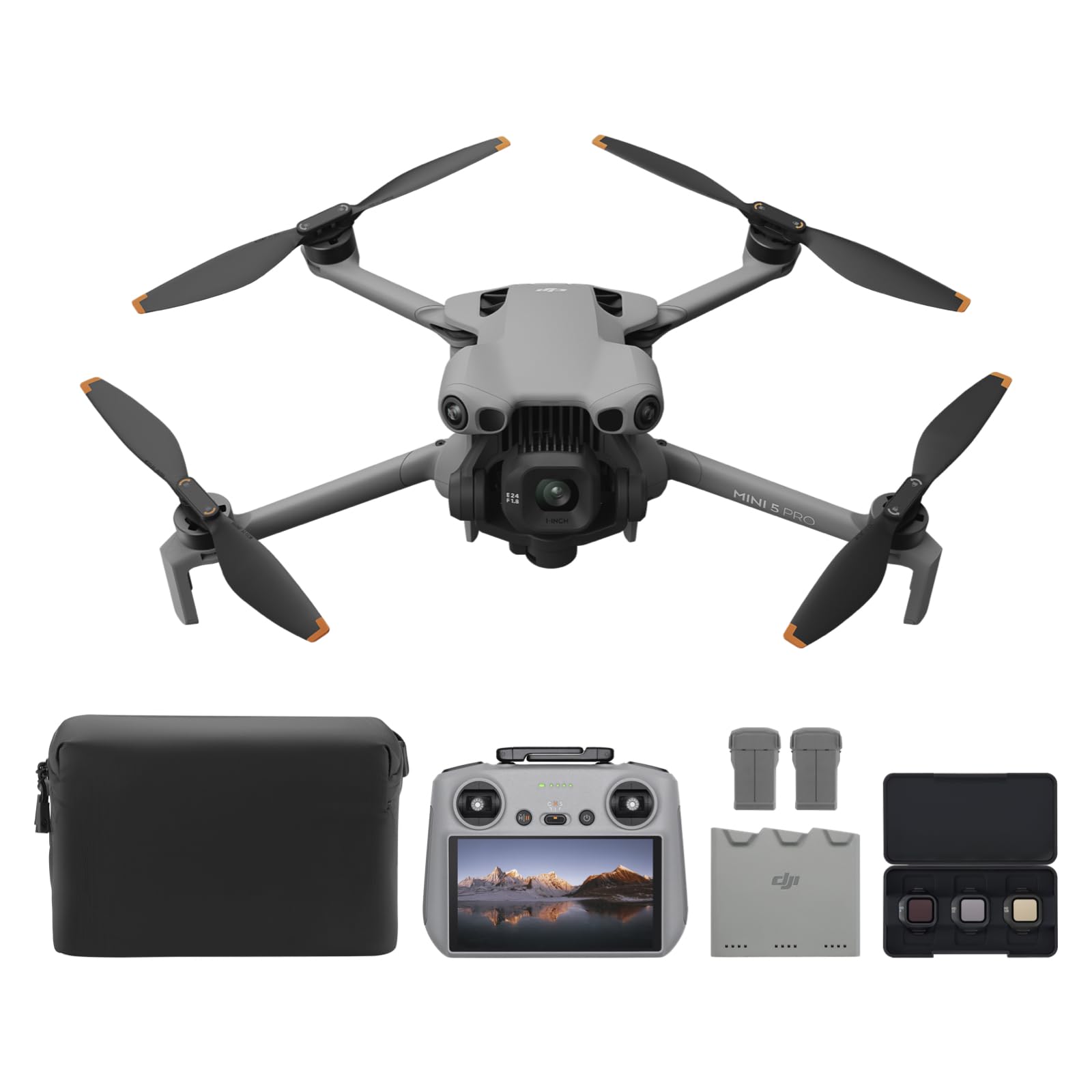
This is the most expensive drone in the guide by a wide margin, and the only one here shooting from a 1-inch sensor. Whether that's worth it comes down to a single question: is the footage the point, or is the flying? If you're filming for someone else, keep reading. If you want good clips from a hike, most of the picks below do the following part of the job for a lot less.

The reason it wins the footage argument isn't resolution, it's tracking. ActiveTrack 360° keeps a subject locked while the drone moves around them, and the faster response is what makes it usable for cycling rather than just walking — the moment most follow-me drones quietly fall apart. The gimbal rotates 225°, which gives you true vertical filming instead of a crop, and LiDAR plus vision sensors cover every direction, including after dark.

The Fly More Combo Plus is the version to get: three Plus batteries, the RC 2 controller with its own screen, and a set of ND filters, so you're not shopping for accessories on day one. It's still a sub-250 g drone at the end of it, and that's the honest ceiling — what you're paying for is the sensor and the tracking, not a professional platform. For travel and documentary work at this size, we haven't flown another drone in this guide that composes a shot this easily.

Pros

  • One-inch CMOS with 4K/60fps HDR video
  • ActiveTrack 360° holds faster subjects
  • LiDAR obstacle sensing works after dark
  • Combo includes RC 2, three batteries, ND filters

Cons

  • Cells can arrive dead or stop holding charge
Our verdict

If the shot is the reason you're buying, this is the one: a 1-inch sensor and ActiveTrack 360° put its footage a class above the rest here.

Check Latest Price
3

Best Value

Potensic ATOM 2

90 /100
Keeper Score Outstanding

Key details

Video
4K/30fps HDR
Photos
48 MP
Weight
8.78 oz
Flight Time
96 min (3 batteries)
Check Price on Amazon

Ninety-six minutes is what three batteries and a parallel charging hub add up to here, and it changes how you shoot. Instead of rationing one flight, you get an afternoon of passes at the same subject until you have the take you want. The hub fills all three packs in about an hour and twenty minutes, so lunch puts you back in the air.

The camera is the bigger surprise. A 1/2-inch Sony sensor, 48 MP photos, and 4K/30 HDR video through a three-axis gimbal is more than this bracket usually delivers, and vertical shooting is genuinely useful when the footage ends up on a phone. We also rate the new controller: the directional antenna holds a 10 km link, which is far more range than following a runner needs and reassuring when the drone drifts.

AI Track handles the following itself, locking a subject and keeping them in frame, and at under 249 g the whole kit travels without registration paperwork. The trade-off is safety. Obstacle sensing isn't part of this specification, so tracking shots want open ground — a field, a beach, a wide trail — rather than a path that threads between trees. Flown inside those limits, it's the most drone per dollar in this guide.

Pros

  • 96 minutes across three batteries
  • 1/2-inch Sony sensor, 48 MP photos, 4K HDR
  • 10 km transmission range
  • Under 249 g with no registration

Cons

  • No obstacle sensing in the specification
Our verdict

Long flights, a stabilized 48 MP camera, and a 10 km link without DJI prices — this is our value pick for follow-me work.

Check Latest Price
4

Best Controller-Free Option

HOVERAir X1

86 /100
Keeper Score Excellent

Key details

Video
2.7K/30fps
Weight
4.41 oz
Control
App only
Follow Speed
Up to 15 mph
Check Price on Amazon

Fifteen miles an hour is the number to check before you buy this one. That's the follow speed HOVERAir lists, and it tells you exactly who the X1 is for: walkers, runners, hikers, parents chasing a toddler across a beach. Point it at a cyclist on a descent and it will fall behind. Point it at your family on a picnic and it does something none of the heavier drones here manage as easily.

There's no controller in the box, and that's the whole idea. You unfold 125 g of drone, press the button, and choose a mode in the app — Hover, Follow, Zoom Out, Orbit, Bird's Eye — and it flies the move while you get on with what you were filming. We like that the enclosed frame lets you launch and catch it by hand without a landing pad, and that it folds into a jacket pocket. It's the one we reach for when the alternative is a selfie stick.

Footage is 2.7K at 30 fps with HDR, and the triple stabilization keeps it smooth; the resolution ceiling is real, but the framing is what sells this drone, because it puts the camera where you couldn't hold one. It's also a fair-weather tool. Keep it over dry land, where a bad landing is an inconvenience rather than the end of the aircraft.

Pros

  • Press a button and it flies itself
  • Follow, Orbit, and Bird's Eye presets
  • 125 g enclosed frame, pocketable
  • 2.7K HDR with triple stabilization

Cons

  • Short battery life per pack
Our verdict

For walking and running pace, nothing here is simpler to use — one button, no controller, and footage that's framed rather than cropped.

Check Latest Price
5

Best for First-Time Fliers

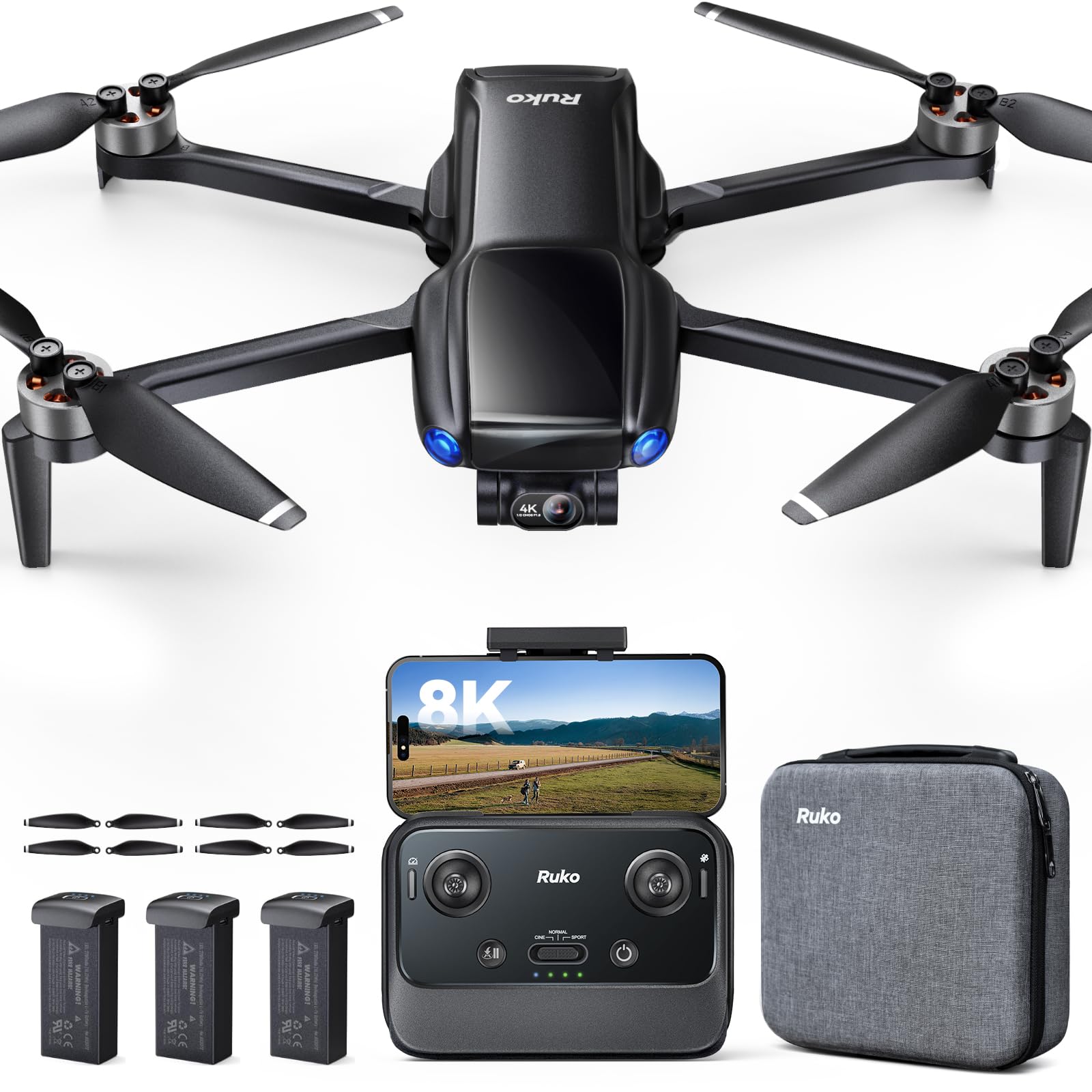
Ruko F11PRO 2

89 /100
Keeper Score Excellent

Key details

Video
4K/30fps
Gimbal
3-axis
Weight
12.6 oz
Flight Time
70 min (2 batteries)
Check Price on Amazon

If you have never flown a drone, the F11PRO 2 is built to take away the two things that frighten new pilots: crashing it and losing it. One-key takeoff and landing handles the first. GPS return-to-home handles the second, bringing the aircraft back on its own when the battery runs low or the signal drops.

What surprised us is how much camera comes with the training wheels. A three-axis mechanical gimbal is the difference between footage you keep and footage you delete, and it's here alongside 4K/30 video and 6K photos. Two batteries give 70 minutes in total — enough for a morning of short flights rather than one long one — and GPS follow keeps you framed while you walk a trail. Circle and waypoint modes give you something to grow into once the basics stop feeling like a test.

The catch is weight. At 357 g it sits above the 250 g line, so in the U.S. it needs FAA registration and Remote ID, and it's a bulkier thing to pack than the sub-249 g drones here. If you fly from the same field every weekend, that's a fair trade for the gimbal and the flight time. If you want a drone that disappears into a daypack for a trip, it isn't this one.

Pros

  • Three-axis gimbal with 4K video
  • 70 minutes across two batteries
  • GPS return-to-home and one-key takeoff
  • Forgiving for first-time pilots

Cons

  • Ships without a charger
Our verdict

The least intimidating route into a gimbal-stabilized drone — straightforward to fly, forgiving to land, and honest about the paperwork.

Check Latest Price
6

Best Budget Pick

Holy Stone HS360S

86 /100
Keeper Score Excellent

Key details

Range
10,000 ft
Video
4K UHD
Weight
7.51 oz
Flight Time
20 min
Check Price on Amazon

The HS360S costs a fraction of what our top pick does and still gives you GPS follow, return-to-home, and a 4K camera. For a first drone, a gift, or a way to film a hike without thinking about piloting, that's most of what we think anyone actually needs.

At 213 g it clears the registration threshold, the controller pairs to a phone over 5 GHz, and the listed 10,000 ft of range is far more than you'll use while following a subject you can still see. Brushless motors are the reason it holds position instead of drifting between inputs, and the camera tilts through 90° by remote, so you can frame straight down when the shot calls for it.

Where the budget shows is the camera's mounting. There's no gimbal here — the camera tilts and the drone's own steadiness does the rest — so footage is fine in calm air and gets restless when the wind picks up. That's the trade for the price, and a reasonable one if your filming is casual: slow, level passes look good, and fast action was never the promise.

Pros

  • 213 g with no FAA registration
  • GPS follow and return-to-home
  • 4K camera with 90° remote tilt
  • The lowest-priced pick here

Cons

  • Short battery life and slow charging
  • 8 MP stills
Our verdict

The cheapest way into real GPS follow-me flying, as long as you keep your shots slow and steady.

Check Latest Price
7

Sub-250 G Travel

Ruko U11MINI 4K

89 /100
Keeper Score Excellent

Key details

Range
20,000 ft
Gimbal
3-axis
Photos
48 MP
Flight Time
96 min (3 batteries)
Check Price on Amazon

The feature we didn't expect to care about is the beeper built into the GPS unit. Drones come down in long grass and on the far side of a fence, and a locator that makes a noise is worth more in that moment than any number on a specification sheet. It's a small decision that suggests someone thought about the day after the crash.

On paper this is the best-equipped drone under 250 g in this guide: a 1/2-inch 48 MP sensor, a three-axis brushless gimbal with EIS, three batteries for 96 minutes, and a 20,000 ft digital link, all at 248 g with no registration required. The gimbal is the part that matters — it's what separates footage you'll keep from footage you'll delete, and it's the reason this costs what it does.

The follow mode is GPS-based, which holds the drone at a set distance rather than hunting for your face in the frame. For a wide tracking shot on a trail that's exactly right; for a talking-head vlog you want a drone with visual subject tracking instead. Worth knowing before you buy, because it's a different tool rather than a worse one.

Where it lands for us is the value case. If you want a sub-250 g drone with a real gimbal and DJI money isn't happening, this is the strongest alternative to our value pick, and the lighter body makes it the easier one to carry all day. It's the drone here we'd pack for a trip where the case has to share space with everything else.

Pros

  • 48 MP sensor and three-axis gimbal
  • 96 minutes across three batteries
  • 248 g with no registration
  • GPS unit with a locator beeper

Cons

  • Battery packs vary in how well they hold charge
Our verdict

A sub-250 g drone with a genuine gimbal and 96 minutes of batteries, and the best-equipped alternative to our value pick.

Check Latest Price
8

Stabilized Value

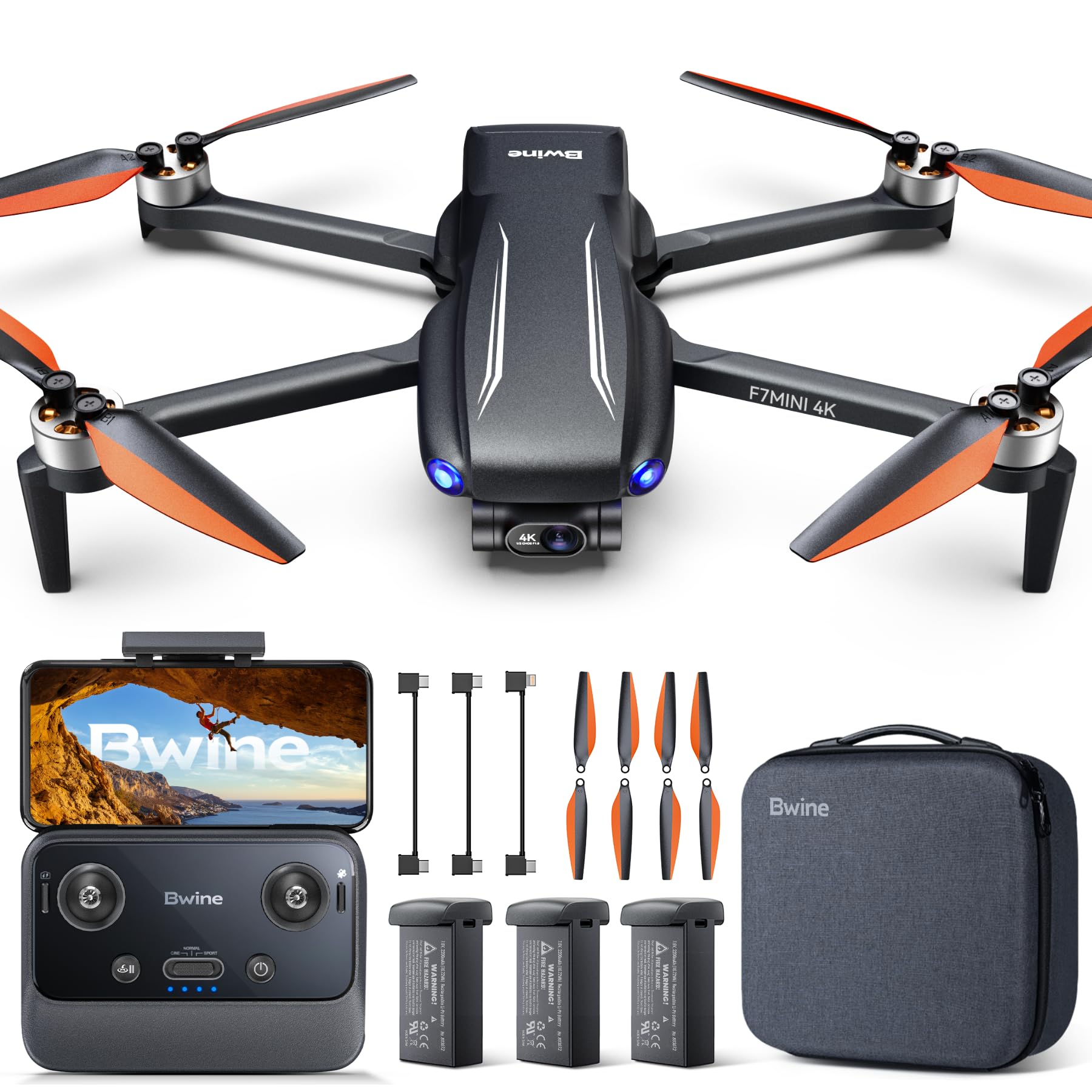
Bwine F7MINI 4K

85 /100
Keeper Score Excellent

Key details

Gimbal
3-axis
Photos
48 MP
Weight
8.78 oz
Flight Time
96 min (3 batteries)
Check Price on Amazon

On paper the F7MINI gives you most of what the two DJI picks do at a price closer to the Ruko: a 48 MP 1/2-inch sensor behind an f/1.8 lens, a three-axis brushless gimbal, three batteries for 96 minutes, a 20,000 ft link, and a 249 g body that skips registration.

Wind is where it earns its keep. The brushless gimbal works with the airframe rather than against it, so footage stays level in the mild breeze that would have a fixed camera swinging. Beginner mode, waypoint flight, and follow-me are all present, and the controls are responsive enough that a first flight doesn't feel like a negotiation.

The follow mode is the thing to test first. GPS follow is on the feature list and it works, but it can fail to engage, and on a drone bought specifically to follow you that's the difference between a hands-free shot and a retake. Fly a few tracking passes close to home before you trust it on a trip that matters.

We still take it over a cheaper drone without a gimbal. If your budget reaches this far and you want stabilized 4K with three batteries in the case, the F7MINI is a legitimate third way between our value pick and the DJI Mini 5 Pro — just prove the tracking before the return window closes.

Pros

  • 48 MP sensor behind an f/1.8 lens
  • Three-axis gimbal keeps footage level
  • 96 minutes across three batteries
  • 249 g with no registration

Cons

  • Batteries can fall well short of the 32-minute claim
Our verdict

A well-equipped sub-250 g drone with a real gimbal and a long battery kit; prove the tracking early.

Check Latest Price

How We Chose and Flew 10 Follow-Me Drones

We started with roughly 30 drones marketed as follow-me or self-flying, then cut anything without real subject tracking. From there we filtered by weight class, gimbal type, claimed flight time, and what came in the box, and read through owner reviews looking for the complaints that repeat: drift, cracked arms, batteries that quit early. That left 10, which we bought at retail and flew for seven months.

Testing happened where people actually fly — a neighborhood park with heavy tree cover, an open field, a windy beach, a wooded trail, and a backyard at dusk. We timed each first flight from case to airborne without opening the manual, counting how many taps it took and whether the app made sense, since ease of use decides whether a beginner is still flying in week two.

For tracking, I walked, jogged, and rode a bike through frame while a second person watched the live feed, noting exactly when the drone lost me, how long it took to reacquire, and whether it drifted toward trees. We reviewed the footage on a large screen at golden hour and again after sunset, checking gimbal stabilization in gusts and whether highlights blew out.

Battery life was measured, not read off the box: we timed each flight until the low-battery warning, then timed the recharge. Durability got tested the honest way — repeated folding and unfolding, a few hard landings in grass, a week riding in a backpack with the rest of the gear. Last, we compared what each box included, spare batteries and cases and controllers, because that's usually where the price gap between two similar drones actually goes.

How to Choose a Follow-Me Drone

Visual tracking vs. GPS follow

These drones follow in one of two ways. Visual tracking — DJI's ActiveTrack, Potensic's AI Track, the HOVERAir's follow mode — uses the camera to recognise a subject and keep them framed, which is what you want when the shot is a person moving through a scene. GPS follow holds the aircraft at a set distance and altitude from the controller: steadier and more predictable, but it won't keep a face in the middle of the frame.

Then match the follow speed to what you actually do. Fifteen miles an hour covers running, hiking, and a dog on a lead. Cycling and skiing need more, and the listing rarely states it — which is exactly why the HOVERAir X1's ceiling is worth knowing before you buy.

Obstacle sensing, and flying like the drone has none

Following is hands-off, which means the drone is making decisions about where to fly at the exact moment you've stopped watching it. Only two picks here cover every direction — the DJI Neo 2 and the Mini 5 Pro, whose LiDAR also works after dark. On everything else, set up tracking runs with clear air on both sides: a field, a beach, an empty trail.

That's not a compromise so much as the correct way to use one of these. A subject who disappears behind a tree line is asking for trouble on any drone, and the models without sensing simply have no way to argue with you about it.

Gimbals, sensors, and which numbers matter

A three-axis mechanical gimbal is the biggest single upgrade to footage on this list, and it's the real reason the midrange drones beat the cheaper GPS models on smoothness. Sensor size comes next: a 1-inch chip like the Mini 5 Pro's holds detail at dusk that a 1/2-inch one loses, and both beat the small sensors at the budget end.

Treat photo megapixels as the least meaningful figure on the box, and frame rate and dynamic range as the ones you'll notice in the edit. A 12 MP frame that's sharp and level beats a 48 MP one shot through a wobble every time.

Flight time, batteries, and charging

Published flight time is per battery, measured in still air. The kit total is what decides your morning. Three packs and a parallel hub, as on the Potensic ATOM 2, add up to roughly an hour and a half of flying with a fast turnaround between charges. A single 20-minute pack, as on the Holy Stone, buys one short flight and a long wait.

Count the batteries before you compare headline minutes, and buy the kit up front rather than adding packs later — the bundle is nearly always the cheaper way to get the second and third battery.

Weight, registration, and control

Under 249 g is the figure to look for in the U.S., because that's the line below which these drones are sold as exempt from FAA registration and Remote ID; the Ruko F11PRO 2 sits above it at 357 g. Weight and control tend to travel together — the lightest drones fly from a phone or your palm, while the heavier ones come with a dedicated controller and a screen you can see outdoors.

Neither is wrong. A controller is easier to fly precisely and easier to hand to someone else; a palm launch is easier to live with, because there's no case, no sticks, and nothing to charge but the drone.

Frequently Asked Questions

Final Verdict

The DJI Neo 2 is the drone we point most people to, because it does the following itself: palm launch, ActiveTrack, and obstacle sensing in a 151 g body you can carry without thinking about it.

If the footage matters more than the convenience, the Mini 5 Pro's 1-inch sensor and ActiveTrack 360° are worth the step up. If flight time is what you keep running out of, the Potensic ATOM 2's three-battery kit fixes that for less than either DJI.