Best Camera Filters of 2026

Every photographer has a version of the same story: the camera swings on its strap, the lens meets a rock, and the drive home is spent wondering whether the glass survived. I've been that person. A filter is the cheapest insurance in photography, and also the one accessory that can quietly flatten the contrast of a shot you can't retake. The right one protects your front element without leaving a green ghost of the sun in every frame.

Cheap protectors taught me the difference the hard way. Over the past six months my team and I have carried 14 filters — plain UV protectors, polarizers, neutral density and graduated sets — through hikes, a windy beach morning, and plenty of gray city afternoons, and the good ones all behaved the same way.

What separates them is unglamorous: whether the coating survives a fingerprint wiped off on a shirt, whether the threads bite cleanly instead of crossing, and whether the ring still turns after a season in a bag. The picks below are the ones that didn't make me think about them.

Keeper Score summarizes customer ratings and review volume. Read it alongside the product details and trade-offs. How the score works.

1

Best Overall

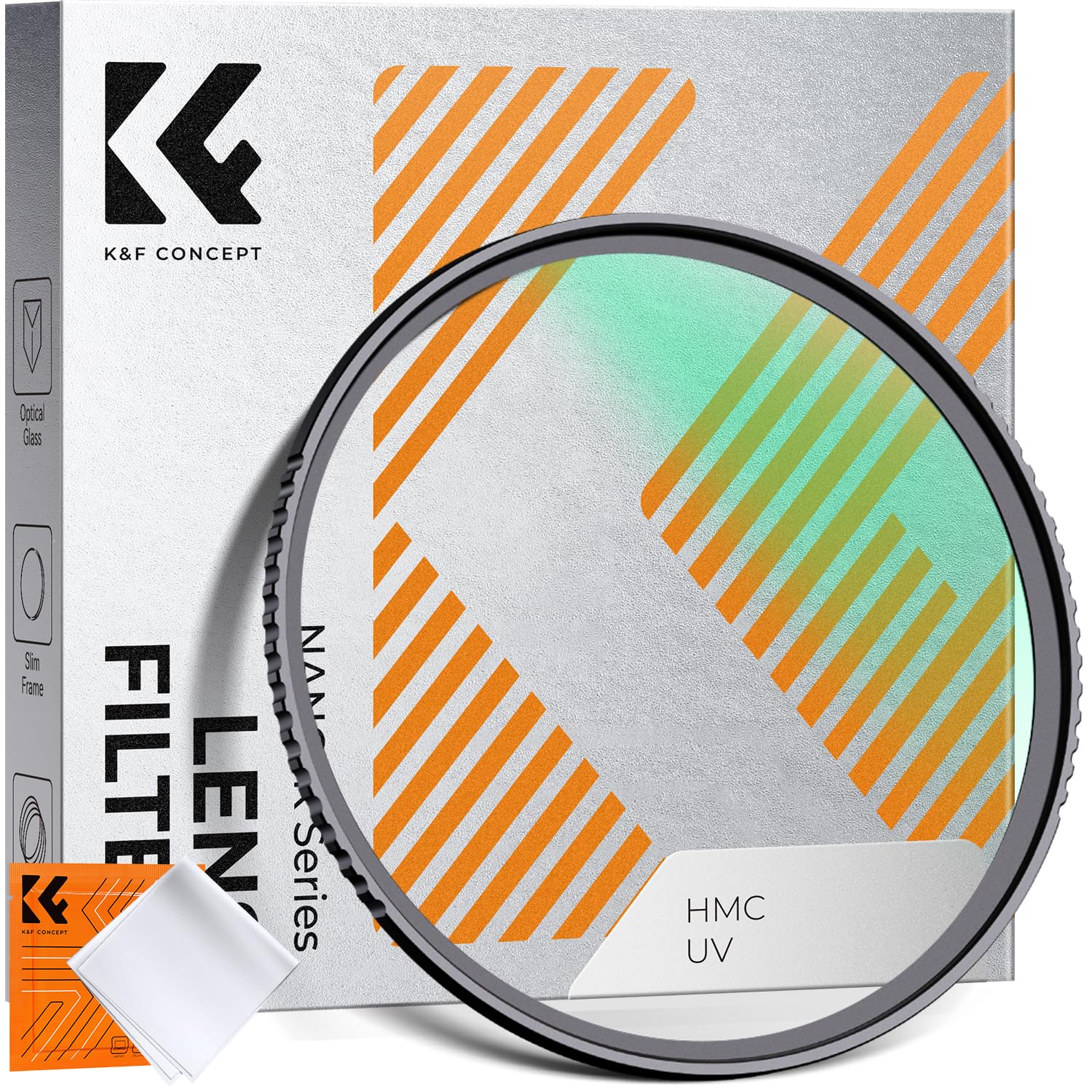
K&F Concept 58mm MCUV Filter

95 /100
Keeper Score Outstanding

Key details

Glass
AGC optical glass, 94% transmittance
Coatings
18-layer multi-coating, both sides
Thread Size
58mm
Frame Thickness
3.3mm
Check Price on Amazon

The most useful thing a filter does is also the least glamorous: it stands between your front element and the sand, spray, and bag-corner knocks of an ordinary shooting day. The K&F Concept MCUV is the one we leave threaded on and stop thinking about. Imported AGC glass, 18 coating layers on both surfaces, 94% transmittance, and in daylight frames we cannot point to anything it adds or takes away, which is exactly the job.

The 3.3mm frame is the detail that decides whether a filter lives on the camera or in a drawer. It is thin enough that lens caps and most hoods still seat over it, and it stays clear of the corners on wide and telephoto glass. The knurled ring matters more than it sounds: cold fingers, a wet lens, and a filter that will not grip is how people end up with a jammed ring.

Set against the rest of this group, it is the balance point. The Amazon Basics filter is the cheaper way to guard a front element but ships with no coating at all, and the B+W is a brass-ringed object of desire at several times the money. Eighteen layers on both sides at a slim depth is the sensible middle, and it is the pick for someone who wants one filter and no further decisions.

Our one real reservation is the thread, which is shallow enough that a careless first turn feels like cross-threading. Start it counterclockwise until you feel the click, then turn it in, and it seats cleanly every time. It is cut for 58mm lenses, the Canon EF-S 18-55mm and Fujifilm XF 18-55mm zooms among them, so check the diameter marking on your own barrel before ordering.

Pros

  • 18-layer coatings on both glass surfaces
  • 3.3mm frame keeps caps and hoods fitting
  • No visible softening in daylight frames
  • Knurled ring grips well in cold hands

Cons

  • Thread needs a careful reverse turn to seat
  • Thin glass can crack on a hard knock
Our verdict

Coated on both sides, slim enough to forget, cheap enough that a scratched one is no tragedy: this is the filter we tell most people to mount first.

Check Latest Price
2

Best Starter Kit

NEEWER 52mm ND Filter Kit

91 /100
Keeper Score Outstanding

Key details

Coating
Nano coating
Kit Extras
Rubber hood, snap-on cap, cap keeper, pouch
Thread Size
52mm
Filters Included
UV, CPL, FLD, ND2, ND4, ND8
Check Price on Amazon

Six filters, a collapsible rubber hood, a snap-on cap, a cap keeper, and a pouch arrive together, which is the appeal and also the thing to understand before buying. The UV, circular polarizer, and FLD cover protection and reflection control; ND2, ND4, and ND8 cover light reduction. For someone who has never owned a filter, it is a whole vocabulary in one purchase.

The NDs are the part worth thinking about. One, two, and three stops is mild: ND8 buys a slow shutter for moving water in shade, but it will not hold a wide aperture outdoors at midday or rescue a bright-sun video shoot. If slow-shutter landscape work is the goal, a denser fixed ND belongs on the list alongside this kit.

Build is where the compromise shows. The glass is respectable at this level, but stack two of these on a wide lens and the corners darken; add the rubber hood over a stack and it gets worse. Keep to one filter at a time and frames come back clean. The rings also bind if you overtighten, so snug them and stop turning.

We think of it as the right first purchase for someone who does not yet know whether they are a polarizer person or an ND person. Trying all six cheaply and finding out beats buying one expensive filter and guessing wrong. Once you know which effect you reach for, spend properly on that one, and you will have learned it here.

Pros

  • Six filters plus hood, cap, and pouch
  • Covers protection, polarizing, and ND in one buy
  • Rubber hood collapses flat in the bag

Cons

  • ND tops out at three stops
  • Rings can bind if overtightened
Our verdict

Six effects, a hood, and a pouch for roughly what one premium filter costs; the ND strengths are mild, but we think it is the right way to find out what you like.

Check Latest Price
3

Best for Video and Portraits

K&F Concept Black Diffusion 1/4

93 /100
Keeper Score Outstanding

Key details

Glass
Japanese AGC optical glass, 84% transmittance
Density
Black diffusion 1/4
Thread Size
67mm
Frame Thickness
3.3mm
Check Price on Amazon

A streetlight after dark grows a soft halo; a window behind a portrait subject blooms just enough to take the edge off skin. That is the black diffusion look, and at 1/4 strength it is the version you can leave on the lens without every frame reading as a hazy memory.

That restraint is why we rate it. Eighteen coating layers on Japanese AGC glass and 84% transmittance keep the frame from going flat, so sharpness stays where you put it while highlights soften. Anyone chasing a filmic, slightly dreamy rendering gets it here without the mush that heavier grades produce, and the 3.3mm aluminum frame plays nicely with hoods and wide lenses.

Mounting is unremarkable in the best way: the ring turns smoothly, the coating wipes clean, and it does not fight the lens cap. For portrait sessions and for video where you want highlights to glow instead of clipping, it is the effect we reach for before opening an editing timeline.

Pros

  • Softens highlights and skin while detail survives
  • 1/4 strength is subtle enough to leave on
  • 3.3mm frame suits wide lenses and hoods

Cons

  • Effect fades when no bright source is in frame
Our verdict

The diffusion filter to try first, and the one we keep mounted for portraits: 1/4 strength softens skin and highlights while the frame stays sharp.

Check Latest Price
4

Best Budget Protection Filter

Amazon Basics UV Filter 58mm

93 /100
Keeper Score Outstanding

Key details

Coating
None
Thread Size
58mm
Frame Material
Aluminum
Check Price on Amazon

There is no cheaper way to put glass between your front element and the world, and that is the entire argument. We treat this one as a consumable: mount it, forget it, replace it when it is scratched rather than mourning a repair bill. For daytime shooting it is clear enough that we have not seen it soften a frame, and it takes a cap and hood like any ordinary filter.

The trade is coating, and there is none. Point it into a low sun or a streetlight and you can pick up flare that a multi-coated filter would not add, so take it off when light is coming at the glass. The other thing to watch is the retaining ring: the glass can work loose and spin in the frame after a while, which is annoying rather than fatal. For a filter whose job is to be sacrificed, neither is a dealbreaker.

Pros

  • Cheapest protection in this group
  • Does not soften daytime frames
  • Cheap enough to replace without a second thought

Cons

  • Glass can work loose and spin in the ring
Our verdict

The one we buy in multiples: clear in daylight, occasionally fiddly, and cheap enough that a scratch costs you nothing worth worrying about.

Check Latest Price
5

Phone Hybrid Shooting

NEEWER 58mm Clip Filter Kit

87 /100
Keeper Score Excellent

Key details

ND Strength
5 stops
Thread Size
58mm
Phone Adapter
Clip plus 37-58mm adapter ring
Filters Included
CPL, ND32, 6-point star, four graduated colors
Check Price on Amazon

The clip and the 37-58mm step ring are the reason this kit exists: they let you screw any of its filters onto a phone, then take the same glass back to a camera with a 58mm thread. If you shoot both and resent buying everything twice, that is real convenience rather than a gimmick.

The ND32 is the standout. Five stops is enough to smooth moving water or drag traffic into streaks even with a phone's fixed aperture and no way to stop down. The 6-point star turns point lights into starbursts, and the four graduated colors in red, orange, yellow, and blue are for skies and stylized frames. The polarizer and ND are the two worth carrying daily.

Where it gives ground is phone ergonomics. The clip grabs one lens at a time, and on a multi-lens phone it will not necessarily sit over the camera you want without shuffling. For camera-only use, the screw-on NEEWER kit is the better buy; this one is for the hybrid shooter who wants a polarizer and a strong ND on whichever device is in hand.

Pros

  • Puts 58mm filters on a phone via clip and step ring
  • ND32 delivers five stops of light reduction
  • Doubles as a normal 58mm set on a camera

Cons

  • Graduated color filters are resin, not glass
Our verdict

If your phone is a second camera, this is the kit that earns its keep for us: a polarizer, a five-stop ND, and a star filter on one clip.

Check Latest Price
6

Graduated Color Effects

X-SweetDream Graduated Color Kit

88 /100
Keeper Score Excellent

Key details

Coating
None
Storage
10-slot nylon pouch
Thread Size
58mm
Filters Included
Nine graduated colors
Check Price on Amazon

Nine graduated colors, metal sealing rings, a ten-slot pouch, and no coatings. That last part is the honest headline: this is an experimenter's set, priced so you can find out what a graduated orange sky or a cool blue tint does to your pictures without committing to a coated filter you might never use again.

A graduated filter is half tinted and half clear, and you rotate the ring to sit the transition on your horizon. On digital, much of that work happens in editing, so the case for these is narrower than it once was. For black-and-white landscapes, or for darkening a blank sky in camera without a gradient mask, they are direct and quick, and the double threading means a polarizer can go on top.

We treat the set as a way to audition a look. Nine colors means you will find the two you actually reach for, and then you can buy those properly coated. The pouch holds all nine and slips into a bag pocket, which keeps the whole thing usable instead of loose in a drawer.

Pros

  • Nine graduated colors for less than the coated picks here
  • Metal rings accept a second filter
  • Ten-slot pouch keeps the set together

Cons

  • Uncoated glass flares when shooting toward light
Our verdict

The set we hand to anyone curious about graduated color: nine tints, metal rings, and a pouch, with no coating to protect you when the sun is in frame.

Check Latest Price
7

Premium Protection

B+W 62mm Master UV Filter

83 /100
Keeper Score Excellent

Key details

Coating
MRC Nano
Thread Size
62mm
Frame Material
Brass
Full-frame Coverage
17mm full frame
Check Price on Amazon

Brass, not aluminum, and you can feel the difference the first time you turn it. The Master's mount is machined from brass with a black knurled edge, so it starts smoothly, seats firmly, and does not gall the way a soft aluminum ring can after a season of mounting and removal. The thin profile stays clear down to 17mm on full frame.

We think the premium is worth paying in one situation: you have had a cheap filter seize on a lens and you never want to repeat it. MRC Nano coating repels water and dust, which matters on a coast or in drizzle, and the QR code on the packaging lets you confirm you have a real one rather than a counterfeit, which is the risk with any premium brand.

Optically it is a protection filter. It will not improve a picture the way a polarizer will, and the K&F costs a fraction as much while doing the same protective job. What the extra money buys is the ring, the easy-clean coating, and the confidence that it will still thread properly years from now.

Pros

  • Brass ring threads smoothly and resists galling
  • MRC Nano coating sheds water and dust
  • Slim enough for 17mm full frame
  • QR code verifies authenticity

Cons

  • Premium price buys build, not image improvement
Our verdict

The one we point to when a seized filter has ruined your afternoon: brass threads, a coating that wipes clean, and the only premium build here.

Check Latest Price

How We Tested Camera Filters

We started by pulling every filter we could find in the thread sizes people actually shoot, from bare UV protectors to multi-coated glass to full kits with hoods and caps, then cut anything that talked only about diameter and never about its glass or coating. That left 14 filters, which we shot with for six months.

They came with us to a salt-spray beach morning, a week of hiking, and a string of gray city afternoons. Indoors they went head-to-head in portrait sessions against a bright window, and a few spent a weekend on a video rig where a graduated or mist filter has to look natural on skin. Each one stayed on a lens for at least a full day rather than a single test frame.

We screwed each filter on and off more than twenty times, including one-handed in the cold, noting which seated cleanly, which cross-threaded, and which left the ring sitting proud of the barrel. Slim mounts got checked on a wide lens for vignetting and for whether a hood or lens cap would still clip on. Protectors were wiped with a dry cloth, breathed on, and left mounted for weeks to see if the ring seized; a couple came home from hikes with grit in the threads.

For image quality we shot the same scene into the sun at the same settings on the same body, then compared flare, ghosting, and edge sharpness. The well-coated ones held contrast and color; a few cheap discs washed out the highlights. At the end we tallied what came in the box against price, since a kit that throws in the hood, cap, and pouch is a different proposition from a single filter sold bare.

How to Choose Camera Lens Filters

Start With the Thread Size, Not the Filter

Every filter is sold by the diameter of the thread it screws into, marked on the lens barrel or inside the lens cap beside a diameter symbol. A 58mm filter will not go onto a 67mm lens, and forcing it damages both. If you own several lenses, buy for the widest one you shoot most and add a step-up ring, which lets a larger filter sit on a smaller thread.

The reverse never works: a small filter on a big lens means visible dark corners or no mount at all. Read the number off your own lens before you shop, not off the product photo.

What a Protection Filter Actually Does

On a digital sensor, cutting ultraviolet light matters far less than the packaging suggests. The reason we keep a UV filter on most lenses is sacrificial: a scratched front element is an expensive repair, and a scratched filter is a shrug. Coating is the variable that separates a good one from a bad one, because multiple layers on both surfaces suppress the reflections the filter itself adds.

That is why an uncoated filter can flare into a low sun while a coated one stays clean. If you shoot toward light often, pay for the coating rather than the brand.

Polarizers and ND: The Filters That Change Pictures

A circular polarizer cuts reflections from water, glass, and foliage and deepens a blue sky, but only when the sun sits roughly at right angles to the lens. Rotate the ring and watch the effect arrive and leave; if nothing changes, you are pointed the wrong way relative to the light.

An ND filter simply removes light, which buys a slow shutter in daylight or a wide aperture in bright-sun video. Fixed densities are cleaner. A variable ND is quicker to adjust but can vignette and cross-hatch near its darkest setting, so work in the middle of its range and check the corners.

Diffusion and Color: Buy the Look, Not the Set

Diffusion filters soften highlights and skin without softening the whole frame, and 1/4 is the strength most people can leave mounted. Their effect lives in bright sources, so in flat overcast light you may see almost nothing, which is worth knowing before you judge one.

Graduated color filters are half tinted and half clear, rotated to place the transition on a horizon. On digital, much of that work is a slider in editing, but they remain a fast way to learn what color does to a black-and-white frame. Buy one strength or one color before you buy nine.

Slim Frames, Stacking, and What Still Fits on Top

Frame depth decides whether your lens cap, hood, and bag pockets still work. Rings around 3mm keep caps and hoods seating and reduce vignetting on wide lenses; thick rings and stacked filters are where dark corners come from.

Two filters at once is the practical ceiling, and even then check the corners at your widest setting. If you shoot wide and often, we choose slim frames over extra features every time.

Frequently Asked Questions

Final Verdict

Start with the K&F Concept 58mm MCUV. It does the least dramatic job on this page and it does it cleanly: coated on both surfaces, slim enough that caps and hoods still seat, and priced so a scratched filter is an inconvenience rather than a repair bill. It is the one that stays on the camera after the novelty of the others wears off.

Add the K&F Concept Black Diffusion 1/4 if you shoot people or video and want highlights to glow rather than clip. If you are still deciding which effects you like, the NEEWER 52mm kit hands you a polarizer and three ND strengths to experiment with, and you will know what to spend properly on afterwards.