Best Overall
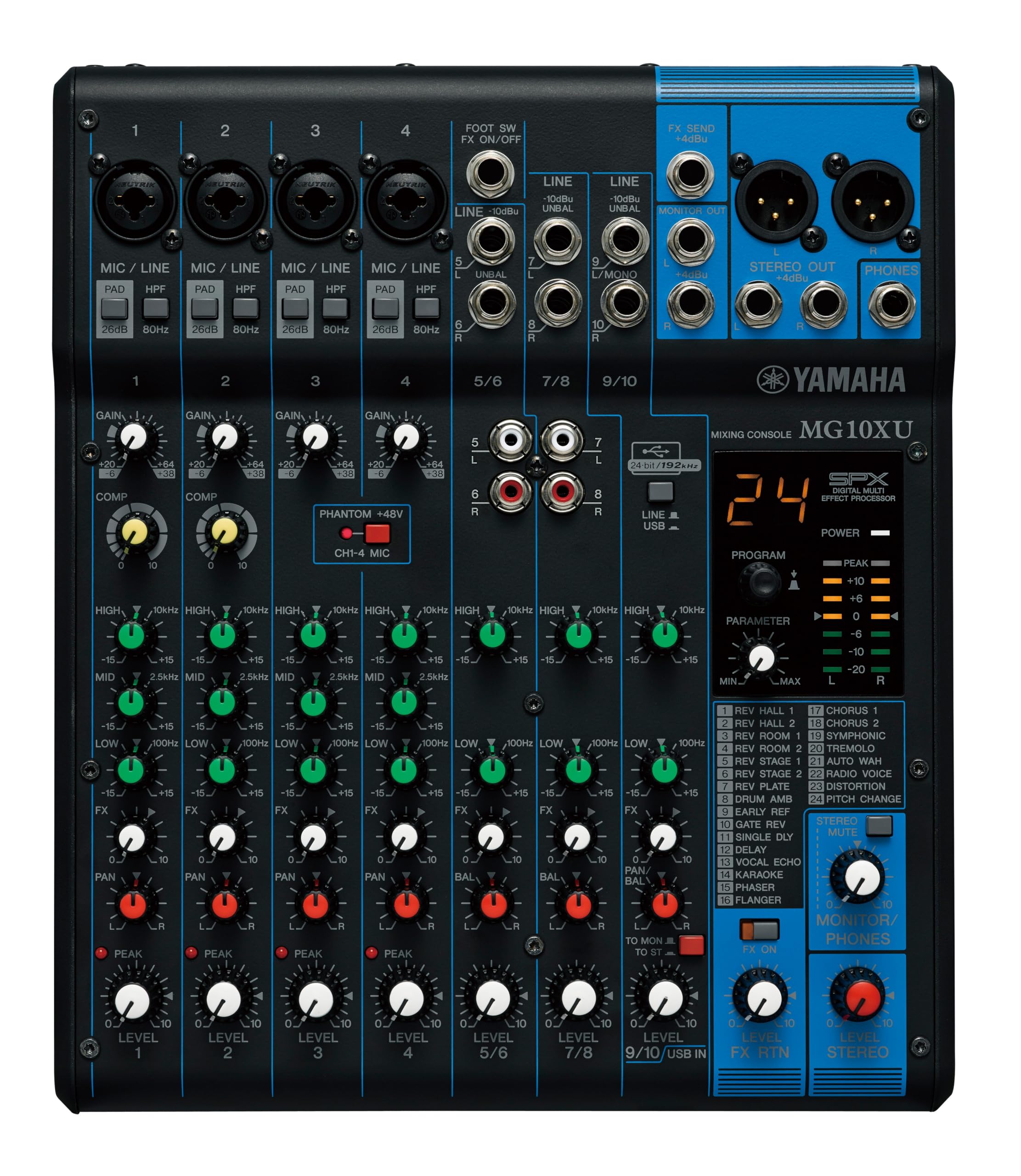
Yamaha MG10XU
Key details
- Effects
- SPX digital effects
- Preamps
- Class A D-PRE
- Channels
- 10
- Connectivity
- USB
The most useful control on this board is the one-knob compressor. It sits on the mic channels beside a three-band EQ and a high-pass filter, and it does what a good engineer does first: pulls a loud singer back into the mix without anyone thinking about ratios. Every control is on the surface, labeled, and reachable without a menu.
That layout is why it's our top pick. Ten inputs cover a four-piece band, a podcast with two guests and a music bed, or a couple of handhelds and a laptop feed, and the class A D-PRE preamps are quiet enough that we stopped thinking about them, which is the highest compliment a preamp gets. Nothing here needs a manual longer than a page.
The SPX effects were the surprise. We expected to leave them off and run vocals dry; a little reverb on a close-miked voice turned out to be the difference between a recording that sounds like a room and one that sounds like a record, and having it onboard saves a box and two cables. The powder-coated steel chassis is the other reason this one travels: at 7.7 pounds it's a two-hand lift, but nothing about it feels like it will crack in a van. The USB connection carries a stereo mix into a computer for streaming or a quick capture.
Pros
- Ten inputs cover mics and stereo sources
- One-knob compressors tidy vocals fast
- SPX effects are usable on real gigs
- Steel chassis takes being moved
Cons
- USB output runs low for direct recording
This is the mixer we hand to most people: ten inputs, compressors that earn their place, usable effects and a case that survives the van.


