Best Wired Earbuds of 2026

Every pair of wireless earbuds I've owned has died at the worst possible moment — mid-sentence on a work call, mid-podcast on the platform, one block into a run. The cheap wired pair that lives in my bag has never once asked to be charged. That's the whole appeal: a wire takes the battery out of the equation, so the only things left to judge are sound, fit, and whether the cord survives a winter in your coat pocket. Over the past four months, my team and I have listened through 14 pairs to work out which ones earn a permanent spot in the bag.

Sort out the plug before anything else. If your phone or laptop still has a headphone jack, a plain 3.5mm pair is the cheapest, most reliable thing you can buy; if the jack is gone, a USB-C set saves you from a dongle you'll lose by Thursday. Then look at the cord itself — whether it carries an inline mic and volume control, since a surprising number of genuinely good-sounding pairs leave both off — and at how many ear-tip sizes come in the box, because that's the difference between an earbud that disappears into your ear for a long flight and one you're re-seating every ten minutes. We weighed all of it, plus the two-packs that make splitting a set with a roommate worth it, and the picks below are the ones that held up.

Keeper Score summarizes customer ratings and review volume. Read it alongside the product details and trade-offs. How the score works.

1

Best Overall

Panasonic ErgoFit

88 /100
Keeper Score Excellent

Key details

Ear Tips
S/M/L
Connector
3.5mm
Microphone
No
Cable Length
3.6 ft
Check Price on Amazon

The ErgoFit's best feature is the one you notice before sound: the fit. Three sizes of soft tips and a rounded in-ear housing give most ears a secure seal, and the 4-gram earpieces stay light enough to forget about. We think that matters more than a spec-sheet driver number, because a poor seal makes every other quality irrelevant. The three tip sizes do the real work: if the medium feels loose, the large usually restores the seal without pressure. At this price, it is the pair we recommend first for straight listening.

The 3.6-foot cord is long enough to run from a pocket to a desk without looping, and the 20Hz-20kHz range and 16-ohm impedance make the pair easy to drive from a phone or laptop. Sound is balanced rather than bass-heavy, with enough passive isolation to take the edge off a bus or an open office. Nothing about the design calls attention to itself, which is the point.

The catch is the missing microphone and controls. There is no inline mic, no call button, and no volume rocker, so this is not the pair for meetings or long phone calls. If that is your main use, the Sony below is the better buy. For everyone else, the ErgoFit is the rare budget earbud that gets the fundamentals right and asks you to give up only the extras.

Pros

  • Secure fit with three tip sizes
  • Balanced sound and useful passive isolation
  • Very light 4-gram earpieces
  • Long 3.6-foot cord

Cons

  • Comfort varies with ear shape
Our verdict

We recommend the ErgoFit first for pure listening: it nails fit and sound for very little money and keeps the design simple.

Check Latest Price
2

Best with a Microphone

Sony MDREX15AP

88 /100
Keeper Score Excellent

Key details

Ear Tips
S/M/L
Connector
3.5mm
Microphone
Yes
Driver Size
9 mm
Check Price on Amazon

The Sony MDREX15AP is the pick that makes the top pick's missing microphone obvious. It has the same 3.5mm plug and in-ear fit, but adds an inline mic and a remote for calls, play/pause, and track control. That one addition turns a listening pair into something you can wear for a work call and then keep on for music.

We think the 9mm drivers give it a clear, lively sound for spoken word and pop, and the three tip sizes plus cord slider help keep the cable from flapping. Our reservation is long-term reliability: these are an affordable call headset, not a buy-it-for-life pair. Treat the cable gently and keep the receipt.

For a cheap wired headset, the Sony covers the basics: a 3.5mm plug that works with laptops, tablets, and older phones, a mic for calls, and a cable that is easy to route. We prefer it to the Jib when call quality matters, and to the Panasonic when you need a mic at all.

Pros

  • Inline mic and remote for calls
  • Clear, lively 9mm driver sound
  • Three tip sizes and a cord slider

Cons

  • Inline remote lacks volume buttons
Our verdict

For calls, we point you to the Sony: the inline mic and 3.5mm plug make it the practical everyday pair for meetings and podcasts.

Check Latest Price
3

Best Budget

Skullcandy Jib

89 /100
Keeper Score Excellent

Key details

Ear Gels
2 sizes
Connector
3.5mm
Microphone
Yes
Cable Length
48 in
Check Price on Amazon

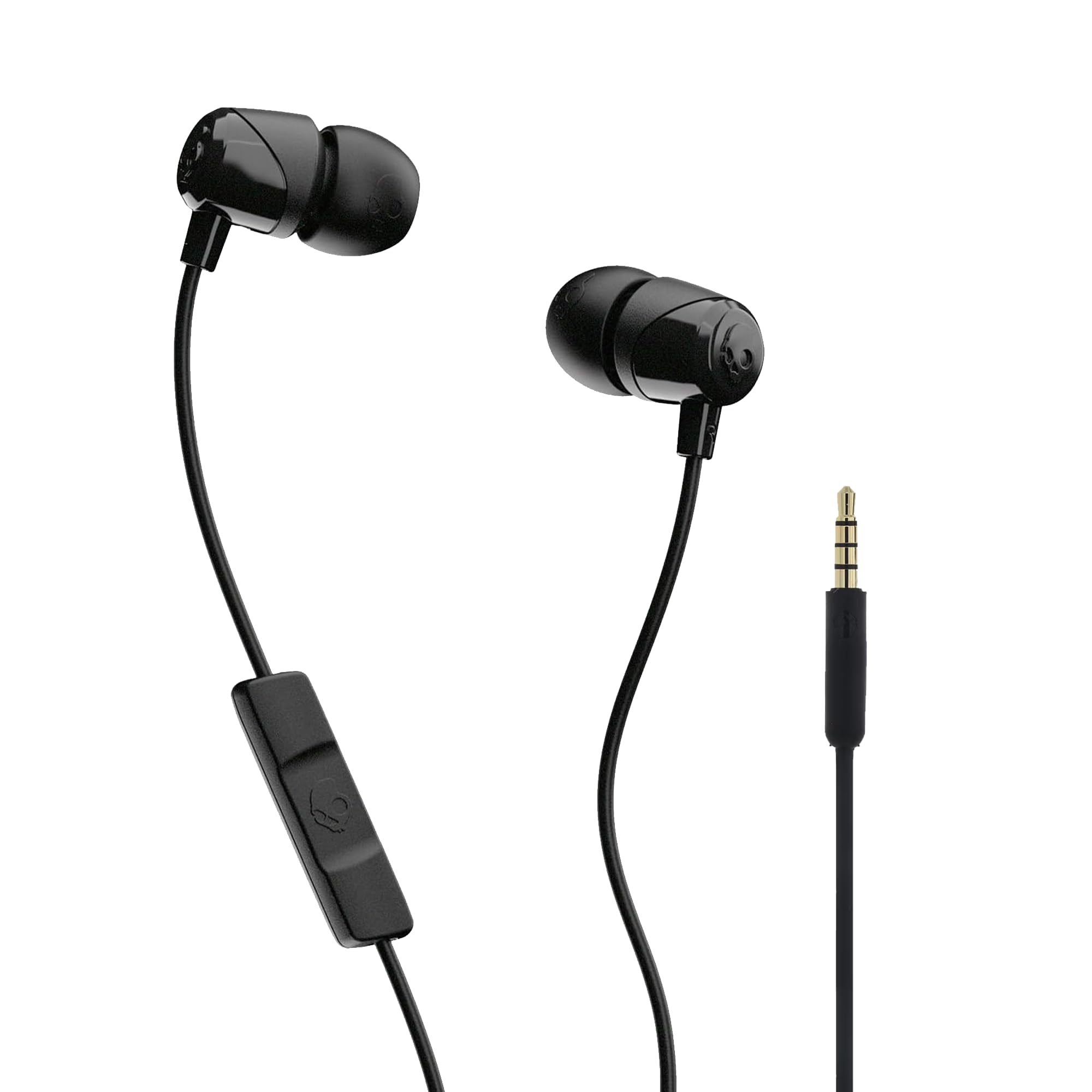
The Jib is the pair we hand to someone who goes through earbuds: it is light, it has a 48-inch cable, and it comes with two sizes of ear gel. The 3.5mm plug works with the widest range of older phones, laptops, and game controllers, and the inline mic means you can take a call without swapping headsets.

Sound is the pleasant surprise. The 16-ohm, 20Hz-20kHz design is easy to drive, and the in-ear seal gives pop and podcasts some body without asking for much volume. The one-year warranty is also a useful cushion at this end of the market.

We think the Jib is best treated as a disposable everyday pair, not a long-term investment. The fit can loosen when you move, so this is not the pair for hard intervals. For a desk, a commute, or a spare bag, it is the budget pick we keep coming back to.

Pros

  • Low-cost 3.5mm wired pair
  • Inline mic and track control
  • Two ear gel sizes and 48-inch cable
  • One-year limited warranty

Cons

  • Cable can transmit handling noise
Our verdict

We keep the Jib around as the pair for gym bags and glove boxes: it is cheap, light, and has a mic for quick calls.

Check Latest Price
4

Best USB-C Value

BLXSounds USB-C 2-Pack

83 /100
Keeper Score Excellent

Key details

Connector
USB-C
Pack Size
2 pairs
Driver Size
14.2 mm
Cable Length
3.9 ft
Check Price on Amazon

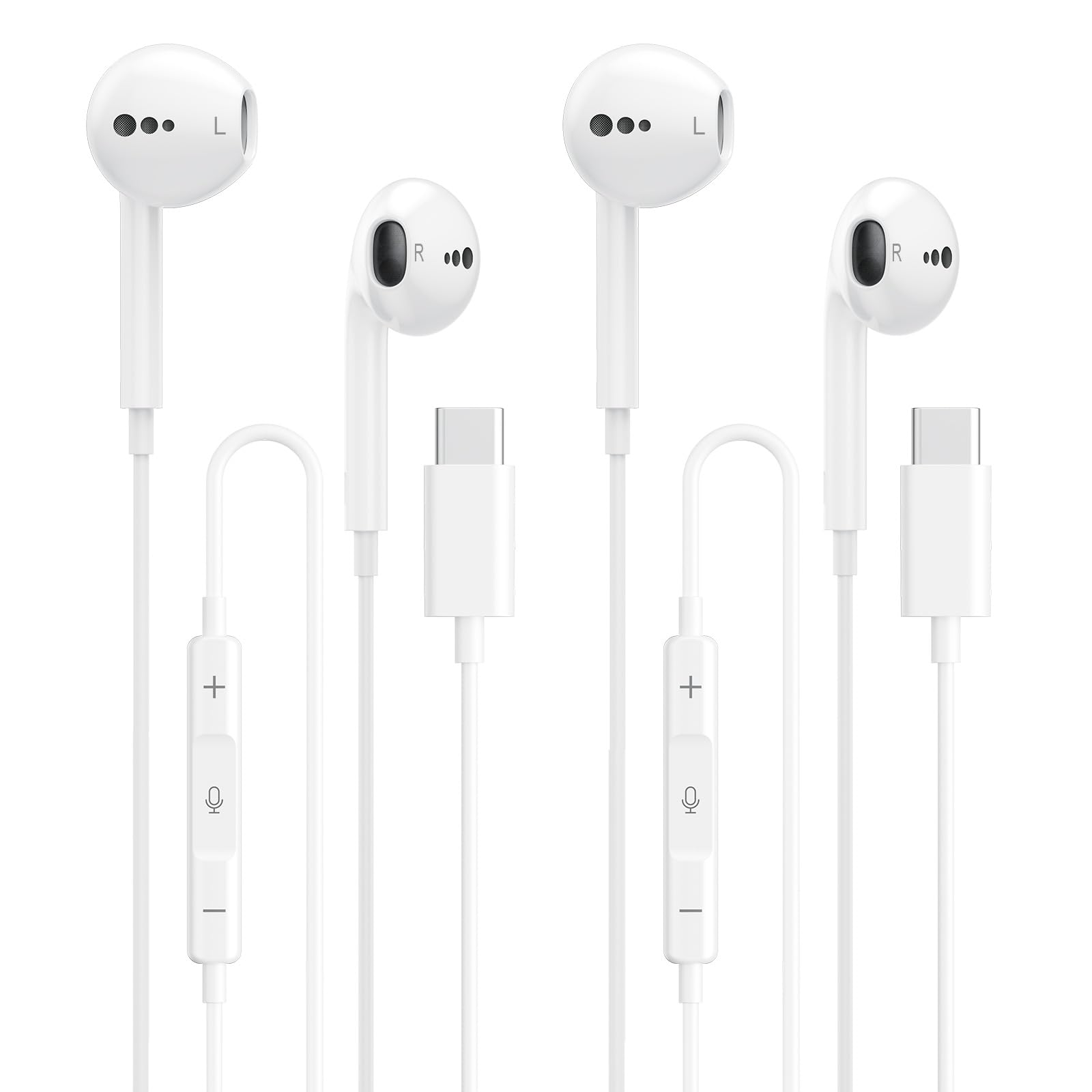
Two USB-C pairs in one pack is the reason this BLXSounds set earns a place. We recommend it for the phone or tablet that has already lost its headphone jack: you get a pair for your bag and a spare for the desk, both with a 3.9-foot cable and inline volume and call controls. It is the least fussy way to keep wired audio on a USB-C device.

The 14.2mm dynamic driver gives these a fuller low end than the tiny earbuds that come in some phone boxes, and the angled in-ear housing stays put in most ears. Calls are clear enough for quick conversations, and the plug-and-play connection means no pairing menu or battery check.

We treat the noise isolation as modest—fine for a quiet office, not for a noisy train. For USB-C listeners who want a spare set without spending much, that is a fair trade.

Pros

  • Two USB-C pairs in one pack
  • Inline volume and call controls
  • 3.9-foot cable and 14.2mm driver

Cons

  • USB-C only, with no 3.5mm fallback
Our verdict

We recommend this two-pack for USB-C phones: you get a spare pair, working inline controls, and no charging ritual for a very low outlay.

Check Latest Price
5

Multi-Device Households

Antool Wired Earbuds

88 /100
Keeper Score Excellent

Key details

Plug
24K gold-plated
Housing
45° angled
Connector
3.5mm
Pack Size
2 pairs
Check Price on Amazon

The Antool's 45-degree angled housing is meant to sit deeper in the ear, and that shape is the first thing to check: the tips run large, so smaller ears may find them uncomfortable or slow to settle. If they fit, the two-pack is a lot of wired earbud for the money, with a 24K gold-plated 3.5mm plug and an inline mic.

Sound is clear and loud for calls and podcasts, and the cable is long enough to leave a phone in a bag. The remote handles volume and track changes, and the angled housing keeps the cable out of the way on a desk. For a pair that costs about as little as wired earbuds get, the build feels more substantial than the price implies.

We recommend the Antool as a bulk buy for a household with several 3.5mm devices. If the angled shape suits you, you get two pairs, a mic, and a cable that takes everyday handling; if it does not, the Sony is the safer shape.

Pros

  • Two pairs for multiple devices
  • Clear, loud sound for calls
  • 45-degree angled in-ear housing
  • 24K gold-plated 3.5mm plug

Cons

  • Inline buttons can feel imprecise
Our verdict

The Antool is a sensible bulk buy for 3.5mm devices, with an angled housing, a mic, and two pairs in the box.

Check Latest Price
6

No-Mic Listening

Sephia SP3060

88 /100
Keeper Score Excellent

Key details

Connector
3.5mm
Microphone
No
Driver Size
10 mm
Cable Length
3.8 ft
Check Price on Amazon

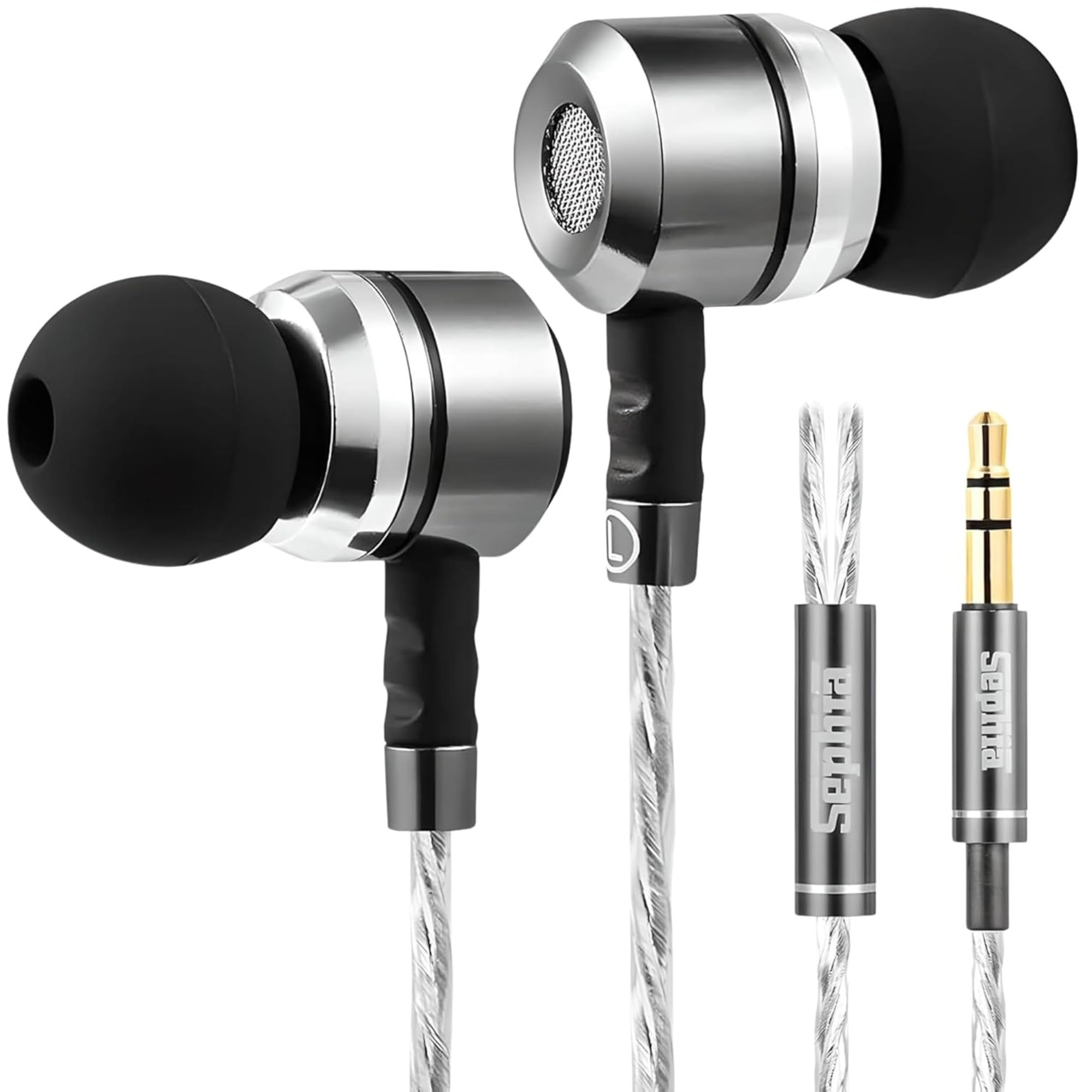
The SP3060 arrives with six sets of ear tips and a small case, which is more accessory support than most budget earbuds bother with. The aluminum housings and 3.8-foot tangle-free cord also make it feel less disposable than the price suggests.

We like the 10mm driver for a warm, bass-forward sound that suits commuting and gym playlists, and the in-ear seal does a decent job of blocking surrounding noise. The fit can loosen when you are walking, especially if you choose the wrong tip size, so take the time to try the six sets included.

Compared with the Panasonic, the Sephia gives you a case, a slightly longer cable, and a more substantial housing, but it does not match the ErgoFit's consistently secure fit. We recommend it for listeners who want those extras and value the sturdier feel.

Pros

  • Aluminum housings feel sturdier than budget plastic
  • 10mm driver with warm bass
  • Six sets of tips and a carry case

Cons

  • No microphone or inline controls
Our verdict

We like the SP3060 as a listening upgrade for anyone who wants a case, six tip sets, and a sturdier-feeling cable.

Check Latest Price

How We Chose and Tested Wired Earbuds

We started with every wired earbud we could find from brands we already trust and a long tail of names we'd never heard of, then filtered by the things that change daily use: the plug, whether a mic and in-line controls sat on the cord, how many ear-tip sizes shipped in the box, and price. That list ran past two dozen models, which we narrowed to 14 and bought at full price ourselves rather than accepting samples. Testing ran four months — long enough for a weak cable to reveal itself.

Most of that time happened on commutes, at desks, and on runs. I kept notes on whether a pair stayed seated through a 40-minute run, and whether my ears ached after two hours of calls, which is where comfort differences actually show up. For sound, I listened to the same handful of bass-heavy and vocal-forward tracks on each pair, then again on a noisy train platform to hear how much the tips blocked and how high the volume went before it distorted. I stuffed every cord into a jacket pocket, pulled it out the next morning, and recorded how badly it had knotted.

Microphone quality got tested by sending voice memos from a busy street and a quiet room, then listening back for that far-away, underwater sound. I noted whether volume and track controls worked without digging out my phone, and whether the plug housing started to bend or crackle after weeks of being wrapped around a hand. Every pair that developed a dead channel or static got flagged in a shared spreadsheet, alongside what arrived in the box — spare tips and a case make a set far less likely to get lost in a drawer.

How to Choose Wired Earbuds

Start with the connector, not the driver

The plug decides which devices you can use without an adapter. A 3.5mm pair is the most flexible: it works with laptops, tablets, game controllers, and older phones, and it is the format we recommend for a shared household pair. USB-C is the better fit for a phone that has already dropped the round jack, but check that the device supports wired USB-C audio. Lightning is its own ecosystem; if you are on a Lightning iPhone, a Lightning-specific pair or the adapter that came with the phone is the practical route.

If you split listening between a USB-C phone and a 3.5mm laptop, two cheap pairs often cost less hassle than a drawer full of adapters. The BLXSounds set is the USB-C example here; the Panasonic and Sony are the 3.5mm side.

Decide whether you need a microphone

An inline mic and remote are the difference between a listening pair and a headset. If you take calls, join video meetings, or use voice chat, buy for the mic first: the Sony MDREX15AP is the straightforward 3.5mm choice here, and the BLXSounds pair covers USB-C. If you mostly listen, a no-mic pair can put the money into fit and sound instead; that is exactly why the Panasonic ErgoFit is our top pick despite having no microphone.

Do not assume every wired earbud with a cable has a mic. The Sephia SP3060 and Panasonic ErgoFit are listening-only designs, while the Skullcandy Jib and Antool add a mic at a similar budget. Check the product name and the inline pod before you buy.

Fit is the feature you cannot see on a spec sheet

An in-ear earbud only sounds right when the tip seals. A loose seal costs bass, lets in noise, and makes you turn up the volume; a good seal does more for perceived sound than a fancy driver claim. Start with a pair that includes small, medium, and large tips, then try the smallest tip that still seals—most people overestimate the size they need.

Housing shape matters too. The Panasonic ErgoFit and Sony MDREX15AP use a rounded in-ear shape that suits a wide range of ears. The Antool's angled housing runs large, so smaller ears may find it uncomfortable. If you know you have narrow ear canals, choose the rounder shape first.

Cable behavior matters more than cable length alone

A 3.6- to 4-foot cable is the practical range for a phone in a pocket or a laptop on a desk. Longer cables give you room to move but collect more loops; shorter ones tangle less but can pull tight. The Skullcandy Jib's 48-inch cable is generous for a desk, while the BLXSounds 3.9-foot cable is easier to manage on a commute.

Look for strain relief at the plug and a cord slider or flat cable if you coil the pair often. The Sephia's tangle-free cord and the Sony's cord slider help, but neither makes a thin cable indestructible. Coil loosely and avoid yanking the plug out by the wire.

Frequently Asked Questions

Final Verdict

We recommend the Panasonic ErgoFit first because it gets the parts that matter most right: a secure in-ear fit, balanced sound, and a light cable that stays out of the way. It is the pair we reach for when the goal is simply listening.

If calls are non-negotiable, choose the Sony MDREX15AP instead; it adds an inline mic without giving up the universal 3.5mm plug. For a USB-C phone, the BLXSounds two-pack is the practical spare-pair answer.