Best Panasonic Cameras of 2026

Every camera decision is a tug-of-war between sensor size and zoom reach. A big sensor gives you clean files after dark and that soft background blur; a long lens puts the far side of a stadium in your frame. Nobody sells you both in a single body, so the honest question isn't which camera is best — it's which compromise fits the way you actually shoot.

I've traded up and down that line for years, most recently on a trip where I carried a pocket camera all day and wished for a bigger sensor every night. Over the past seven months, my team and I have shot with nine cameras at farmers markets, little-league games, and a genuinely dim aquarium. The numbers that ended up mattering weren't megapixels: it was how fast the focus locked onto a kid running at me, how steady the frame stayed at full zoom, how much camera each one bought for the money, and whether a friend picking it up cold could find her way around the menus. Here's what earned a spot.

Keeper Score summarizes customer ratings and review volume. Read it alongside the product details and trade-offs. How the score works.

1

Best Overall

Panasonic LUMIX FZ300

92 /100
Keeper Score Outstanding

Key details

Video
4K UHD 2160p
Sensor
12.1MP 1/2.3-inch MOS
Zoom Range
24x optical, 25-600mm
Weather Sealing
Splash- and dust-proof body
Check Price on Amazon

A 25-600mm lens that holds f/2.8 for the whole zoom range is the reason this camera takes our top spot. Zooms usually darken as they extend, which is how long-lens shots end up soft; here the aperture stays open, so a bird in shade at 600mm still gets a usable shutter speed. Add a splash- and dust-proof body and you have the one camera here that handles a wet hike and a distant subject on the same trip.

In hand it feels like a small DSLR, and that is the point: the grip and the 0.70x electronic viewfinder give you something to brace against, and the articulating touchscreen means you can shoot low without lying down. The 5-axis stabilization is the other half of that, holding the frame steady enough for the lens to matter. We were glad of the sealing on wet days — it is the difference between packing up and keeping going. The feature we came back to most is 4K Photo, which records a 30fps burst and lets you pull the frame where the wings land right.

Focus asks for a little patience. Pushed to the far end on a low-contrast subject, the contrast-based system hunts, and bracing on a railing or switching from the screen to the viewfinder settles most of it. Set the function buttons once — we assigned ISO and focus mode — and the deep menu mostly stays out of the way.

Pros

  • Constant f/2.8 from 25mm to 600mm
  • Splash- and dust-proof sealing
  • Articulating touchscreen and 0.70x EVF
  • 4K video and 30fps 4K Photo

Cons

  • 12.1MP is the lowest resolution here
  • Bulky 1.5-pound body rules out a pocket
Our verdict

We recommend the FZ300 to anyone who wants one camera for wide landscapes and distant wildlife: the constant f/2.8 lens and the sealed body do what the pocket models cannot.

Check Latest Price
2

Best Pocket Travel Camera

Panasonic LUMIX ZS99

83 /100
Keeper Score Excellent

Key details

Video
4K at 30p
Sensor
20.3MP 1/2.3-inch BSI CMOS
Weight
11.4 oz
Zoom Range
30x optical, 24-720mm
Check Price on Amazon

A school concert, a stadium show, a whale offshore — the shots you cannot walk closer to are what the 24-720mm Leica lens is for, and it does them from a body that slips into a jacket pocket. Thirty times optical zoom, 20.3MP on a 1/2.3-inch backside-illuminated sensor, and 322 grams of camera.

That is the case for taking it instead of something bigger: it is the one you actually have with you. We appreciated the small conveniences more than the headline numbers — USB-C charging from the same cable as a phone, and a Send Image button that pushes a shot to a paired phone over Bluetooth without digging through menus. The 1,840k-dot screen tilts, so an overhead shot at a concert is not guesswork.

At 720mm the optical stabilization does most of the work, and we still braced against a wall for the longest handheld frames, which is worth planning for if you shoot from the back row. In good light the files hold up fine; this is a daylight camera that happens to fit in a pocket.

Pros

  • 30x zoom in a 322-gram body
  • USB-C charging and Bluetooth transfers
  • Tilting 1,840k-dot touchscreen

Cons

  • Lens dims to f/6.4 at full zoom
Our verdict

Buy it if the camera has to disappear into a pocket but still reach across a stadium; we have not found another Lumix here that balances those two so neatly.

Check Latest Price
3

Best for Video

Panasonic LUMIX S5IIX

88 /100
Keeper Score Excellent

Key details

Video
6K, unlimited recording
Sensor
24.2MP full-frame CMOS
Weight
1.63 lb
Autofocus
Phase Hybrid AF, 779 points
Check Price on Amazon

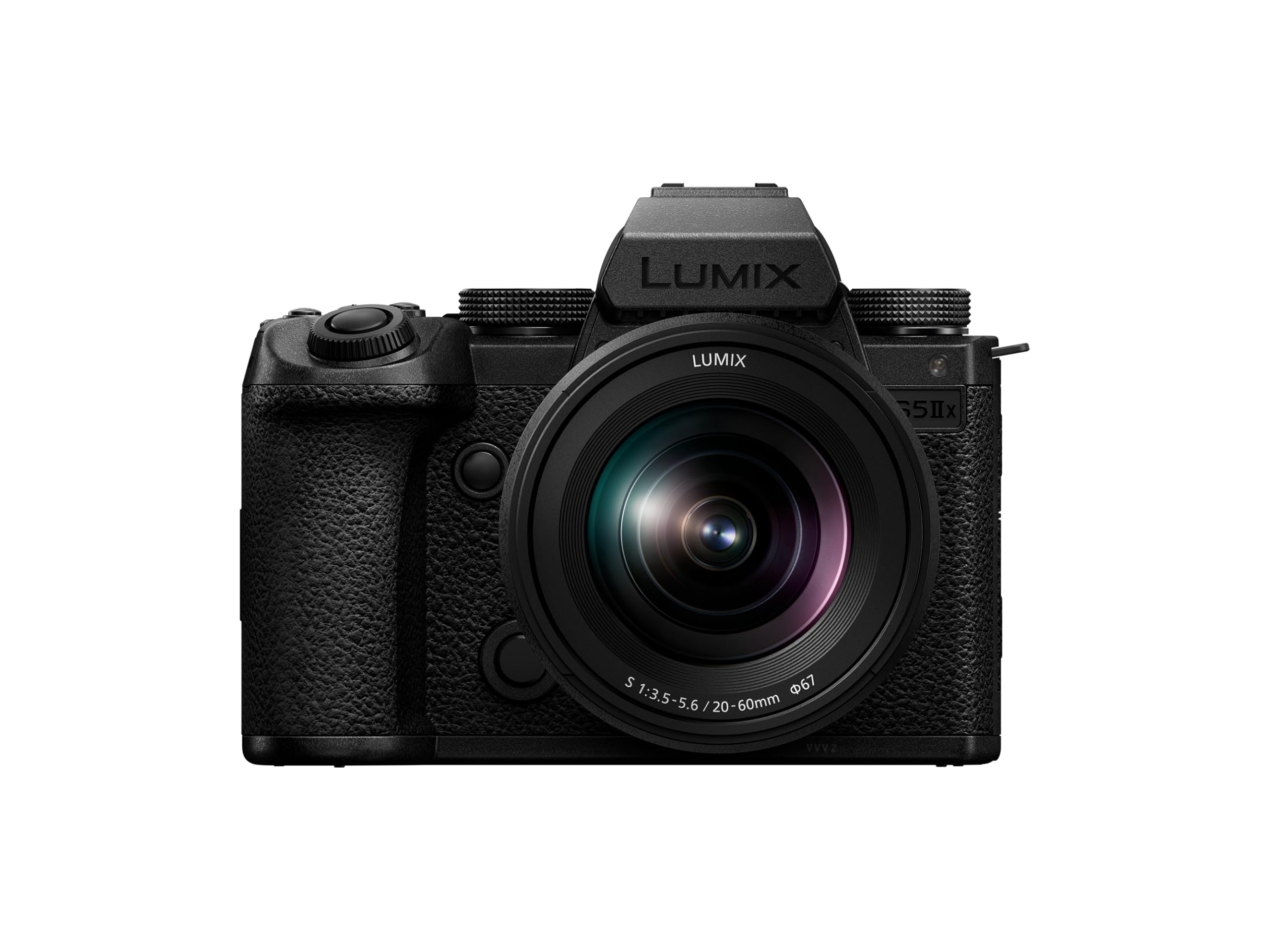
The fan is the tell. Panasonic put a small internal fan and a high-efficiency heat sink in this body so recording keeps going instead of stopping when things get warm, and that single decision is what makes the S5IIX a video camera rather than a stills camera that also does video. It records 6K, holds 14+ stops in V-Log, and can bake a LUT into the file in camera.

The autofocus is what impressed us most. Phase Hybrid AF gives it 779 points, 273 of them phase-detection, and the difference shows when a subject walks toward you: the contrast-based systems elsewhere in this group hunt in that situation, and this one holds. Active I.S. keeps walking shots steadier than a handheld 6K clip has any right to be.

It is the most expensive camera in this group, and the money buys the cooling, the phase-detect autofocus, and the dual card slots. For someone shooting stills and long-form video on the same body, that is a fair trade; for travel snapshots, the S9 or a pocket model makes more sense.

Pros

  • Unlimited recording with internal cooling
  • Phase Hybrid AF with 779 points
  • 6K video and 14+ stops in V-Log
  • Dual card slots and Active I.S.

Cons

  • Slow f/3.5-5.6 kit lens
  • Heaviest body here at 740 g
Our verdict

For video-first shooters, the S5IIX is the one we point to: unlimited 6K recording, phase-detect focus, and stabilization that keeps handheld footage usable.

Check Latest Price
4

Best Budget Superzoom

Panasonic LUMIX FZ70

89 /100
Keeper Score Excellent

Key details

Video
Full HD 1080/60i
Sensor
16.1MP 1/2.3-inch CMOS
Weight
1.3 lb
Zoom Range
60x optical, 20-1200mm
Check Price on Amazon

At 1.3 pounds, this is the lighter of the two bridge cameras here, and it reaches twice as far as the other one — 1200mm against 600mm. Sixty times optical zoom, 16.1MP on a 1/2.3-inch sensor, a 3-inch LCD and an electronic viewfinder, and a body you can carry on a strap all day.

Using it is a lesson in long-lens discipline. At full zoom, half a step of handshake moves the frame a county over; the optical stabilization helps, and a monopod or a wall helps more. Focus is the mixed part — quick on nearby subjects, less sure when you push all the way out on something small and distant, so bursts and a second attempt are worth the habit.

What we did not expect is how little it gets in the way otherwise. The controls are shallow enough to learn in an afternoon, and 16.1MP is plenty for a print. It is the camera we point new long-lens shooters to: the reach teaches you what focal length really does, and you find out whether a superzoom suits you before spending serious money.

Pros

  • 60x zoom out to 1200mm
  • Light 1.3-pound body
  • Simple controls and shallow menus

Cons

  • Video stops at 1080p
  • No Wi-Fi or Bluetooth transfer
Our verdict

If a 20-1200mm zoom is the whole point, this is the best value in the group and the lightest way to get there.

Check Latest Price
5

Travel and Social

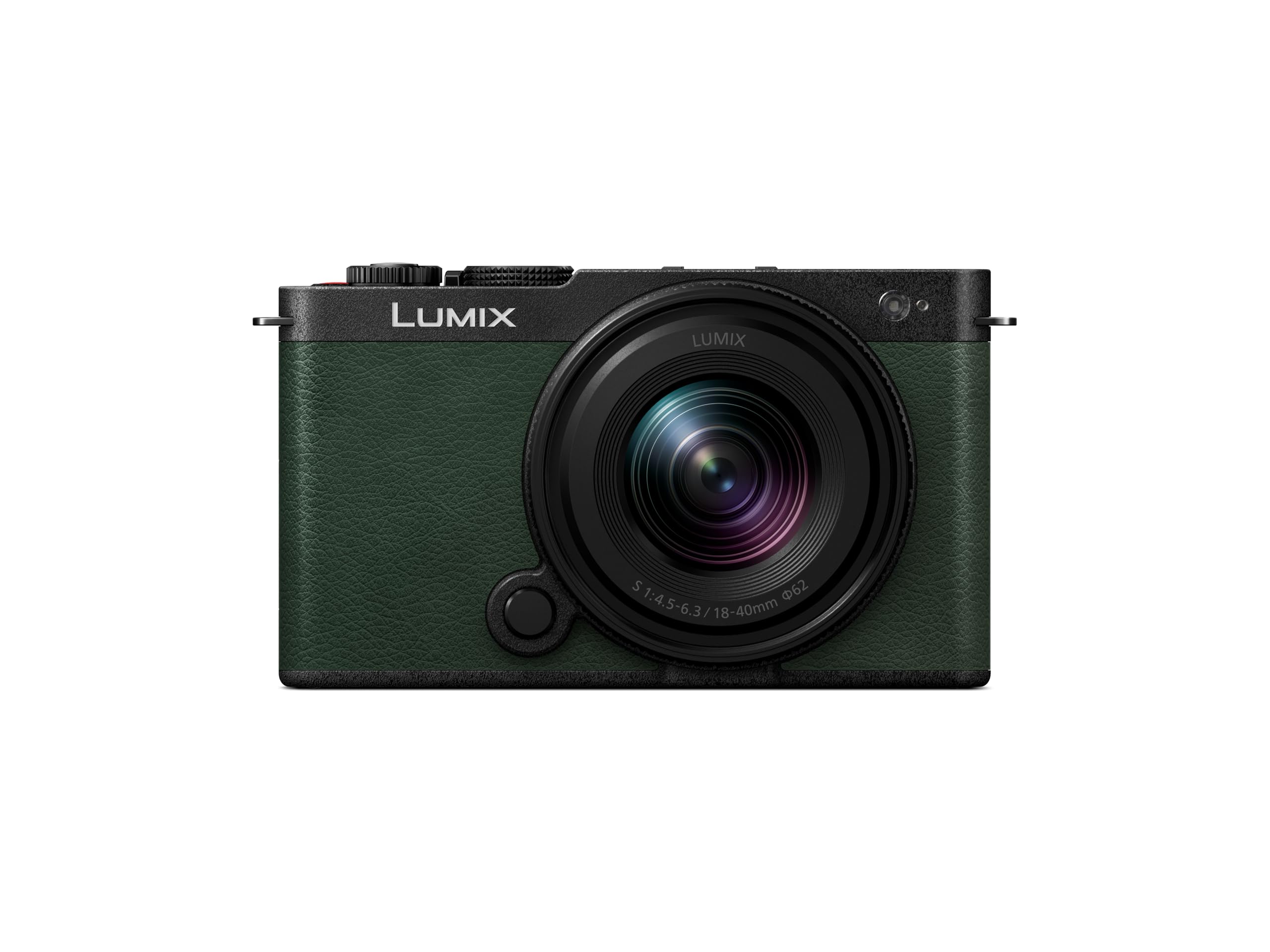
Panasonic LUMIX S9

78 /100
Keeper Score Very Good

Key details

Video
6K Open Gate
Sensor
24.2MP full-frame CMOS
Kit Lens
18-40mm f/4.5-6.3
Transfer
LUMIX Lab over Wi-Fi
Check Price on Amazon

Full frame in something you can carry like a compact is the pitch, and the S9 delivers it with an 18-40mm kit lens that barely protrudes. The interesting part is Open Gate: it records the full sensor area in 6K, so one take crops to widescreen, square, or vertical without a second setup. For anyone shooting once and posting in three places, that is real time back.

The 18-40mm range is wider than most kit lenses, which suits arm's-length video and interior shots, and the full-frame sensor gives you more room in low light than the 1/2.3-inch cameras here can offer. We found the phone handoff genuinely quicker than pulling a card: LUMIX Lab moves files over Wi-Fi, and the whole design assumes you will edit and post from a phone rather than a desktop.

Autofocus is the compromise. This body uses Panasonic's depth-from-defocus system with 255 points rather than the phase-detection hardware in the S5IIX, which is fine for framed, deliberate shooting and less so for anything moving fast. That is less a flaw than a description: the S9 rewards a simple setup and a slower pace, and it is the full-frame camera we reach for when the bag has to stay small.

Pros

  • Full-frame 24.2MP sensor in a compact body
  • 6K Open Gate for any aspect ratio
  • Fast LUMIX Lab phone transfers

Cons

  • Kit lens aperture is only f/4.5-6.3
  • Premium price for a compact body
Our verdict

For travel and social video, we like the S9: full-frame images, a pocketable kit lens, and Open Gate framing that crops to any format.

Check Latest Price
6

Budget Pocket Zoom

Panasonic LUMIX ZS20

87 /100
Keeper Score Excellent

Key details

GPS
Built-in
Video
Full HD 1080p
Sensor
14.1MP 1/2.3-inch MOS
Zoom Range
20x optical, 24-480mm
Check Price on Amazon

Built-in GPS and a 20x zoom in a body that weighs 6.56 ounces — for a certain kind of trip this is still the sensible camera. It is the least expensive model here, it shoots 14.1MP stills and 1080p video, and the 24-480mm range covers what most people actually photograph on a hike or a city break.

We like how little there is to think about. The touchscreen handles most navigation, the zoom lever falls under a finger, and the camera is out of a jacket pocket and ready before a scene passes. There is no Wi-Fi here, so photos come off on the card or a cable — pack a cheap card reader and it stops mattering.

The GPS is the quietly useful part. Every frame comes back tagged, so a year later you can find the cliff you photographed without guessing which overlook it was. That, and a zoom range a phone cannot match, is the case for carrying a separate camera at all.

Pros

  • 20x zoom from 24-480mm
  • Built-in GPS tags every shot
  • Pocketable 6.56-ounce body

Cons

  • 1080p video only
  • Autofocus hunts when zoomed in
Our verdict

We keep recommending the ZS20 to travelers who want a pocket zoom and a location tag on every shot without paying much.

Check Latest Price

How We Tested These Cameras

We started with the full current lineup and narrowed by use case rather than by spec sheet: a long-zoom body for school sports and travel, a pocketable camera for trips and concerts, and a full-frame body for people shooting photos and video for money. Anything that duplicated another pick's job too closely got cut, which left nine cameras to test.

Those nine went everywhere with us for seven months. They came to a Saturday farmers market with hard sun and cluttered backgrounds, an evening little-league game where the light dropped inning by inning, a dim aquarium where flash is banned, and a walkable downtown where we shot the way a traveler does — one hand, no tripod, camera pulled out of a jacket pocket.

At each stop we half-pressed the shutter on someone walking toward us and counted how long the focus hunted before it locked; we fired bursts at a running dog and tallied how many frames were actually sharp; we pulled every file up at 100 percent on a calibrated monitor to see how much grain showed in the shadows and whether long-zoom shots held their detail. We shot at full zoom handheld, then braced against a wall, to judge how much the stabilization covered for shaky hands. A friend who had never used any of them was handed each camera and timed while changing a setting, which told us more about ease of use than any menu walkthrough.

Reliability got checked the boring way: a full day on a single battery, a light drizzle on the weather-sealed body, and enough continuous shooting to see whether the buffer stalled. Value was the last calculation — what each camera cost against how often we actually reached for it.

How to Choose a Panasonic Camera

Match the Body to Where It Will Live

Panasonic's three families do different jobs. Pocket models like the ZS99 and ZS20 go into a jacket pocket and come out fast. The bridge cameras, the FZ300 and FZ70, add a viewfinder and a 1.3- to 1.5-pound body you carry on a strap. The S9 and S5IIX take interchangeable L-mount lenses and want a small bag.

The trap is the word compact: it means the camera fits a coat or a bag pocket, not that it vanishes into jeans. If you will not carry a bag, pick a pocket model and accept the shorter zoom; if you will carry one thing and want range, a bridge camera earns the strap.

Sensor Size Sets the Low-Light Ceiling

Every zoom camera here uses a 1/2.3-inch sensor, and the two S bodies use full frame. Reach and sensor size pull against each other. The ZS99's 30x lens dims to f/6.4 at 720mm, while the FZ300 holds f/2.8 across its 600mm range — worth roughly two stops of light at the long end.

We think that makes the lens as important as the sensor. If most of your shooting is daylight and distance, a small sensor is fine. If it is evenings and interiors, the full-frame S9 and S5IIX are the ones that will not need a flash.

Viewfinder and Screen Decide How You Shoot

An electronic viewfinder does two jobs: it shows the frame when sunlight washes out the LCD, and it gives you a third contact point that steadies a long lens. The FZ300's 0.70x finder and the FZ70's EVF are why both are easier to hand-hold at 600mm than a screen-only camera.

An articulating screen, like the FZ300's, helps with low angles and recording yourself; a fixed panel is one less thing to break. If you plan to shoot past 400mm, put a viewfinder near the top of your list.

Autofocus and Stabilization at Long Range

At 600mm and beyond, small movements become big ones. Every zoom camera here lists optical stabilization, and it earns its keep, but stabilization cannot fix a subject that moves. The phase-detection system in the S5IIX tracks a moving subject in a way the contrast-based systems elsewhere in this group do not, which matters for sport and wildlife.

On the bridge cameras, brace against something solid, shoot bursts, and accept a second attempt at the longest setting. A monopod costs far less than a new body.

Frequently Asked Questions

Final Verdict

Six cameras in, the choice comes down to what you will carry. The FZ300 is our recommendation for most people: f/2.8 held from 25mm to 600mm, a sealed body, 4K video, and a viewfinder that works in sunlight. No other camera here pairs that reach with a constant aperture.

If the camera has to fit a pocket, the ZS99 is the better buy. If video is the job and focus has to track a moving subject, step up to the S5IIX.