Best VR Headsets of 2026

VR shopping is really two purchases wearing the same name. One is a standalone headset with its own processor, game store, and controllers — charge it, put it on, and you're inside a game. The other is a pair of phone-powered goggles that cost about as much as dinner out, hold the phone you already own, and live in a drawer between uses. Neither is wrong; they answer different questions.

The things that decide whether you keep using one are quieter than the spec sheet. A wide field of view pulls you in, but a headset that presses into your cheekbones ends the session in twenty minutes no matter how good the picture is. Battery life, charging, and compatibility with the console or PC you already own matter more than most first-timers expect — and cable length comes up in review after review, because a short one tethers you to a single spot on the floor.

Over the past six months I've handed a dozen of these to family, friends, and one friend who owns everything, and the pattern held: the fun ones got picked up weekly, the fussy ones got shelved. The headsets that survived the handoffs are below, sorted by who they actually suit.

Keeper Score summarizes customer ratings and review volume. Read it alongside the product details and trade-offs. How the score works.

1

Best Overall

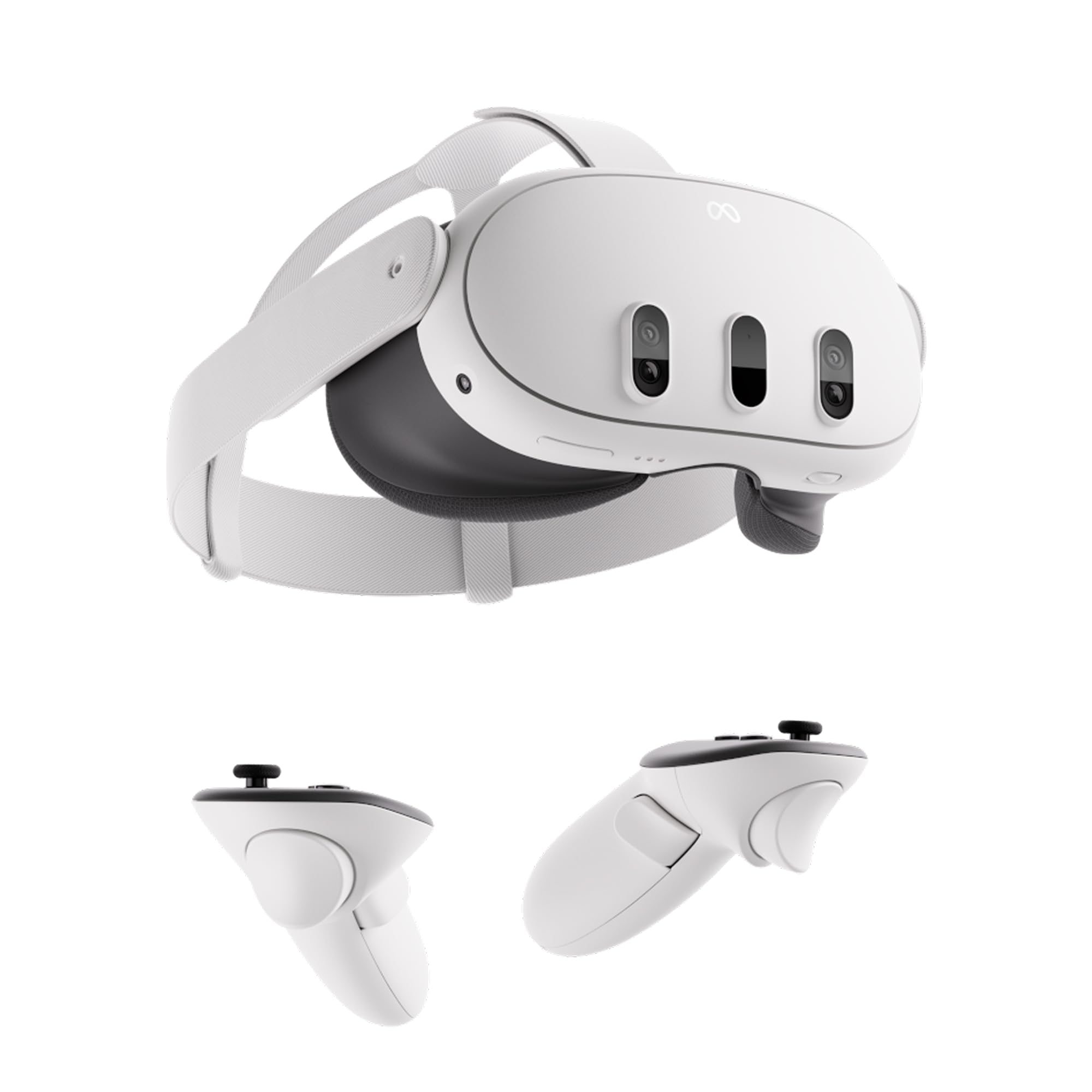
Meta Quest 3 512GB

89 /100
Keeper Score Excellent

Key details

Weight
14.1 oz
Storage
512 GB
Resolution
2064 x 2208 pixels per eye
Battery Life
2.2 hours
Check Price on Amazon

The 512GB Quest 3 is the headset we recommend first for most people, and the storage is a big reason. A 128GB headset can hold a handful of large games, a fitness app, and a streaming app before you start deleting things; 512GB gives you room to keep a library installed. The pancake lenses matter too: they keep the front of the headset from feeling like a bulky box and give the 4K+ display a cleaner look across the view.

The rest of the hardware supports that first impression. The Snapdragon XR2 Gen 2 and 120Hz refresh rate make the interface feel quick, and mixed reality is useful rather than a novelty when you want to pull up a browser or a workout screen without leaving the room. We spent most of our time in games and fitness apps, and the headset handled both without a PC or console attached.

Comfort is the part to try before a long session. The facial interface is included and the 400-gram headset is light enough to wear for a normal gaming session, but the rated 2.2 hours of battery is a session timer, not an all-day promise. A USB-C battery pack or a long cable solves the runtime problem, and the included wrist straps are a sensible safeguard for active games.

Where the Quest 3 pulls ahead of the cheaper standalone option is the combination of sharper optics and room for a real library. If you want one headset for room-scale games, mixed reality, and fitness, this is the one that feels least compromised. The extra capacity is the difference between a headset you sample and one you live in.

Pros

  • 512GB storage leaves room for a large library
  • Crisp 4K+ display and pancake lenses
  • Fast standalone performance and mixed reality
  • Works without a PC or console

Cons

  • Controller tracking can be inconsistent
  • Passthrough can look grainy
Our verdict

For the widest mix of games, mixed reality, and fitness without a PC, the 512GB Quest 3 is the headset we recommend first.

Check Latest Price
2

Best Budget

Meta Quest 3S 128GB

93 /100
Keeper Score Outstanding

Key details

Storage
128 GB
Resolution
1832 x 1920
Battery Life
2.5 hours
Field Of View
128 degrees
Check Price on Amazon

The Quest 3S is the lower-cost way into the Quest library, and it keeps the parts that matter for most buyers: the same Meta Horizon OS, the same app store, and the same untethered setup. The 128GB model is the entry point, and it keeps the mixed-reality camera setup and motion controllers that make the Quest feel like a console rather than a phone holder.

We think the 3S is the smarter buy for anyone who wants mixed reality and room-scale games without paying for the Quest 3's upgrades. The headset still runs the big Quest titles, and the included Batman: Arkham Shadow and three-month Horizon+ trial give you something to play on day one. Battery life is rated at 2.5 hours, which is slightly longer than the Quest 3's 2.2 hours, and that matters if you mostly play in short sessions.

The 3S is built for the same kind of room-scale sessions as the Quest 3, and the included Batman game gives it a clear first-night hook. We liked having a headline title in the box because it turns setup into a demo rather than a shopping trip. If you mostly play in bursts and do not need the sharpest virtual desktop, this is the one we hand to friends.

Pros

  • Runs the full Quest library without a PC
  • Mixed reality and motion controls
  • Rated 2.5-hour battery
  • Includes Batman game and Horizon+ trial

Cons

  • Softer display than the Quest 3
  • 128GB storage fills quickly with big games
Our verdict

The Quest 3S is the standalone headset we recommend when you want the Quest library and mixed reality without paying for the Quest 3's sharper display.

Check Latest Price
3

Large Phones

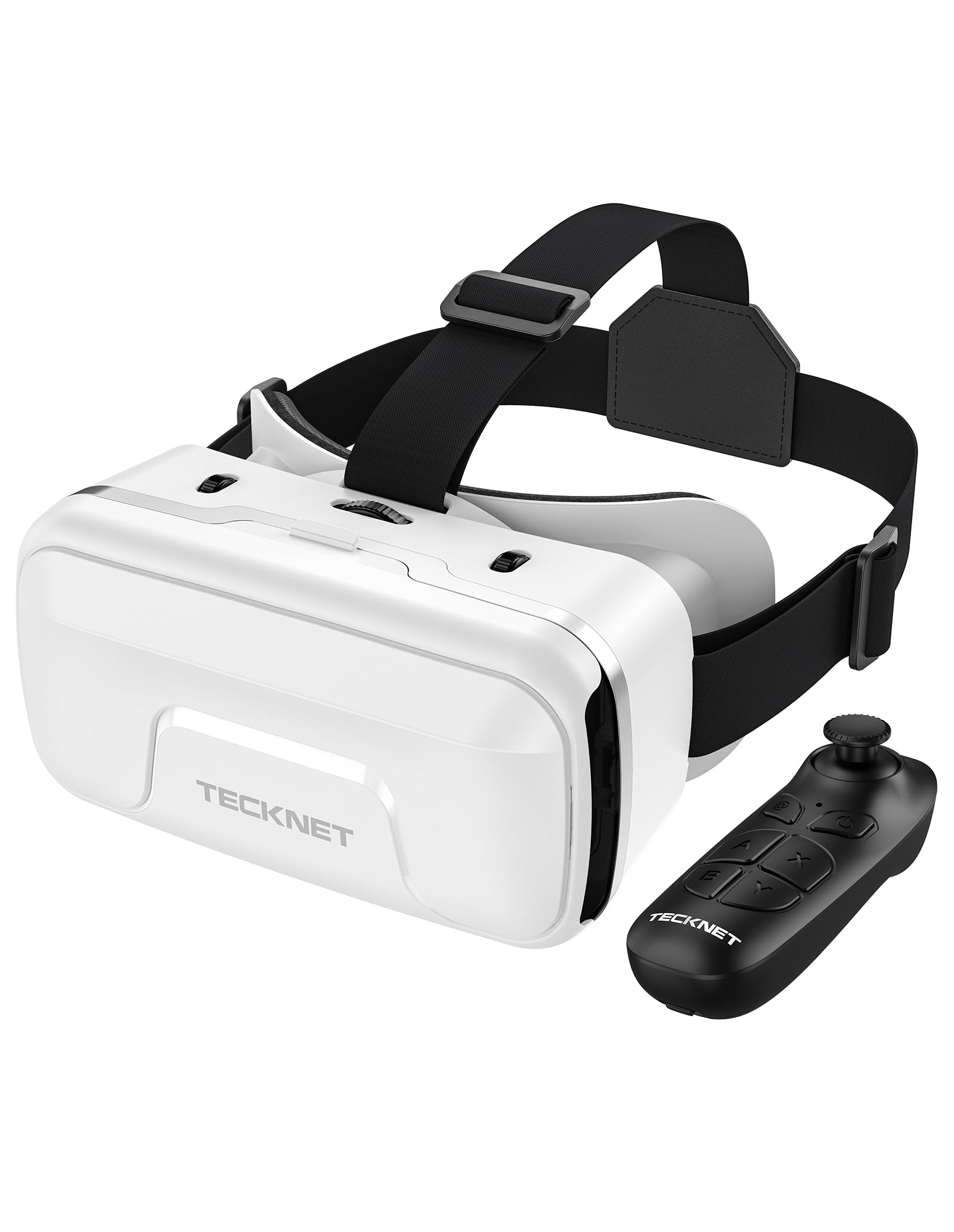
TECKNET Phone VR Headset

82 /100
Keeper Score Excellent

Key details

Warranty
3 years
Controller
Bluetooth
Field Of View
90 to 110 degrees
Phone Compatibility
4.7 to 7.2 inches
Check Price on Amazon

The TECKNET's phone tray is the reason to look at it: it accepts handsets from 4.7 to 7.2 inches, which covers the big-screen phones that many cheap VR holders cannot. We like the adjustable headband and soft nose rest for a first headset because they make the fit less fussy, and the 90- to 110-degree field of view gives you a wide window into 3D videos.

This is a phone-powered viewer, not a standalone console. The phone supplies the screen and the processing, so the experience is built around 3D videos and simple VR apps. The Bluetooth controller is handy for navigating menus and simple games, and the blue-light lenses are a nice extra, though they do not replace breaks.

For a big phone, a travel bag, or a curious beginner, the TECKNET is a low-risk way to try VR. The three-year warranty is unusually generous for this category, and the controller gives you more interaction than a bare lens holder. The included face cover and cleaning cloth are small touches that make sharing less fussy. Just do not buy it expecting a full game console; that is a standalone headset job.

Pros

  • Fits phones from 4.7 to 7.2 inches
  • Bluetooth controller included
  • Adjustable headband and soft nose rest
  • Three-year warranty

Cons

  • No positional tracking for room-scale games
  • Requires a phone for all content
Our verdict

The TECKNET is the phone-powered headset we recommend for large phones and casual 3D viewing, not for room-scale gaming.

Check Latest Price
4

Kids and Beginners

REALITEX Kids VR Headset

90 /100
Keeper Score Outstanding

Key details

Included
Cleaning cloth, controller, fabric case
Age Range
All ages
Controller
Android remote
Compatibility
iPhone and Android
Check Price on Amazon

The Realitex headset is a kids' first VR kit in the most practical sense: it is a phone holder with soft face padding, an Android remote, and a short list of included 3D videos and apps to get started. That bundle is the appeal. A child can be watching a 3D video or trying a simple VR game within minutes, without a console or a separate screen.

What we appreciate most is the guided start. The tutorial link and included content links remove the blank-stare moment that often follows a VR gift, and the adjustable straps and bigger lenses are aimed at smaller faces. The headset is lightweight enough for short sessions, and the fabric case makes it easier to put away after use.

The catch is the same one that applies to every phone-powered viewer: the experience stays seated, with 3D videos and simple apps as the focus. A child who wants to move around a virtual room or play a full Quest title will be disappointed. For a first taste, that is a fair trade, and the low-cost bundle makes it easy to find out whether VR holds a child's attention before spending on a standalone headset.

Pros

  • Simple phone-based setup for beginners
  • Includes controller and content links
  • Soft face padding and adjustable fit
  • Lightweight for short sessions

Cons

  • Performance depends on the paired phone
  • Requires a compatible phone for every session
Our verdict

The Realitex is the pick for a child's first VR experience when you want simple 3D videos and a low-cost gift, not a full gaming headset.

Check Latest Price

How We Picked and Tested VR Headsets

We started by gathering every headset a normal person might actually buy — standalone units with their own game stores, phone-powered goggles at the cheap end, and the in-between options — then filtered by price, phone compatibility, and whether the maker publishes real lens and field-of-view specs instead of vague marketing copy. A dozen made the cut, and we've lived with them for six months.

Testing happened where headsets actually get used: a living room with the couch pushed back, a bedroom where someone wanted to watch a movie lying down, and a desk where we tried linking a headset to a PC and to a console. We timed each battery from a full charge down to the low-battery warning, then timed the recharge, noting whether the headset got warm against a face while charging and playing at once. We also measured the included cable against the distance from our couch to the PC, since that number decides whether you're standing or sitting.

Fit got its own round of abuse. We put each headset on adults, a glasses-wearer, and two kids, and watched where the strap or adjustment gears ran out of length. We read menu text aloud to judge sharpness, slid our eyes to the edges of the lenses to see if the picture smeared, and asked first-timers to describe what they saw.

Fun is hard to measure, so we counted instead: how many days in a row someone reached for a headset unprompted, and whether anyone came back to it after the first week. Every session ended with a microfiber wipe so we could see how fast the lenses fogged or smudged.

How to Choose a Vr Headset

Standalone or Phone-Powered

Standalone headsets such as the Quest 3 and Quest 3S have a processor, battery, and tracking cameras built in. That is what lets you walk around a room, swing a controller, and play without a phone or PC. Phone-powered viewers are essentially lens holders: the phone supplies the screen and processing, and the experience is built around seated 3D videos and simple apps. We put standalone headsets first for anyone who wants room-scale games, fitness, or mixed reality. If you want a low-cost way to watch 3D content, a phone holder can be enough. The trap is assuming a wide field of view means the same thing as positional tracking. It does not.

Resolution, Lenses, and Comfort

Resolution is only half the picture. Lens design, display type, and how the headset sits on your face determine whether text looks crisp and whether you can wear it for an hour. The Quest 3's pancake lenses and 2064 x 2208-per-eye resolution give it a clearer view than the Quest 3S, which uses a lower-resolution display. But comfort is just as important: a lighter headset with a balanced strap will get more use than a sharper one that presses on your cheekbones. We prioritize a secure, adjustable fit and a clear center view over a single big resolution number. Try to handle a display before buying, especially if you plan to read text or use virtual desktop apps.

Storage and Battery

Storage is about how many big games you keep installed, not how much video you stream. The Quest 3S starts at 128GB; the Quest 3 comes in a 512GB version. If you mostly play a few titles and stream, 128GB can work, but large games and updates will have you deleting and redownloading. Battery ratings cluster around two to two and a half hours, and mixed reality can drain the headset faster than a simple game. A USB-C battery pack or a long cable is the practical fix; a spare pair of AA batteries for the controllers saves a session. We prefer to budget for a battery pack rather than treat the rated run time as an all-day promise.

Tracking, Controllers, and the Library

Six-degrees-of-freedom tracking is the feature that separates a real VR headset from a phone viewer. It lets the headset follow your head and hands as you move, which is what makes room-scale games, fitness, and mixed reality work. Controller tracking can still hiccup when a controller leaves the cameras' view, so keep your hands in front of you and re-center if a hand drifts. The library matters too: the Quest platform has the widest mix of games, fitness, and social apps among the headsets here, while phone-powered models depend on phone apps and 3D video. If you already own a gaming PC, check whether the headset supports PC VR before buying; if not, standalone is the simpler path.

Frequently Asked Questions

Final Verdict

We recommend the Meta Quest 3 512GB first if you want one headset for games, fitness, mixed reality, and a large library without a PC. The Quest 3S is the better choice when the display and storage concessions matter less than the savings. For a child's first taste of 3D videos or a big phone owner's casual viewer, the phone-powered picks make sense, but they are a different category of experience, not a shortcut to room-scale VR.