Best Tripod Bags of 2026

A tripod bag has an awkward tradeoff baked into it: the one long enough for your tallest light stand is a nuisance to haul up a stairwell, and the compact model that slings neatly over a shoulder won't swallow a boom. Length is where most people get burned anyway — the number in the listing rarely accounts for the head, the feet, or the half inch your stand actually folds to.

I've carried gear into studios, basements, and a few too many parking lots, and I now measure a folded stand with a tape before buying anything. Over four months we tested 15 bags, from 27-inch compacts to cases built for 50-inch boom stands, loading each one with real equipment instead of a tape measure. Zippers turned out to be the quiet dealbreaker: a coil zip on a stuffed 47-inch bag is where these fail first, usually at the corner where the padding stops.

The picks below run that whole range, from a light weekend kit to a full stand-and-lights haul.

Keeper Score summarizes customer ratings and review volume. Read it alongside the product details and trade-offs. How the score works.

1

Best Overall

HEMMOTOP 47-Inch Tripod Bag

95 /100
Keeper Score Outstanding

Key details

Weight
1.9 lb
Pockets
2 zippered pockets
Material
Water-repellent nylon
Interior Dimensions
47"L x 8.3"W x 8.3"H
Check Price on Amazon

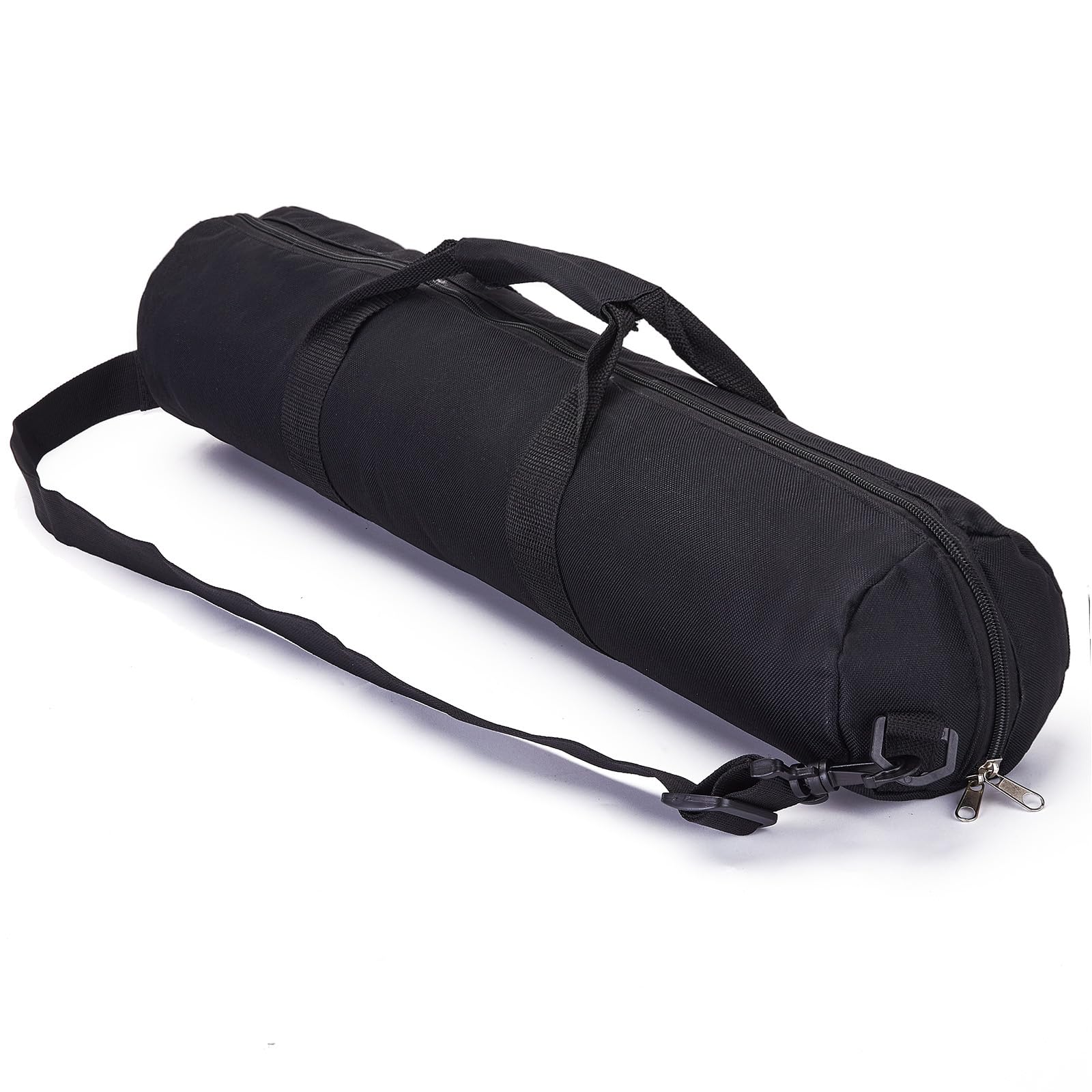
Padding is the first thing we check on a tripod bag, because everything else is negotiable. On the HEMMOTOP the cushioning runs the length of all four sides rather than sitting in a strip down one face, and 8.3 inches of girth means a tripod goes in with its head still on and a little room to spare. That combination is why it's the bag we recommend first.

The zips are the other half of the story. They're SBS, noticeably bigger than the ones on most bags this size, and they run the full length, so the bag opens flat and a stand lifts straight out instead of being fished from the top. Inside, tie-down straps stop the load sliding toward one end on the walk from the car.

At 1.9 pounds empty it isn't the lightest case here, but that weight buys structure: it stands up on its own when you set it down and keeps its shape with a light stand and a boom inside. A zippered pocket inside, and another outside, take a plate, a cable, and the small tools that otherwise rattle around loose.

Two things to know before ordering. It arrives folded, so expect creases for a day or two until something heavy sits in it. And 47 inches is generous without being infinite: with a long pan handle or a tall pan-tilt head fitted, the load gets tight, so measure the tripod collapsed with the head on and leave a couple of inches.

Pros

  • Thick cushioning on all four sides
  • Oversized SBS zips that open the bag flat
  • 47 x 8.3 inches fits a tripod with head attached
  • Interior tie-down straps and two zipped pockets

Cons

  • Long pan handles can make the fit tight
Our verdict

Our default pick: the padding, the oversized zips, and the 8.3-inch girth together protect a tripod properly without asking you to take the head off.

Check Latest Price
2

Best for Standard Tripods

VidPro TC-35 Tripod Case

92 /100
Keeper Score Outstanding

Key details

Carry
Shoulder strap and web handles
Pocket
Zippered side pouch
Material
Nylon
Interior Dimensions
35"L x 4.5"W x 4.5"H
Check Price on Amazon

Thirty-five inches is the length most photo tripods actually collapse to with a ball head left on, and the VidPro is built around exactly that. The 35 x 4.5-inch interior takes a set of legs and a compact head without disassembly, which is why it's the bag we reach for when we're carrying one tripod and nothing else.

What we keep coming back to is how little there is to it: a shoulder strap, two web handles, a full-length zip, and a side pouch that swallows a spare plate and a cable. There's no frame and no bulk, so it folds into a drawer between shoots. The padding is light, though — enough for scuffs in a trunk, not for a bag that gets thrown into a van.

The 4.5-inch girth sets the ceiling. A large pan-tilt head or a quick-release plate left proud won't go in, and neither will a second stand. Within those limits it's a straightforward, honest bag — the kind you buy once for the tripod and once more for the monopod.

Pros

  • Correct 35-inch fit with the head left on
  • Shoulder strap, two handles, and a side pouch
  • Folds flat for storage between shoots

Cons

  • Zipper is the part that wears out first
Our verdict

For a standard photo tripod that travels with its head on, this plain, correctly shaped bag does the job with no fuss and no bulk.

Check Latest Price
3

Best for Travel

TORIBIO 28-Inch Tripod Case

88 /100
Keeper Score Excellent

Key details

Carry
Shoulder strap and handles
Pocket
Zippered front pocket
Weight
13.8 oz
Interior Dimensions
28"L x 4.5"W x 4.5"H
Check Price on Amazon

At 0.39 kg the TORIBIO is the bag that disappears on your shoulder, and after a walk to a location that's the only specification anyone cares about. The 28 x 4.5-inch body suits a compact travel tripod, and there's enough length and lining to take a slim monopod alongside it. Soft lining runs the full length, so anodized legs don't come out scuffed.

It's a small bag and it knows it. Twenty-eight inches won't take a full-size studio tripod with a pan-tilt head, and 4.5 inches of girth won't take two stands side by side. What it does have is a water-resistant shell, a zipped front pocket for a plate and a remote, and both a shoulder strap and handles. For travel, and for a couple of slim light stands, this is the sensible buy.

Pros

  • Under a pound when empty
  • Soft full-length lining protects anodized legs
  • Water-resistant shell and a zipped front pocket
  • 28 inches suits travel tripods and monopods

Cons

  • Too short for a full-size studio tripod
Our verdict

A sub-pound bag for a compact travel tripod or a couple of slim stands; nothing here is easier to carry all day.

Check Latest Price
4

Best for Light Stands

YOREPEK 50.5-Inch Tripod Case

89 /100
Keeper Score Excellent

Key details

Base
Four bumpers
Weight
2.5 lb
Pockets
1 zippered, 2 hook-and-loop
Interior Dimensions
50.5"L x 10"W x 10"H
Check Price on Amazon

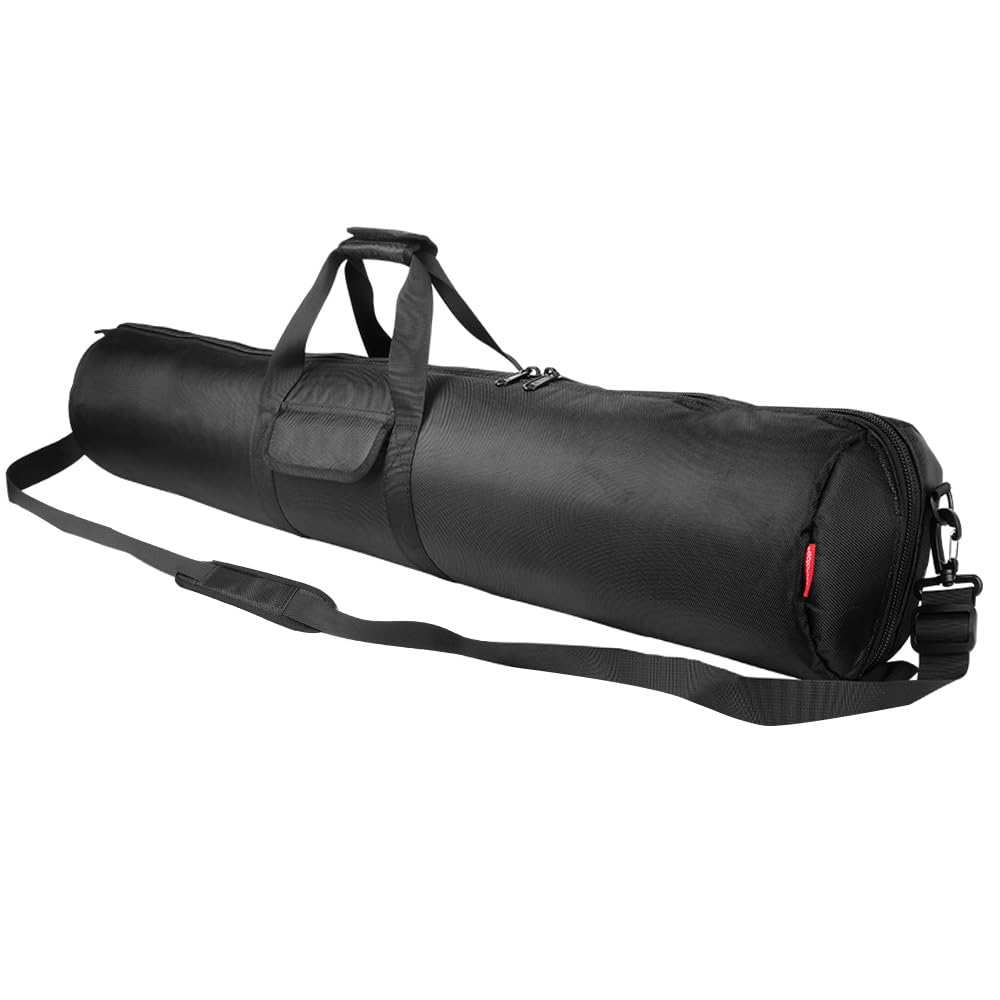
Fifty and a half inches is a statement about what you carry. This is the bag for a light stand, a boom, an umbrella, and a couple of monolights at once — not for the tripod that goes on a hike. Ten inches of girth is what makes the difference: stands go in with their brackets on, and umbrellas lie alongside rather than on top.

The four bumpers on the base are a detail worth noticing. A long soft bag usually flops over the moment you let go of it; this one stands in the corner of a studio with its base off the floor, and the fabric at the bottom doesn't grind into concrete. Three front pockets — one zipped, two hook-and-loop — take clamps, cables, and a spare shoe.

Padding is the compromise. The walls are there and the base is reinforced, but this isn't the deep cushioning of our top pick, so lights and heads want their own pouches inside rather than riding bare against the nylon. For a bag this size, that's a trade we can live with, because stands and umbrellas are hard to hurt.

It carries well on the detachable shoulder strap, which comes off entirely when two hands are easier. Think of it as a working bag rather than a protective case, and the job it does is getting an entire stand kit to the gig in one trip.

Pros

  • 50.5 x 10 inches takes stands, booms, and umbrellas
  • Four base bumpers keep it upright
  • Three front pockets for clamps and cables
  • Detachable, adjustable shoulder strap

Cons

  • Zipper is the weak point on a full load
Our verdict

If your load is stands, booms, and umbrellas rather than one tripod, this is the bag that swallows them and still stands up in the corner afterward.

Check Latest Price
5

Best for Organization

MagicLine 41-Inch Tripod Case

82 /100
Keeper Score Excellent

Key details

Weight
2.6 lb
Padding
0.4 in foam
Compartments
3 interior, plus 3 pockets
Interior Dimensions
41"L x 7.5"W x 7.5"H
Check Price on Amazon

The MagicLine opens at the end rather than down the middle, and that changes how you load it: unzip one end, slide three or four stands in head first, and the bag becomes a rack you can pull from. At 41 x 7.5 inches it's a lighting-kit bag more than a single-tripod bag, which is exactly how we used it.

Three interior compartments are what earn it a place here. Each stand gets a lane, so heads and brackets stop knocking into each other in transit, and two outer pockets plus an inner one take clamps and a spare plate. The 0.4-inch foam is a real layer rather than a token, and the shoulder strap is padded where it meets you.

There are costs. At 2.6 pounds it carries more of its own weight than the plain shells here, and that's before anything goes in. Forty-one inches is also short for a tall stand with an umbrella clamp on top. But if your kit is lighting stands that need to arrive in the arrangement they left in, the compartments do work no single-compartment bag can.

Pros

  • Three interior compartments keep stands apart
  • End-opening double zip loads from one end
  • 0.4-inch foam padding on the walls
  • Two outer pockets and an inner one

Cons

  • 2.6 pounds before you load it
Our verdict

For three or four lighting stands that need to arrive untangled, the compartments and end opening make this the most organized bag here.

Check Latest Price
6

Best Mid-Size

ITHWIU 32-Inch Tripod Bag

86 /100
Keeper Score Excellent

Key details

Carry
Web handle, shoulder strap
Storage
Folds flat
Material
Water-resistant Oxford
Interior Dimensions
32"L x 7"W x 7"H
Check Price on Amazon

Seven inches of girth at 32 inches is an odd pairing, and it's why this bag works for awkward loads. A folded light stand with its bracket on, a short boom arm, a projector screen — things too wide for a 4.5-inch tripod sleeve and too short for a 47-inch stand bag drop straight in.

The shell is Oxford nylon with a water-resistant finish, and the double zip opens from either end, which matters more than it sounds when the bag is lying flat in a trunk. Empty, it folds down small enough to keep in the car for the days you need it.

What it isn't is a structured case. There's no frame, so a half-loaded bag slumps into whatever shape the load gives it, and the protection is a layer of fabric rather than foam panels — fine against a trunk floor, not against a van floor with other kit stacked on top.

For a location kit of light stands and a couple of booms, though, this is the middle size most people actually need: shorter and easier to steer than a 47-inch bag, roomier than a tripod sleeve, and light enough to carry up a flight of stairs in one hand.

Pros

  • 32 x 7 inches suits light stands and booms
  • Double zip opens from either end
  • Water-resistant Oxford shell
  • Folds flat when empty

Cons

  • Strap attachment is the part to check on a full load
Our verdict

The middle size most location kits want: 32 x 7 inches takes light stands and booms a tripod sleeve won't, without a 47-inch bag to steer.

Check Latest Price
7

Budget Long Gear

nomiou 47-Inch Tripod Bag

85 /100
Keeper Score Excellent

Key details

Weight
1.04 lb
Pockets
Zippered side pocket
Material
600D Oxford, water resistant
Interior Dimensions
47.2"L x 8.2"W x 8.2"H
Check Price on Amazon

Forty-seven inches and 8.2 inches of girth at the budget end of this group — the nomiou is the value play, and it's honest about what it is: a big nylon tube with a zip, a strap, and a side pocket.

What you get is 600D Oxford with a water-resistant finish, double zips with reinforced stitching at the ends, dual handles, and an adjustable shoulder strap. It weighs just over a pound empty and folds down small, which is worth something if the bag spends most of its life in a closet between shoots.

What you don't get is padding. The fabric is the protection — fine for a backdrop stand, a couple of light stands, or a tripod that lives in the back of a car, and not fine for anything with glass in it. The shell is thin enough that a sharp tripod foot will find it if you drop the bag on a corner.

For gear that's already tough, that's a fair trade. For anything you'd worry about, spend the difference on one of the padded bags above; this is the one to buy when the load is long and hard to damage.

Pros

  • 47.2 x 8.2 inches for backdrop and light stands
  • Just over a pound and folds down small
  • Double zips and a zipped side pocket
  • Water-resistant 600D Oxford shell

Cons

  • Fabric-only protection, no padding
Our verdict

A long, light, budget bag for backdrop stands and hard-wearing gear; it's the value pick here as long as nothing inside is fragile.

Check Latest Price
8

Small Padded Kit

MOOCY 27.5-Inch Tripod Case

85 /100
Keeper Score Excellent

Key details

Weight
7.05 oz
Padding
All-side cushioning
Sizes Available
22, 27, 35, 45 in
Interior Dimensions
27.5"L x 7.5"W x 7.5"H
Check Price on Amazon

Four sizes in one listing is unusual, and the useful part is how MOOCY states them: the 27-inch bag fits gear up to 26 inches, the 35 fits up to 34, and so on. That's the number to shop by, because the bag you need is always a little longer than the tripod you own. We had the 27.5 x 7.5-inch medium.

It weighs 200 grams empty, has thickened cushioning on all sides, oversized zips, a padded shoulder strap, and a top handle. That's a light bag that adds almost nothing to what you're carrying, which is the point at this size — it's for the tripod that rides in the trunk next to the camera bag, not the one that gets checked.

Where it earns its place is as the compact padded option: 27.5 inches and 7.5 inches of girth take a travel tripod with the head on, or a couple of small stands, and the cushioning is enough to stop the knocking that scuffs legs. Choose your size from the 'fits up to' figure rather than the model name and it does exactly what a small bag should.

Pros

  • Four sizes, each with a stated 'fits up to' length
  • Thickened padding on all sides
  • 200 grams empty
  • Padded shoulder strap and top handle

Cons

  • Padded, but not a hard shell for fragile heads
Our verdict

A light, properly padded compact case, and the one to buy if your tripod is small and you don't want a long bag to steer.

Check Latest Price

How We Chose and Tested Tripod Bags

A tripod bag isn't complicated, which is exactly why the weak ones give themselves away after a few loads. We started by gathering every case we could find that was built for stands rather than bare camera tripods, then filtered on stated internal length, whether the bag had both a shoulder strap and a handle, how many pockets it claimed, and whether the padding and hardware described matched the price. That left 15 bags, from 27-inch compacts to cases sized for 50-inch boom stands.

Then we loaded them. Each bag got a folded tripod, monopod, or light stand in the size it was sold for, plus a boom arm in the longer cases. We noted how much room was left once the bag was zipped — a couple of inches of slack is a comfort, none at all is a fight every single time — and whether the outer pockets could take a few clamps and a roll of gaffer tape without bulging into the main compartment. In the bags with inner compartments, we split the head from the legs and checked whether the dividers actually stayed put.

We carried them the way people actually carry them: up and down stairs, through a narrow doorway, in and out of a car trunk, and on a 20-minute walk over one shoulder. Strap padding that felt fine in the hand dug in around the ten-minute mark more often than we expected, and the dual-handle bags were noticeably easier to swing into a trunk when fully packed.

For durability, we ran every zipper open and shut dozens of times, deliberately zipped around a packed corner, and inspected the stitching where the strap meets the body and where the base sits down on concrete. The bags that held up shared a heavier-gauge zipper and a padded base; the ones that didn't were cheaper for a reason. Value, in the end, came down to what survived those four months without fraying.

How to Choose a Tripod Bag

Measure the tripod, not the legs

The collapsed length on a spec sheet is the tripod alone. Add a head and a quick-release plate and you've gained two or three inches, which is how people end up with a bag that zips shut only under tension. Measure the whole thing and add clearance so the bag closes comfortably.

Girth separates the types more than length does. Four and a half inches is a sleeve for legs and a ball head; seven inches takes a stand with its bracket on; eight inches and up is where umbrellas and booms start fitting alongside. Where a listing gives a 'fits up to' figure, as MOOCY does, shop by that rather than the model name.

Padding and zips decide how long it lasts

Padding is the thing you're paying for, and more is not automatically better: deep walls on a 47-inch bag add weight you feel at the end of a walk. Match it to the trip. Cushioning on all four sides suits gear that rides in a van with other kit; a lighter shell is fine for a tripod that lives in the trunk.

The zip matters as much. A full-length double zip spreads the load and lets the bag open flat, and it's the part that fails first on a cheap case. Check the stitching where the shoulder strap meets the body, because that seam carries everything.

Compartments and pockets: how much organizing you need

A single compartment is right for one tripod and nothing else. Once you're carrying three or four lighting stands, compartments earn their keep: MagicLine's three interior slots stop brackets knocking into each other in transit, and that's the difference between arriving with a straight stand and a bent one.

Pockets are more negotiable. One zipped pocket for a plate, a cable, and a spare shoe covers most people. Beyond that you're adding weight and places to lose things.

Straps, handles, and what happens when you set it down

A long bag with stands inside is an awkward weight, and the strap is what makes it manageable: padded where it crosses the shoulder, detachable when you want the handles instead.

The base matters too. Bags with bumpers, like the YOREPEK, stand up on their own when you put them down and keep the fabric off a wet floor. A bag that folds flat when empty, like the ITHWIU, is far easier to store. You rarely get both in one case.

Frequently Asked Questions

Final Verdict

If you want one bag that does the ordinary job properly, it's the HEMMOTOP. Cushioning on all four sides, zips big enough to survive a loaded bag, and 47 x 8.3 inches that take a tripod with the head still on and a light stand beside it. It even stands up on its own when you set it down.

The exception is a kit built around stands and umbrellas, where the YOREPEK's extra length and three pockets make more sense. And if what you own is a single 35-inch photo tripod, the VidPro is the simpler, cheaper answer that asks nothing of you.