Best Spotting Scope Tripods of 2026

Glass a windy ridge for an hour and you learn what a spotting scope tripod is really for: not holding the scope up, but holding the image still. The magnification that makes a distant animal identifiable is the same magnification that turns every gust and footstep into a blur. A tripod that settles fast and stays put is how you actually use the zoom you paid for, and it's the difference between watching a herd for ten minutes and losing it in twenty seconds.

I've spent the better part of eight months with 11 of these, and the pattern held: the leg locks and the pan head matter more than the max height printed on the box. Weight cuts both ways as well — a tripod that's a hassle to carry never leaves the truck, so I paid as much attention to folded length, packed weight, and how each one slings onto a daypack as I did to steadiness. What follows is what I'd carry again.

Keeper Score summarizes customer ratings and review volume. Read it alongside the product details and trade-offs. How the score works.

1

Best Overall

Vortex High Country II

93 /100
Keeper Score Outstanding

Key details

Head Type
2-way pan head
Folded Size
24.3 x 4.0 inches
Load Capacity
22 lb
Maximum Height
62.5 inches
Check Price on Amazon

Sixty-two and a half inches doesn't sound like much until you are standing behind an angled scope with a straight back. That is the height the High Country II reaches, and it gets there with three leg sections rather than four, which is the version we trust more: fewer joints between the ground and your eyepiece. Add a 22-pound rating to that height and you have the strongest all-round set of legs in this guide.

The two-way pan head is what we keep coming back to. One handle swings the scope across a hillside and tips it up a tree line, and the tension is smooth enough to follow a warbler at 40x without the image jumping every time you correct. The Arca-Swiss plate locks down flat with a lever, so a scope, a camera body, or a pair of binoculars goes on and comes off in seconds without losing your framing.

Underneath, three-angle leg pivots let you splay the legs on uneven ground or drop the platform for a seated view, and the detachable hook under the center column takes a stuff sack of gear when the wind gets up. That hook is the sort of detail that decides whether a long afternoon of open-country glassing ends early.

You are not shopping for extras afterward, either. A quick-release plate, the counterweight hook, a rubber strap, a carrying case, and the hex wrenches for the leg pivots all come in the box, and the warranty is unlimited and unconditional for as long as you own the tripod. That last part is what makes a tripod at this price easy to recommend.

Pros

  • Reaches 62.5 inches for standing glassing
  • 22-pound rating covers scope plus camera
  • Smooth two-way pan head with Arca-Swiss plate
  • Unlimited, unconditional lifetime warranty

Cons

  • 62.5 inches leaves very tall users stooping
  • Bulkier packed than the four-section Mountain Pass
Our verdict

If you want one tripod that does everything a spotting scope needs, this is the one we recommend: 22 pounds of capacity, 62.5 inches of height, and a head that tracks at 40x.

Check Latest Price
2

Best for Backpacking

Vortex Mountain Pass

91 /100
Keeper Score Outstanding

Key details

Mount
Arca-Swiss compatible
Head Type
2-way pan head
Load Capacity
22 lb
Maximum Height
56 inches
Check Price on Amazon

Take our top pick and shorten it by half a foot, and you have the Mountain Pass. Fifty-six inches at full stretch puts the eyepiece at chest height for most adults, which is where you want it when you are sitting on a hillside or perched on a folding stool with your elbows on your knees. The legs telescope independently and lock with flip levers, so it sets up on a slope in seconds.

The part we appreciate is that nothing important was downgraded to hit the smaller size. The head is the same two-way pan design with the same Arca-Swiss quick release, the legs use the same flip levers, and the load rating stays at 22 pounds, so a heavy scope behaves the same on both tripods. You are buying a shorter tripod, not a weaker one.

Where it gives ground is mass. The legs are light enough that a big objective lens in a gust will show movement, and this is the tripod in the pair that goes in a pack, so bracing a boot against a leg or waiting out the gust is the usual answer. The counterweight hook on the High Country II is what we reach for when the wind is up.

One more thing worth knowing: the plate standard is shared across the Vortex range, so a scope that lives on a Mountain Pass moves to a High Country II, or to a friend's kit, without a new adapter.

Pros

  • Compact and light enough to strap to a pack
  • Same pan head and Arca-Swiss plate as the top pick
  • Keeps the 22-pound load rating at a shorter height

Cons

  • 56-inch top height rules out standing glassing
Our verdict

Buy it if you glass sitting down and carry your own gear: the Mountain Pass gives up height, and nothing else, to our top pick.

Check Latest Price
3

Best for Standing Height

Celestron TrailSeeker

86 /100
Keeper Score Excellent

Key details

Weight
4 lb
Leg Sections
4
Load Capacity
8.8 lb
Maximum Height
70.5 inches
Check Price on Amazon

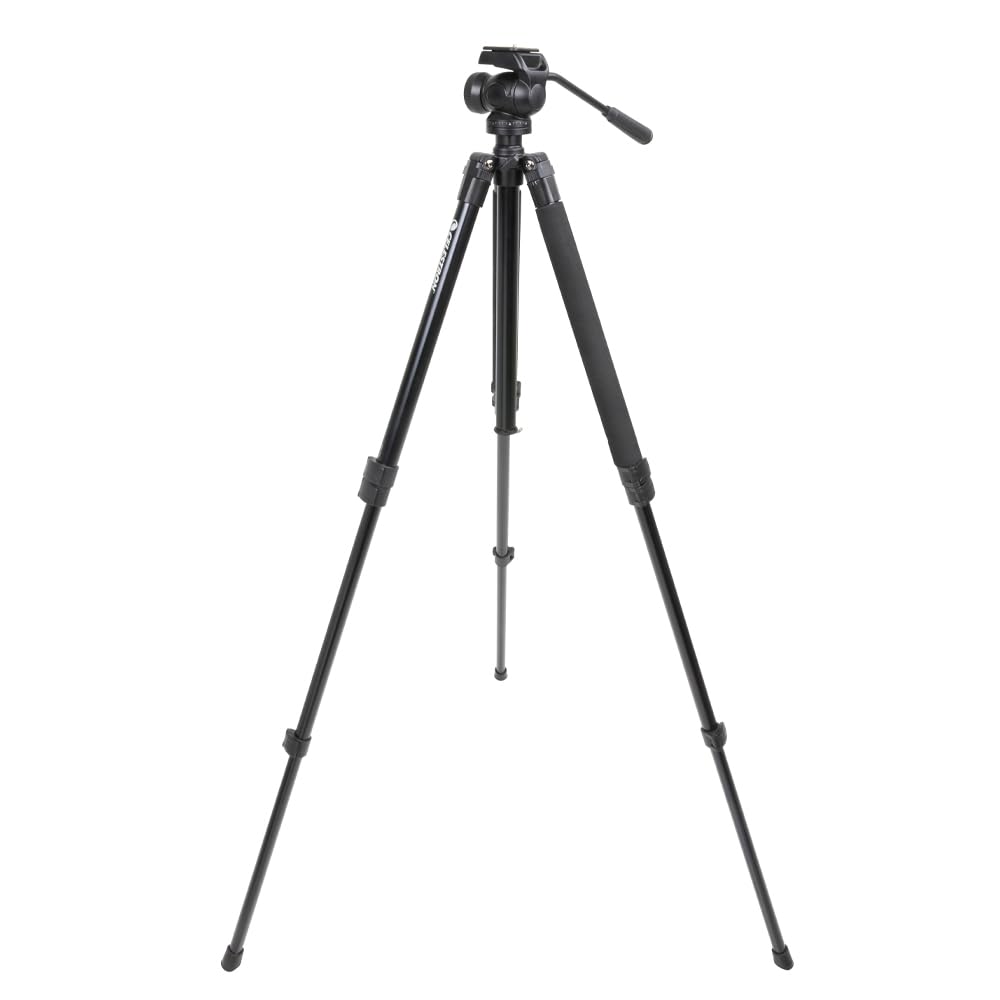
If you are six-two and every tripod in this guide leaves you hunched over the eyepiece, start here. Seventy and a half inches at full extension is more than anything else on this page, and four leg sections plus a center column are how it gets there. It folds to 24 inches and ships with a shoulder-strap case, which not every tripod here includes.

What you are buying is height and light weight rather than headroom. The 8.8-pound rating is plenty for a spotting scope and thin for a scope with a camera hung off the eyepiece, so plan on one instrument at a time. The fluid head moves nicely once you are on the bird; the single locking knob that handles both axes is the part that takes a session to get used to.

At four pounds with four leg sections, this is a long lever when it is fully extended, and a heavy scope makes that obvious in a breeze. Keep the center column down when you can, splay the legs, and hang something from the retractable hook. That is the discipline any tall, light tripod asks for, and it is the difference between a usable 70 inches and a wobbly one.

Pros

  • Tallest tripod here at 70.5 inches
  • Fluid pan head with a quick-release plate
  • Four pounds with a case and shoulder strap
  • Retractable hook for ballast in wind

Cons

  • 8.8-pound capacity limits scope-plus-camera rigs
  • One knob controls both pan and tilt
Our verdict

The pick for tall users and anyone who wants to stand square behind the eyepiece; just keep expectations modest about capacity at that height.

Check Latest Price
4

Best for a Fixed Spot

Bushnell Advanced Tripod

89 /100
Keeper Score Excellent

Key details

Head Type
3-way pan/tilt head
Folded Size
26 inches
Load Capacity
11 lb
Maximum Height
63 inches
Check Price on Amazon

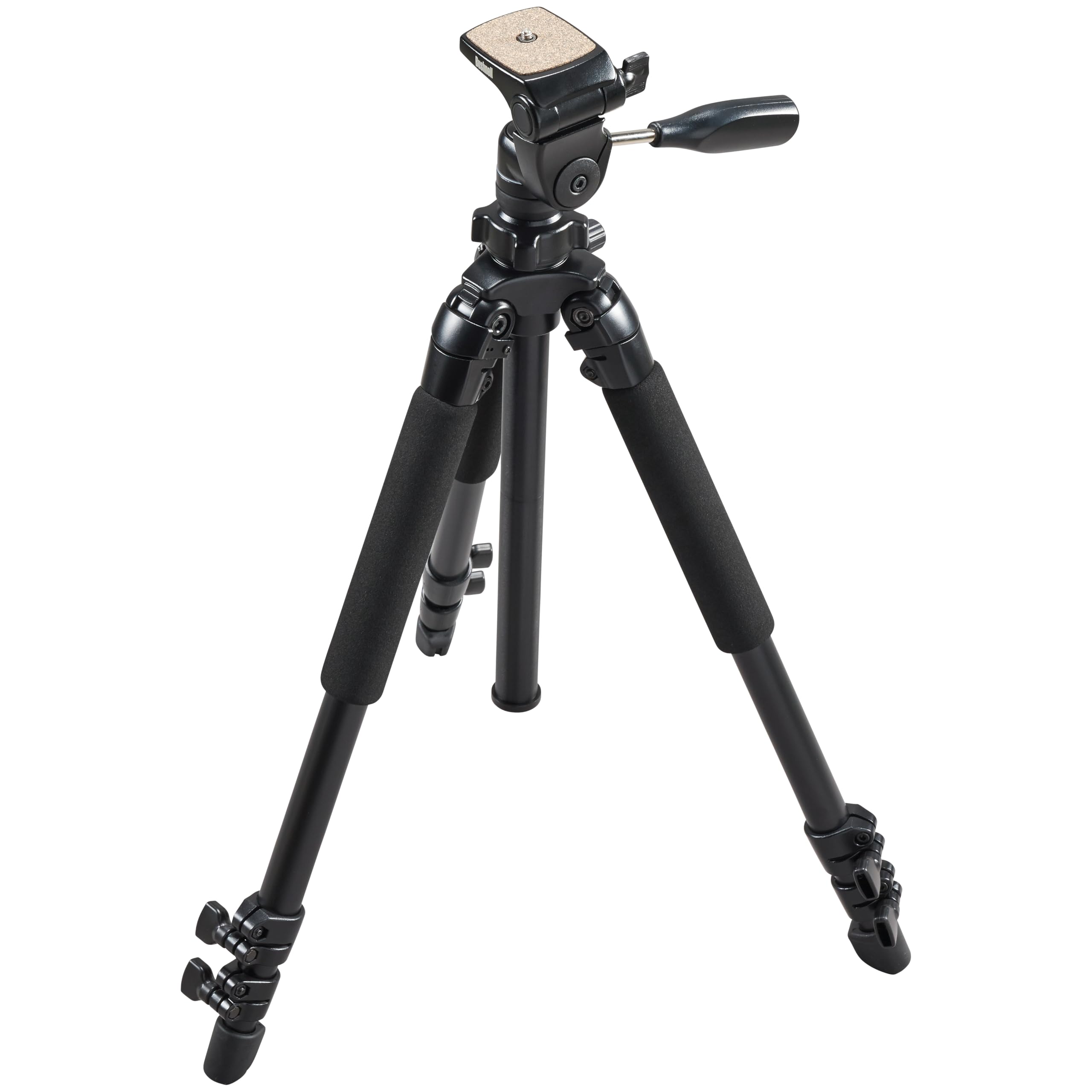
Setting this one up is the moment it makes its case: the legs go wide, the non-slip feet bite, and the whole thing sits still in a way the light tripods here do not. A full-size angled scope on the three-way head shows almost none of the shiver you get from a light tripod on a breezy afternoon, and that steadiness is why it is in this guide.

The head rewards patience. Three axes adjust separately, so you frame the bird, lock the axis you are not using, and track with the handle, closer to a telescope mount than to the single-knob heads further down this list. The 11-pound rating is half of what the Vortex kits carry and still comfortably above a big scope and a camera body together.

What you trade for that is speed. The leg locks are not quick-release, so levelling on uneven ground takes a few extra seconds each time, and this is not a tripod you break down and rebuild every half hour. Point it at the view, tighten it up, and leave it.

That is how a lot of scopes are actually used, too: a deck rail, a kitchen window, a blind you return to every Saturday. Set up once, and the only thing you touch all morning is the pan handle.

Pros

  • Very steady under a full-size scope
  • Three-way head locks each axis separately
  • Three-position leg angles and non-slip feet on rough ground

Cons

  • Nearly four pounds and 26 inches folded
Our verdict

For a scope that lives in one place, this is the steady, simple pan-head tripod we point people to.

Check Latest Price
5

Best Budget

Lusweimi 72-inch Tripod

86 /100
Keeper Score Excellent

Key details

Weight
2.16 lb
Head Type
Ball head
Maximum Height
69 inches
Minimum Height
16.9 inches
Check Price on Amazon

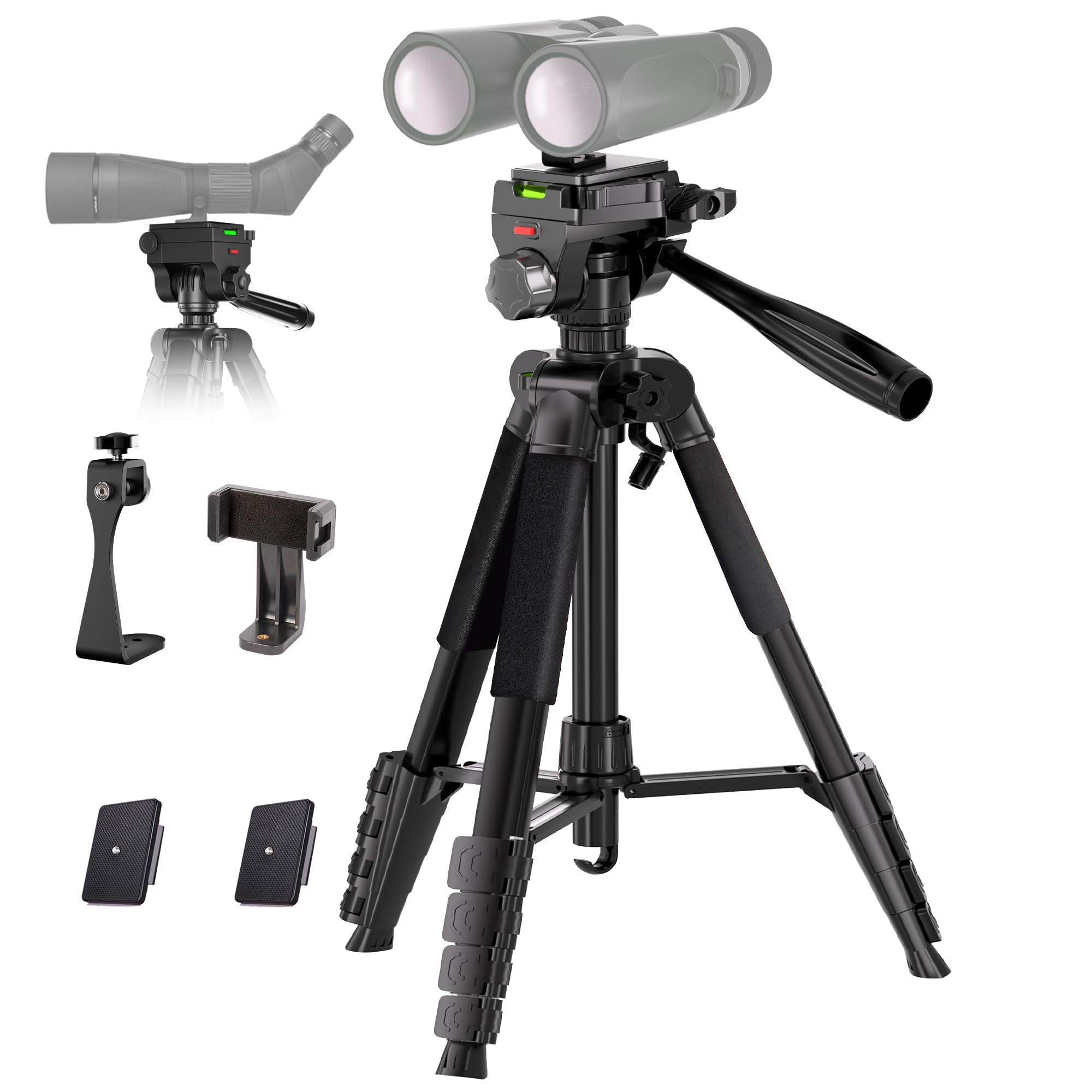
Two quick-release plates, a binocular adapter, a phone holder, and a carry bag: the Lusweimi arrives as a kit rather than a tripod, and that is most of why it earns a place here. If a scope, a camera, and a pair of binoculars all have to share one set of legs over a weekend, having the plates and adapters in the box saves a second purchase. Your binoculars do need a quarter-inch threaded socket for the adapter to grip anything.

The legs are aluminum with flip locks and run from about 17 inches to 69, so the same tripod does tabletop work and standing work, which is unusual at the budget end. The ball head is the compromise: fast to swing onto a new subject, fussy to fine-tune, and at high magnification you end up working with the tension set fairly tight to keep the image from drifting.

Light is the other side of the coin, and it is the trade we accept here. A tripod this light with a big objective lens on top will move in wind, and the hook under the center column is there for exactly that, since a bag hung from it settles the whole setup noticeably. What you get in return is a tripod you can carry in one hand with a scope already mounted, which is not true of the heavier tripods here.

Pros

  • Two plates plus binocular and phone adapters
  • Runs from 16.9 to 69 inches on flip locks
  • Light enough to move one-handed with a scope on it

Cons

  • Ball head makes fine framing fussy at high magnification
Our verdict

The budget kit we recommend for a first scope: tall, light, and bundled with the plates and adapters that otherwise cost extra.

Check Latest Price
6

Best for Hunters

BOG Infinite Tripod

87 /100
Keeper Score Excellent

Key details

Weight
6.5 lb
Head Type
Ball head
Height Range
8.4 to 59 inches
Load Capacity
40 lb
Check Price on Amazon

Eight point four inches is a number you either need or you don't. Dropped all the way down, this tripod puts a scope at ground level, low enough to glass from a sitting position with your elbows on your knees, or to look over a rise without showing more than your hat. It climbs to 59 inches when you get up.

What makes it more than a shooting rest is the mount. The Arca-Swiss plate takes a spotting scope, a camera, or a binocular adapter, the ball head pans a full circle with one lock for the rail and another for the ball, and a bubble level under the head lets you square everything before you tighten down. Fat legs and a wide stance mean the head is not fighting the platform the way it does on a light tripod.

Two practical notes. The rubber feet unscrew to expose steel spikes, which is the difference between planted and sliding on wet grass or loose dirt. And the ball-head tension is worth checking before you walk away from a heavy rig, because on a tripod that gets carried, bumped, and leaned against a truck, that is the adjustment that decides whether the scope is still pointing where you left it.

Where it earns its place in a spotting-scope guide is that range of positions. Ground level, seated, or standing at a stretch, with the same head and the same plate, is more than most of the pan-head tripods here will do; they are happier at one height and one job.

Pros

  • Drops to 8.4 inches for ground-level glassing
  • 40-pound capacity handles a heavy rifle or scope
  • Arca-Swiss mount with separate ball and rail locks
  • Rubber feet convert to steel spikes

Cons

  • 6.5 pounds is the heaviest tripod in this guide
Our verdict

Built for hunters who want one platform for glassing and shooting, and it covers everything from ground level up to 59 inches.

Check Latest Price
7

Budget Tall Setups

LCNCY 72.4-inch Tripod

86 /100
Keeper Score Excellent

Key details

Weight
4.5 lb
Load Capacity
22 lb
Maximum Height
72.4 inches
Quick-release Plates
2 plates, 1/4 inch
Check Price on Amazon

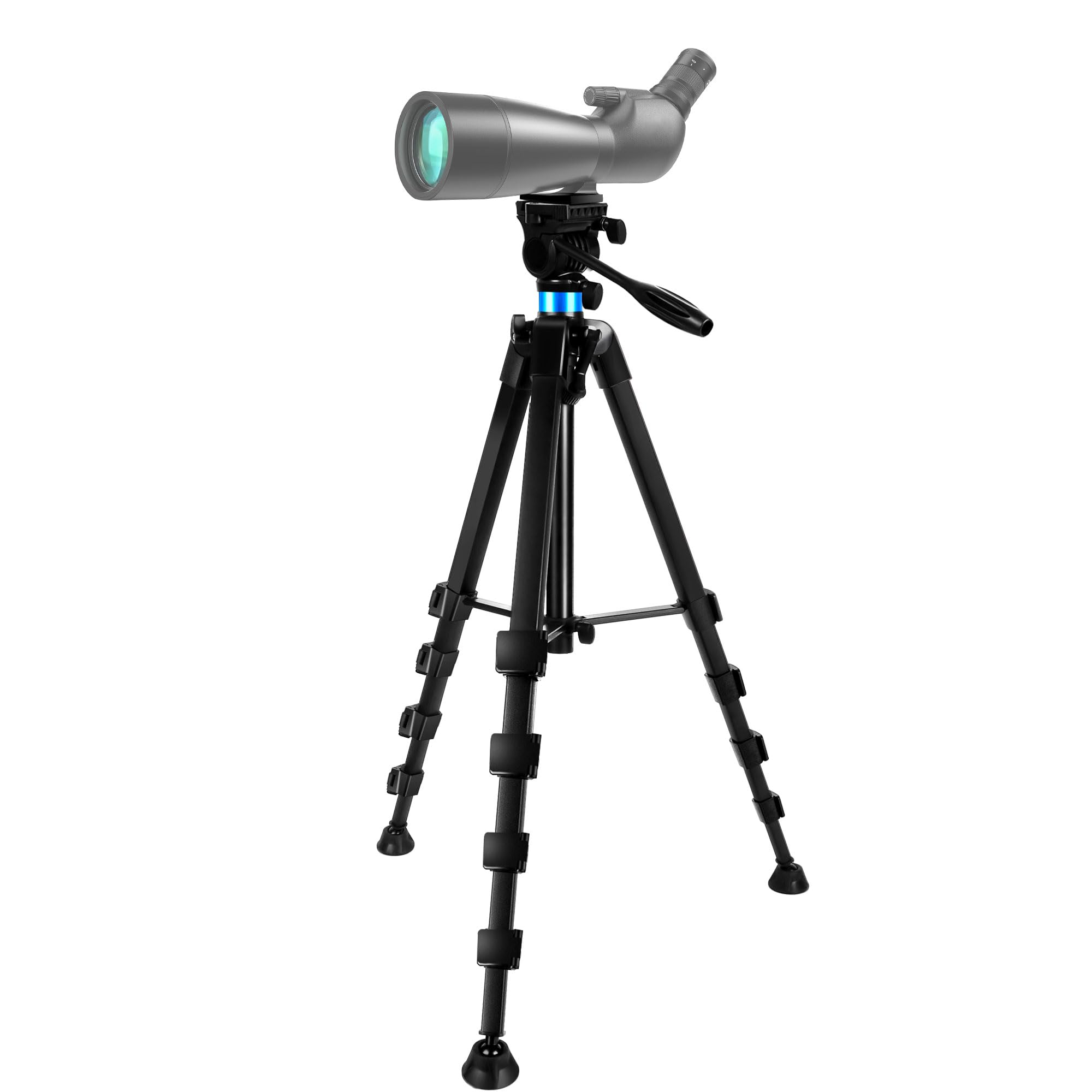
The V yoke is what separates this kit from the other budget tripods here. It bolts to the quick-release plate and cradles a rifle or a rest in a V, and it lifts off in seconds when you want the flat plate back for a spotting scope. If one tripod has to cover the range and the ridge, that part is what makes it work.

The rest of the package is aimed at the same buyer. Seventy-two inches at full extension, a 22-pound rating, two quick-release plates so a scope and a camera can each keep one, and a removable head that lets you change the whole top later. Three-section aluminum legs and flip locks are the simple arrangement most people get along with in the field.

What you give up is refinement. The head is a utilitarian unit next to the Vortex pan heads, and the camouflage bandages and yoke fittings are aimed at hunters rather than birders. For stand hunting, a truck-window setup, or a morning at the range, that is the right trade, and the storage bag means it can live behind the seat without collecting much dust.

Pros

  • V yoke cradles a rifle or rest and lifts off
  • 72.4 inches with a 22-pound rating
  • Two quick-release plates included

Cons

  • 4.5 pounds is a lot to hike with
Our verdict

A tall, high-capacity kit with a V yoke, for the buyer who wants one tripod for the range and the ridge.

Check Latest Price

How We Tested the Best Spotting Scope Tripods

We started with a couple dozen listings and cut anything that couldn't put an eyepiece at comfortable standing height, lacked a quick-release plate, or came with a head that only pointed in one plane. Mounting was its own filter: Arca-Swiss dovetails and proprietary plates don't talk to each other, so we noted which standard each tripod used and whether the plate could be swapped without tools. Folded length, listed load capacity, and leg-lock style narrowed the field to 11.

Those 11 tripods got eight months of real use. Most of the testing happened at a backyard feeder station and on a hawk-watch ridge where the wind does what it wants and the birds don't wait, and several of them rode in a truck bed, strapped to a daypack, and got set up in the dark before sunrise.

We set each one up in the dark with gloves on and timed it, then panned the head across a tree line and watched how far the image drifted after we let go of the handle. A fingertip tap on the eyepiece showed how long the shake lasted. On gusty days we hung a loaded daypack from the center hook and noted which legs flexed and which flip levers crept. Every tripod went back into its carry bag and onto a kitchen scale, and we moved a scope, binoculars on an adapter, and a camera on and off the plates to see how forgiving the mounting was.

Durability came down to sun, rain, and gravel: we left legs extended for days at a time and dropped sections onto rock to see what scratched, seized, or loosened. Value was judged by what actually came in the box and whether the included head was good enough to keep.

How to Choose a Spotting Scope Tripod

Start With Height and How You Look Through the Scope

Maximum height is the first number most people compare, but read it knowing that the headline figure usually assumes the center column is raised, which is the least steady the tripod gets. Roughly 62 inches at full extension lets most adults stand behind an angled scope; the Vortex High Country II sits right at that, and the Celestron TrailSeeker clears it by eight inches.

An angled eyepiece is forgiving of a shorter tripod because you look down into it, so a 56-inch model like the Vortex Mountain Pass works for seated glassing. A straight-through eyepiece wants the eyepiece at eye level, which is where the extra height earns its keep. Measure your standing eye height before you order, and subtract a couple of inches for the scope's eyepiece.

Match the Head to How You Aim

A spotting scope lives between 20x and 60x, and at that magnification a head that swings freely is a liability. A two-way pan and tilt head with adjustable tension, as on both Vortex kits and the Celestron, lets you loosen it, follow the bird, and let go without the scope flopping over. That is the head we choose for wildlife.

Ball heads, like the ones on the BOG and the Lusweimi, are quicker to point at a new hillside but harder to trim once you are close. They make the most sense when the same tripod has to carry a rifle, a camera, or both.

Treat Load Capacity as Headroom

A big scope with an eyepiece weighs a few pounds, so even the 8.8-pound Celestron is well inside its rating. The number matters as margin, not as a target: it absorbs a camera body, a heavy eyepiece, and the moment you lean on the tripod to steady yourself.

Ratings also describe the head and clamp as much as the legs, and the clamp is where a cheap tripod lets you down. Before you trust it with your scope, check that the plate seats fully and locks without play.

Count Sections and Consider the Packed Length

Three-section legs are stiffer and faster to set up; four sections fold shorter but add a joint between the ground and your eyepiece. That trade matters more than weight if the tripod rides outside your pack. The four-section Mountain Pass packs smaller than the three-section Bushnell, which stays at 26 inches folded.

Flip levers are quicker with gloves on, while collars are slower but catch less on brush. Neither will ruin your day, but if you set up in the dark, levers are easier to work by feel.

Plates and Adapters Decide How Much Swapping You Do

Two standards cover nearly everything: Arca-Swiss plates, used on the Vortex kits, the BOG, and the LCNCY, and the quarter-inch screw thread most scopes and binoculars are built around. Buy an extra plate for each instrument and swapping a scope for a camera takes seconds instead of a re-level.

If you plan to mount binoculars, check that they have a threaded socket before you count on it. The Lusweimi and the LCNCY include a binocular adapter, but it needs that socket to grip anything.

Frequently Asked Questions

Final Verdict

The Vortex High Country II is what we recommend to most people: 62.5 inches of height, a 22-pound rating that shrugs off a scope and a camera, a pan head that tracks cleanly at 40x, and a lifetime warranty behind it.

If the tripod lives in a pack and you glass sitting down, buy the Mountain Pass instead. If you need to stand fully upright and you are on the tall side, the Celestron TrailSeeker reaches 70.5 inches, and that single figure settles the choice.