Best Solar Power Banks of 2026

The solar panel on a power bank isn't there to refill the battery — a panel that size would need a week of direct sun. It's there so the pack holds a charge in a drawer or a backpack, and so you get a trickle of power when there's no outlet for miles. Which pushes the real decision elsewhere: how fast it refills a phone, whether the cables are built in, and how much weight you'll carry for it.

I've carried these up more trails than I can count, usually in rain, and they fail in predictable ways — dead after a summer in a hot car, cable covers snapped off, a wireless pad that quits the second you leave your case on. We've spent five months with 14 of them, on camping weekends, through a three-day ice-storm outage, and on a sunny windowsill. Durability and honest capacity separated the field fast.

Some are built for a week off-grid, others for the glovebox and the odd blackout — the ones worth carrying are below.

Keeper Score summarizes customer ratings and review volume. Read it alongside the product details and trade-offs. How the score works.

1

Best Overall

BLAVOR PN-W39 20,000mAh

88 /100
Keeper Score Excellent

Key details

USB-C Output
20W
Built-in Cables
4 (2 USB-C, 1 iOS, 1 USB-A)
Battery Capacity
20,000mAh
Wireless Charging
Qi phone and Apple Watch
Check Price on Amazon

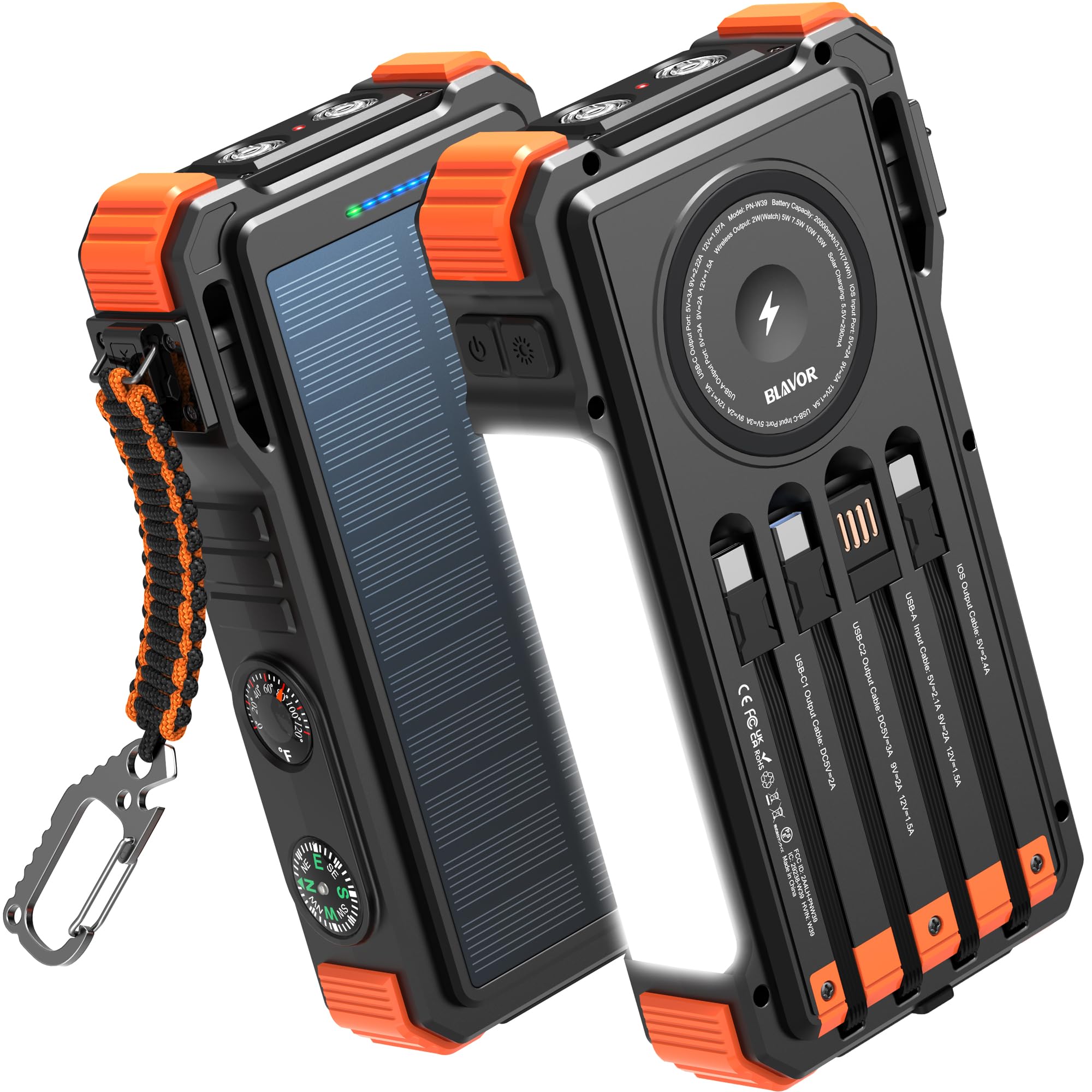
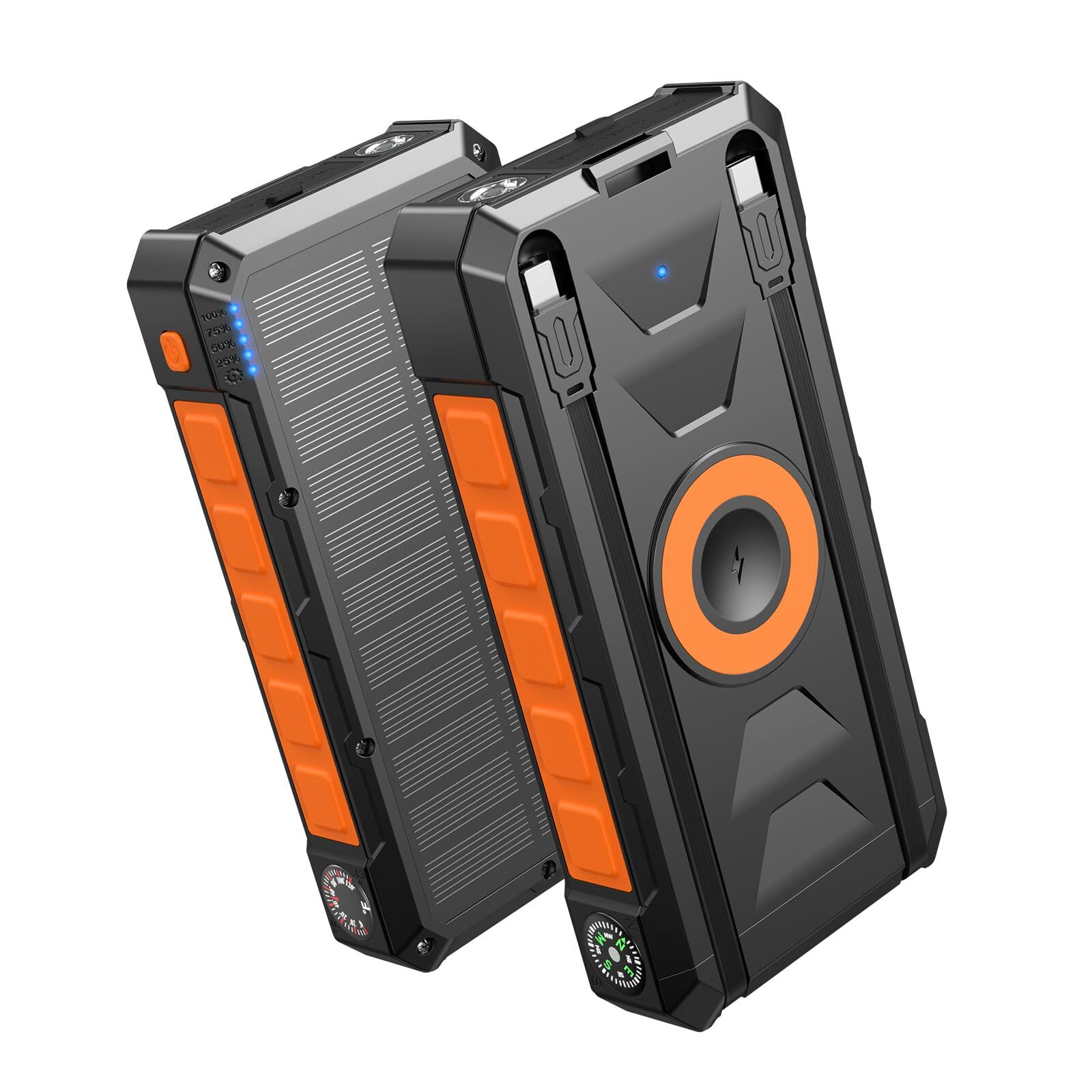
The built-in cable layout is what made the PN-W39 our default. BLAVOR puts two USB-C cables, an iOS cable, and a USB-A cable into the body, then adds three ports, so one pack can feed six devices without a tangle of extras. For a family camping box, a glovebox, or a work bag, that convenience is the difference between a pack that gets used and one that stays home because nobody packed the right cord.

Capacity is 20,000mAh, which is the sensible middle of this group: enough for several phone charges and a tablet top-up without the bulk of the 50,000mAh models. We also like the 20W USB-C output for a quick rescue charge, and the Qi pad is more useful than most because it takes an Apple Watch as well as a phone.

The solar panel should not change your travel plan. It is a supplemental trickle that helps on a sunny day, not a way to refill a 20,000mAh battery before dinner; charge it from the wall before you leave. We treat the PN-W39 as an all-round backup rather than a wilderness-only gadget, and the three-year warranty is a reassuring extra for something that lives in a tent or car.

Pros

  • Built-in cables cover USB-C, iOS, and USB-A
  • 20W USB-C output for quick top-ups
  • Qi pad charges a phone or Apple Watch
  • 20,000mAh capacity suits weekends

Cons

  • Wireless charging is slower than the cable
Our verdict

We recommend the BLAVOR PN-W39 as the default solar power bank for most people: it has the cables, the 20W USB-C top-up, and the capacity for a weekend without becoming a single-purpose brick.
Check Latest Price
2

Best Compact

BLAVOR PN-W05 10,000mAh

86 /100
Keeper Score Excellent

Key details

Weight
9.3 oz
USB-C Output
20W
Battery Capacity
10,000mAh
Water Resistance
IPX5
Check Price on Amazon

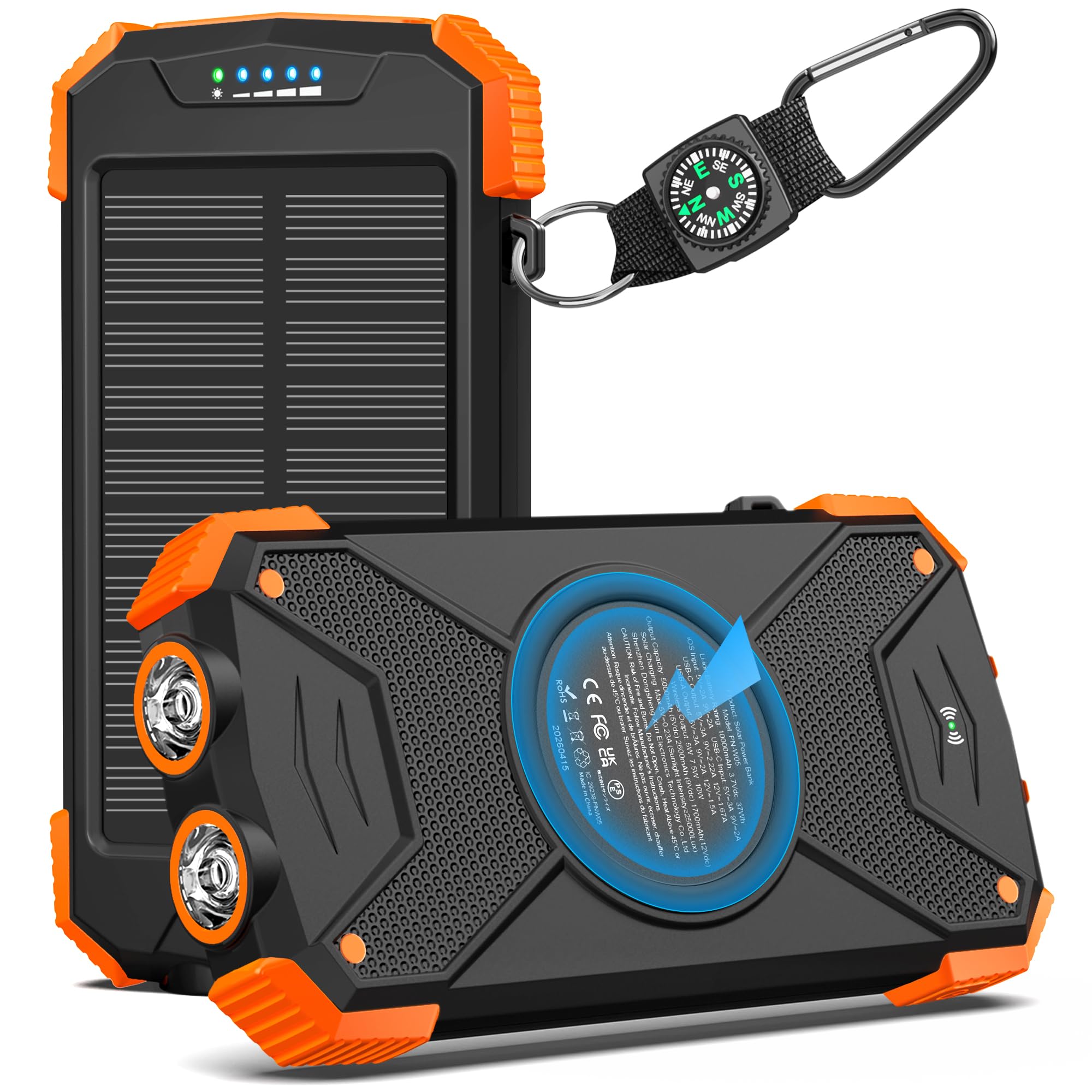
The 9.3-ounce body is the reason this BLAVOR stays in our daily bag. At 10,000mAh it is a phone-first pack, and that smaller reserve is exactly why it is easy to carry: it slips into a jacket pocket or a small sling and disappears until you need it.

The 20W USB-C output and Qi wireless pad give it the same modern conveniences as larger picks, and the IPX5 shell makes it a reasonable companion for a wet hike or a dusty campsite. We also appreciate the two flashlights; on a dark walk back to the tent, a light on the battery you already have is one less thing to pack. The built-in cables are a small touch that saves digging for a short cord.

The solar panel is best thought of as an emergency top-up. It will not refill a 10,000mAh pack in an afternoon, and it is no substitute for a wall charge before a trip. Where this one earns its place is as the pack you carry every day and forget about, then remember when your phone is nearly dead.

Pros

  • 9.3 ounces and pocketable
  • 20W USB-C plus Qi wireless
  • IPX5 water resistance for outdoor use
  • Dual flashlights built in

Cons

  • Wireless charging is slower than the cable
Our verdict

We keep the BLAVOR PN-W05 in the daily-carry slot: it is light enough to forget, has 20W USB-C and wireless charging, and asks you to give up only the big battery reserve.

Check Latest Price
3

Best High-Capacity

SOARAISE SPB2601 50,000mAh

88 /100
Keeper Score Excellent

Key details

Weight
16 oz
USB-C Output
22.5W
Battery Capacity
50,000mAh
Wireless Charging
15W
Check Price on Amazon

The 50,000mAh capacity claim is the headline, but the 22.5W USB-C output is what makes the SPB2601 usable. A big pack that charges slowly is a battery you plan around; this one can put a meaningful charge into a phone in the time it takes to eat lunch. The 15W wireless pad adds the same convenience for a phone or earbuds, though it is not the fastest way to recharge.

This is a basecamp and long-weekend pack. It is not the one we reach for on a day hike unless the group has several devices to keep alive; the size and weight make more sense in a vehicle, a cabin, or an emergency kit. Three extra ports let you add your own cables for anything else you plan to charge.

We also like the small survival tools—compass, thermometer, and flashlight—because they suit the pack's role as a leave-in-the-car backup. The solar panel is a supplement, not a reason to leave the wall charger at home. If your trips involve one phone and a short walk, the smaller BLAVOR is easier to live with; if the pack is staying put and charging several devices, this one earns the space.

Pros

  • 50,000mAh capacity for long trips
  • 22.5W USB-C fast charging
  • 15W wireless charging pad
  • Compass, thermometer, and flashlight built in

Cons

  • Only two built-in cables
Our verdict

We recommend the SOARAISE SPB2601 when capacity and fast charging matter more than pocketability: it is the long-trip pack that can revive several devices without a wall outlet.

Check Latest Price
4

Best Budget

YELOMIN S1008D 38,800mAh

84 /100
Keeper Score Excellent

Key details

Outputs
3
Dimensions
5.9 x 2.95 x 0.98 in
Flashlight
Dual LED, 3 modes
Battery Capacity
38,800mAh
Check Price on Amazon

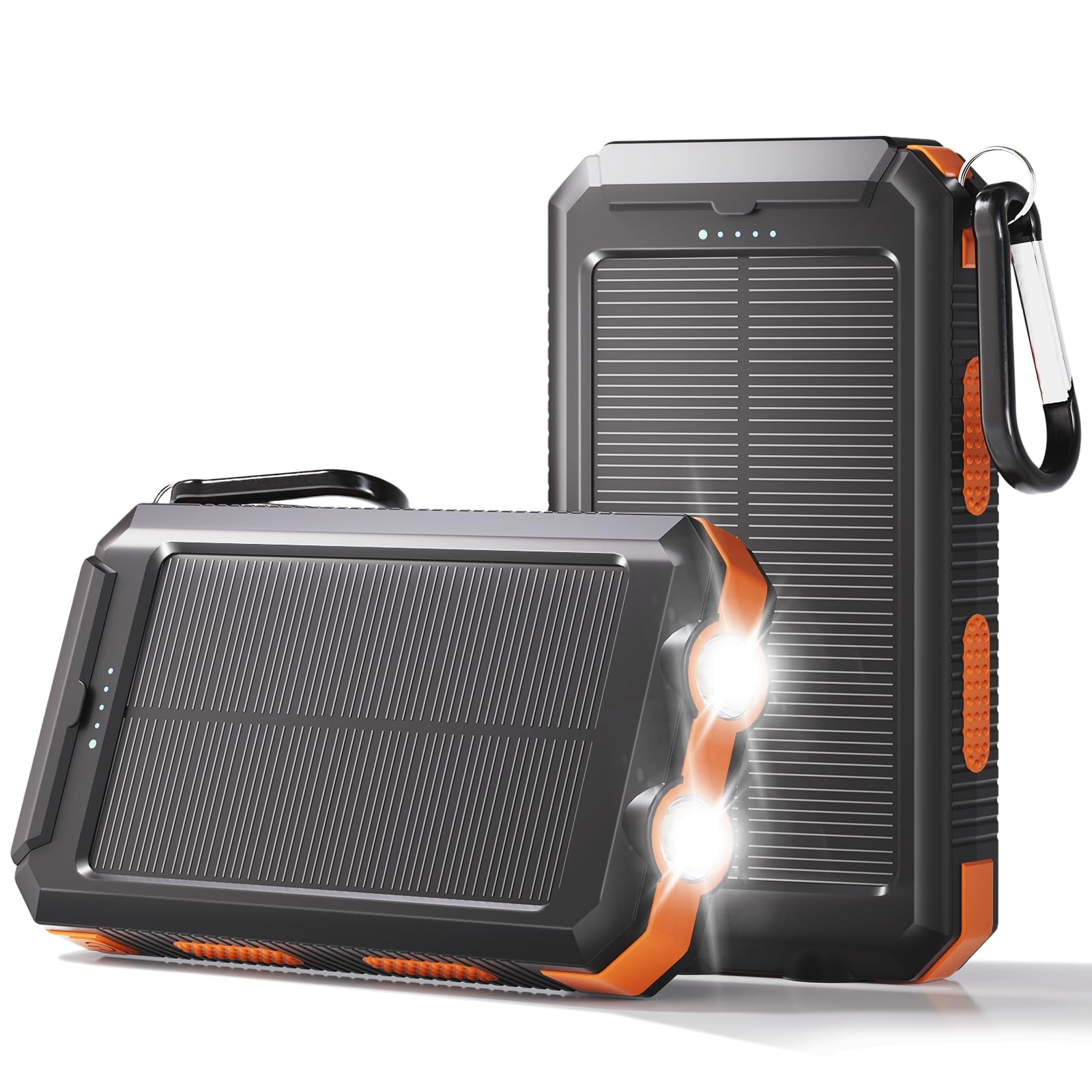
The YELOMIN is the cheapest way into a high-capacity solar pack in this group, and it looks the part: a rugged orange body, three outputs, and a pair of LED lights with steady, SOS, and strobe modes. We see it as a glovebox or emergency-drawer pack, the sort you charge every few months and forget about until the power goes out.

The 38,800mAh capacity is enough for a phone and a second small device over a night or two, and the included carabiner makes it easy to hang from a tent loop or a pack strap. The solar panel is a fallback, not a fast refill; plan on wall charging before a trip. The 12-month warranty is the reassuring part at this price.

The flashlight modes are the detail that makes it more than a spec-sheet budget pick. A steady beam, an SOS setting, and a strobe cover a roadside kit or a power outage better than a single button light, and the orange shell is easy to find in a dark drawer. We just do not make it the only battery on a long backcountry trip.

Pros

  • Low-cost high-capacity option
  • Three outputs and flashlight modes
  • Carabiner and compact body
  • 12-month warranty

Cons

  • Some units stop holding a charge
Our verdict

We recommend the YELOMIN S1008D as a low-cost emergency pack: it gives you high-capacity backup, multiple outputs, and useful lights without asking you to treat it as expedition gear.

Check Latest Price
5

Group Camping Power

GULLVEN PS37K 49,800mAh

79 /100
Keeper Score Very Good

Key details

Solar Panels
4 foldable
USB-C Output
22.5W
Built-in Cables
4 (iOS, Type-C, USB-A, Micro)
Battery Capacity
49,800mAh
Check Price on Amazon

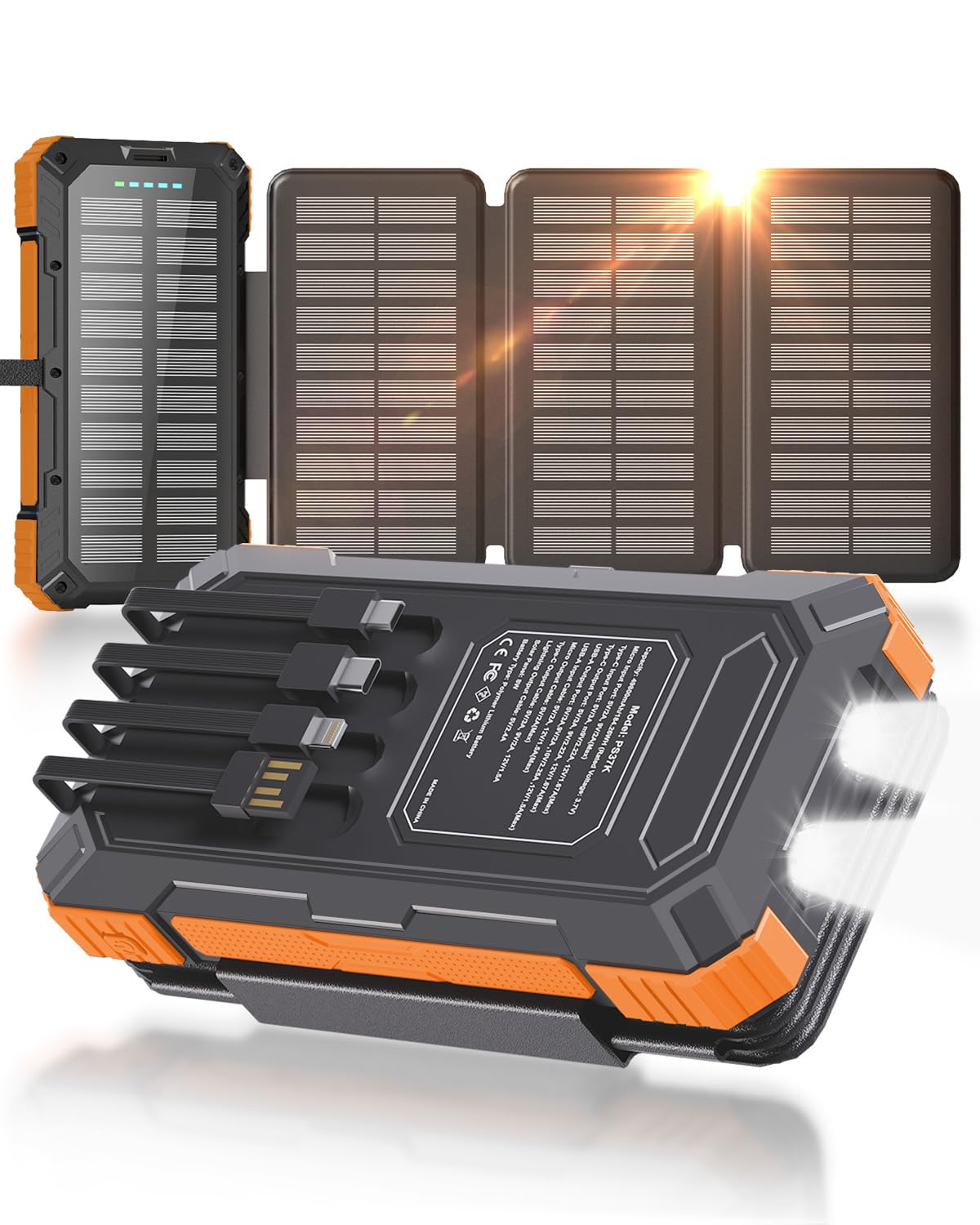
Four foldable solar panels are the reason to look at the GULLVEN PS37K. They fan out across the top of the pack and give it more surface area than single-panel designs, which sounds like a big advantage until you remember that even four small panels are still a trickle charger for a 49,800mAh battery.

The rest of the package is aimed at multi-device trips: four built-in cables, three ports, 22.5W USB-C, and an IP65 shell. We like the cable set for a group because it covers iOS, USB-C, USB-A, and micro-USB without a separate pouch. The three-mode camping light is bright enough to justify its place in a tent, and the folding lid protects the panels when the pack is in a car.

What holds it back is the same thing that holds back most large solar packs: the sun is a backup, not a plan. A day of good sun may not add much to a pack this size, so charge it from the wall before you leave. For a scout pack, a truck kit, or a family camping box, the panel coverage and built-in micro-USB cable make it worth a look for group trips.

Pros

  • Four foldable solar panels
  • Four built-in cables cover major connectors
  • 22.5W USB-C output
  • IP65 water and dust resistance

Cons

  • Large body takes backpack space
Our verdict

We recommend the GULLVEN PS37K for group trips where one pack with four cables can cover several phones, as long as you treat the fold-out panels as backup rather than a primary charger.

Check Latest Price
6

Fast Multi-Device Charging

BLASOUL PD-W49 49,800mAh

83 /100
Keeper Score Excellent

Key details

USB-C Output
22.5W
Battery Capacity
49,800mAh
Water Resistance
IP65
Wireless Charging
15W
Check Price on Amazon

The BLASOUL PD-W49 makes its case with the charging spec: 22.5W USB-C, 15W wireless, and four built-in cables in a 49,800mAh pack. That combination puts it near the top of this group for devices per charge, and it is a better fit than the YELOMIN for anyone who wants fast USB-C and a wireless pad in the same battery.

The cable arrangement is slightly unusual: three built-in output cables for iOS, USB-C, and micro-USB, plus one built-in USB-A input cable for recharging the pack. We like that the output cables stay attached, but it means the pack is designed around its own set rather than around loose cables you might already own.

The IP65 rating and 49,800mAh capacity give it a clear outdoor role. We rank it below the BLAVOR picks because its cable layout is less flexible for mixed devices, not because the charging spec disappoints. What it offers is a lot of charging hardware and a fast wireless pad in one battery.

Pros

  • 22.5W USB-C and 15W wireless
  • Four built-in cables including input
  • 49,800mAh capacity
  • IP65 rating

Cons

  • Large body for pocket carry
Our verdict

We recommend the BLASOUL PD-W49 for shoppers who want 22.5W USB-C, 15W wireless, and a complete built-in cable set in a high-capacity pack; it is a strong spec-first alternative to the BLAVOR picks.

Check Latest Price
7

Light Travel Charging

Etsuati P017 20,000mAh

86 /100
Keeper Score Excellent

Key details

USB-C Output
20W
Recharge Time
3.8 hours
Built-in Cables
4 (Micro USB, USB-C, Apple, USB-A)
Battery Capacity
20,000mAh
Check Price on Amazon

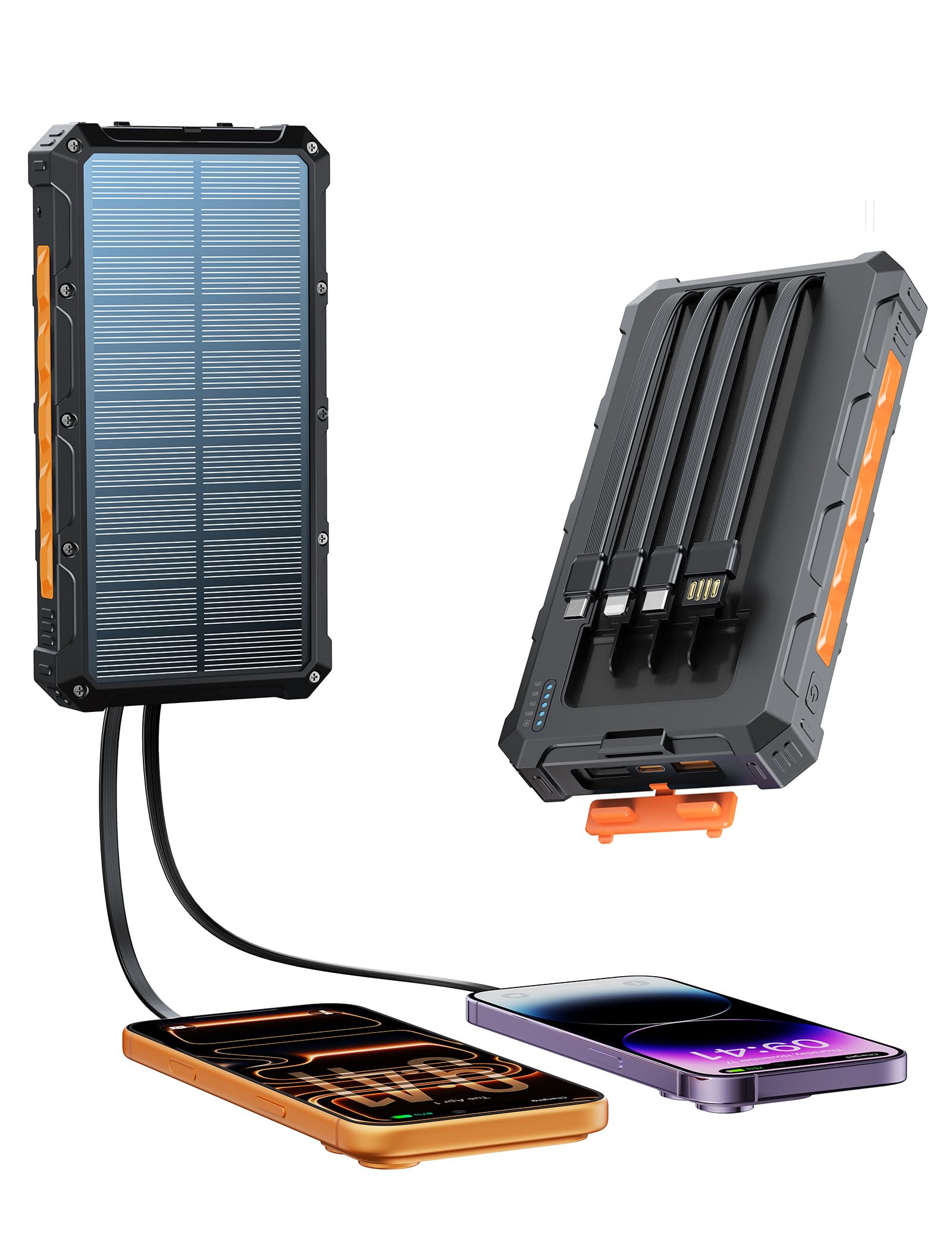
The Etsuati P017 keeps 20,000mAh under an inch thick, which is the detail that makes it worth a look for travel. It is not the smallest pack here, but it sits in the useful middle: enough reserve for a phone and a tablet, with a body that slides into a personal item rather than demanding a dedicated pouch.

The four built-in cables cover micro-USB, USB-C, Apple, and USB-A, and the 20W output is quick enough for a modern phone. The 3.8-hour wall recharge is the number we care about most; a pack that refills overnight is easier to keep in rotation than one that needs a full day plugged in. The three-mode flashlight is a useful emergency extra.

For one phone and a tablet, the 20,000mAh capacity is the right reserve; it will not run a group, but it keeps the pack light and quick to refill. We treat the solar panel as an emergency top-up rather than a reason to skip the wall plug. The built-in cables cover the connectors people forget, which is the failure point on a short trip.

This is the pack we point to for a traveler who wants a simple battery with its own cables, not a shared power station. It will not match the BLAVOR PN-W39 for device variety, but it is easier to carry and quicker to refill from a wall outlet.

Pros

  • 20,000mAh in a slim body
  • Four built-in cables cover major connectors
  • 20W fast charging
  • 3.8-hour wall recharge

Cons

  • 20W output trails the fastest packs here
Our verdict

We recommend the Etsuati P017 for travelers who want a lighter 20,000mAh pack with built-in cables and a fast wall recharge, and who do not need a high-capacity basecamp battery.

Check Latest Price

How We Tested Solar Power Banks

We started by reading through customer reviews for every solar power bank with a meaningful review count, then narrowed by the things reviewers kept flagging: input port type, whether the cables are attached or loose, and how the pack is meant to be carried. Fourteen made the cut.

Testing ran five months, much of it outdoors — two camping weekends, a three-day outage after an ice storm, a few flights, and a lot of ordinary commuting. We weighed each pack inside a daypack and noted which one we actually grabbed on the way out the door, since that turned out to be a better measure of likability than any spec sheet.

For charging speed, we drained a phone to 1 percent and timed how long each pack took to reach 50 and 100 percent, then repeated it with a watch and earbuds charging alongside. Wireless charging got its own round: phone face-up, then in a thick case, then nudged off-center to see how far it could drift before the connection dropped. Every pack also sat on a west-facing windowsill and then on a rock in full sun for four hours with a meter attached; the best gained a few percent, which settled the solar question.

Durability meant waist-high drops onto gravel, a dunk in a basin, and a week in a hot car. To check capacity claims, we counted full phone charges in a row without recharging and noted how quickly each pack topped itself up from a wall outlet. Two packs quit partway through; the rest still take and hold a charge cleanly, and those are the ones below.

How to Choose a Solar Power Bank

Match capacity to the trip

Capacity is the first fork in the road, but the number on the box is not the same as the charge you get. A 10,000mAh pack is a phone-first daily carry; 20,000mAh is the sensible weekend and emergency size; 50,000mAh models are basecamp or vehicle packs. Very large claims deserve a second look, because usable output is lower than the cell rating after conversion losses. For most people we prefer the 20,000mAh middle, then check weight and dimensions before committing.

Plan on wall power, not just sun

Solar panels on these packs are trickle chargers. Even four fold-out panels gather far less power than a wall adapter, and shade, cloud, or a bad angle can cut that further. Use the panel to slow the drain while a pack sits on a dashboard or picnic table, not to refill a depleted battery before a trip. Our rule is simple: the pack leaves home full from the wall, and anything the sun adds is a bonus.

Count cables and check USB-C output

Built-in cables are a real convenience, especially for family packs where different phones need different connectors. Count the ones that match your devices, then look at the USB-C output: 20W is a good modern baseline, and 22.5W is a little quicker. A wireless pad is convenient for a phone or watch but slower than a cable, so do not choose a pack on wireless alone. More ports are useful only if you will actually share the battery.

Let carry style set the size

Pocketable packs cluster around 10,000mAh; 20,000mAh packs fit a daypack or glovebox; 50,000mAh packs are better left in a vehicle or basecamp. The trap is the word portable in a listing: it can mean a pack fits a backpack, not an airline seat pocket. Check the thickness and weight against the bag you plan to use. If you are splitting power among several people, the extra bulk of a larger pack can be the right trade.

Check sealing, warranty, and battery condition

An IP rating helps with rain and dust, but no power bank belongs in standing water. A three-year warranty is more meaningful on a battery than on a cable, because the cells are the part that ages. Inspect any pack that has been left in a hot car for swelling or a distorted case, and stop using it if the shell changes shape. A solar pack is still a lithium battery, so treat heat as the enemy.

Frequently Asked Questions

Final Verdict

The BLAVOR PN-W39 gets our recommendation because it balances the things a solar power bank actually needs: a useful 20,000mAh reserve, 20W USB-C, a built-in cable set, and a wireless pad that also takes an Apple Watch. For a smaller daily pack, choose the BLAVOR PN-W05; for a basecamp battery that can share power across several devices, the SOARAISE SPB2601 is the better fit.