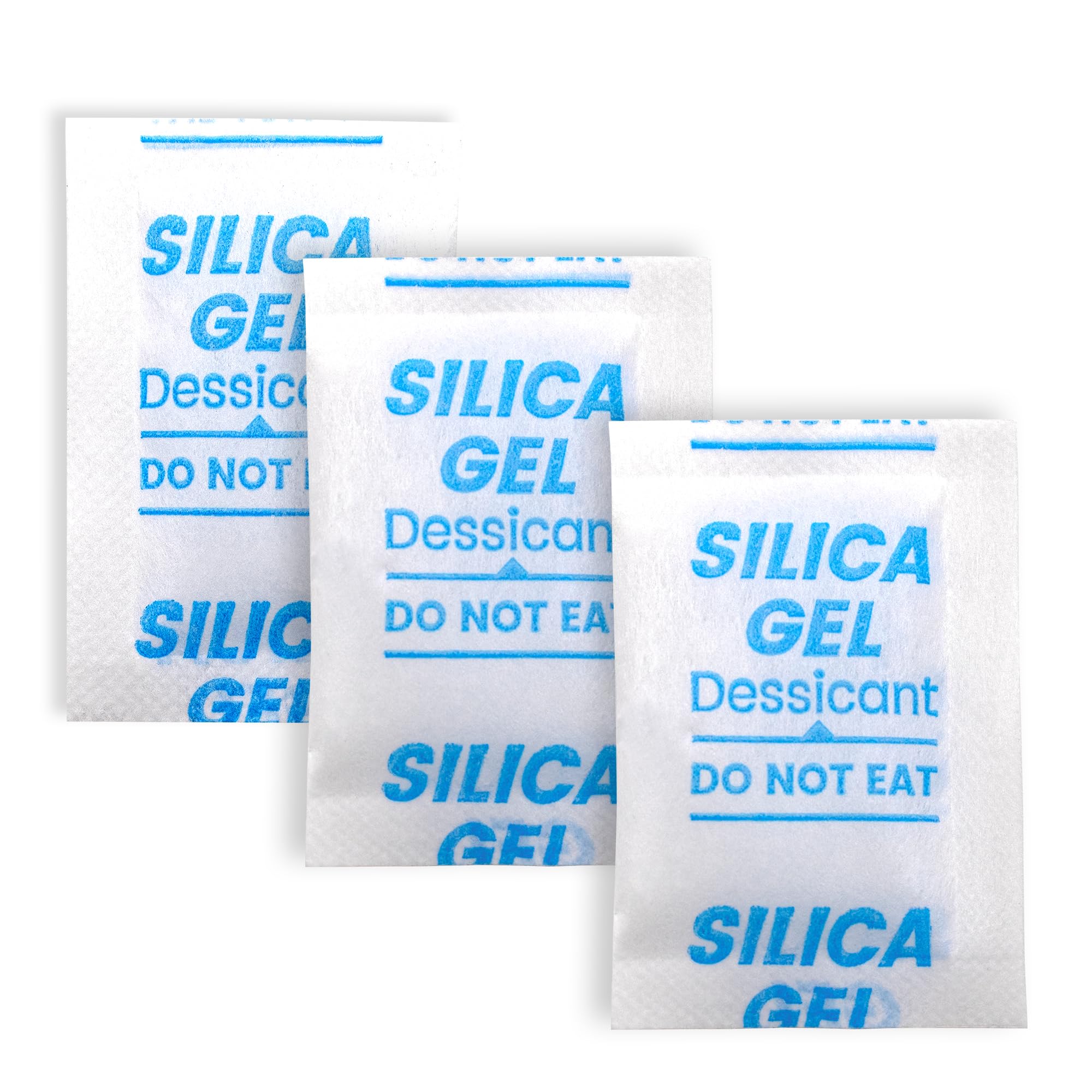
Best Silica Gel for Camera Bags of 2026

Camera gear rarely dies from one dramatic drop. More often it fogs after a cold shoot, picks up a basement smell inside a closed bag, or develops haze on a lens that no microfiber will fix. A small desiccant pack is cheap insurance, pulling moisture out of the bag, case, or storage bin before it settles on glass and grips. The trick is finding one that keeps absorbing, fits your pockets, and tells you when it is spent.

I have cycled desiccant packs through my own camera bags for years; over five months, my team and I tested 14 of them across shoulder bags, hard cases, and a closet shelf. We noted whether packs stayed dry to the touch, whether the color indicator was readable at a glance, whether recharging split seams, and whether each size fit beside a lens divider. Value and compatibility matter as much as absorption: a pack too bulky for your bag is just clutter. The picks below are the ones we would trust with our own glass, from tiny packets to larger pouches for a storage bin.

Keeper Score summarizes customer ratings and review volume. Read it alongside the product details and trade-offs. How the score works.

1

Best Overall

Dry & Dry 5 g (50 Pack)

95 /100
Keeper Score Outstanding

Key details

Count
50 packets
Coverage
About 600 cu in per packet
Recharge
Oven, reusable
Packet Size
2 x 2.7 in
Check Price on Amazon

Six hundred cubic inches is the number that decides this one. That is the volume a single 5-gram packet is rated to cover, and it is roughly the interior of a small shoulder bag holding a body and one lens — so a 50-pack is not 50 bags' worth, it is two packets in each of four or five bags with a resealable bag of spares left on the shelf.

The packet size is the other half of why these are our default. At 2 by 2.7 inches they slide into a divider pocket or the sleeve behind a lid and stay there, where a 20-gram packet bulges the bag out of shape. It helps that the outer bag actually reseals: unused packets keep their charge instead of quietly working on the air in your cupboard.

The beads are plain, with no color change, and that is the trade. Rather than squinting at a patch, you recharge the set on a calendar — oven heat brings them back, and rotating a fresh handful in at the start of a humid season takes ten minutes. For a bag that lives in a car trunk or a closet, that routine is worth more than a spot that may not shift clearly.

Fifty is more than one bag will use in a year, and the surplus is the point. A packet goes in the camera bag, one in the hard case, one in the drawer where the spare batteries and cards live — and the bag stays zipped in between, which is what makes any of it work.

Pros

  • Packets measure 2 by 2.7 inches, sized for divider pockets
  • About 600 cubic inches of coverage per packet
  • Oven reactivation keeps the set reusable
  • Resealable outer bag keeps spares charged

Cons

  • Plain beads with no color change to read
Our verdict

This is our pick for almost any camera bag: 50 packets that fit real pockets, a coverage figure you can plan around, and oven recharging that keeps the same set in service.

Check Latest Price
2

Best with a Moisture Indicator

Vbeijll 5 g Color-Indicating (50 Pack)

94 /100
Keeper Score Outstanding

Key details

Count
50 packets
Capacity
Up to 35% of packet weight
Indicator
Orange beads turn dark green
Packet Size
2.36 x 1.77 in
Check Price on Amazon

Orange beads that turn dark green are the whole argument for these. In a bag you open once a month, seeing whether the desiccant still has life in it beats any number on the packet, and we reached for this pack first whenever we wanted to check a bag without unpacking it.

The rest is standard 5-gram territory: 50 packets at roughly 2.4 by 1.8 inches, a stated capacity of up to 35 percent of their weight in water vapor, and food-grade, odorless packet material. The footprint is smaller than the Dry & Dry packets, which helps in a compact bag with narrow dividers.

Recharging is where we slow down. These are fabric and paper around loose beads, and heat is what damages them: an oven on low heat, packets spread out and checked every so often, treats them gently. Anything faster risks scorching the paper before the beads are dry, and a split packet in a camera bag is a mess you do not want.

Thirty-five percent of weight is the figure to hold on to when you are deciding how many. A 5-gram packet is holding under two grams of water at full saturation, so a bag you open daily through a wet month wants a second packet rather than a bigger one.

Pros

  • Orange-to-green beads show saturation at a glance
  • Stated capacity of up to 35 percent of weight
  • 50 packets at roughly 2.4 by 1.8 inches
  • Food-grade, odorless packet material

Cons

  • Color shift can be gradual and hard to time
Our verdict

Buy these if you want to read a bag at a glance: the orange-to-green beads are why we reach for this pack over the plainer 5-gram options here.

Check Latest Price
3

Best for Hard Cases

Wisesorb 20 g (15 Pack)

94 /100
Keeper Score Outstanding

Key details

Count
15 packets
Weight
20 g per packet
Material
Three-side sealed non-woven
Packet Size
2.36 x 4.1 in
Check Price on Amazon

A foam-lined hard case is a different problem from a shoulder bag: more air inside, a lid that seals properly, and room for a packet the size of a phone. That is the job this pack is built for, and it is why we reach for the 20-gram packets when gear travels in a case rather than on a strap.

Fifteen packets, 2.36 by 4.1 inches each, three-side sealed in a non-woven fabric around white beads with no cobalt chloride. The fabric is the detail that matters in a case: it is stiffer than the paper packets here, so it does not crumple into a corner or split when a lid closes on it.

What we like most is how little attention they need. A case that opens a few times a month does not demand an indicator or a schedule pinned to it — one packet in the lid, one at the bottom, and fifteen of them go a long way between recharges. The proportion suits storage: bigger packets, fewer of them, less fiddling every time you lift a lid.

The white beads give no signal, so the routine is a date rather than a look. Recharge the set when the season turns and write the date inside the case lid, because the packets themselves will never tell you.

Pros

  • 20 g per packet suits cases, safes and cabinets
  • Three-side sealed non-woven fabric resists crumpling
  • White beads, no cobalt chloride indicator dye
  • 15 packets per bag

Cons

  • Too long for a compact bag's divider pockets
Our verdict

For a hard case or a cabinet we recommend the bigger packet: one or two do the work of a handful of sachets, in fabric that holds its shape.

Check Latest Price
4

Best for Tight Pockets

SmaringWing 5 g (50 Pack)

93 /100
Keeper Score Outstanding

Key details

Beads
Clear, non-indicating
Count
50 packets
Recharge
Oven or microwave
Packet Size
1.8 x 2.2 in
Check Price on Amazon

At 1.8 by 2.2 inches these are the smallest packets in this roundup — smaller than a credit card, and slimmer than the Dry & Dry packets we recommend first. That sounds like a footnote, and for a roomy backpack it is. For a compact body in a half case, or a chest pack with two narrow compartments, the packet that fits is the one that gets used, and that is why small-bag owners get pointed here.

A 5-gram packet is rated around 600 cubic inches, the same as the bigger 5-gram packs here, so the smaller footprint does not come with a smaller claim. What is smaller is the mass: a 5-gram packet reaches saturation sooner than a 20-gram one, so a full hard case wants several. In a bag, several small packets spread through the dividers is what you are after anyway — one behind the body, one in the lid.

The paper is where inexpensive desiccant usually shows itself, and the composite stock here is light without feeling flimsy. The seams held up in the bags we used them in, and 50 at this size means a packet in every compartment of every bag you own, with a resealable bag left over.

Pros

  • Smallest packets here at 1.8 by 2.2 inches
  • Rated around 600 cubic inches per packet
  • 50 packets covers a whole bag collection
  • Recharges in the oven or microwave

Cons

  • Clear beads with no indicator to check
Our verdict

We point compact-bag owners here: the smallest packets in the set slip into narrow dividers, and they carry the same coverage rating as the bigger 5-gram packs.

Check Latest Price
5

Best for a Camera Cabinet

DryTote Rechargeable 100 g

92 /100
Keeper Score Outstanding

Key details

Size
5 x 5 x 2 in
Count
1 pouch
Weight
3.53 oz
Recharge
Microwave or oven
Check Price on Amazon

One pouch, 100 grams, five inches square — this is a cabinet, safe or gear-drawer item rather than something you carry. That is a narrower job than a bag of sachets, and the single-pouch format is the reason to consider it: nothing to count out, nothing to ration, one thing to recharge and put back.

The blue-to-pink patch is what sells it, and it is also the part to hold loosely. The shift can be slow to arrive, and a patch that stays blue is not proof the pouch is dry, so we treat it as a nudge rather than a measurement.

Recharging in the microwave or a low oven is simple, and reusability is where this format wins — one pouch, refreshed a few times a year, replaces a drawer of throwaway sachets. Where it loses is spread: 100 grams covers a cabinet, not a camera bag, so it is an addition to a packet collection rather than a replacement for one.

Pros

  • One 100-gram pouch suits a cabinet, safe or drawer
  • Recharges in the microwave or a low oven
  • One unit to refresh instead of counting sachets

Cons

  • Color patch can be slow to change
Our verdict

One pouch, easy to refresh, with a window that tells you roughly when it is due: our pick for a cabinet, a safe or a gear drawer.

Check Latest Price
6

Shelves and Bins

FURWEY 100 g (6 Pack)

89 /100
Keeper Score Excellent

Key details

Size
5.5 x 3.1 in
Count
6 pouches
Weight
100 g per pouch
Indicator
Blue-to-pink color window
Check Price on Amazon

Six 100-gram pouches is a shelf's worth of desiccant. If your gear lives in a cabinet, a run of storage bins or the lid of a rolling case, that scale is the point — you put one in each container, date it, and stop thinking about moisture for a season.

Each pouch is 5.5 by 3.1 inches and rated to take on 25 to 35 percent of its weight in water vapor, with a color window that runs pink when spent and blue after a recharge. We found the window genuinely useful on a shelf, where you are looking at the same six pouches for months and want to spot the one that is due without pulling them all out. Read it as a prompt rather than a gauge; the change can lag.

The recharge method is the thing to get right. These are meant for a microwave at 210 degrees or below, in short bursts with a turn between them, and a long run in a high-power oven can damage the fabric before the beads are dry. A low oven is slower and gentler, and either way it is worth recharging all six together so they go back out as a set.

What you are buying is convenience at shelf scale rather than precision: no measuring, no counting sachets into bags, and a pouch big enough that one per container is obviously enough.

Pros

  • 100 g per pouch for cabinets and storage bins
  • Six pouches, individually sealed until use
  • Color window shows roughly when a recharge is due

Cons

  • Too bulky to go inside a camera bag
Our verdict

A cabinet or a set of storage bins is where these earn their place: 100 grams a pouch, six of them, and a window you can read across the shelf.

Check Latest Price
7

Cases and Drawers

Romeda 20 g (15 Pack)

96 /100
Keeper Score Outstanding

Key details

Beads
Clear, non-indicating
Count
15 packets
Weight
20 g per packet
Recharge
Oven or microwave
Check Price on Amazon

You can see the beads through the packet, and that turns out not to tell you much: these are clear, non-indicating beads, and the listing says plainly that they will show no color or physical change when saturated. So the question with this pack is whether you want a signal at all.

Fifteen 20-gram packets is a lot of desiccant in one bag, and the format is as simple as it gets here: no indicator, no pouch, just packets you can drop into a case, a toolbox drawer or the bag that lives in the car. Twenty grams is enough that one packet handles a mid-size case without a second thought.

Recharging runs on the warm side — half an hour to two hours at 200 to 250 degrees, or a defrost cycle in the microwave — and that is a range wide enough that we start at the short end and check. The clear beads do have one small advantage: you can see whether a packet is intact without opening anything.

Where this pack makes sense is a household with several cases and a habit of recharging everything when the season changes. Where it does not is a bag you want to check at a glance, because a clear packet gives you nothing to read and a saturated one looks exactly like a fresh one.

Pros

  • 20 g packets suit cases and larger containers
  • Clear beads, no indicator dye
  • Recharges in the oven or microwave

Cons

  • Beads look identical once saturated
Our verdict

For cases and drawers where you recharge on a calendar, these big packets do the work without an indicator to read.

Check Latest Price
8

Bulk Spares

ADSORBCO 5 g (50 Pack)

91 /100
Keeper Score Outstanding

Key details

Count
50 packets
Weight
5 g per packet
Material
Breathable non-woven fabric
Recharge
Oven, 1 to 2 hours
Check Price on Amazon

Fifty packets is roughly four times what one camera bag needs, so the honest question is what happens to the rest. Ours went into a hard case, the drawer of cables and cards, and the dry bag the spare body lives in — which is the case for buying bulk 5-gram packets rather than a five-pack when you own more than one bag.

What you get is a standard 5-gram packet in breathable non-woven fabric, with oven recharging that wants one to two hours on low heat and a look every half hour. Nothing about it is precious: the packets are small enough to go wherever there is a gap, and there are enough that you stop saving them.

Recharging is the least fussy part — an hour or two on low heat, checked halfway, and they are ready to go back in. The instruction worth following is the half-hourly look, since a tray of packets looks identical from above whether the middle ones are dry or not.

We keep this bag in the gear cupboard as general stock. The packet you do not have is the one that matters on the evening a bag comes in damp, and fifty means there is always one within reach.

Pros

  • 50 standard 5 g packets in one bag
  • Breathable non-woven fabric
  • Simple refresh with one to two hours of low oven heat

Cons

  • Bulky in narrow divider pockets
Our verdict

Bulk stock for a bag collection: standard 5-gram packets, simple oven recharging, and enough of them that you stop rationing.

Check Latest Price

How We Tested Silica Gel for Camera Bags

We started by narrowing a long list of desiccant packs by size, construction, and claimed reusability, then ordered 14 that represented the range a camera-bag shopper actually sees: small 5-gram packets, mid-size pouches, and larger 100-gram bags. We skipped anything sold in bulk quantities too large to try sensibly or whose packet material looked prone to tearing. Over five months, the packs lived in shoulder bags, hard cases, and a closet shelf where I keep a backup body and lenses. They went on weekend shoots, sat in a humid bathroom during a week of rain, and rode in a closed car trunk after a hot hike.

To judge absorption, we weighed each pack on a kitchen scale before and after a week inside a closed camera bag, then noted whether the beads clumped or the packet felt damp. For color-indicating packs, we watched how evenly the beads changed and whether the shift was obvious in dim bag light. Rechargeability got the same treatment: we followed each maker's instructions, checked whether the beads returned to their starting color, and looked for split seams or leaking beads afterward.

Durability and compatibility were mostly hands-on. We slid packs into lens dividers, filter pouches, and front pockets, noting which ones fit without bulging the bag or pressing on a lens. We opened and closed zippers repeatedly, packed heavier cases on top, and checked for tears and dust. We also compared how many packs it took to cover a typical shoulder bag and how often each needed recharging, since a cheap packet that quits in a week is no value at all. The final picks are the ones that stayed dry, read clearly, and survived being packed and repacked.

How to Choose Silica Gel for Camera Bags

Match the Packet to the Pocket

Packet sizes cluster into three formats: roughly 2 by 2.7 inches for a 5-gram sachet, 2.4 by 4.1 inches once you reach 20 grams, and a 5-inch pouch at 100 grams. The middle size is where bag buyers go wrong — a 20-gram packet is excellent in a hard case and awkward in a divider pocket.

Measure the pocket before you order. Under about three inches of width, stay with a 5-gram packet; if you are covering a cabinet shelf, go up. And watch the word compact in a listing: it usually describes the retail bag, not the sachet inside it.

Coverage Is a Starting Point

The 5-gram packets here are rated around 600 cubic inches each, which is about a small shoulder bag holding a body and one lens. Treat that as a baseline for a sealed container rather than a promise for a bag that opens all day.

A bag that moves between an air-conditioned room and a hot car pulls in moist air every time the zip opens, so we plan on two packets for a shoulder bag and three or four for a backpack, plus one more in a humid climate. Packets are cheap and rechargeable; a fogged lens is neither.

Indicators Are a Prompt, Not a Gauge

Orange-to-green and blue-to-pink beads are genuinely convenient, and they are also the feature most likely to disappoint: the shift can be gradual, and a patch that refuses to change does not prove the packet is dry. Buy an indicator if you like a visual nudge, but pair it with a habit.

With plain beads, put a reminder in your phone at the start of each humid season. That is the entire system, and it costs nothing but a calendar entry.

Recharge Gently

Almost everything here is reusable, and heat is what wears a packet out. A low oven with the packets spread on a tray is the gentler route; a microwave works but wants short bursts and a turn between them.

Silica gel tolerates heat far better than the paper or fabric holding it, which can scorch, split or melt, so follow the temperature printed on your packet rather than a number remembered from another brand. Never stack them in a pile, where the middle ones cook while the edges stay cool.

Dry the Gear First

A desiccant manages humidity inside a closed bag; it does not dry a wet camera. If gear comes in from the rain, wipe it down, let it reach room temperature, and only then zip it away with the packets.

The same applies at the end of a season: empty the pockets, air the bag out, and start with freshly recharged packets rather than the ones that have been sitting in there since spring.

Frequently Asked Questions

Final Verdict

Start with the Dry & Dry 50-pack. The packets fit the pockets camera bags actually have, the coverage figure is stated plainly enough to plan around, and oven recharging keeps the same set in service for years instead of one humid season.

If you want to see when a packet is due, the Vbeijll pack is the alternative we point people to. If the gear lives in a hard case rather than on a strap, go up to the 20-gram Wisesorb packets and use fewer of them.