Best Open Gate Cameras of 2026

The gate at the end of a long driveway is where wifi goes to die. Most outdoor cameras are built for the side of a house with a router thirty feet away, not for a farm gate, a job-site trailer, or a back acre with no signal. What a gate camera has to solve is unglamorous: power, connection, and enough reserve to keep watching through a week of gray skies.

Over seven months, my team and I mounted 12 of these on gates and fence posts and lived with the alerts, including the 3 a.m. ones from a raccoon. The split comes down to how they get online. Wifi models are cheapest if your router reaches that far; cellular ones need a SIM card and a data plan but work where nothing else does, which makes battery life the whole ballgame.

One thing nobody warns you about: motion detection is where these cameras live or die. A camera that pings you every time a branch moves gets muted by week two. The picks below are the ones that stayed useful, and legible at 2 a.m.

Keeper Score summarizes customer ratings and review volume. Read it alongside the product details and trade-offs. How the score works.

1

Best Overall

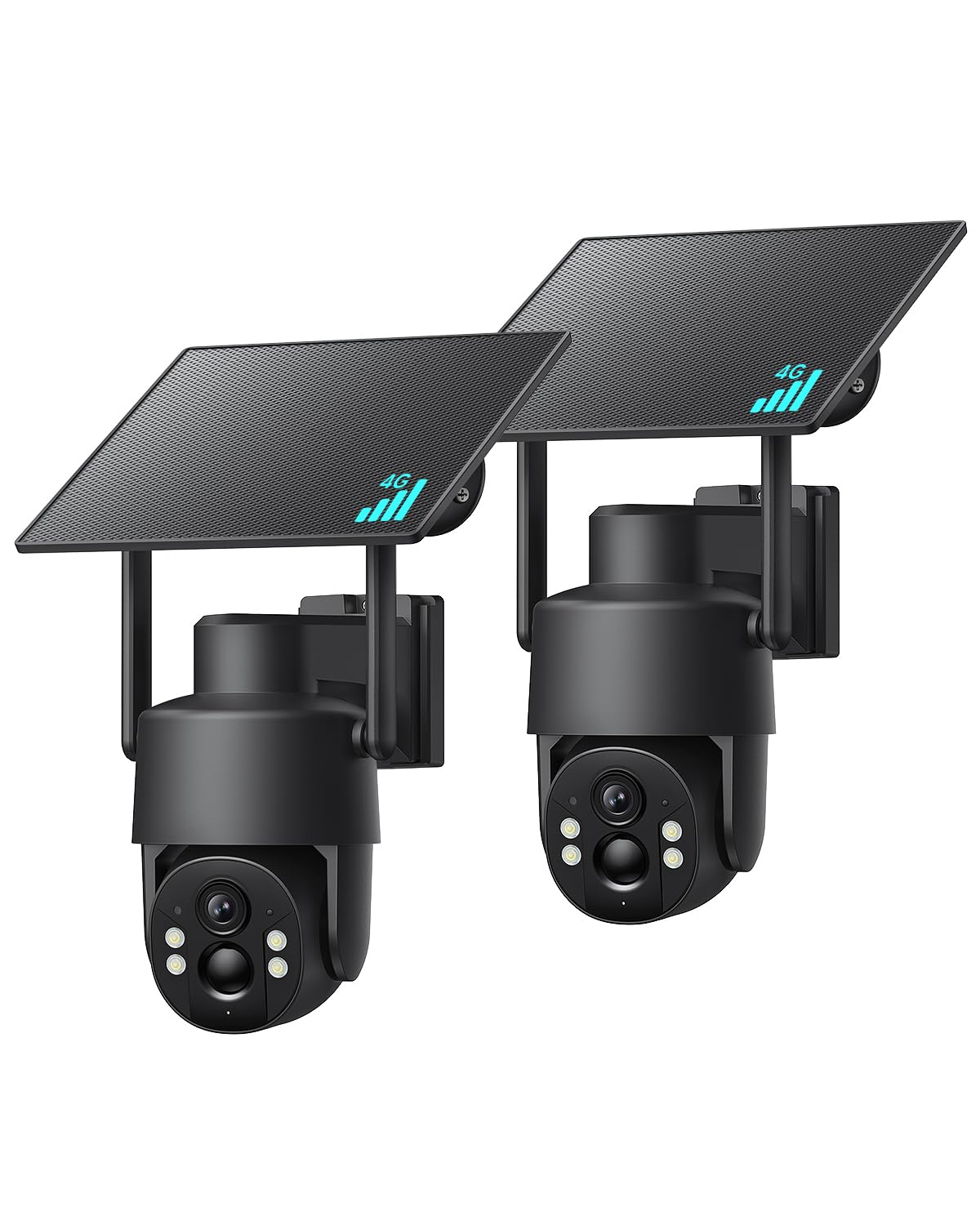
Oculview TC18 4G 2-Pack

86 /100
Keeper Score Excellent

Key details

Power
Solar panel, rechargeable battery
Resolution
2K
Connectivity
4G LTE (Verizon, AT&T, T-Mobile)
Weather Rating
IP65
Check Price on Amazon

The awkward truth about gate cameras is that the gate is usually the worst place on the property for one. It sits past the last reliable stretch of house Wi-Fi, there's no outlet nearby, and whatever you mount has to keep working through rain and a February night.

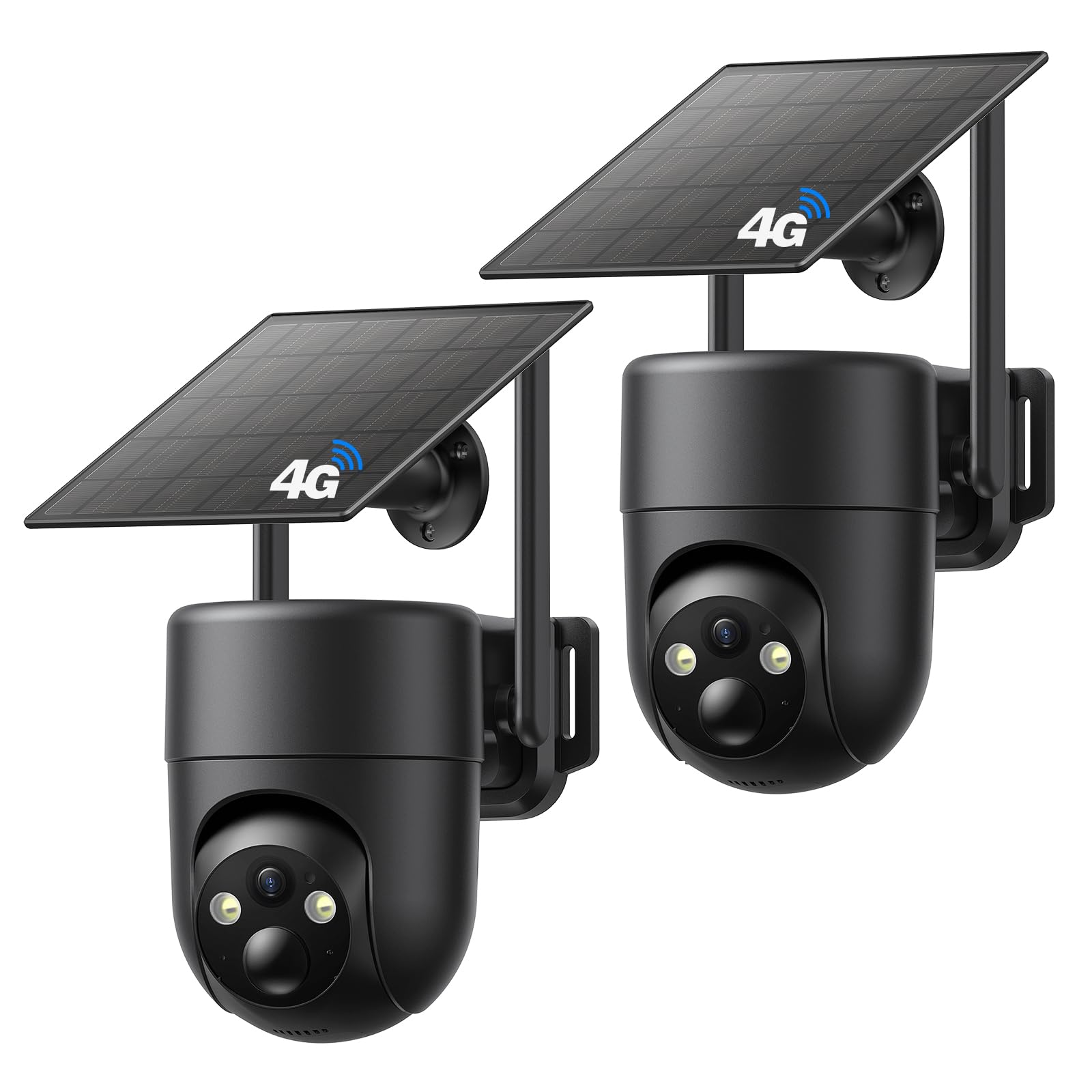
The Oculview TC18 pair answers both problems at once. The 4G LTE SIM is built in, so these cameras talk to Verizon, AT&T or T-Mobile rather than to your router, and each one arrives with its own solar panel. Nothing has to reach the house except the cell signal. You also get two cameras rather than one, which at a gate is the difference between watching the approach and watching the latch.

What they see is genuinely useful: 2K in daylight, full-color night vision, and a 360-degree pan you drive from the app instead of guessing where to aim. The resolution is enough to tell a delivery van from a neighbor's sedan, and the color after dark means you're identifying vehicles by paint and lights rather than by silhouette.

Two things to know before you mount it. The automatic tracking isn't dependable, so leave the camera parked on the gate and use the pan as something you control rather than something that follows. And the panels need real sun — ours kept up through overcast weeks, but check where the light lands on the post in winter before you commit to a spot.

Pros

  • Cellular SIM built in, so no Wi-Fi at the gate
  • Solar panel supplied with each camera
  • 2K color night vision and 360° pan
  • Two cameras cover approach and latch

Cons

  • Some cameras stop working after installation
Our verdict

For a gate with no power and no usable Wi-Fi, this is the pair we point people to: cellular and solar out of the box, with 2K color night video of the whole opening.

Check Latest Price
2

Best Wired

REOLINK RLC-520A

87 /100
Keeper Score Excellent

Key details

Resolution
5MP (2560 x 1920)
Connectivity
PoE Ethernet
Night Vision
IR, up to 100 ft
Weather Rating
IP67
Check Price on Amazon

One cable does everything on the RLC-520A. Power over Ethernet carries the current, the video and the data down a single strand, which means a camera at the gate that never needs charging, never sleeps to save battery, and never sends you up a post with a battery pack in the rain.

That last part is what earns it a place here. Because the camera runs off the cable, 24/7 recording is a setting rather than a battery compromise, and the 5MP sensor at 25 frames per second leaves you real detail to work with when something happens at the barrier. The 100 feet of infrared matters more at a gate than on a porch, too: gate posts sit well beyond the reach of the lights you can throw at them.

The catch is the cable itself. Running direct-burial Ethernet or conduit out to the gate is a weekend of digging, and if that isn't possible for you, one of the cellular picks is the answer instead. If it is possible, you get the most maintenance-free camera in this group: IP67 housing, a waterproof lid for the connector, and no monthly bill, since footage records to a microSD card or an NVR.

The detection filters earn their keep out there, letting you alert on people and vehicles rather than on a branch moving in the wind. Plan where the cable terminates before you mount anything, though — the turret needs to sit high enough that nobody can turn it by hand, and that's a decision you make on the ground, not on the ladder.

Pros

  • One cable carries power, video and data
  • 5MP at 25 fps with 100 ft IR range
  • Continuous recording with no subscription
  • IP67 housing for an exposed post

Cons

  • Needs an Ethernet cable run to the gate
  • App can be slow to reconnect
Our verdict

If a single cable can reach the gate, this is the camera to put on the end of it: 5MP, 100 feet of infrared, and no battery, panel or subscription to manage.

Check Latest Price
3

Best for Continuous Recording

ELYSOO CQ1S 4G 2-Pack

85 /100
Keeper Score Excellent

Key details

View
355° pan, 90° tilt
Power
Solar panel, rechargeable battery
Resolution
4MP
Connectivity
4G LTE cellular, built-in SIM
Check Price on Amazon

A battery camera at a gate is asleep most of the day. It wakes when the sensor fires, takes a moment to decide, and starts filming after the thing you wanted to see has already happened. ELYSOO's pitch for the CQ1S is that it doesn't work that way: always-on video, recorded continuously, over a cellular connection, from a solar panel.

The hardware backs the idea up. The camera runs on a built-in SIM across Verizon, T-Mobile and AT&T, so there's no Wi-Fi to reach the gate and no router to reboot. You get 4MP, a 355-degree pan with 90 degrees of tilt, color night vision out to about 49 feet, IP65 sealing and person and vehicle detection. The pair means one camera on the gate and one wherever the vehicles end up.

Where it earns its spot is a gate you want on record rather than on alert. Continuous footage puts the car that pulls up and waits on the card from the moment it arrived, not from the moment a sensor decided it counted. The solar side held up in use as well — the panels kept both units at full charge, including through cloudy stretches and rain.

The other thing to price in is data. Continuous recording over a cellular link is only as good as the plan behind it, so check the allowance before you commit to round-the-clock recording rather than event clips. It's the difference between the feature working as advertised and a monthly bill that surprises you in month two.

Pros

  • Continuous recording over 4G with no Wi-Fi
  • Solar panels kept both units fully charged
  • 4MP with 355° pan and color night vision
  • Two cameras in the box

Cons

  • Motion alerts can arrive well after the event
Our verdict

The pick for a gate you want on continuous record rather than on alerts — cellular and solar, with no Wi-Fi or power run needed at the post.

Check Latest Price
4

Best Solar Kit

Cinnado S1 4-Pack

78 /100
Keeper Score Very Good

Key details

Pack
4 cameras
Power
Integrated solar panel
Resolution
2K
Connectivity
2.4GHz Wi-Fi
Check Price on Amazon

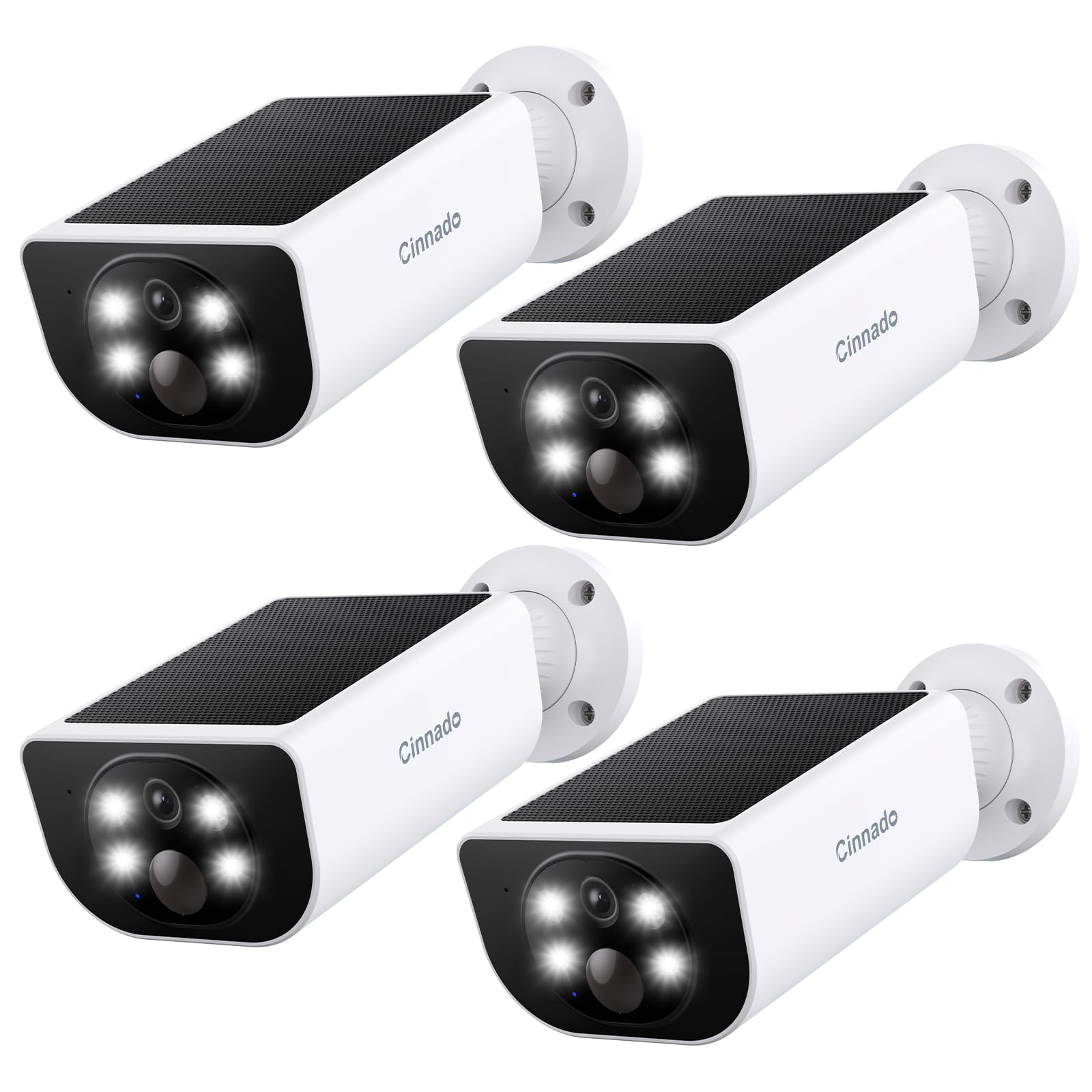
Cinnado folds the solar panel into the camera body instead of hanging it off a cable. At a gate that's a small design choice with a large practical payoff: one thing to mount instead of two, no cable to route around a post, and no way to get the connection wrong.

As a kit, this is the most straightforward way here to cover a gate, its approach and a stretch of fence in one purchase. Four cameras, 2K video, IP65 bodies, PIR detection with an AI layer for people, two-way talk and a siren on each. Setup was quick and the brackets make it easy to angle each camera exactly where you want it.

The panels did their job in use, keeping the batteries topped up through cloudy spells and rain, which is the part of a solar camera that decides whether you end up liking it. With four mounted, one app screen shows every view at once, and that grid is the real argument for buying a kit rather than four separate cameras over a year.

Pros

  • Integrated panel means one mount per camera
  • Four 2K cameras with sirens and two-way talk
  • Panels held up through cloudy weather
  • All four views in one app screen

Cons

  • Panel angle is tied to the camera angle
Our verdict

The simplest way to put four solar cameras around a gate and its approach — just plan the sun and the view together, because the panel follows the lens.

Check Latest Price
5

Best Budget Kit

GMK CG6 4-Pack

83 /100
Keeper Score Excellent

Key details

Power
Rechargeable battery
Resolution
2K
Connectivity
2.4GHz Wi-Fi
Night Vision
Up to 33 ft
Check Price on Amazon

Four cameras and no solar panels — that trade is the whole story of the GMK kit. You get the coverage of a small system without paying for a panel on every camera, and in exchange you take on the one chore a gate camera should never have: climbing up to bring it inside to charge.

What's there works. The 2K picture is clear day and night, the 110-degree view is wide enough for a gate opening, and setup runs to minutes per camera rather than an afternoon. The PIR is tuned sensibly for a driveway as well: small animals crossing don't trip it, people do, and alerts land on your phone without much of a wait.

Plan the charging before you plan the mounting. Without a panel, every camera comes down eventually, so put them at ladder height even where a higher spot would give a better angle — a camera you can reach in a minute gets charged, and one at the top of a gate pier quietly runs flat. A spare charging cable per camera saves you rotating them through the kitchen.

The other limit is range after dark. The infrared is rated to about 33 feet, which covers a gate post and the ground beneath it but not a wide opening at night. On a broad double gate, budget for two cameras pointed at the latch rather than one pointed at everything.

Pros

  • Four 2K cameras for wide coverage
  • Motion detection that ignores small animals
  • Setup takes minutes per camera
  • IP65 bodies with a siren on each camera

Cons

  • Cameras occasionally lose their Wi-Fi connection
Our verdict

A lot of coverage for the money if you can live without solar — best on a gate close enough to the house that four charging trips a year don't bother you.

Check Latest Price
6

Best Budget Single Camera

GALAYOU R6

82 /100
Keeper Score Excellent

Key details

Power
Detachable solar panel
Resolution
2K
Connectivity
2.4GHz Wi-Fi
Night Vision
Up to 26 ft
Check Price on Amazon

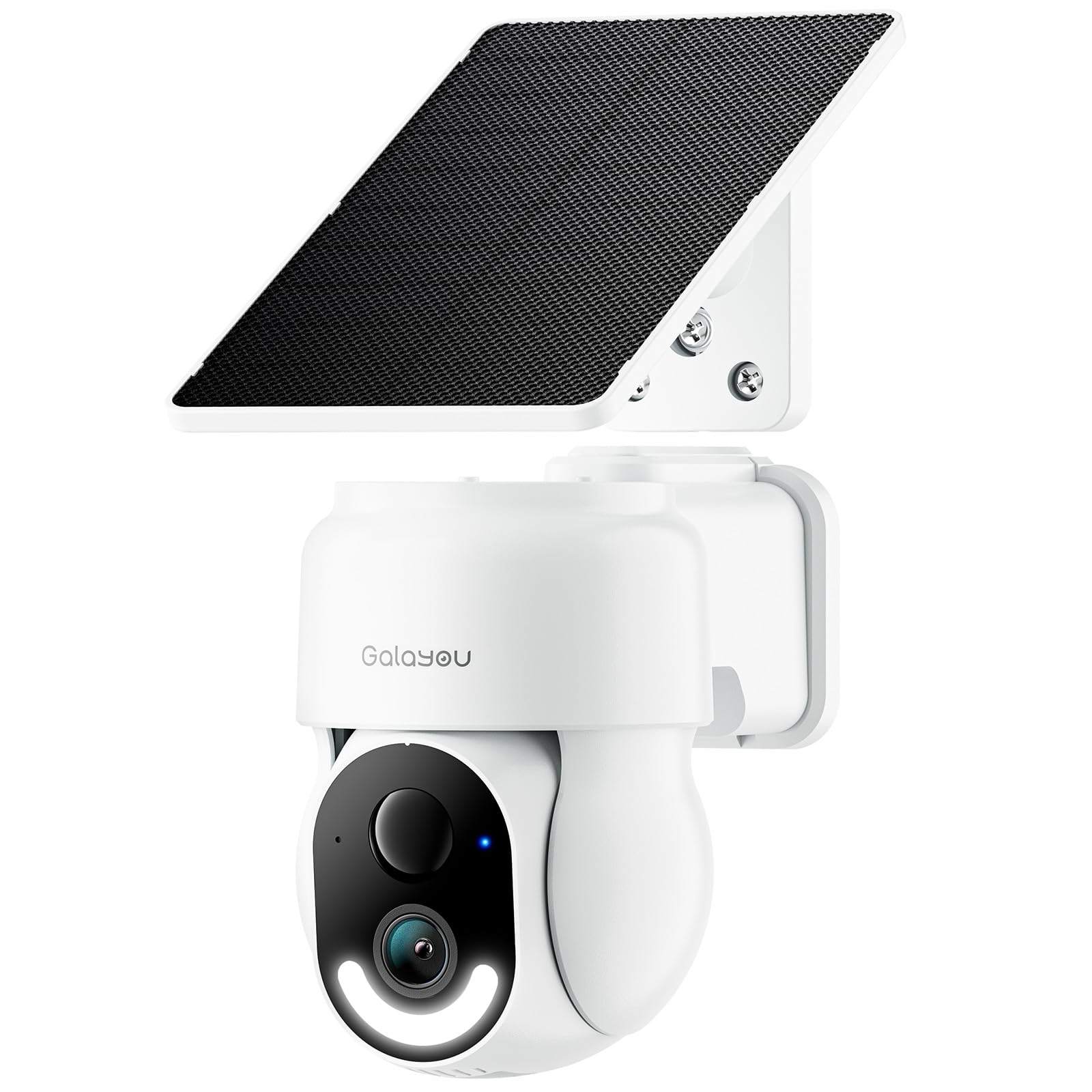
The panel on the GALAYOU R6 unclips from the camera. That sounds minor until you're standing at a gate working out where the sun goes in December — then being able to leave the camera aimed at the latch and put the panel somewhere brighter is the difference between a camera that keeps up and one you're recharging every other week.

The rest of it is a sensible small camera. 2K video, a 93.8-degree view, IP65 sealing, PIR detection with human filtering, color night vision and a microSD slot that takes up to 128GB. At roughly 3.5 by 4.7 by 5.5 inches it sits on a gate post without announcing itself, and setup is a phone job rather than a tool job.

Two things we noticed once it was up. The night vision is rated to about 26 feet, which is short for a gate: it lights the latch and the ground around it, not the road beyond. And the detection is sensitive enough that moving foliage in the frame will set it off, so spend five minutes drawing a detection zone before you decide the alerts are useless.

What you're buying here is the cheapest route into the category that still comes with a solar panel attached, and the panel is the part that matters. Battery performance is the variable — some units run for weeks, others want topping up sooner — so aim the panel properly on day one and the rest of it behaves.

Pros

  • Detachable panel aims independently of the lens
  • 2K video in a compact body
  • IP65 sealing and a 128GB card slot
  • Cheapest solar camera in this set

Cons

  • Night vision reaches only about 26 feet
Our verdict

The budget pick for a single gate post: 2K video and a solar panel you can aim independently of the lens, so long as the gate is within 26 feet after dark.

Check Latest Price
7

Unobtrusive Placement

realhide CB54W

82 /100
Keeper Score Excellent

Key details

Power
Rechargeable battery
Battery
50 Wh
Resolution
2K
Connectivity
2.4GHz and 5GHz Wi-Fi
Check Price on Amazon

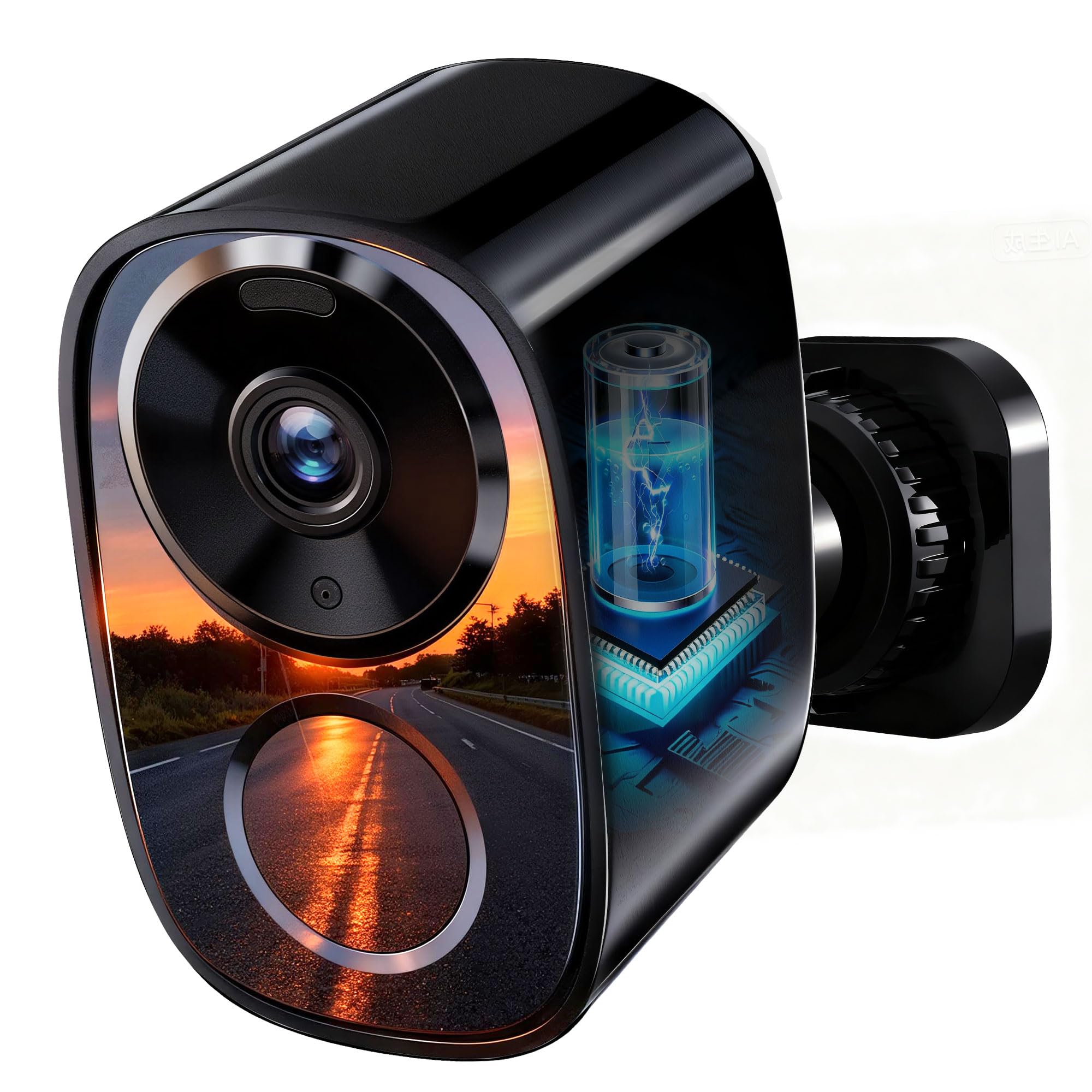
No solar panel, and at the end of a driveway that's the first thing to weigh. The realhide CB54W is a battery camera you bring in to charge; the listing claims up to six months, and how close you get to that depends entirely on how busy the view is.

It is genuinely small — about 2.1 by 3 by 2 inches and a bit over five ounces — which makes it easy to tuck onto a fence rail or a timber post where a bigger camera would announce itself. Setup is quick, the app is plain, and the 2K picture is the strongest thing about it: crisp in daylight, clear at night, and the part reviewers of any camera notice first.

Where it makes sense is a gate close enough to the house to sit on your Wi-Fi and quiet enough that the battery isn't working all day. In that spot it's the least fussy camera here: mount it, check it once a season, forget it. The dual-band radio helps if your 2.4GHz band is crowded at home, though 2.4GHz is still the one that reaches furthest.

Frame the shot from the ladder rather than the sofa. The view is noticeably narrower than the pan-and-tilt models here, so where you point it is where it stays — and on a gate that means choosing between the latch and the road, not getting both.

Pros

  • Tiny body hides on a post or rail
  • 2K picture is sharp day and night
  • Dual-band 2.4GHz and 5GHz Wi-Fi
  • Quick setup through the app

Cons

  • No solar panel, so it comes down to charge
  • Battery life varies widely between units
Our verdict

A small, sharp, easy camera for a gate that's inside your Wi-Fi and quiet enough to leave alone — as long as you accept bringing it in to charge.

Check Latest Price
8

Large Properties

FAMVIVA PT808 4-Pack

80 /100
Keeper Score Excellent

Key details

View
355° pan, 90° tilt
Power
Solar panel, rechargeable battery
Resolution
2K
Connectivity
2.4GHz Wi-Fi
Check Price on Amazon

Four cameras for one gate sounds like overkill until you count the angles. There's the latch, the road side, whatever the vehicle does next, and the yard behind — and the FAMVIVA kit covers each with its own camera, its own solar panel and a 355-degree pan.

The hardware suits the job. 2K video, IP66 sealing, PIR detection, two-way talk through the app and 90 degrees of tilt on top of the pan. It's 2.4GHz only, which reads like a limitation on a spec sheet and is actually the right call out here: the lower band is the one that carries to the far end of a drive.

A gate is also exactly where motion-only recording struggles. The camera catches the traffic that passes and can miss the vehicle that pulls up and stops, which is the visitor or the delivery you actually wanted on film. If that's the traffic you get, weigh a continuous-recording camera before you commit to any event-based kit.

What you're buying is four independent views of one opening, plus panels that keep them running without a cable run. The catch is that all four live or die on the same Wi-Fi signal, so test the connection at the gate — one bar at the post is one bar at the post, however many cameras you own.

Pros

  • Four panning cameras cover every angle
  • Solar panel supplied with each camera
  • IP66 bodies for exposed posts
  • 2.4GHz reaches the far end of a drive

Cons

  • All four streams depend on one 2.4GHz band
Our verdict

Best for a wide or busy gate where one camera can't cover the angles — four views and four panels, with one Wi-Fi signal to get right.

Check Latest Price

How We Tested the Best Cameras for Gates and Driveways

We started with research: spec sheets for about 40 cameras, sorted by how each one gets power and how it gets online — wired, wifi with a solar panel, or cellular with a built-in SIM. Anything that needed an outlet at the gate was out, and so was anything whose app reviews repeated the same dropped-connection complaint. Then we bought 12 at retail and mounted them over seven months at a farm gate on a gravel drive, a side-yard gate in the suburbs, a job-site trailer, and an off-grid property where my phone shows one bar.

Mounting was timed with one person, a drill, and a ladder; the units with an integrated panel were up in minutes, and the ones with separate hardware cost a second trip. Most of the judging came from living with the alerts. We noted how long a person walking up the drive took to set a camera off and how fast that notification reached a phone two towns away, then logged every deer, branch, and passing headlight that triggered one. Night footage got checked the honest way: a truck's headlights sweeping the gate at 9 p.m., and whether the picture held color or went to mush.

Battery and signal went into a logbook rather than a spec sheet. I wrote down battery percentages every few days through a cold snap and whether the solar panel had clawed anything back by evening, then rebooted the router on purpose to see which cameras reconnected on their own and which needed a walk outside. Two-way talk got used from the kitchen, sirens got listened to, and every camera sat through a hose-down to check its seals.

How to Choose a Camera for an Open Gate

Power: Sun, Battery, or a Cable

Three designs cover almost every gate. A PoE camera runs off the same Ethernet cable that carries its video, so it never needs charging and never sleeps to save power. A solar camera tops itself up from a panel, which works beautifully when that panel sees six hours of sun and badly when it sits in the shadow of a gate pier. A battery-only camera is the least expensive and the most hands-on, because it comes down to charge.

The trap is the word wireless. It means no power cable, not no maintenance, and a solar camera in shade is a battery camera with extra steps. Stand at your gate at midday and look at where the light actually falls before you pick. Whatever you choose, match the weather rating to the spot: IP65 handles rain on an exposed post, IP67 survives a hosing.

Signal at the Gate, Not at the Porch

Wi-Fi fades fast outdoors, and the gate is usually the furthest point from the router. The 2.4GHz band reaches further than 5GHz, so even a dual-band camera will end up on 2.4GHz out there. If you're down to one bar at the gate, no camera is going to fix that: go cellular, or run cable.

Test it before you buy rather than after. Take a phone to the gate, join the network the camera will use, and see whether a video call holds together. That tells you more about your gate than any antenna figure on a box, and it's the difference between a camera that clips and one that keeps a stream.

What the Camera Sees After Dark

Night vision range is the specification that separates a gate camera from a porch camera. Look for a figure that reaches past your opening, and remember infrared lights the ground in front of the lens, not the road beyond it. A wide lens takes in more of the gate but turns a face at distance into a smudge; a narrow one gives you detail and loses the edges.

On a double gate, two modest cameras usually beat one wide one. Color night footage is worth paying for at an entrance, where identifying a vehicle by paint and lights is more useful than a grey silhouette.

Recording: Events or Everything

Most battery cameras record only when the sensor fires, which is why the clip so often begins a beat after the thing you wanted. Continuous recording is the honest fix, and it needs either a cabled camera or a cellular one built for it.

A gate is exactly where motion triggers struggle. The camera catches the traffic that passes and can miss the vehicle that pulls up and stops, which is the one you actually care about. If your gate sees deliveries, visitors or anyone turning around, continuous recording is worth more than an extra megapixel.

Storage and the Bill After Purchase

Every camera here records to a microSD card, the cloud, or both. The card is the cheap route and keeps working when the internet doesn't; the cloud is what lets you pull a clip after a camera is taken off the post. Free tiers generally mean short clips, so read what the free plan gives you before assuming the subscription is optional.

Cellular models add a data plan on top. Price the storage and the data before you choose, because a camera that costs more up front and nothing monthly can be the better deal over a few years.

Frequently Asked Questions

Final Verdict

Most gates have no power and no usable Wi-Fi, and that single fact reorders this whole list. The Oculview TC18 pair is what we recommend for the typical open gate: a cellular SIM and a solar panel on each camera mean nothing has to reach the house except a signal, and you get two views of the opening instead of one.

If you can get a cable to the gate, the REOLINK RLC-520A is the better camera — 5MP, 100 feet of infrared and continuous recording with no battery to manage. Decide that before you shop rather than after.