Best Nikon Lenses of 2026

The hardest part of buying a lens isn't the price — it's figuring out which one you'll actually reach for. A fast prime can make a portrait sing, but it won't help at a kid's soccer game. A superzoom covers everything, yet it asks you to give up some light. Over the past six months, I've shot with eight lenses across both mirrorless and DSLR bodies, and the pattern is clear: the right lens matches how you shoot, not the longest spec sheet.

I used them the way most people do: a 50mm on a rainy walk, a macro in the garden with dew on the petals, a telephoto at a track meet, and a standard zoom on a trip where I didn't want to swap lenses. Sharpness wide open, autofocus that kept up with a moving subject, and whether I still wanted to carry the lens after an hour mattered more than any chart. Value came down to how often a lens earned a spot in my bag. The picks below are the ones that did.

Keeper Score summarizes customer ratings and review volume. Read it alongside the product details and trade-offs. How the score works.

1

Best Overall

NIKKOR Z 24-120mm f/4 S

91 /100
Keeper Score Outstanding

Key details

Mount
Nikon Z
Weight
1.4 lb
Focal Length
24-120mm
Max Aperture
f/4
Check Price on Amazon

The 24-70mm f/2.8 S further down this page is the finer lens in the abstract — a stop faster, sealed to a higher standard, beautifully built. It also costs about twice as much. For most Z owners the 24-120mm f/4 S is the better buy, because the extra 50mm at the long end changes more photographs than the extra stop does, and the lens is already sharp at f/4, which is where it will live.

Constant aperture is the detail we care about most here. Set f/4 and it holds from 24mm to 120mm, so there's no exposure jump when you zoom in to tighten a frame — the thing event shooters pay for, only at a price that doesn't require a client. Twin stepping motors move the glass quietly, and the minimum focus distance of 1.15 ft applies at every focal length, which turns the long end into a genuine near-macro: at 120mm you can fill the frame with something the size of a coffee cup.

Detail holds across the frame at f/4, corner to corner, and 120mm isn't a soft afterthought. Zoom all the way in and the barrel extends a couple of inches; it's visible on a tripod, doesn't upset the balance in the hand, and stops registering after a week of use.

One thing to know before ordering: this is full-frame glass. On a Z50 or Zfc it behaves like a 36-180mm — a good portrait-and-travel range, but no longer wide enough for a landscape or a small room. Crop-body owners should put a wide zoom on the list alongside it.

Pros

  • Constant f/4 from 24mm to 120mm
  • Sharp corner to corner at f/4
  • Focuses to 1.15 ft at every focal length
  • Quiet twin stepping motors

Cons

  • No in-lens VR; steady shots rely on the body
Our verdict

The first lens we recommend to almost any Z owner: it covers the range most of us shoot every day and stays sharp while doing it.

Check Latest Price
2

Best for Professional Work

NIKKOR Z 24-70mm f/2.8 S

93 /100
Keeper Score Outstanding

Key details

Mount
Nikon Z
Weight
1.8 lb
Focal Length
24-70mm
Max Aperture
f/2.8
Check Price on Amazon

If the camera pays your rent, this is the standard zoom the work asks for. Weddings, corporate events, a press call in a dim room: one lens, f/2.8 across the range, and enough sealing around the moving parts of the barrel to keep going when the weather turns.

Nikon splits the focusing between two drive units that fire together, and the result is the quickest, quietest autofocus in this group — the lens locks onto a face and holds while you recompose. Nothing about it announces itself, which is what you want during a ceremony.

Optically it's the cleanest zoom here: edge-to-edge sharpness, contrast that survives backlight, and a rendering that makes skin look like skin rather than a sharpening test. The filter thread is a large 82mm, so budget for filters if you use them.

The stop is the whole argument. At 70mm, f/2.8 in a reception hall is a different photograph from f/4 — cleaner at high ISO, with the background falling away instead of sitting there. Our advice: if you shoot people in poor light for money, this is the lens to buy before a second body.

Pros

  • Constant f/2.8 through the zoom range
  • Fast, near-silent dual-motor focusing
  • Sharp edge to edge with strong contrast
  • Sealed against dust and moisture

Cons

  • The most expensive lens in this group
  • 815 g adds real weight to a small body
Our verdict

Our pick when photography is the job: the fastest-focusing standard zoom here, built for anyone shooting people in bad light for a living.

Check Latest Price
3

Best Prime

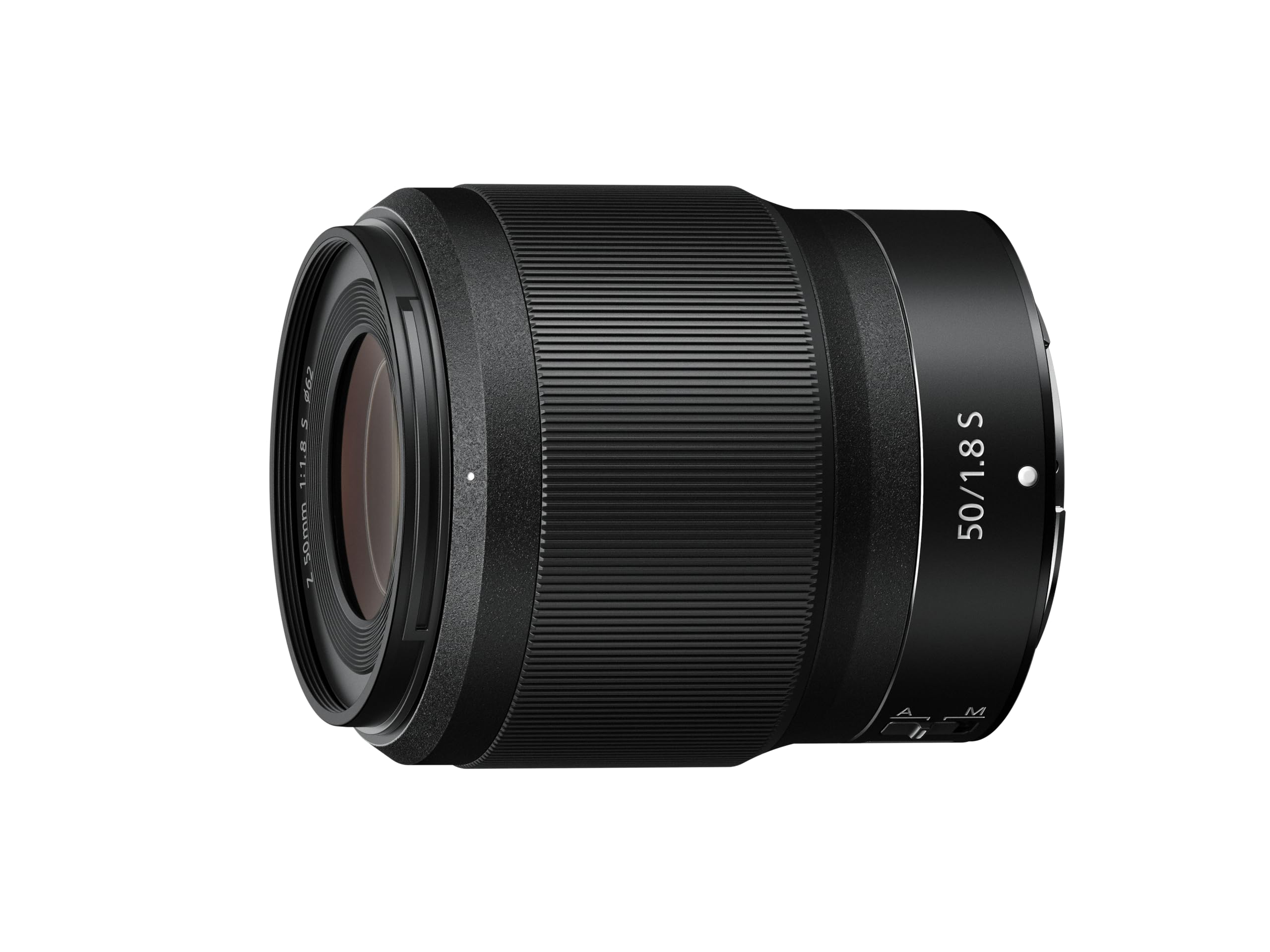
NIKKOR Z 50mm f/1.8 S

94 /100
Keeper Score Outstanding

Key details

Mount
Nikon Z
Weight
14.6 oz
Focal Length
50mm
Max Aperture
f/1.8
Check Price on Amazon

The phrase "nifty fifty" promises small and cheap, and this lens is neither. At 14.56 oz it's roughly twice the bulk of the plastic 50mm you may have started on, and it costs more than a kit zoom. Hold that thought while you look at a frame made wide open.

Because at f/1.8, with no stopping down, this lens is already extremely sharp — corners hold, distortion is close to zero, and chromatic aberration is hard to find even against a bright window. That's the trade: give up small and cheap, get a standard prime you never have to apologize for. In low light it's the lens we reach for first, and the nine rounded blades keep background blur round rather than busy.

Focus comes from an ultra-quiet stepping motor, quick enough for eye detection on a moving subject and silent enough to leave on the camera for video. On a full-frame body the 46.8-degree view is the classic normal perspective; on a DX body it tightens into a 75mm portrait lens, which is a happy accident for anyone shooting a Z50 or Zfc.

Pros

  • Extremely sharp wide open at f/1.8
  • Near-silent stepping motor autofocus
  • Almost no chromatic aberration
  • Smooth, round background blur

Cons

  • Bulkier and pricier than a classic 50mm
Our verdict

The prime we recommend first for available light: extremely sharp wide open at f/1.8, and quiet enough to shoot video with.

Check Latest Price
4

Best Compact Prime

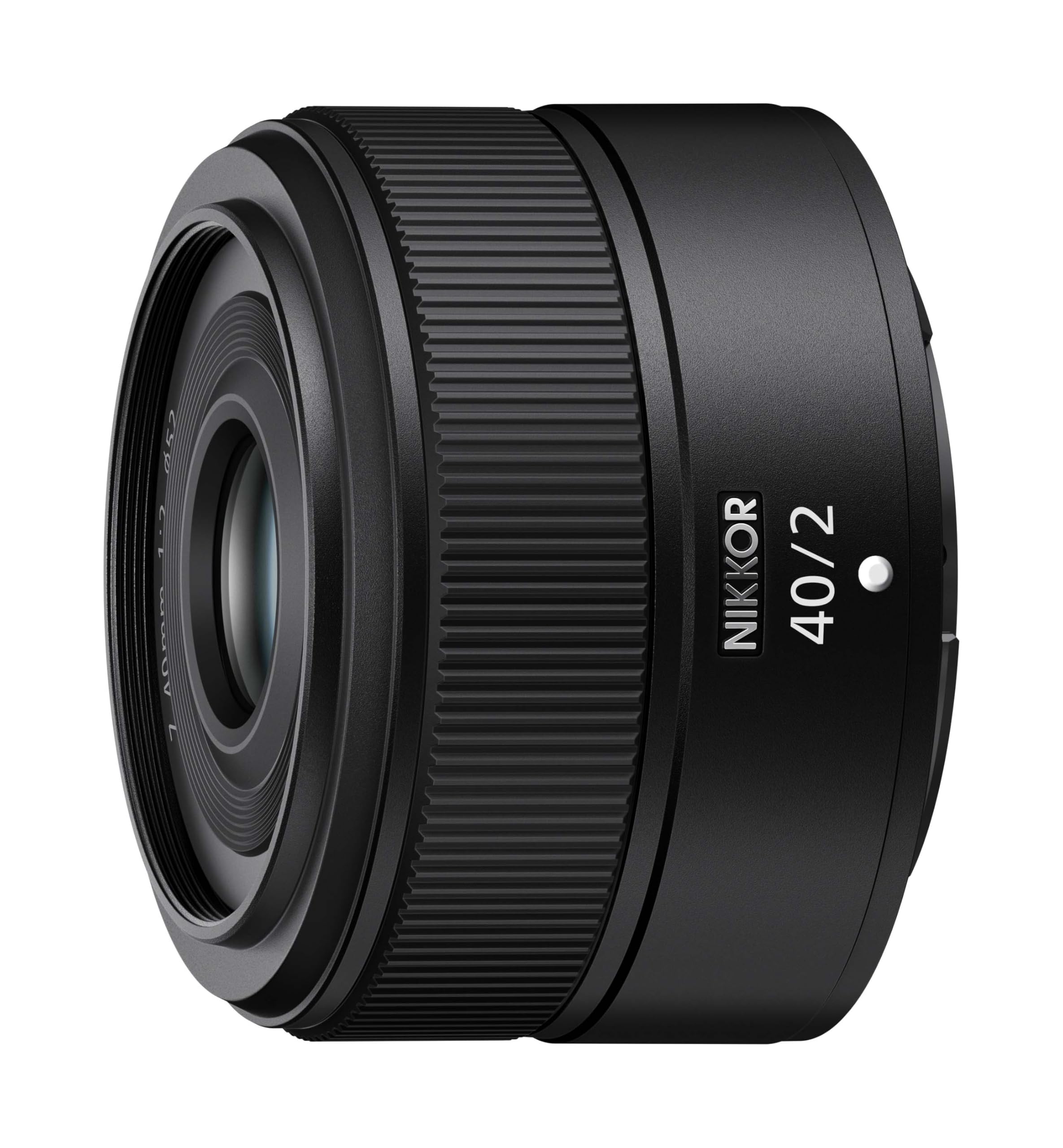
NIKKOR Z 40mm f/2

91 /100
Keeper Score Outstanding

Key details

Mount
Nikon Z
Weight
6.08 oz
Focal Length
40mm
Max Aperture
f/2
Check Price on Amazon

At the least expensive end of this group sits a 6.08 oz pancake that changes the character of a Z body. Screw it onto a Z6 or a Zfc and the camera stops feeling like a system and starts feeling like something you carry without thinking about it.

We like it for the focal length as much as the size. Forty millimeters sits between the 35mm documentary view and the 50mm portrait view — wide enough for a street corner, tight enough that faces don't stretch at the edges of the frame. The f/2 aperture and nine rounded blades let backgrounds fall away softly, and the control ring can be set to aperture or exposure compensation, so you can shoot one-handed without lifting your eye from the finder.

The box holds front and rear caps but no hood, which is a small annoyance on bright days; a 52mm screw-in hood fixes it for very little. On a DX body the field of view tightens to 60mm, which makes this a compact short portrait lens rather than a street lens — worth knowing before you buy it for the wide look.

Pros

  • Weighs 6.08 oz and barely adds bulk
  • f/2 aperture with soft, round blur
  • Suppressed focus breathing for video
  • Custom control ring for one-handed shooting

Cons

  • Not weather-sealed
Our verdict

The cheapest way into a fast Z prime, and the one we grab when we want the camera to disappear into a jacket pocket.

Check Latest Price
5

Best All-In-One

NIKKOR Z 28-400mm f/4-8 VR

90 /100
Keeper Score Outstanding

Key details

Mount
Nikon Z
Weight
1.6 lb
Focal Length
28-400mm (14.2x)
Max Aperture
f/4-8
Check Price on Amazon

Twenty-eight to 400mm is a 14.2x zoom in a 1.6 lb barrel, and we think of it as the lens that ends the packing argument. One body, one lens, a landscape at 28mm and a bird at 400mm without opening a bag or missing the shot while you swap.

Stabilization is what holds the design together: five stops of VR, enough to hand-hold at the long end in ordinary daylight. Close focus is 0.2 m at the wide end with a maximum reproduction ratio of 0.35x, so it also handles flowers and small details that superzooms usually fumble. Sharpness is better than the range suggests — 400mm is usable, not merely available.

What you're buying is convenience, and the lens is honest about it. At 5.57 in long and light for what it covers, it sits close enough to the body that a burst at 400mm is comfortable. For a two-week trip where one bag has to do everything, this is the one; if most of your shooting happens indoors, the 24-120mm's constant f/4 is the better tool.

Pros

  • Covers 28-400mm without changing lenses
  • Five stops of VR for handheld shooting
  • Focuses to 0.2 m at the wide end
  • Light for its range at 1.6 lb

Cons

  • f/8 maximum aperture at 400mm
  • Focus can be slow at the long end
Our verdict

For travel we take this one: 28-400mm in a light barrel, with stabilization that makes the long end hand-holdable.

Check Latest Price
6

Best Macro

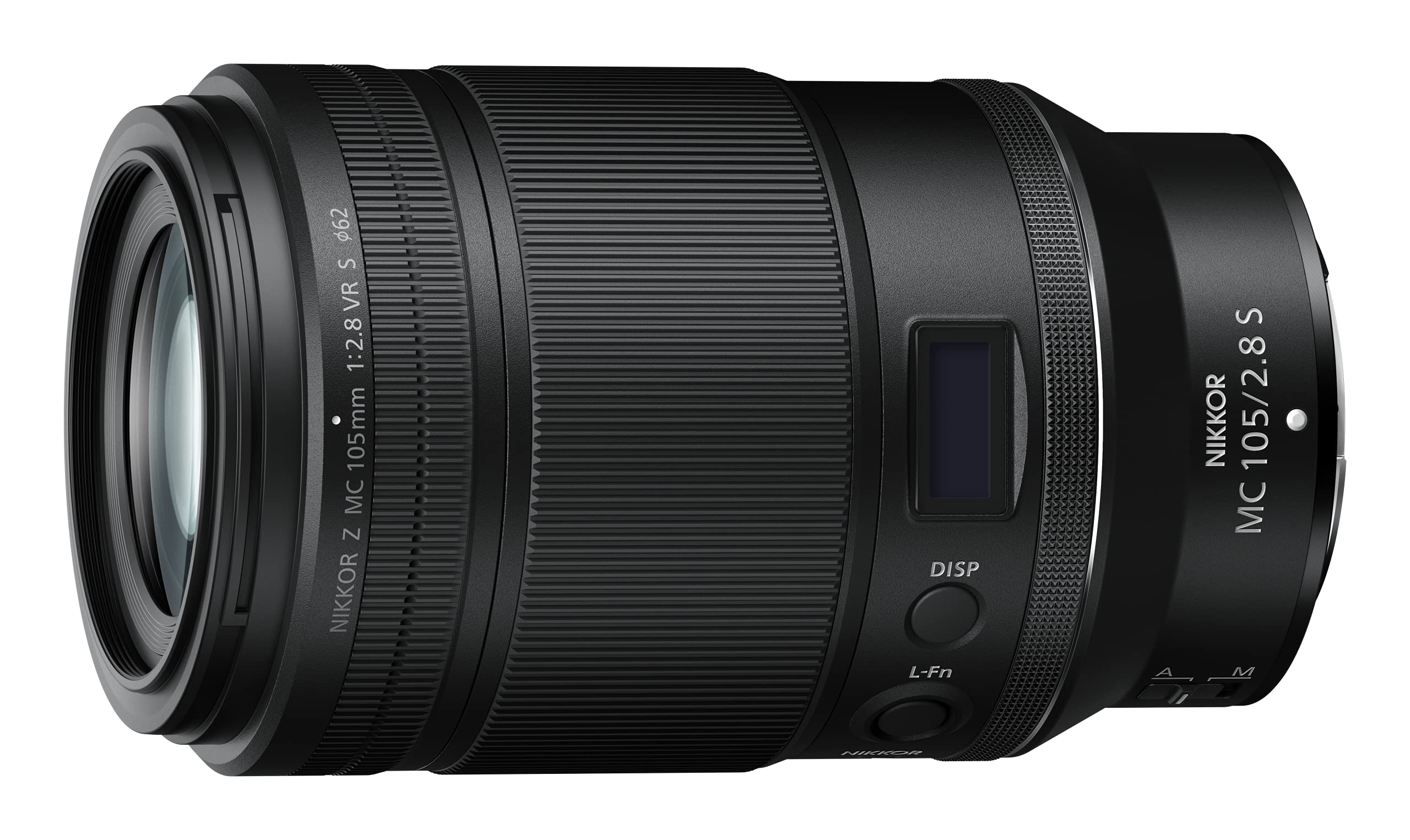
NIKKOR Z MC 105mm f/2.8 VR S

93 /100
Keeper Score Outstanding

Key details

Mount
Nikon Z
Focal Length
105mm
Max Aperture
f/2.8
Magnification
1:1
Check Price on Amazon

Nothing else on this page does 1:1. At full magnification a subject the size of the sensor fills the frame — a coin, a beetle, the stamens of a lily — and at 105mm you stand far enough back to light it without your own shadow falling across the shot.

It's two lenses in one. Wide open at f/2.8 it's a fast short telephoto that renders portraits with soft backgrounds and sharp eyes; racked down to minimum focus it's a macro that stays sharp into the corners, which is exactly where cheaper macro designs come apart.

The stabilization matters more here than anywhere else in this group. At 1:1 every millimeter of camera movement is magnified along with the subject, and in-lens VR is the difference between a macro you carry on a walk and one that stays in the studio. Our advice: leave the tripod at home and trust the VR for anything that isn't a focus stack.

The one behavior to plan around is focus. The throw is long by design, so racking from nearest to farthest takes a moment and the lens will hunt if you let it. Set the focus limiter for normal distances or focus manually at 1:1 — macro shooters do this anyway — and it stops being a problem.

Pros

  • True 1:1 lifesize magnification
  • 105mm working distance for skittish subjects
  • Fast f/2.8 aperture for portraits
  • Sharp edge to edge with in-lens VR

Cons

No notable drawbacks to flag.

Our verdict

Our macro pick, and a genuinely good portrait lens: 1:1 magnification with the working distance to light small subjects properly.

Check Latest Price
7

Best for DSLR Wildlife

AF-S FX NIKKOR 200-500mm f/5.6E VR

93 /100
Keeper Score Outstanding

Key details

Mount
Nikon F (FX)
Focal Length
200-500mm
Max Aperture
f/5.6
Vibration Reduction
4.5 stops
Check Price on Amazon

This is F-mount glass. It mounts straight onto a DSLR and onto a Z body through the FTZ adapter, where it keeps autofocus and vibration reduction — settle that before anything else, because nothing else about the lens matters if it won't fit your camera.

Two hundred to 500mm at a constant f/5.6 is the reason this lens suits birders: 750mm of equivalent reach on a DX body, and a maximum aperture that doesn't shrink as you zoom out to the long end. Close focus is 7.2 ft, near enough for a dragonfly at 500mm.

The sharpness at 500mm is what we kept coming back to. Four and a half stops of VR with a dedicated sports mode is what makes a hand-held long frame possible at all, and there's a quick-release tripod foot for the times it isn't. It also takes Nikon's TC-14E teleconverters on bodies that support autofocus at f/8, which gets you to 700mm without buying another lens.

The cost is commitment. It's a large lens, and a long session goes better with a monopod under that tripod foot than with the whole rig hanging off the camera mount. Set up that way, 500mm stops being intimidating — and for the money, nothing else here reaches it.

Pros

  • Constant f/5.6 out to 500mm
  • Sharp wide open at the long end
  • 4.5 stops of VR with a sports mode
  • Takes TC-14E teleconverters on f/8 bodies

Cons

  • Autofocus is not the quickest for fast action
  • Not weather-sealed
Our verdict

For DSLR shooters chasing wildlife, this is the reach-to-price sweet spot: a constant f/5.6 at 500mm with stabilization that works.

Check Latest Price
8

Budget DX Walkaround

AF-S DX NIKKOR 18-140mm VR (Renewed)

90 /100
Keeper Score Outstanding

Key details

Mount
Nikon F (DX)
Weight
1.5 lb
Focal Length
18-140mm
Max Aperture
f/3.5-5.6
Check Price on Amazon

This is Nikon renewed stock rather than new glass, which is how a DX shooter ends up with a 7.8x zoom for so little money. The refurbishing process covers cleaning, testing, and repackaging, and the result is a lens most people can't tell from new.

The range is what earns it a place: 18mm for a room or a landscape, 140mm for a face across a table, with VR to steady the long end and ED glass to keep contrast up. Minimum focus is 1.48 ft, close enough for a flower at 140mm. We prefer the single lens to a two-lens kit here — fewer changes, fewer missed frames.

The ceiling is the aperture. f/3.5 at 18mm and f/5.6 at 140mm is fine outdoors and marginal in a school gym, where you'll be pushing ISO to keep the shutter speed up. For a body you're keeping another year or two and a budget that won't stretch to S-line glass, that's an easy trade, and the value is hard to argue with.

Pros

  • 18-140mm covers wide to short telephoto
  • VR and ED glass at a low price
  • Focuses to 1.48 ft
  • Renewed units arrive looking new

Cons

  • 90-day warranty rather than a year
Our verdict

The budget answer for DX shooters: one lens from wide to short telephoto, renewed, at a price that leaves room for a second lens.

Check Latest Price

How We Tested These Lenses

We started by pulling every current lens that fits the two mounts readers are most likely shooting — mirrorless and DSLR — and filtering by focal range, aperture, price, and what owners actually complained about. That left eight lenses: primes, a macro, a superzoom, a constant-aperture standard zoom, and a long telephoto. Over six months, we shot each one on the same bodies we use for work and on weekend walks, not on a test bench.

Sharpness was checked by shooting a brick wall and a resolution chart at every full stop, then comparing corners at 100 percent. Constant-aperture zooms were shot wide open at both ends of the range to see if the promise held. Autofocus speed got a harder test: a dog running toward the camera, a speaker walking across a stage, and a runner at a track meet at dusk. We also noted whether the lens hunted in low light and how loud the motor was. For stabilization, we shot handheld at 1/15 second and counted keepers.

Weight and balance were judged on a five-mile hike and a full day at a botanical garden. We weighed each lens on a kitchen scale, then asked whether we'd voluntarily pack it again. Build quality got a once-over on a rainy walk and a dusty trail: zoom ring feel, hood fit, and whether dust crept in. Versatility got a real-world check with one lens on a weeklong trip, no backups. Value was never about the sticker alone — it was whether the lens delivered images we couldn't get with the kit zoom.

How to Choose a Nikon Lens

Start With the Mount and the Sensor

The lens has to fit the camera before anything else about it matters. Nikon's mirrorless bodies take Z lenses; the DSLRs take F lenses. Within each mount there are two formats — DX glass is built for the smaller sensor, FX glass covers the full frame. An FX lens on a DX body is fine and simply crops. A DX lens on a full-frame body leaves you shooting in crop mode or looking at dark corners.

The trap is the 1.5x crop working in reverse. A 24-120mm full-frame zoom behaves like a 36-180mm on a Z50 or Zfc: a good portrait-and-travel range, but the wide end you paid for is gone. Plan on a wide zoom to pair with it.

Decide How Much Range You Actually Need

Look at the last few hundred photographs you kept and count how many were made past 70mm. If the answer is almost none, a standard zoom such as the 24-120mm covers nearly everything at a useful aperture. If you crop constantly, a superzoom like the 28-400mm trades aperture for reach and saves the lens change.

Primes are the other bargain: one focal length, more light, and often a sharper file for less money than a zoom covering the same length. A 40mm or 50mm is the cheapest way to make a kit lens look flat.

Spend on Aperture Only Where You'll Use It

A constant f/2.8 zoom and a constant f/4 zoom can look identical at noon. The difference appears indoors and at dusk, when the faster lens holds your shutter speed and keeps the ISO down, and in how a background falls away behind a face. That stop is the biggest single driver of price in this category.

Our rule: buy the fast lens if you photograph people in poor light for money. Otherwise take the wider range and put the savings toward a prime that opens to f/2 or f/1.8.

Read the Focus Spec, Not Just the Aperture

Most Nikon lenses now focus with stepping motors, which are quiet, smooth, and steady enough for video. What varies is how quickly they arrive. Zooms with a long turn from wide to telephoto, and macro lenses with a long focus throw, focus deliberately rather than instantly — a design choice, not a fault, and it decides whether you catch a bird in flight or a flower.

If your subjects move, prioritize focus speed. If they don't, prioritize a smooth manual ring and a focus limiter.

Weigh the Lens Against the Camera It Goes On

Total weight matters less than balance. A 1.6 lb superzoom on a full-size body is comfortable; the same lens on a small body puts all the mass out front. Stabilization changes the arithmetic too: five stops of in-lens VR buys hand-held shots at shutter speeds that would otherwise need a tripod, and the same applies to the 4.5 stops on the long DSLR telephoto.

Lenses without VR lean on the camera body for steadiness, which is worth checking before you pair one with a small body that has no stabilization of its own.

Frequently Asked Questions

Final Verdict

The 24-120mm f/4 S is the lens we point almost every Z owner toward, because it covers the focal lengths most photographs are actually made at and stays sharp while doing it. The 24-70mm f/2.8 S is the upgrade for anyone shooting events or weddings in poor light, and the extra stop is the only reason on this page to give up the reach.

On a DSLR, start with the 18-140mm if the budget is tight, or the 200-500mm if birds are the reason you own a camera.