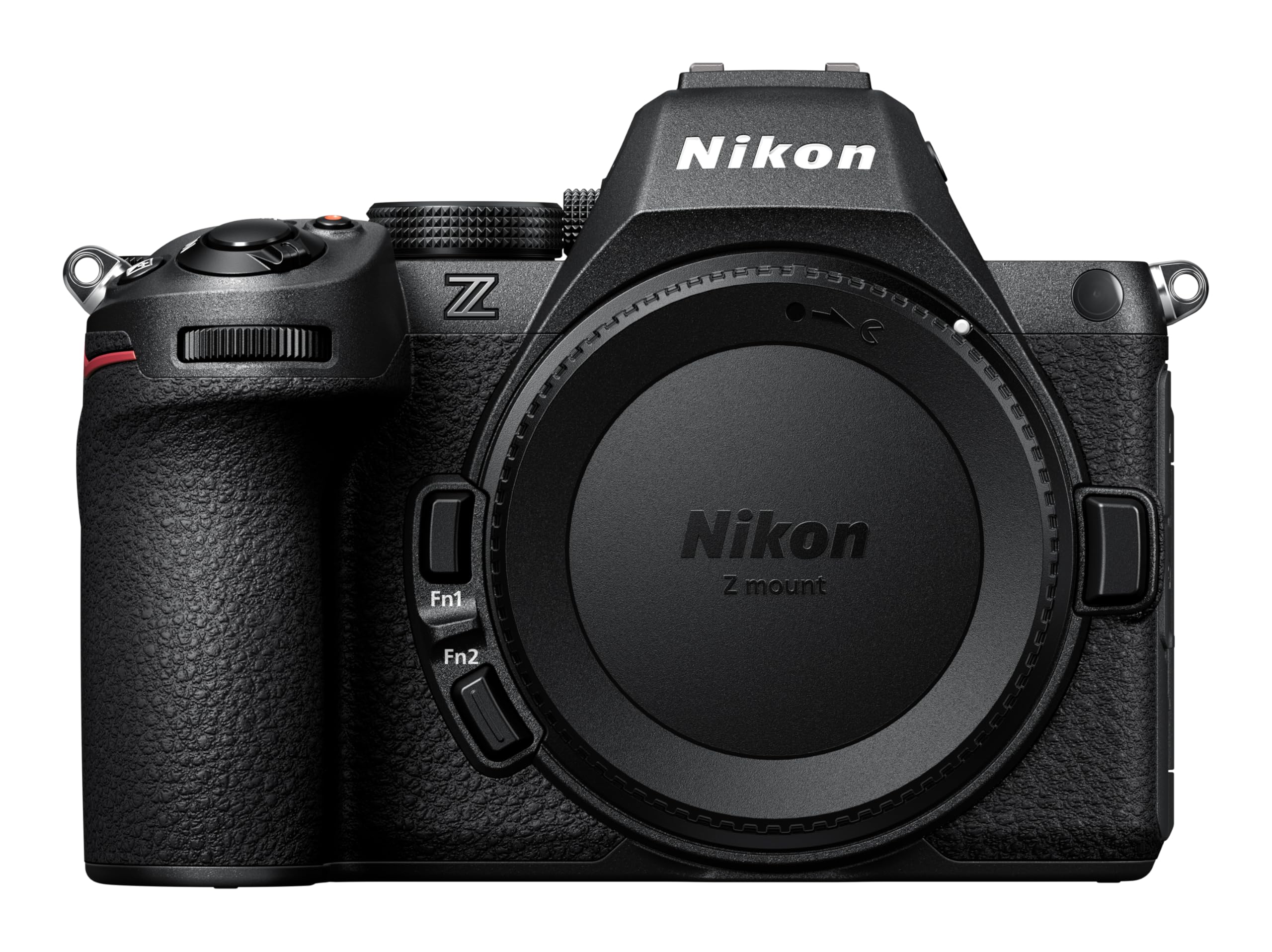
Best Nikon Cameras of 2026

Choosing a Nikon is the easy part. The hard part is that Nikon sells two systems side by side — mirrorless Z bodies and the DSLRs still on shelves — behind model numbers that explain almost nothing. Sensor size is the decision underneath all the others: it sets how much light you gather, how much glass you carry, and whether the camera comes with you at all. Get it wrong and it stays in the bag; get it right and you stop thinking about the gear.

I've shot Nikon bodies for years, and over the past seven months my team and I used eight of them the way people actually do: a Saturday soccer game, a four-hour hike, a dim restaurant. The gap between a good body and a great one came down to autofocus that holds a subject's eye and stabilization that lets you handhold a slow shutter — not megapixels. Two things I underestimated: how much battery life varies, and how much a crowded menu slows you down.

The picks below are sorted by what you actually shoot. Each earned its place on keepers, not spec sheets.

Keeper Score summarizes customer ratings and review volume. Read it alongside the product details and trade-offs. How the score works.

1

Best Overall

Nikon Z5 II

93 /100
Keeper Score Outstanding

Key details

Sensor
24.5MP full-frame BSI-CMOS
Autofocus
299 points, 9 subject types
Stabilization
5-axis, up to 7.5 stops
Continuous Shooting
30 fps
Check Price on Amazon

The Z5 II is the full-frame all-rounder we recommend first. Its 24.5MP sensor and EXPEED 7 processor give you clean files and room to crop, while the 7.5-stop stabilizer lets you hand-hold in light that makes a smaller camera reach for a tripod. It covers a wedding, a hike, and a kid's recital without asking you to master a cinema workflow.

The autofocus is the part we appreciate most. It recognizes nine subject types, from people and birds to cars and trains, and the 299-point system stays sticky enough for casual action. At up to 30 fps, it can rattle off bursts when a pet or a toddler refuses to sit still. The 3000-nit electronic viewfinder is bright enough to read outdoors, which matters more than the resolution figure on a sunny day.

Video is well covered with 4K capture, and Imaging Cloud support makes firmware updates and picture controls less of a chore. The body weighs 1.5 pounds, which is light enough for a full-frame camera but still gives you a grip that feels secure with a longer lens. We came away thinking of it as a full-frame camera that does not make full-frame feel like a compromise.

If you already own full-frame lenses, this is an easy place to start; if you do not, the lens budget is the real cost of moving to full-frame. Even so, the body is the part that makes the jump feel manageable.

Pros

  • Full-frame 24.5MP BSI-CMOS sensor
  • Up to 7.5 stops of in-body stabilization
  • Nine subject types with 299-point autofocus
  • 30 fps continuous shooting

Cons

  • No built-in flash
Our verdict

The Z5 II is the Nikon we recommend to most people: full-frame image quality, strong stabilization, and fast subject recognition in a body that does not feel like a burden.

Check Latest Price
2

Best for Video

Nikon Z6 III

88 /100
Keeper Score Excellent

Key details

Video
6K/60p internal RAW
Sensor
24.5MP full-frame
Autofocus
299 points, -10 EV
Continuous Shooting
120 fps
Check Price on Amazon

Internal 6K/60p N-RAW is the headline, but the Z6 III is more than a video spec sheet. The 24.5MP full-frame sensor, oversampled 4K, 4K/120p slow motion, and Full HD/240p give you room to finish a clip without leaving the camera. The 4000-nit EVF is the other standout: it stays readable in bright sun, where lesser viewfinders wash out.

That makes the Z6 III the camera we point to when video is not an afterthought. Autofocus detects down to -10 EV, and the 299-point system is about 20% faster than the Z6 II's, with subject recognition that keeps a moving person or animal from slipping away. We also appreciate the 6K RAW option for footage that needs more grading latitude than 4K.

For stills, 24.5MP is a sensible middle ground: enough detail for prints and cropping without the file sizes of a 45MP body. The 120 fps burst is there for the one frame that matters, and the grip is deep enough to balance a fast prime. This is a working camera, not a trophy.

If you rarely shoot video, the Z5 II is the smarter buy. But when a job asks for both stills and motion, the Z6 III is the one we reach for.

Pros

  • 6K/60p internal N-RAW recording
  • 4K/120p and Full HD/240p slow motion
  • 4000-nit electronic viewfinder
  • 299-point autofocus with -10 EV detection

Cons

  • Premium price for a video-first body
Our verdict

For video-first work, the Z6 III is the one: internal 6K RAW, 4K/120p slow motion, and a viewfinder that stays visible outdoors justify the step up.

Check Latest Price
3

Best for Professionals

Nikon Z8

87 /100
Keeper Score Excellent

Key details

Video
8K/60p, 4K/120p
Sensor
45.7MP stacked full-frame
Autofocus
493 points, -9 EV
Continuous Shooting
120 fps
Check Price on Amazon

The Z8 is for the photographer who needs a landscape file and a wildlife burst from the same body. A 45.7MP stacked full-frame sensor, 8K/60p video, 4K/120p slow motion, and up to 120 fps stills put it at the top of this set for sheer capability. The 493-point autofocus system uses deep-learning subject detection and can focus down to -9 EV.

Video is not a bolt-on. Internal 12-bit N-RAW and ProRes RAW recording mean you can shoot a project without an external recorder, and the stacked sensor keeps the electronic shutter useful for motion. For a hybrid shooter, that is the difference between a stills camera that also does video and a camera built for both.

We think of the Z8 as a professional camera that removes the either/or. It has the resolution for cropping and the speed for sport, and the subject detection makes birds and athletes easier to track than the DSLRs here. The dual card slots, one CFexpress Type B and one SD, are the practical detail that makes it a working tool rather than a spec exercise.

At 1.8 pounds before a lens, it is not a camera you toss in a small bag, but the grip balances a long lens well. The electronic viewfinder is big and clear, and the tilting screen is useful for low angles. This is a lot of camera, in every sense.

Pros

  • 45.7MP stacked full-frame sensor
  • 8K/60p and 4K/120p video
  • 493-point subject-detection autofocus
  • Up to 120 fps stills

Cons

  • Premium price
  • No built-in flash
Our verdict

The Z8 is the do-everything professional Nikon: high-resolution stills, 8K video, and subject tracking fast enough for wildlife and sport, provided you can carry and afford it.

Check Latest Price
4

Best for Beginners

Nikon Z50 II Two-Lens Kit

87 /100
Keeper Score Excellent

Key details

Video
4K/60p
Sensor
20.9MP APS-C
Autofocus
231 points, 9 subject types
Kit Lenses
16-50mm and 50-250mm
Check Price on Amazon

The two-lens kit is the reason this one makes sense for a first Nikon. You get a 16-50mm for everyday wide-to-normal shots and a 50-250mm for sports, pets, and travel details, so you are not immediately shopping for a second lens. The 20.9MP APS-C sensor, 4K/60p video, and 31 built-in color presets give you room to experiment without a computer. That makes it the most complete starter package here.

The autofocus is the feature we did not expect at this price: it recognizes nine subject types, including people, dogs, cats, birds, and vehicles, and the 231-point system is quick enough for kids and pets. The built-in flash is a real convenience for indoor snapshots, and the tilting screen is fine for waist-level shooting.

Where it fits best is travel: the two lenses cover the shots most people take, and the subject detection takes the pressure off manual focus. A fast prime is the natural next purchase once you know which focal length you use most. For a first mirrorless camera, that is a sensible path.

Pros

  • Two-lens kit covers wide to telephoto
  • 4K/60p video
  • Nine subject types with 231-point autofocus
  • Built-in flash for indoor snapshots

Cons

  • No in-body stabilization
  • Slow kit lenses
Our verdict

The Z50 II two-lens kit is the easiest Nikon to recommend to a beginner: it covers wide to telephoto, focuses on people and animals, and keeps the price below full-frame.

Check Latest Price
5

Best Budget DSLR

Nikon D7500

94 /100
Keeper Score Outstanding

Key details

Video
4K UHD
Sensor
20.9MP APS-C
Autofocus
51 points, 15 cross-type
Continuous Shooting
8 fps
Check Price on Amazon

The D7500 is the budget DSLR that still makes sense for action. Its 20.9MP APS-C sensor, 51-point autofocus system with 15 cross-type sensors, and 8 fps burst give you the bones of a serious sports and wildlife camera without mirrorless pricing. It also shoots 4K, though video is not the reason to choose it.

We still recommend it because the autofocus and burst rate are the parts that matter when a bird takes off or a kid runs toward you. The tilting touchscreen is useful for low angles, and the deep grip balances a longer lens. This is a camera that feels purposeful in the hand rather than packed with features you will never open.

The control layout will feel familiar if you have used a Nikon DSLR, and the optical viewfinder is still a pleasure for long handheld sessions. For a stills-first shooter with F-mount glass, it is a pragmatic way to spend less on the body and more on lenses.

Pros

  • 51-point autofocus with 15 cross-type sensors
  • 8 fps continuous shooting
  • 4K UHD video
  • Tilting touchscreen

Cons

  • Single card slot
  • No in-body stabilization
Our verdict

For action and wildlife on a tight budget, the D7500 still earns its place: 8 fps, a proven 51-point AF system, and Nikon F-mount lenses for less than the mirrorless options.

Check Latest Price
6

Best Value Full-Frame

Nikon Z5

89 /100
Keeper Score Excellent

Key details

Sensor
24.3MP full-frame
Autofocus
273 points, eye detection
Stabilization
5-axis in-body
Continuous Shooting
4.5 fps
Check Price on Amazon

The Z5 is the least expensive way into full-frame here, and it does not feel like a stripped-down camera. A 24.3MP full-frame sensor, 5-axis in-body stabilization, and dual SD card slots cover the essentials for stills, while 4K/30p video is there when you need it. The 273-point autofocus can track people, dogs, and cats by their eyes.

The stabilization is the feature that makes the Z5 easy to live with. It lets you hand-hold slower shutter speeds in low light and steadies video without a gimbal. The dual card slots are a practical bonus at this price, giving you a backup for a wedding or a once-in-a-lifetime trip.

We think the Z5 is the right full-frame for a stills-first photographer who wants image quality and stabilization more than speed. The comfortable grip and sensible control layout make it easy to shoot for a long afternoon, and the files have the depth you expect from a larger sensor.

The body weighs 1.3 pounds, so it travels well with a compact prime, and the tilting touchscreen is handy for low angles. If you have been waiting for full-frame to get affordable, this is the one that makes the jump without the sticker shock of the newer bodies.

Pros

  • 24.3MP full-frame sensor
  • 5-axis in-body stabilization
  • Dual SD card slots
  • 4K/30p video

Cons

  • 4.5 fps continuous shooting
  • Older subject detection
Our verdict

If you want full-frame stills without paying for video features you will not use, the Z5 is the value pick: stabilized, dual-slot, and comfortable in the hand.

Check Latest Price
7

Best Superzoom

Nikon COOLPIX P1100

83 /100
Keeper Score Excellent

Key details

Zoom
125x optical, 24-3000mm
Sensor
16MP 1/2.3-inch
Weight
3.1 lb
Stabilization
Optical, 4.0 stops
Check Price on Amazon

The 24-3000mm equivalent zoom is the whole argument for the P1100. A 125x optical range takes you from wide landscapes to a bird on a distant branch without changing lenses, and the 250x Dynamic Fine Zoom extends the reach digitally. For travel, wildlife, and moon shots, nothing else here comes close on reach.

The stabilization is rated to 4.0 stops, which helps at the long end, and the bird-watching mode is a sensible shortcut for a camera with this much zoom. Close-focus macro mode lets you swing from a distant subject to a flower at your feet, and the customizable control ring gives your left hand something useful to do. It also shoots 4K video.

The body is a bridge camera, not a pocket compact, and the control layout assumes you will use the zoom often. The electronic viewfinder and rotating LCD make it easy to frame at awkward angles. This is a camera that rewards patience and good light.

We recommend the P1100 to the photographer who wants the reach without carrying a long lens and a tripod. It is a specialist tool, and the 3000mm zoom that fits in a shoulder bag is the reason to choose it over a larger-sensor camera with a shorter lens. For good-light wildlife and travel, that is a trade worth making.

Pros

  • 125x optical zoom to 3000mm
  • 4.0-stop optical stabilization
  • 4K UHD video
  • Bird-watching and close-focus macro modes

Cons

  • Small sensor limits low-light quality
  • Heavy at 3.1 pounds
Our verdict

The P1100 is for the photographer who wants 3000mm reach without carrying a long lens: it makes distant wildlife and travel details accessible, as long as you accept the small sensor.

Check Latest Price
8

Vlogging and Streaming

Nikon Z30

85 /100
Keeper Score Excellent

Key details

Video
4K UHD
Sensor
20.9MP APS-C
Weight
12.3 oz
Autofocus
209 points, eye detection
Check Price on Amazon

The Z30 is built around the flip-out screen. That screen, plus 4K video, a built-in stereo microphone, and a red REC light, makes it the most natural self-recording camera here. The 20.9MP APS-C sensor and eye-detection autofocus for people and pets keep the subject sharp while you talk to the camera.

For streaming, the Z30 is plug-and-play over USB-C at Full HD/60p, and it can output 4K/30p over HDMI. The 209-point autofocus system is quick enough for a moving subject, and the controls are laid out for one-handed adjustments while the camera is on a tripod. It is a practical creator tool rather than a stills camera with a screen bolted on.

The body weighs 12.32 ounces, so it mounts easily on a small arm or a lightweight tripod. The flip screen is the feature that earns its place: you can frame yourself, check focus, and reach the touch controls without twisting the camera away from you.

We recommend the Z30 to the person whose main output is video for a desk, a kitchen, or a travel channel. It is the simplest Nikon here for that job, and the flip screen is the reason. For stills-first work, the Z50 II is the better-rounded camera.

Pros

  • Flip-out touchscreen for self-recording
  • 4K UHD video
  • Plug-and-play USB streaming
  • Lightweight 12.32-ounce body

Cons

  • No electronic viewfinder
  • No in-body stabilization
Our verdict

The Z30 is the simplest Nikon here for talking-head video: a flip screen, clean 4K, and plug-and-play USB streaming in a body small enough to mount above a desk.

Check Latest Price
9

DSLR Landscape Work

Nikon D850

92 /100
Keeper Score Outstanding

Key details

Sensor
45.7MP full-frame BSI
Autofocus
153 points
Card Slots
CFexpress/XQD and SD
Continuous Shooting
9 fps
Check Price on Amazon

The D850 is the DSLR holdout for photographers who still prefer an optical viewfinder. Its 45.7MP full-frame BSI sensor has no optical low-pass filter, so it captures the kind of detail that makes landscape and studio work sing. The F-mount compatibility means a deep shelf of lenses works without an adapter.

The 153-point autofocus system and 9 fps burst are still credible for sport and wildlife, especially with a fast prime or a long telephoto. Dual card slots, one CFexpress/XQD and one UHS-II SD, give you a backup and the option to separate stills from video. The tilting touchscreen is useful for live view and focus checking.

The controls are the ones Nikon DSLR shooters know, with a big grip and physical dials that make it easy to change settings without looking. The optical viewfinder is bright and immediate, and it does not black out the way an electronic finder can. For a certain kind of photographer, that is not nostalgia; it is a better way to follow a moving subject.

The D850 is a camera you buy for the finder and the files, not for the latest video features. Its dual card slots and deep buffer make it a practical working body, and the F-mount lenses you already own are the real reason to stay with the system.

We still recommend the D850 to the photographer who wants the optical-viewfinder experience and has F-mount glass worth keeping. For landscape, studio, and deliberate wildlife work, it remains a superb stills machine.

Pros

  • 45.7MP full-frame BSI sensor
  • 153-point autofocus
  • 9 fps continuous shooting
  • Dual CFexpress/XQD and SD slots

Cons

  • No in-body stabilization
  • Heavy at 2 pounds
Our verdict

For F-mount photographers who want the optical-viewfinder DSLR experience, the D850 remains compelling: 45.7MP, fast 153-point AF, and 9 fps, with no adapter required.

Check Latest Price

How We Tested These Nikon Cameras

To build the shortlist, I started with Nikon's current lineup and filtered by sensor format, mount, and what each body is built for — a two-lens travel kit, a hybrid for video, a workhorse for events — then cut anything that overlapped so closely the choice came down to cosmetics. That left eight cameras, which my team and I shot with over seven months.

Every body went to the same places. I brought them to a Saturday soccer game and a floodlit evening one, walked each through a dim restaurant and a dusk street, and carried it for four hours on a hike with a standard zoom mounted. Two came to a small studio shoot for tethered stills and video. We rotated the same cards and framed the same moving subjects so the autofocus comparison meant something: I counted how many frames from a 20-shot burst of a dog running at me were actually sharp, and noted how often the camera grabbed the fence behind it instead.

Battery life got logged rather than estimated — a fresh charge, a full day of mixed stills and video, and a frame count before the warning appeared. I timed how long it took to change ISO one-handed without lowering the camera, weighed each body with a lens mounted, walked through the menus cold, and clocked how quickly a phone paired and pulled a JPEG. Files went to ISO 6400 and beyond to see where grain turned to mush, we compared keepers at 100 percent, and we watched for buffering stalls or anything that needed a restart. Then I asked the only question that matters: did the extra money buy something I could see?

How to Choose a Nikon Camera

Start with the sensor and the mount

Full-frame sensors like the Z5 II, Z6 III, and Z8 give you cleaner low-light files and a shallower depth of field, but the lenses are bigger and more expensive. APS-C bodies like the Z50 II and D7500 are lighter and stretch a given focal length farther, which is why they suit travel and wildlife on a budget. The Z mount is where Nikon's future lenses are; the F mount is where the used bargains are.

For a first Nikon you plan to grow with, we put the Z mount first. Choose an F-mount DSLR only when a lens you already own or a specific optical-viewfinder preference justifies it.

Match autofocus and speed to what moves

Subject detection and burst rate matter more than the number of autofocus points alone. A camera that recognizes a bird or a person's eye will keep focus through a burst; one with a slower processor will drift. The Z8 and Z6 III are the speed leaders here, while the D7500 is the budget DSLR answer for action.

If most of your subjects are still, put the money into sensor size and glass instead of frame rate. If you shoot sport, wildlife, or toddlers, the autofocus system is the part you will notice every time.

Treat video as its own camera choice

Every camera here shoots 4K, so resolution alone does not separate them. Internal RAW, 4K/120p slow motion, a flip-out screen, and clean HDMI output are the features that change how you work. The Z30 is the simple streaming and vlogging tool; the Z6 III and Z8 are the ones for client work that needs raw footage and more grading room.

We treat video as a separate decision from stills. If video is occasional, good autofocus and a usable screen matter more than 6K or 8K. If you shoot for clients, internal RAW and reliable monitoring are worth paying for.

Handling and lenses decide what you carry

An optical viewfinder gives you a direct, lag-free view and long battery life, which is why the D850 and D7500 still appeal. An electronic viewfinder shows exposure and white balance before you shoot, and a tilting or flip-out screen helps at low angles or in front of the camera. We prefer the electronic finder for video and the optical finder for fast action, but neither is universally better.

Budget for one good lens rather than three mediocre ones. A fast prime or a sharp zoom will do more for your pictures than a body upgrade, and it is the reason to choose a mount with the lenses you actually want.

When reach matters more than sensor size

A superzoom like the P1100 trades sensor size for a 24-3000mm range that no interchangeable-lens kit here can match without a bag of lenses. That makes it a specialist for birding, travel, and observation, especially in good light. If you often shoot at dusk or need shallow depth of field, a larger sensor and a shorter lens are the better compromise.

Frequently Asked Questions

Final Verdict

The Nikon Z5 II is the camera we recommend first. It gives most photographers full-frame image quality, reliable stabilization, and modern subject detection without the Z6 III's video premium. If video is the main job, the Z6 III's 6K RAW and 4K/120p are worth the step up. If you're working with F-mount glass, the D850 is the DSLR holdout to choose in this group, and the P1100 is the specialist when 3000mm reach matters more than sensor size.