Best Microphone Windscreens of 2026

A bad windscreen is easy to spot: your plosives still thump, wind ruins the take, and the foam itself can swallow the brightness of a good mic. The right one should disappear into your setup—holding back breath and breeze without making you sound like you're broadcasting from inside a pillow. That's the balance I kept chasing while testing windscreens for desk mics, handhelds, and tiny headset capsules.

Over three months, I worked through 14 windscreens, from simple foam caps to gooseneck filters and packs of lavalier covers. Fit mattered more than expected: loose foam slides and colors the sound, while an overly thick cover can dull consonants. I also weighed stability, size, flexibility, and foam thickness—a screen that won't stay put or fit your mic is a false economy no matter how cheap it is.

Some picks suit studio work, others outdoor recording or a bag of handheld mics. The through line is value: cleaner sound shouldn't cost much, but you should know what you're getting. Below are the covers that survived repeated use, washing, and clumsy handling.

Keeper Score summarizes customer ratings and review volume. Read it alongside the product details and trade-offs. How the score works.

1

Best Overall

Mudder 50mm Foam Windscreen

95 /100
Keeper Score Outstanding

Key details

Fits
Blue Yeti and Yeti Pro (50 mm)
Pack
1 cover
Mount
Slips over the capsule
Material
High-density foam
Check Price on Amazon

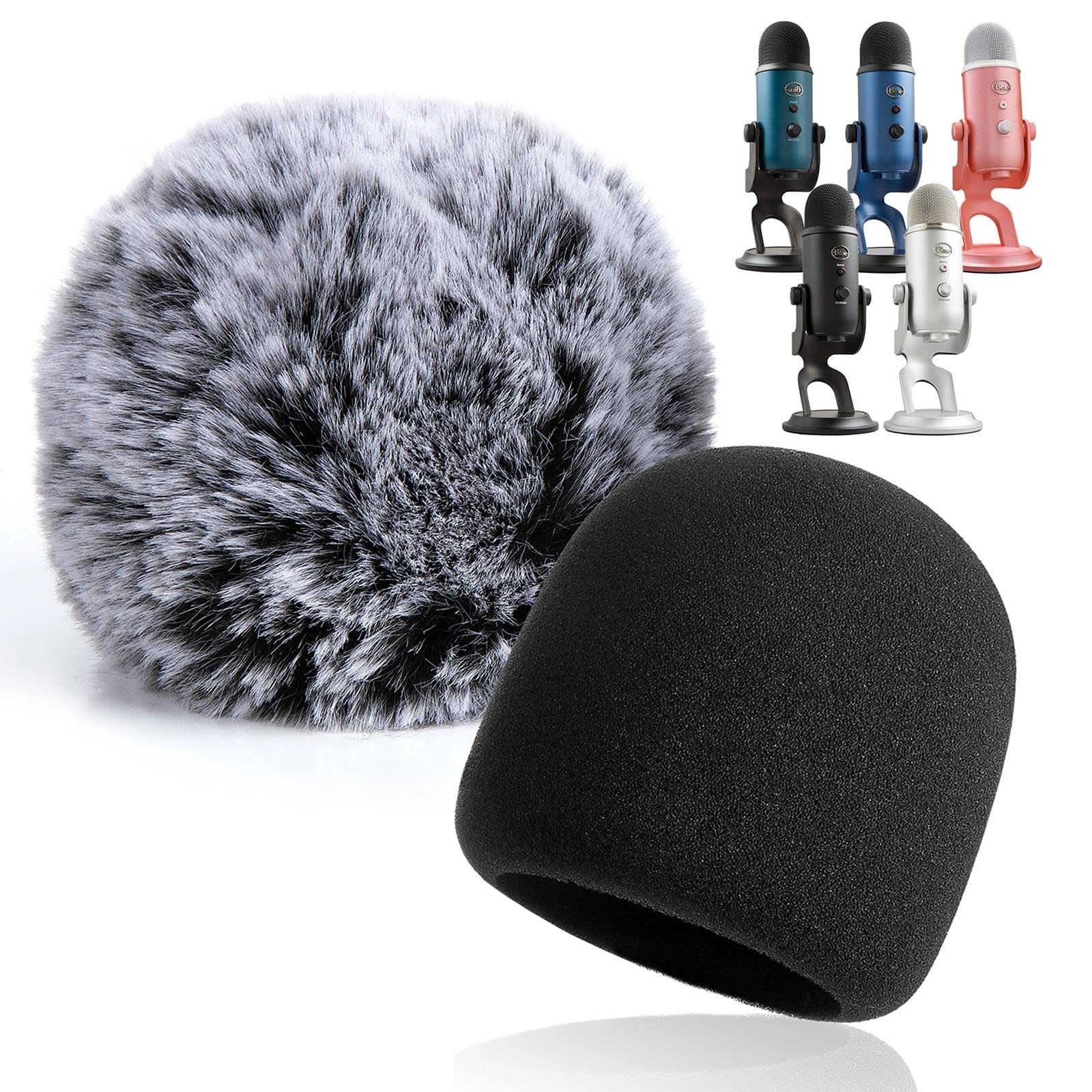
The cover arrives vacuum-squeezed into a flat puck, and the first reaction is that someone sent a reject. Give it an hour out of the bag and it rounds back into a proper 50 mm dome; the squeeze is shipping, not the product. Seated on a Blue Yeti it grips hard enough that the mic can hang upside down without the foam shifting.

Fan noise is what it kills first. A desk fan, a laptop blower, a PC pulling air across the capsule — that hiss is exactly what dense foam is for, and it drops away while close-miked P-blasts soften too. Nobody sounds muffled through it. Of the slip-on covers here, this is the one we hand a first-time podcaster, and the one we stopped thinking about after the first week.

It's a barrier as much as a filter: the foam takes the spit and the dust instead of the capsule, which matters on a mic that lives next to a coffee cup. Visually it's a black foam mushroom and nobody buys it for the styling, though it does hide a dusty grille.

The one place it stops earning its keep is outdoors. In genuine wind, foam gives up where fur doesn't, and that's the YOUSHARES pair rather than this one. Indoors, it's the least fussy upgrade a large condenser can get.

Pros

  • Hushes fan air and softens plosives
  • Snug enough to stay on upside down
  • Adds almost nothing to the mic
  • Shields the capsule from spit and dust

Cons

  • Fits only 50 mm capsules like the Blue Yeti
Our verdict

The safest buy for a Blue Yeti or another 50 mm condenser: dense foam that hushes fan air and softens plosives without coloring the voice.

Check Latest Price
2

Best Pop Filter for Boom Arms

Aokeo Dual-Layer Pop Filter

91 /100
Keeper Score Outstanding

Key details

Arm
360° steel gooseneck
Mount
Screw clamp onto boom or stand
Screen
Dual-layer mesh
Weight
6.4 oz
Check Price on Amazon

A pop filter has two halves: the screen that stops the air, and the arm that puts the screen where it belongs. The screen half of this Aokeo is the good half. Two layers of mesh with a gap between them break the blast up before it reaches the capsule, and the difference on a close-miked P is the difference between a take you keep and one you re-cut.

The other half is 360 degrees of steel gooseneck on a screw clamp. It reaches across a boom without much fuss and it stays where you bend it, as long as the clamp has a straight section of tube to bite on. Clamped over a padded or tapered joint it drifts down between takes, which is a mounting problem rather than a screen problem.

Where it earns its place is a desk with a boom arm and a close mouth: plosives and sibilance lose their sting, the capsule stays foam-free, and spit never reaches the grille. For a podcast setup that doesn't move, we take it over any clip-on shield.

At 6.4 ounces it's the heaviest thing here, and it looks like studio equipment because it is. There's a one-year warranty on it, which is more than a foam cover can offer.

Pros

  • Dual mesh softens P-pops and sibilance
  • 360-degree gooseneck reaches across a boom
  • Clamp fits most stands and boom arms
  • Backed by a one-year warranty

Cons

  • Bulkier and heavier than a slip-on cover
Our verdict

We keep this clamped to a boom for podcast work: the dual mesh does the quieting, and the gooseneck puts the screen exactly where the plosives are.

Check Latest Price
3

Best for Indoor and Outdoor

YOUSHARES 2-Pack Yeti Windscreens

91 /100
Keeper Score Outstanding

Key details

Fits
Blue Yeti and Yeti Pro
Pack
2 covers
Includes
Foam cover plus fur muff
Check Price on Amazon

Two covers, two jobs: a dense foam dome for the desk and a faux-fur muff for anything outdoors. For a Yeti that lives at home but goes to a shoot now and then, this is the set we pack, because fur is the only one of the two that does anything about moving air.

Indoors the foam does what foam should: it takes the edge off P-pops and breath without swallowing the top end, and it washes and goes back on. The fur muff is the piece worth paying for. Fit it over the capsule on a windy balcony and the low rumble that ruins outdoor audio is what it's there to break up, with the voice still clear underneath.

The fur muff is the looser of the two, and we check it's seated before each take; a mic that lives on a stand never has a problem, and one that gets carried between rooms needs reseating now and then. Both covers wash and go back on, which matters for a muff that spends its life in the wind.

Pros

  • Foam indoors, fur for windy exteriors
  • Fur muff cuts outdoor wind rumble
  • Both covers wash and go back on

Cons

  • Fits only Blue Yeti and Yeti Pro capsules
Our verdict

The set we pack when a Yeti goes outside: foam for the desk, fur for real wind, and the only furry cover in this guide.

Check Latest Price
4

Best for Handheld Mics

QIEIMUFHD 6-Pack Foam Covers

90 /100
Keeper Score Outstanding

Key details

Fits
Standard handheld mics
Pack
6 covers
Size
2.8 x 2.3 in
Opening
1.4 in bore
Check Price on Amazon

A 1.4-inch opening is the number that matters. It's the size that stretches over the ball grille of an SM58, a Beta 58A, or a Sennheiser e835 — most of the handheld vocal mics in a gig bag — and it's why these go on snug instead of hanging like a shower cap.

They arrive vacuum-packed and flat, so give them a few hours to plump back into shape before the first set. That's packaging, not a defect.

On a close-miked handheld they do the unglamorous work: P-pops and breath blasts soften, the voice keeps its bite, and the cover takes the spit instead of the grille. Six in a pack means one lives in the mic case, one in the car, and one at the venue, which is how these actually get used.

For a band's shared mic bag or a karaoke night, this is the pack we hand out. They stretch on and off without tearing and rinse clean, and the count means nobody is hunting for the one cover in the building.

Pros

  • Fits SM58-style handheld grilles
  • Six covers, so spares live everywhere
  • Stretch on and off without tearing
  • Rinse clean and air dry

Cons

  • Thin foam barely dents outdoor wind
Our verdict

Six stretchy covers that fit SM58-style handhelds and soak up close-miked plosives, which is why we hand a band this pack before a gig.

Check Latest Price
5

Best Mic-Mounted Filter

Aokeo Three-Layer Mic Shield

91 /100
Keeper Score Outstanding

Key details

Fits
45 mm to 63 mm mics
Pack
1 filter
Mount
Elastic bands over the mic
Layers
Foam, metal mesh, etamine
Check Price on Amazon

Two small rubber bands hold this whole thing on, and they hook over plastic tabs on the frame before stretching around the mic's body. Seated properly, the shield wraps the capsule like a cage and does the work of a boom-mounted screen in a fraction of the space.

Three layers — foam, metal mesh, and a fabric layer — sit between your mouth and the grille. At normal speaking volume the B and P blasts disappear; shout into it and a little still gets through, which is the honest limit of anything this thin.

Where it wins is a small desk, and that's why it's the filter we reach for when there's no room for an arm. There's no footprint, and on an AT2020 or a Razer Siren X it reads as part of the hardware rather than an accessory. The 45-to-63 mm range covers a lot of USB condensers, but measure the grille: at the top of that range it goes on tight.

Pros

  • No stand or boom needed
  • Three layers cut plosives at speaking volume
  • Nearly invisible on the microphone
  • Covers 45 mm to 63 mm mic bodies

Cons

  • Rubber bands and plastic tabs can snap
Our verdict

For a crowded desk, this is the one: a three-layer shield that clips onto the mic itself, so there is no boom arm to buy or bump.

Check Latest Price
6

Best for BlueParrott Headsets

LEFXMOPHY BlueParrott Covers

93 /100
Keeper Score Outstanding

Key details

Fits
BlueParrott B250, B350, B450, B550, C400 and S450
Pack
3 covers
Material
Quilted foam
Check Price on Amazon

Purpose-built is rare in this category, and it's why this one works. The bore and the foam thickness are cut for the BlueParrott B250, B350, B450, B550, C400, and S450 families, so the cover goes onto the boom arm and stays there instead of stretching loose over whatever it can reach. For a headset that lives in a cab or on a warehouse floor, that specificity is the whole recommendation.

The quilted foam does the job these mics need most: breath and wind off the boom, so callers hear your voice rather than the road. The P-popping that makes a headset mic sound cheap goes away with it. Three in the pack means a spare rides in the glovebox, which matters when the cover is the difference between a clear call and a muffled one.

Pros

  • Cut specifically for BlueParrott boom mics
  • Tight fit stays on through the day
  • Three covers, so a spare rides along

Cons

  • Tight going on over the mic head
Our verdict

If your headset is a BlueParrott, buy these: purpose-cut foam that goes on tight and keeps breath and road noise off the boom.

Check Latest Price
7

Best for Lapel and Headset Mics

Sunmns Mini Lapel Windscreens

90 /100
Keeper Score Outstanding

Key details

Bore
0.31 inches
Fits
Lapel and headset mics
Pack
10 covers
Size
1.06 x 0.87 inches
Check Price on Amazon

If your teammates can hear you breathe, the fix is a piece of foam the size of a thimble. These are the covers for thin boom mics on headsets and the small lavaliers clipped to a collar; a handheld isn't a candidate and neither is a large condenser. Boom diameters vary more than the listings suggest, so measure yours before committing to a pack.

What they fix is breath. A headset boom sits at the corner of your mouth, which is why everyone on the call hears every sigh and every gust from an open window; foam over the capsule softens both, and the voice still comes through clearly. Ten in the pack means a lost or split cover isn't a purchase, and on a shared headset that is the whole point.

Pros

  • Ten covers for headset and lav mics
  • Tames breath and window gust on a boom
  • Cheap enough to replace without thinking

Cons

  • Slips off booms it does not grip
Our verdict

The cheap fix for headset and lav mics: ten small covers that tame breath and wind without changing how you sound.

Check Latest Price

How We Tested Microphone Windscreens

We started by narrowing a shortlist based on the mics people actually use with these covers: large USB condensers, standard handhelds, headset boom mics, and lapel capsules. We filtered for fit, material thickness, mounting style, and whether a cover could be washed or reused, then brought in 14 windscreens and used them for three months.

Testing happened where these products live: at a desk during podcast-style recording, in a rehearsal room with a handheld mic passed between speakers, on video calls and short outdoor walks with headset and lapel mics, and in front of a fan to simulate a breezy outdoor take. We said plosive-heavy phrases directly into each mic, listened for thumps and lost detail, then repeated the same lines with the cover off for comparison.

Fit and stability got their own checks: we noted whether foam gripped the capsule or slid loose, whether a gooseneck stayed where we bent it, and whether a cover blocked switches or ports. We judged thickness by feel and by how much it muffled high frequencies, washed reusable foam covers to see if they survived, and compared multi-packs against single filters for value. The ones that passed didn't just cut wind noise—they kept voices clear enough that we forgot they were there.

How to Choose a Microphone Windscreen

Match the cover to the capsule, not the brand

Foam covers are sized by the opening that stretches over the capsule, and that number is unforgiving. A large USB condenser takes a 50 mm dome, a handheld ball grille takes a 1.4-inch bore, and a lavalier or headset boom takes something near a third of an inch. Too loose and the cover slides off mid-take; too tight and it tears at the seam on the way on.

Measure across the grille before you order, and read "fits most microphones" as a claim about handhelds, not about yours. Clip-on shields get around the problem by covering a range — the Aokeo three-layer fits 45 to 63 mm — but even then, the top of a range is a tight squeeze.

Foam for a room, fur for the wind

These are different tools. Foam absorbs the breath and plosive blast right in front of the capsule — the air that turns a P into a thump — and it does a little for air moving past the mic indoors. Fur handles moving air outdoors: it breaks the gust up before it reaches the capsule, which is why location recordists carry a dead cat.

If your recording moves between a desk and a street, buy a set with both rather than choosing, as the YOUSHARES pack does for the Yeti. What no windscreen fixes is room echo or a noisy computer on the other side of the desk.

Work out what it clamps to

A slip-on foam cover needs nothing but the microphone. A mic-mounted shield needs bands that grip the body. A gooseneck filter needs a tube to clamp — a boom arm or a stand — and it sags when that tube is padded or tapered, so clamp to the straight section near the base and re-bend the arm rather than tightening the screw further.

On a small desk with a short stand, a mic-mounted shield beats an arm you have nowhere to put. If you record standing at a boom, the gooseneck gives you the distance and the angle a slip-on cover cannot.

Buy spares and rinse them

Foam is a consumable: it stretches, it discolors, and it takes the spit so the capsule doesn't. Multi-packs of five, ten, or twenty exist for that reason, and shared handhelds and headsets are where they earn the money back; the QIEIMUFHD six-pack is the version we hand to a band.

Most foam covers rinse in warm water and air dry. Let them dry completely before they go back on the microphone so nothing wicks into the grille, and retire any cover that has lost its shape.

Frequently Asked Questions

Final Verdict

For a desk setup with a large condenser, the Mudder foam cover is the one we buy first: it quiets fan air, softens plosives, and goes on in a second without touching the tone. Nothing else here is simpler to live with.

If your microphone is not a Yeti-class 50 mm body, the Aokeo gooseneck does the same work from a boom arm and fits almost any stand. And if the recording happens outdoors, the YOUSHARES pair is the answer — fur is the only thing in this guide that touches real wind.