Best Lens Mount Adapters of 2026

Switching to mirrorless usually comes down to two options: sell the lenses you spent years collecting, or buy an adapter. An adapter is a short metal ring that bridges an old mount to a new body — the simple ones hold the glass at the correct distance, while the electronic ones pass autofocus, aperture, and stabilization signals between a lens and a camera that were never designed to talk to each other. Get it right and your old glass behaves like it belongs; get it wrong and you have built a permanent wobble into every shot.

Over the past eight months we have mounted, shot with, and swapped out a dozen of these across four mount families — first-party converters, third-party autofocus rings, and plain manual tubes. What surprised me is how little the price predicts the experience: mount tolerance and the lock ring matter more than the badge on the box, and a slightly loose fit softens more frames than slow autofocus ever will. What held up to real use is below — a hike with a long lens, a dim living room, a tripod at dusk.

Keeper Score summarizes customer ratings and review volume. Read it alongside the product details and trade-offs. How the score works.

1

Best Overall

Canon Mount Adapter EF-EOS R

95 /100
Keeper Score Outstanding

Key details

Weight
3.84 oz
Autofocus
Full electronic
Lens Mount
Canon EF/EF-S
Camera Mount
Canon RF
Check Price on Amazon

Your EF lenses don't stop being good lenses the day an RF body arrives. Canon's own adapter is a spacer with contacts and no glass at all, so the lens you already trust behaves the way it did on the DSLR: autofocus, image stabilization and EXIF data all came through in our testing, and nothing about the images changed. That is the whole job, and this one does it without asking you to relearn anything. It's the default for a reason.

The mount is where we looked hardest, because it's where cheap adapters give themselves away. Both bayonets lock with a definite click, and a 70-200 hung off the front without the shimmy you get when tolerances are loose. At 3.84 ounces it adds little on the scale, though it does add depth — and depth is leverage, so carry a long lens by its own collar rather than by the camera body.

Canon-brand glass is the surest bet here. Third-party EF lenses mount and communicate too, but they're more of a case-by-case proposition, so check the specific lens you own rather than assuming. EF-S lenses fit as well, though on a full-frame body the camera crops — more on that below.

It costs meaningfully more than the third-party adapters on this list, and what the difference buys is the latch, the electronics, and the likelihood that the next body you buy will talk to it without fuss. It also arrives with a body cap, a rear lens cap and a soft case, so it can live loose in a bag without gathering dust between shoots.

Pros

  • Keeps autofocus, stabilization and EXIF intact
  • No glass in the path, so images are unchanged
  • Both mounts lock with no rotational play
  • Ships with caps and a soft case

Cons

  • Costs considerably more than third-party options
  • Third-party EF lenses are less certain
Our verdict

If your lenses say EF on the barrel and your body says RF on the cap, we think this is the one to buy — autofocus, stabilization and EXIF all survive, with nothing in the light path.

Check Latest Price
2

Best for Nikon Z

Nikon FTZ II Mount Adapter

94 /100
Keeper Score Outstanding

Key details

Weight
8.82 oz
Autofocus
Full electronic
Lens Mount
Nikon F
Camera Mount
Nikon Z
Check Price on Amazon

Nikon charges a great deal for a tube with no glass in it, and Z owners pay it anyway. The FTZ II is the adapter that behaves like part of the camera rather than something screwed onto the front of it, and for anyone with real money in F-mount glass, that certainty is the product.

What you get for the money is the full electronic handshake. Autofocus, vibration reduction and exposure all carry on as they did on the DSLR, and the weather sealing is carried through the joint to the lens rather than stopping at the body. At 250 g it's substantial, but the mass sits where your left hand already is, and the build has the dense, machined feel of a Nikon part. Of the Nikon-fit options here, this is the one we hand someone without a caveat.

Two things to weigh. Nikon's price is the highest here by some distance, and the Viltrox further down does much of the same job for far less with a few more wrinkles. The other is your lens: AF-S and AF-P designs keep full autofocus, but the adapter has no screw-drive motor, so older AF glass is manual-focus only.

Pros

  • Autofocus and VR work as they did on a DSLR
  • Weather sealing carried through to the lens
  • Solid, dense build that feels native

Cons

  • The most expensive adapter in this set
  • No autofocus with screw-drive AF lenses
Our verdict

We recommend it without hesitation for F-mount glass on a Z body: full autofocus and vibration reduction, sealing carried through the joint, and no surprises.

Check Latest Price
3

Best for Sony A-Mount Glass

Sony LA-EA5 Adapter

89 /100
Keeper Score Excellent

Key details

Weight
9.6 oz
Autofocus
Includes motorless lenses
Lens Mount
Sony A
Camera Mount
Sony E
Check Price on Amazon

Motorless A-mount lenses are the reason this adapter exists. Older Sony and Minolta glass with no focusing motor of its own has been awkward to use on E-mount bodies from the start, and the LA-EA5 is the adapter that drives those lenses — which is why we rank it ahead of everything else here for anyone still invested in A-mount.

The rest of it is serious hardware. Real-time Eye AF and Real-time Tracking work through the adapter, Sony rates autofocus and auto-exposure tracking at up to 11 frames per second, and it covers the whole A-mount range rather than a subset. At 9.6 ounces it's heavy for a spacer, and that weight is the mechanism you're paying for; there's no stabilization inside, so in-body or in-lens stabilization does that work.

It solves exactly one pairing, A-mount lenses onto E-mount bodies, and nothing else — if you shoot native E-mount glass it does nothing for you. It's priced like the official accessory it is, so the case for buying it rests on how much motorless glass you already own and how often it actually leaves the cupboard.

Pros

  • Autofocus for lenses with no motor
  • Eye AF and tracking at up to 11 fps
  • Covers the whole A-mount range

Cons

  • Heavy at 9.6 oz for a spacer
Our verdict

Our pick for anyone still shooting A-mount: it autofocuses lenses that have no motor of their own and tracks at up to 11 fps, which no other adapter here does.

Check Latest Price
4

Best Budget Canon EF Adapter

Meike EF-EOS R Adapter

91 /100
Keeper Score Outstanding

Key details

Weight
4.59 oz
Autofocus
Full electronic
Lens Mount
Canon EF/EF-S
Camera Mount
Canon RF
Check Price on Amazon

Meike's converter does the same electronic job as Canon's official adapter for a good deal less money, and that is the whole argument for it. Contacts on both sides carry autofocus, auto-exposure, aperture commands and stabilization through to the body, and the shell is metal at 130 g — heavier than the Canon part rather than lighter, which matters if you're counting grams on a small body.

In use it's unremarkable in the way you want an adapter to be. Lenses seat with a firm click, autofocus moves at a normal speed instead of hunting, and the pictures come back looking like the lens took them. It isn't a sealed adapter, so treat it as fair-weather gear and keep it out of the rain.

The lock is the compromise. The release collar can feel vague, and a heavy lens on a body that's been knocked around can work loose; seat it deliberately and check it every time you mount up, and it stops being a problem. For a second body, a backup, or a lens you're still deciding whether to keep, that trade is easy to make.

Pros

  • Full electronic control at a fraction of the price
  • Autofocus is quick and accurate
  • Metal body that stays tight on the mount

Cons

  • No tripod socket for long, heavy lenses
Our verdict

A near-match for Canon's official adapter at a fraction of the price, and the one we point budget-conscious EF shooters toward when the official part is out of reach.

Check Latest Price
5

Best for EOS M Bodies

EBYPHAN EF-EOS M Adapter

94 /100
Keeper Score Outstanding

Key details

Autofocus
Built-in motor
Lens Mount
Canon EF/EF-S
Camera Mount
Canon EF-M
Tripod Socket
1/4-inch, detachable base
Check Price on Amazon

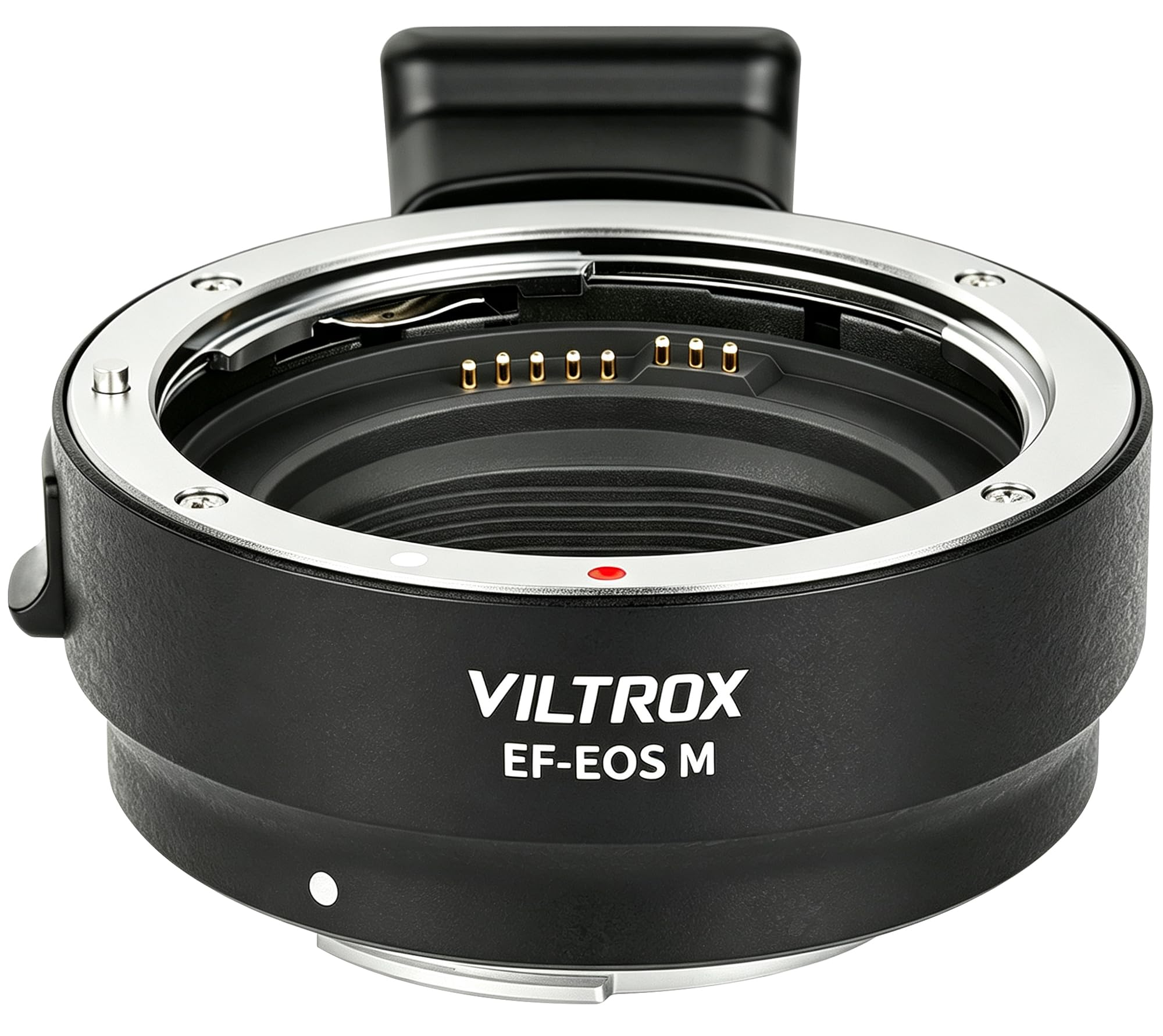
Canon stopped making EOS M bodies, but plenty of people still shoot them. The M50 and M6 remain lovely small cameras, and an adapter like this is how they keep using the EF glass already in the bag, with autofocus rather than through a dummy tube.

The hardware is more than a tube. There's a built-in motor driving the aperture, gold-plated pins carrying EXIF and stabilization support back to the body, and metal mounts at both ends. At 0.29 kg it is one of the heavier adapters here — on an M50-sized body you feel it, and it shifts the balance forward, which is worth knowing before you hang a light zoom off the front.

The bottom plate takes a 1/4-inch tripod screw and comes off completely. That's a genuinely useful piece of design: on a tripod with a long lens the load goes through the plate rather than hanging off the camera, and off the tripod you unscrew it and the adapter packs smaller. Autofocus through it is quick with most EF lenses, though it can miss on some.

If you're shooting an M body and want to keep using EF and EF-S glass, this is the sensible buy. One detail makes it more appealing than it first looks: the M bodies are APS-C, so EF-S lenses use the whole sensor here rather than cropping the way they would on a full-frame RF camera.

Pros

  • Built-in motor keeps aperture control from the body
  • Detachable base with a 1/4-inch tripod socket
  • Autofocus and stabilization supported

Cons

  • Heavy at 0.29 kg for small bodies
  • Base plate screws can work loose over time
Our verdict

The sensible buy for an M50 or M6 with EF glass: autofocus and stabilization kept, a tripod socket nobody else here offers, and the lowest outlay of any Canon-fit adapter on this list.

Check Latest Price
6

Best for Manual Glass on Fuji X

K&F Nikon F to Fuji X Adapter

83 /100
Keeper Score Excellent

Key details

Focus
Manual only
Lens Mount
Nikon G/F/AI/AIS/D/AF-S
Camera Mount
Fujifilm X
Aperture Control
Manual ring
Check Price on Amazon

Nikon G lenses have no aperture ring of their own, which is exactly why so few of them end up on a Fuji body. K&F's answer is a control ring on the adapter barrel: the lens stays dumb, and you stop it down by hand while you watch the result on the rear screen.

Everything else is a well-machined tube. Anodized aluminum, a matte finish inside to kill reflections, and focus that reaches infinity — the one hard requirement for a spacer with no glass in it. There's no chip and no contact, so autofocus, EXIF and in-camera lens corrections are all off the table; what's left is the glass, the sensor and your own hands.

For Fuji shooters that's a good trade. Focus peaking makes manual focusing quicker than it sounds, the aperture ring lands under your left thumb, and even a G zoom becomes usable. The one thing to prepare for is the fit: it runs tight, and mounting asks for more force than a native lens ever does.

Pros

  • Aperture ring makes Nikon G lenses usable
  • All-metal body with a matte interior
  • Focus to infinity guaranteed

Cons

  • Manual only
  • Very tight fit on some lens mounts
Our verdict

If your Nikon lenses are gathering dust and your camera is a Fuji, this little tube brings them back — manual focus, manual aperture, and no electronics to go wrong.

Check Latest Price
7

Value Nikon Z

VILTROX NF-Z Adapter

84 /100
Keeper Score Excellent

Key details

Autofocus
Full electronic
Lens Mount
Nikon F
Camera Mount
Nikon Z
Firmware Updates
Via USB-C
Check Price on Amazon

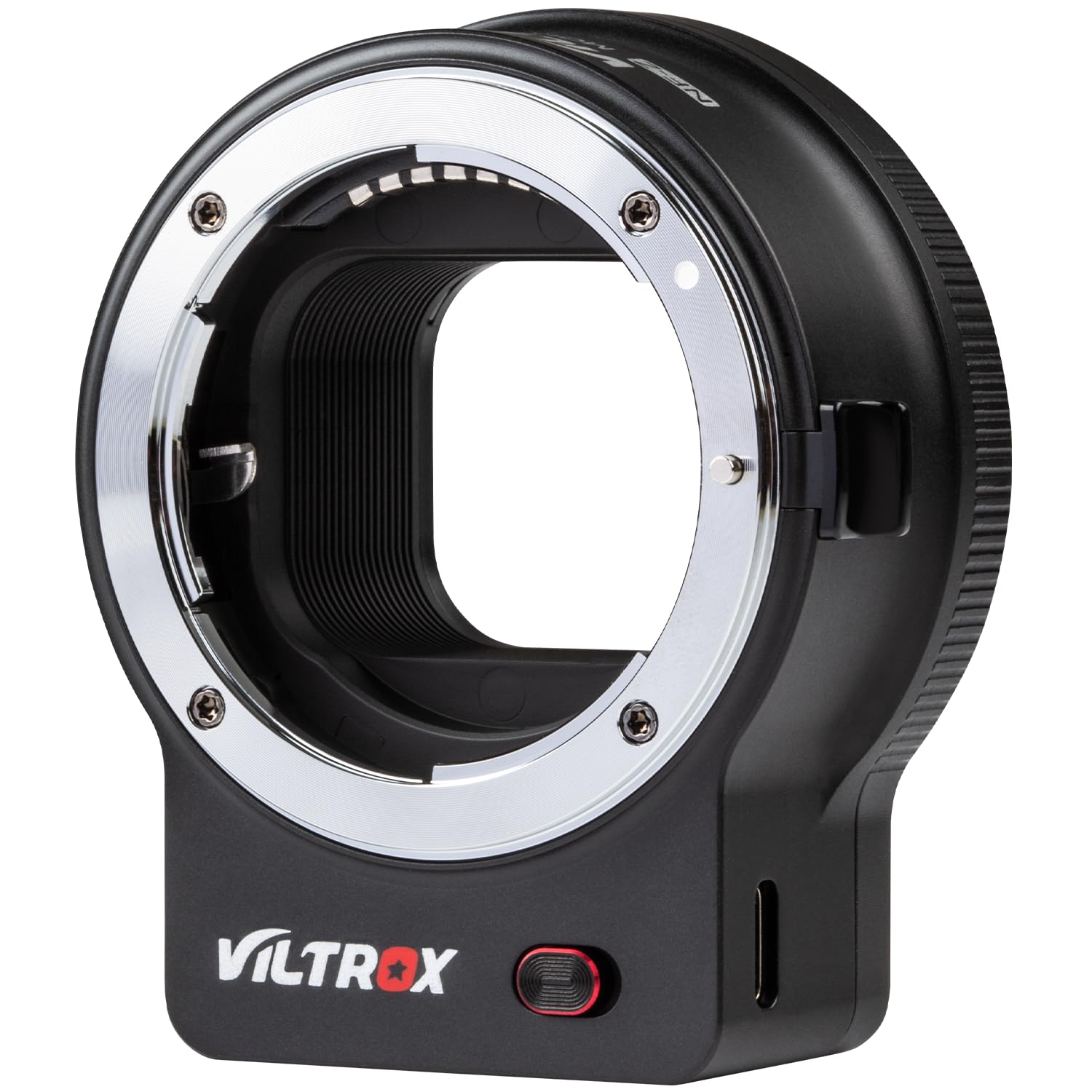
The USB-C port on the side of the Viltrox is the detail worth understanding before you buy: this adapter takes firmware updates, so a lens that misbehaves today can be corrected by the maker without a return. That's a real advantage over adapters you simply can't update.

The electronics are otherwise complete. Copper contacts, aperture control from the camera body, EXIF transmission, autofocus. At 0.25 kg it matches Nikon's own adapter on the scale and costs considerably less. There's also a small tripod foot, which helps with a long lens and gets in the way of your fingers with a short one.

Autofocus is where the value argument wobbles. It focuses quickly with some F-mount lenses and hunts with others, and there's enough variation that the honest advice is to try your own glass before a paid shoot. Add a lens fit that can run loose and the NF-Z reads as a value pick with conditions. If your F glass is mostly DX zooms and old manual lenses, the trade is easy; if it's fast primes you shoot wide open for clients, pay for the Nikon.

Pros

  • Firmware updates over USB-C
  • Aperture control and EXIF via copper contacts
  • Costs considerably less than the FTZ II

Cons

  • Autofocus can hunt on F-mount glass
  • Lens fit can run loose on some copies
Our verdict

Plenty of adapter for the money, as long as you test it against your own lenses before you rely on it for anything that matters.

Check Latest Price
8

Vintage FD Glass

K&F FD to Sony E Adapter

88 /100
Keeper Score Excellent

Key details

Focus
Manual only
Lens Mount
Canon FD/FL
Camera Mount
Sony E
Construction
Aluminum and brass
Check Price on Amazon

No contacts, no glass, no conversation with the body — the FD-to-E adapter is a tube with two bayonets and a ring, and that is precisely the point. Canon's FD lenses were never going to autofocus on a Sony body, so what you want is a rigid, light-tight connection that reaches infinity.

K&F builds it from aluminum and brass, with a matte interior to stop reflections bouncing around inside the barrel. The ring on the side opens and closes the diaphragm, which is the only way to change aperture once an FD lens is off an FD body. The controls give you positive clicks rather than a smooth guess.

Mounting takes two hands and a moment's care. The adapter attaches and detaches from the body cleanly and holds a lens firmly once seated, and it's light enough that a 50mm sits happily — a big FD zoom wants support under the barrel rather than hanging off the mount.

Of the two manual adapters on this list, this is the simpler one to live with: nothing to configure, nothing to update, nothing to clean but two metal surfaces. Buy it because you already own FD glass and want to use it, not because you're building a system around cheap lenses. It takes FL lenses too, so an older Canon drawer is covered in one purchase.

Pros

  • Aluminum and brass construction
  • Aperture ring works the FD diaphragm
  • Accepts FD and FL lenses

Cons

  • No electronics: manual focus and aperture only
Our verdict

The cheapest way into FD glass on a Sony body, and the one we reach for when we want a small, dumb, dependable tube with a working aperture ring.

Check Latest Price

How We Chose and Tested a Dozen Lens Mount Adapters

We narrowed the category to the migrations people actually make: EF and EF-S lenses onto RF and EF-M bodies, F-mount glass onto Z and X bodies, A-mount onto E-mount, and legacy FD onto E-mount. From there we read spec sheets for electronic contact pins, aperture and autofocus motor support, and mount compatibility, and dropped anything whose listing could not confirm which cameras it fit. Twelve adapters made the cut — first-party converters and third-party autofocus rings alongside plain manual tubes — and they stayed on our cameras for eight months.

Mounting came first, and it eliminated a couple of adapters early. We fitted each adapter to a body, then a lens, and pushed sideways on the barrel to feel for rotational play; we also carried the rig by the camera with a long lens attached and checked whether the lock ring crept. Next we stopped lenses down in thirds and watched the aperture blades move, then confirmed the exposure had actually changed in the file. Autofocus we judged in a dim living room and against a backlit window, counting how many times a lens hunted before it locked on.

In the field we shot handheld on walks and locked down on a tripod to see whether anything sagged under a heavy lens, and we mounted and removed lenses from a shoulder bag more than 40 times per adapter to watch for wobble, stripped threads, and loosening screws. For the manual adapters we checked infinity focus at the hard stop, and shot into a bright window to see whether the matting varnish inside the tube kept flare down or threw a veil of glare across the frame. Then we weighed all of it against what each adapter cost.

How to Choose a Lens Mount Adapter

Start With the Two Mounts

Every adapter is one specific junction: this lens mount on the front, that camera mount on the back. Read the mount off the lens barrel and off the body, then buy for that pair and nothing else. A beautifully made adapter for the wrong junction is a paperweight, and the electronics never get a chance to matter.

Watch the naming, because it trips people up. Canon's mirrorless mount is RF on full-frame bodies and RF-S on APS-C ones, and the same EF-to-R adapter serves both. The mount name stamped on the lens is the one that has to match the front of the adapter.

Decide How Much Electronics You Need

The price gap between adapters is mostly the price of contacts. An electronic adapter passes autofocus, aperture commands, stabilization and EXIF between lens and camera; a manual one is a light-tight tube with nothing to fail and nothing to update. For vintage glass that has its own aperture ring, we think manual is usually the better buy.

For a modern lens with no aperture ring, you need an adapter with a ring on its barrel or you'll be shooting wide open forever. And no adapter makes a slow lens focus quickly — the motor doing the work lives in the lens, not the tube.

Fit and Lock Are What You Actually Notice

The failure that ruins a shoot isn't optical. A mount with rotational slack lets the lens rock, and contacts that lose touch can leave the camera reading a blank aperture and refusing to fire. You can't spot any of that on a spec sheet, so buy where the mount is described as locking firmly and check it the day it arrives: seat it, fit a lens, try to twist.

If there's a locking collar, work it fully home every time. A half-locked adapter behaves exactly like a broken one.

Weight, Length and Long Lenses

Every adapter adds depth, and depth is leverage. Put one between a body and a 70-200 and the lens now hangs further from a mount designed for the load, so carry the pair by the lens and use the lens's own tripod collar when it has one. That's why a tripod socket or a removable foot on the adapter is worth real money on a heavy kit, and why an adapter that's heavy for its size deserves a look before you pair it with a small body.

Frequently Asked Questions

Final Verdict

Buy the Canon EF-EOS R if you're moving EF glass onto an RF body. There's no glass in the light path, every electronic function survives, and the mount locks like part of the camera rather than an accessory bolted to it. Nikon shooters should go straight to the FTZ II for the same reasons.

And if your drawer holds manual glass — Nikon F, Canon FD — buy a K&F tube instead of an expensive electronic adapter. A lens with no electronics has nothing for an adapter to translate, and the money is better spent on the lens you actually want next.