Best Fujifilm X-Mount Lenses of 2026

Cheap glass used to be a gamble: you saved a few hundred dollars and paid it back in missed focus. That trade has mostly collapsed. Over the past eight months, my team and I have shot with 12 Fujifilm X-mount lenses — first-party primes and zooms alongside the newer third-party autofocus designs — and the gap in focus speed, build, and image quality is now considerably narrower than the gap in price.

The lens that earns its keep is the one you stop noticing. It locks focus before your subject moves, it holds up in the corners, and it's small enough that you actually pack it. Autofocus is the spec most shoppers underrate; maximum aperture is the one they overrate.

We weighed image quality and build against price at every step, because a sharp lens that hunts for focus is still one you'll leave at home. Below, the picks are sorted by how you actually shoot, so start with whichever matches the way your camera gets used.

Keeper Score summarizes customer ratings and review volume. Read it alongside the product details and trade-offs. How the score works.

1

Best Overall

Fujinon XF35mm F2 R WR

94 /100
Keeper Score Outstanding

Key details

Autofocus
Inner focus, 0.08 sec
Focal Length
35mm (53mm equivalent)
Max Aperture
f/2
Weather Sealing
8 sealing points
Check Price on Amazon

Fujifilm quotes 0.08 seconds for the focus motor, and the figure turns out to be the least interesting thing about the way this lens focuses. What we noticed is that it never seems to be the reason a frame is missed: it goes, it stops, and it doesn't hunt in the dim rooms where cheaper glass starts looking for contrast. It's also close to silent, which counts for more than the spec suggests when the people you're photographing can hear the camera working.

The 53mm equivalent is the other half of the argument. It's long enough that faces keep their proportions and short enough that you can still fit a person and their surroundings into the frame without stepping backwards into traffic. Because it focuses internally, the barrel stays the same length on the camera, so the whole outfit remains something you can hold in one hand and forget about between shots.

Where this one pulls ahead of everything else in the group is durability. Eight sealing points and operation down to 14 degrees make it the lens we're comfortable leaving on the body through a wet afternoon, and none of the third-party picks here make that claim. The barrel has a dense, small-tool solidity to it, the 43mm filter thread keeps the front end compact, and Nano-GI coating keeps flare in check when the sun is just outside the frame.

Pros

  • Fast, near-silent inner-focus autofocus
  • Sealed at eight points, good to 14 degrees
  • Sharp wide open at f/2
  • Compact metal body that keeps the kit small

Cons

  • A stop slower than the Viltrox 35mm f/1.7
Our verdict

The first lens we point new X-series owners toward: sealed, near-silent, and sharp wide open at a 53mm-equivalent field of view.

Check Latest Price
2

Best Standard Zoom

Sigma 18-50mm f/2.8 DC DN

85 /100
Keeper Score Excellent

Key details

Weight
10.1 oz
Filter Size
55mm
Focal Length
18-50mm (29-80mm equivalent)
Max Aperture
f/2.8 constant
Check Price on Amazon

Constant-aperture standard zooms normally charge you in bulk: a wider front element, a heavier barrel, a bag that suddenly needs rearranging. This one weighs 285 grams, which is lighter than a good many kit zooms, and on the camera it barely shifts the balance. That single fact reorganised how we think about packing a one-lens day.

The range is 18-50mm, which covers a 29-80mm equivalent — wide interiors at one end, head-and-shoulders at the other — and it holds f/2.8 the whole way through instead of surrendering light the moment you zoom in. That's the part that matters. The difference at any single setting is modest, but you stop choosing between lenses because the one that's mounted is already fast enough.

Sharpness wide open has been the pleasant surprise, and the close focusing means it handles small details without a lens change. It has also behaved well for video: with a constant aperture, exposure doesn't drift as you zoom, which is the small thing that quietly ruins handheld clips.

Pros

  • Constant f/2.8 from 18mm to 50mm
  • 285 g, lighter than most kit zooms
  • Sharp wide open with close focusing

Cons

  • No aperture ring, so aperture is set on the body
  • Not weather sealed
Our verdict

The zoom we take when we want one lens and no excuses: constant f/2.8 across a useful range in a body that barely registers in a bag.

Check Latest Price
3

Best Telephoto Zoom

Fujinon XF70-300mm F4-5.6

89 /100
Keeper Score Excellent

Key details

Weight
1.75 lb
Focal Length
70-300mm
Max Aperture
f/4-5.6
Stabilization
Optical (OIS)
Check Price on Amazon

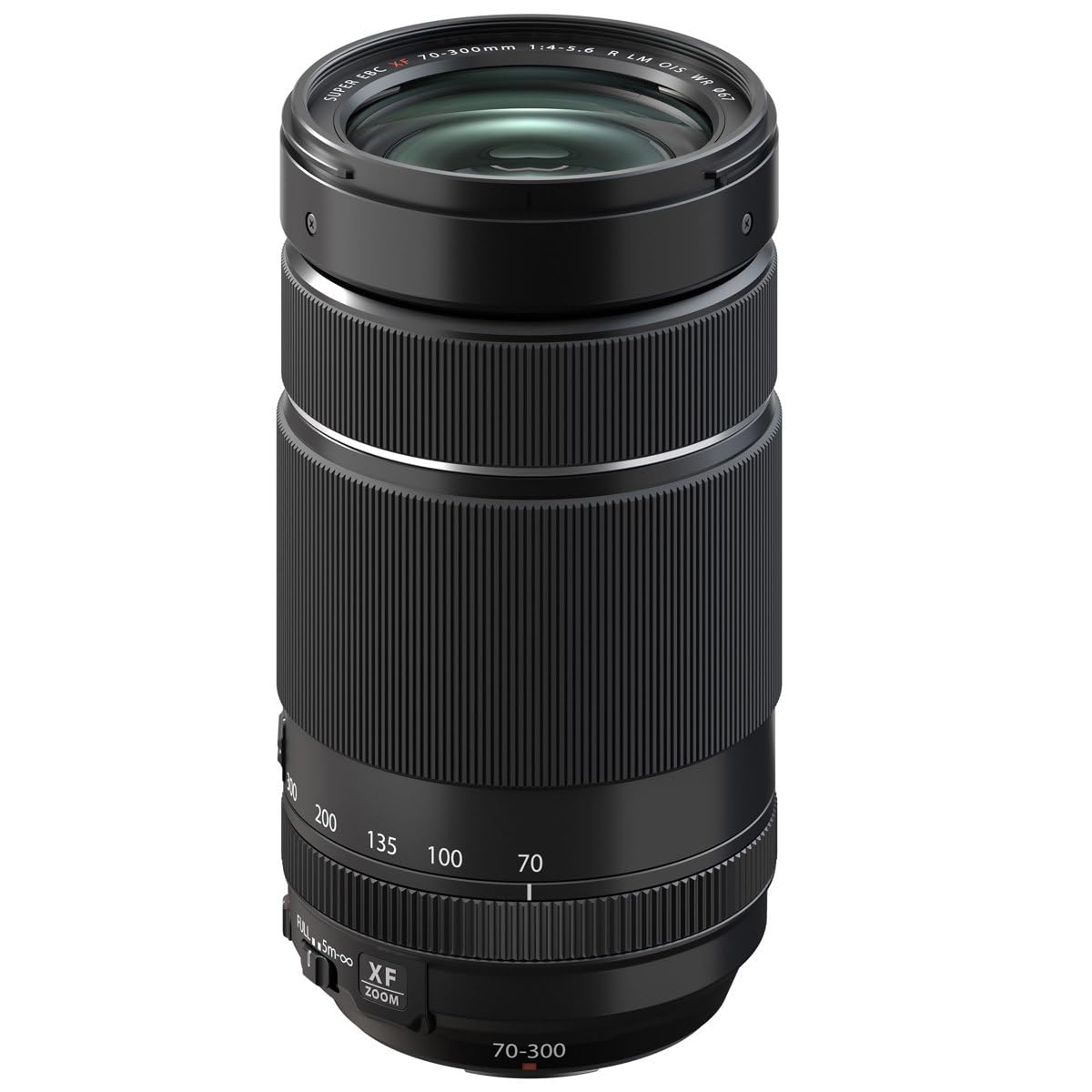
It's the priciest lens in this roundup, and it's the only one that justifies the number in its first sentence: 795 grams, optical stabilization, weather sealing, and a 70-300mm range that runs from a portrait across the street to a bird two trees away. When someone tells us they want more reach and can't say exactly what for, this is the lens we point at.

Stabilization is what changes the arithmetic. At the long end, handholding stops being a compromise — the sharpness we got at full extension was the surprise, and it holds across the range rather than peaking in the middle. Nine diaphragm blades keep backgrounds smooth, and the focus is quick enough to catch a subject moving across the frame rather than waiting for it to settle.

Two things make it more versatile than the focal length suggests. It takes Fujifilm's 1.4x and 2x teleconverters, so the reach extends without a second lens in the bag, and the close focus is short enough that flowers and insects fill the frame — which is how a lot of long-lens afternoons actually end up.

Pros

  • Optical stabilization that holds at 300mm
  • Takes 1.4x and 2x teleconverters
  • Sharp across the whole range
  • Close focus works for flowers and insects

Cons

  • 795 g is a lot to hang on a small body
Our verdict

Our telephoto pick: weather-sealed, image-stabilized reach to 300mm, with sharpness that survives a teleconverter behind it.

Check Latest Price
4

Best All-In-One Travel Zoom

Tamron 18-300mm f/3.5-6.3

84 /100
Keeper Score Excellent

Key details

Weight
1.4 lb
Zoom Ratio
16.6x
Focal Length
18-300mm
Max Aperture
f/3.5-6.3
Check Price on Amazon

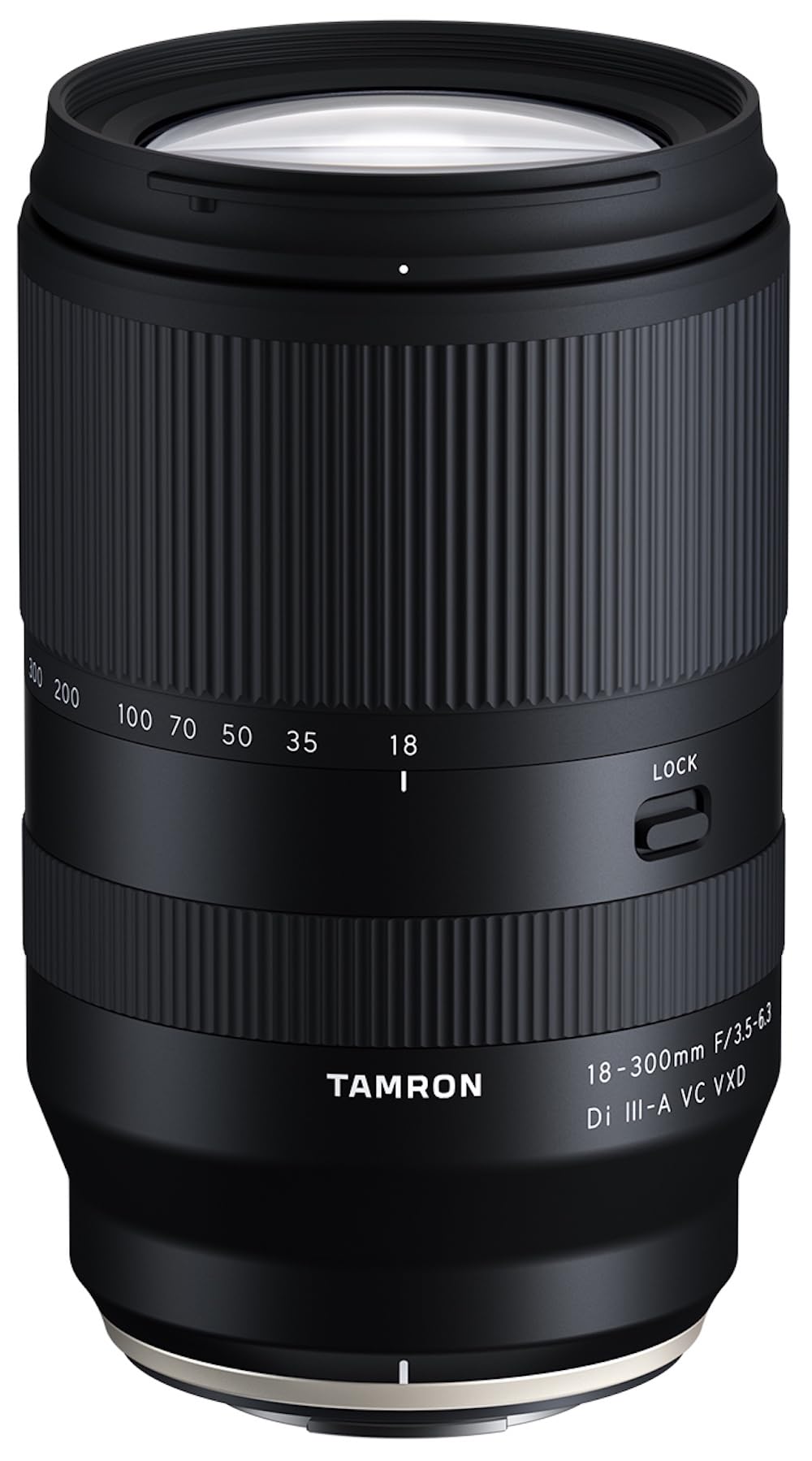
A 16.6x zoom ratio invites suspicion, and it's worth being honest about what that range buys and what it costs. What it buys is a fortnight away with one lens on the camera: 27mm at the wide end for a street, 450mm at the long end for whatever is across the water, and no bag of primes to carry between them.

The close focusing is the part we didn't expect. At the wide end you can get near enough that small objects fill the frame, which makes it useful for food, flowers and market stalls in a way superzooms usually aren't. Focus comes from a linear motor, and in good light it's quick and quiet enough to keep up with a walking pace.

Where it earns its recommendation is as a travel decision rather than an optical one. If the alternative is missing the shot because the right lens is in a hotel room, a lens that covers everything is the better instrument. Stabilization holds up at the long end, the fluorine coating wipes clean, and the whole thing weighs 1.4 pounds — which is remarkable for the reach.

Pros

  • One lens from wide to long telephoto
  • Close focusing useful for details and food
  • Stabilized and travel-friendly at 1.4 lb

Cons

  • Softer at 300mm than the Fujinon telezoom
  • f/6.3 at the long end limits low light
Our verdict

The lens we pack when a trip only has room for one: 27-450mm equivalent, stabilized, and close-focusing enough for the details.

Check Latest Price
5

Best Budget Fast Prime

Viltrox AF 35mm f/1.7

89 /100
Keeper Score Excellent

Key details

Weight
6 oz
Focal Length
35mm (53mm equivalent)
Max Aperture
f/1.7
Min Focus Distance
0.33 m
Check Price on Amazon

Same 53mm-equivalent field of view as the Fujinon at the top of this list, a stop brighter, and a great deal less money. The optical recipe is more elaborate than the price suggests — 11 elements in nine groups, with two high-refractive, one extra-low-dispersion and one aspherical element — and the question worth asking is where the saving actually shows up.

Mostly it doesn't. Sharpness wide open is where inexpensive fast primes usually come apart, and this one holds: results at f/1.7 are usable rather than a stepping stone to f/2.8, and it stays clear into the corners rather than only in the middle. Autofocus is quick and quiet, focus breathing is controlled enough for video, and the 0.33m minimum focus makes it more than a portrait lens.

At 170 grams it sits on the smaller bodies without making them nose-heavy, and nothing about the barrel reads as a shortcut. What we kept noticing is how little we had to think about it: point, focus, shoot. Lenses at this price usually ask for more patience than that.

Pros

  • Sharp wide open at f/1.7
  • Quick, quiet STM focus with low breathing
  • 170 g with a 0.33m close focus

Cons

  • Not weather sealed
Our verdict

The brightest autofocus prime in this group, at our top pick's field of view, and sharp from f/1.7 rather than f/4.

Check Latest Price
6

Best Ultra-Wide

Viltrox AF 9mm f/2.8

90 /100
Keeper Score Outstanding

Key details

Weight
6.17 oz
Focal Length
9mm (13.5mm equivalent)
Max Aperture
f/2.8
Field Of View
113.8 degrees
Check Price on Amazon

113.8 degrees is wide enough that you stop composing by turning the camera and start composing by moving yourself: step half a metre forward and the frame changes completely. On APS-C that's a 13.5mm equivalent, which puts it in the territory of architecture, tight interiors, group shots at arm's length and the kind of landscape where the foreground matters as much as the horizon.

It's 175 grams made of 13 elements in 11 groups, including three high-refractive, three extra-low-dispersion and two aspherical elements — a serious optical stack for something this small. Minimum focus is 0.13m, so you can put the front element almost against a subject and get a wide, exaggerated close-up no normal lens can imitate, and the STM motor keeps autofocus quick enough for video.

Where it earns its place is that it's genuinely usable rather than a novelty: sharp across the frame instead of only in the centre, and small enough to live in the bag as an extra rather than a decision. It isn't a walkaround lens — 113.8 degrees is a lot of world to organise — but on the days you need it, nothing else here substitutes.

Pros

  • 113.8-degree field of view in a small body
  • 0.13m close focus for exaggerated close-ups
  • Sharp across the frame, not just the centre

Cons

No notable drawbacks to flag.

Our verdict

The ultra-wide we reach for when everything has to fit in one frame: 113.8 degrees, autofocus, and a 175-gram body.

Check Latest Price
7

Pocket Carry

TTArtisan AF 27mm f/2.8

84 /100
Keeper Score Excellent

Key details

Weight
3.28 oz
Firmware
USB-C in rear cap
Focal Length
27mm (41mm equivalent)
Max Aperture
f/2.8
Check Price on Amazon

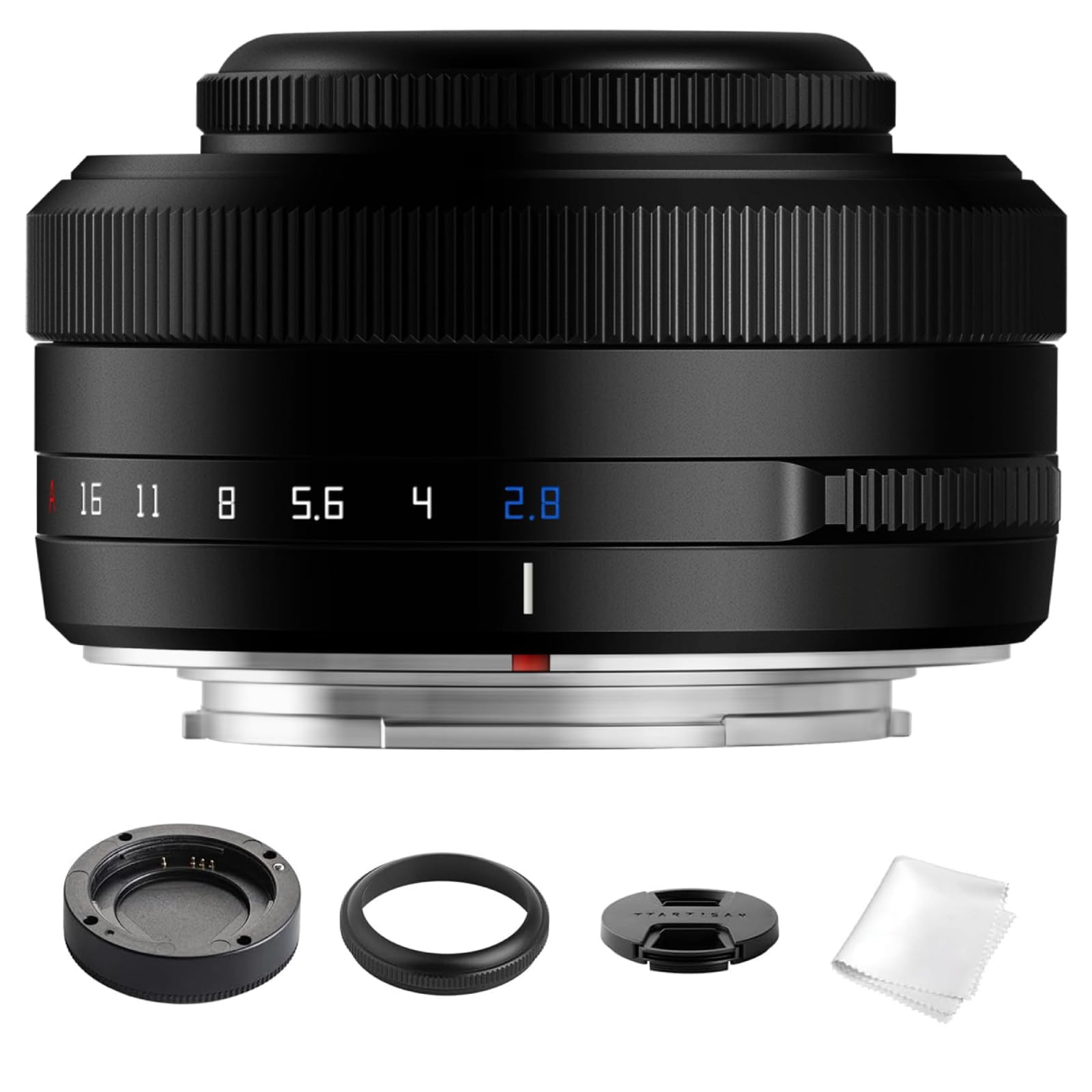
Ninety-three grams is light enough that the camera stops being something you decide to carry. Mount this on an X-series body and the whole outfit goes into a jacket pocket or a small shoulder bag, which is the entire reason a 41mm-equivalent pancake exists in the first place.

The design is more thoughtful than the money suggests: an aperture ring you can set by feel, a 39mm filter thread, seven diaphragm blades, and a USB-C port built into the rear cap for firmware updates. The 41mm equivalent sits between the classic 35mm and 50mm fields of view, which makes it a good default for street and travel — wide enough for context, long enough not to stretch faces at the edge of the frame.

Autofocus is the part that asks for patience. The stepping motor is fine in daylight and takes a beat longer in a dim room, and there are frames it plainly works harder for than the Fujinon glass does. None of that is disqualifying at the money, but it's the difference between a lens you trust at a party and one you take out on a walk.

What tips it for us is the combination rather than any single figure: an aperture ring under your fingers, autofocus when you want it, and a body that disappears into a pocket. It's the lens that makes the smallest X-series cameras make sense.

Pros

  • 93 g makes the camera pocketable
  • Aperture ring plus autofocus
  • USB-C firmware updates in the rear cap

Cons

No notable drawbacks to flag.

Our verdict

The pancake we keep coming back to: 93 grams, autofocus, an aperture ring, and a camera that finally fits in a pocket.

Check Latest Price
8

Portraits

TTArtisan AF 56mm f/1.8

84 /100
Keeper Score Excellent

Key details

Focal Length
56mm (85mm equivalent)
Max Aperture
f/1.8
Body Material
Aviation aluminum
Aperture Blades
9
Check Price on Amazon

Eighty-five millimetres equivalent at f/1.8 is the classic portrait recipe, and at this money we expected to make excuses for it. The excuses weren't needed: the aviation-aluminum barrel and mount feel like a much older, much dearer lens, the nine-blade aperture keeps highlights round, and the rendering gives the soft separation that makes the focal length worth owning.

Focus comes from a stepping motor with a lead screw, quiet enough not to intrude on video, and at portrait distances eye detection does most of the work. The 52mm filter thread matches the Viltrox 35mm f/1.7 here, which is a small convenience if you're building a two-lens kit around both.

The honest limitation is pace. This isn't the fastest-focusing lens in the group, and a subject walking toward you will find the edge of what it tracks comfortably. For portraits, events and anything where someone holds still for half a second, that gap barely shows.

What we appreciate is that the compromise sits where it costs least. Nobody buys an 85mm equivalent to photograph a running dog, and everything the lens is actually for — faces, background separation, a light bag — it does without asking for more money.

Pros

  • 85mm-equivalent f/1.8 for portraits
  • Metal barrel and mount
  • Quiet focusing for video and stills

Cons

No notable drawbacks to flag.

Our verdict

The least expensive route to an 85mm-equivalent f/1.8 here, in a metal barrel with quiet focus and good manners for portraits.

Check Latest Price

How We Tested Fujifilm X-Mount Lenses

We started by gathering every autofocus X-mount lens we could find in the focal lengths people actually search for — a pancake standard, fast 35mm primes, a portrait-length 56mm, an ultrawide, and zooms running from standard to superzoom — then cut the list down by mount-native autofocus (no adapters) and by price band, so we weren't judging a compact prime against a pro telephoto. Twelve made the cut, and we shot with them for eight months across a couple of X-series bodies.

Each lens went where lenses actually go: weekend street walks, a dimly lit dinner, a drizzly trail, and one long trip where everything had to fit in a small shoulder bag. For autofocus, I focused on a subject walking toward me, then on a backlit subject against a bright window, and counted how often the lens hunted before locking. I noted which motor design each one used and recorded the motor's sound through the camera's mic, since a lens that's fine for stills can ruin a quiet clip. Two of the lenses claim weather sealing, so one hike happened in the rain.

For image quality, we shot the same scene at every aperture from wide open to f/8 and compared the corners, then looked at how highlights and out-of-focus backgrounds held up. Build got the least glamorous treatment: I checked for play in the barrel, listened to how positively the aperture ring clicked, and carried each lens loose in a bag for a week to see what rattled. Stabilization was tested handheld at slow shutter speeds in low light.

Value was a running tally rather than a verdict — we noted which lenses we reached for without thinking and which stayed in the drawer. A lens that costs half as much but gets left at home isn't a bargain.

How to Choose a Fujifilm X-Mount Lens

Convert the focal length before you compare anything

Every lens here sits on a 1.5x crop, so the number engraved on it isn't the field of view you get. A 27mm behaves like a 41mm, a 35mm like a 53mm, a 56mm like an 85mm, and the 9mm ultra-wide like a 13.5mm. That's why a lens sold as a standard can feel tight across a dinner table.

Choose by the picture you already have in mind: 41mm for street and environmental portraits, 53mm for a natural view of people, 85mm when you want head-and-shoulders compression. The trap is buying the number you liked on a full-frame camera and finding it too long indoors on an X body.

Decide what a fast aperture is worth to you

An f/1.7 lens gathers roughly twice the light of an f/2.8 at the same focal length, and the shallower depth of field separates a subject from a background in a way editing can't reproduce. The Viltrox 35mm f/1.7 is the brightest autofocus lens in this group, and the Fujinon covering the same field of view is a stop slower.

What the faster lens doesn't buy is weather sealing or Fujifilm's focus consistency. If you mostly shoot daylight at f/4, put the money into reach or sealing instead; if you photograph people indoors after dark, aperture earns its keep every time.

Autofocus is where the money shows

Fujifilm publishes 0.08 seconds for the XF35mm f/2, and that figure is useful only as a comparison. What you actually feel is hunting in low light, motor noise during video, and how a lens behaves when someone walks toward you.

The Fujinon glass and the better third-party lenses here track dependably; the least expensive stepping motors take a beat longer in a dim room. If you photograph children, weddings or events, put focus performance ahead of aperture on your list rather than the other way around.

Weight decides whether the lens leaves the house

A 93-gram pancake changes how you carry a camera; a 795-gram telephoto changes whether you bring one at all. Balance matters as much as the figure — the long zoom makes its presence felt on a small body, while the pancakes turn a compact X-series camera into something you forget is in your bag.

Before you buy, think about the bag you actually carry rather than the one you pack for special occasions. The lens that matches your real week gets used; the one that matches your ambitions collects dust.

Sealing and controls are the quiet dealbreakers

Weather resistance is the clearest line between the Fujinon picks and the rest: the XF35mm f/2 lists eight sealing points and operation down to 14 degrees, and the XF70-300mm is sealed as well. If you shoot through a wet winter, that's the premium you're paying.

Controls matter too. The TTArtisan 27mm has an aperture ring; the Sigma zoom sets aperture from the camera body. For anyone raised on dials, the ring is half the reason to shoot Fujifilm in the first place, and it's worth checking before you commit.

Frequently Asked Questions

Final Verdict

When we hand someone an X-series body and tell them to buy one lens, it's the XF35mm F2 R WR. The deciding advantage isn't sharpness or focus speed on their own — it's that the sealing, the silence and the 53mm field of view make it usable in more situations than anything else here without a second thought.

If your photography already happens past 200mm, the XF70-300mm is the better buy and the only lens here built for it. And if the budget is the constraint, the Viltrox 35mm f/1.7 covers the same ground a stop brighter for far less money, as long as you keep it out of the rain.