Best Insta360 Cameras of 2026

A 360 camera fixes the oldest problem in action footage: you stop aiming. Point it, shoot, and decide the frame later—wide, tight, or a slow pan you didn't have to perform. I started carrying one on bike rides and hikes because I was tired of coming home with a camera full of sky and missing the moment.

Over the past seven months, my team and I have run 10 cameras through commutes, rainy trails, a windy beach, and dim garages. We watched image quality in good light and bad, how much usable frame we got after reframing, how quickly the app made a shareable clip, and whether battery life lasted a full afternoon. We also compared 8K capture, invisible selfie-stick tricks, replaceable lens guards, wind handling, and stabilization—the features that separate a camera you tolerate from one you reach for. If a camera took four menus to start recording, ran hot on a long take, or felt flimsy in the hand, it stayed in the bag; the picks below are the ones worth carrying.

Keeper Score summarizes customer ratings and review volume. Read it alongside the product details and trade-offs. How the score works.

1

Best Overall

Insta360 X5

92 /100
Keeper Score Outstanding

Key details

Battery
208 minutes
Sensors
Dual 1/1.28-inch
360 Video
8K30fps
Waterproof
Waterproof
Check Price on Amazon

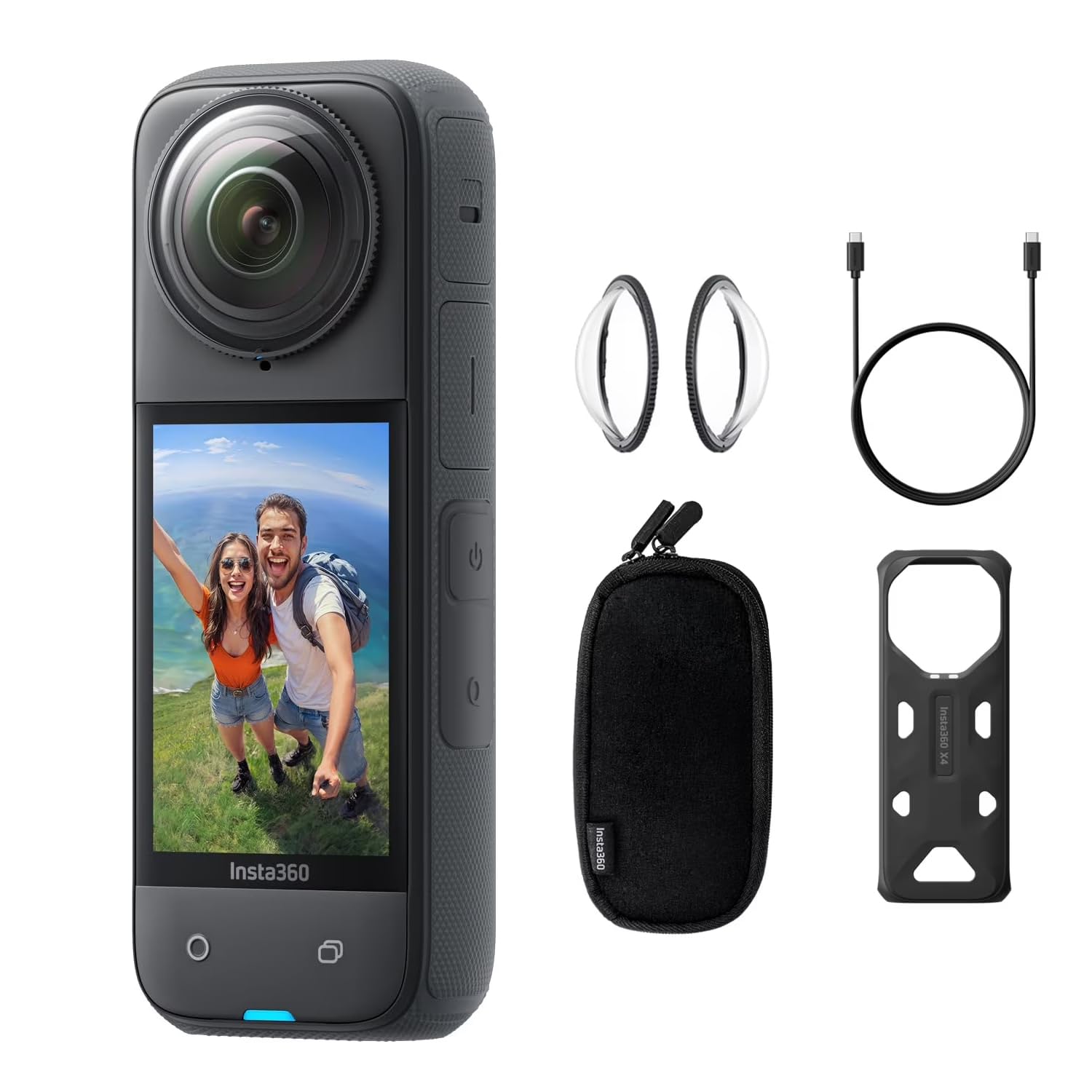
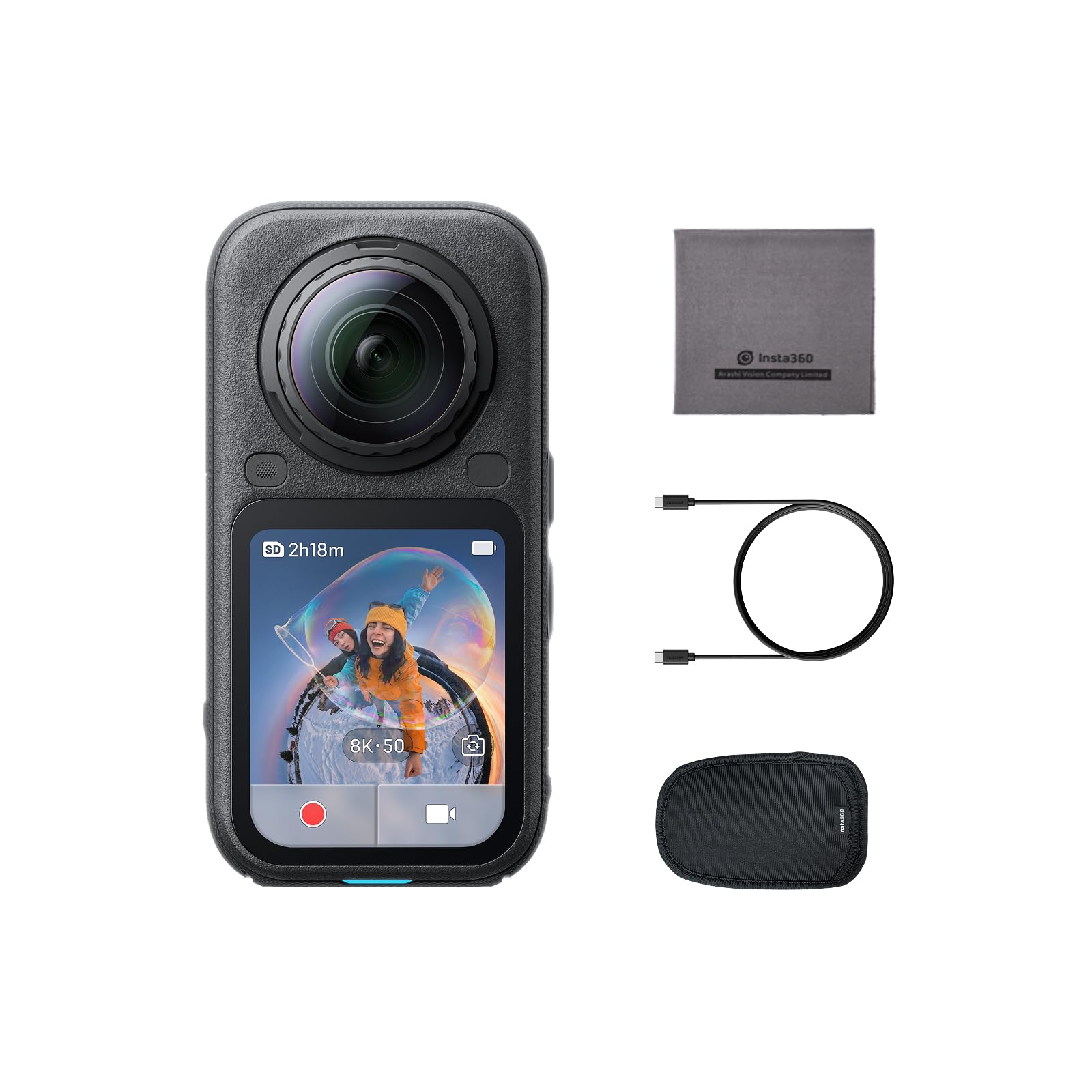
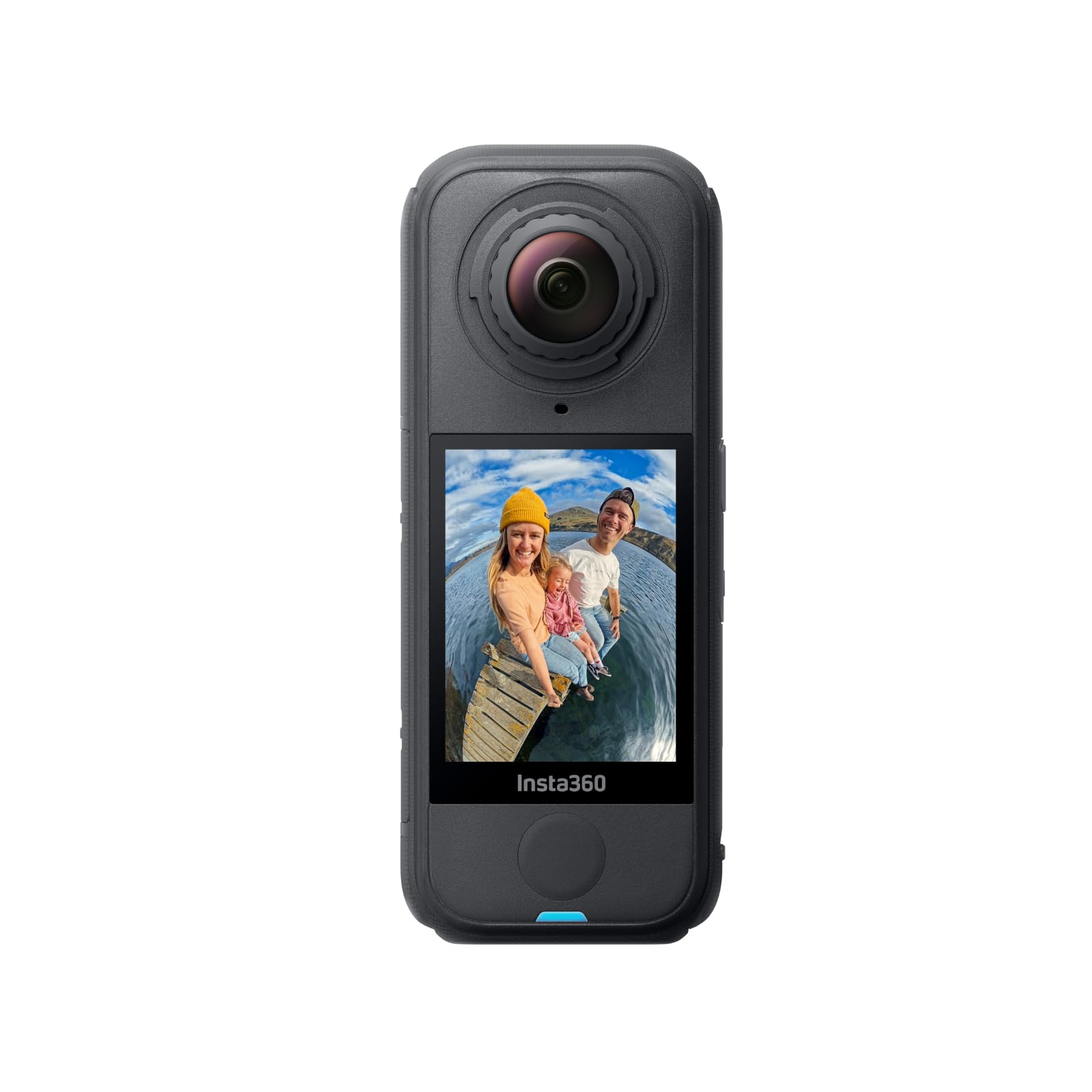
For most buyers, the X5 is the 360 camera we recommend first. It pairs 8K30 360 footage with a 208-minute battery rating, waterproofing, and replaceable lenses in one body, and that balance matters more than any single headline spec. The dual 1/1.28-inch sensors and triple AI chip also put it ahead of the X3 and X4 Air for low-light processing.

The invisible selfie stick effect is the reason to choose a 360 camera over a traditional action cam: you shoot first and pick the angle later. We appreciate that the X5 adds a built-in wind guard and full 360 Horizon Lock, because those details make handheld and mounted footage usable without a gimbal. The 2.5-inch screen is big enough to check framing without relying on your phone.

Battery life is the caveat. The 208-minute rating is generous, but high-bitrate 8K recording will cut into it, so a spare battery belongs in the bag for a full day. The X5 is also heavier than the X4 Air, which matters if you want a camera that clips to a cap or disappears in a pocket.

The X6 is the upgrade if 8K50 and larger sensors matter more than runtime; otherwise, the X5 is the one that fits the widest range of trips.

Pros

  • Balanced 8K 360 performance
  • 208-minute battery rating
  • Waterproof and replaceable lens
  • Strong low-light processing

Cons

  • No microSD card included
  • Premium price compared with X3
Our verdict

For most people, the X5 is the Insta360 we recommend: it balances 8K 360, long battery life, waterproofing, and replaceable lenses better than anything else here.
Check Latest Price
2

Best Premium 8K 360

Insta360 X6

86 /100
Keeper Score Excellent

Key details

Battery
140 minutes at 8K
Sensors
Dual 1/1.1-inch
360 Video
8K50fps
Color Depth
10-bit
Check Price on Amazon

The X6 is the spec upgrade in this 360 group: 8K50 video, dual 1/1.1-inch square sensors, 10-bit color, and a triple AI chip. The 50fps mode is the detail that stands out, because it gives fast action more room to be slowed down without dropping out of 8K.

We think it earns its premium for shooters who care about low light and high-frame-rate 8K. The larger sensors and 10-bit color are the kind of upgrades you notice in shadow detail and color grading, not just in a resolution badge. The catch is battery: the listing claims 140 minutes of 8K recording, shorter than the X5's 208-minute rating.

The AI Director and InstaFrame 2.0 are aimed at people who want a flat clip without a full reframing session. We like that the X6 can produce a shareable 4K video while it charges, because that makes the 360 workflow feel less like homework. The 2.32-inch screen is also a useful size for checking a shot without pulling out a phone.

The X5 is the more sensible all-rounder for most people, but the X6 is the one that makes sense when 50fps is the reason you are upgrading. It is a specialist's camera, and it asks you to pay for that specialization.

Pros

  • 8K50 360 footage
  • Dual 1/1.1-inch sensors
  • 10-bit color
  • AI-assisted flat video

Cons

  • Higher cost than the X5
  • No microSD card included
Our verdict

We recommend the X6 for premium 360 shooters who need 8K50 and stronger low-light sensors, as long as shorter battery life is an acceptable trade.

Check Latest Price
3

Best Lightweight 360

Insta360 X4 Air

91 /100
Keeper Score Outstanding

Key details

Lenses
Replaceable
Weight
5.82 oz
360 Video
8K30fps
Water Resistance
Not water resistant
Check Price on Amazon

At 165g, the X4 Air is the camera you can toss in a jacket pocket and forget about until you need it. It still shoots 8K30 360 video, keeps the invisible selfie stick effect, and uses replaceable lenses, so the light body does not strip out the core 360 tricks.

The compromises are in the margins. Low-light footage can look grainy compared with the X5, and battery life is not a strength; this is a camera for daylight travel and short clips rather than a full day of continuous recording. The X5 is the one to take into rain or water.

We still think the X4 Air earns a place because the weight is the feature. If you are hiking, walking a city, or shooting travel footage where a full-size 360 camera feels like a chore, the 165g body is the difference between bringing it and leaving it at home. The X5 is the better all-rounder; the X4 Air is the one for travelers who want the lightest 360 body here.

That makes it a second camera or a travel camera rather than your only action camera. If most of your shooting happens on dry land and you value a small bag, the trade is easy to make.

Pros

  • Very light 165g body
  • 8K 360 video
  • Replaceable lenses
  • Easy to carry all day

Cons

  • Not water resistant
  • No microSD card included
Our verdict

We like the X4 Air as a travel-first 360 camera: the 165g body is easy to carry, but it is not the one for water sports.

Check Latest Price
4

Best Traditional Action Camera

Insta360 Ace Pro 2

86 /100
Keeper Score Excellent

Key details

Lens
Leica SUMMARIT
Screen
2.5-inch flip touchscreen
Sensor
1/1.3-inch
Water Resistance
Waterproof
Check Price on Amazon

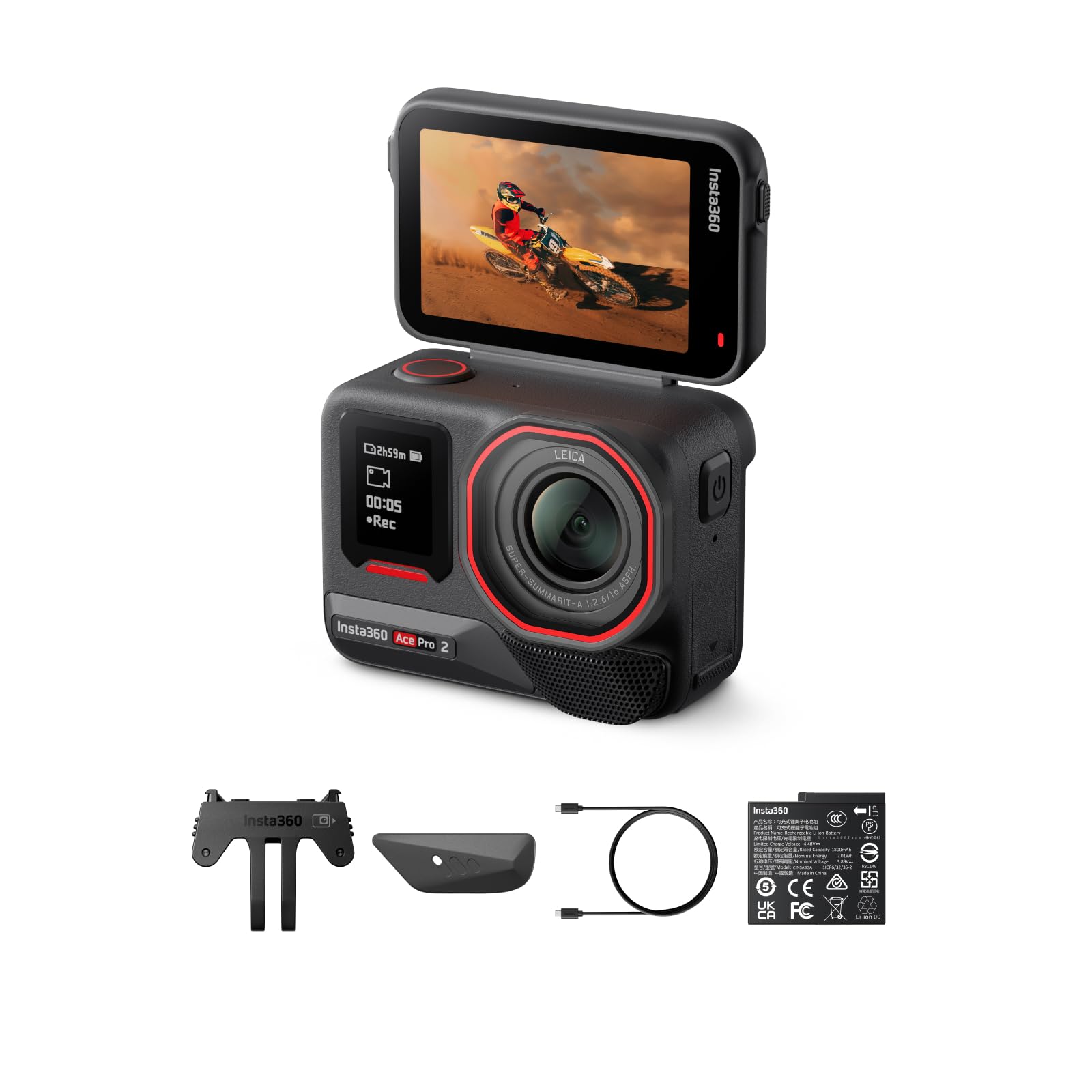
The Ace Pro 2 is the pick for anyone who wants an action camera, not a 360 camera. Its 2.5-inch flip touchscreen makes framing yourself obvious, and the 1/1.3-inch sensor and Leica Summarit lens give it a more traditional action-cam look than the reframing workflow of the X5. We like that clarity: you point it, you see the shot, and you move on.

The sensor and dual AI chip are the headliners, but the practical win is low light. PureVideo mode is designed for darker scenes, and the wind guard is a small accessory that makes a real difference in audio when you are moving. The flip screen also makes it a better vlogging camera than a fixed-screen action camera, especially for solo shots.

It is not a 360 camera, so you lose the shoot-first-frame-later flexibility and the invisible selfie stick effect. That is the trade you make for a simpler workflow and a screen you can actually see. For motorcycle, bike, and handheld action footage, we prefer that directness.

The single-battery bundle is worth topping up with a spare for long days. The X5 remains the more flexible tool; the Ace Pro 2 is the easier one to hand to someone who just wants to hit record.

Pros

  • Flip touchscreen for easy framing
  • Leica lens and 1/1.3-inch sensor
  • Strong low-light action footage
  • Wind guard improves audio

Cons

  • No 360 capture or reframing
  • No microSD card included
Our verdict

We recommend the Ace Pro 2 to anyone who wants a straightforward action camera with a flip screen rather than a 360 reframing workflow.

Check Latest Price
5

Best Vlog Camera

Insta360 Luna Pro

92 /100
Keeper Score Outstanding

Key details

Video
8K30fps
Screen
Detachable 2-inch OLED
Sensor
1-inch
Runtime
4 hours
Check Price on Amazon

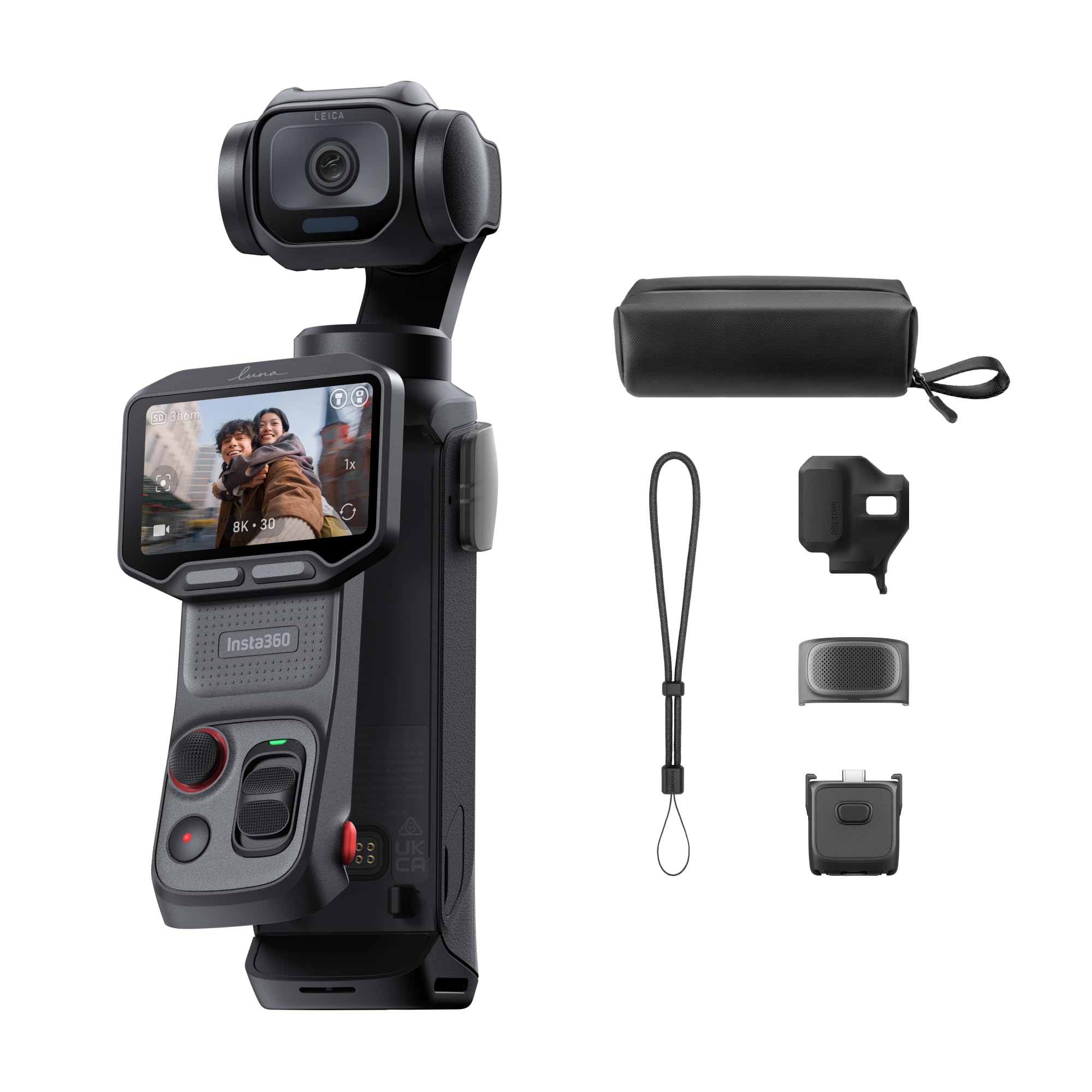
The Luna Pro is a vlogging camera first: a 1-inch 8K sensor, a detachable 2-inch OLED touchscreen, and a listed four-hour runtime. The detachable screen is the detail that makes solo shooting easier, because you can monitor yourself from a distance instead of guessing whether you are in frame.

We think the four-hour runtime is the number that matters. It makes the Luna Pro feel like a camera you can leave running through a shoot, not a short-clip gadget. The 1-inch sensor and 14 stops of dynamic range are aimed at low light and highlight roll-off, and the Leica color profiles give you a finished look without a heavy grade.

The 4K vertical mode is a smart touch for social shooters: twist the screen and you are already in the right aspect ratio. The detachable screen also works as a remote, which is useful when the camera is on a tripod or a small gimbal. We like that the controls stay simple enough for a solo creator to run without a second person.

The limitation is that this is not a 360 camera. You lose the invisible selfie stick and the freedom to reframe later. The X5 is the more flexible travel camera; the Luna Pro is the one that makes a talking-head shoot feel simple.

Pros

  • Four-hour runtime
  • Detachable OLED screen
  • 1-inch 8K sensor
  • Vertical video mode

Cons

  • Higher price than the Ace Pro 2
  • No microSD card included
Our verdict

We think the Luna Pro is the strongest vlog camera here, thanks to its 1-inch 8K sensor, detachable screen, and four-hour runtime.

Check Latest Price
6

Best Wearable POV Camera

Insta360 GO Ultra

86 /100
Keeper Score Excellent

Key details

Video
4K60fps
Battery
180 minutes
Camera Body
1.87 oz
Water Resistance
Waterproof
Check Price on Amazon

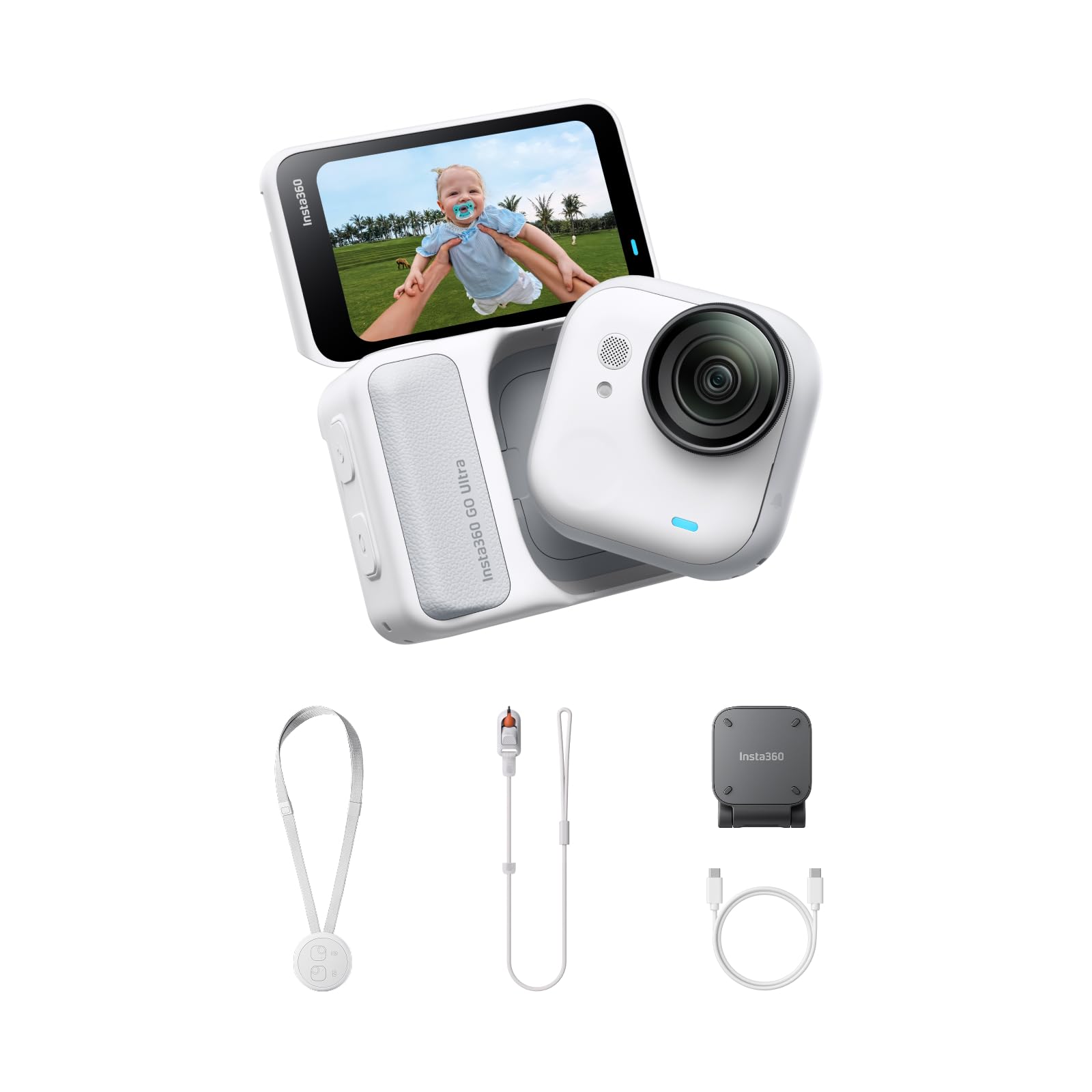
The GO Ultra is the wearable in the group: a 53g camera body that clips to a cap or hangs from the magnet pendant, with a 1/1.28-inch sensor and 4K60 video. The magnetic mounting is the whole point. It gets the camera off your hands and into angles a handheld stick cannot reach.

The Action Pod adds a flip screen and a bigger battery, and the listing puts the camera at 180 minutes with the Pod. The standalone camera is the part you wear, and that is where battery life and heat become the trade-off. High-bitrate 4K60 can get warm and drain quickly, so this is a camera for short POV clips rather than long continuous takes.

We like the 1/1.28-inch sensor because it gives the tiny camera a better shot at low light than the older GO 3S, and the 4K60 mode is useful for action. The magnetic clip is the kind of mount you can leave attached to a cap, which makes it more likely to come with you. The Action Pod also means you can review footage without squinting at the camera body.

Where the GO Ultra wins is spontaneity. It is the camera you wear when a full-size 360 rig stays in the bag, and the 4K footage is good enough for social and personal projects. We treat it as a short-clip camera: keep a spare battery or the Action Pod close, and do not expect it to replace the X5 for a full day of recording.

Pros

  • 53g magnetic body
  • 4K60 video
  • Action Pod screen and battery
  • Good low-light sensor for its size

Cons

  • No 360 capture
  • MicroSD card sold separately
Our verdict

We recommend the GO Ultra for short hands-free POV clips, where its 53g magnetic body matters more than long continuous recording.

Check Latest Price
7

Best Budget 360

Insta360 X3

93 /100
Keeper Score Outstanding

Key details

Screen
2.29-inch touchscreen
Weight
7.05 oz
360 Video
5.7K
Single-lens
4K30fps
Check Price on Amazon

The X3 is the entry point to 360: 5.7K 360 video, a 4K30 single-lens mode, a 2.29-inch touchscreen, and FlowState stabilization. It does not have the X5's 8K sensor or replaceable lens, but it keeps the shoot-first-frame-later workflow that makes these cameras fun.

The 5.7K footage is still enough for social clips, and the 4K single-lens mode makes it usable as a normal action camera when you do not need 360. The 2.29-inch screen is bigger than you expect on a camera this size, and the on-device controls are straightforward. The compromises show up in low light, where the X3 gives ground to the X5 and X4 Air.

We think the X3 still earns a budget spot because the price gap to the X5 is large and the core 360 experience is intact. If you are curious about 360, want a second camera for travel, or need a cheaper way to try reframing, the X3 is the entry point. Just buy from a seller with a clear return policy.

The X3 is a good way to try 360, not the camera we reach for when the footage has to come home.

Pros

  • Lower-cost 360 entry
  • 5.7K 360 and 4K single-lens
  • Large touchscreen
  • FlowState stabilization

Cons

  • Mixed reliability record
  • No 8K capture
Our verdict

We see the X3 as the budget 360 entry, but its mixed reliability record makes buying from a seller with a clear return policy important.

Check Latest Price
8

Budget Waterproof 8K

Insta360 X4 Renewed

85 /100
Keeper Score Excellent

Key details

Battery
135 minutes
Warranty
90 days limited
360 Video
8K
Waterproof
Waterproof
Check Price on Amazon

The X4 Renewed is the value route to an 8K waterproof 360 camera. It has the same 8K 360 capture, 135-minute battery rating, and waterproof body as the standard X4, but it arrives as a renewed unit with a 90-day limited warranty.

That warranty is the part to read closely. A renewed camera can be a smart buy if the savings are real and the return window is generous, but it is not the same ownership proposition as a new X5. The 8K footage and invisible selfie stick effect are still there, and the 135-minute battery rating is decent for a 360 camera.

The X4 is older than the X5, so low light and lens replacement are the areas where it gives ground. The X5's dual 1/1.28-inch sensors and replaceable lens are the newer setup; the X4 Renewed is the budget way into 8K 360, not the newest version of it.

We think the X4 Renewed makes sense for a shooter who wants waterproof 8K 360 and can accept a shorter warranty. If you need the camera for a paid shoot or a once-in-a-lifetime trip, the new X5 is the safer buy. For a second camera, a travel backup, or a first 360 camera on a tighter budget, the renewed X4 is a practical compromise.

Pros

  • 8K waterproof 360
  • 135-minute battery rating
  • Lower-cost route to X4
  • Includes standard lens guards

Cons

  • 90-day renewed warranty
  • No microSD card included
Our verdict

We recommend the X4 Renewed for a budget route to waterproof 8K 360, provided you can accept its 90-day renewed warranty.

Check Latest Price

How We Tested These 360 and Action Cameras

I started by narrowing the field to cameras with true 360 capture or a clear action or vlogging purpose, then filtered for the things shoppers keep asking about: waterproofing, replaceable lens protection, wind handling, stabilization, and an app that can edit without a desktop. That left 10 units, which we used for seven months.

We shot morning commutes, weekend bike rides, a rainy hike, a windy beach day, and handheld vlog walks, plus a few low-light garage tests. To judge image and video quality, we compared footage at full resolution and in single-lens mode, looking for mush in shadows, blown highlights, and how much detail survived cropping. We checked field of view by filming the same tight hallway and open sightline, then reframing in the app to see how much usable frame we really had. We timed power-on to first clip and counted taps to switch modes, and we swapped between handheld, helmet, and magnetic wearable setups to see which cameras traveled well.

Battery life was measured in use, not by the longest claimed runtime: we ran continuous 8K and 4K takes until the camera quit, then checked how fast it recovered. We also logged when a body got too hot to hold during long takes, whether lens guards or replaceable lenses survived a knock, and whether waterproofing held after a splash-heavy day. For editing, we built the same short clip in each app, noting reframing speed, export time, and whether the AI tools saved steps or added them. Value came last: we asked whether the footage, battery endurance, and workflow made the camera worth carrying over a phone.

The cameras that rose to the top didn't win on a single spec. They started quickly, stayed cool enough to keep shooting, and produced clips I'd post without an edit rescue.

How to Choose an Insta360 Camera

Start With 360, Action, or Wearable

A 360 camera such as the X5 or X4 Air lets you shoot first and choose the angle later, which is why it suits travel, biking, and family footage where you cannot predict the best view. A flat action camera like the Ace Pro 2 is simpler: you frame the shot, see it on screen, and share it with less editing. A wearable like the GO Ultra is for short POV clips where mounting matters more than screen time. We prioritize 360 for flexibility, flat action for speed, and wearable for hands-free moments.

Resolution Is Only Half the Story

8K sounds like the obvious upgrade, and it does give you more room to crop a 360 clip into a flat 4K frame. But sensor size and frame rate matter just as much. The X6's dual 1/1.1-inch sensors and 8K50 mode are aimed at low light and fast action, while the Luna Pro's 1-inch sensor is built for a cleaner vlog image. We think most casual shooters are better served by a good 5.7K or 8K sensor than by the highest number on the box. Choose 8K if you reframe often or deliver 4K; choose 5.7K if social clips are the main output.

Plan for Battery and Heat

Listed runtime is measured under specific settings, and 8K or high-bitrate 4K will usually shorten it. The X5's 208-minute rating is the longest here, but a spare battery is still the difference between a full day and a short outing. Tiny cameras like the GO Ultra trade battery and heat for size, so they work best for short clips rather than continuous recording. We treat a spare battery as part of the camera budget, not an optional extra.

Check Waterproofing and Lens Protection

Waterproofing is the spec that changes where you can shoot. The X5 and X4 Renewed are listed as waterproof; the X4 Air is explicitly not water resistant, so it belongs in a bag on wet days, not in a pool. Replaceable lenses are another practical safeguard: the X5 and X4 Air can take a swap if a lens gets scratched. If you choose a model without that feature, a lens guard and a case are worth adding. We check the rating before we check the mount.

Budget for Editing, Storage, and Warranty

360 footage is not finished when you stop recording. Reframing in the Insta360 app is part of the workflow, and the app's ease matters as much as the camera's menu. You also need a fast microSD card and, for long days, a spare battery; neither is always in the box. A renewed camera can save money, but the 90-day warranty on the X4 Renewed is shorter than a new camera's. We factor all of that into the total cost before recommending a body.

Frequently Asked Questions

Final Verdict

The X5 is the Insta360 camera we recommend first because it has the best combination of 8K 360 footage, a 208-minute battery rating, waterproofing, and replaceable lenses in this set. The X6 is the upgrade for 8K50 and larger sensors, while the X4 Air is the travel pick if you can live without water resistance.

If vlogging is the job, the Luna Pro's detachable screen and four-hour runtime make it the cleaner choice. For a budget route into waterproof 8K 360, the X4 Renewed is a practical compromise, as long as its shorter warranty suits you.