Best Compact Cameras of 2026

Every compact camera is a negotiation between the sensor inside it and the lens bolted to the front. Favor the sensor and you get clean shots at dusk but a modest zoom; favor the zoom and the pictures go soft the moment light drops. Neither choice is wrong — what matters is which compromise fits the way you actually shoot.

I shoot mostly on walks, at dinner tables, and in loud, badly lit rooms, which is exactly where a phone starts to smear. Over the past eight months, my team and I have carried 12 compact cameras through those same situations, and the gaps showed up fast: how honest skin tones looked, whether the body vanished into a jacket pocket, and whether autofocus caught a kid mid-run or hunted until the moment passed.

Megapixels, it turns out, did very little; sensor size and lens quality did most of the work. Battery life and wireless transfers mattered more than I expected — a camera that dies at 5 p.m. or won't hand a photo to your phone doesn't get carried twice. Below are the ones worth the pocket space, sorted by what each is genuinely best at.

Keeper Score summarizes customer ratings and review volume. Read it alongside the product details and trade-offs. How the score works.

1

Best Overall

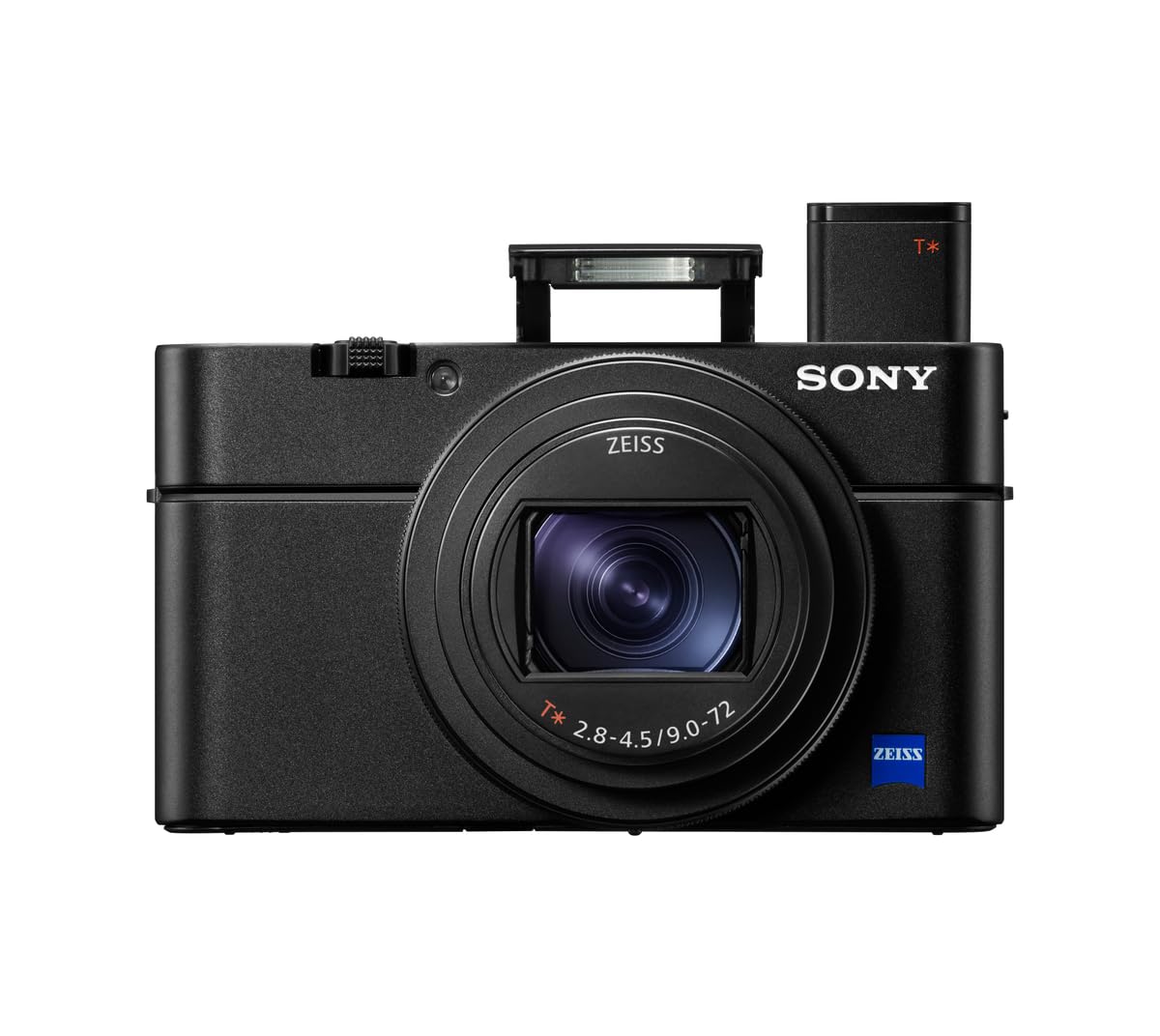
Sony RX100 VII

83 /100
Keeper Score Excellent

Key details

Lens
24-200mm f/2.8-4.5
Video
4K, mic input
Sensor
1.0-type stacked CMOS, 20.1MP
Weight
9.7 oz
Check Price on Amazon

Every camera here makes a compromise; the RX100 VII's is the price. It puts a 1-inch stacked sensor, a 24-200mm Zeiss zoom, and an electronic viewfinder into a 275-gram body that shoots up to 20 frames per second without blackout. That combination is why it's our top pick: on a trip, at a birthday party, or in a dim restaurant, it's the one compact here we never have to make excuses for.

Autofocus is where it separates from the cheaper picks. Sony rates it at 0.02 seconds using 357 phase-detection points, with real-time tracking and eye detection for people and animals, and in our shooting it held moving subjects the way the spec sheet promises. The 24-200mm range is the other quiet advantage — wide enough for a street scene, long enough to pull a face out of a crowd, and consistent enough at both ends that we stopped carrying a second lens.

Video is genuinely usable rather than an afterthought: 4K with a microphone jack, active stabilization, and Sony's Log3 profile if you want to grade footage later. The f/2.8-4.5 lens is dimmer than the fixed f/2.0 on the ZV-1F, so a very dark room still favors the wider aperture, but the larger stacked sensor gives it far more room in low light than the 1/2.3-inch travel zooms in this group.

What you don't get is reach past 200mm, and it isn't the camera for the pool. If your shooting is mostly outdoors in good light and you want 720mm, the ZS99 is the smarter buy; if you're headed into the water, the WPZ2 is the only answer. For everything in between, this is the compact that covers the most ground.

Pros

  • 1-inch stacked sensor with strong low-light detail
  • 24-200mm zoom covers wide to tight portraits
  • Fast phase-detect autofocus with real-time tracking
  • 4K video with microphone input and Log3

Cons

  • The most expensive camera in this group
Our verdict

The most capable pocket camera here, and the one we recommend when you want a single compact for travel, family, and video.

Check Latest Price
2

Best Travel Zoom

Panasonic LUMIX ZS99

83 /100
Keeper Score Excellent

Key details

Lens
24-720mm (30x)
Video
4K 30p
Sensor
1/2.3-inch, 20.3MP
Weight
11.4 oz
Check Price on Amazon

Compared with our top pick, the ZS99 gives up the 1-inch sensor and the viewfinder and takes back 520mm of reach. Its 24-720mm Leica zoom is 30x optical, and the whole thing weighs 322 grams — light enough that we stopped noticing it in a jacket pocket, which is the test that matters for a travel camera.

What we appreciate most is that the reach doesn't come with a handling penalty. The 3-inch 1,840k-dot touchscreen tilts up for shooting over a crowd, charging runs over USB-C so one cable covers the whole trip, and Bluetooth 5.0 pushes photos to your phone without a card reader. For the trip where the point is what's far away — a stage, a skyline, wildlife across a lake — it's the best compromise in this group.

The cost is in the sensor. A 1/2.3-inch chip and a lens that dims toward the long end mean the ZS99 is at its best outdoors in daylight; the RX100 VII and the ZV-1F are in a different league indoors and after dark. Point it at a lit stage or a sunny landscape and it delivers what you paid for.

Pros

  • 30x optical zoom in a 322 g body
  • Tilting touchscreen and USB-C charging
  • Bluetooth transfer without a card reader

Cons

  • Small sensor is weakest indoors and after dark
  • Lens dims at the long end
Our verdict

For travel where the subject is far away, the ZS99 is the compact we recommend first — 30x zoom, USB-C, and a body you'll actually carry.

Check Latest Price
3

Best for Video and Low Light

Canon PowerShot V1

86 /100
Keeper Score Excellent

Key details

Lens
16-50mm f/2.8-4.5
Video
4K, 10-bit Log 3
Sensor
1.4-type CMOS, 22.3MP
Weight
15 oz
Check Price on Amazon

The V1 carries the largest sensor on this page — a 1.4-type chip that records 22.3MP stills and 18.7MP video — and that changes what a compact can do indoors. With a 16-50mm equivalent f/2.8-4.5 lens, it's built for the person filming in a kitchen, a shop, or a dim street rather than the one zooming in on a stage.

The fan is the detail that sells it for video. Where most compacts stop after a short 4K clip, the V1's active cooling is designed to extend recording time, and that is the difference between getting the take and losing it. Add 10-bit Canon Log 3, a 3-stop ND filter, and an articulating 3-inch screen, and you have a serious video tool that still fits a jacket pocket. We think it's the most convincing video-first compact in this set.

The trade-offs are real. There's no viewfinder and no built-in flash, the body is the heaviest here at just over 15 ounces, and the zoom stops at 50mm, so it's a poor choice for anything distant. Battery life is the weak point: it runs short, and the camera ships as body only, so plan on USB-C charging and a spare cell.

It's also new enough that long-term reliability is still an open question, which is why it sits below the RX100 VII rather than above it. If video is most of what you shoot, that risk is easier to accept than it would be on a once-a-year vacation camera.

Pros

  • Largest sensor here, with 22.3MP stills
  • Built-in cooling fan for longer 4K takes
  • 10-bit Canon Log 3 and a 3-stop ND filter

Cons

  • No viewfinder or built-in flash
  • Heaviest body here at 15.04 ounces
  • Short battery life, and no charger in the box
Our verdict

For low-light video, streaming, and indoor content, the V1 is the strongest compact here — accept the bulk, the short battery life, and no viewfinder.

Check Latest Price
4

Best for Vlogging

Sony ZV-1F

90 /100
Keeper Score Outstanding

Key details

Lens
20mm f/2.0 fixed
Video
4K
Sensor
1-inch, 20.1MP
Weight
8.96 oz
Check Price on Amazon

A 20mm f/2.0 lens with no zoom is either exactly right or immediately wrong, and Sony built this one for the first case. At arm's length the wide angle frames you and the room behind you; on a tabletop it takes in a whole scene without stepping back. If you want to zoom, this isn't your camera — the ZS99 and the SX740 HS cover that.

The rest of the package is aimed at the same buyer: a 1-inch 20.1MP sensor that holds up in indoor light, eye autofocus and tracking so your face stays sharp while you talk, a side-articulating screen you can see while filming yourself, and a three-capsule directional mic with a wind screen in the box. At 254 grams it disappears into a small bag.

We think it's the easiest camera here to hand to someone who has never vlogged. The controls are simple and the wide lens forgives bad framing. The catch is endurance: the battery is short enough that a full filming day needs a second one, and stabilization is digital only, so handheld walking shots still wobble. Neither is a dealbreaker for sit-down or tripod work.

Stills are perfectly good, but a fixed 20mm is a limited stills lens — treat this as a video camera that also takes pictures, and it makes sense.

Pros

  • Wide 20mm f/2.0 lens for arm's-length framing
  • 1-inch sensor with eye AF and tracking
  • Flip screen plus directional mic and wind screen

Cons

  • No optical zoom at all
  • Short battery life on long shooting days
  • Digital-only stabilization
Our verdict

For talking-to-camera video and vlog-style travel clips, the ZV-1F is the simplest good answer here — just budget for a spare battery.

Check Latest Price
5

Best Budget

Kodak PIXPRO FZ55

89 /100
Keeper Score Excellent

Key details

Lens
28-140mm (5x)
Video
1080p
Sensor
1/2.3-inch, 16MP
Weight
3.7 oz
Check Price on Amazon

This is the camera that ends up in the tote bag, the glovebox, or a kid's backpack and actually gets used. At 3.7 ounces with a 5x 28-140mm zoom, a 16MP sensor, and 1080p video, it does the two things a phone can't at this size: real optical zoom and proper two-handed handling.

Dollar for dollar, this is the one we point a first-time buyer toward. The 28mm wide end is useful indoors, the 5x zoom gets you closer than a phone's digital crop, and the picture quality holds up in daylight — the slightly nostalgic look of the files is a bonus if that's the aesthetic you're after.

Budget realities show up in the details. There's no card in the box, so plan on a Class 10 SD card, and the battery wants at least four hours before the first charge and about two hours over USB after that. Long-term reliability is the one thing that gives us pause — some of these stop working within the first few months, so buy where returns are easy.

Pros

  • 5x optical zoom in a 3.7 oz body
  • Simple controls that suit a first camera
  • Clear daylight photos for the money

Cons

  • Basic 2.7-inch screen with no viewfinder
  • Digital stabilization only
Our verdict

The least expensive way here to get real optical zoom and pocket size — a great first camera if you buy a spare battery and a good card.

Check Latest Price
6

Maximum Zoom

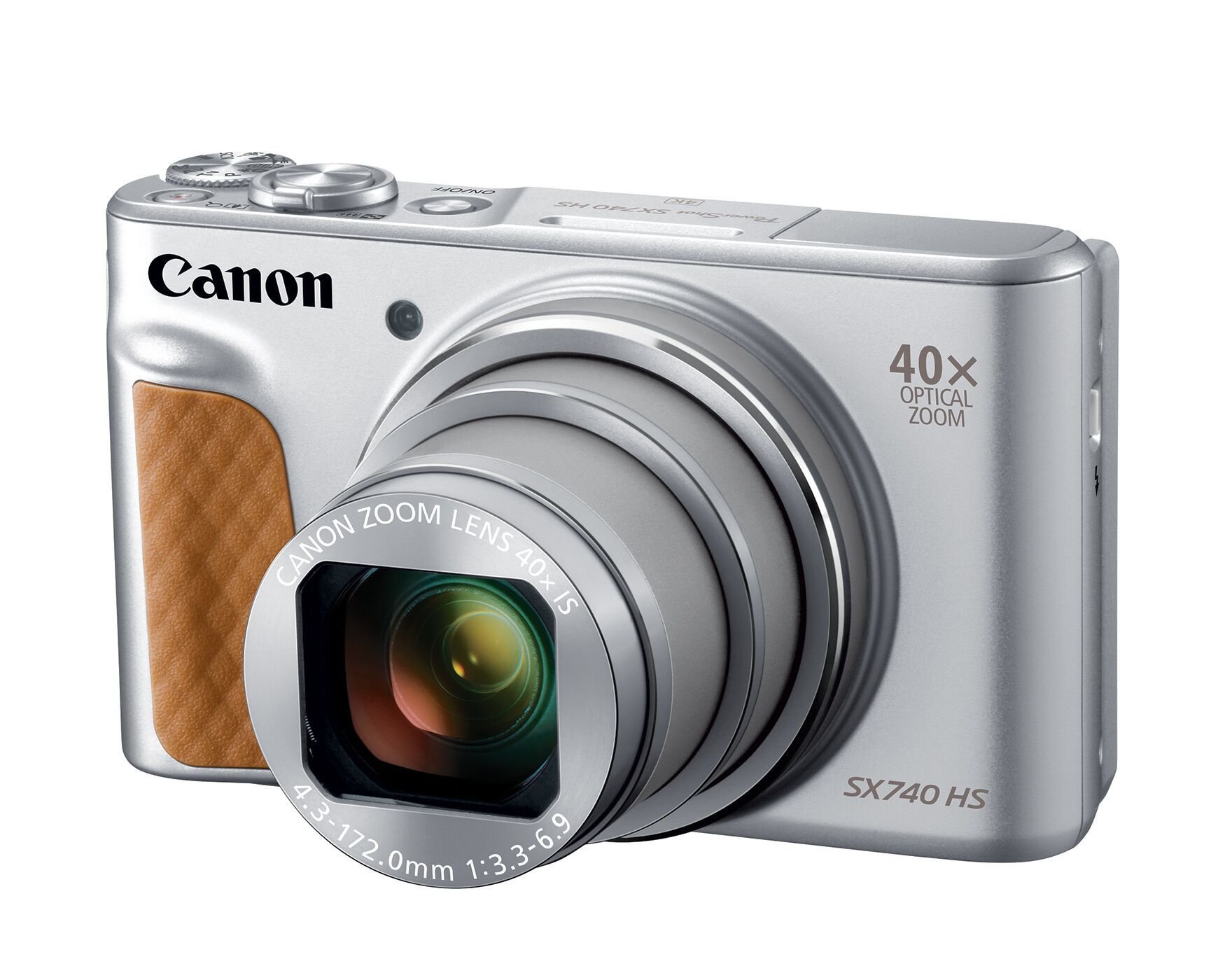
Canon PowerShot SX740 HS

84 /100
Keeper Score Excellent

Key details

Lens
24-960mm (40x)
Video
4K
Sensor
1/2.3-inch, 20.3MP
Weight
9.76 oz
Check Price on Amazon

960mm is the longest reach on this page, and it comes in a body that weighs under ten ounces. That's the entire pitch of the SX740 HS: a 40x optical zoom that starts at a 24mm wide angle, optical stabilization with Zoom Framing Assist to help you find what you're zooming toward, and a tilting 3-inch screen.

For wildlife from a hide, a stage from the back row, or a moon shot, nothing else here gets you this close for the money. Video runs to 4K with 4K time-lapse, and Wi-Fi with Bluetooth handles transfer to a phone.

The limits are the familiar ones for a superzoom. The 1/2.3-inch sensor needs good light, and autofocus at full extension is the weakest part of the experience — it can hunt and drift, so brace yourself and shoot in bursts rather than single frames.

We noted that the zoom is the reason to buy it, and everything else is adequate rather than impressive. It's an older design, which shows in the contrast-detection focus and the modest low-light performance, but as a long lens you can pocket it still earns its place.

Pros

  • 40x optical zoom out to 960mm
  • 4K video and 4K time-lapse
  • Wi-Fi and Bluetooth transfer

Cons

  • Autofocus hunts at full zoom
  • Small sensor needs daylight
Our verdict

If maximum zoom in a pocketable body is the requirement, the SX740 HS is still the answer here — provided most of your shooting happens in daylight.

Check Latest Price
7

Beach and Pool

Kodak PIXPRO WPZ2

85 /100
Keeper Score Excellent

Key details

Lens
27-108mm (4x)
Video
1080p
Weight
6.21 oz
Waterproof
15 m for 1 hour
Check Price on Amazon

This is the only camera here that goes in the water. It's rated to 15 meters for an hour, shockproof from 2 meters, and dustproof, with no housing to buy or forget. For a snorkeling trip, a pool day, or a kayak, that's a capability none of the other picks have.

Above the surface it's a straightforward 16MP point-and-shoot: a 27-108mm 4x zoom, 1080p video, Wi-Fi for sending photos to your phone, and a 2.7-inch screen. The yellow body at least makes it easy to find at the bottom of a beach bag.

We treat the seals as the main event. Water can get past a gasket that's dirty or not fully locked, so the pre-swim check the instructions describe — inspect the rubber, close and lock the cover, never open it wet, rinse with clean water afterward — is the routine that decides whether this camera survives your trip. The screen is also hard to read in bright sun, which makes framing above water a bit of a guess.

Used within those habits, it's the pick for beach and boat days. Just don't expect much from it after dark or at a distance; the small sensor and the short zoom keep it firmly in its lane.

Pros

  • Waterproof to 15 m without a housing
  • Shockproof to 2 m and dustproof
  • Wi-Fi sharing and a 4x optical zoom

Cons

  • Seals can let water in if the cover isn't clean and locked
  • Screen washes out in bright sun
Our verdict

For snorkeling, pools, and beach days, the WPZ2 is the only pick here that can get wet — check the seal before every swim and it earns its keep.

Check Latest Price
8

First Cameras

Duluvulu DC101

84 /100
Keeper Score Excellent

Key details

Zoom
16x digital
Screen
3-inch 180° flip
Sensor
1/3-inch, 48MP
In The Box
32GB card, two batteries, bag
Check Price on Amazon

The box is the argument here: the camera, a 32GB memory card, two rechargeable batteries, a USB-C cable and adapter, a lens cap, a strap, and a carry bag. If you're equipping a teenager or a first-time shooter from scratch, that bundle removes the usual second shopping trip.

What it does have is a 3-inch screen that flips a full 180 degrees for selfies, 4K video recording, a built-in fill light, and webcam mode over USB. The controls are simple enough for a kid to learn in an afternoon, and the two batteries mean one can charge while the other works.

Judged as a first camera, it does the job; judged as a camera, the numbers on the box oversell it. The 48MP figure is interpolated from a 1/3-inch sensor — a chip that size can't resolve that much real detail — and the 16x zoom is digital, so files are fine in daylight at normal distances and soft the moment you crop or move indoors.

If the goal is genuinely good photos rather than a complete kit, spend a little more on the FZ55: the optical zoom and larger sensor make a visible difference to what comes out the other end.

Pros

  • Comes with card, two batteries, and a bag
  • 180-degree flip screen for selfies
  • Light and small enough for a bag

Cons

  • Digital zoom only, no optical reach
  • Small sensor limits detail and low light
Our verdict

A complete first-camera kit for a kid or a casual shooter, as long as you're buying convenience and not 48 megapixels of real detail.

Check Latest Price

How We Tested: Eight Months, Twelve Cameras, Five Scenes

We built the shortlist from spec sheets, retailer listings, and the reviews people leave after a month of ownership, then trimmed anything that duplicated a zoom range or a price band we'd already covered. Twelve cameras made the cut. We read the manufacturer claims and then set out to confirm or contradict them, rather than treating any of it as a given.

Each camera went on a weekend trip, into a dim restaurant, to a loud venue, and out on a walk in bad weather. We shot the same five scenes on every model — a backlit portrait, a moving subject, a zoomed-in detail across the street, a low-light dinner table, and a short video clip — then compared the files side by side on a calibrated monitor. We also flipped the screens around to check how self-recorded video framed up, timed how long a charge lasted with the screen on, and counted the seconds it took to push a dozen photos to a phone over Wi-Fi.

Autofocus got its own pass: we tracked a dog running at the lens and a cyclist crossing frame, counting keepers out of twenty attempts. For durability, each camera rode in a bag with keys and a water bottle for a week while we watched for a wobbling lens barrel or a loosened battery door, and the waterproof models took a five-minute dunk in the sink followed by a check for fogged glass. Value came last — what you're actually left with once the novelty wears off.

How to Choose a Compact Camera

Start with the sensor, not the megapixel count

Three of our picks use a 1-inch or larger sensor — the RX100 VII, the ZV-1F, and the V1 — and that is what lets them shoot indoors without flash and keep detail when the light drops. The rest use 1/2.3-inch chips, which are fine in daylight and buy you a lot of zoom for the money.

Megapixels are the wrong number to shop by. The DC101's 48MP come from a 1/3-inch sensor and are interpolated, while the RX100 VII's 20.1MP are real. If you shoot mostly outdoors in good light, save the money and take the reach.

Decide how much zoom you actually need

24-200mm covers everything from a street scene to a head-and-shoulders portrait, which is why we like it as a default. Travel zooms run to 720mm on the ZS99 and 960mm on the SX740 HS, and that reach genuinely matters for stages, wildlife, and skylines. A fixed 20mm like the ZV-1F is the opposite bet: wide, bright, and made for filming yourself.

Ignore digital zoom figures entirely — they crop and soften. Only optical zoom changes what you can photograph, and the WPZ2's 4x optical is worth more than any 16x digital claim.

Check the size against where you'll carry it

Compact in a listing means it fits a jacket pocket or a bag, not that it vanishes into jeans. Our picks run from 3.7 ounces on the FZ55 to just over 15 ounces on the V1, and that gap decides whether the camera comes with you at all.

Measure the pocket or bag you plan to use. A 720mm zoom in a 322-gram body, like the ZS99, is the travel compromise most people should start from; the V1 trades that portability for a much larger sensor.

Match the video features to how you'll shoot

All but the budget picks record 4K, but the useful differences sit elsewhere. A side-flipping screen, as on the ZV-1F, is what you need to see yourself; a tilting screen is enough for shooting over a crowd. A microphone input and a Log profile, both on the RX100 VII, matter if you edit.

Check stabilization too. Some of these are digital only, which will not rescue a walking shot, and a cooling fan like the V1's is what lets a camera record long takes without shutting down.

Budget for cards, batteries, and charging

Almost none of these ship with a memory card, and the V1 arrives as body only. Add a Class 10 SD card — the FZ55 accepts up to 512GB — plus a spare battery for any camera you'll use all day.

Charging details differ more than you'd expect: the FZ55 wants about four hours before its first use and roughly two hours on USB after that, while the ZS99 and V1 charge over USB-C from the cable you already own. Price the extras before you compare the cameras.

Frequently Asked Questions

Final Verdict

After shooting with all eight, the RX100 VII is the one we recommend without a caveat about capability: it's the only compact here that pairs a 1-inch sensor, a 200mm zoom, a viewfinder, and fast autofocus in a body you'll carry every day.

If the price is the blocker, the ZS99 gives you far more reach for much less and is the better daylight travel camera. Shoot mostly video indoors? The Canon V1's larger sensor and cooling fan are worth the extra bulk.