Best Fujifilm Zoom Lenses for Every Focal Range of 2026

Every zoom is a trade: you give up a sliver of sharpness and a stop of light so you stop swapping glass while the scene changes. The fine print usually shows up at the long end, where a lens that looked crisp at the short end goes soft just as the heron finally turns. I shoot an X-mount body most weekends, and the difference between a zoom that keeps up and one that doesn't rarely lives on the spec sheet. It's in how quickly it locks on, how much it weighs after four hours on your shoulder, and whether the focus motor is quiet enough to sit through a school concert without the parent in front of you turning around.

Over the past seven months, my team and I have shot with eight of these lenses, from pocketable standard zooms to long telephoto glass, and the split came down to consistency as much as reach. A constant aperture buys you light at the long end but adds weight and cost; a slower variable zoom can be the difference between carrying a camera all day and leaving it in the cupboard. What I cared about most was whether the image held up when I pushed to the far end, and whether each lens felt worth what it asked. The ones below are the ones I kept reaching for.

Keeper Score summarizes customer ratings and review volume. Read it alongside the product details and trade-offs. How the score works.

1

Best Overall

Fujinon XF 16-80mm f/4

86 /100
Keeper Score Excellent

Key details

Weight
15.5 oz
Focal Length
16-80mm (24-120mm equivalent)
Max Aperture
f/4 constant
Image Stabilization
6 stops
Check Price on Amazon

Sixteen to eighty millimeters — 24mm to 120mm in full-frame terms — is the range that covers most of a day out: a wide interior, a street scene, a face at the far end without moving your feet. Of every zoom here, this is the one we recommend to someone who wants a single lens and no second thoughts. The f/4 aperture stays constant across the whole range, so you set it once and the exposure doesn't drift when you zoom.

What sold us is how much Fujifilm packed around that range without adding bulk. The barrel is sealed in ten places, the stabilization is rated to 6 stops, and the whole lens weighs 440 g — light enough that a day of carrying it doesn't register. We also appreciated that the OIS shuts itself off when the camera goes onto a tripod, a small thing that saves a menu dive every time you switch between handheld and locked down.

Handling is where an XF lens usually earns its price, and this one has the aperture ring marked in full stops with a crisp detent at each — the kind of control you set by feel without looking away from the finder. The zoom ring turns smoothly rather than stiffly. On a bigger body it balances well; on a small rangefinder-style body the front end is noticeably heavier than the camera, so plan on a grip or accept the imbalance.

Where it gives ground is at the edges of the frame. At 16mm and f/4 the corners are the softest part of the image, and they firm up as you stop down; this is a five-times zoom, not a prime, and it behaves like one. For travel, street and family photographs that's the right set of priorities. For architecture or copy work at the wide end, a prime is the better tool.

Pros

  • 24-120mm equivalent covers wide to short telephoto
  • Sealed in ten places against dust and damp
  • 6 stops of OIS for handheld work at 80mm
  • Marked aperture ring with crisp detents

Cons

  • Constant f/4 is a stop slower than the f/2.8 zooms here
  • 72mm filters cost more than the 55-62mm threads here
Our verdict

We recommend it first for most Fujifilm owners: 24-120mm equivalent, sealed, stabilized, and light enough to leave on the camera all day.
Check Latest Price
2

Best for Wildlife and Outdoor Sports

Fujinon XF 70-300mm f/4-5.6

89 /100
Keeper Score Excellent

Key details

Weight
1.75 lb
Focal Length
70-300mm
Max Aperture
f/4-5.6
Teleconverters
1.4x and 2x
Check Price on Amazon

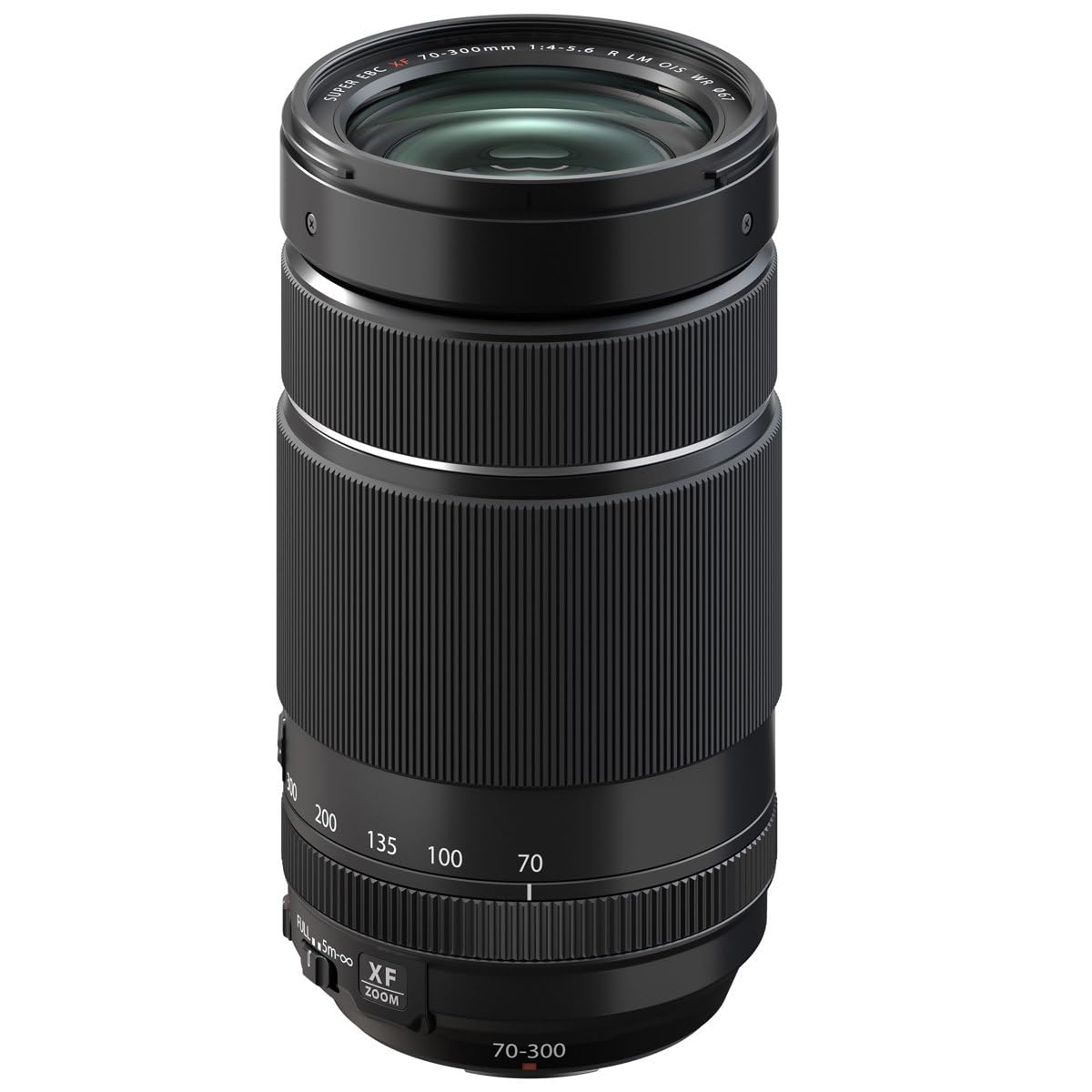
Three hundred millimeters of reach for 795 grams — that ratio is the whole argument. It's light enough to hang off a strap all day, and light enough that the long lens stops being a special-occasion item you leave at home. On a body with a decent grip it feels balanced rather than front-heavy, which we can't say for the big super-telephoto in this group.

This is the telephoto we point at wildlife, outdoor sport, and anyone who walks to their subjects. The barrel is weather sealed, the stabilization holds 300mm steady in the hand, and the mount takes Fujifilm's 1.4x and 2x teleconverters when 300mm isn't enough. Close focus is the sleeper feature: it gets near enough for flowers and insects, which turns a long lens into something worth carrying around a garden.

Set against the other long lenses here, it lands in the middle and earns it: more reach than the 55-200mm, a fraction of the 100-400mm's bulk, and sharper through the range than the budget telephotos. It's also the one long lens here that takes a converter without turning into a different lens to handle.

Pros

  • 300mm reach at 795 g
  • Weather-sealed barrel and mount
  • Takes 1.4x and 2x teleconverters
  • Close focus for flowers and insects

Cons

  • f/5.6 at 300mm is the limit in poor light
  • Focus can hunt on older X-series bodies
Our verdict

We take this one when the day is outdoors and on foot — the best balance of reach, sealing and weight in this group.

Check Latest Price
3

Best One-Lens Travel Zoom

Tamron 18-300mm f/3.5-6.3

84 /100
Keeper Score Excellent

Key details

Weight
21.9 oz
Zoom Ratio
16.6x
Focal Length
18-300mm
Max Aperture
f/3.5-6.3
Check Price on Amazon

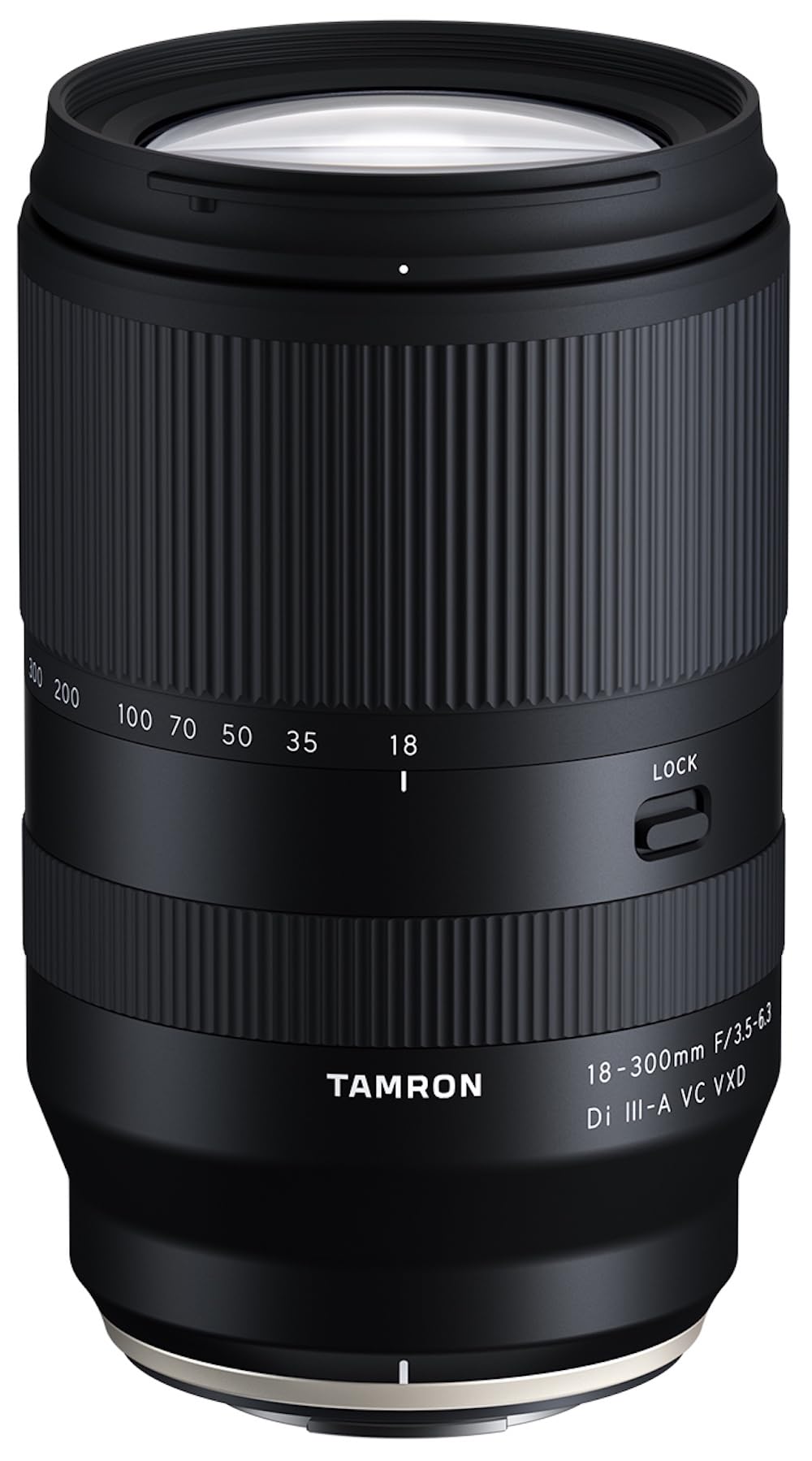
A 16.6x zoom is a promise: one lens, no bag, nothing changed in the dust. The 18-300mm spans what would otherwise take two or three lenses, from 18mm at the wide end to 300mm at the long, and it does it in a barrel that weighs 21.9 ounces. Optical stabilization is on board, which matters more than usual at the far end of that range.

What surprised us is how little it feels like a compromise in the hand. The barrel is solid, the fluorine coating wipes clean, and the VXD linear motor is quick enough for children and animals. Close focus at the wide end is short enough to use almost like a macro, and the six-year USA warranty runs longer than the coverage on the first-party lenses here.

Buy it for the trip where you get one lens and no second chances — a safari, a long hike, a week of family travel — and accept that the far end is where the compromise shows. If most of your frames sit between 18 and 80mm, the 16-80mm is the better lens by a clear margin. If you need 300mm and can only carry one barrel, this is the one that gets you there.

Pros

  • 16.6x zoom spans 18-300mm in one barrel
  • VXD linear motor focuses quickly
  • Close focus at the wide end
  • Six-year USA warranty

Cons

  • Aperture narrows to f/6.3 at 300mm
  • Resolution thins out at the long end
Our verdict

We choose it when one lens has to cover the whole trip, and accept a softer, slower long end in exchange for never missing a frame.

Check Latest Price
4

Best for Events and Portraits

Fujinon XF 50-140mm f/2.8

89 /100
Keeper Score Excellent

Key details

Weight
2.2 lb
Focal Length
50-140mm (76-214mm equivalent)
Max Aperture
f/2.8 constant
Filter Thread
72 mm
Check Price on Amazon

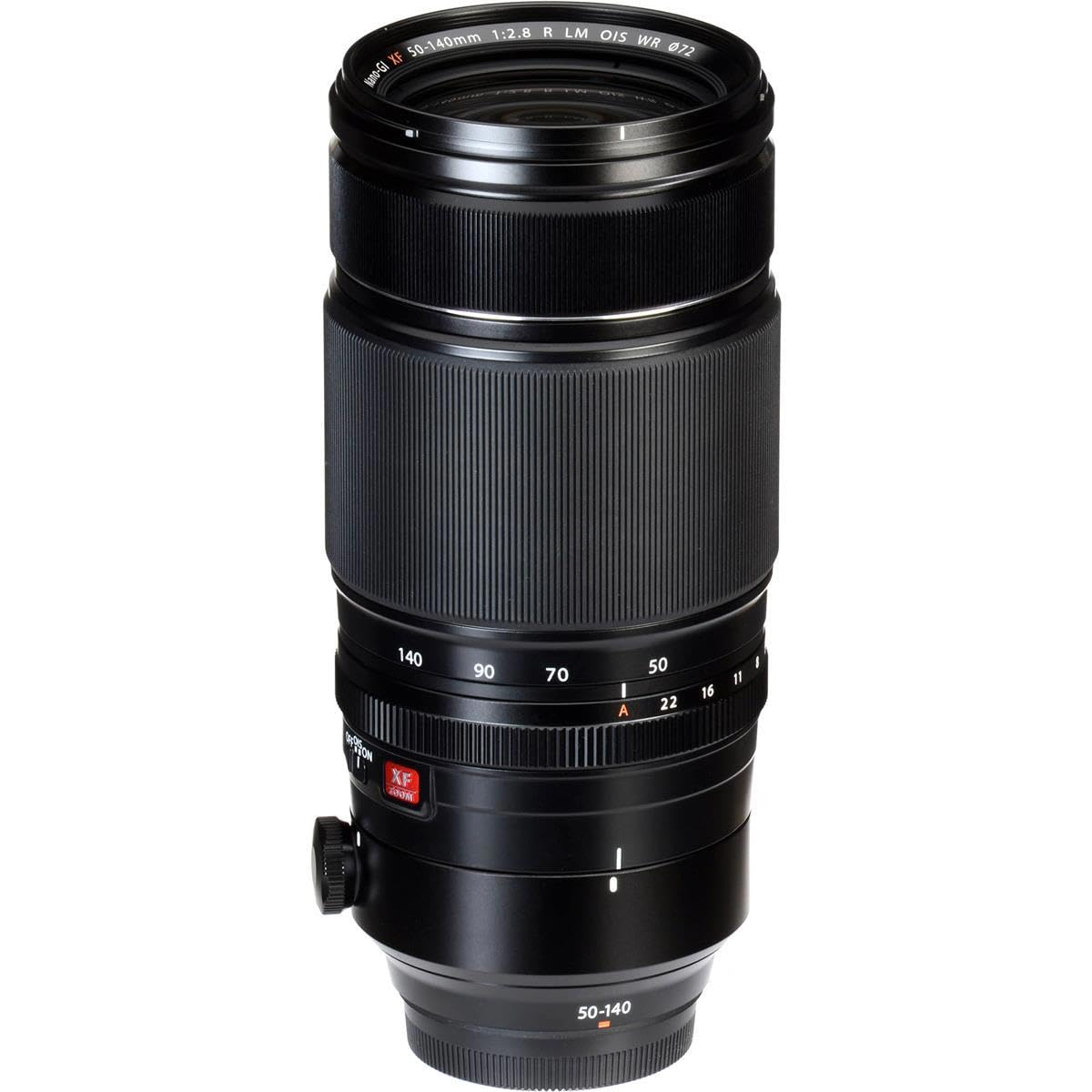
Two things define this lens: f/2.8 across the whole range, and a price to match. From 50mm to 140mm — 76mm to 214mm in full-frame terms — nothing else in this group holds a constant aperture that fast, and that single number is why it exists.

What f/2.8 buys you is a stop of light over the f/4 zooms here and, more usefully, the background separation that makes a portrait look deliberate. Close focus is 1m through the entire zoom range, the aperture has nine blades, and the barrel is sealed against dust, water and cold. It's a working lens, built to be used rather than admired.

It's heavy by Fujifilm standards, and that's the honest cost of the glass. On a bigger body it balances beautifully; carried through a full wedding day, you feel it by the last hour. The stabilization is effective enough to shoot handheld in a dim reception, which is exactly where a lens like this earns its keep.

If you photograph people, events or indoor sport — for money or for love — this is the zoom that keeps up. The autofocus is fast and quiet, the images are sharp wide open, and it shrugs off weather that would send you inside. If your long-lens work happens outdoors in daylight, take the 70-300mm and pocket the difference.

Pros

  • Constant f/2.8 from 50-140mm
  • Sharp wide open with nine aperture blades
  • Fast, quiet autofocus
  • Sealed against dust, water and cold

Cons

  • 1 kg barrel makes it a two-handed lens
  • Second only to the 100-400mm on price here
Our verdict

We reach for this one for people and events in poor light; the constant f/2.8 and fast autofocus justify the weight and the price.

Check Latest Price
5

Best Compact Standard Zoom

Sigma 18-50mm f/2.8

85 /100
Keeper Score Excellent

Key details

Weight
10.1 oz
Focal Length
18-50mm (29-80mm equivalent)
Max Aperture
f/2.8 constant
Filter Thread
55 mm
Check Price on Amazon

Two hundred and eighty-five grams with f/2.8 across the range — those two numbers don't usually sit in the same sentence. Sigma got there by keeping the barrel short and the glass simple, and the result is a lens you can leave on the camera for a whole day without noticing it's there. It isn't sealed, so keep it out of the rain; the mount isn't gasketed either, which is worth remembering on a wet beach.

We think that's the right set of compromises for a daily carry. The f/2.8 aperture is the same speed as the big 50-140mm at a fraction of the bulk, and it's genuinely sharp wide open — this isn't a lens that needs stopping down before it's usable. Minimum focus is close enough for food, flowers and details, and the images have the clean, contrasty look that makes the small size easy to forgive.

For video it's the sleeper of the group: the constant aperture means no exposure jump as you zoom, and the focus is quiet enough to trust with on-camera audio. Pair it with a small body and you have a rig you can hold in one hand, which is more than most of this group can claim.

Pros

  • Constant f/2.8 at just 285 g
  • Sharp wide open
  • Close minimum focus distance
  • Quiet enough for video work

Cons

  • Zoom ends at 80mm equivalent
  • No aperture ring on the barrel
Our verdict

We keep coming back to this one as a default standard zoom — small, fast, and sharp enough that nothing about it feels entry-level.

Check Latest Price
6

Best Lightweight Telephoto

Fujinon XF 55-200mm f/3.5-4.8

90 /100
Keeper Score Outstanding

Key details

Weight
1.28 lb
Focal Length
55-200mm (83-300mm equivalent)
Max Aperture
f/3.5-4.8
Image Stabilization
4.5 stops
Check Price on Amazon

The obvious question with this lens is why not the 70-300mm. The answer is weight and aperture: 580 g against 795 g, and f/4.8 at 200mm instead of f/5.6. What you give up is 100mm of reach.

Optically it's the safest bet of the telephotos in this group. Sharp from 55mm out to about 155mm, with rendering that keeps skin tones clean and backgrounds soft, it's the kind of lens that flatters portraits without asking anything of you. Stabilization is rated at 4.5 stops, close focus is 1.1m, and the 62mm filter thread is the least expensive of the telephotos here to fit with a polarizer.

This is the telephoto for portraits, school sport and travel in decent light, where 200mm is enough and you'd rather not carry the extra weight. On a mid-size body it feels like an extension of the camera rather than something bolted onto the front, and it's the one here that most people can shoot all afternoon without thinking about it.

Value is the other argument. It sits below the 70-300mm on price, the filters are cheaper, and the focal range covers the portraits-and-kids work most people actually buy a telephoto for. It's the sensible middle, and it has been for a long time.

Pros

  • 580 g with a 4.5-stop stabilizer
  • Sharp from 55mm to about 155mm
  • f/4.8 at 200mm beats the 70-300mm
  • Costs less than the 70-300mm

Cons

  • Not weather sealed
  • Focus hunts indoors and at 200mm
Our verdict

We like it best when 300mm equivalent is enough — sharp where it matters and light enough to come along.

Check Latest Price
7

Best Budget Telephoto

Fujinon XC 50-230mm f/4.5-6.7

85 /100
Keeper Score Excellent

Key details

Focal Length
50-230mm (76-350mm equivalent)
Max Aperture
f/4.5-6.7
Filter Thread
58 mm
Image Stabilization
3.5 stops
Check Price on Amazon

Three hundred and fifty millimeters equivalent for less than any other long lens here — that's the pitch, and it's a good one. This is the lens we point people to when they've just bought a body and want to try shooting long without committing to it. At that price, trying it out is the whole point.

The optics are better than the money suggests. Thirteen elements in ten groups, including one aspherical and one ED element, and the results hold color and contrast well; backgrounds go soft in a pleasing way at the long end. Stabilization is rated at 3.5 stops, enough to handhold at 230mm in daylight.

It's the pairing that makes it work. On a small body the balance is fine, and the barrel is compact enough to live in a bag beside a standard zoom. On a bigger body you'll want the 70-300mm instead — but you'll know that after a season of shooting, not before.

Pros

  • Least expensive route to 350mm equivalent here
  • ED and aspherical elements hold color well
  • 3.5 stops of optical stabilization

Cons

  • f/6.7 at 230mm needs strong daylight
  • Plastic barrel with no weather sealing
Our verdict

We point people here when they want to find out whether they shoot long at all, and the optics hold up better than the price suggests.

Check Latest Price
8

Maximum Reach

Fujinon XF 100-400mm f/4.5-5.6

88 /100
Keeper Score Excellent

Key details

Weight
4.2 lb
Focal Length
100-400mm (152-609mm equivalent)
Max Aperture
f/4.5-5.6
Image Stabilization
5 stops
Check Price on Amazon

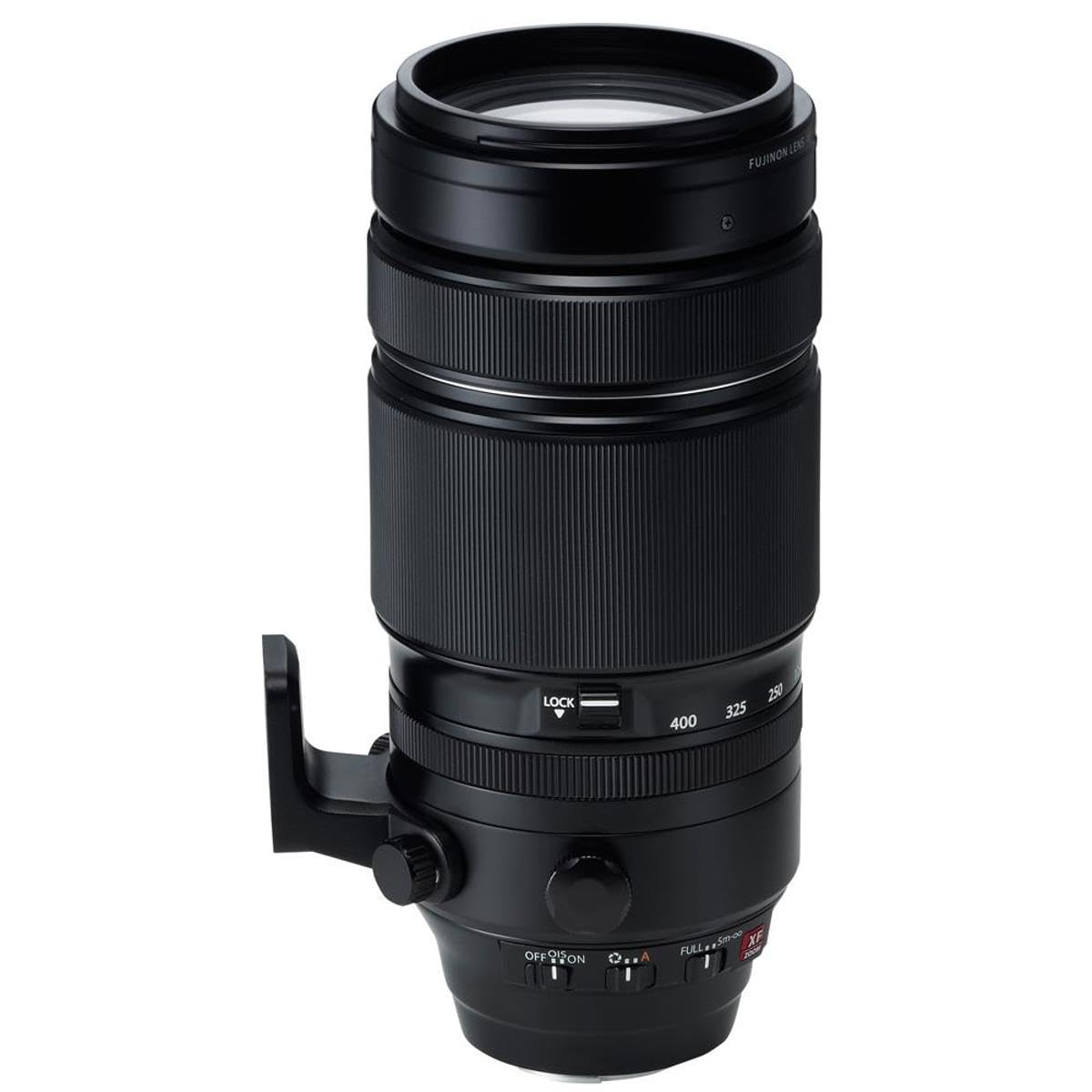
Six hundred and nine millimeters equivalent at the long end is what this lens exists for. Nothing else here reaches it without a teleconverter, and the barrel is built for the job: sealed, rated down to 14°F, and fitted with a removable tripod collar for the days you don't handhold.

Five stops of stabilization is what makes handheld work at 400mm realistic in good light, and the 1.75m minimum focus distance lets a subject fill the frame without you backing away. The front element takes 77mm filters, which is the size you'd expect at this focal length, and the tripod collar comes off when you want to shoot from the hand.

Optically it's the strongest long lens in this group. Sharpness holds across the frame rather than just in the middle, contrast survives a heavy crop, and the autofocus tracks well enough that birds in flight aren't a gamble. It's the reference point for everything else at the long end here.

Buy it if long is your main subject and you'd rather own one excellent lens than two good ones. If you shoot long occasionally, the 70-300mm gets you most of the way there for less than half the weight — and it's the lens that actually leaves the house.

Pros

  • 609mm equivalent reach without a converter
  • 5 stops of stabilization
  • Sealed and rated to 14°F
  • Sharp across the frame

Cons

  • 4.2 pounds before you add a body
  • The highest price in this group
Our verdict

We recommend it only for dedicated bird and wildlife work, where nothing else here reaches 609mm equivalent.

Check Latest Price

How We Chose and Tested Eight X-Mount Zooms

We started with a shortlist of roughly twenty zoom lenses sold for X-mount bodies and cut it by focal range, maximum aperture, stabilization, weather sealing, and the complaints that kept surfacing in owner reviews — softness wide open, sluggish autofocus, and weight that quietly keeps the camera at home. Eight made the cut, and we shot with them for seven months, mounting them on the same two bodies wherever possible so the comparisons stayed honest.

The scenes were the ones these lenses actually live in: a Saturday farmers market, a kid's soccer game under floodlights, a drizzly coastal walk, a dim school hall, and a wetland boardwalk at dawn. We photographed a fence post and then a treeline thirty yards off, racking focus back and forth twenty times to count how many frames the camera missed and to hear whether the motor whirred or whispered. Each lens was pointed straight down and zoomed through its range to check for creep, then carried in the same sling for a full day and weighed on a kitchen scale that night.

For image quality, we shot backlit branches to see how much purple fringing crept into the highlights, and compared 100 percent crops at the center and corners at every aperture to find where each lens actually sharpens up. We also shot handheld at the long end at slow shutter speeds to see how many frames survived, and took every weather-sealed option out in the drizzle, wiping the barrel down afterward. Lenses that made us stop thinking about them and just shoot are the ones that earned a spot.

How to Choose a Fujifilm Zoom Lens

Match the Range to What You Photograph

Fujifilm's APS-C sensor multiplies every focal length by 1.5, so a 16-80mm behaves like a 24-120mm and an 18-300mm like a 27-450mm. A standard zoom covers most of a day. A superzoom covers the day without a lens change and asks you to accept softer corners and a slower aperture at the far end.

If you mostly photograph people and places, start with a standard zoom and add a telephoto later. If you're packing for a trip where you may only get one chance at a subject, the range is worth more than the last increment of sharpness — and the 16.6x Tamron exists for exactly that trade.

Constant Aperture or Longer Reach

A constant f/2.8 or f/4 zoom holds its exposure as you zoom and gathers more light where a variable zoom is weakest — at the long end. That's what you pay for in the 50-140mm and the Sigma 18-50mm, and it's why both are shorter-range lenses. Variable apertures like f/3.5-5.6 buy reach instead.

Our rule: pay for the constant aperture if you shoot indoors, at dusk, or for hire. Take the range if most of your work happens in daylight and the lens has to do everything.

Weight and Balance on the Camera

Weight matters more than the spec sheet suggests, because it decides whether the lens leaves the house. The lightest standard zoom here is 285 g; the heaviest telephoto is 4.2 pounds. Balance matters just as much: a 440 g lens on a small X-E or X-T30 body is front-heavy and wants a grip, while the same lens sits naturally on an X-T5 or X-H2.

Before you commit to a long lens, mount it on your own body rather than judging by the number. If you plan to work from a monopod, check that the lens has a tripod collar — the 100-400mm has a removable one, and the lighter telephotos don't need it.

What Stabilization and Sealing Actually Buy You

Claimed stabilization in this group runs from 3.5 to 6 stops, and those figures assume a static subject and a steady stance. That's a genuine help at 300mm handheld; it does nothing for a running child or a gust of wind. Read the number as a measure of how slow you can handhold, not of how well you'll stop motion.

Weather sealing works the same way — it only helps if the body is sealed too. If you shoot in rain, dust or spray, sealing should outrank a stop of aperture; if you shoot indoors, spend the money elsewhere.

Autofocus: Linear Motors and What They Cost

The fast-focusing lenses here use linear motors — Fujifilm's LM designation and Tamron's VXD — and those are the ones that stay quiet and lock on when the light drops. Older stepper motors are fine in daylight and slower in a dim room.

If you photograph sport, wildlife or children, prioritise the motor over an extra few millimeters of reach. If you photograph landscapes and still life, it barely matters, and the money is better spent on reach or sealing.

Frequently Asked Questions

Final Verdict

Our pick for most Fujifilm owners is the XF 16-80mm f/4: 24-120mm equivalent, sealed, stabilized, and light enough to carry without thinking about it. When most of your frames happen past 100mm, the 70-300mm earns the money instead — similar price territory, far more reach, and still handholdable.

If you want a fast standard zoom in the smallest possible package and you don't shoot in the rain, the Sigma 18-50mm covers the middle at roughly two-thirds of the weight. And if long is your main subject rather than an occasional one, the 100-400mm is the only lens here that reaches 609mm equivalent without a converter.