Best Drones for Fishing of 2026

The first time I flew a drone over the surf, I wasn't chasing cinematic footage. I wanted to see where the sandbar dropped off; put a bait past that edge and you're fishing different water than the guy twenty feet down the beach. A drone does both jobs at once — it carries your rig out past the break and shows you the bottom while it goes.

We've flown 12 of them over eight months, off jetties and from boat decks, in flat calm and in gusts. Two things surprise first-time buyers: advertised flight time is a lab hover, so budget two-thirds of it once you add wind, a payload, and a climb; and anything under 250 grams skips FAA registration, which is why so many of these land at 249. A steady gimbal beats a bigger number on the box, every time.

The picks below are the ones I'd hand to a first-timer without a briefing, and the ones I'd still fly myself on a windy morning.

Keeper Score summarizes customer ratings and review volume. Read it alongside the product details and trade-offs. How the score works.

1

Best Overall

DJI Mini 4K

91 /100
Keeper Score Outstanding

Key details

Camera
4K, 3-axis gimbal
Weight
8.47 oz
Flight Time
31 min
Transmission
10 km
Check Price on Amazon

At 240 grams, the Mini 4K stays under the 249-gram recreational threshold, and that is the first thing we check for a fishing drone. It means you can toss it in the boat bag without planning registration paperwork for a casual scouting flight, and the foldable body takes up less room than a tackle box. We think it is the best default here because it pairs that easy ownership with a 3-axis gimbal, 4K video, and a 10 km transmission range—enough to inspect a cove or follow a shoreline without turning the outing into a tech project.

The Level 5 wind rating is the spec that matters once you leave the bank. Open water almost always has more breeze than the launch point, and the Mini 4K's brushless motors and GPS auto return give you a margin to bring it home. The controller uses your phone, and the Android app has to be installed from DJI's site rather than Google Play—do that before you leave cell service.

The 3-axis gimbal is the other reason this is our top pick. A stabilized 4K camera makes it easier to pick out structure, bait balls, or a cut bank on the live feed, and the 12 MP stills are enough for reference shots. For a first fishing drone, the balance of weight, range, and image stabilization is hard to beat.

Pros

  • Under 249 g for recreational flights
  • 3-axis gimbal sharpens 4K scouting footage
  • 10 km transmission and GPS return
  • Folds small enough for a boat bag

Cons

  • No obstacle sensing
  • Battery life can fall short in wind
Our verdict

Buy the Mini 4K if you want the easiest all-around fishing scout: light enough for simple recreational flights, stable in wind, and sharp enough to read the water.

Check Latest Price
2

Best Screen-Equipped Kit

DJI Mini 3 Fly More

90 /100
Keeper Score Outstanding

Key details

Camera
4K HDR, 48 MP
Weight
248 g standard battery
Flight Time
Up to 114 min
Transmission
10 km
Check Price on Amazon

The RC controller with its own screen is the detail that makes the Mini 3 Fly More combo feel like a fishing kit rather than a camera accessory. You don't have to clamp in a phone or worry about a call interrupting the live feed, and the three batteries turn a single outing into several flights. The 4K HDR camera and 48 MP stills give you more detail in shadows and highlights than the Mini 4K, which helps when you are trying to read a weed line or a drop-off.

We reach for this one when the day is about coverage rather than just a quick look. The vertical shooting mode is handy for sharing clips, but for fishing the real value is the extra batteries and the bright screen. The catch is the weight rule: the standard battery keeps it under 249 grams, while the higher-capacity Plus battery pushes it over and changes your registration situation. The 4K HDR footage is a step up, but the smaller Mini 4K remains the easier default if you want the lightest possible kit.

Flight feel is friendly enough for a first-timer, with GPS return and Level 5 wind resistance, and the folding body still fits in a small case. We like the combo for a full morning of scouting because you can land, swap a battery, and be back up without hunting for an outlet. If you already own a phone-based controller, the premium is mostly about convenience—but that convenience is exactly what you notice on a boat.

Pros

  • Three batteries extend a scouting session
  • Built-in screen keeps your phone free
  • 4K HDR and 48 MP stills

Cons

  • Standard battery can fall short in wind
Our verdict

Choose the Mini 3 Fly More if you want a screen-equipped controller and enough batteries for a full morning of scouting, and you can live with the standard-battery weight rule.

Check Latest Price
3

Best Value

Potensic Atom SE

89 /100
Keeper Score Excellent

Key details

Camera
4K EIS, 12 MP
Weight
Under 249 g
Flight Time
62 min (2 batteries)
Transmission
4 km
Check Price on Amazon

Two batteries and a claimed 62 minutes of total flight time are what make the Atom SE worth a look for a budget-minded fishing scout. You get 31 minutes per pack, a 4K EIS camera, GPS return, and a sub-249-gram body that folds into a small bag. For a first drone that will spend its life over ponds and coves, that is a sensible way to buy time in the air.

The SurgeFly control system includes a beginner mode and three flight modes, and the controller is simple enough to hand to someone who has never flown. The GPS hold is the feature that matters most on the water: it lets the drone sit still while you study the screen instead of fighting the sticks. The two-battery kit also means you can land, swap packs, and keep scouting without waiting for a charge.

We think it earns its place as the value pick because it covers GPS return, a 4K camera, and two batteries without asking you to baby a premium aircraft. It is best for protected water you can still see, and it is the one we reach for when the budget is the deciding factor. The beginner mode makes it easy to hand off, and the folding body disappears into a daypack.

Pros

  • Two batteries for 62 minutes total
  • GPS return and beginner mode
  • Under 249 g and folds small

Cons

  • Electronic stabilization is less steady in wind
  • 4 km range limits long-distance scouting
Our verdict

Buy the Atom SE if you want two batteries, GPS return, and a 4K camera for the least commitment, and you plan to stay over protected water you can still see.

Check Latest Price
4

Best Midrange Alternative

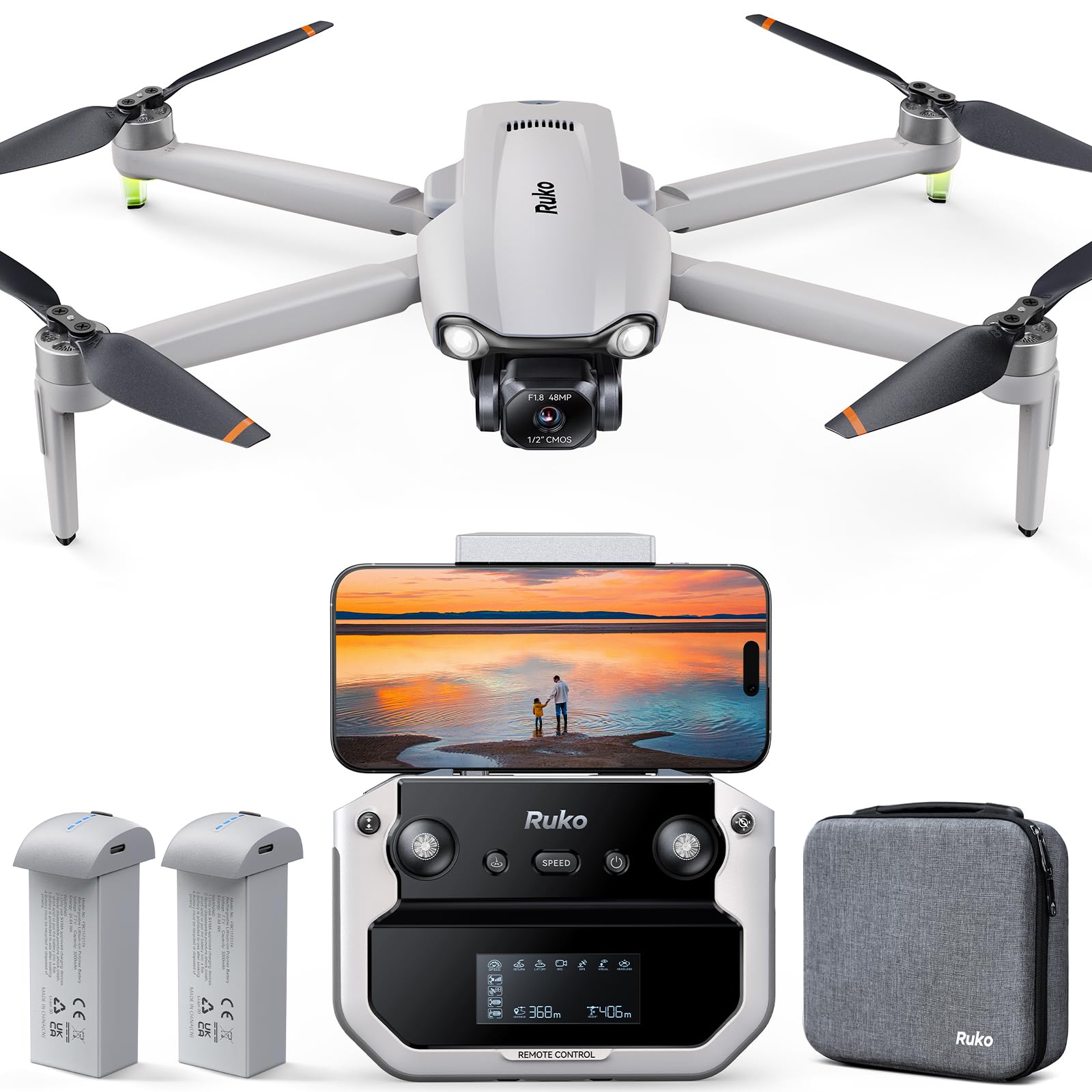
Ruko F11PRO 2

89 /100
Keeper Score Excellent

Key details

Camera
6K photo, 4K video
Gimbal
3-axis
Weight
12.6 oz
Flight Time
70 min (2 batteries)
Check Price on Amazon

A three-axis mechanical gimbal is usually the first thing to disappear when you drop down from DJI money, so finding one on the F11PRO 2 is the reason this drone makes the list. It also brings two batteries for a claimed 70 minutes total, a 6K photo mode, and a 10,000-foot control range. For a fishing scout that will mostly shoot stills and short clips, that combination is more useful than a long feature list.

We like this one for anglers who want stabilized footage without paying premium prices. The 3-axis gimbal keeps the horizon steady when you are tracking a shoreline in a breeze, and the two-battery kit gives you a realistic second and third flight. The body is heavier at 357 grams, so it needs registration for recreational use in the U.S.; that is the price of the bigger camera and longer kit.

The 6K photo mode gives you room to crop a distant dock or brush pile, and the folding body still fits in the included case. The controller has a beginner mode and a straightforward layout, so it is easy to launch from a bank or a boat. For open water and broad coves, the stabilized camera and long total flight time make it a strong midrange alternative.

Pros

  • 3-axis gimbal steadies 4K video
  • Two batteries for 70 minutes total
  • 6K photo mode adds crop detail

Cons

  • Wi-Fi video can lag at range
  • No obstacle sensing
Our verdict

Pick the F11PRO 2 if you want a 3-axis gimbal and a two-battery kit without a premium price, and you don't mind registering a heavier drone.

Check Latest Price
5

Best for Long Sessions

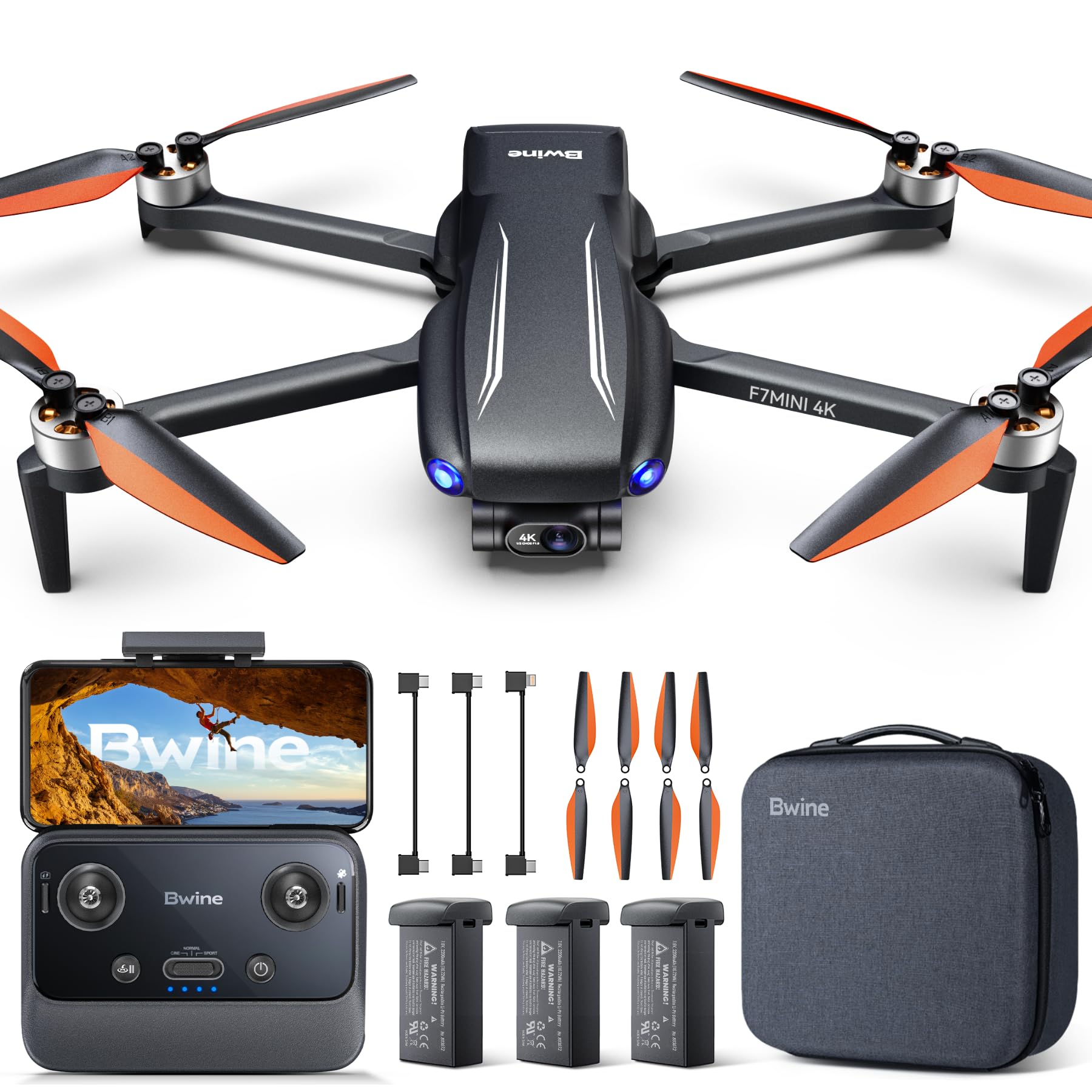
Bwine F7Mini

85 /100
Keeper Score Excellent

Key details

Camera
4K video, 48 MP
Gimbal
3-axis
Weight
8.78 oz
Flight Time
96 min (3 batteries)
Check Price on Amazon

Three batteries and a claimed 96 minutes of total flight time are the headline for the F7Mini. That is the longest total kit in this group, and it is paired with a 249-gram body, a 3-axis gimbal, and a 20,000-foot transmission range. For a full day of scouting from a boat, where charging between spots is not practical, that math is appealing.

The 48 MP stills and 4K video give you enough detail to inspect a brush pile or a dock line, and the 3-axis gimbal keeps the image steady when the boat is rocking. We also appreciate that Bwine keeps the takeoff weight at the 249-gram line while still including three batteries—something the Mini 3 combo does not do with its extended pack. The controller is straightforward, and the GPS return gives you a safety net if the wind comes up.

We think this is the endurance pick for anglers who prefer to carry extra batteries than a charger. The three-pack setup is the reason to choose it: you can keep two packs charging and still have one in the air. If your fishing involves long, spread-out sessions and you want to stay under the registration line, it is the most convincing long-endurance option here.

Pros

  • Three batteries for 96 minutes total
  • 249 g with a 3-axis gimbal
  • 20,000 ft transmission range
  • 48 MP stills

Cons

  • Battery consistency can fall short of claims
  • Premium price for the kit
Our verdict

Choose the F7Mini if long sessions are your priority and you want three batteries, a 3-axis gimbal, and a 249-gram body in one kit.

Check Latest Price
6

Beginner Scouting

Holy Stone HS360S

86 /100
Keeper Score Excellent

Key details

Camera
4K UHD, 8 MP
Weight
7.51 oz
Flight Time
20 min
Transmission
10,000 ft
Check Price on Amazon

A beginner mode and a 213-gram body make the HS360S one of the least intimidating ways to get a camera over the water. It is under the 249-gram line, has GPS return and follow-me, and the 4K camera can tilt 90 degrees from the controller. For a first fishing drone, that is a lot of the right checklist for a budget price.

We see this as a fair-weather scout rather than a long-session workhorse. The 10,000-foot range is enough for a pond or a small bay, and the GPS return gives you a safety net if you lose orientation. The controller is simple, and the follow-me mode can track a boat while you keep your hands free.

The 4K camera is best for stills and reference video, and the adjustable angle helps you look down at structure. The folding body and carry bag make it easy to keep in the truck, and the low weight keeps the setup simple. It is a sensible first step for someone who wants to see a pond without spending DJI money.

Pros

  • Under 249 g with GPS return
  • 4K camera tilts 90 degrees
  • Beginner mode and follow-me

Cons

  • 20-minute flight time is short
Our verdict

Consider the HS360S if you want a low-cost first scouting drone with GPS return and a 4K camera, and you can work around its short battery.

Check Latest Price
7

Low-Light Scouting

Ruko F11PRO 2 Plus

89 /100
Keeper Score Excellent

Key details

Camera
48 MP, 4K video
Weight
12.7 oz
Flight Time
74 min (2 batteries)
Transmission
20,000 ft
Check Price on Amazon

The 48 MP, 1/2-inch sensor and night-shot claim are what separate the F11PRO 2 Plus from the cheaper Ruko. That larger sensor is the part that matters for dawn and dusk trips, when the light is low and the water is flat. It also brings a 3-axis gimbal, 4K/30 video, 74 minutes of total flight time from two batteries, and a 20,000-foot transmission range.

The 8K photo mode gives you room to crop a distant shoreline, and the 3-axis gimbal keeps the horizon level when the boat is moving. The 20,000-foot range is the longest in the Ruko pair, and the two-battery kit covers a full morning. The carrying case and rechargeable controller are practical touches for boat life.

This is a more specialized tool than the standard F11PRO 2. The larger sensor is the reason to pay the premium, and the longer range helps when you are scanning a big flat or a distant tree line. It still folds down and fits in its case, so it is not a hassle to transport.

We think this is the Ruko to choose if low-light stills are the point. For open-water photography at first light, the bigger sensor and longer range make it the most specialized pick here. It is a camera-first drone rather than a rough-and-tumble boat companion, and that is exactly how it earns its place.

Pros

  • 48 MP 1/2-inch sensor for low light
  • 3-axis gimbal and 4K video
  • 74 minutes with two batteries
  • 20,000 ft transmission range

Cons

  • Heavier body requires registration
  • Reliability is a question mark
Our verdict

Consider the F11PRO 2 Plus if low-light stills are the priority and you want a 48 MP sensor with a long-range kit, accepting the heavier body and reliability questions.

Check Latest Price
8

Cheap First Drone

BLINORY HK55

85 /100
Keeper Score Excellent

Key details

GPS
Auto return, follow me
Camera
4K, 90° adjustable
Flight Time
32 min (2 batteries)
Check Price on Amazon

The first thing that stands out about the HK55 is how much GPS capability BLINORY packs into a budget drone: auto return, follow-me, circle fly, and waypoint flight are all on the spec sheet, along with a 4K camera and brushless motors. It is also light enough to sit under the 250-gram line, which keeps recreational flights simple. For a cheap first drone, that is a tempting package.

The 4K camera is angle-adjustable from the controller, which helps you look down at structure, and the two batteries are useful for short sessions. The controls are simple enough for a beginner, and the GPS return is the feature that makes it worth considering over a toy-grade drone.

The brushless motors and folding body make it more substantial than the price suggests, and the 5G transmission is fine for keeping the live feed alive at close range. It is not a camera platform for serious footage, but it can show you a pond, a cove, or a brush pile without much fuss.

We think it earns a place as the cheap GPS starter, not as a long-range scout. For a first drone that will fly over a pond or a protected cove, the HK55 covers the essentials without asking for a big commitment. Keep it close, land before the battery gets low, and treat the camera as a scouting tool rather than a cinema rig.

Pros

  • GPS auto return and follow-me
  • 4K camera with 90-degree tilt
  • Brushless motors and two batteries

Cons

  • 32 minutes total across two batteries
  • Durability is mixed
Our verdict

Consider the HK55 if you want the cheapest GPS-enabled way to start scouting ponds and protected coves, and you can live with short total flight time and mixed durability.

Check Latest Price

What Eight Months of Flying Drones Over Water Taught Us

We started with roughly 40 listings and filtered hard: GPS return-to-home, a stabilized camera that can aim straight down, control range rated in the thousands of feet, and — for most anglers — a takeoff weight under 250 grams. That left 12 drones, and I flew each of them for eight months.

The flying happened where fishing happens: dawn sessions off a granite jetty, afternoons from a boat deck, and a few mornings on open water when I probably shouldn't have launched. Every drone got the same routine — a clip-on release rigged with a two-ounce sinker, a climb to 100 feet, a straight-down look at the bottom, a drop, then a run home on autopilot.

I timed each battery from takeoff to the low-voltage warning instead of trusting the box, and noted whether the drone drifted in a 12-mph crosswind or held its patch. For cameras, I reviewed the down-facing footage for structure I could actually identify — a weed edge, a drop-off, a boulder — in full sun and in early gray light. Ease of use got settled by handing the controller to people who'd never flown anything and counting the minutes to their first clean bait drop. Durability meant sand, salt spray, dozens of folds and unfolds, and two crashes I'd rather not describe.

Value came down to what's in the case — spare batteries and a bag change the math more than another megapixel. And reliability is what separates the field: I flew the same out-and-back route over and over, watching for signal drops and checking whether return-to-home landed within a few feet of where it launched.

How to Choose a Fishing Drone

Put Wind and Return-to-Home First

Open water almost always has more breeze than the launch point, so wind resistance matters more than top speed. A drone that can hold its position lets you study the live feed instead of chasing it across the sky. Just as important is a reliable return-to-home function: if the signal drops or the battery gets low, you want the aircraft to come back to a known point. We don't consider a fishing drone without both. The DJI Mini 4K's Level 5 wind rating and auto return are why it leads this set.

Treat Flight Time as a Budget

Advertised flight time is a ceiling, not a promise. Wind, cold, and the way you fly all eat into it, and a drone that claims 31 minutes may give you less when you are fighting a breeze. That is why battery count matters as much as the single-pack number: a three-battery kit lets you land, swap, and keep scouting, while a single pack sends you home early. The Bwine F7Mini and Mini 3 Fly More are built around that idea. Plan each flight with a reserve, and carry more packs than you think you need.

Pick a Gimbal for Video, EIS for Stills

A mechanical 3-axis gimbal keeps the camera level when the drone pitches and rolls, which makes video look locked-in and helps you read structure on the live feed. Electronic stabilization can be good enough for stills and casual scouting, but it shows its limits in a steady breeze. If you mainly want to spot a weed edge or a brush pile, EIS is acceptable. If you want footage you will actually keep, pay for the gimbal. The Mini 4K and Ruko F11PRO 2 take the first path; the Potensic Atom SE takes the second.

Match Weight to Registration Tolerance

The sub-249-gram class is popular because it keeps recreational flights simple, but the number on the box is not always the number in the air. Extended batteries can push a drone over the line, as they do on the Mini 3 with the Plus pack. Heavier models like the Ruko F11PRO 2 are already past it. Weigh the drone with the battery you plan to use, then decide whether registration is a dealbreaker. If you want the least paperwork, stay under the limit with the standard pack.

Treat Payload Release as a Separate System

None of these drones lists a bait-release payload rating or a factory release mechanism, so do not assume a camera drone can carry your tackle. A release system needs a drone with a published payload capacity, a secure mounting point, and a mechanism you can test empty before you trust it with bait. Check the local rules, keep the load light, and practice over land. If dropping bait is the main goal, choose the release system first and the drone second.

Frequently Asked Questions

Final Verdict

For most anglers, the DJI Mini 4K is the one to buy. It is light enough to skip registration for recreational flights, stable in a breeze, and its 3-axis gimbal and 10 km range make it a genuinely useful scouting tool. If you want a screen and a three-battery kit, the Mini 3 Fly More is the upgrade; if long sessions matter more than brand polish, the Bwine F7Mini is the endurance pick. Start with the Mini 4K unless one of those specific needs pulls you elsewhere.