Best Cellular Trail Cameras of 2026

A trail camera's job is to show you what happened while you were somewhere else, and for years it showed you two weeks late, after a hike back in and a card reader. Cellular models send the picture to your phone instead, usually within a minute of the deer stepping out. That's a real upgrade — and a real risk, since a camera that drops signal or dies in the cold is worse than an empty one.

I've kept cameras on fence lines and food plots for years, and last season my team and I put 12 cellular models through six months of the same weather, from late summer into the dead of winter. We timed setup in the field, noted which ones held a signal in low ground, compared night frames side by side, and watched the data plans drain once video sending was switched on.

Two things catch first-time buyers off guard: the megapixel number on the box rarely matches the photo that lands on your phone, and the service plan often costs more over a season than the camera did. Everything below earned its place on the pictures it actually sent, not the numbers on the box.

Keeper Score summarizes customer ratings and review volume. Read it alongside the product details and trade-offs. How the score works.

1

Best Overall

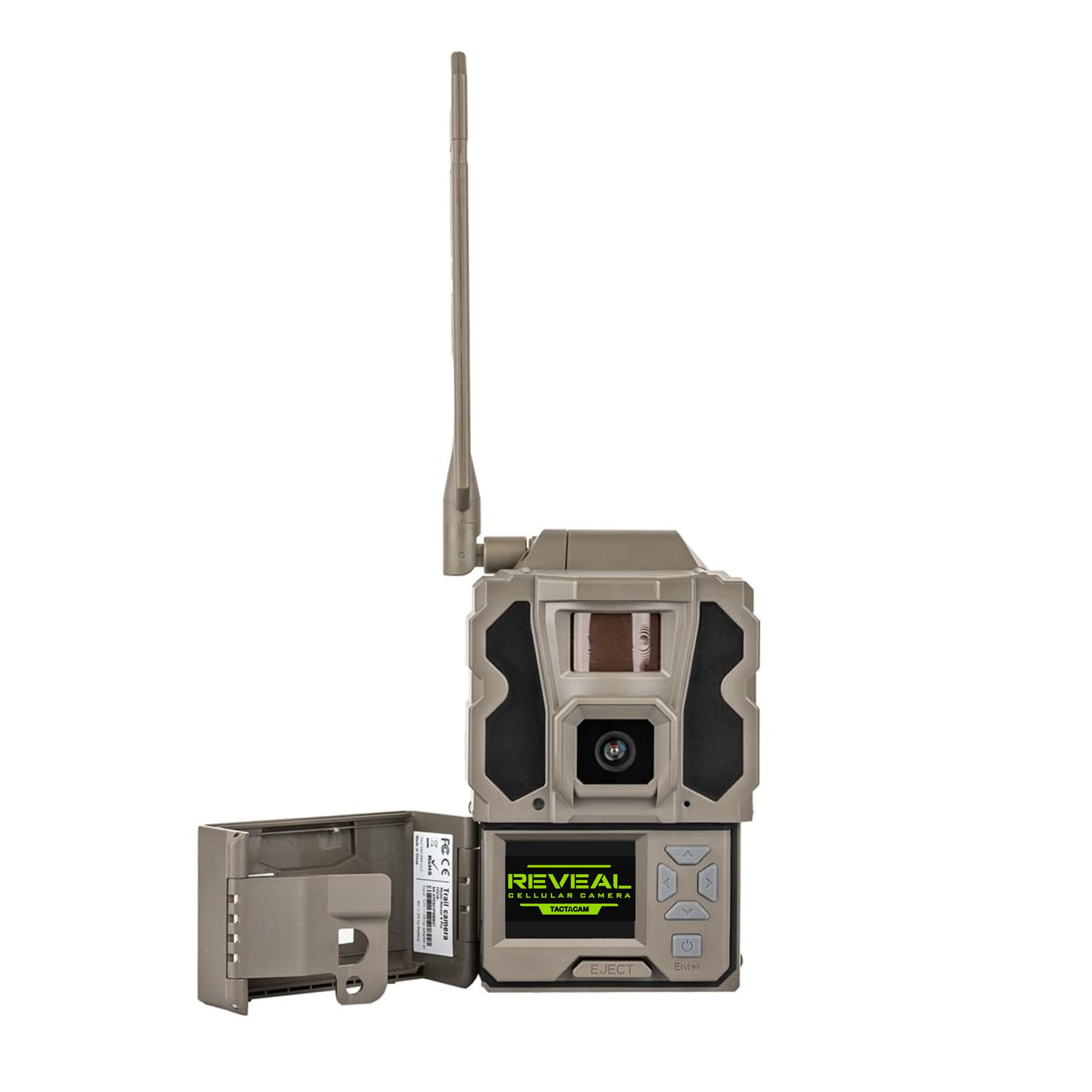
Tactacam Reveal X 3.0

87 /100
Keeper Score Excellent

Key details

Video
1080p
Battery
Up to 6+ months
Cellular
Auto-connect AT&T and Verizon
Photo Resolution
4K
Check Price on Amazon

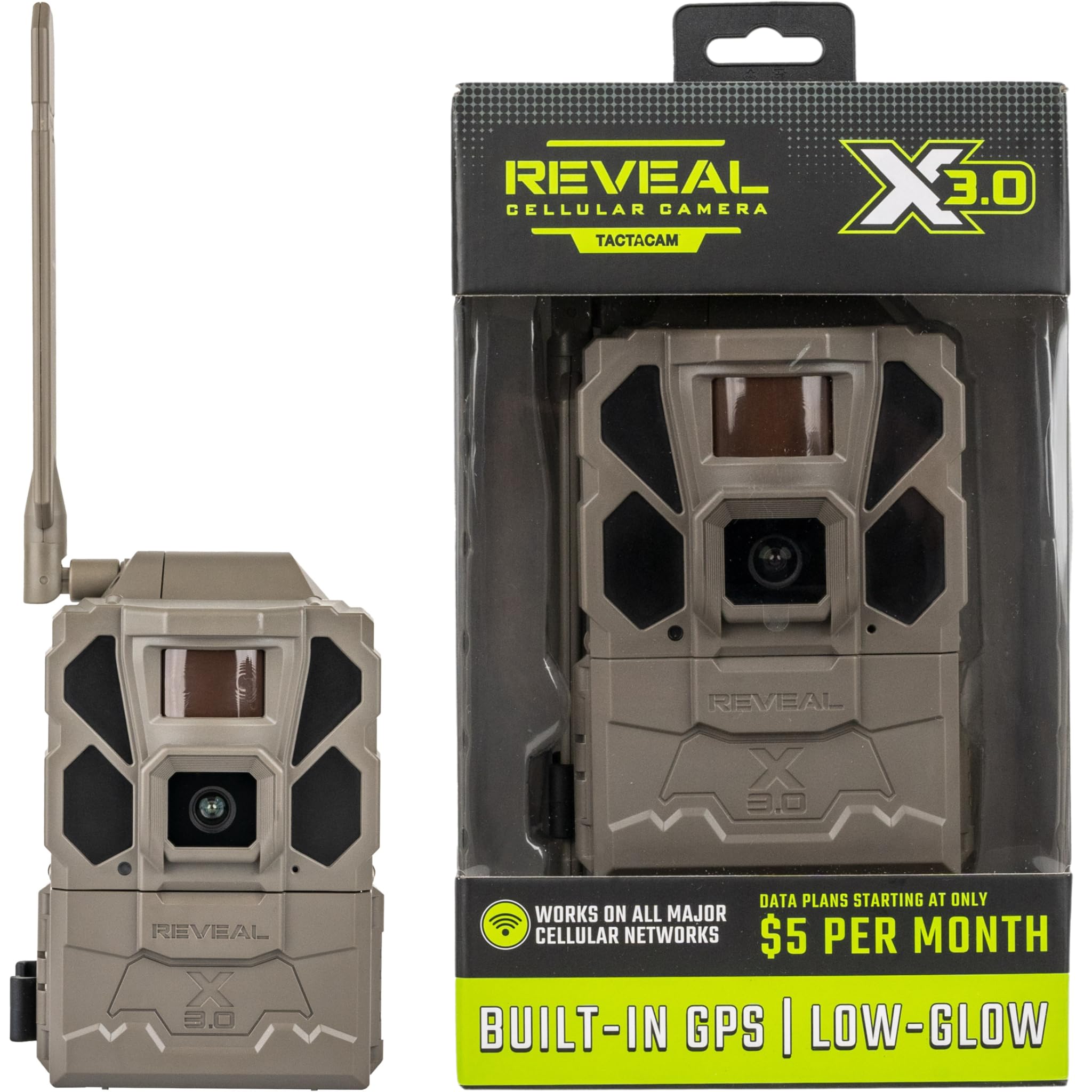
The Reveal X 3.0 is the camera we reach for when we want to hang something and stop thinking about it. The pre-installed SIM locks onto AT&T or Verizon on its own, and the 32GB of built-in storage means there is no card to buy, format, or swap. We set it up from the app without a SIM swap, then used the app to confirm it was online before walking away. The 4K photos and 1080p video are more than enough for scouting, and the 96-foot night range covers a food plot or fence line without turning the whole area into a stage.

What makes it our top pick is the combination of fewer setup chores and fewer return trips. The 3-shot burst and sub-half-second trigger are useful when a deer crosses a lane, and the 60-degree lens keeps the scene tight enough that you are not sorting through half a hillside. We also like that the battery rating is a standby figure, not a promise for heavy video; plan on lithium cells or a solar panel if you request clips often.

The Reveal X is the simplest of the Tactacam pair: no card, no separate plan setup, no extra steps. The Pro 3.0 adds a card slot and on-demand video, but the X is the one we hand to someone who wants the shortest path from box to tree. The 60-degree lens rewards careful aiming, and the app makes that easy to check before you tighten the strap.

Pros

  • Auto-connects to AT&T or Verizon
  • Built-in 32GB storage, no SD card
  • Up to 6+ months standby battery
  • 4K photos and 1080p video

Cons

  • No SD card slot for local backup
Our verdict

The Reveal X 3.0 earns our top spot because its auto-carrier SIM, built-in storage, and long standby battery remove the usual cellular setup chores.
Check Latest Price
2

Best for Deer Hunters

Moultrie Edge 3

83 /100
Keeper Score Excellent

Key details

Video
1080p
Cellular
4-carrier auto-connect
Trigger Speed
0.5 seconds
Photo Resolution
40 MP
Check Price on Amazon

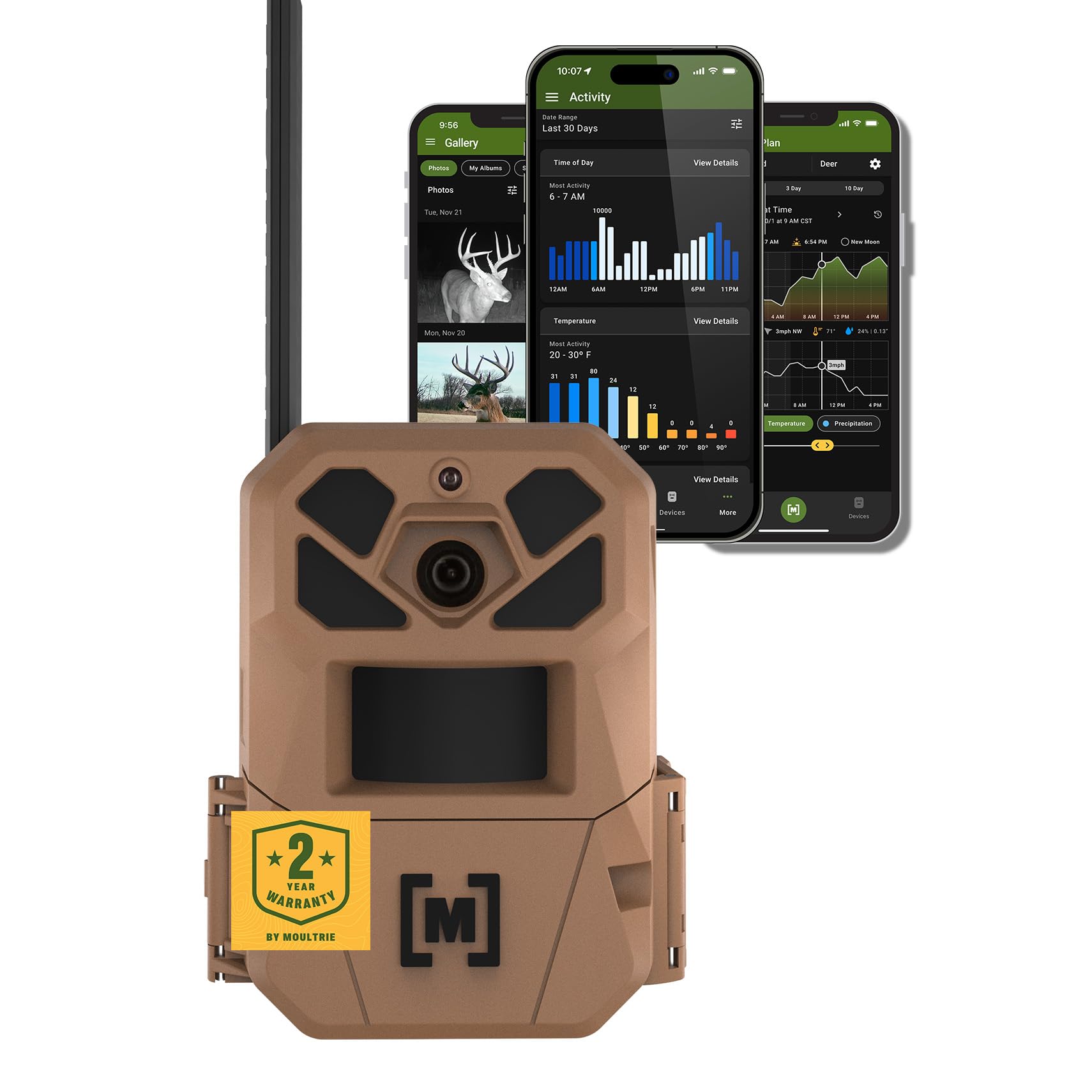
We found the Edge 3's AI buck detection more useful than another megapixel bump. Instead of scrolling through every branch that moved, the camera flags a buck and sends the image, which is the sort of help that actually changes a hunt. The 40MP stills give you crop room, the 0.5-second trigger catches a walking deer, and the four-carrier auto-connect takes the SIM decision out of setup. For a deer hunter who wants the camera to do some sorting, this is the pick.

Setup is app-driven and quick: the camera finds the strongest of the major networks and starts sending. We appreciated the 100-foot detection range for field edges, and the low-glow flash is discreet enough for a bedding area. The app is where you tune sensitivity and check what came in; it is not as simple as the Reveal X, but the AI sorting is the payoff.

The 40MP files are sharp in daylight, and the 1080p video is fine for scouting rather than presentation. We kept the lens fixed on a food plot and relied on the AI filter to cut the noise; if you need to sweep a wide clearing, a 360 camera like the SEHMUA TC18 makes more sense. The Edge 3 is at its best when you want stills and alerts, not a remote-controlled view.

Pros

  • AI buck detection cuts empty frames
  • 40MP stills and 0.5-second trigger
  • Four-carrier auto-connect
  • 100-foot detection range

Cons

  • Battery life varies in cold weather
  • Data plan required for AI alerts
Our verdict

For deer hunters who want the camera to sort bucks from does, the Edge 3's AI detection and four-carrier coverage make it the pick.

Check Latest Price
3

Best for SD Card Backup

Tactacam Reveal Pro 3.0

86 /100
Keeper Score Excellent

Key details

Video
1080p
SD Card
Up to 512 GB
Cellular
4G LTE
Photo Resolution
4K
Check Price on Amazon

The reason to step up to the Reveal Pro 3.0 is the microSD slot. It takes cards up to 512GB, so you can keep a local copy of every image instead of trusting the app as your only archive. The rest of the kit is familiar Tactacam: a pre-activated SIM, 4K photos, 1080p video, and a no-glow IR flash rated to 96 feet. We had it online quickly and used the on-demand video to pull a clip without waiting for a trigger.

The on-demand control is the feature we used most. Being able to request a fresh photo or video from the app turns the camera into a check-in tool, not just a passive trap. The 4G LTE connection held up in our field checks where coverage was decent, and the optional card means you are not dependent on the cloud for every frame. It is a more flexible camera than the Reveal X, and the extra flexibility is the whole point.

We think the Pro 3.0 is the better buy for anyone who wants a local record or likes to pull video on demand. It is a more flexible camera than the Reveal X, and the extra flexibility is the whole point. If you want the simplest no-card kit, the Reveal X is still the easier default; if you want a card slot and more control, this is the one.

Pros

  • Optional microSD up to 512GB
  • On-demand photo and video
  • 4K photos and 1080p video
  • Pre-activated SIM and quick setup

Cons

  • MicroSD card sold separately
  • Battery life depends on video requests
Our verdict

If you want a local microSD archive and on-demand video without giving up simple setup, the Reveal Pro 3.0 is the one.

Check Latest Price
4

Best Budget

SEHMUA RBX-H10

84 /100
Keeper Score Excellent

Key details

Solar
4W panel
Video
2K live
Cellular
4G LTE built-in SIM
Night Range
82 feet
Check Price on Amazon

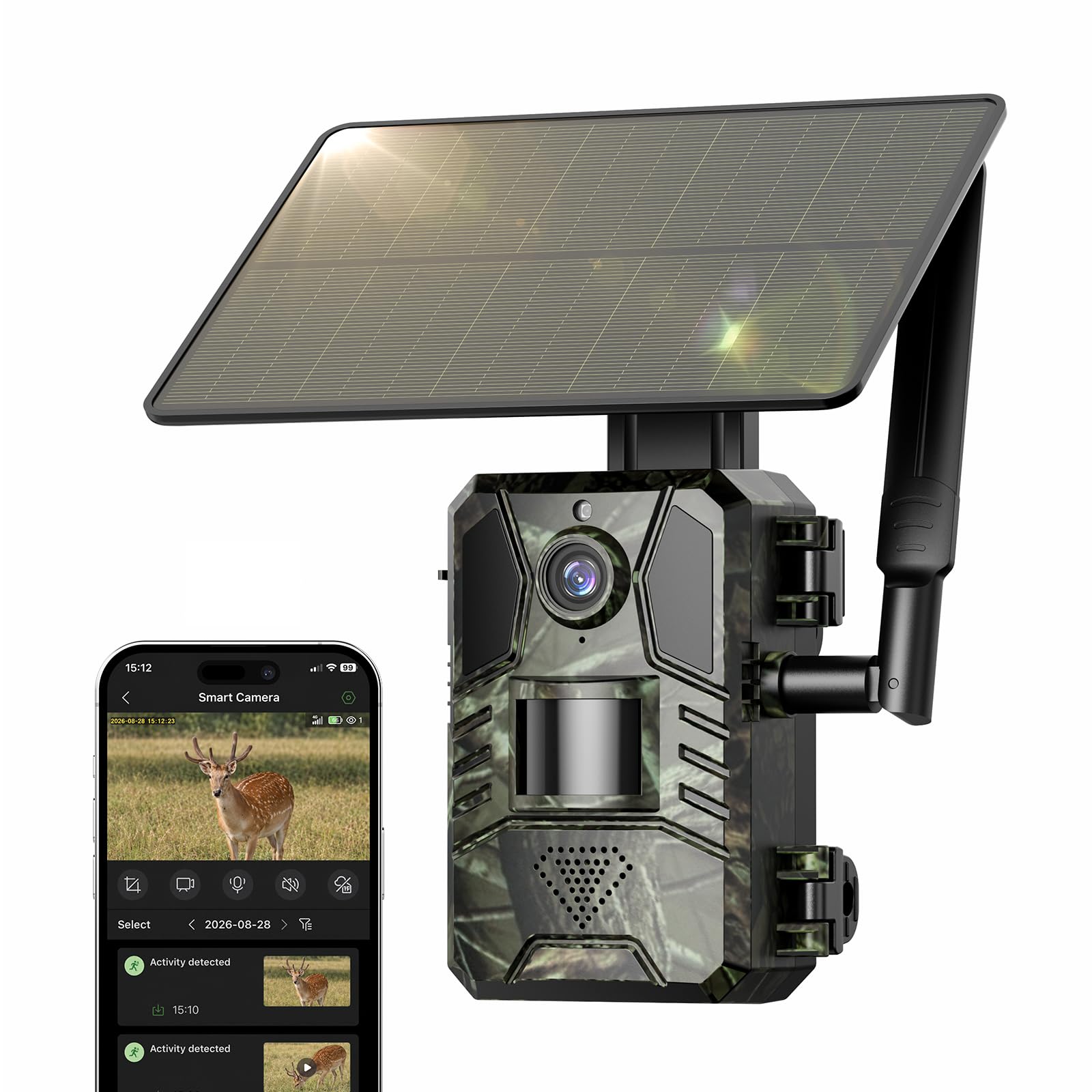
The RBX-H10 is the camera we hand to someone who wants to try cellular scouting without buying into a premium system. It streams 2K live video to the app, runs off a 4W solar panel and a 7,800mAh battery, and uses a built-in SIM that works with the major carriers. The 120-degree view is wider than the fixed-lens cameras here, so one unit covers a gate or a small clearing without much fuss. For a first camera or a budget fence line, it does the job.

We liked the solar side more than we expected. The panel is small enough to mount with the camera and keeps the battery topped up in open sun, which means fewer trips with a battery pack. Setup is app-based and the live view is the star: you can look around without waiting for a trigger. The 0.2-second trigger is quick enough for wildlife, and the 82-foot night range is fine for close work.

The catch is that a wide view and a live feed both lean on the connection. In a spot with weak signal, the app can lose the camera, so check coverage at the exact tree before you commit. We kept it on a fence line where we wanted live checks without running power, and that is the job it handles well. The solar panel is the detail that makes it a set-and-forget budget camera, as long as the sun reaches it.

Pros

  • 2K live view in the app
  • 4W solar and 7,800mAh battery
  • Built-in SIM works with major carriers
  • Wide 120-degree view

Cons

  • Night images soften at distance
Our verdict

A live 2K feed, solar charging, and a built-in SIM make the RBX-H10 the budget camera we point first-time buyers toward.

Check Latest Price
5

Best Solar Pair

Moultrie Edge Solar 2-Pack

82 /100
Keeper Score Excellent

Key details

Pack
Two cameras
Power
Integrated solar
Video
1080p
Photo Resolution
40 MP
Check Price on Amazon

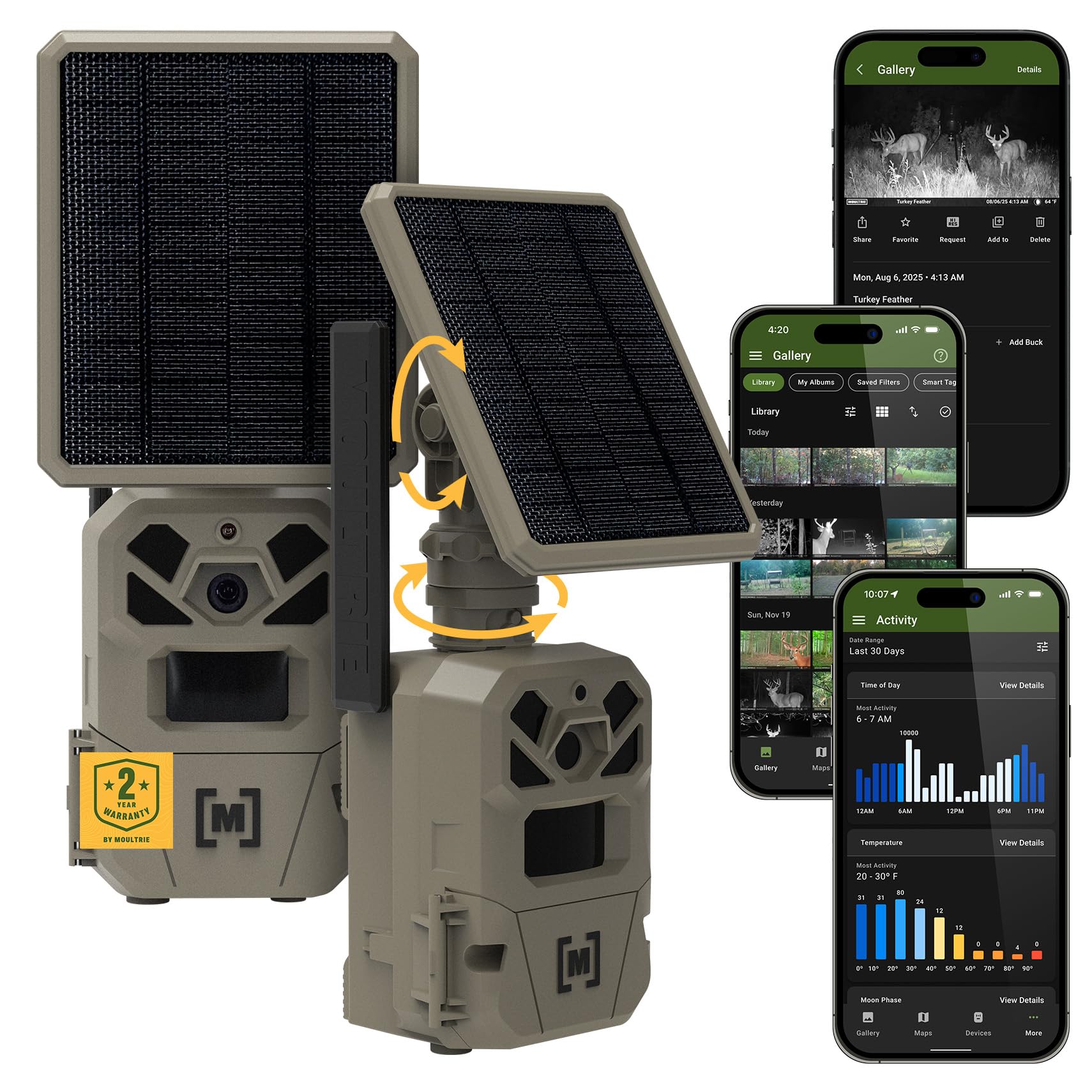
The Edge Solar's appeal is the integrated panel and the removable lithium pack. There is no AA tray to feed, no separate solar accessory to line up, and no reason to open the housing every few weeks. The 40MP stills and 1080p video are the same class of image quality as the rest of the Edge line, and the 100-foot low-glow flash is discreet at night. The two-pack is aimed at someone who already knows they want to cover more than one plot.

We think this is the best pair for sunny food plots. The 40MP files give you the crop room to judge a buck, and the fixed lens is easy to aim with the included mount. It is a simpler setup than the 360 cameras: no panning motor, no app sweep, just a camera pointed at the lane you care about. The solar part is what makes the pair worth considering as a set rather than two separate cameras.

The two-pack is a bigger commitment than a single camera, and the fixed lens means you need to choose your lanes carefully. The 40MP stills are the reason we prefer it over the 2K live cameras for antler detail; if you need remote panning, the SEHMUA TC18 is the better fit. The included mount makes aiming straightforward, but you still want to clear brush from the detection zone.

Pros

  • Integrated solar and removable Li-ion pack
  • Two cameras in one box
  • 40MP stills and 1080p video
  • 100-foot low-glow flash

Cons

  • Needs direct sun to keep charged
  • Night images can be soft
Our verdict

The Edge Solar 2-Pack is our pick for two sunny food plots when you want to skip the AA routine and still get 40MP stills.

Check Latest Price
6

Best 360 Degree Pair

SEHMUA TC18 2-Pack

85 /100
Keeper Score Excellent

Key details

Pack
Two cameras
View
355° pan, 100° tilt
Solar
6W panel
Video
2K live
Check Price on Amazon

The TC18's 355-degree pan and 100-degree tilt let you sweep a field from the app instead of guessing where to point a fixed lens. That is the feature that makes a two-pack useful: one camera can cover the feeder, the other can check the gate, and you can redirect either without a return trip. The 2K live feed is clear enough for scouting, and the two-way audio adds a way to check what is happening without waiting for a notification.

We liked the 6W solar panels. They are more generous than the 3W panels on some rivals, and each camera has its own panel in the box. Setup was straightforward through the app, and the 0.2-second trigger caught animals at the edge of the clearing. The 100-foot night range is useful for a wide view, and the low-glow IR keeps the scene discreet.

The panning feature is most useful on a wide clearing, not a tight woodlot; in thick cover, a fixed camera is simpler and less expensive. The two-pack also means two data plans unless you can share data across the account, so check that before you order. The 6W panels are the reason the pair stays out of the battery rotation in open sun.

This is the pair we reach for when the ground is wide and open. The remote pan means you can check the back side of a plot without walking out, and the two solar panels keep the routine light. The panning motor is the feature that keeps earning its keep; you can cover a gate, a feeder, and the lane between them without moving the mount.

Pros

  • Remote 355° pan and 100° tilt
  • Two cameras and two 6W solar panels
  • 2K live view with two-way audio
  • 0.2-second trigger and 100-foot night range

Cons

  • Connection can drop in weak signal
Our verdict

The TC18 2-Pack is the wide-clearing specialist: remote pan and tilt let you inspect more ground from the app.

Check Latest Price
7

Budget Trial

Loatos RBX-H10

88 /100
Keeper Score Excellent

Key details

Solar
4W panel
Video
2K live
Cellular
Built-in 4G SIM
Night Range
82 feet
Check Price on Amazon

The Loatos comes with a built-in SIM and seven days of unlimited trial data, which is the easiest way to test cellular scouting without signing a plan first. It streams 2K live video to the app, runs on a 4W solar panel, and has a 120-degree view that covers a gate or small clearing. The 0.2-second trigger is quick, and the night range is rated to 82 feet.

We liked the solar setup for a low-cost camera. The panel is enough to keep it topped up in open sun, and the app gives you a live look without pulling the card. The 2K feed is sharper than the price class suggests, and the wide view means you do not have to be precise with the aim. It is a simple camera to hang and check.

The 120-degree view is the detail that makes it useful for a gate or small clearing with one camera. The solar panel needs open sun to keep up, so a shaded setup will still need a charge. For a first camera on a sunny fence line, it is a low-risk way to test the idea.

Pros

  • Seven-day unlimited data trial
  • 2K live view over 4G
  • 4W solar panel
  • 0.2-second trigger

Cons

  • Plan required after the trial
  • Night range shorter than premium picks
Our verdict

A built-in SIM with a week of unlimited trial data makes the Loatos a low-risk way to test cellular scouting before choosing a plan.

Check Latest Price

How We Chose and Tested Cellular Trail Cameras

We started with every cellular model we could find, then cut anything without a real carrier partnership, with an app that hadn't been updated in years, or with a data plan that cost more per season than the camera itself. That left 12, which we strapped to trees and t-posts in late August and left out through February — over scrapes, a fence crossing, a corn feeder, and a low hollow at the back of the property where service drops to one bar.

Setup was timed from unboxing to the first photo landing on my phone, standing in the field with gloves on, and we counted how many steps the app demanded before a camera would connect. Picture quality was judged on the actual file rather than the thumbnail: we pulled full-resolution frames of the same buck at 20 and 60 feet and compared detail in the antlers, then repeated the walk-through after dark to see what each flash did to a face at close range.

Battery life got checked weekly in the app — percentage, how hard a cold snap hit it, and whether a solar panel kept up — and we logged every camera that went quiet without warning. We turned video sending on for a month to see how long a clip took to arrive and what it did to the plan, let each app's AI detection sort a week of does and fawns to see how many it got wrong, and added six months of service to every price before deciding which ones were genuinely a good value.

How to Choose a Cellular Trail Camera

Start With Coverage, Not Resolution

A 40MP camera with a weak signal is a very expensive card reader. Check the carrier map for the exact tree, not the nearest town, and prefer a camera that auto-connects across multiple networks. The Tactacam Reveal X 3.0 and Moultrie Edge 3 both take the SIM decision off your plate, which matters when the best carrier changes at the property line. If your spot is marginal, plan for a camera with local storage so you still have the images when the connection returns.

Match Power to How Often You Visit

Battery life claims are usually standby figures, not a promise for daily video requests. Cold weather, weak signal, and frequent transmissions all pull power down. If the camera is a short walk from the truck, AA batteries are fine. If it is a long hike or a winter lease, lithium cells or an integrated solar panel are worth the extra cost. The Moultrie Edge Solar 2-Pack is the clearest example: the panel and removable pack are there to reduce trips, but the panel needs direct sun to do its job.

Budget for the Data Plan, Not Just the Camera

Every cellular camera needs a data plan, and the monthly cost can outlast the purchase price. Look for a plan you can pause or cancel, and check whether video requests or cloud storage cost extra. If you run multiple cameras, ask whether the plan is per camera or shared across an account. We prefer cameras with clear plan terms and no long contract, because the camera you keep in the woods for years is the one whose service you can live with.

Choose the Lens and Trigger for Your Ground

A fixed lens is simpler, cheaper, and usually sharper for a food plot or a fence line. A 360-degree pan-and-tilt camera is better for a wide clearing, a gate, or a property you want to inspect from the app. Trigger speed matters for walking animals; 0.5 seconds is fine, and 0.2 seconds is quicker. Detection range and night range tell you how far the camera can see, but the field of view tells you how much ground you get in one frame. Match the camera to the shape of your spot, not the spec sheet.

Plan for Setup, Aiming, and Weather

The app is part of the camera. Look for activation that does not require a SIM swap, a live or on-demand view for aiming, and a mount that lets you adjust the angle without guesswork. Weather sealing matters more than the IP number on the box; check the door gasket and keep the antenna clear. We like a camera that can send a test image while you are still standing under the tree, because that is the fastest way to catch a bad aim or a weak signal.

Frequently Asked Questions

Final Verdict

The Tactacam Reveal X 3.0 is the camera we recommend first because it removes the two chores that make cellular cameras annoying: carrier setup and card shuffling. Its auto-connect SIM, built-in storage, and long standby battery make it the easiest camera to hang and forget.

The Moultrie Edge 3 is the better choice if you want the camera to sort bucks from does before you walk in, and its four-carrier auto-connect is a close match for the Reveal's convenience. For a first property or a budget fence line, the SEHMUA RBX-H10 gives you live 2K and solar without the premium commitment.