Best Cameras for Video of 2026

The resolution on a video camera is the least useful thing about it. Most of these camcorders reach 4K, 5K, or 8K by interpolating from a smaller sensor, so a cheap 8K model can look muddier in a dim room than a modest 1080p one. What separates them is duller: how footage holds up indoors, how audio sounds, and whether the battery lasts an afternoon.

I've filmed school plays and market stalls for years, and over the past five months my team and I have lived with 16 video cameras, from a stabilized pocket model to flip-screen camcorders. We shot handheld and on tripods, in dim rooms and glaring sun, then watched the footage back on the same monitor. The ones we kept reaching for never had the biggest number on the box.

Value is good now: clean footage, a screen that flips so you can frame yourself, and a spare battery in the box are realistic at the low end. Just don't buy on zoom specs, since digital zoom only softens the image, and budget for an external mic if your voice matters.

Keeper Score summarizes customer ratings and review volume. Read it alongside the product details and trade-offs. How the score works.

1

Best Overall

DJI Osmo Pocket 3

89 /100
Keeper Score Excellent

Key details

Video
4K at 120fps
Sensor
1-inch CMOS
Battery Life
166 minutes
Stabilization
Motorized 3-axis gimbal
Check Price on Amazon

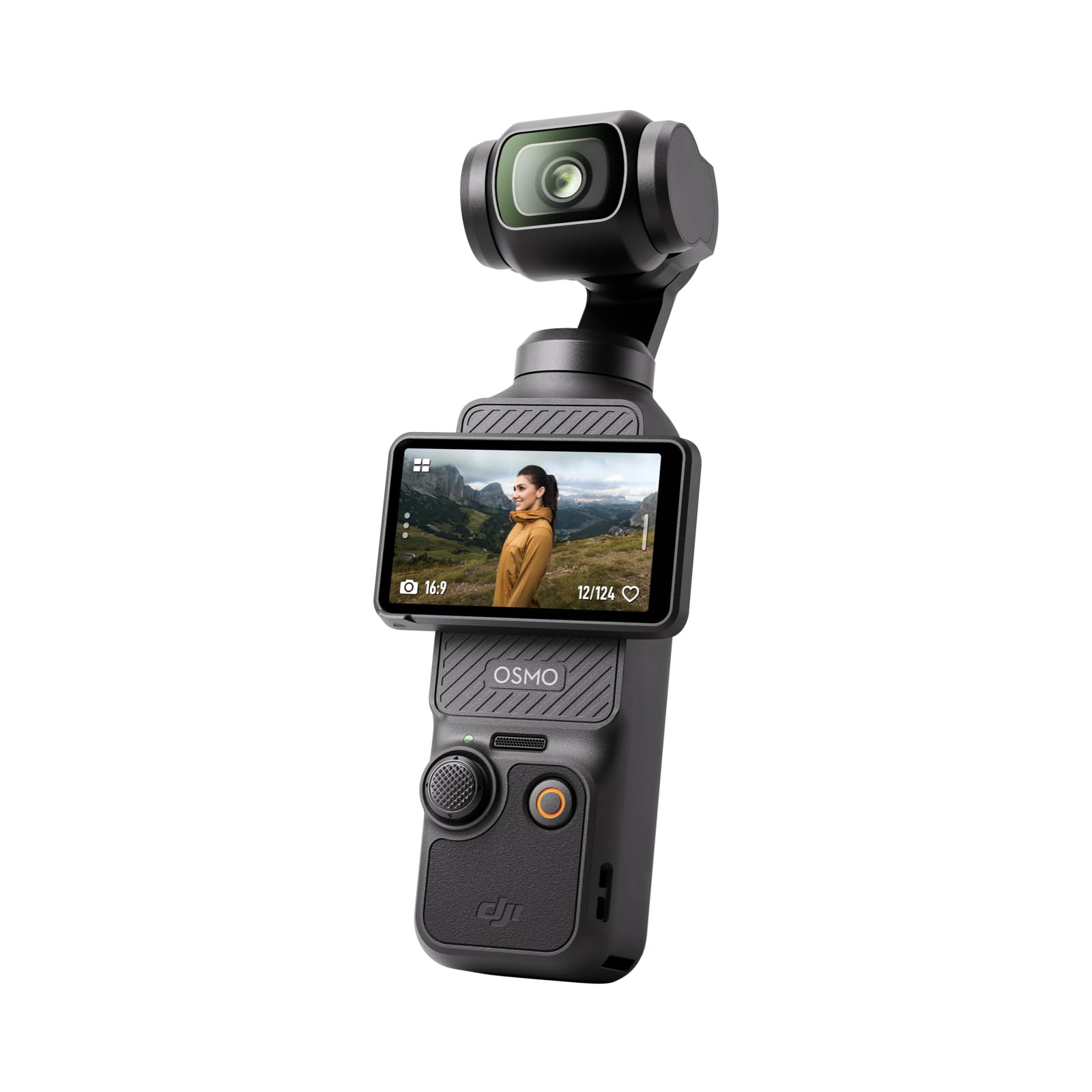
A one-inch sensor, 4K at 120 frames per second, and a motorized three-axis gimbal in a body that weighs 179 grams: on paper the Osmo Pocket 3 is playing a different game from the rest of this group, and in hand it feels that way too. It is the one we reach for when the footage actually has to be usable.

The gimbal is what changes how you shoot. The camcorders here lean on digital stabilization, which crops the frame and hopes the algorithm keeps up; a physical gimbal holds the sensor steady before a single pixel is recorded. We noticed it in the ordinary stuff, walking down a street or following a dog across a yard, where shots that normally need a second take came out right the first time. The 2-inch screen rotates between horizontal and vertical, which turns out to matter when the same clip is headed for YouTube and Shorts, and ActiveTrack keeps a face centered while the camera sits on a tripod.

The lens is a fixed wide angle with 4x digital zoom, so this is not the camera for reaching across a field; you move closer instead. Reliability is the other caveat, and it shows up as a camera that will not power on or a gimbal that stops leveling. Buy from a seller with a straightforward return window and register the unit. At 179 grams it disappears into a jacket pocket, which is the quiet argument for it: the camera you actually carry is the one that gets used.

Pros

  • Motorized gimbal steadies walking and handheld shots
  • One-inch sensor and 4K/120 in a 179-gram body
  • Rotating screen switches horizontal to vertical
  • ActiveTrack keeps a subject framed on a tripod

Cons

  • Rated 166-minute battery can fall short on long shoots
  • Two-inch screen is tight for judging focus in the field
Our verdict

The camera we recommend to anyone who wants steady, clean-looking footage without building a rig, and the one travelers and solo creators will get the most out of.
Check Latest Price
2

Best Value Camcorder

ZYDIIE 4K Camcorder

83 /100
Keeper Score Excellent

Key details

Zoom
18x digital
Video
4K
Screen
3-inch, 270° rotation
In The Box
32GB card, two batteries, remote
Check Price on Amazon

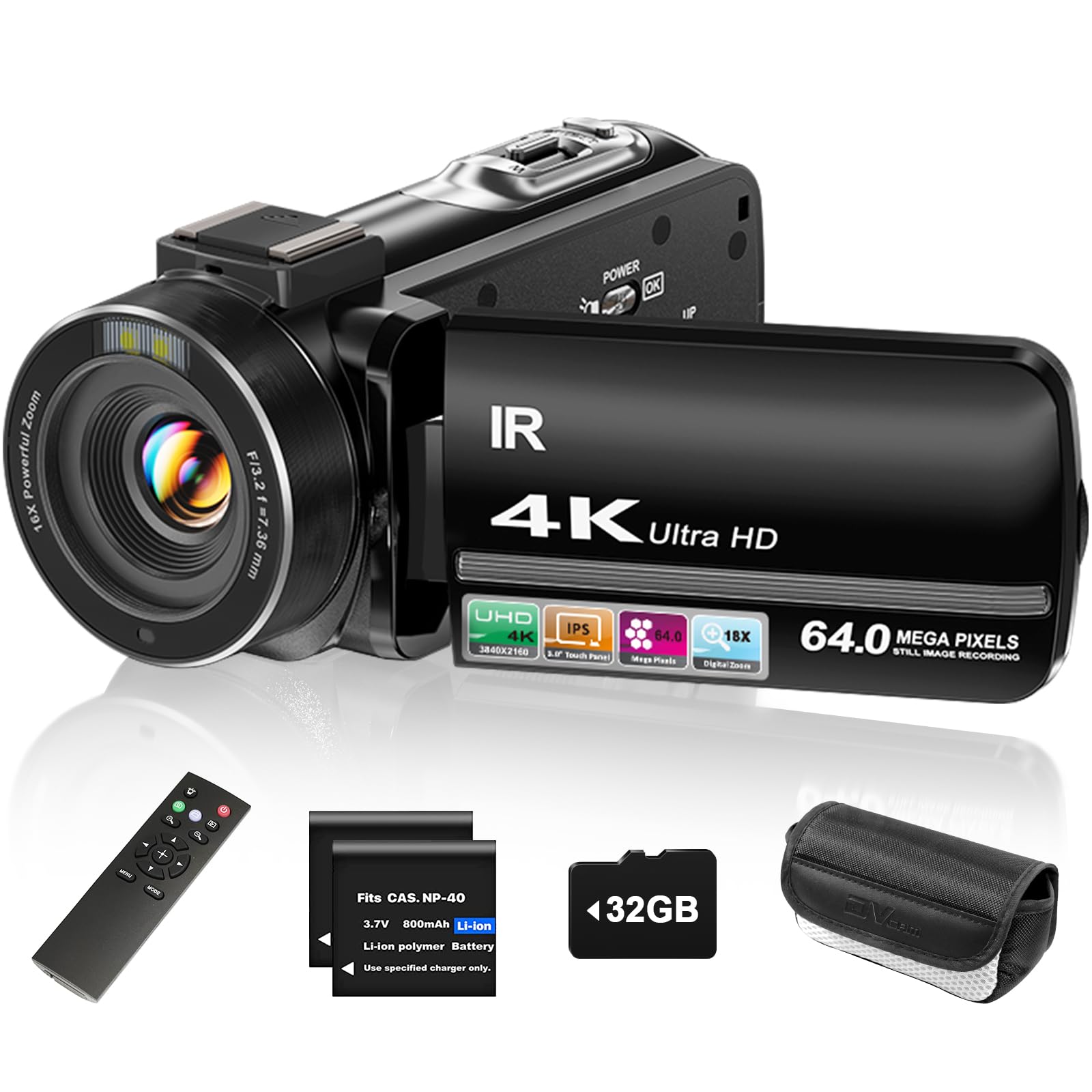
If you want a camera you can hand to a family member, point at a birthday table, and get usable footage back, this is the shape you are picturing: a hand-held camcorder body, a screen that flips around to face whoever is holding it, and a zoom control under your thumb. The ZYDIIE covers the basics and asks nothing extra of you on day one, since a 32GB card, two batteries, and a remote are already in the box.

What we like most is how little it gets in the way. The 3-inch touchscreen rotates a full 270 degrees, so you can frame yourself while the camera sits on a table, which is what most family and vlog shooting actually looks like. Setup is simple enough to hand over without a lesson, and the second battery is already charged when the first runs down, which is the difference between a full afternoon of clips and a camera that quits early.

IR night vision is here too, and it does what it says once the light drops, returning monochrome footage rather than color. Think of it as a way to keep recording after dark rather than a way to shoot a dim wedding. The remote earns its place as well: put the camera on a shelf, sit down with the family, and start recording without walking back to the tripod.

Video quality is the reason this sits near the front of the camcorder group. The 4K recording carries enough color and detail that phone screens and laptops flatter it, and the webcam mode is a genuine bonus: one USB cable and it becomes a video-call camera. It is a settled, unglamorous package that does the job it is sold for, which is exactly what most households want from a video camera.

Pros

  • 4K footage holds up on a phone or laptop
  • Screen flips 270 degrees for self-recording
  • Two batteries, a 32GB card, and a remote included
  • IR night vision for near-dark scenes

Cons

  • Fixed focus keeps very close subjects soft
  • Zoom is digital only, so reach softens the image
Our verdict

A camcorder you can hand to anyone: it flips, it ships with two batteries and a card, and it makes 4K family video without a learning curve.

Check Latest Price
3

Best Kit for New Creators

Uytya X70 5K Camcorder

84 /100
Keeper Score Excellent

Key details

Zoom
16x digital
Video
5K at 20fps; 4K at 60fps
Screen
3-inch, 270° rotation
In The Box
32GB card, two batteries, tripod, external mic
Check Price on Amazon

Most kits leave the microphone out and let you discover the problem on your first upload. The Uytya X70 ships with an external noise-reducing mic along with a tripod, a lens hood, a remote, a 32GB card, and two 1,800 mAh batteries, which makes it the most complete creator bundle in this group.

The recording specs are the interesting part: 4K at 60 frames per second, double what most camcorders here manage, and enough headroom to slow footage down in an edit without it turning to mush. The headline 5K mode runs at 20fps, so treat that as a number on the box and shoot 4K/60 for anything that moves. The 3-inch screen flips a full 270 degrees for self-framing and sits on a metal hinge rather than the all-plastic assembly common on camcorders this size, which is a small thing until a hinge is the reason you are shopping again.

We will take clean sound over a slightly sharper picture every time, and that is the trade this camera gets right. Speech through the bundled mic sits clearly above the room noise, which is the difference between a vlog people finish and one they click away from. Nothing on the camera fights you either: the menu is straightforward, the touchscreen responds, and the buttons are where your fingers expect them.

What we appreciated on longer days is the power situation. Two 1,800 mAh batteries are included, and the camera will record while charging, so a power bank covers an afternoon out. It is also compact enough to live in a bag without being a decision. For a first channel where you are on camera and in control of the shot, the pieces are all here.

Pros

  • 4K at 60fps for smooth motion and slow-motion edits
  • External mic, tripod, and two batteries included
  • Metal-hinged 270-degree flip screen
  • Simple menus and responsive touchscreen

Cons

  • Manual focus, so you adjust as subjects move
Our verdict

Buy this one if you want to sound as good as you look from your first upload: the included mic and 4K/60 make it the strongest starter kit in this set.

Check Latest Price
4

Best for Solo Vlogging

Lmzour 4K Pocket Camera

85 /100
Keeper Score Excellent

Key details

Lens
330° rotating wide-angle
Video
4K at 30fps
Screen
1.72-inch
Battery Life
1.5 hours
Check Price on Amazon

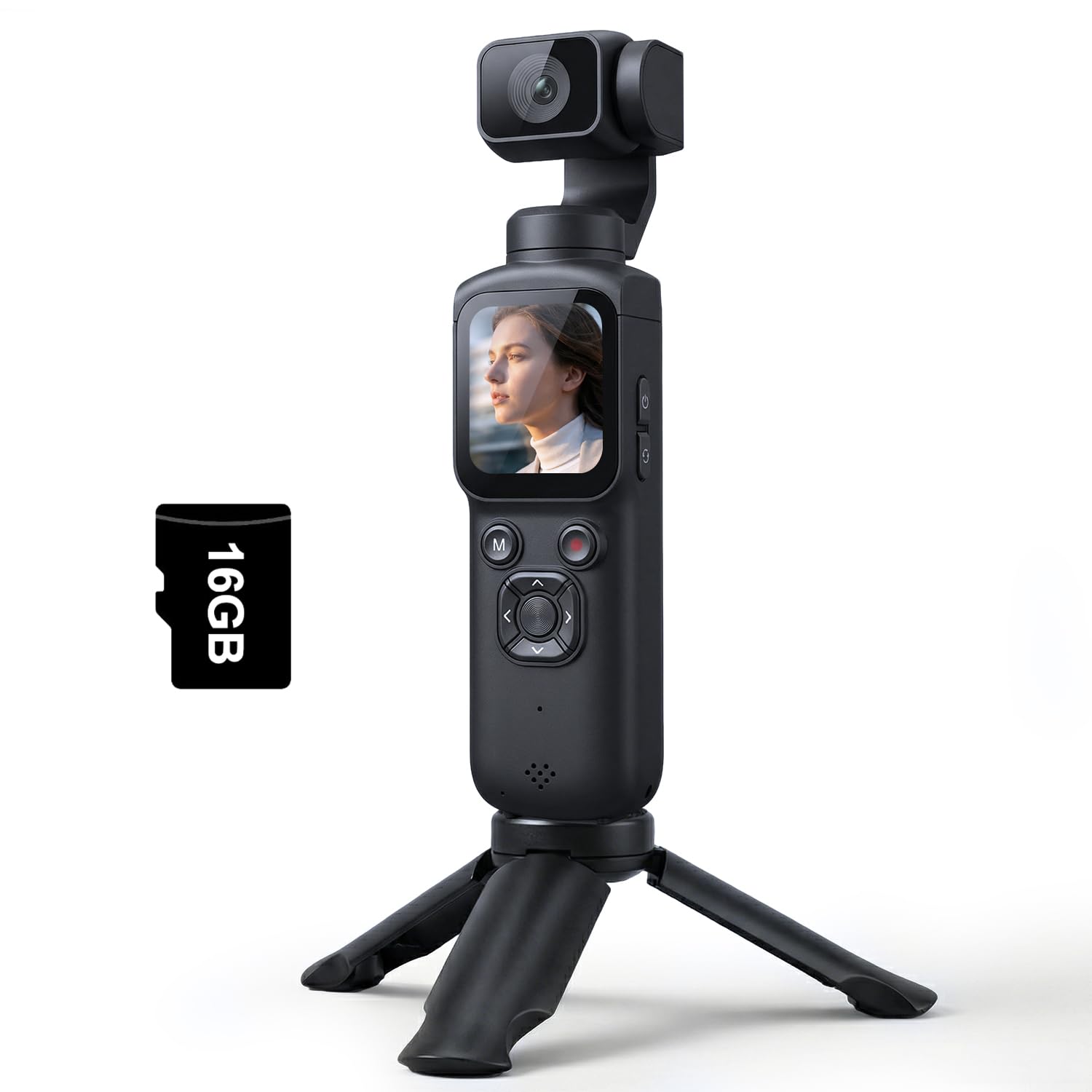
Point the lens, not the body. This camera's head rotates 330 degrees, so it can face you while you hold it at chest height: no mirror, no second take, no propping a phone against a mug.

Face tracking does the rest. Set it down, start recording, and move around the room; the camera follows your head and keeps you framed, which is the single most useful thing a solo vlogger can have and the feature we came back to most. The 79-degree wide lens fits a room in behind you without the fisheye bend of an action camera, and the autofocus locks on quickly enough during a normal conversation.

What the pocket format buys you is the thing that matters most: it is there when something happens. It went out on errands and weekend trips where a camcorder would have stayed in the bag, and came back with footage we would otherwise have missed. The trade is stability, since the anti-shake smooths a slow walk but will not rescue a run, and that is the honest boundary of what this one is for.

WiFi transfer is the quiet advantage. Most camcorders here want you to pull the card and find a computer; this one pushes clips to your phone, which is the difference between posting the same evening and posting next week. The 16GB card in the box gets you started, and a mini tripod and pouch come along for the ride. Swap in a larger card before a trip and it is a complete kit in a jacket pocket.

Pros

  • 330-degree rotating lens flips forward for selfies
  • Face tracking keeps you framed while you move
  • WiFi transfer to a phone for same-day posting
  • Small and light enough to carry every day

Cons

  • 1.72-inch screen is cramped for checking framing
  • Rated 1.5 hours of battery suits short sessions
Our verdict

The pick for filming yourself without help: the rotating lens and face tracking handle the framing so you can just talk.

Check Latest Price
5

Best for Beginners

VETEK 8K Camcorder

83 /100
Keeper Score Excellent

Key details

Video
8K at 15fps; 4K at 60fps
Sensor
1/2.5-inch CMOS
Weight
9.88 oz
In The Box
32GB card, external mic, remote
Check Price on Amazon

8K is on the box and 15 frames per second is the catch. The VETEK will record 7680 by 4320, but at a frame rate that makes movement look stepped; the mode we actually shot in is 4K at 60fps, which this camera also handles and which is far more useful for anything with a person walking through the frame. Judge it on that, not on the badge.

What sits behind it is a camera that becomes usable quickly. The flip screen handles self-framing, the menus are plain enough to work out without the manual, and at 0.28 kg it is light enough to hold through a long take without your arm giving out. Parents and first-time creators tend to land here for exactly that reason, and the 3-inch screen is bright enough to frame from at arm's length.

The bundle is where the value sits: an external mic with noise reduction, a 32GB card, a remote, and two batteries. The mic is not a luxury. Audio from the built-in mic comes through thin and uneven, and switching to the included one fixes most of that, which is the single biggest upgrade you can make to a first channel. WiFi transfer to the app is clunky but works, and night vision keeps the camera recording when the room goes dark.

Where we noticed the gap is in the extras rather than the core: the app is slow to connect and the remote is basic. Neither changes what ends up on the card. Use the mic, shoot 4K/60, and this behaves like a camera sold to do a serious job.

Pros

  • 4K at 60fps alongside the headline 8K mode
  • External mic with noise reduction in the box
  • Light 0.28 kg body for long handheld takes
  • Beginner-friendly menus and setup

Cons

  • Battery life falls short of the rated 2.5 hours
Our verdict

Our choice for a first YouTube channel: quick to learn, shipped with a usable mic, and best shot at 4K/60 rather than the 8K it advertises.

Check Latest Price
6

Best Budget Option

Fxmug 2.7K Camcorder

79 /100
Keeper Score Very Good

Key details

Video
2.7K
Screen
2.8-inch, 270° rotation
Dimensions
4.2 x 2.5 x 2.2 in
In The Box
16GB card, two batteries
Check Price on Amazon

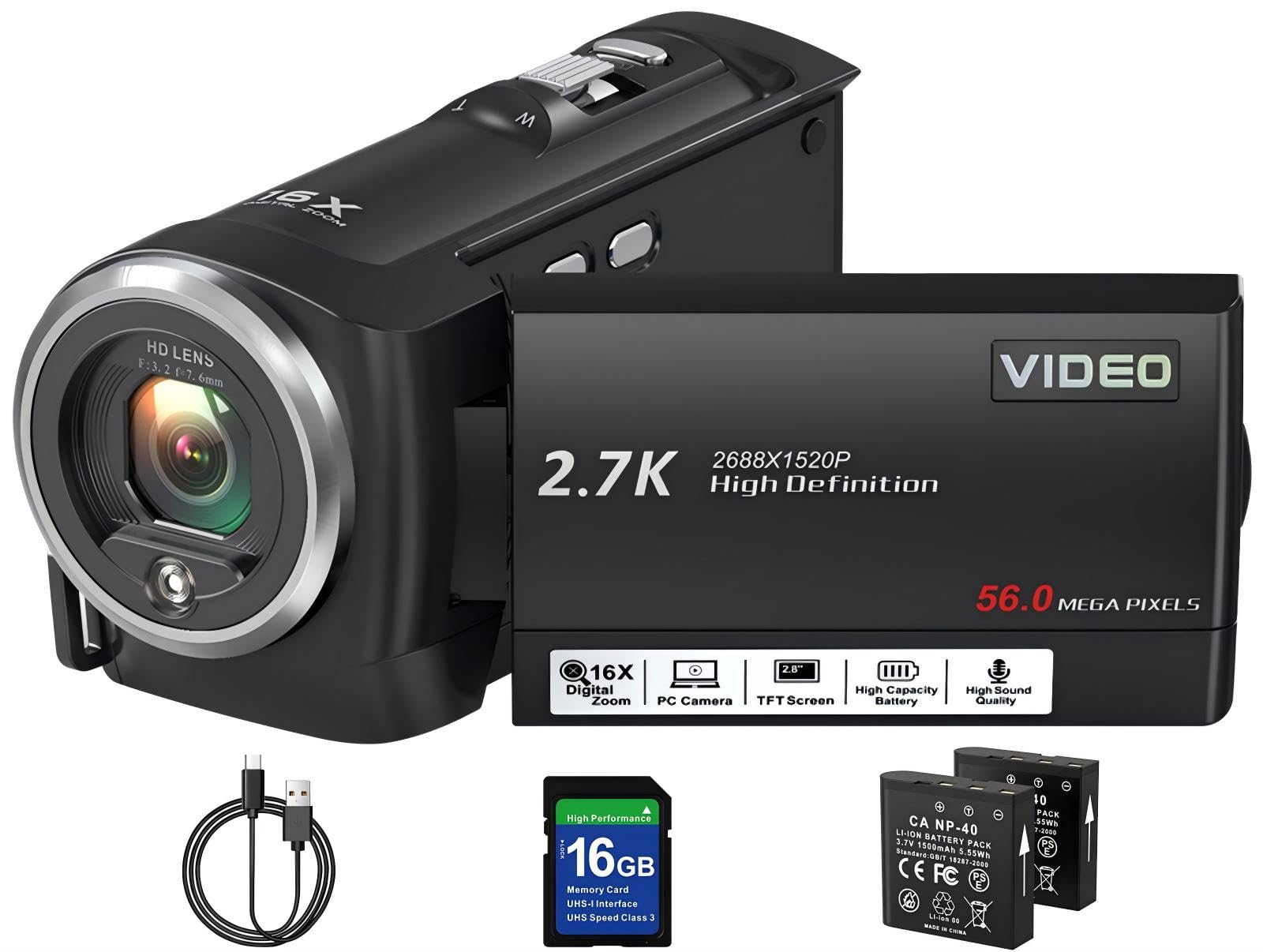
The built-in LED fill light is the detail that makes this one useful in a way the spec sheet does not advertise. A birthday in a dim living room, a school concert in a low-lit hall: you get light exactly where the camera is pointing, which is more than a phone will do for you.

At 2.7K and 56 megapixels, this is not the camera here that will give you the sharpest footage. It is the one that is easiest to keep in a drawer and pull out, and that is a real category, because the camera that is charged and within reach beats the better one that stayed at home. The 16GB card and the two included batteries are what make that true.

The 2.8-inch screen rotates 270 degrees, so self-recording works the same way it does on the bigger camcorders. At 4.2 by 2.5 by 2.2 inches and about 0.58 pounds it rides in a bag without being a decision, and the webcam mode means it doubles as a video-call camera when the laptop one is pointed at the ceiling.

Audio is the thing we plan around: there is no microphone in the box and the built-in one is a scratch track at best, so if you are recording a lot of talking, budget for an external mic, which this camera accepts. For clips of kids, pets, and weekends, where the sound is incidental, it is the least fussy way into video here.

Pros

  • Built-in LED light for dim rooms
  • 2.8-inch screen flips 270 degrees
  • Two batteries and a 16GB card included
  • Compact and light enough to keep in a bag

Cons

  • Tops out at 2.7K, with no 4K mode
Our verdict

The one to hand a teenager or keep in a drawer for family moments: small, simple, and it lights dim rooms for you.

Check Latest Price
7

Stabilized Starter Kit

FlyFrost 8K Camcorder

79 /100
Keeper Score Very Good

Key details

Video
8K at 15fps
Screen
3-inch, 800 x 400
In The Box
Mic, stabilizer, lens hood, two batteries
Stabilization
Digital
Check Price on Amazon

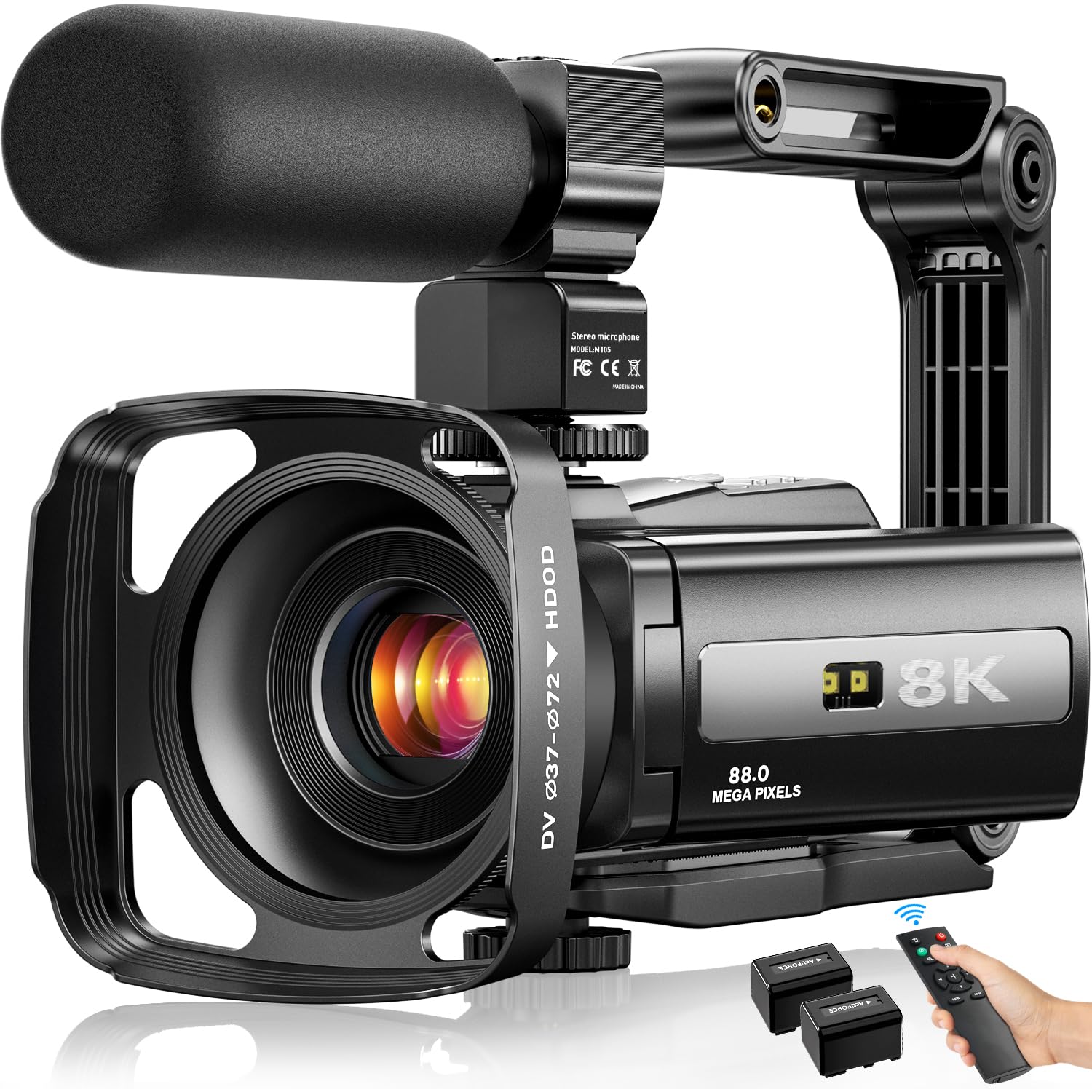
Two 8K camcorders made it into this guide, and the difference between them is mostly in the box: FlyFrost adds a handheld stabilizer, a lens hood, and an external microphone, and the mic is the piece to plug in first. Both record 8K at 15 frames per second, and both are better shot at 4K.

The stabilizer is a grip, not a motorized gimbal. It gives you a steadier two-handed hold rather than compensating for movement the way the Osmo Pocket 3 does, and we felt that distinction on the first walking shot: one removes shake, the other reduces it. The 6-axis gyroscope on the box is doing software work behind the scenes, and in decent light it is enough.

Elsewhere it is a familiar package: a 3-inch touchscreen that flips for self-framing, 18x digital zoom, IR night vision, WiFi transfer through the iSmart DV2 app, a remote, a 32GB card, and two batteries. The accessories are the point. You can start shooting the day it arrives without ordering anything else, and the included mic makes speech sound like speech rather than a room with somebody talking in it.

Where it lands for us is as a starter kit that happens to say 8K. If you want a stabilizer and a microphone in the same order and you are not chasing a big sensor, this is a sensible place to stop looking. If the picture is what you will judge yourself on, the gap to the Pocket 3 is wide, and the Uytya gets you 4K/60 with a mic in a cleaner bundle.

Pros

  • Stabilizer, microphone, and lens hood in the box
  • WiFi transfer through a phone app
  • IR night vision for dark scenes
  • Two batteries and a 32GB card included

Cons

  • Fixed focus rules out close-up detail
  • 3-inch screen is only 800 x 400 pixels
Our verdict

A well-accessorized starter camcorder for someone who wants a stabilizer and a mic in the same order, and can live with 4K as the working mode.

Check Latest Price
8

Complete 8K Package

Tixeuo 8K Camcorder

92 /100
Keeper Score Outstanding

Key details

Zoom
18x digital
Video
8K; 4K at 60fps
Screen
3-inch touchscreen
In The Box
64GB card, mic, stabilizer, charging cradle
Check Price on Amazon

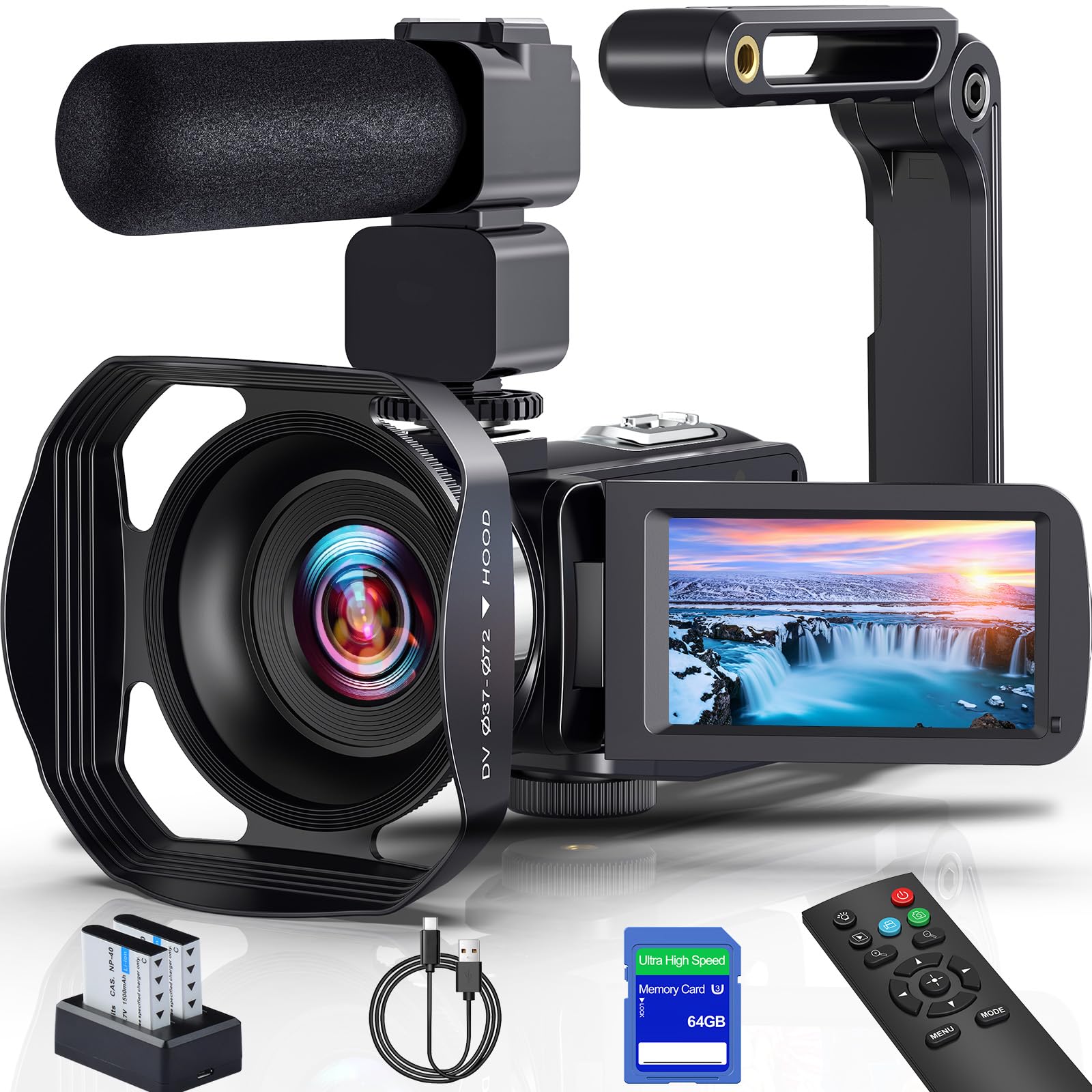
The box is the argument: a 64GB card, two NP-40 batteries, a charging cradle, an external mic, a stabilizer, a lens hood, and a 2.4G remote. The cradle is the detail we appreciate most, because it lets a spare battery charge while the camera is in use instead of tethering the camera to a cable between takes.

Recording runs up to 8K, with 4K at 60 frames per second for anything with movement in it, and the 3-inch touchscreen flips for self-framing. WiFi through the Hello Cam app moves clips to a phone, HDMI output means you can play footage straight to a TV, and the remote works from across a room, which is useful when the camera is on a tripod and you are the subject.

IR night vision and a fill light cover the low-light end, and photo mode steps up to 64 megapixels for stills. The 8K mode is a headline rather than a workhorse here, as it is on every 8K camcorder in this guide: the 64GB card that feels generous at 4K fills quickly at the top resolution. Shoot 4K/60 for motion, drop to 8K for a locked-off landscape, and the storage maths works out.

Our reservation is track record. There is less settled use behind this model than behind the VETEK or the ZYDIIE, which is the price of a package this new, so buy it where returns are straightforward and lean on the warranty in the first year. If a complete 8K kit with a big card and a spare-battery charger is what you want in one order, it is the tidiest version of that here.

Pros

  • 64GB card and a spare-battery charging cradle included
  • 4K at 60fps for movement, 8K for locked-off shots
  • Mic, stabilizer, and lens hood in the same box
  • HDMI output and app-based WiFi transfer

Cons

  • 18x zoom is digital, so reach costs detail
Our verdict

The most complete 8K kit here, with a big card, a spare-battery cradle, a mic, and a stabilizer, best for someone who wants everything to arrive at once.

Check Latest Price

How We Tested: Five Months, 16 Cameras, One Monitor

We started with research rather than a shopping spree: owner reviews and forum threads first, then filtering by sensor, mount, screen design, and what actually comes in the box. A spare battery and a memory card included is real money saved for a first camera, so that counted. Sixteen cameras made the cut, spanning flip-screen camcorders, pocket cameras with rotating lenses, and one pocket gimbal model with a much larger sensor.

Each camera lived in a tote bag for five months and came out for the same jobs: a ten-minute talking-head clip at a desk, a handheld walk around the block to see how stabilization coped with footsteps, an evening indoors lit only by lamps, a bright window behind the subject, and a weekend trip where it was packed and unpacked repeatedly. We also ran each one outdoors after dark with night-vision switched on, which was monochrome and grainy on every model, so we treated it as a last resort. Footage was re-watched on one calibrated monitor, side by side, noting where skin tones drifted, where highlights blew out, and whether autofocus hunted when a hand crossed the frame. For audio we recorded the same two sentences at arm's length indoors and in a breeze, then listened on headphones for hiss, wind rumble, and that boxy, far-away sound.

Battery life was a stopwatch job: full charge to shutdown while recording continuously, plus a note on whether a second battery came in the box. We weighed and pocketed each camera to judge how likely it was to leave the house, and logged every freeze, dropped WiFi connection, and card error across the five months, since reliability shows up in the boring weeks rather than the first afternoon. Finally we tallied the accessories — cards, batteries, mics, remotes, mini tripods — so value was judged on the whole kit.

How to Choose a Camera for Video

Frame Rate Before Resolution

The biggest number on the box is usually the least useful mode. Several camcorders here advertise 8K but record it at 15 frames per second, a rate that turns walking people into a slideshow. 4K at 60fps is the safer target: motion stays smooth, slow-motion edits survive, and it is what the Uytya, VETEK, and Tixeuo do best. Shoot 4K at 30fps or plain 1080p for talking heads, where almost nothing moves and file size is the only cost. Look at the frame rate attached to a resolution before you compare anything else.

Stabilization: Gimbal, Digital, or Grip

Three different things get sold as stabilization and they are not equivalent. A motorized gimbal, like the one in the Osmo Pocket 3, physically holds the sensor steady and is the only one of the three that fixes a walking shot. Digital stabilization crops the frame and smooths what remains, which costs you angle of view and struggles as light drops. A handheld stabilizer, like the grip included with the FlyFrost, mostly just gives you a better hold. If most of your footage is you moving and talking, pay for the gimbal; if the camera lives on a tripod, none of this matters.

Audio Decides Whether People Watch

Viewers forgive soft footage and abandon bad sound. Built-in microphones on small camcorders pick up the room, the wind, and the person behind you, which is why the bundled external mics on the Uytya, VETEK, FlyFrost, and Tixeuo matter more than their resolution claims. Two things to confirm before buying: whether a microphone is included, and whether the camera accepts an external one at all, because a body with no mic input cannot be upgraded later. If you record speech, put the microphone ahead of a sharper sensor in your budget.

Budget for Batteries and Cards

The camera is rarely the whole purchase. Some of these ship with a memory card and a spare battery; the rest quietly add both to your first order. Two batteries is the working standard, one in the camera and one charging, and a separate cradle, like the one in the Tixeuo box, beats charging a cell inside the camera between takes. Card size follows your shooting mode: high-resolution files are large, and the 16GB or 32GB cards bundled here are enough to start rather than enough for a trip.

Pocket Camera or Camcorder Body

The shape decides where the camera ends up. A pocket camera like the Lmzour or the Osmo Pocket 3 leaves the house because it fits in a jacket, and it is the better tool for filming yourself. A camcorder body gives you a bigger screen, a zoom control, and a grip that stays comfortable through a two-hour event, but it lives in a bag. Neither is better in the abstract: if your footage happens on walks and in kitchens, buy the one you will carry; if it happens at recitals and family dinners, buy the one with the flip screen and the tripod thread.

Frequently Asked Questions

Final Verdict

The camera we recommend first is the DJI Osmo Pocket 3. The gimbal and the one-inch sensor do work no camcorder here can match, and at 179 grams it goes everywhere with you, which is most of the battle. Choose the ZYDIIE if you want a conventional camcorder you can pass around at family events, or the Uytya if you are starting a channel and want the microphone, tripod, and 4K/60 in one order.