Best Camera Film of 2026

Film is the rare purchase you can't grade at checkout. You load a roll, spend a weekend shooting birthdays and dog pictures, send it off, and find out two weeks later that half the frames came back grainy, green, or missing entirely. The right choice isn't the fanciest emulsion — it's the one that matches your camera and the light you actually shoot in.

We've spent five months putting 18 rolls through their paces, across 35mm color negative and both instant formats, and the gap between a good stock and a mediocre one shows up in skin tones, shadow detail, and how gracefully a slightly off exposure can be saved.

Two things I'd tell anyone buying film for the first time: check the expiration date on the box before you shoot, not after, and don't overlook multi-packs — they cost less per frame and make an easy gift for the friend who just dug a point-and-shoot out of a drawer. The rolls below earned a permanent spot in my bag.

Keeper Score summarizes customer ratings and review volume. Read it alongside the product details and trade-offs. How the score works.

1

Best Overall

Kodak Ultramax 400 (3-Pack)

96 /100
Keeper Score Outstanding

Key details

ISO
400
Process
Color negative (C-41)
Exposures
36 per roll, 3 rolls
Film Format
35mm (135)
Check Price on Amazon

Load a roll of this into a camera you haven't touched in years and it will probably just work. ISO 400 is forgiving enough for indoor snapshots with the flash up and slow enough that a bright afternoon doesn't blow the highlights, and the color comes back saturated and slightly punchy — deep skies, warm brick, believable skin.

That versatility is why it's our top pick rather than a footnote about specifications. Three 36-exposure rolls give you 108 frames at the lowest cost per frame here, and film is a running cost, not a one-time one. Nothing else in this roundup covers as many situations for as little per shot.

The long roll is the one thing to plan around. You finish 36 frames before you see a single result, so a camera with a light leak or a sticky shutter can eat a month of shooting before you find out. We keep a 24-exposure pack of Gold 200 for testing an unfamiliar body and save the three-pack for cameras we trust.

Where it gives ground is character. Ultramax chases punch and saturation rather than the pastel softness of Portra or the golden cast of Gold, and for snapshots, travel, and street corners we think that's the right trade to make.

Pros

  • Lowest cost per frame of any film here
  • ISO 400 handles indoor and outdoor light
  • Saturated color that reads as classic film
  • Loads and exposes easily in older cameras

Cons

  • Only sold as a three-roll pack
Our verdict

Most 35mm shooters should start here: ISO 400 covers nearly any light, and 108 frames across three rolls work out cheapest per frame of anything we tested.
Check Latest Price
2

Best for Instant Cameras

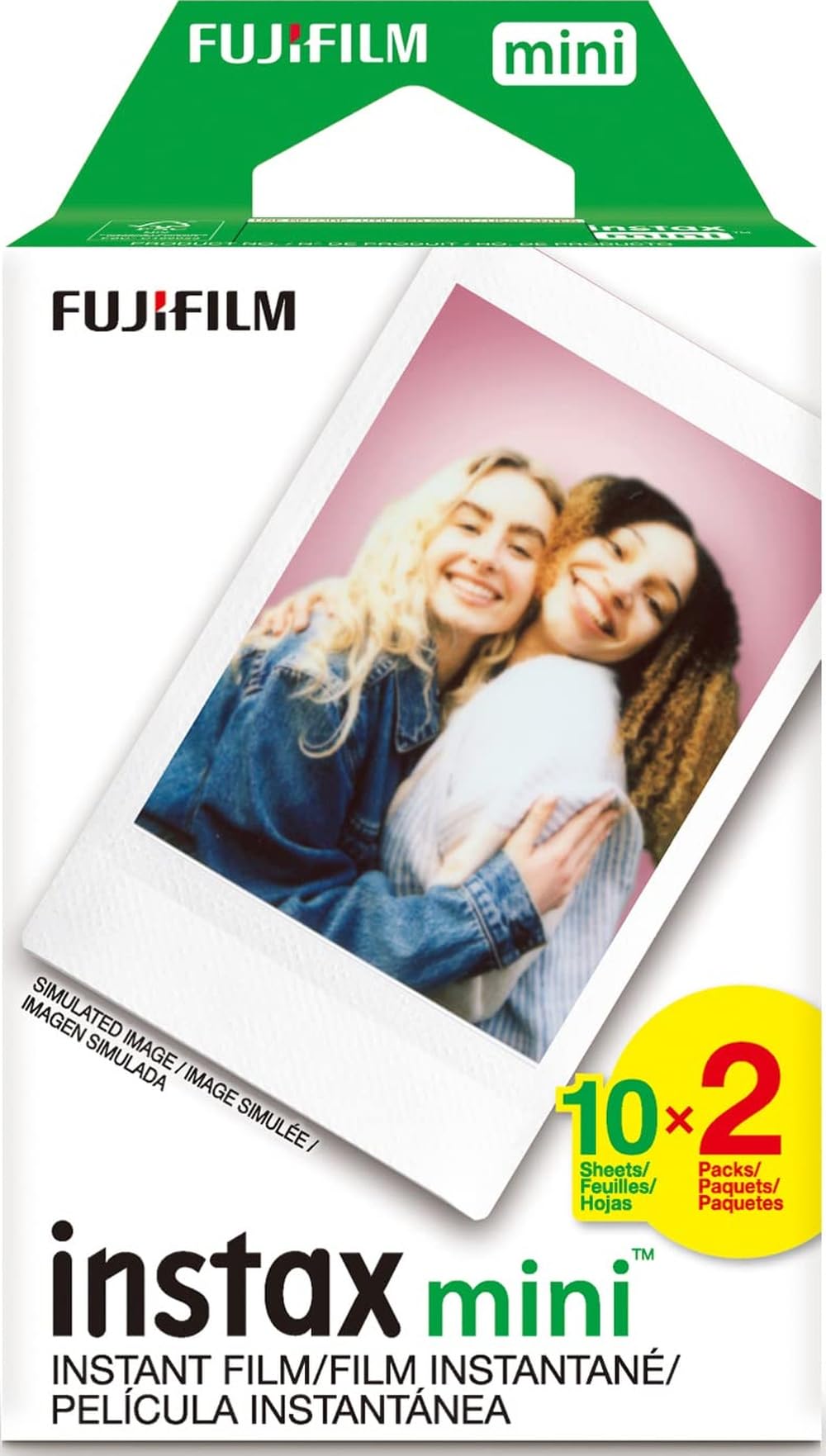
Fujifilm Instax Mini Twin Pack

96 /100
Keeper Score Outstanding

Key details

ISO
800
Photos
20 (two packs)
Print Size
2.13 x 3.4 in
Film Format
Instax Mini instant
Check Price on Amazon

Twenty prints the size of a credit card, in your hand a couple of minutes after you press the shutter — that's the whole appeal, and it's why this twin pack is the instant film we buy most often. Two sealed packs of ten load in seconds, and the ISO 800 rating puts an indoor birthday party within reach without much fuss.

A white or black print has a cause worth checking: a pack loaded in bright light, film that's been sitting somewhere warm, or a camera running low on batteries. Load packs in shade, keep spares out of the glovebox, and if a whole pack comes out blank, try a fresh one before you assume the camera is broken. Dark rather than blank prints are usually just a light problem, so use the flash indoors.

What you give up is size and subtlety. These come out small, with hard, contrasty color — closer to a sticker than to something you frame — and there's no negative to go back to, so the print is the photograph. For a party, a wedding table, or a kid with their first camera, none of that has ever bothered us.

Pros

  • Prints develop in your hand in minutes
  • ISO 800 copes with indoor light
  • Two easy-load packs, 20 photos total
  • Cheapest instant film per print here

Cons

  • Costs several times more per shot than 35mm film
Our verdict

An Instax Mini camera needs Instax Mini film, and this twin pack is the version we buy: 20 prints, quick loads, and the lowest cost per photo of the instant films here.

Check Latest Price
3

Best for Warm Daylight Color

Kodak Gold 200 (2-Pack)

95 /100
Keeper Score Outstanding

Key details

ISO
200
Process
Color negative (C-41)
Exposures
24 per roll, 2 rolls
Film Format
35mm (135)
Check Price on Amazon

Gold 200 makes an ordinary evening look like a memory. Highlights go amber, skin goes honeyed, shadows pick up a warm haze — subtle enough to stay believable, strong enough that you can pick a Gold frame out of a contact sheet. We reach for it in the last hour before sunset.

Where it earns its place is grain. At ISO 200 the texture is finer than any of the 400-speed films here, so skies stay smooth and a landscape holds together when you scan it large. The color doesn't collapse in flat light either, which is more than you can say for every warm-toned stock.

The 24-exposure roll is a quiet advantage. It finishes quickly, so you see results from a new camera sooner, and two rolls in the pack give you 48 frames before you need to reorder. If you're testing a flea-market find, this is the pack we start with.

Pros

  • Warm, golden color in daylight
  • Finer grain than the 400-speed films here
  • Short rolls suit testing a new camera

Cons

  • Needs daylight or flash
Our verdict

Buy it for the warmth. Gold 200 is the roll we load at golden hour, provided there's daylight or a flash to feed its ISO 200.

Check Latest Price
4

Best Neutral Palette

Fujifilm 400 (3-Pack)

93 /100
Keeper Score Outstanding

Key details

ISO
400
Process
Color negative (C-41)
Exposures
36 per roll, 3 rolls
Film Format
35mm (135)
Check Price on Amazon

Shoot the same scene on this and on Ultramax and the difference is obvious. Fujifilm 400 goes cool and neutral where Kodak goes warm and punchy: greens stay green, blues stay blue, and skin sits a shade cooler than most people expect from color negative film.

Everything else about it is conventional in the best way. ISO 400, 36 exposures, three rolls to a pack, standard color negative processing — it loads in the same cameras and exposes the same way, giving you 108 frames to work through. The bundle throws in a microfiber cloth, which is handy for the lens and beside the point for the film.

The decision comes down to palette and price. We keep this one for overcast days and greenery, where the cooler balance holds up better than Kodak's warmth. What it isn't is the bargain of the group: it runs meaningfully more per roll than our top pick, and that's the trade you make for a straighter rendering.

Pros

  • Cooler, more neutral palette than Kodak
  • ISO 400 works indoors and out
  • Three 36-exposure rolls per pack
  • Processes at any standard lab

Cons

  • Costs more per roll than our top pick
Our verdict

If Kodak's orange cast isn't for you, Fujifilm 400 is the correction — neutral color and ISO 400 versatility, at a higher cost per roll.

Check Latest Price
5

Best for Portraits

Kodak Portra 400

89 /100
Keeper Score Excellent

Key details

ISO
400
Process
Color negative (C-41)
Exposures
36 per roll, 1 roll
Film Format
35mm (135)
Check Price on Amazon

Portra 400 is the film people name when they talk about skin. Faces come back soft and slightly desaturated, contrast stays gentle, and color settles into pastels instead of jumping off the print — a look you can't get from a phone filter and won't get from a punchy consumer stock.

The catch here is packaging, not emulsion. This is a single loose roll sold through a reseller rather than a sealed Kodak box, so check the expiry date when it lands and shoot it sooner rather than later. A 36-exposure roll is also just one roll: 36 frames and you're reordering.

Where it earns its keep is people. For a portrait session, a family roll, or anything where faces are the subject, the rendering justifies the premium. For street shooting, travel snapshots, or a camera you're still learning, our top pick does the same work with more frames and a lower cost per frame.

So this is the one we buy for a specific job rather than for the shelf. Load it when the pictures are going to be of people, and shoot the rest of the month on something with more frames in the pack.

Pros

  • Soft, pastel rendering that flatters skin
  • Gentle contrast that holds detail
  • Standard color negative processing

Cons

  • Most expensive per frame of the 35mm picks here
Our verdict

When the photographs are of people, Portra 400 earns its price: soft skin tones, gentle contrast, and pastel color nothing else here matches.

Check Latest Price
6

Best for New Polaroid Cameras

Polaroid i-Type Color Film

91 /100
Keeper Score Outstanding

Key details

ISO
640
Photos
16 (two packs of 8)
Film Format
Polaroid i-Type
Develop Time
About 15 minutes
Check Price on Amazon

Which Polaroid you own decides this one. i-Type packs fit the current cameras — Now, Now+, OneStep 2, OneStep+, and the Lab — and they will not work in a vintage 600 body, so check the badge before you order.

Sixteen prints arrive in two packs of eight, square and white-framed, with the softer, lower-contrast look that separates Polaroid from Instax. The film is ISO 640 and the instructions are blunt about light: shoot in bright conditions or turn the flash on. We found the flash does most of the work indoors, and shots taken without it come out muddy.

Development surprises first-timers. Every print emerges blank, takes about 15 minutes to finish, and is most fragile in the first minute — face down, out of the light, no bending or waving. Store spare packs chilled but never frozen. Of the two Polaroid formats here, this is the cheaper way to keep a modern camera fed, and the square prints are noticeably bigger than an Instax Mini.

Pros

  • Fits current Polaroid Now and OneStep cameras
  • 16 large square prints in two packs
  • Classic soft, low-contrast Polaroid look
  • Cheaper per print than Polaroid 600 film

Cons

  • Won't fit vintage Polaroid 600 cameras
Our verdict

Own a current Polaroid? i-Type film is the one to buy — 16 large square prints and a lower cost per print than 600 film.

Check Latest Price
7

Vintage 600 Cameras

Polaroid 600 Color Film

93 /100
Keeper Score Outstanding

Key details

Photos
16 (two packs of 8)
Process
Instant, self-developing
Film Format
Polaroid 600 instant
Check Price on Amazon

There's a battery hidden inside every 600 film pack, and it explains both the price and the devotion these cameras still inspire. A vintage 600 body has no power source of its own — the pack drives the motor, the flash, and the shutter — so buying film for one means buying chemistry and a power cell together.

Sixteen prints arrive in two packs of eight, white-framed and square, with the soft contrast Polaroid is known for. These cameras want light: outdoor sun or the built-in flash, ideally both. We came at this film from the other direction — the camera was already in the house, and a pack was the only way to find out whether it still worked.

None of this makes it cheap. Per print it's the most expensive film in this roundup, and if you also own a modern Polaroid, i-Type gets you a similar look for less. But for the shelf full of hand-me-down cameras, this is the only thing that will wake one up.

Pros

  • Powers vintage 600 cameras from the pack
  • 16 white-framed square prints
  • The soft Polaroid rendering, not Instax contrast

Cons

  • Highest cost per print of the instant films here
Our verdict

A vintage 600 camera only runs on 600 film, and the battery built into every pack is what brings it back to life — at the highest cost per print here.

Check Latest Price
8

Long Trips, Both Speeds

Kodak Ultramax & Gold 200 Bundle

93 /100
Keeper Score Outstanding

Key details

ISO
200 and 400
Includes
Ultramax 400 and Gold 200
Exposures
36 per roll, 6 rolls
Film Format
35mm (135)
Check Price on Amazon

Two stocks in one box is the idea: three rolls of Ultramax 400 and three of Gold 200, all 36 exposures, plus a microfiber cloth. Load the 200 for a bright morning and the 400 when the light drops, and you're not reordering halfway through a trip.

The pairing is genuinely useful. Gold's warmth and finer grain suit landscape and afternoon portraits; Ultramax's speed and saturation cover interiors, evenings, and anything moving. Six rolls is 216 frames — a long trip, or a whole season of weekends.

What you pay for is convenience, and it's the biggest single outlay in this roundup. If you already know you shoot one speed, a three-pack of that film alone is the better buy. The bundle only makes sense if both stocks will actually get used.

We like it for the variety, not as a way to save money. It suits someone planning a long trip, or a household with two film cameras and different habits. Everyone else is better served by one film and more of it.

Pros

  • Two Kodak stocks in a single order
  • Six 36-exposure rolls, 216 frames
  • Covers bright and dim light on one trip

Cons

  • Highest up-front cost of any pick here
Our verdict

Worth it for a long trip or two cameras in the house; if you only shoot one speed, buy that film on its own instead.

Check Latest Price

How We Tested 18 Rolls of Camera Film

We started by rounding up every color negative and instant film we could find, then filtered by what was actually in stock, how far out the expiration date sat, and the cost per frame once we did the division. That left 18 rolls spanning seven different stocks — 200- and 400-speed 35mm plus two instant formats — which we shot over five months.

Every stock went into the same three situations: a backyard cookout in flat midday sun, a birthday dinner in a dim restaurant, and a weekend road trip with a lot of window light and a few frames shot straight into the sun. All the 35mm work ran through the same two cameras, a point-and-shoot that reads DX codes and a manual SLR, and every roll was developed and scanned at the same lab so the comparisons were fair.

Back at the table we looked at grain in the scans, whether skin tones drifted pink or yellow, and how much shadow detail survived indoors. A few frames per roll got bracketed a stop over and a stop under to see which stocks could be rescued, and we kept notes on loading — whether the DX code registered, whether a roll jammed, and whether instant packs delivered the frame count on the box.

Shelf life got its own test: we checked the date on every box, then left three rolls on a room-temperature shelf for three months next to identical rolls kept in the fridge and compared the color cast afterward. For value, we counted the cost per frame that actually came back usable, not the number advertised.

How to Choose Camera Film

Match the Film to Your Camera First

35mm film, often labeled 135, fits the overwhelming majority of film SLRs, rangefinders, and point-and-shoots made in the last sixty years. Instant film is a different story entirely: an Instax Mini pack only fits Instax Mini cameras, Polaroid i-Type fits the modern Now and OneStep bodies, and 600 film fits the older 600 cameras.

The trap is the word "instant," which sounds universal and isn't. Check the badge on the camera before you order anything, and remember that one brand's packs will not work in another brand's body.

Match the Speed to the Light

ISO tells you how much light the film needs. ISO 200 is a daylight film: lovely in sun, slow indoors without a flash. ISO 400 is the all-rounder and the reason we default to it — one roll handles a street, a kitchen, and an overcast afternoon without changing anything.

Instant film runs faster still, in the ISO 640 to 800 range, which is why it copes indoors better than its small prints suggest. Speed costs you grain, so if your shooting is almost entirely outdoor daylight, a 200 gives a cleaner negative.

Choose a Color Character

Film stocks are not neutral, and that is the whole point of choosing one. Kodak Gold goes warm and golden, Ultramax goes saturated and punchy, Fujifilm 400 stays cool and even, and Portra settles into pastels with soft skin tones. Read those as palettes, not as quality grades.

If you're unsure, buy one roll of two different stocks and shoot the same subject in the same light. A single side-by-side roll tells you more about your own taste than any description, ours included.

Count Frames, Not Packs

Divide the pack price by the number of frames and the bundles sort themselves out. Three rolls of 36 is 108 shots, and long rolls are usually the cheapest way to buy a given stock. Processing is charged per roll, so three long rolls also cost less to develop than four short ones holding the same number of frames.

Budget for scanning separately, since labs often quote development and scans as two line items, and be honest about how much you shoot — film that sits in a drawer for a year is money parked, not memories made.

Instant Film Rewards a Little Care

Instant film is chemistry in a sealed pouch, and temperature changes the result. Keep spare packs chilled but never frozen, let them come up to room temperature before loading, and load in shade rather than direct sun.

Once the print emerges it is still developing: face down, out of the light, nothing bending or waving it for the first few minutes. Most blank or muddy prints trace back to one of those conditions rather than to a faulty pack.

Frequently Asked Questions

Final Verdict

If you shoot 35mm and want one answer, it's the Kodak Ultramax 400 three-pack. ISO 400 works from a bright street to a dim kitchen, and 108 frames across three rolls make it the cheapest per frame in this roundup.

Two exceptions are worth knowing: Kodak Gold 200 when you want warmth and have the sunlight for it, and Kodak Portra 400 when the photographs are of people. Shooting instant instead? Match the film to the camera before anything else — the Instax Mini twin pack for Instax bodies, i-Type for a current Polaroid, and 600 film for a vintage one.