Best 120 Film

Medium format is where film stops being convenient and starts being deliberate: twelve frames on a roll, no screen to check, and a negative so big you can see the difference the moment it comes out of the tank. The tradeoff is that every frame costs real money, so the stock you load matters more than it does in a 35mm camera you can burn through on a whim. A film with generous exposure latitude forgives a metering mistake or a handheld shot at dusk; a tight one hands you back mud.

Over the past seven months my team and I have put 16 rolls through 6x6 and 6x7 bodies — color negative and black-and-white, ISO 100 and 400 — and the gaps in color, grain, and how much abuse each stock absorbs are not subtle. Speed gets all the attention, but what actually decides whether you come home with a usable roll is how a film fails when you're a stop off. The picks below are the ones that gave us frames worth scanning.

Keeper Score summarizes customer ratings and review volume. Read it alongside the product details and trade-offs. How the score works.

1

Best Overall

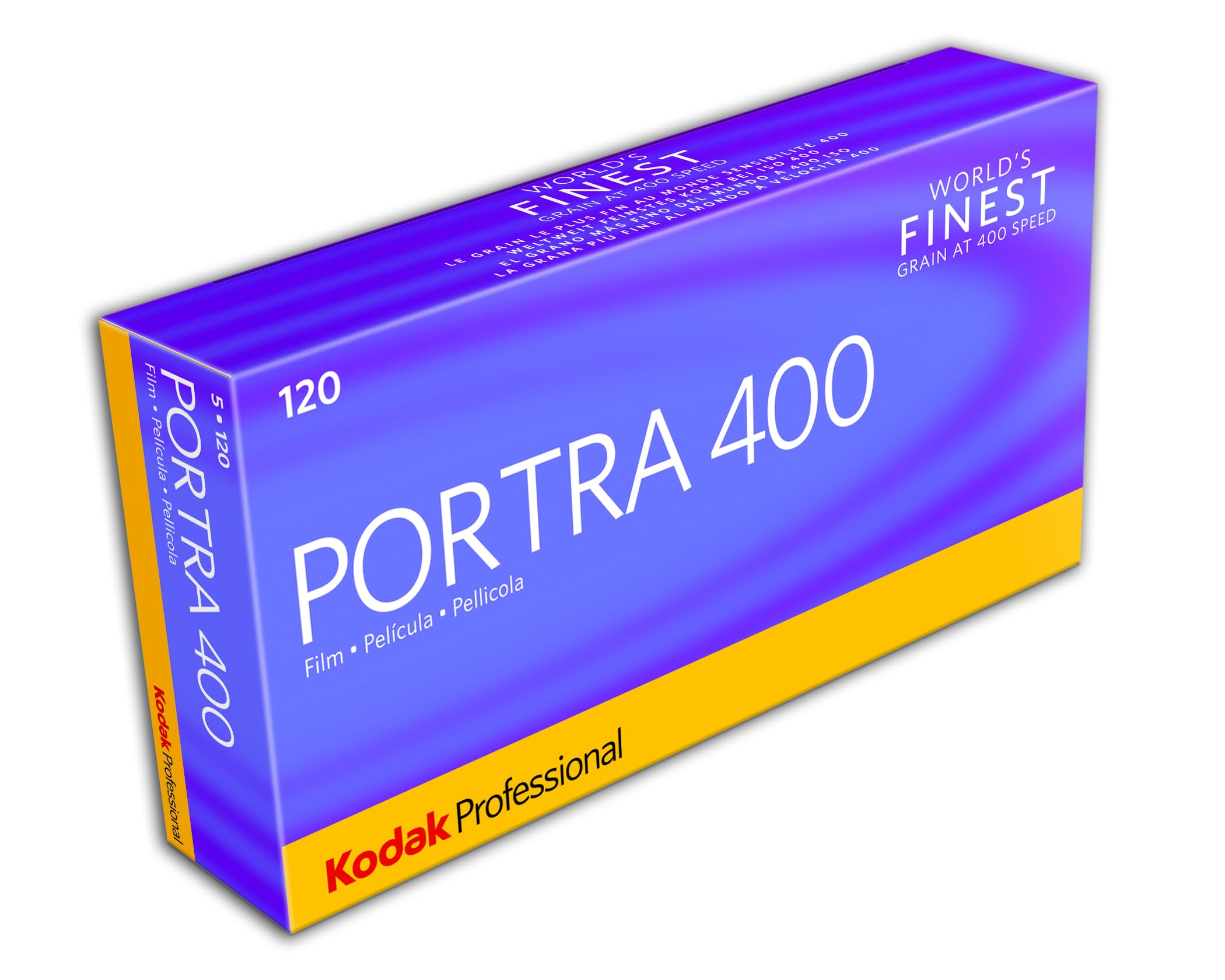
Kodak Portra 400

93 /100
Keeper Score Outstanding

Key details

ISO
400
Film Type
Color negative
Film Format
120
Rolls Per Pack
5
Check Price on Amazon

Of the color films here, this is the one we load when we don't know what the light will do. ISO 400 covers an overcast afternoon, a shaded doorway, and a room lit only by windows, and the five-roll propack means you can fill a couple of backs and still keep a spare in the bag. It's a standard color negative, so any lab that processes color film can handle it without a conversation about special chemistry.

What earns it the top spot is how little it punishes a mistake. Rate it a stop off box speed, or meter off the wrong patch of shadow, and there's still a printable negative at the end of it; the film holds detail at both ends where a slower, more saturated stock would give up. It takes pushing and pulling comfortably too, which makes a roll of 400 usable in light that would otherwise call for something faster.

The palette is where it wins people over. Skin stays skin, greens stay believable, and nothing in the frame shouts — exactly what we want for portraits and for anything shot under a mix of daylight and interior lamps. If you want color that announces itself, Ektar 100 is the pick further down this page; if you want texture instead of color, HP5 Plus is the answer. Portra's real job is being the film you don't have to think about.

Pros

  • Fine grain for a 400-speed color film
  • Natural skin tones and believable color
  • Wide latitude forgives metering mistakes
  • Five-roll propack keeps a bag stocked

Cons

  • Highest cost per roll in this group
Our verdict

We recommend starting here: ISO 400 flexibility, forgiving latitude, and natural skin tones make this the safest color film to put in a medium-format bag.

Check Latest Price
2

Best Black and White

Ilford HP5 Plus 400

94 /100
Keeper Score Outstanding

Key details

ISO
400
Film Type
Black and white
Film Format
120
Rolls Per Pack
5
Check Price on Amazon

Per roll, this is the least expensive film in this guide, and it happens to be the one that's hardest to ruin. A five-roll pack of HP5 Plus runs less than a propack of either color stock, which is why it's what we keep buying when we want to shoot a lot and think about the results later.

Latitude is the spec that matters here. It's a medium-contrast 400 with a wide exposure range, so a frame metered for the shadows and a frame metered for the highlights both come out usable; on a meterless folder or a box camera with one shutter speed, that tolerance is the whole game. It also responds well to push processing, which puts dim rooms and evening streets back within reach at 800 or 1600.

The look is deliberate rather than spectacular. Medium contrast leaves you room to choose your paper grade or your scan settings, and the texture is present without taking over the frame — the negative holds detail in a dark doorway and a bright window in the same shot, which is what makes it so easy to print. And if you've only shot color in 120 so far, this is the least expensive way to find out what the format does when color isn't the point.

Pros

  • Wide exposure latitude shrugs off metering errors
  • Pushes to 800 or 1600 when light drops
  • Lowest cost per roll of the three picks

Cons

  • Sold here only as a five-roll pack
Our verdict

We point anyone who wants black and white in medium format here first: the latitude is generous, it pushes willingly, and it costs the least per roll of the three.

Check Latest Price
3

Best for Fine Detail

Kodak Ektar 100

94 /100
Keeper Score Outstanding

Key details

ISO
100
Film Type
Color negative
Film Format
120
Rolls Per Pack
5
Check Price on Amazon

The trade-off is right there in the box speed. At ISO 100 this film wants sun, open shade, or a tripod, and it won't rescue you at a dim indoor reception the way Portra 400 will. What you get in return is the finest-grained color negative in this group and the most vivid palette of the three.

Kodak builds it on micro-structure optimized T-grain emulsions, and the payoff is a negative you can enlarge hard. Grain is close to invisible in a 6x7 frame at sizes where other color films start to show texture, edges stay crisp, and reds and blues come back saturated without sliding into cartoon. We reach for it for landscapes, architecture, and anything where the detail is the subject, and it handles hard midday sun — the light most color films struggle with — without blocking up.

It's also cheaper per roll than our top pick, which surprises people who assume the fine-grain film carries a premium. Five rolls is a long weekend on a 6x6, and the consistency across a pack means a trip's worth of frames looks like it belongs together on the light table.

Pros

  • Finest grain of any color film here
  • Vivid, saturated color with crisp edges
  • Enlarges hard thanks to the T-grain emulsion
  • Costs less per roll than our top pick

Cons

  • Can show a pink cast depending on scanner and developer
Our verdict

Buy Ektar 100 if your shooting happens in good light and you want the sharpest, most saturated color 120 offers here — just don't ask it to save a dim room.

Check Latest Price

How We Tested 120 Film

We started by narrowing the shelf to stocks actually manufactured in 120, which ruled out anything sold only in 35mm cassettes, then filtered for what a medium-format shooter can realistically reorder: color negative and black-and-white emulsions in ISO 100 and 400, sold as single rolls or five-roll propacks. From that shortlist we bought 16 rolls and shot them over seven months, keeping a log of which body, which light, and which frame number each test landed on.

The rolls went wherever the cameras went: golden-hour portraits in open shade, an overcast morning on the coast, a dim restaurant, a bright noon hike with no shade in sight. Because 120 gives you twelve frames or fewer depending on the back, we bracketed on purpose — the same scene at box speed, then a full stop under — to see how much underexposure each film swallowed before the shadows collapsed.

Back at the desk we laid the scans side by side and looked at whether skin kept its warmth or drifted pink, whether a clear sky stayed smooth or went grainy, and whether the blacks held any detail at all. We shot into tungsten spilling out of a daylight room and noted how much correction it took to bring the color back. We also logged the unglamorous parts: how the backing paper and tape behaved in a changing bag, how tightly the roll spooled off the reel, how each stock held up to a one-stop push, and how many frames out of a roll we would actually print. That last count is where the value question really got answered.

How to Choose a 120 Film

Color or Black and White Comes First

The palette decides more than any spec. Color negative is the practical default: it's forgiving, any lab processes it, and it scans easily into the digital workflow most of us finish in. Black and white is where you go when tonality and texture matter more than accurate color, and it rewards anyone who prints.

If you shoot two backs, keep one of each and you're covered for most days. If you only shoot one, start with color and add HP5 Plus once you know how your camera meters.

Match the ISO to the Light You Actually Shoot

The most common mistake is buying an ISO 100 film because someone's landscape looked spectacular, then discovering it's a tripod film in a living room. Medium format often means stopping down to f/8 or f/11 for depth of field, and that eats shutter speed fast.

A 400-speed film covers overcast days, open shade, and window light handheld. A 100-speed film is for sun, flash, and tripods. Be honest about the light you're in at four in the afternoon in November.

Grain, Sharpness, and How Big You Print

Medium format already gives you detail 35mm can't match at the same print size, so the grain question is about character rather than quality. Ektar 100 is the one to choose when you want none of it — it's the reason people haul a 6x7 into the field.

A 400-speed black and white like HP5 Plus gives you visible texture and a medium contrast that holds both ends of a scene, which suits documentary work and home scanning. Decide whether you want to see the grain; if you don't, go slower and carry the tripod.

Pack Size, Storage, and Cost Per Roll

Most 120 comes as a propack of five individually boxed rolls, which is normally the best value per roll and also a commitment if you're trying a stock for the first time. Divide the pack price by the number of rolls before you compare, and remember that processing is a second per-roll cost sitting on top of the film.

Check the date on the box as well: film is perishable, and stock that's been sitting on a shelf isn't getting any fresher. Keep it cool and dry, in its packaging, until you load it.

Frequently Asked Questions

Final Verdict

Portra 400 is the film we tell most people to buy first: it handles the light a day actually gives you, it flatters skin, and it survives a metering mistake.

Add a five-roll pack of HP5 Plus if you want black and white in the bag, and choose Ektar 100 when your shooting happens in sun and you want the sharpest, most saturated negative here. Three stocks, three jobs — that's a working 120 kit without a shelf of experiments you'll never finish.