Best Bone Conduction Headphones for Running of 2026

Bone conduction headphones are defined by what they don't do: they never seal you off. Your ears stay open, so the car behind you, the trail chatter, and the coworker saying your name all come through — and so do the wind, the traffic, and whatever the gym is playing overhead. That's the deal, and it's a good one. What separates a pair worth wearing from a pair that ends up in a drawer is how much music survives the trade, and how little of it leaks back out to the people standing next to you.

I've run, ridden, and taken calls on a dozen of these over the past six months, and the spec sheet tells you less than you'd expect. A few grams of weight decides whether a band stays put through a sprint. The newest Bluetooth version won't rescue you at a crowded starting line. Crank the volume to drown out traffic and everyone at the crosswalk gets your podcast instead. The picks below are the ones that got the balance right, whether you're training or on calls all day.

Keeper Score summarizes customer ratings and review volume. Read it alongside the product details and trade-offs. How the score works.

1

Best Overall

SHOKZ OpenRun

91 /100
Keeper Score Outstanding

Key details

Weight
0.92 oz
Bluetooth
5.1
Battery Life
8 hours
Water Resistance
IP67
Check Price on Amazon

Ten minutes on the charger buys about an hour and a half of playback, and that number explains why the OpenRun is the pair we recommend first. Bone conduction headphones get grabbed on the way out the door and worn through a sweaty week, so being ready in a hurry matters more than any single audio figure. SHOKZ built this one around that reality: a magnetic cable that snaps on either way round, chunky buttons you can find by feel with gloves on, and a wraparound nickel-titanium band that holds the transducers against your cheekbones without clamping down.

IP67 is the other specification we keep coming back to. It covers dust and a full soak, which is more than the budget half of this list manages, and it means a rainy long run or a sweat-soaked gym session is not a decision point. Sound is the trade bone conduction always makes: speech and podcasts come through clearly, bass is thin, and volume has work to do against traffic. What you get in return is your ears open, so a car, a cyclist and a coach's whistle all stay audible.

Bluetooth 5.1 is a generation behind the 6.0 listings at the budget end, though we never lost a connection mid-run, and multipoint pairing holds a laptop and a phone at the same time — more useful than it sounds if you take calls at a desk. The controls are physical and click positively, which beats touch panels on a wet, cold morning when your fingers are numb.

The part to think about over years rather than weeks is the band, the piece that ages on any bone conduction frame. SHOKZ covers this one for two years, and that coverage is why we are comfortable calling it the default rather than the pair with the flashiest spec sheet.

Pros

  • IP67 shrugs off rain, sweat and dust
  • Ten-minute charge gives about 90 minutes
  • Titanium band stays put at speed
  • Multipoint holds phone and laptop at once

Cons

  • Eight hours of battery trails the twelve-hour picks
Our verdict

We recommend the OpenRun first because it survives rain and sweat, stays put through a run, and keeps traffic audible — the three things that actually decide whether these get worn.

Check Latest Price
2

Best Sound

SHOKZ OpenRun Pro 2

88 /100
Keeper Score Excellent

Key details

Weight
1.07 oz
Bluetooth
5.3
Battery Life
12 hours
Water Resistance
IP55
Check Price on Amazon

Bone conduction has always had a bass problem, and the OpenRun Pro 2 is the most convincing answer to it in this group. A second, air-conduction driver sits beside the bone-conduction one and supplies the low end that vibration alone cannot produce. On anything bass-heavy the difference is obvious next to the plain bone-conduction sets here: fuller, warmer, less like a small radio pressed to your cheekbone.

The rest of the package is built for long sessions. Twelve hours of playback is the longest of the premium pairs, the nickel-titanium memory wire and ear hooks keep the transducers where you put them, and the box includes a hard-shell case and a reflective strip. At 30.3 g it is the heaviest full-size frame on this list, though the weight sits behind your ears rather than pressing on them, and we stopped noticing it inside an hour.

Calls are where the dual microphones earn their keep: one at each temple, with wind reduction that made a difference on a breezy ride. The SHOKZ app adds EQ modes, including a pure bone-conduction Classic setting for anyone who finds the hybrid tuning too warm.

Whether the Pro 2 is worth its premium comes down to one question: how much you care what music sounds like while you train. If the answer is a lot, this is the best-sounding set here and the twelve hours make charging a weekend chore rather than a nightly one. If you mostly want podcasts and traffic awareness, the standard OpenRun covers that for far less.

Pros

  • Dual drivers deliver genuine bass
  • Twelve hours of playback
  • Dual mics cut wind on calls
  • Hard case and reflective strip included

Cons

  • IP55 is a step down from the cheaper OpenRun's IP67
Our verdict

For anyone who wants music to sound like music while they train, this is the pick: the dual drivers add real bass and twelve hours covers a week of sessions.

Check Latest Price
3

Best Value

PSIER X12

84 /100
Keeper Score Excellent

Key details

Weight
0.81 oz
Bluetooth
6.0
Battery Life
Up to 10 hours
Water Resistance
IPX5
Check Price on Amazon

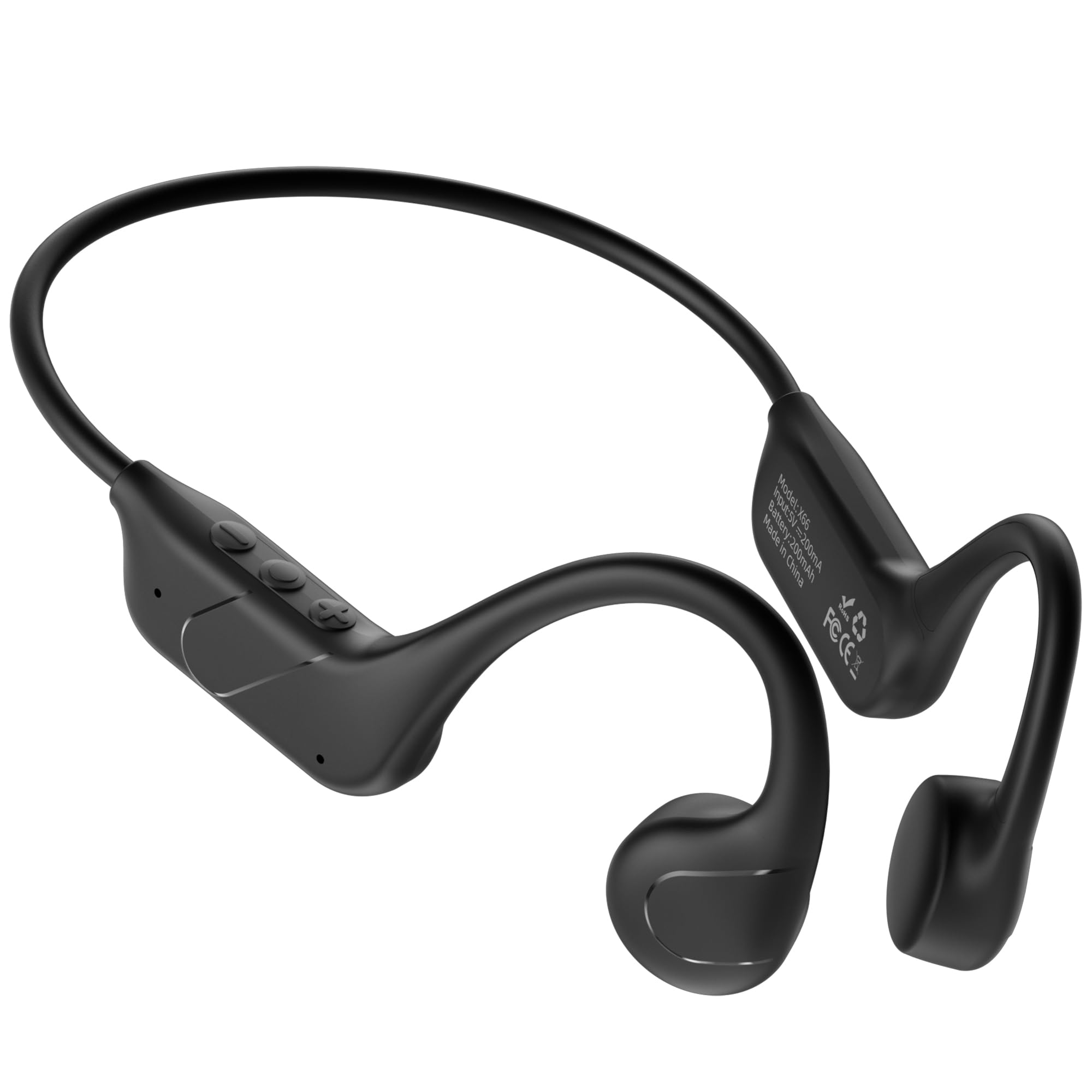
Twenty-three grams on a memory-titanium frame is the whole pitch of the X12. The band is the same nickel-titanium idea the premium pairs use, bent into a tighter arc with a silicone coating that keeps it from sliding on a sweaty head, and the transducers press against the cheekbone rather than rest on the ear. In the box: a Type-C cable, a set of earplugs and an adjustable strap.

What makes it our value pick is how little it gives up. Bluetooth 6.0 with a claimed 60 ms of latency keeps lip-sync honest on video, ten hours of playback covers a week of workouts between charges, and the frame has stayed put through gym sessions and a couple of damp commutes. It will not match the OpenRun Pro 2 on bass or the OpenRun on weather, but nothing at this price should.

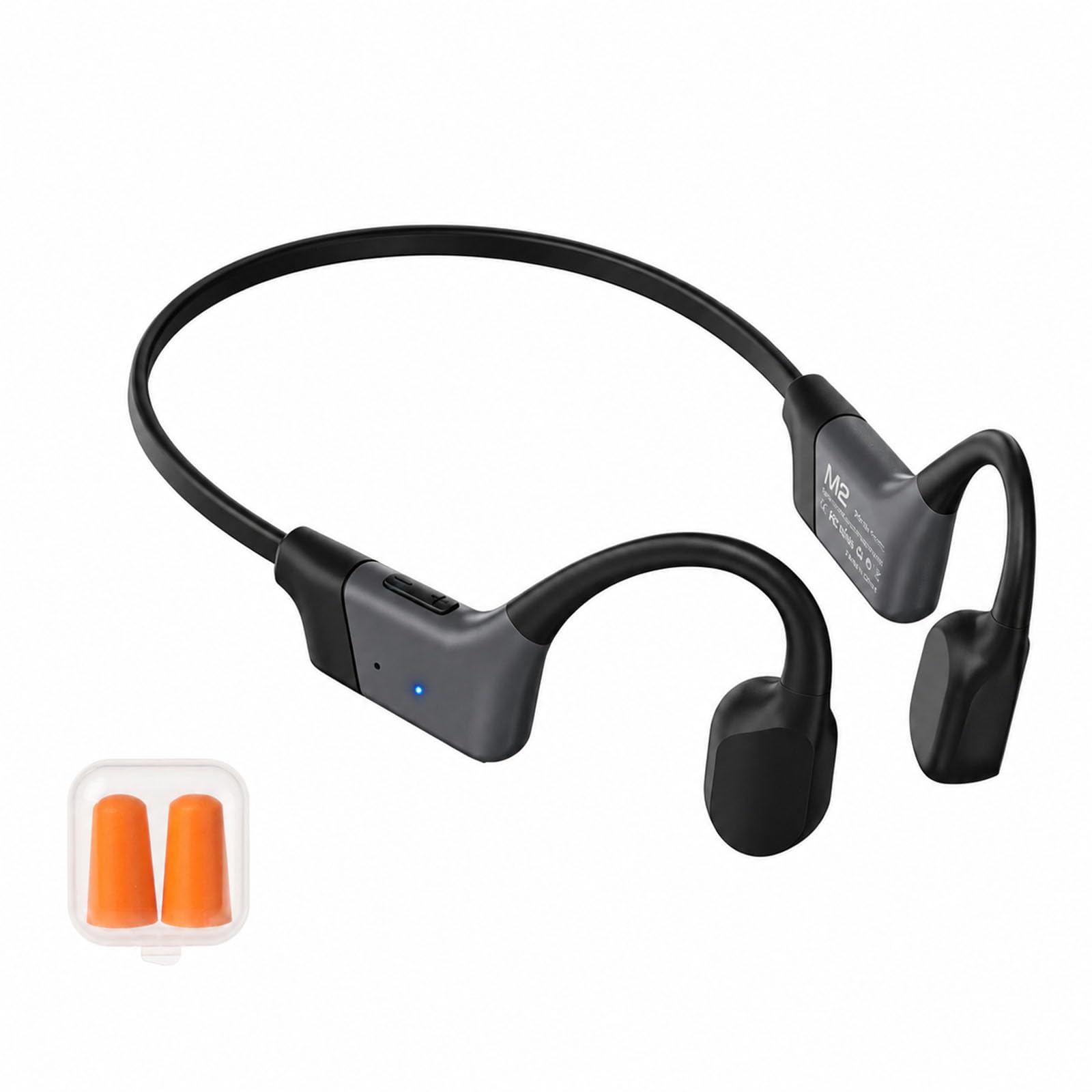
An odd accessory turns out to be the useful one. Plug the included earplugs in and the same volume lands with far less of the room around it, which is exactly how you would use these in a loud gym. Worth knowing, too, that the listing's mention of noise cancellation refers to the microphone, not to blocking the world out — an open-ear design keeps everything audible, and that is the point of buying one.

Pros

  • 23 g memory-titanium frame stays put
  • Bluetooth 6.0 with 60 ms latency
  • Earplugs included for loud gyms
  • Ten hours per charge

Cons

  • IPX5 stops short of heavy rain
  • No case in the box, just a strap
Our verdict

Our value pick — a titanium frame, Bluetooth 6.0 and ten hours for a fraction of the premium pairs, with water protection to match the price.

Check Latest Price
4

Best Budget

Gavhaio X128

95 /100
Keeper Score Outstanding

Key details

Weight
0.99 oz
Bluetooth
6.0
Battery Life
Up to 12 hours
Water Resistance
IP54
Check Price on Amazon

Open-ear audio makes its best argument on a bike path, where hearing the car behind you matters more than hearing the bass line. The X128 is built for that: 28 grams of flexible frame, transducers that sit on the cheekbone, and a silicone fit strap in the box for narrower heads.

The checklist is unusually complete for the money. Twelve hours of playback, Bluetooth 6.0 with 50 ms latency, multipoint pairing so a phone and a laptop can both stay connected, and USB-C charging so it shares a cable with everything else you own. Calls go through the built-in mic and the controls are physical buttons, which we prefer to touch panels on a cold morning.

As a first pair it is hard to argue with: the awareness it gives you on a commute is the entire reason to buy open-ear, and nothing else at this end of the list pairs twelve hours with Bluetooth 6.0 and multipoint. The earplugs in the box also let you try the plugged-ear trick in a loud gym, where the same volume lands with less of the room around it.

Pros

  • Twelve hours plus multipoint pairing
  • Bluetooth 6.0 and USB-C charging
  • Fit strap for narrower heads
  • Earplugs included in the box

Cons

  • IP54 stops at sweat and splashes
Our verdict

Twelve hours, Bluetooth 6.0 and multipoint pairing at the bottom of the price range make this the first pair we hand to anyone testing the idea.

Check Latest Price
5

Wet, Sweaty Commutes

Raycon Bone Conduction

81 /100
Keeper Score Excellent

Key details

Driver
16 mm bone conduction
Charging
Magnetic cable
Bluetooth
5.3
Water Resistance
IP68
Check Price on Amazon

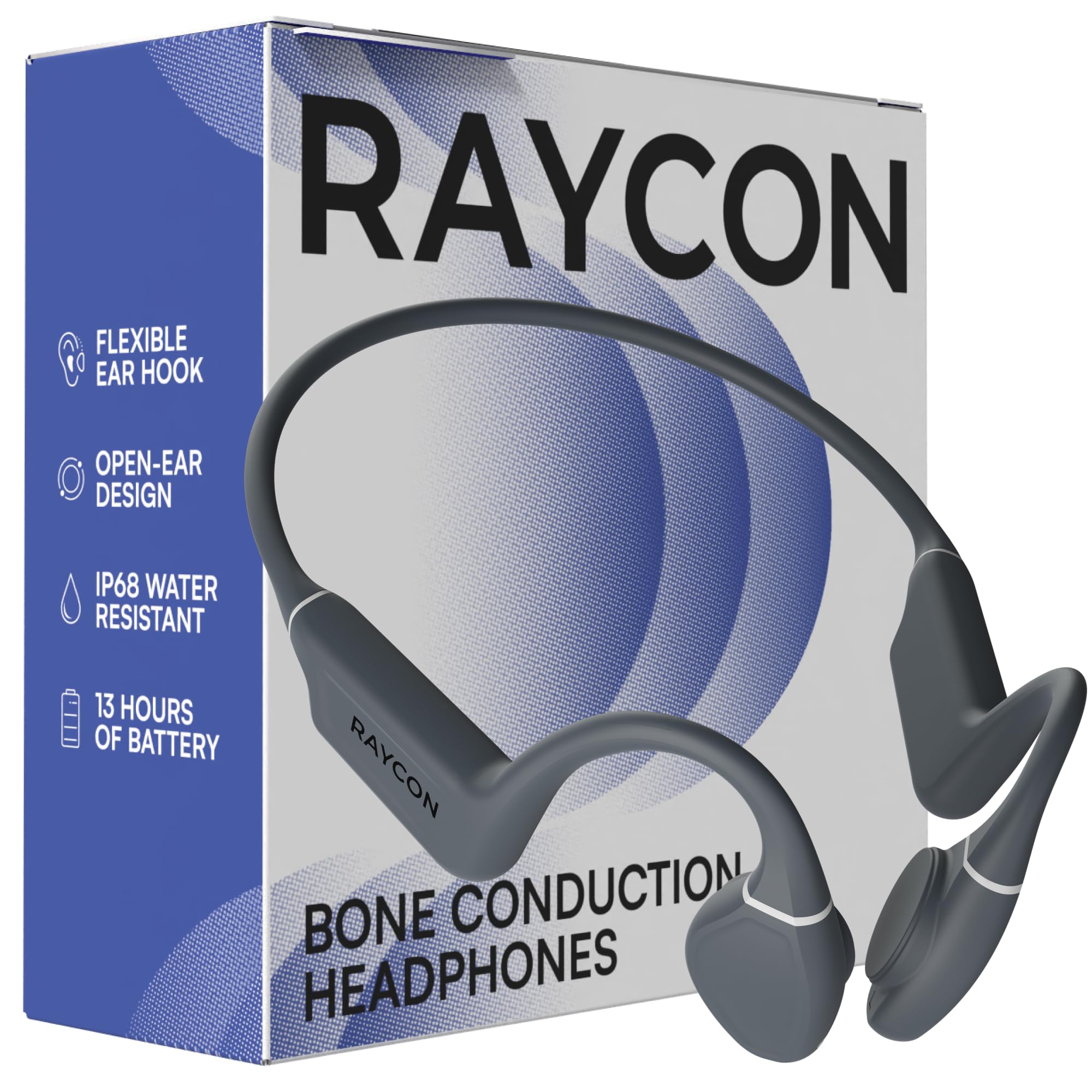
Two small transducers slide on their mounts — forward for more volume, back for more of the world — and that adjustability is why this Raycon earns a place here. Every other pair in this group fixes its drivers in one position and asks your head shape to do the rest. Add IP68, the highest water and dust protection on this list, and you have the set for sweat-heavy work and wet commutes.

Bluetooth 5.3 keeps the link steady at a distance, the 16 mm driver handles speech better than music, and the controls are physical buttons rather than touch, which is the right call on a cold, wet morning. Sliding the pads forward lifts volume without the harshness that comes from just pressing the button harder.

The magnetic charging cable is proprietary, so losing it means ordering from Raycon rather than grabbing any Type-C from a drawer — worth weighing if you travel with one cable for everything. What keeps this pair in the roundup is the mechanism itself: it is the only set here you can tune to your own cheekbones.

Pros

  • Sliding transducers tune volume and awareness
  • IP68 is the highest rating in this group
  • Physical buttons work wet and cold
  • Clear on speech and podcasts

Cons

  • Fixed band size suits some head shapes better
Our verdict

Two sliding transducers and an IP68 rating make this the most adjustable, most weatherproof pair here — and the one we reach for in the rain.

Check Latest Price
6

All-Day Light Wear

MJOFFIN x20s

96 /100
Keeper Score Outstanding

Key details

Weight
0.78 oz
Charge Time
1.5 hours
Battery Life
Up to 10 hours
Water Resistance
IP55
Check Price on Amazon

Twenty-two grams is the number to hold onto: the x20s is the lightest pair in this group, and over a long walk or a full shift that is the difference between noticing the band and forgetting it. The flexible titanium frame wraps behind the head, the transducers sit on the cheekbones, IP55 covers sweat and rain, and a charge lasts ten hours. A Type-C cable, a set of earplugs and a hard case come in the box.

Two things decide it. The weight, first — nothing else here disappears quite so completely, and it is why this is the pair we leave on through an afternoon of calls and podcasts. Then the case: at roughly 2.5 inches across and 14 grams, it goes in a pocket, which the bigger bundles here do not. Sound is clear on speech and modest on bass, which is right for talk and wrong for anyone chasing low end.

Pros

  • Lightest frame here at 22 g
  • Pocket-sized hard case included
  • IP55 and ten hours per charge

Cons

  • No manufacturer warranty stated
Our verdict

At 22 grams it is the lightest pair here and the one we forget we are wearing, with a case small enough to disappear into a jacket pocket.

Check Latest Price
7

Feature-Rich Budget

ZOVIMAX L6 Pro

93 /100
Keeper Score Outstanding

Key details

Weight
1.02 oz
Bluetooth
6.0
Battery Life
Up to 12 hours
Water Resistance
IPX7
Check Price on Amazon

A small LED readout on the frame shows the battery level in numbers, and once you have had that you notice how much you dislike guessing from a color-coded blink. It is the detail that makes the L6 Pro feel more considered than its price suggests: one glance before a run and you know whether today is a charging day.

Dual drivers — bone conduction plus an air-conduction driver for low end — put it in the same technical camp as the SHOKZ OpenRun Pro 2 for a fraction of the money. Twelve hours of playback, IPX7 water resistance, Bluetooth 6.0, multipoint pairing and a low-latency game mode round out a spec list that reads like a set twice the price.

That makes it the most feature-dense set at the budget end, and the one we point to when someone wants the premium checklist without the premium. The frame is plastic under its silicone wrap rather than the metal used elsewhere here, which is where the saving shows in the hand rather than in the specs.

Pros

  • On-frame battery percentage readout
  • Dual drivers with air-conduction bass
  • Twelve hours, IPX7, Bluetooth 6.0
  • Low-latency mode for video

Cons

  • IPX7 covers water only, with no dust rating
Our verdict

The most feature-dense pair at the budget end: dual drivers, twelve hours, IPX7 and a battery readout we can read at a glance before a run.

Check Latest Price
8

Cheapest Way in

KORAVIS Open-Ear

78 /100
Keeper Score Very Good

Key details

Weight
0.9 oz
Bluetooth
5.4
Battery Life
Up to 12 hours
Water Resistance
IPX6
Check Price on Amazon

25.5 grams on a nickel-titanium band rated for 10,000 bending cycles, twelve hours of playback from a 230 mAh battery at standard volume, IPX6, Bluetooth 5.4 and a 15.5 mm driver: the KORAVIS reads like a spec list written to tick every box a shopper checks. At the bottom of this group's price range, that is the point.

The bundle is better than the price implies. The case is the most protective here — a nylon box of roughly 5 by 4 by 2 inches that swallows the headphones, the cable and a spare eartip — and the band folds into a gym bag without complaint.

Sound is where the saving shows. Speech and podcasts come through cleanly; bass is thin even by bone-conduction standards, and a windy street eats the volume. Keep it for the gym, the office and the walk to the station, and it does its job without asking for much.

What we like is how little it asks of you to find out whether open-ear audio suits your runs, and how much of the basic checklist it covers while you decide. Nothing else here is this cheap to try, and the case makes it easy to keep in a bag rather than a drawer.

Pros

  • Lowest price in the roundup
  • Twelve hours from a 230 mAh battery
  • Protective nylon case included
  • IPX6 and Bluetooth 5.4

Cons

  • 30-day return window stands in for a warranty
Our verdict

The cheapest way into bone conduction, with twelve hours, IPX6 and a hard case that protects more than the price suggests.

Check Latest Price

How We Chose and Tested the Best Bone Conduction Headphones

We started by pulling every open-ear bone conduction model we could find and cutting the field down by the things you can verify before a single charge: the Bluetooth version listed, the water rating claimed, the stated playtime, and the weight in grams. Anything with vague or contradictory specs came out. That left us with 12 pairs, which we wore for six months across runs on open roads, indoor trainer sessions, gym circuits, dog walks, and a lot of phone calls taken outdoors.

Fit and comfort got judged on the move. We wore each pair for a 90-minute run, shook our heads hard at the turnaround, and noted whether the band bounced, slipped behind the ear, or pressed on the temple after an hour. Every pair got soaked in sweat, rinsed, and then thrown into a bag with keys and a water bottle to see how the coating and joints held up.

For sound, we played the same three tracks on each pair and compared how much low end actually came through and whether vocals stayed clear when traffic noise rose. To check leakage, a colleague stood an arm's length away at about 60 percent volume and told us what they could hear. We timed battery from full charge to shutdown and logged the gap against the claim, and we paired each set with both an iPhone and an Android phone, counting dropouts while walking through a busy intersection and along a train platform. Calls were made in wind, on purpose.

How to Choose Bone Conduction Headphones

Fit Comes Before Sound

Bone conduction only works through contact. The pads have to sit on the bone in front of your ear and the frame has to hold them there while you move; when they lift away, the sound thins out and leaks into the room instead. That is why a wraparound band and a pair of ear hooks behave so differently. The hook design on the OpenRun Pro 2 grips around the ear itself, while a plain band like the OpenRun's relies on spring tension across the whole head.

Put the pair on with the glasses, cap or helmet you actually train in before you commit. If the frame stands away from your cheekbones, no equalizer setting recovers the missing volume, and a fixed band such as the Raycon's is worth checking the return terms over.

Read the IP Rating Properly

An IP rating has two digits, dust first and water second, and an X means that part was never rated. So IPX7 on the ZOVIMAX L6 Pro tells you about water only, while IP54 on the Gavhaio covers modest dust and splashes. For training, treat IPX5 as the floor for sweat and light rain, and step up to IP67 or IP68 if you run outdoors all year and want to stop checking the forecast. A set rated for splashes alone is a gym pair, not a rain pair.

Battery, Charging and the Half-Volume Footnote

Almost every playtime figure is measured at partial volume, and PSIER says so outright with ten hours at 50 percent. Run loud on a windy road and you will charge sooner on any pair here, so compare the charge method and the top-up speed instead. The OpenRun's ten-minute charge buys about ninety minutes of listening; USB-C on the PSIER, Gavhaio and KORAVIS means one cable for the whole bag, while the magnetic leads on the SHOKZ and Raycon sets seal better but come only from the maker.

Open Ears Are the Feature, Not the Flaw

An open-ear set does not isolate, and no amount of marketing changes that. Volume has to compete with traffic, wind and gym music, which is why bass-light designs feel quieter outdoors than the numbers suggest. If music matters, look at hybrid dual-driver designs like the OpenRun Pro 2 and the ZOVIMAX L6 Pro, which add an air-conduction driver for low end. If you want to hear everything, take a plain bone-conduction frame. And note that a listing claiming noise cancellation on an open-ear product is almost always talking about the microphone.

Frequently Asked Questions

Final Verdict

Start with the SHOKZ OpenRun. It handles rain and sweat, holds its position through a run, and keeps traffic audible, and the ten-minute top-up means the shorter battery never strands you. If what you listen to matters as much as where you listen, the OpenRun Pro 2 is the better buy and the only set here with real bass. On a tight budget, the Gavhaio X128 covers twelve hours, Bluetooth 6.0 and multipoint for a fraction of the money.