Best Planar Magnetic Headphones of 2026

Planar magnetic headphones are usually explained in specs, when what you actually notice after ten minutes is texture. Instead of a cone pushed from a single point, a flat diaphragm is driven evenly across its whole surface, so a bass note arrives with edges rather than a smear and detail turns up at volumes that don't hurt.

They're also fussier than the pair you keep by the door. Most good ones are open-back, so they leak sound both ways and want a quiet room and a real DAC or amp; the cups run large; clamping force swings wildly from model to model. Over the past seven months my team and I have worn nine pairs for hours at a stretch — at desks, on couches, late into the night — to learn which of those tradeoffs you actually feel.

Some of these are happiest in a gaming setup, one folds into a bag, and a couple run fine straight off a laptop jack, but all of them share tuning you won't be reaching for an equalizer to fix.

Keeper Score summarizes customer ratings and review volume. Read it alongside the product details and trade-offs. How the score works.

1

Best Overall

HIFIMAN Edition XS

85 /100
Keeper Score Excellent

Key details

Driver
Planar magnetic
Weight
14.3 oz
Impedance
18 ohm
Sensitivity
92 dB
Check Price on Amazon

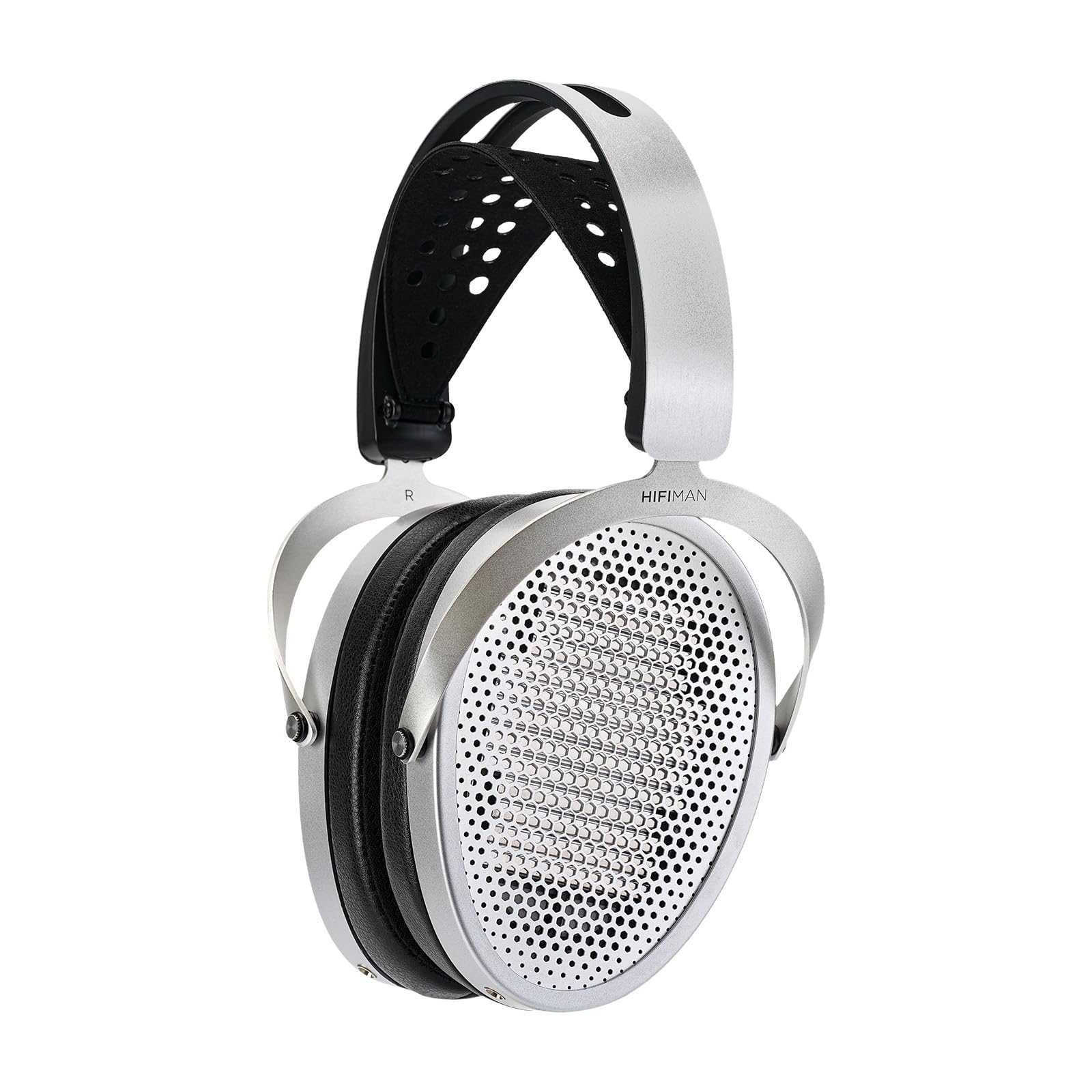
The Edition XS is the easiest recommendation in this group, and the reason is unglamorous: 18 ohms and 92 dB mean it plays loud and clean from a laptop dongle, a phone with a decent adapter, or the small amp most people already own. Full-size planars can be fussy about what feeds them; this one isn't.

What comes out is a stage wide enough that live recordings stop sounding like a mix and start sounding like a room. Bass reaches deep without thickening the mids, and the top end stays open rather than sharp. Set against the Edition XV further down this list, the XS is the brighter and airier of the two — the XV trades some of that width for weight at the bottom. If your library is acoustic, jazz, or anything with real space in the recording, the trade favors the XS.

Fit is where it needs a warning. The cups are enormous, which most ears will find comfortable, but the clamp is light, so the whole headphone shifts when you tip your head down and it will swim on a smaller head. The headband also puts its weight on one spot at the crown. A padded strap costs very little and solves the second problem; there's no fix for a small head except a different headphone, and the Edition XV is the one to look at.

Give it a proper amplifier and the bass stops being a quantity and becomes a texture. That's the upgrade you're buying later rather than on day one, and it's the reason these stay on the desk instead of going back in the box.

Pros

  • Wide, deep stage that fills the room
  • Deep bass without muddying the mids
  • Runs from a dongle at 18 ohms, 92 dB
  • Detachable cable and adjustable headband

Cons

  • Light clamp lets the cups shift as you move
  • Can develop creaking or a low-frequency buzz
Our verdict

If you want one open-back that shows what planar drivers do without demanding a rack of gear, the Edition XS is the pair we tell people to buy first.
Check Latest Price
2

Best Budget

FiiO JT7

86 /100
Keeper Score Excellent

Key details

Cables
Detachable 3.5 mm and 4.4 mm
Driver
95 x 86 mm planar
Weight
11.2 oz
Sensitivity
92 dB/mW
Check Price on Amazon

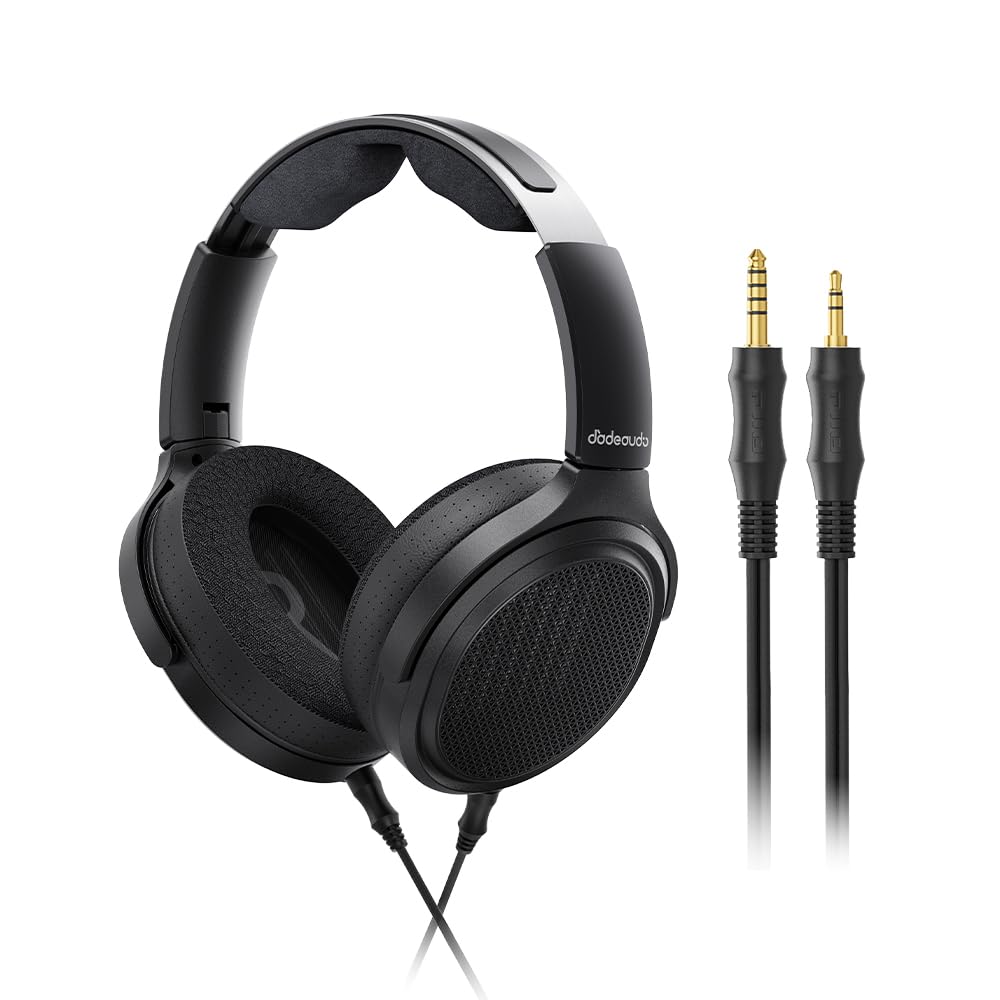
Three hundred and eighteen grams is the whole argument. Most of the headphones in this guide sit at or above 400 g, and after an hour that gap shows up in your neck and the top of your skull. The JT7 is light enough that we stopped noticing it was there, which is not something we say often about a planar.

The 95 x 86 mm driver and FiiO's dual-sided magnet array produce the open, wide presentation people come to planars for, with tight bass and a clean top end, and at 92 dB/mW it will run from a phone. It sounds better with a real amplifier, though, and the difference is control at the bottom rather than volume — which matters more on dense rock and electronic tracks than on acoustic material.

In the box you get two cables, a 3.5 mm with a 6.35 mm adapter and a 4.4 mm balanced, which is unusual in this group and genuinely useful if your DAC has a balanced output. The pads and headband are detachable and replaceable, so the parts that wear first can be renewed instead of ending the headphone's life.

Where it gives ground is materials. The frame is plastic and feels lighter and less substantial in the hand than the Edition XS, even though it sounds like more headphone than its place in this group suggests. We minded it less the longer we wore them; if a metal frame matters to you, that's what the step up buys.

Pros

  • 318 g
  • Two cables including 4.4 mm balanced
  • Replaceable pads and headband
  • Wide stage with tight, controlled bass

Cons

  • Plastic frame feels less substantial than the sound
  • Large cups can overwhelm a smaller head
Our verdict

For a first planar or a second pair for long nights, the JT7 gives you the open, wide presentation and two cables without asking much of your desk or your head.

Check Latest Price
3

Best for Long Sessions

HIFIMAN Edition XV

84 /100
Keeper Score Excellent

Key details

Driver
Planar magnetic
Headband
Composite with rotating hinges
Impedance
12 ohm
Sensitivity
92 dB
Check Price on Amazon

The knock on the Edition XS is that its headband concentrates weight at the crown and its clamp is loose. The Edition XV is HIFIMAN's answer to exactly that: a composite headband, hinges that rotate so the cups sit flat against your head, and pads deep enough that your ears never touch the driver grille.

The tuning is a deliberate step away from the family sound. Bass carries more weight, the treble is softer, and poorly recorded material is more forgiving as a result. It's also unusually responsive to EQ, so the brightness can be dialed back in if you miss it. What you give up is stage: the presentation is a size smaller than the Edition XS's, and if width and air are the reason you're shopping, that's the trade you're making.

Twelve ohms and 92 dB make it about as easy to drive as anything here — a dongle is enough, which isn't true of most planars at this level. For anyone who listens in three-hour stretches rather than thirty-minute ones, this is the pair we hand over, and the step up in price over the Edition XS buys comfort and a warmer balance rather than more resolution.

Pros

  • Rotating hinges and plush, deep pads
  • Warmer balance that stays easy for hours
  • 12 ohms and 92 dB
  • Takes equalization without complaint

Cons

  • Stage is a size smaller than the Edition XS's
Our verdict

If long sessions matter more to you than the widest possible stage, the Edition XV is the most comfortable way into a serious planar.

Check Latest Price
4

Best Premium

FiiO FT7

85 /100
Keeper Score Excellent

Key details

Cables
4.4 mm balanced with adapters
Driver
106 mm planar
Weight
15.1 oz
Impedance
25 ohm
Check Price on Amazon

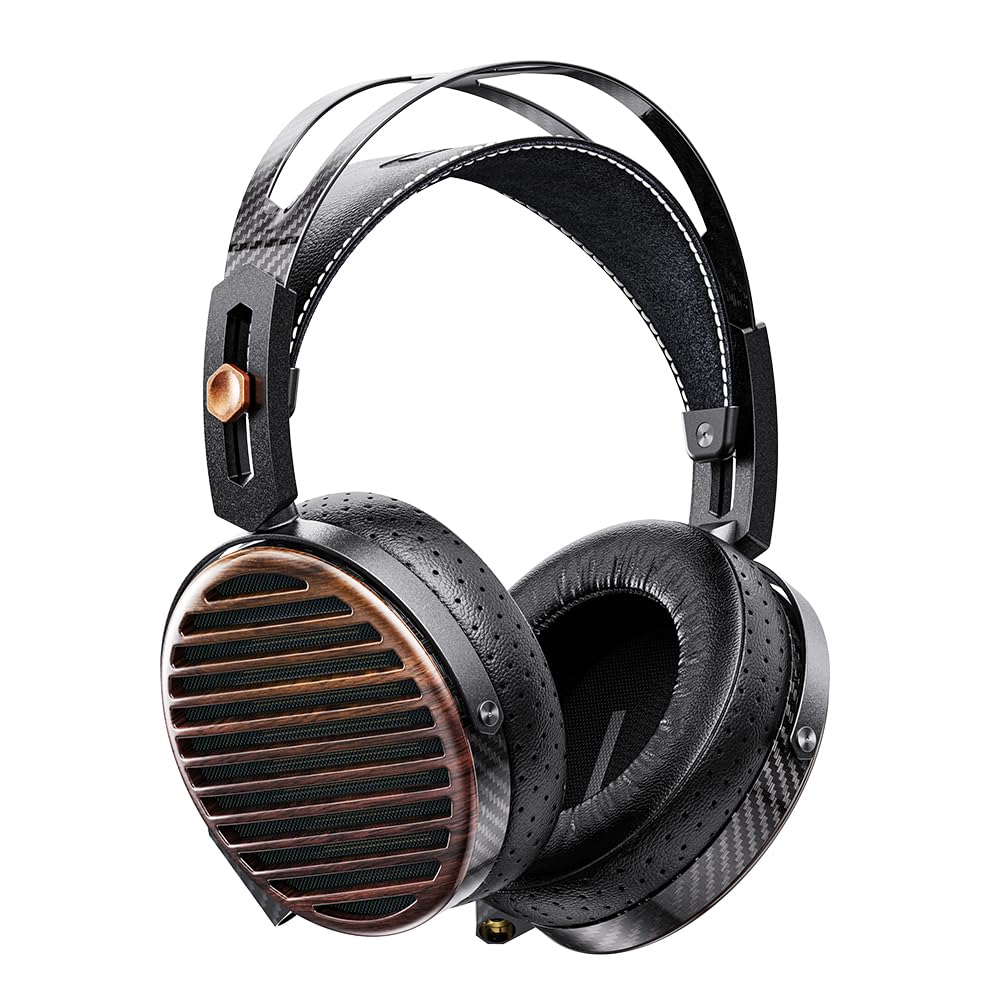
A 106 mm planar driver, a 1 μm diaphragm coated in gold and silver, a zebrawood grille and carbon fiber cups: the FT7 is built like a statement piece and priced like one. The materials aren't decoration. That big driver gives the low end weight and definition without the treble turning hard, which is the balance most planars get wrong.

Two pad sets come in the box, one lambskin and one breathable fabric, and swapping them changes both the seal and the balance. That isn't a spare, it's a tuning option, and it's the sort of thing we usually see on headphones further up the market. The 4.4 mm balanced cable ships with adapter plugs for single-ended gear, so you aren't hunting for a cable on day one.

At 427 g the carbon headband is doing real work. The weight is there, but it's spread wide enough that a two-hour session doesn't leave a hot spot, and the fit stays put when you lean back. The tuning leans warm and full, which flatters most recordings but won't suit anyone chasing the brightest, most analytic presentation — the Edition XS is the cooler, more open listen of the two.

What we keep coming back to is how little it asks of you once it's on. It isn't the most comfortable headphone in this group and it isn't the most convenient, but it's the one that makes a familiar album sound like a different recording.

Pros

  • 106 mm driver with real bass weight
  • Two pad sets that change the sound
  • Balanced cable with adapter plugs included
  • Carbon fiber and zebrawood build

Cons

  • Only one cable supplied, so a failure means downtime
  • Premium price relative to the rest of this set
Our verdict

For a flagship open-back that looks as expensive as it sounds, the FT7 is the one here we reach for when the listening session is the event.

Check Latest Price
5

Best with a Mic

ASUS ROG Kithara

81 /100
Keeper Score Excellent

Key details

Driver
HIFIMAN-tuned planar
Weight
11.2 oz
Microphone
On-cable boom
Connections
3.5, 6.3, 4.4 mm, USB-C
Check Price on Amazon

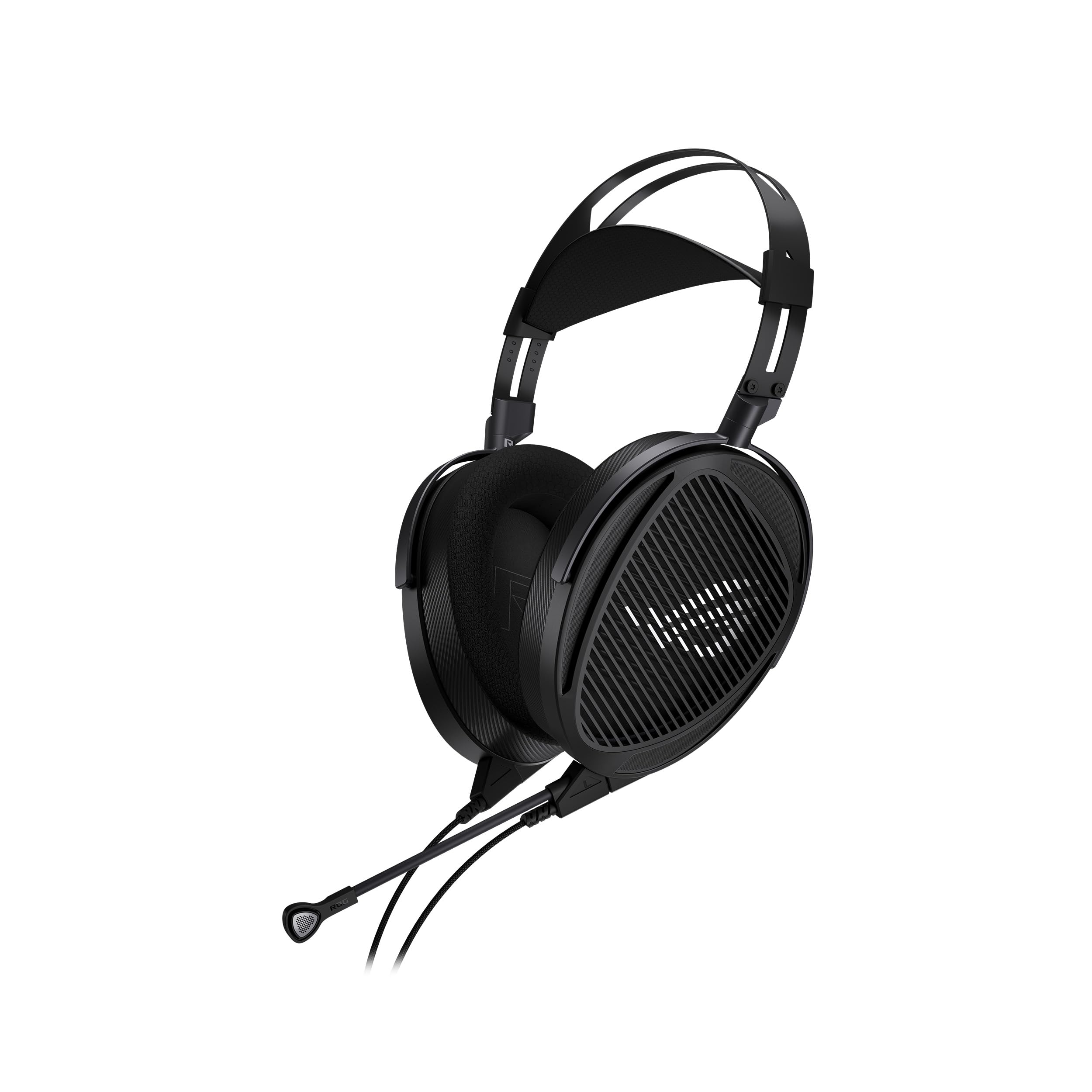
Every so often a gaming brand sends over something that turns out to be a real headphone. The ROG Kithara is one: open-back, wired, with planar drivers developed with HIFIMAN, and a boom mic on a cable you can swap out. The styling says gaming; the sound says otherwise.

The stage is wide and clean, and it handles bass-heavy tracks without the low end smearing into the mids. Comfort is where it surprised us. An eight-level headband and two sets of pads, one hybrid fabric and one leatherette, mean you can find a fit, and the 11.2-ounce weight disappears in a way the big HIFIMANs simply don't.

Plug options are the other reason to consider it. One cable ends in a 4.4 mm balanced plug with 3.5 mm and 6.3 mm adapters; a second carries the boom mic; a USB-C adapter covers consoles and phones. If you want one headset for music, voice chat, and a console on the same desk, this is the one we point at. The mic is sensitive, so keep it off your mouth and angled to the side — a few inches back it sounds clean, and up close it picks up every breath.

What it isn't is a specialist. It won't out-resolve the Edition XS on acoustic material or match the FT7 for weight and texture, but it's close enough that most people would need the two side by side to say so.

Pros

  • HIFIMAN-tuned planar drivers in a headset
  • Boom mic cable swaps out for music
  • 3.5, 6.3, 4.4 mm and USB-C in one box
  • Two pad sets and an eight-level headband

Cons

  • Light clamp lets the cups shift when you move
  • Open back gives no isolation for competitive play
Our verdict

If your desk has a console, a voice chat habit, and a music library, the Kithara is the one headset here that handles all three properly.

Check Latest Price

How We Tested Planar Magnetic Headphones

We started with a long list of every planar magnetic model we could get our hands on, logged driver dimensions, impedance and sensitivity figures, whether the cable detaches and what ships in the box, then narrowed it to nine pairs that covered the range. That meant open-back reference sets, a foldable pair, and one with a boom mic aimed at gaming.

Each pair got the same first week: three-hour listening sessions at a desk, then a two-hour stretch on the couch, with notes on where the headband pressed and whether the pads ran warm. Because I have a large head and a colleague on the team has a small one, we compared how the same headband and clamping force behaved on both of us — several pairs that felt fine on me pinched her, and one that fit her well slid around on me. We also measured cup openings and pad depth against our ears.

For sound, we level-matched pairs against each other and ran the same playlist of bass-heavy electronic, acoustic, and orchestral material, noting whether cymbals turned glassy when we pushed the volume, whether low end bled into the lower mids, and whether a warmer tuning still resolved small details. Nobody touched an equalizer on the first pass.

We swapped every included cable, tried the balanced plugs on a balanced amp, ran the rest from a laptop, a phone, and a console controller, and listened for cable noise rubbing against a shirt collar. We flexed headbands, twisted yokes, pulled pads off and reseated them, and checked the cable sockets for wobble. Seven months in, we went back and listened for driver rattle or channel imbalance, and noted which pairs had developed creaks.

How to Choose Planar Magnetic Headphones

What It Actually Takes to Drive Them

Impedance gets quoted like a difficulty rating, but sensitivity tells you far more about whether a laptop or a dongle can run a headphone. The pairs here sit between 12 and 25 ohms at roughly 92 dB, which is sensitive enough to reach a decent volume from modest gear. What they won't give you from a headphone jack is their best bass control.

If you're spending real money on a planar, put a small desktop DAC/amp in the budget at the same time. The gain is control and definition at the bottom end, not loudness, and it's the upgrade we'd rather see a buyer make than another pair of headphones.

Open Back Means the Whole Room Hears It

An open-back cup is a grille, not a wall. Sound escapes outward and room noise comes straight in, which is exactly why the stage sounds the way it does. That makes these desk-and-sofa headphones: fine in a quiet room, wrong in a shared office, a busy kitchen, or anywhere a television is running.

The trap is buying an open back for a noisy space and then blaming the headphone. If isolation is on your list, this whole category is the wrong shelf — no amount of tuning fixes it.

Fit and Clamp: The Spec Sheet's Blind Spot

Planar cups are big, and clamp force varies wildly between models even within one brand. A light clamp on large cups stays comfortable for hours and then slides when you tip your head down; a firm clamp holds its place and starts pressing behind the jaw after ninety minutes. Neither number appears on the box.

The one fit figure worth acting on is the crown pressure point. If a headband concentrates weight on one spot, a padded strap fixes it for very little money. For everything else, buy somewhere with a return window and give the headphones a two-hour session in the first week.

Weight Decides How Long You Listen

Most of the headphones here carry a large magnet structure on each side, and the lighter ones weigh about 320 g while the heavier ones run past 400 g. That gap is invisible in a photograph and obvious after an hour, especially if the weight sits on a narrow band rather than a suspension strap.

If you listen in twenty-minute blocks, weight barely matters and a slightly wider stage or a richer bass is the better use of your money. If you settle in for whole albums, prioritise the lighter pair with deeper pads — comfort is what keeps you listening.

Cables and Pads Are the Parts That Wear

A detachable cable and replaceable earpads can add years to a headphone's life, because those are the parts that fail first. Two cables in the box — a single-ended and a 4.4 mm balanced — is a genuine convenience rather than a marketing line, but only if your amp has the matching output.

Pads also change sound, not just comfort. A pair with two sets lets you choose between a warmer seal and a breathable fit without buying anything extra, which is worth more than most feature lists suggest.

Frequently Asked Questions

Final Verdict

The Edition XS is the one to buy. It's the pair that shows what a planar driver does — a stage that leaves the room, bass that goes deep without blurring the mids — and it does it from a laptop dongle, which is why it's the recommendation for most people.

If you listen for hours at a stretch, the Edition XV's comfort and warmer balance are worth the step up in price. If your desk is also a gaming setup, the Kithara is the one that does everything.