Best Overall

Celestron SkyMaster 15x70
Key details
- Weight
- 3.3 lb
- Field Of View
- 4.4 degrees
- Magnification
- 15x
- Objective Lenses
- 70mm
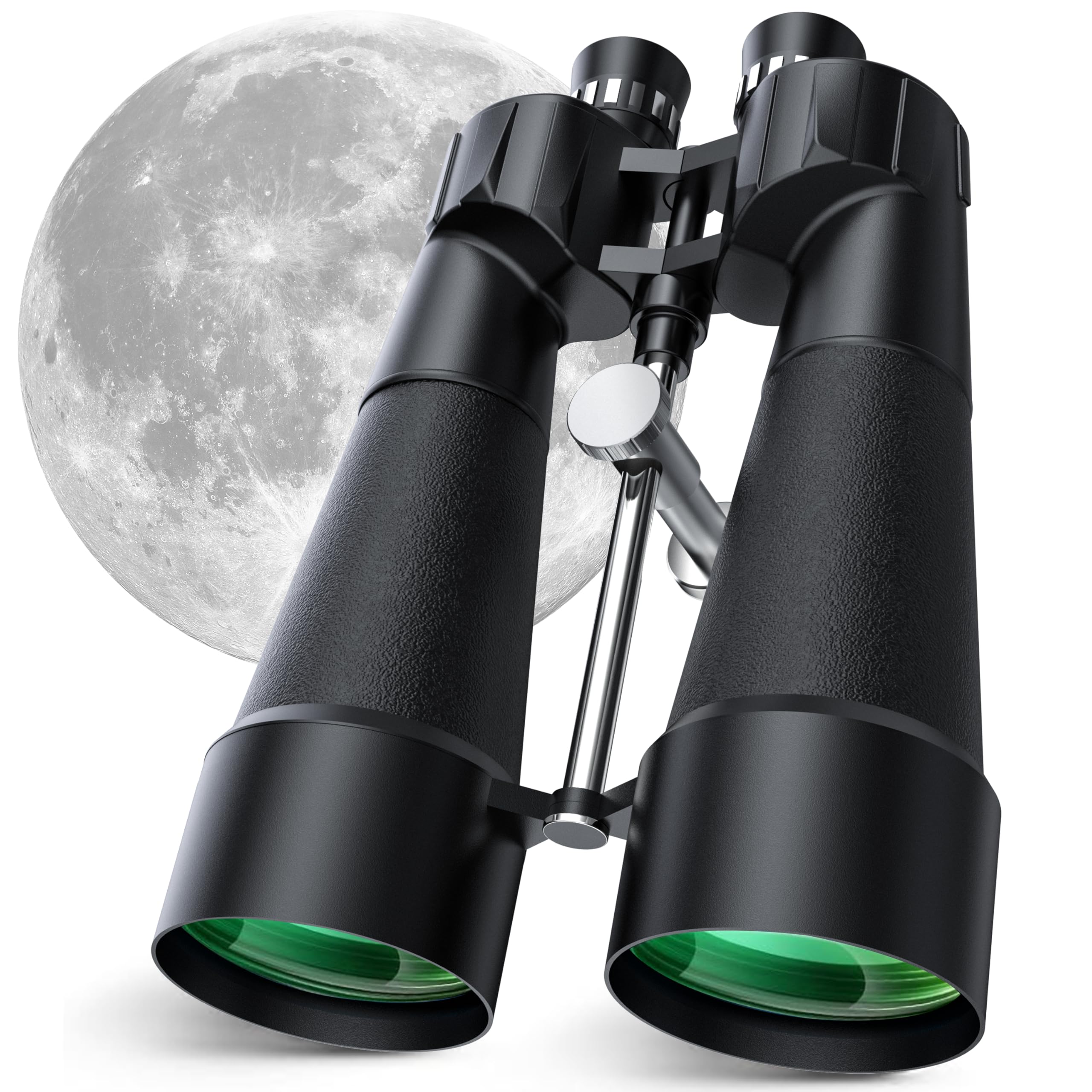
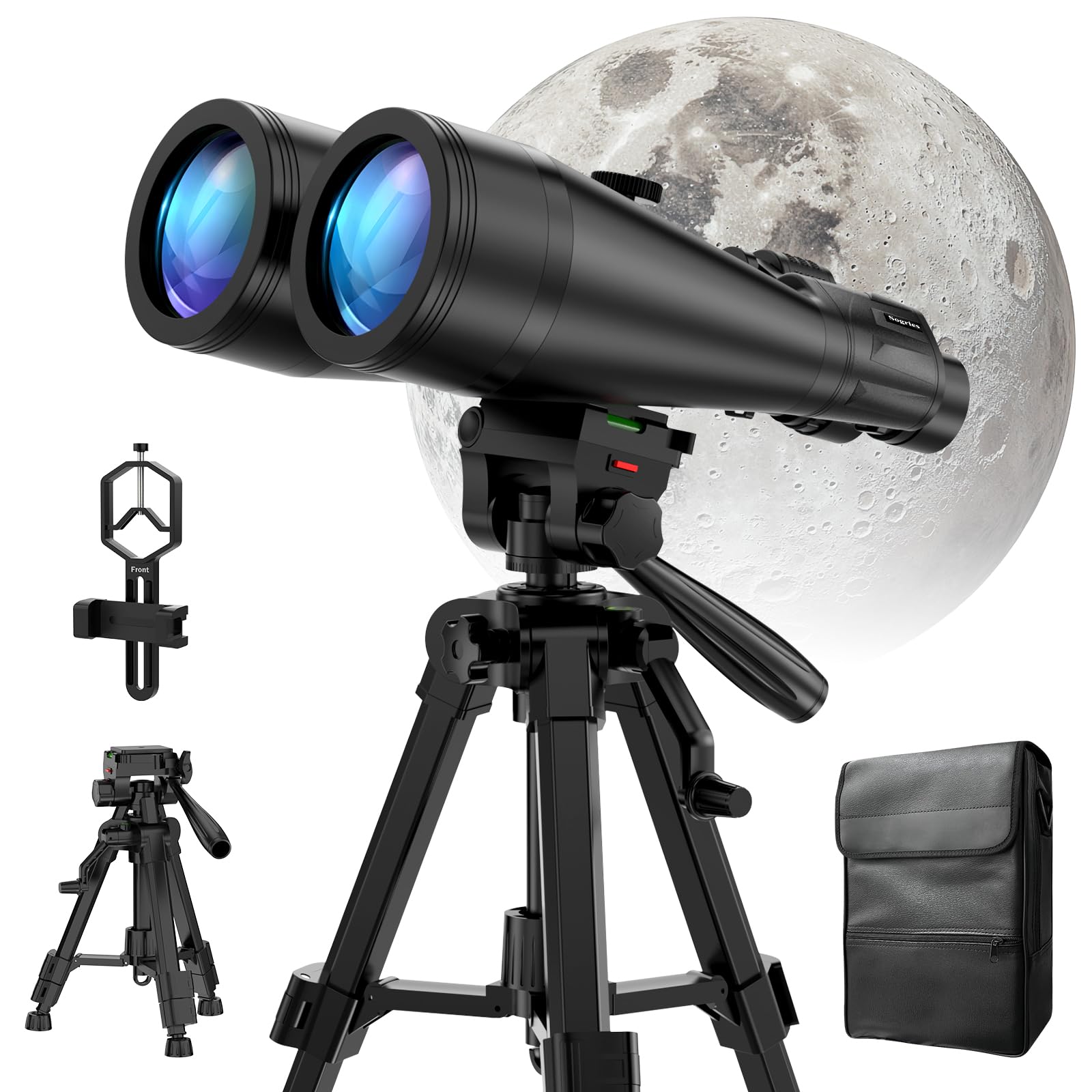
A tripod adapter ships in the box with the SkyMaster 15x70, and that one accessory tells you what the binocular is for. Celestron built something that wants to sit on a mount: 70mm objectives and 15x power give you enough light and enough image scale to pull the Pleiades apart or trace the Milky Way, and a plain photo tripod turns that from a glance into a study session. For most stargazers this is the right first serious pair.
The view is the reason. BaK-4 prisms and multi-coated glass keep the field bright, and 4.4 degrees is nearly nine full Moons across, wide enough to hold Orion's Belt and the sword below it in one frame. That matters more than magnification when you're still learning where things are, and it's why a 70mm beats a bigger, narrower glass for the first year of ownership.
Comfort is where it quietly wins. Eighteen millimeters of eye relief means glasses stay on, and a single center-focus wheel gets you sharp again faster than the individual eyepieces on the big Sogries models. The 3.3-pound body is a two-hands job, so the supplied adapter earns its keep: it threads into the ¼-inch socket and sits on any photo tripod you already own.
Celestron covers it with a limited lifetime warranty, which is a longer commitment than the sealed giant in this group carries.
Pros
- 70mm objectives pull in faint clusters and star fields
- 4.4-degree field frames whole constellations
- Tripod adapter included, unlike the budget pick
- 18mm eye relief works with glasses
Cons
- Heavy enough that hand-held sessions stay short
- Water-resistant rather than sealed against a soaking
For most stargazers this is the pair to buy: 70mm of aperture, a wide, easy-to-aim field, and a tripod adapter included so you aren't hunting for a part.