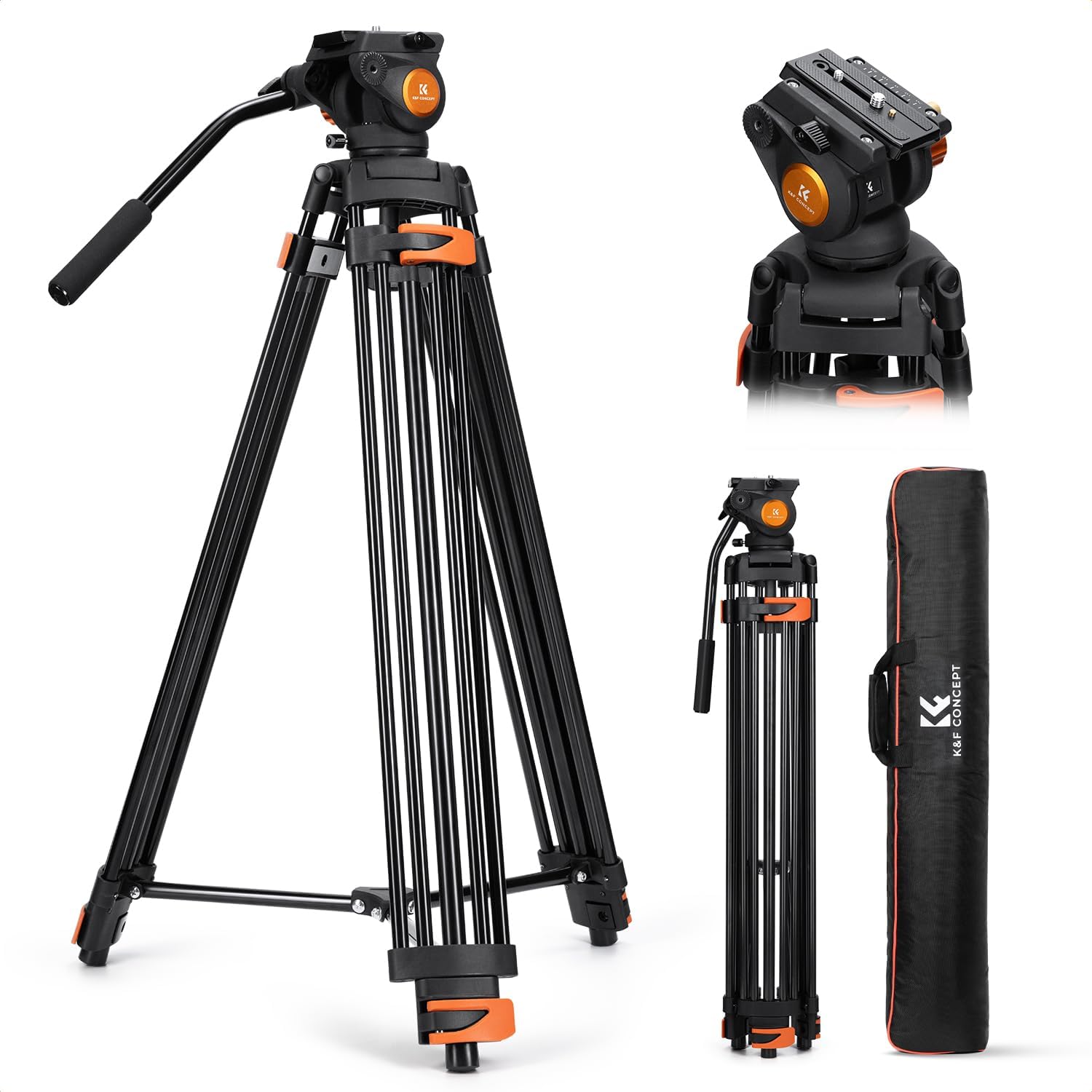
Best Overall

NEEWER TP74
Key details
- Weight
- 10.9 lb
- Max Load
- 17.6 lb (8 kg)
- Max Height
- 74 in (187 cm)
- Quick Release
- DJI RS and Manfrotto 501PL/504PL
Two quick-release standards share one head here: the DJI RS 2, RS3 and RS3 Pro plate, and the Manfrotto 501PL and 504PL. That is the detail that makes the TP74 the tripod we hand most video shooters first, because a camera moves between a gimbal and the sticks without a plate swap or a hunt for an adapter. The 17.6 lb (8 kg) payload covers a mirrorless body with a long zoom or a mid-size camcorder, and 74 inches of maximum height clears a standing subject.
The head is the part we expected to be a compromise, and it isn't. It pans a full 360 degrees and tilts from -75 to +90, and the friction damping is set by feel rather than stepped through presets, so a slow pan stays slow from the first frame to the last. Locked off, the camera stayed where we put it.
Three-section legs with flip locks run from 34 to 74 inches. That 34-inch floor is low enough for a seated interview and not low enough for a ground-level cutaway, and a height change means three locks per leg, so we set the height once at the top of a session rather than nudging it between takes.
The mass is the honest trade. At 10.9 lb it is weight you feel at the end of a corridor, and the same mass is why a pan holds its line where a lighter tripod shivers. What tips it for us is that the head, the piece most likely to be the weak link on an affordable tripod, is the strongest part of this one.
Pros
- Takes DJI and Manfrotto quick-release plates
- 17.6 lb payload with 360° pan and -75/+90 tilt
- Drag set by feel rather than presets
- Holds a long lens without drifting
Cons
- 10.9 lb to carry between locations
This is the tripod we reach for first: 17.6 lb of payload, damping you can set by feel, and a head that takes both DJI and Manfrotto plates.