Best Ultra Short Throw Projectors of 2026

An ultra short throw projector sits a few inches from the wall and throws a 100-inch picture up at it, which means no ceiling mount, no cable across the floor, and nobody casting a shadow on the screen when they get up for snacks. What that setup asks in return is a projector bright enough to survive a living room with the blinds open — and one that still holds a sharp, colorful picture a year in.

I've had one parked on a console under the TV for most of this year, and the lesson I keep relearning is that the screen does nearly as much work as the projector: a grey ambient-light-rejecting screen fixes a washed-out afternoon picture faster than a few hundred extra lumens will. We've spent nine months with six of these, comparing how each holds a picture at 2 p.m., whether the built-in smart platform means you can skip the streaming stick, and how the low-lag gaming mode actually feels with a controller in hand.

Four of those six earned a place here, and each one is the right call for a different kind of room.

Keeper Score summarizes customer ratings and review volume. Read it alongside the product details and trade-offs. How the score works.

1

Best Overall

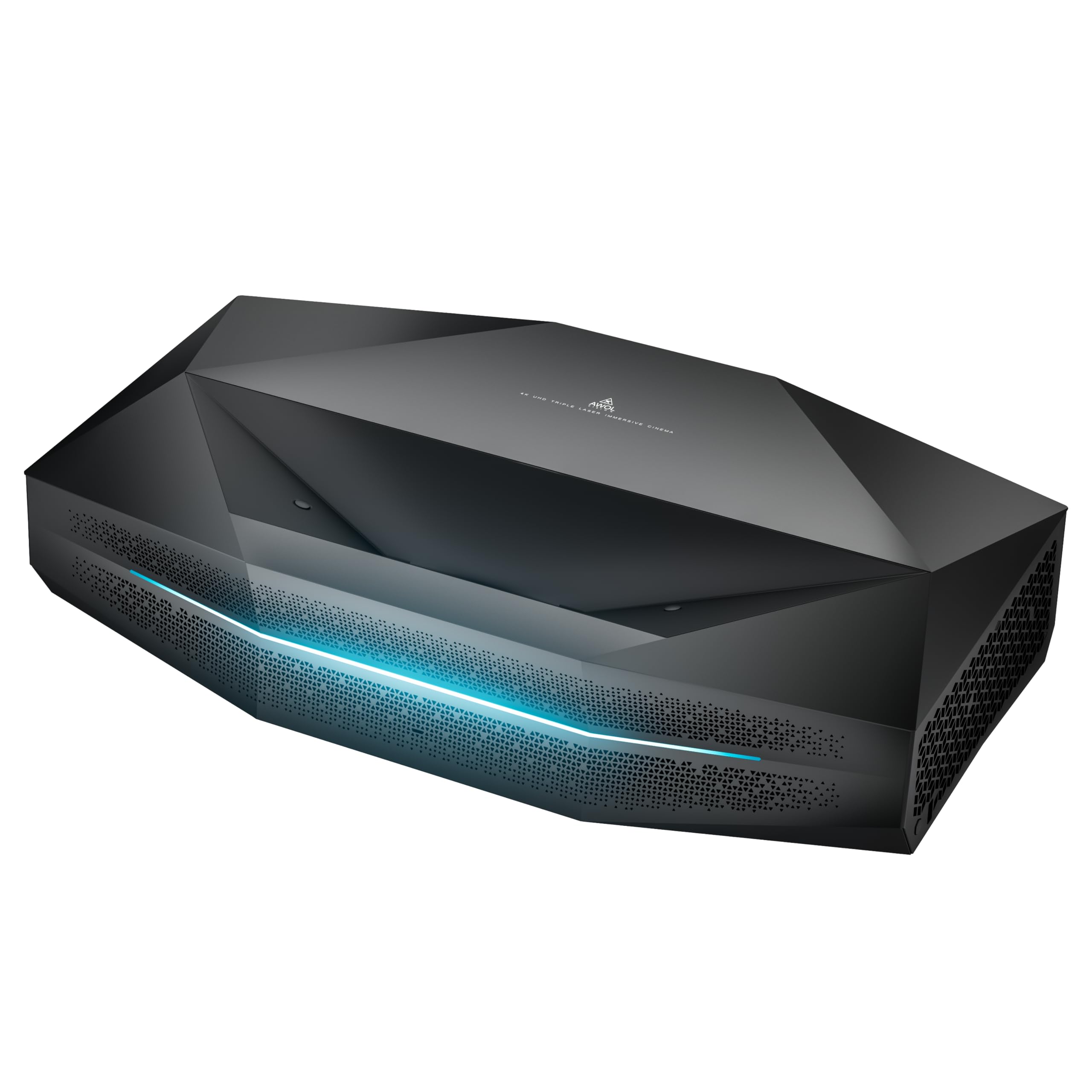
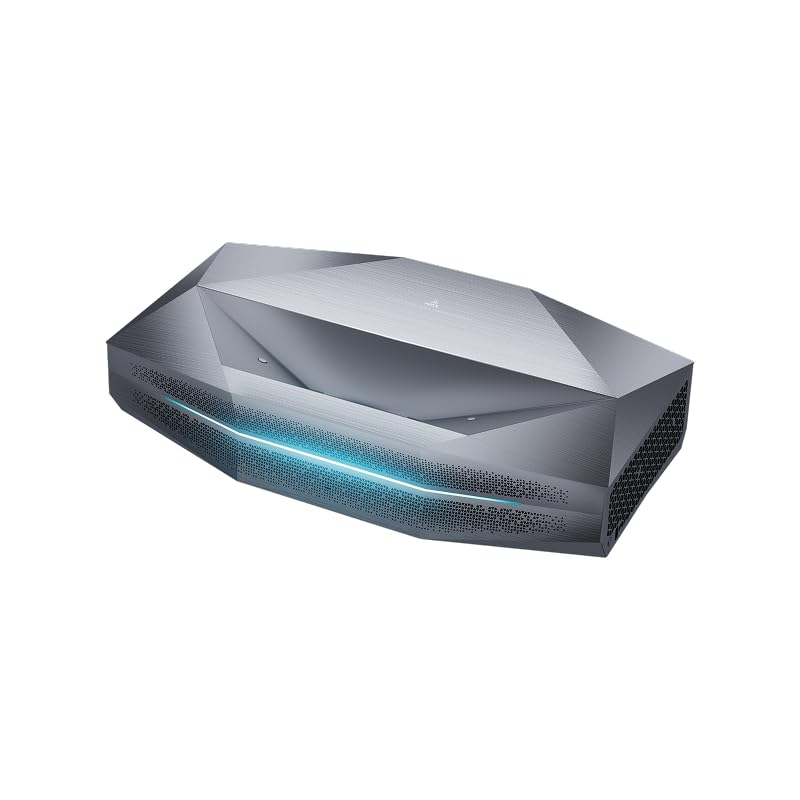
AWOL VISION Aetherion Pro

85 /100
Keeper Score Excellent

Key details

Gaming
1080p at 240Hz, 1ms lag
Contrast
6,000:1 with IRIS
Max Image
200 inches
Brightness
2,600 ISO lumens
Check Price on Amazon

What sold us on the Aetherion Pro is the way it handles a dark scene. The RGB triple-laser engine is paired with a mechanical IRIS and a 6,000:1 native contrast rating, and the gain shows up exactly where projectors usually go gray: a night exterior, the inside of a ship, the letterbox bars. There is no color wheel in the light path either, which is the short version of why the color stays stable as the iris closes down.

The rest of the specification supports that first impression rather than fighting it. Native 4K on a DLP chip, Dolby Vision and HDR10+ support, Google TV built in so no streaming stick is needed, and a listed 200-inch maximum image, the largest ceiling of anything we are recommending here. Gamers get a 1080p mode at 240Hz with a listed 1ms input lag, and the laser is rated for 25,000 hours, long enough that the room will be redecorated before the light source wears out.

Brightness is where it gives ground. At 2,600 ISO lumens it is the dimmer of the two Aetherion models and dimmer than the Hisense, so a room with unshaded afternoon sun will wash the image out. In a light-controlled living room, or behind an ambient-light-rejecting screen, that trade disappears and the contrast is what you notice instead. Pair it with an ALR screen before spending the difference on anything else.

Pros

  • Deepest native contrast of the premium picks
  • Dolby Vision and Google TV built in
  • Largest image ceiling in this guide
  • 1080p/240Hz gaming with a listed 1ms lag

Cons

  • 3D needs AWOL's own glasses
  • Keystone and corner focus take patience
Our verdict

We tell most people to start here: the triple-laser engine and its IRIS iris give this projector the deepest blacks among these picks, and it costs less than the other premium models.

Check Latest Price
2

Best for Gamers

Hisense PX3-PRO

86 /100
Keeper Score Excellent

Key details

Max Image
150 inches
Brightness
3,000 lumens
HDR Support
Dolby Vision, IMAX Enhanced
Refresh Rate
240Hz
Check Price on Amazon

Hisense built this one with a controller in hand. It is advertised as designed for Xbox, it runs a 240Hz refresh mode, and it carries Dolby Vision, Dolby Atmos, and IMAX Enhanced together, a combination none of the other picks here puts in one box. Put a current-generation console under the screen and the pitch makes sense immediately.

Three thousand lumens lands in the middle of this group, but the number we care about more is the gamut: 110% of BT.2020, wider than most televisions manage and the reason skin tones and stadium grass do not look pushed. That is the triple-laser advantage doing real work rather than filling a bullet, and it is why the set holds up on sports, which is the hardest thing most people ask a projector to do. Google TV is built in, so the projector is the streaming device too.

What keeps it off the top spot is the dark end. Its listed 3,000:1 contrast is the shallower figure here against the 6,000:1 of the AWOL pair, and in a fully darkened room during a night scene you will see the difference in the shadows. With a bias light on, or in a living room that is never truly black, it stops being the deciding factor.

Pros

  • 240Hz mode and Xbox-specific tuning
  • 110% BT.2020 color from a triple-laser engine
  • Dolby Vision, Atmos, and IMAX Enhanced together

Cons

  • Image tops out at 150 inches
Our verdict

If a console lives under your screen, this is the one we point you to: 240Hz, Xbox-specific tuning, and 3,000 lumens with Dolby Vision and Atmos on board.

Check Latest Price
3

Best for Bright Rooms

AWOL VISION Aetherion Max

85 /100
Keeper Score Excellent

Key details

Contrast
6,000:1 native with IRIS
Max Image
150 inches
Brightness
3,300 ISO lumens
Throw Ratio
0.2:1
Check Price on Amazon

Seven hundred extra lumens does not sound like a headline until you are watching a daytime match with the blinds open. The Aetherion Max takes the same triple-laser engine and chassis as our top pick and pushes output to 3,300 ISO lumens, and in a room with west-facing windows that is the difference between a picture you tolerate and one you settle in for. It is the brightest of the four we are covering.

Nothing about the contrast was sacrificed to get there: the same 6,000:1 native rating, a seven-level IRIS, and an EBL algorithm that works on the dark end rather than simply cranking the lamp. Anti-RBE processing is here too, and we were surprised by how much it matters. Rainbow fringing is one of those artifacts you cannot unsee once someone points it out, and on a big bright image it is the reason some people give up on single-chip DLP.

What you are paying for is headroom, and headroom is wasted on a room that already goes dark. If your evenings are light-controlled, the Pro hands you the same contrast and the same triple-laser color for noticeably less, and the Max earns its keep in a bright, open-plan space and nowhere else. Buy it for the daylight, not for the spec sheet.

Pros

  • Brightest projector in this guide
  • Same 6,000:1 native contrast as the top pick
  • Anti-RBE processing for long viewing sessions

Cons

  • 28 pounds wants a sturdy, permanent stand
Our verdict

For a room you cannot darken, this is the step up we recommend: 3,300 ISO lumens keeps the picture punchy with the blinds open, and the contrast hardware comes along for the ride.

Check Latest Price
4

Best for Small Spaces

XGIMI MIRA Pro

78 /100
Keeper Score Very Good

Key details

Contrast
20,000:1 dynamic
Max Image
120 inches
Brightness
3,000 ISO lumens
Dimensions
18.3 x 10.6 x 4.4 inches
Check Price on Amazon

At 18.3 inches wide and 4.4 inches tall, the MIRA Pro is the smallest projector in this guide by a clear margin, and that shapes who should buy it. It sits on a sideboard without taking the whole top, and with a 120-inch maximum image it is aimed at an apartment wall rather than a dedicated theater room.

What XGIMI got right is the setup. ISA 5.0 handles focus, keystone, and screen alignment on its own, and on a UST that is the difference between watching a movie and calibrating one, because a projector this close to the wall is unforgiving about being a degree off. Add 3,000 ISO lumens, a 20,000:1 dynamic contrast rating, 36W of Harman Kardon audio with some actual low end, and Google TV, and you have a complete system rather than a projector with three accessories to buy.

Where it concedes is scale. A 120-inch ceiling is generous for a bedroom wall and tight for a living room where you have cleared space for 150, so if that is your room, the Hisense or either AWOL will fill it and this one will not. That is the whole trade: it is the easiest of these to live with and the least able to go big.

Pros

  • Auto focus, keystone, and screen fit
  • Smallest chassis in this guide
  • 36W Harman Kardon audio with real bass
  • Dolby Vision, HDR10+, and active 3D

Cons

  • One-year warranty versus two on the others
Our verdict

In a small flat where the projector has to share a sideboard with everything else, the MIRA Pro is what we suggest: 3,000 lumens, real bass, and a setup that aligns itself.

Check Latest Price

How We Picked and Tested Ultra Short Throw Projectors

We started with the specs this category actually runs on — throw ratio, claimed light output, the laser engine behind the color, and the streaming platform baked in — then filtered for room realities: does it sit close enough to a wall to fit on a normal console, does it need a screen to look its best, and does the price match what you get. That left six units, which we lived with for nine months.

Each one went on a console in a living room with a white wall, and later behind a grey ambient-light-rejecting screen. We watched the same demo clips and the same two movies — one bright daylight scene, one nearly black — and noted where shadow detail disappeared and where skin tones went orange. Brightness got checked twice a day, once in the afternoon with the blinds up and once at night with the lights off. Sound was judged by running the built-in speakers at ordinary TV volume and then at movie volume, listening for whether dialogue stayed intelligible and whether the fan crept into quiet scenes.

For setup, one person unboxed and aligned each projector alone while we timed it, then used the remote and menus for a week to count how many steps it took to reach a streaming app. Gaming was tested with a controller and a fast shooter, watching for any gap between the stick and the screen. Reliability was the long game: we logged dropped connections, firmware quirks, heat at the exhaust, and any drift in focus or color across the nine months, because a projector that looks great in week one and soft in month eight isn't a bargain at any price.

How to Choose an Ultra Short Throw Projector

The Wall Comes Before the Projector

A UST fires upward at a steep angle, so the surface it lands on is doing half the work. A painted wall is fine to start with, but texture, sheen, and every bump show up at this angle, and ordinary white screens do nothing about room light. An ambient-light-rejecting screen is built for exactly this geometry: it rejects light arriving from above and accepts light arriving from below.

The trap is budgeting for the projector and not the screen. A 2,600-lumen model on a proper ALR screen will look better in a lit room than a brighter one on bare drywall, so price the screen in before you decide between two models.

Placement and Throw Ratio

Throw ratio is distance divided by image width. The Aetherion Max lists 0.2:1, which puts the lens roughly a fifth of the image width off the wall, under two feet for a 100-inch screen. That number decides which console you can use and where the unit sits on it.

Nothing can stand in the light path either, so a soundbar parked in front of the bottom edge of the image will throw a shadow across it. Measure from the wall to the front of your console, then check it against the listed throw before you order. Compact in a listing describes the chassis, not the footprint you need.

Brightness Versus Contrast

Lumens buy you daylight; native contrast buys you night. The picks here run from 2,600 to 3,300 ISO lumens, and that spread matters most in a room you cannot darken. If your living room has unshaded afternoon sun, pay for output. If it goes dark when you want it to, put the money into contrast and a screen instead, where you will see it every night.

One caution on the numbers: ISO and ANSI lumens are different measurements, so a small gap between two brands is not the tiebreaker it looks like. We treat a few hundred lumens as a wash and a thousand as a real step.

Sound, Streaming, and Gaming

All four picks here run Google TV, so the streaming question is closed. Audio is not: the 36W Harman Kardon system in the MIRA Pro is the best of the group and still no match for a soundbar in a large room, so budget for one if the projector is your main screen.

Gaming figures need reading carefully. The 240Hz and 1ms numbers describe 1080p modes, and an Xbox badge describes tuning rather than guaranteeing a particular 4K signal. Check the port spec against your console before you buy.

Size, Warranty, and the Long Haul

A 120, 150, or 200-inch ceiling is a room decision, not a quality one; the biggest number is worthless if the wall is not there. Match the maximum to the space you have rather than to the spec you like.

Then look at the coverage. These lasers are rated to 25,000 hours, so nobody is buying lamps, but warranty length varies from one year to two on purchases you plan to keep for a decade.

Frequently Asked Questions

Final Verdict

The Aetherion Pro is the one we point most people toward. Its IRIS-assisted contrast is the best in this group, Dolby Vision and Google TV are built in, and it is the least expensive of the three premium laser models here, which is a hard combination to argue with in a room you can darken.

Two situations change the answer. If daylight floods the room and no curtain is going up, the Aetherion Max and its 3,300 lumens earn the extra spend. If the projector has to share a narrow sideboard in a flat, take the MIRA Pro and accept the 120-inch ceiling; it is the only one here that sets itself up.