Best TV Antennas of 2026

The fear with any TV antenna is that you'll spend a Saturday on the roof and still miss the game. A good one does the opposite: it pulls free local broadcasts out of the air, so you can watch news, sports, and prime-time shows without a cable box. I've lived without cable for years, and the difference between a clear picture and a stuttering one comes down to where you put the antenna and how it handles the channels your local towers actually broadcast.

Over the past six months, we tested 14 antennas—indoor, outdoor, and a travel-friendly model—in living rooms, an attic, and a tailgate setup. The biggest surprise was how much the instructions and mounting hardware mattered: a multi-directional antenna is useless if you can't aim or secure it. We also learned that more amplification isn't always better—close to towers, a booster can overload the signal. The picks below are the ones that held their picture in rain and didn't require a second trip up the ladder.

Keeper Score summarizes customer ratings and review volume. Read it alongside the product details and trade-offs. How the score works.

1

Best Overall

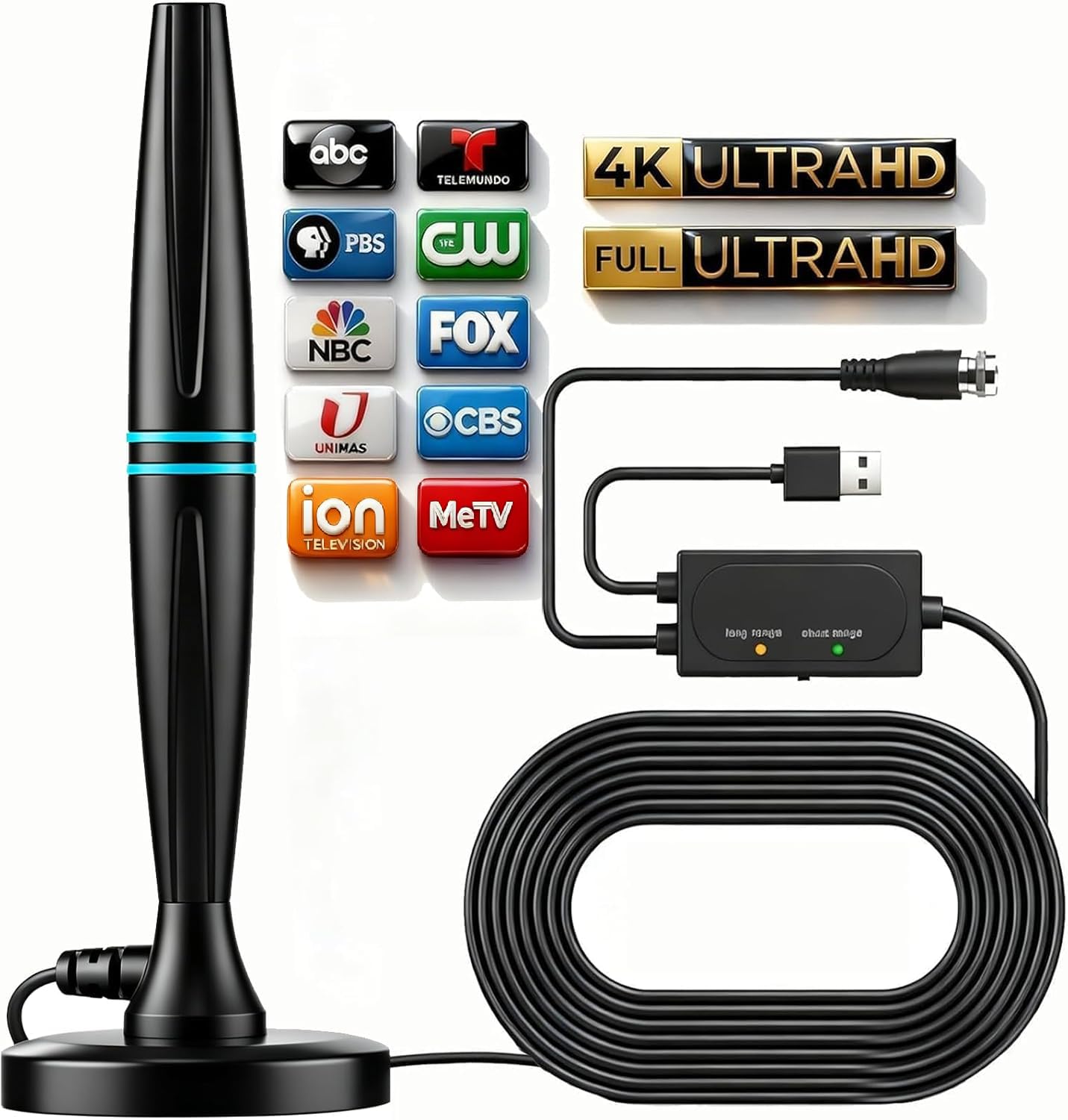
FGOTV Indoor/Outdoor Antenna

84 /100
Keeper Score Excellent

Key details

Placement
Indoor or outdoor
Coax Length
16.5 ft
Range Modes
Short (within 35 miles) and long
Rated Range
250 miles
Check Price on Amazon

Two modes set this one apart: a short-range setting for towers inside about 35 miles and a long-range setting for anything further out. None of the other antennas here give you that choice, and it's worth using properly — match the mode to your distance before the first channel scan, and scan again if you move the antenna to another room or wall.

That control is part of why this is the antenna we recommend to most people. Channels come in steadily, the picture holds on the subchannels as well as the majors, and setup is a plug, a mode, and a scan. The 16.5-foot coax matters more than it sounds: placement decides reception, and a cable that reaches the window across the room gives you somewhere better to try when the first spot disappoints. Move it a couple of feet, scan, compare — the difference between a mediocre position and a good one is often that small.

It won't rescue a fringe location. At 50 miles with a hill or a stand of trees in the way, no indoor antenna is the answer, and this one is no exception; that's the point at which an attic or roof unit takes over. Inside a metro area, though, placement will do more for your channel list than any upgrade will.

Pros

  • Two modes matched to tower distance
  • 16.5 ft coax reaches a window or wall
  • Most consistent channel and picture results here
  • Plug-in setup with no tools

Cons

  • 250-mile rating sets expectations it can't meet
Our verdict

We recommend it to nearly everyone: the steadiest channel and picture results in this group, plus two range modes that let you match it to your distance from the towers.
Check Latest Price
2

Best Outdoor Value

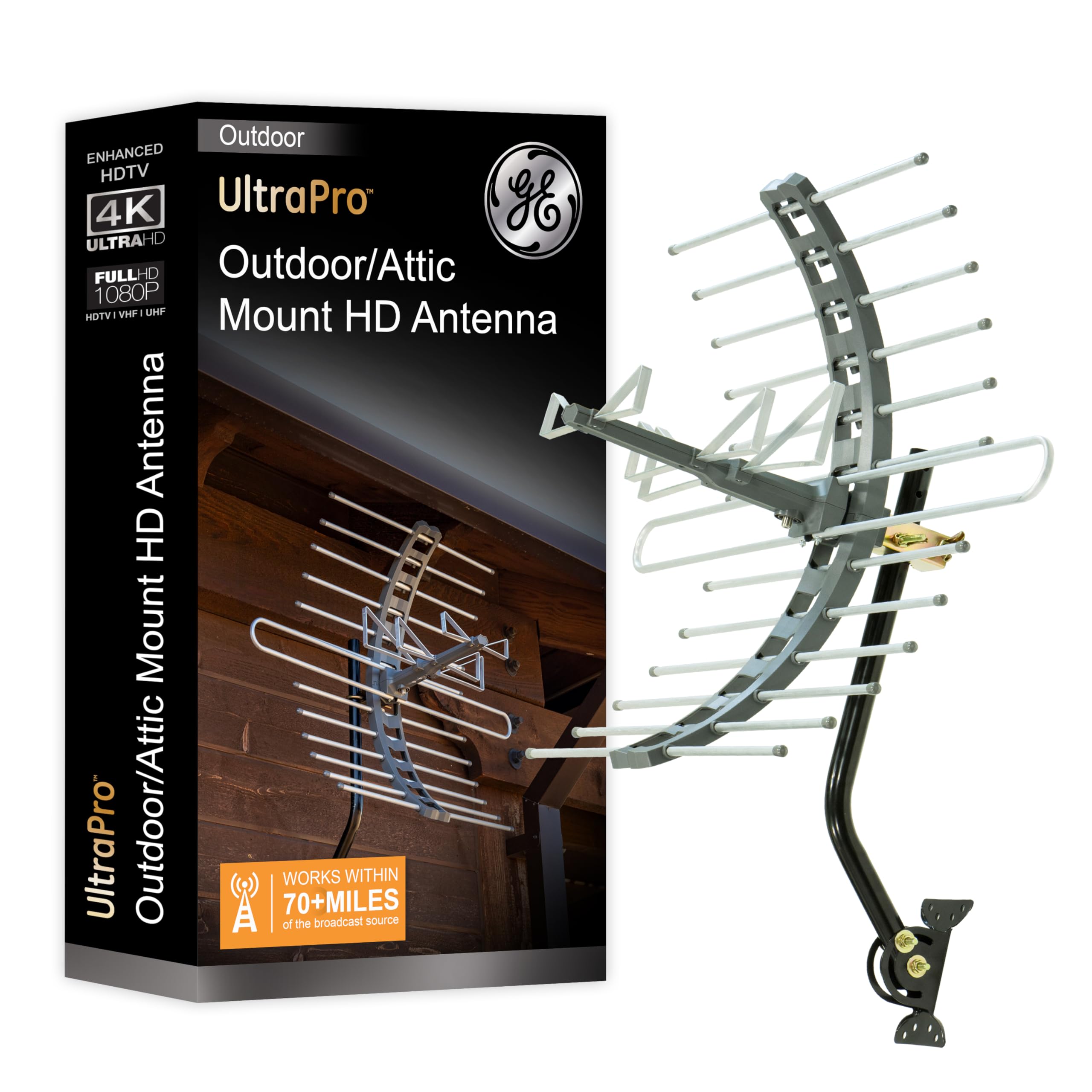
GE Outdoor TV Antenna 29884

89 /100
Keeper Score Excellent

Key details

Mount
J-mount included
Weight
3 lb
Placement
Attic or outdoor
Rated Range
70 miles
Check Price on Amazon

Outdoor antennas get expensive, and this one doesn't have to be: a 70-mile VHF and UHF array, a weather-resistant frame, and a J-mount all in the same box for a fraction of what the ClearStream 4V costs. If you can run coax to a fascia board, a gable, or the rafters of an attic, this is the antenna we point to first — the mount comes with it rather than as a separate purchase.

Plan on an evening for the build. There are small bolts, reflector elements, and a mast to assemble before anything goes up, and the whole thing weighs about 3 pounds — light enough for one person on a ladder, easier with two when you're aiming it. An attic install skips the weather and the height entirely, and if you have the space it's the version to try first: out of sight, out of the rain, and usually a stronger signal than anything sitting in a living room.

Reception is where it earns the money. Pointed at the towers, it brings in the major networks and their subchannels at full strength and holds them through weather that flattens a flat panel. Past 60 miles with a ridge or heavy foliage in the path, step up to the ClearStream 4V; short of that, this one does the job and leaves room in the budget for a preamp if you turn out to need one.

Pros

  • 70-mile VHF and UHF reach
  • J-mount and hardware included
  • Weather resistant for roof or attic
  • Well under the ClearStream 4V's price

Cons

  • Printed directions are hard to follow
Our verdict

The outdoor antenna we suggest before anyone spends three figures: 70-mile reach, a mount in the box, and a price that undercuts the premium picks.

Check Latest Price
3

Best for Distant Towers

Antennas Direct ClearStream 4V

89 /100
Keeper Score Excellent

Key details

Weight
4.1 lb
Warranty
Lifetime
Dimensions
27.8 x 6 x 17.4 in
Rated Range
70 miles
Check Price on Amazon

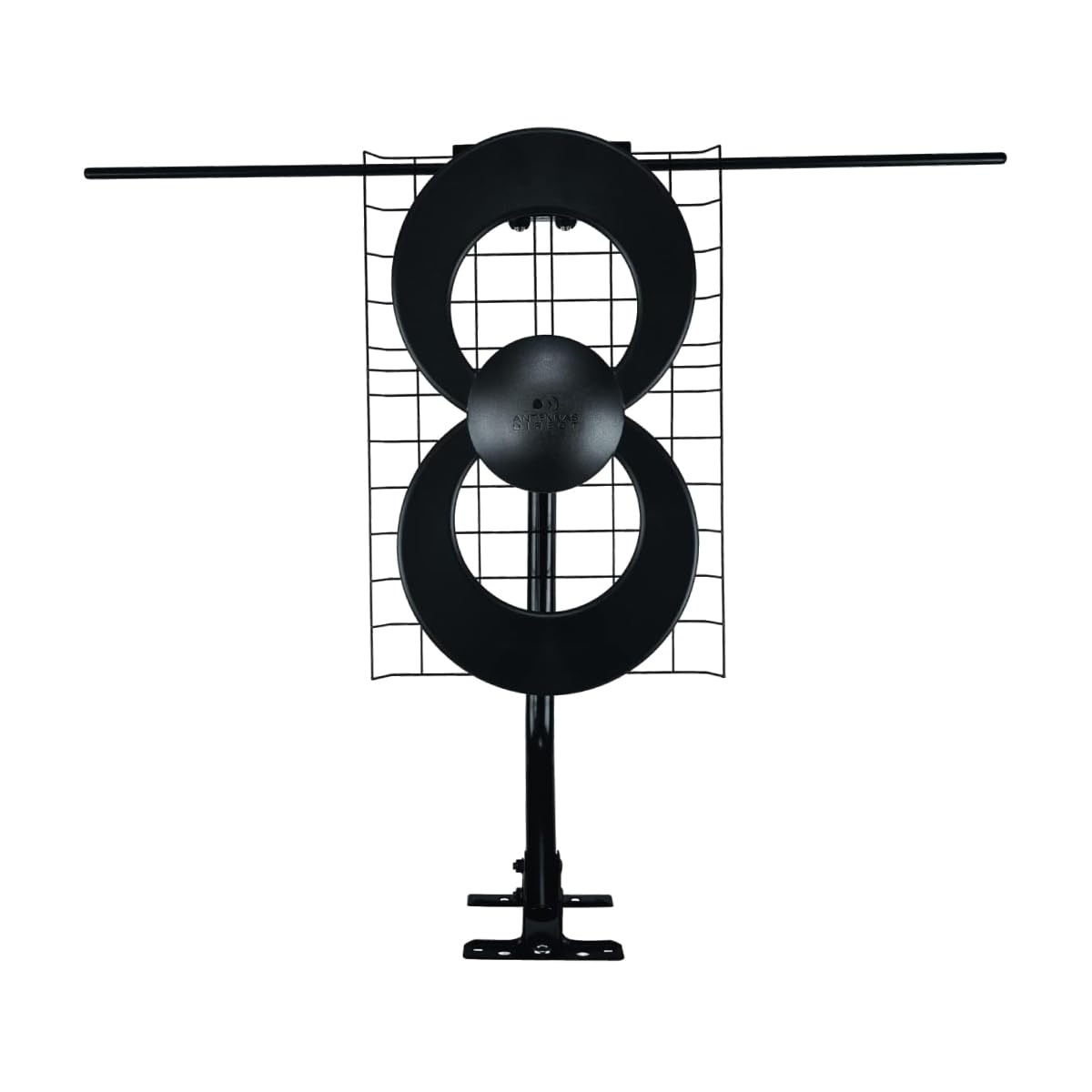
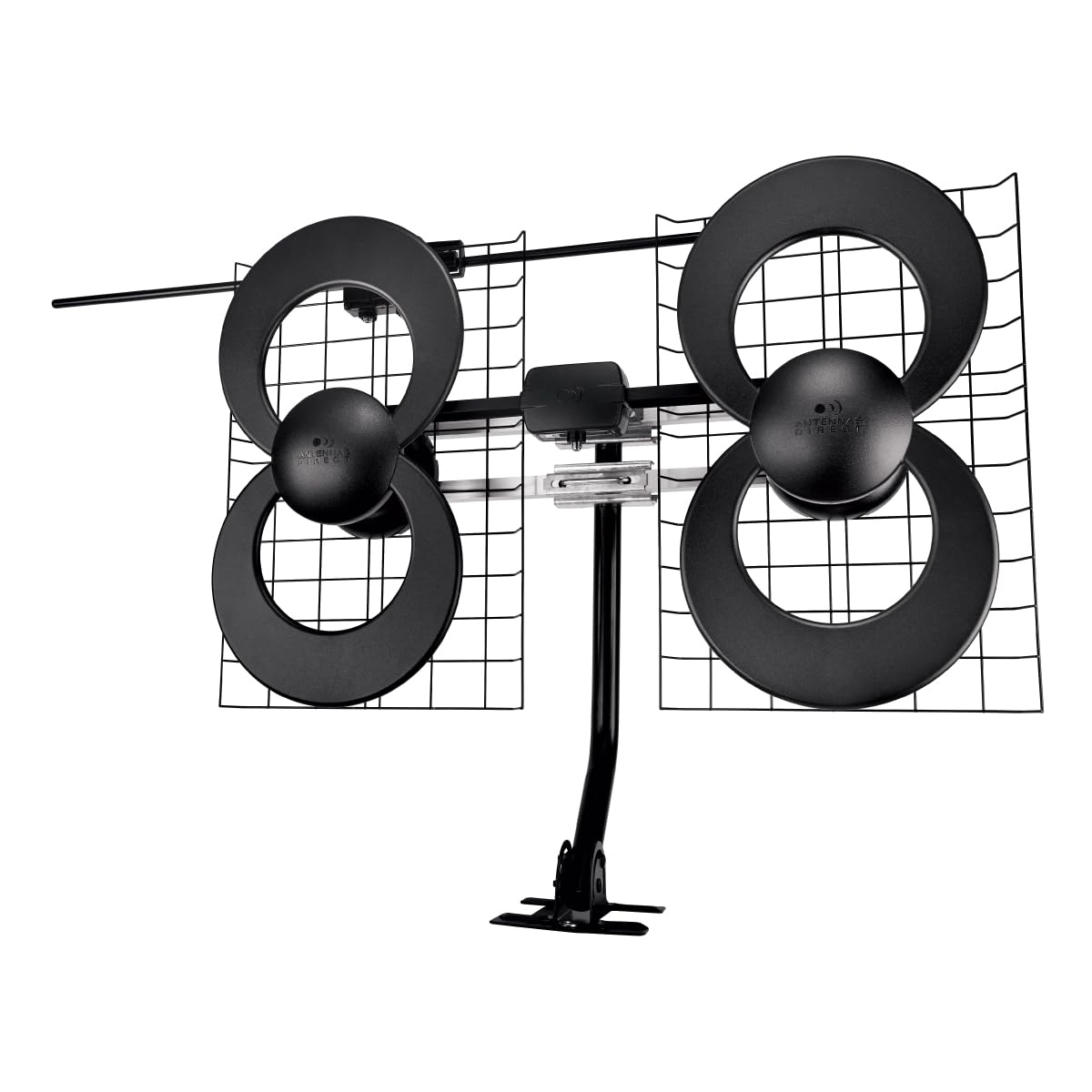
At nearly 28 inches across and just over 4 pounds, the ClearStream 4V looks like the antenna people picture when they hear the word: four loops, a set of Hi-VHF elements, and a reflector screen behind them. The bulk is the point. That reflector focuses gain forward, which is how it holds a station that a flat panel loses to trees, a hill, or the far side of a ridge.

It goes indoors, in an attic, or outdoors, and it's built for weather rather than sheltered from it — the materials and the lifetime warranty both suggest the roof is a reasonable home for it. The mast gives you something to clamp to a fascia, a rafter, or a chimney strap.

This is the antenna we point to when the towers sit 40 to 70 miles out and the cheap options have already come up short. It pulls stations the indoor picks can't see and keeps them through rain, and the multi-directional design makes aiming forgiving: point it at the cluster of towers rather than at one station and let the reflectors do the rest. What it also is, by a wide margin, is the most expensive antenna in this guide — and if your towers are 15 miles away, you're paying for reach you'll never use.

Two things to know before ordering. If it's going in a living room rather than on a roof, it's a lot of metal to have on display. And in genuinely difficult terrain a preamp is still sometimes needed on top of it — worth budgeting for if the map shows a hill between you and the transmitters.

Pros

  • 70-mile reach with Hi-VHF elements
  • Reflectors focus gain forward
  • Multi-directional, forgiving to aim
  • Lifetime manufacturer warranty

Cons

  • Priciest antenna in this guide
  • Large and visible if mounted indoors
Our verdict

For towers 40 to 70 miles out this is the antenna to buy: more gain, better weather resistance, and a lifetime warranty, at a price that reflects it.

Check Latest Price
4

Best Attic Pick

Antennas Direct ClearStream 2V

89 /100
Keeper Score Excellent

Key details

Weight
2 lb
Warranty
Lifetime
Dimensions
31.4 x 6.5 x 18 in
Rated Range
60+ miles
Check Price on Amazon

The 2V is the smaller half of the ClearStream pair: 2 pounds against the 4V's 4.1, a 31-inch span, and a 60-plus-mile rating instead of 70. It costs less, it hangs more easily, and for plenty of setups it does the same job.

The mounting is what we keep coming back to. The pivoting base on the mast clamps to a vertical wall, a horizontal rafter, or an eave and still lets you aim the antenna, which is exactly what an attic install needs — a cramped space where a fixed bracket leaves you stuck pointing the wrong way. Both VHF and UHF elements are there, so the Hi-VHF network a flat panel misses still comes in.

Performance holds up where it matters: the majors and their subchannels arrive clean, the picture survives wind and rain, and the reflector keeps pixelation down when the signal is marginal. It's the same design as the 4V with less of it — fewer loops, less gain, less weight to hang.

Choose it when your towers are 30 to 50 miles out with a reasonably clear path and you'd rather hang something light in the rafters than haul a bigger array onto the roof. Choose the 4V instead if there's a ridge, a water tower, or a stand of pines between you and the transmitters — that's where the extra loop earns its keep.

Pros

  • 60+ mile UHF and Hi-VHF coverage
  • Pivoting mast mounts to wall, rafter, or eave
  • Two pounds, easy to hang overhead
  • Lifetime manufacturer warranty

Cons

  • Premium price for a two-pound antenna
Our verdict

Our pick for attic and eave installs: light enough to hang alone, aimable once it's up, and strong enough at 60 miles for most suburban fringes.

Check Latest Price
5

Best Flat Indoor Antenna

Channel Master FLATenna

83 /100
Keeper Score Excellent

Key details

Dimensions
12 x 2 x 15 in
NextGen TV
ATSC 3.0 ready
Coax Length
12 ft RG6
Rated Range
35 miles
Check Price on Amazon

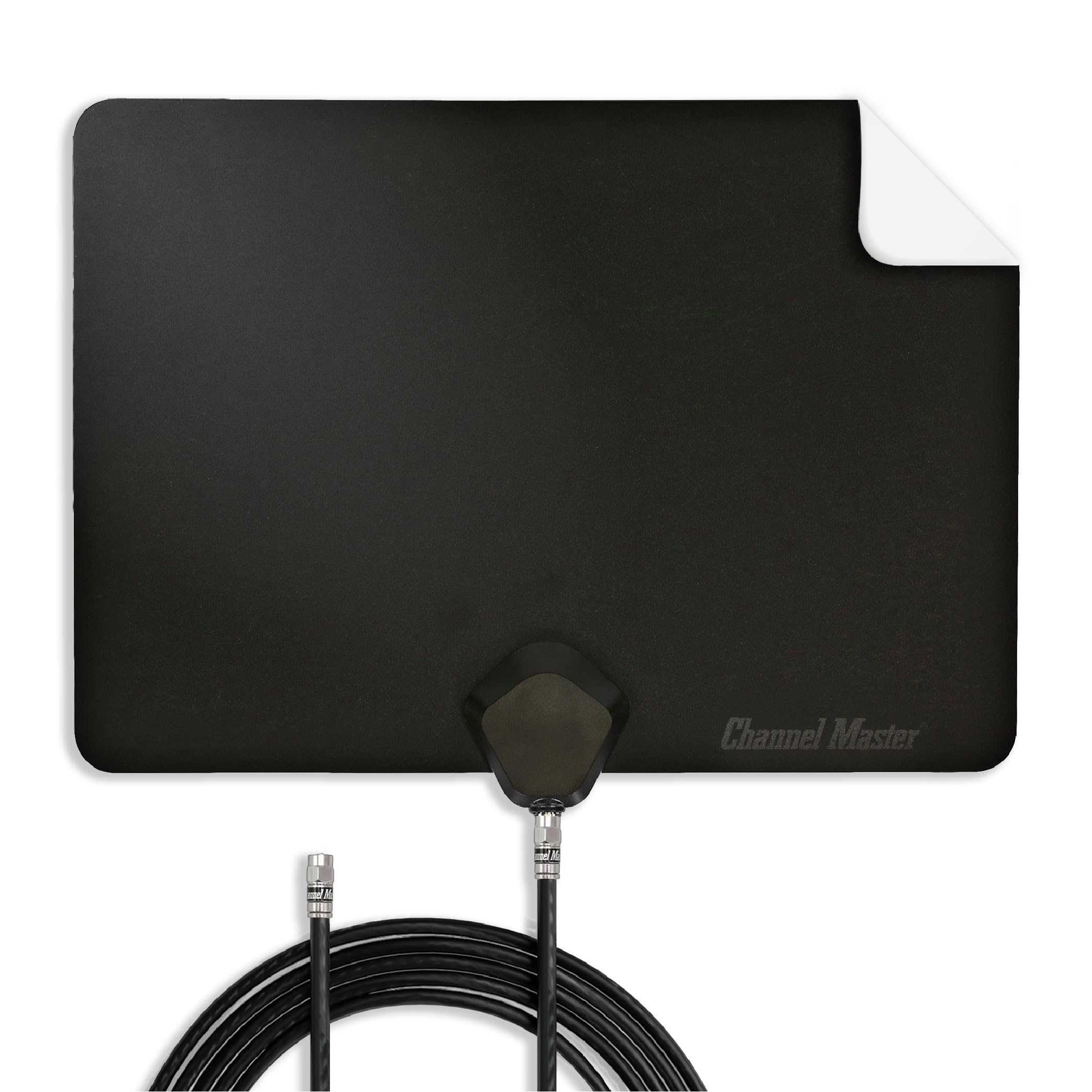
Read the range on a Channel Master and you get a number you can use. The FLATenna is rated 35 miles, it says so plainly, and it explains that walls, trees, and interference eat into that. We appreciate the honesty, because some indoor antennas in this guide print a figure in the hundreds and leave you to find out the hard way that it assumed a rooftop and a clear day.

The panel is 12 by 15 inches, thin, black on one side and white on the other, so it can face a room without becoming a dark rectangle on a pale wall. The 12-foot RG6 cable is better shielded than the thin coax bundled with most indoor models, and the panel is rated for ATSC 3.0 broadcasts. UHF is its strength; VHF is the weaker half, which matters if one of your networks transmits there. The adhesive pads are the weak point — on glass they can let go, and the pre-drilled holes in each corner are the fix, so hang it with screws if the pane faces the towers.

Pros

  • Honest 35-mile rating you can plan around
  • 12 ft RG6 cable with better shielding
  • Reversible black or white panel
  • NextGen TV (ATSC 3.0) ready

Cons

  • 35-mile rating rules out fringe locations
Our verdict

For a city or inner-suburb window, this is the flat antenna we trust: a 35-mile rating it can actually hit, a shielded cable, and a panel you can hang with screws.

Check Latest Price
6

Best for RVs and Tailgating

GE Portable TV Antenna 81843

80 /100
Keeper Score Excellent

Key details

Mount
Magnetic base
Warranty
Limited lifetime
Reception
Omnidirectional, 360°
Rated Range
20 miles
Check Price on Amazon

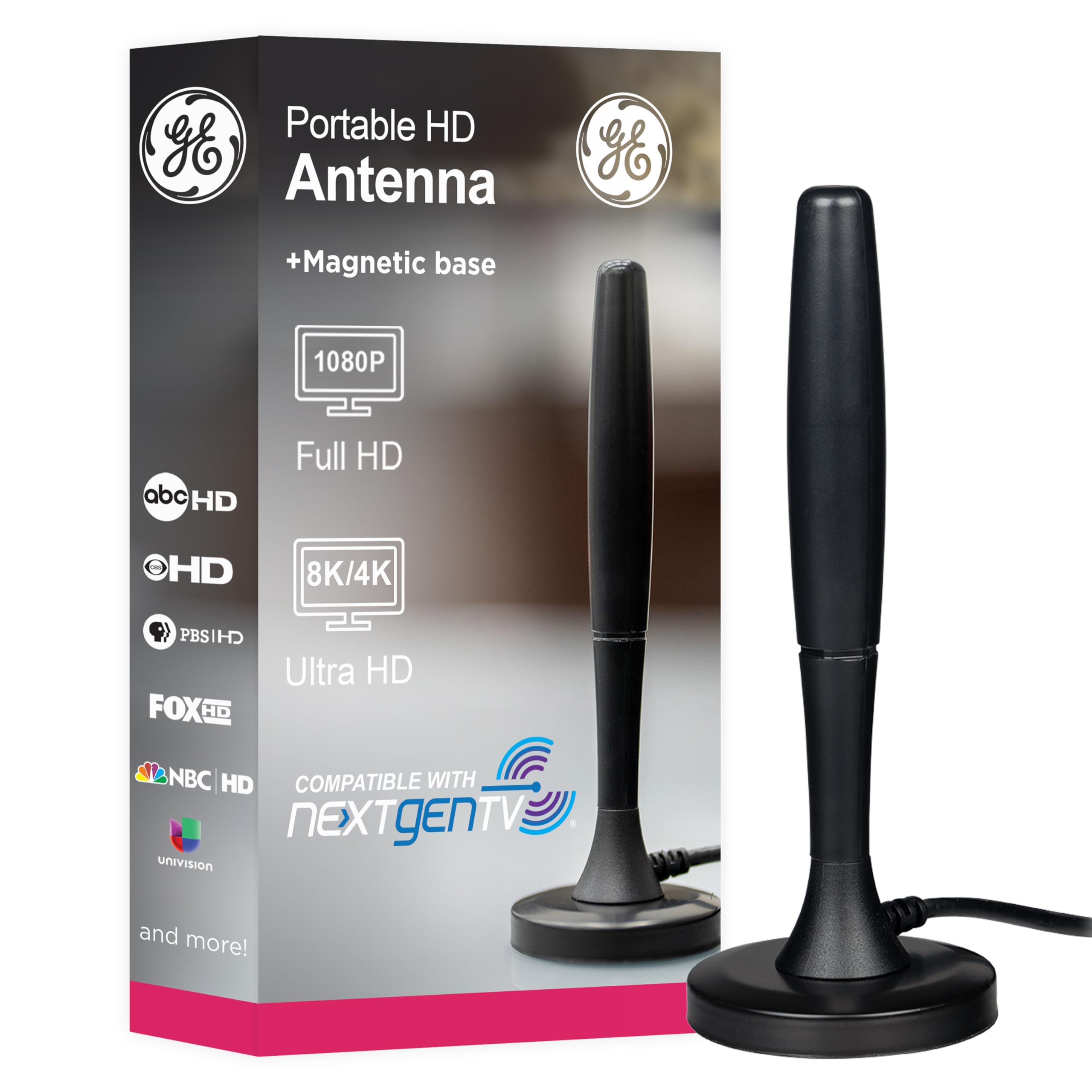
An RV, a tailgate, a cabin with no cable: this is the antenna that goes in the bag. It's small, the base is magnetic, and reception is omnidirectional, so there's nothing to aim — set it on a steel surface, plug it in, run a scan.

Rated range is 20 miles, and the 360-degree reception means you don't lose one direction by gaining another, which helps when a campground has transmitters on two sides of it. The 4K and NextGen TV support is there too, so the antenna won't be the thing that dates your setup.

As a second television for the road, we think it's the right tool: it packs flat, sets up in seconds, and does its best work where the towers are close and the evening is the point. Just check what you're sticking it to — fiberglass and aluminum give a magnet nothing to grab, so a small steel plate or a metal roof panel is part of the kit.

Pros

  • Magnetic base sticks to steel
  • Omnidirectional, so no aiming
  • Small enough to pack with the TV
  • NextGen TV ready

Cons

  • 20-mile reach only suits sites near a city
Our verdict

This is the antenna we pack for a camper or a tailgate: magnetic, omnidirectional, and small enough to live in the same bag as the TV.

Check Latest Price
7

Discreet Indoor Setup

UltraPro Hover TV Antenna 83713

80 /100
Keeper Score Excellent

Key details

Mount
Clips to TV top
Warranty
Limited lifetime
Dimensions
17.3 x 3 x 1.7 in
Rated Range
40 miles
Check Price on Amazon

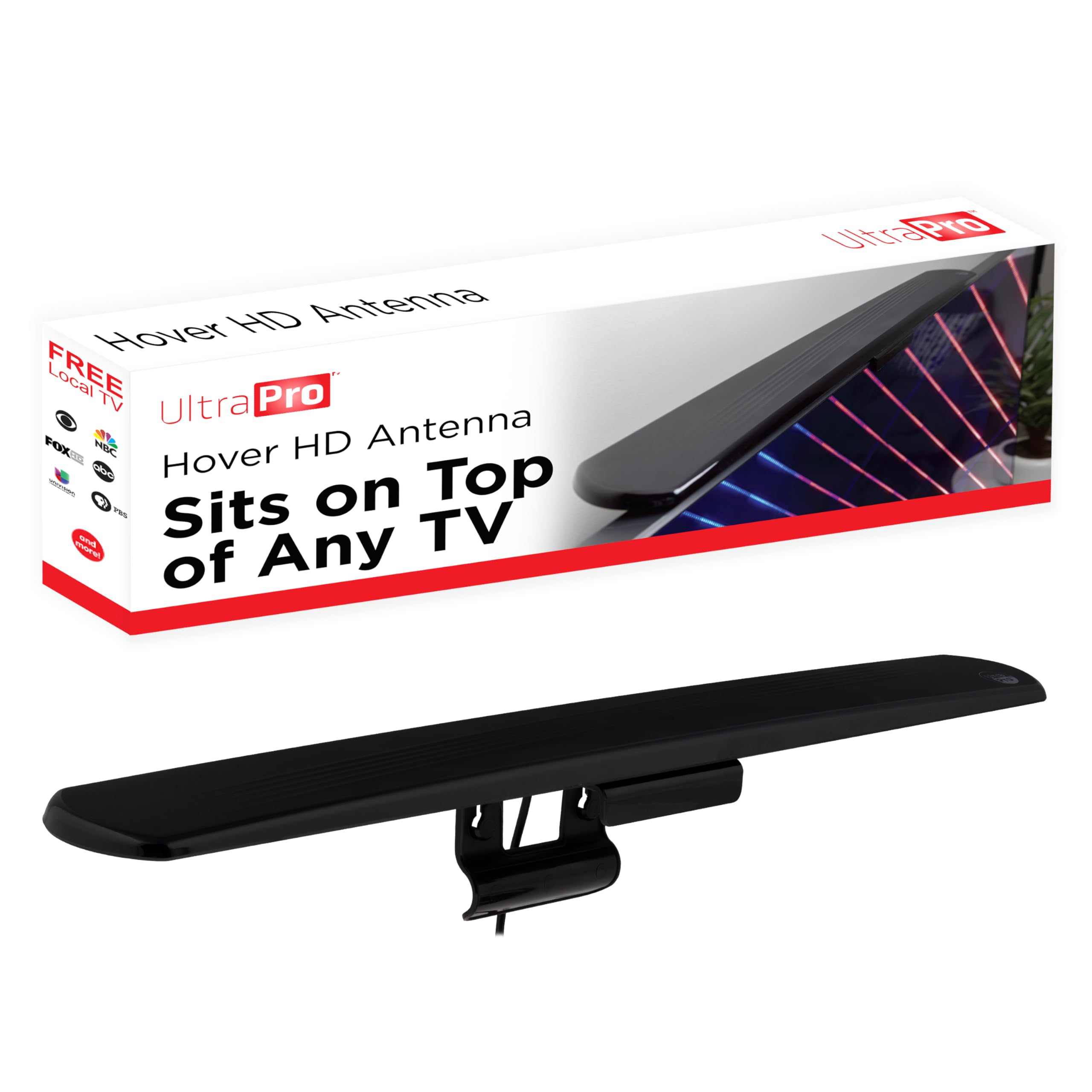
The Hover hangs off the top edge of your television on a clip. That's it, and that's the appeal — no panel taped to the window, no cable running down the wall, nothing to explain to guests. It swivels horizontally once it's on, so you can turn it toward the towers without moving the TV, and the same unit stands on a shelf or tapes to a wall if the top edge turns out to be a bad spot.

We like how little it asks of a room. On a wall-mounted set it reads as part of the hardware, and the 40-mile rating with 360-degree reception is enough for a metro or a close-in suburb. Scanning takes a couple of minutes, and the picture on the channels it finds is crisp.

Coverage is where it varies. In a strong-signal area it pulls a full slate of locals; further out the list shortens, and VHF stations are the ones most likely to go missing. That's why we rank it behind the bigger indoor picks — but for a bedroom or den within 25 miles of the towers, or a rental where you can't put holes in the wall, it's the neatest answer here.

Pros

  • Clips to the TV, no window space needed
  • Swivels to aim without moving the set
  • Looks like part of the television
  • Stands or wall-mounts if needed

Cons

  • Overhangs the picture on thin-bezel TVs
Our verdict

The tidiest indoor antenna here: it clips to the top of the TV, aims with a swivel, and keeps a window free — best within about 25 miles of the towers.

Check Latest Price
8

Tabletop Rooms

Philips Rabbit Ears Antenna SDV7114A

84 /100
Keeper Score Excellent

Key details

Dipoles
15 in, extendable
Dimensions
7.5 x 2.1 x 4.7 in
Coax Length
4 ft
Rated Range
30 miles
Check Price on Amazon

Rabbit ears get a bad rap, mostly from people who remember adjusting them in 1985. This is the modern version: a tabletop base, a loop, and two 15-inch dipoles you extend and angle. It sits on a shelf, it doesn't need a window, and it doesn't look like a piece of test equipment.

The adjustment is the feature. Swing the loop and extend the dipoles independently and you can tune VHF and UHF separately, which is more control than a flat panel gives you — with those you can only move the whole thing around the room and hope.

Where it comes up short is at the edges. VHF stations are the least reliable part of the dial for it, and past 30 miles the channel list thins quickly — this is a city and inner-suburb antenna, not a rural one. Its best moment in our hands was on a shelf beside a window in an apartment with the towers a few miles away, where the dipoles could be tuned channel by channel.

As a spare-room antenna, or a first one in an apartment a few miles from the towers, it's a genuinely good answer: adjustable, inexpensive, and furniture rather than equipment. Buy it for the tuning and the looks; the rest of this list is where to look if your towers are further out or your TV sits across the room.

Pros

  • Extendable 15-inch dipoles
  • Loop and dipoles adjust independently
  • Tabletop footprint needs no window
  • Lifetime-limited warranty

Cons

  • 4 ft coax is short for a room-corner setup
Our verdict

A tabletop antenna we recommend for apartments and spare rooms close to the towers: adjustable, good-looking, and cheap enough to try.

Check Latest Price

How We Tested the Best TV Antennas

We started by gathering the antennas that keep surfacing in reviews and spec sheets—models with VHF and UHF elements, multi-directional designs, and mounting options for windows, attics, and roofs. We filtered out anything with vague range claims or flimsy hardware, then bought 14 units at retail so we were testing the same ones you'd receive.

For six months, we ran each antenna through a channel scan in the same third-floor apartment with a brick wall facing the towers, then moved it to a suburban living room with a clear line of sight. We timed how long setup took using only the included instructions, noted whether the cable reached from the window to the TV without an extension, and checked how securely each mount held after a few bumps.

Outdoors, we tested the roof and attic models through rain and wind, watching for pixelation and dropped channels during evening broadcasts. We also took the portable magnetic-base model to a tailgate and an RV to see how quickly it locked onto stations after moving. The numbers that mattered were simple: how many channels came in, how often the picture froze, and whether a small nudge fixed a weak signal before we had to climb back on the roof.

How to Choose a Tv Antenna

Start With Your Distance to the Towers

Every antenna here publishes a range, and every one of those numbers assumes a clear path to the transmitter. Trees, a ridge, brick, or a metal roof will all take a bite out of it. Find your towers first — the FCC's DTV maps show distance and direction from your address — then buy an antenna rated beyond that distance, not exactly at it.

Inside 25 miles, a flat panel or a set of rabbit ears is plenty. From 30 to 50, move up to a 60-mile attic or outdoor unit. Past 50, buy for gain and get it high.

Indoor, Attic, or Roof

Placement beats price. An indoor antenna on the wrong wall can lose stations that a cheaper one on the right wall picks up, so try several spots before deciding you need more antenna: high up, near a window facing the towers, and away from metal blinds and the TV's own electronics.

An attic is the practical middle ground — no ladder, no weather, and usually a few dB better than the living room. A roof or eave mount is the answer for fringe distances, and it's a two-person job with a coax run and a ground wire.

Check Which Band Your Stations Use

Plenty of flat antennas are UHF specialists, and many markets put at least one major network on VHF — that's the channel a flat panel quietly drops. Look for Hi-VHF elements, as on both ClearStream models, or extendable dipoles, as on the Philips.

If you don't know which band you need, look up the station's real channel number: 2 through 13 is VHF, 14 and up is UHF. Then check that the antenna claims both rather than assuming it does.

Aim It, Scan, and Scan Again

Multi-directional designs like the ClearStreams and the GE portable are forgiving — point them at the cluster of towers and you're done. A directional antenna rewards careful aiming, and a compass bearing to the nearest tower group is worth the two minutes.

Either way, run a fresh channel scan after every move, because the tuner only remembers what it found last time. If channels break up in wind and rain, that's a thin signal margin rather than a broken antenna; a preamp or a better position fixes more than a replacement does.

Frequently Asked Questions

Final Verdict

The FGOTV antenna is the one we recommend to most households: two range modes, a cable long enough to reach a good spot, and the most consistent channel and picture results in this group, all for less than most of the alternatives here.

If you can get coax to a roof, an attic, or an eave, the GE outdoor antenna buys real range for a modest step up, and the ClearStream 4V is the right buy when your towers are 40 miles out or more. Start indoors, run a scan, and only climb when the list comes back thin.