Best Telescopes for Astrophotography of 2026

The first night a telescope found the Orion Nebula on its own, tracked it, and stacked four minutes of exposures on my phone while I stood with my hands in my pockets, I stopped hauling out the eyepiece case. The best telescope for astrophotography is less about raw aperture than whether the mount can find a target, hold it, and stay put while the camera does its work.

My team and I spent 10 months with 12 telescopes — app-controlled smart scopes with cameras built in, plus traditional computerized GoTo tubes you pair with your own camera. Good nights and wasted ones rarely differ on the spec sheet; they differ on how fast you're aligned, how easily you nail focus, and whether the scope is still tracking an hour later.

First-timers overrate aperture. It gathers light, yes, but it also magnifies every wobble in a marginal mount, which is the most common reason people quit. The picks below split along how you'll actually use them: one-tap imaging versus a scope you build a kit around.

Keeper Score summarizes customer ratings and review volume. Read it alongside the product details and trade-offs. How the score works.

1

Best Overall

Seestar S30 Pro

85 /100
Keeper Score Excellent

Key details

Camera
4K dual camera
Weight
3.6 lb
Aperture
30 mm
Focal Length
160 mm
Check Price on Amazon

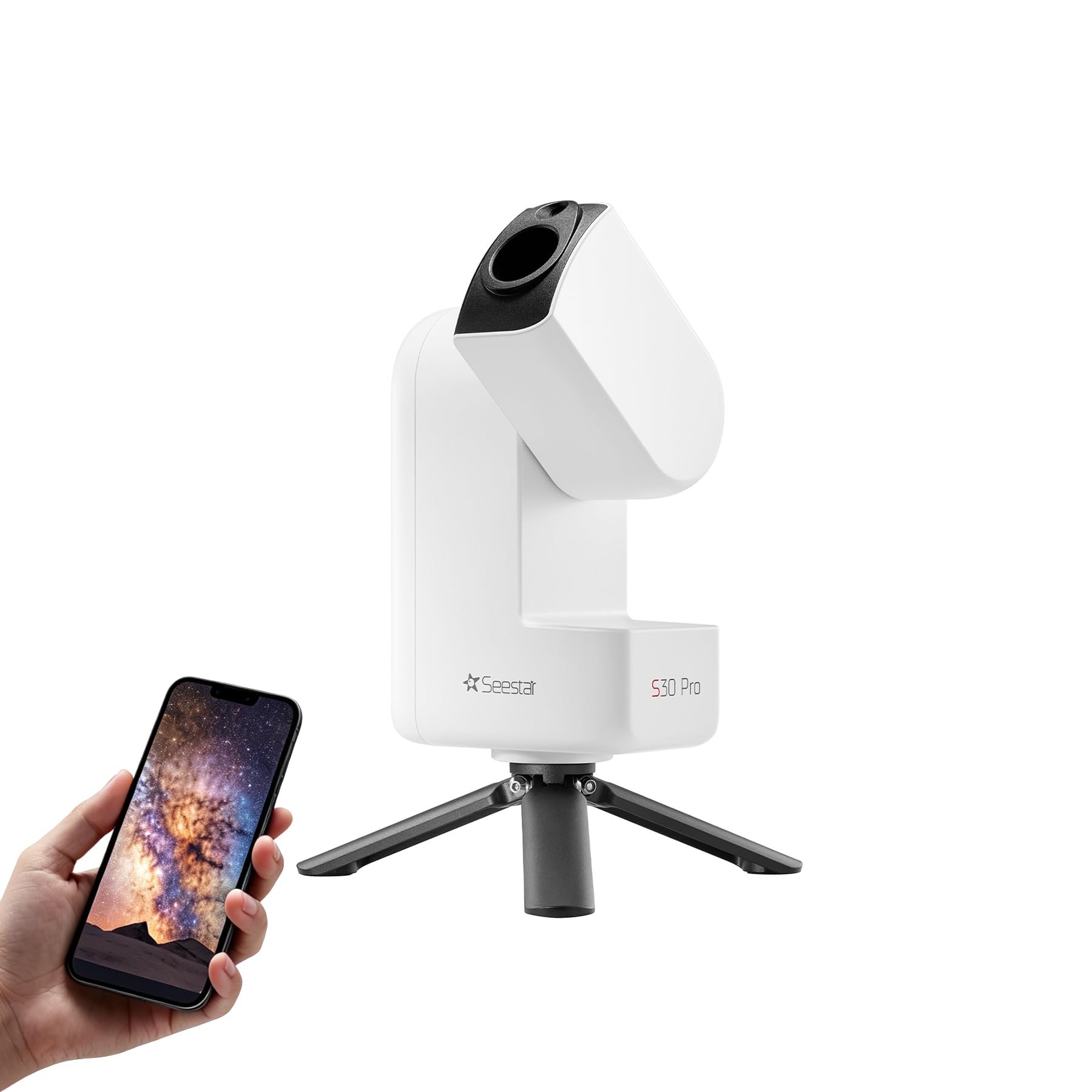
The Seestar S30 Pro's pitch is simple: set it down, let the app find a target, and watch a finished deep-sky image build on your phone. The dual 4K cameras cover both a tight view of a nebula and a wide field for the Milky Way, and the built-in light-pollution filter is there for suburban skies.

We were impressed by how much of the workflow lives in the app. There's no separate mount, camera, laptop, or stacking session to manage; the scope handles GoTo, tracking, and one-tap processing, and the results look surprisingly complete on a tablet. EQ mode is the part that matters for longer deep-sky work, and it's easy enough to set up that switching modes doesn't feel like a project.

The wide-field camera gives you room for star trails and the Milky Way, while the deep-sky camera pulls in nebulae and clusters. Compass calibration is the one step that can trip up a first night; redo it away from metal and the pointing settles. At 3.6 pounds, it's the one we leave set up by the door for a clear evening.

Against the Dwarf 3, the Seestar feels more like a complete imaging appliance: the dual cameras and processing are tuned for sharing, not tinkering. If you already own an equatorial mount and camera, the SVBONY SV503 is the more flexible optical tube; for most first-time imagers, this is the easiest way into deep-sky pictures.

Pros

  • One-tap GoTo and stacking simplify deep-sky imaging
  • Dual 4K cameras cover deep sky and wide fields
  • EQ mode and light-pollution filter help in suburbs
  • Only 3.6 pounds and fully app-controlled

Cons

  • 30mm aperture is small for faint, tiny targets
Our verdict

The Seestar S30 Pro is our top pick for most first-time astrophotographers because its one-tap GoTo, dual 4K cameras, and EQ mode turn a clear night into shareable deep-sky images.
Check Latest Price
2

Best for Travel

Dwarf 3

85 /100
Keeper Score Excellent

Key details

Modes
AZ and EQ
Mount
Altazimuth
Camera
Dual-lens 4K
Aperture
35 mm
Check Price on Amazon

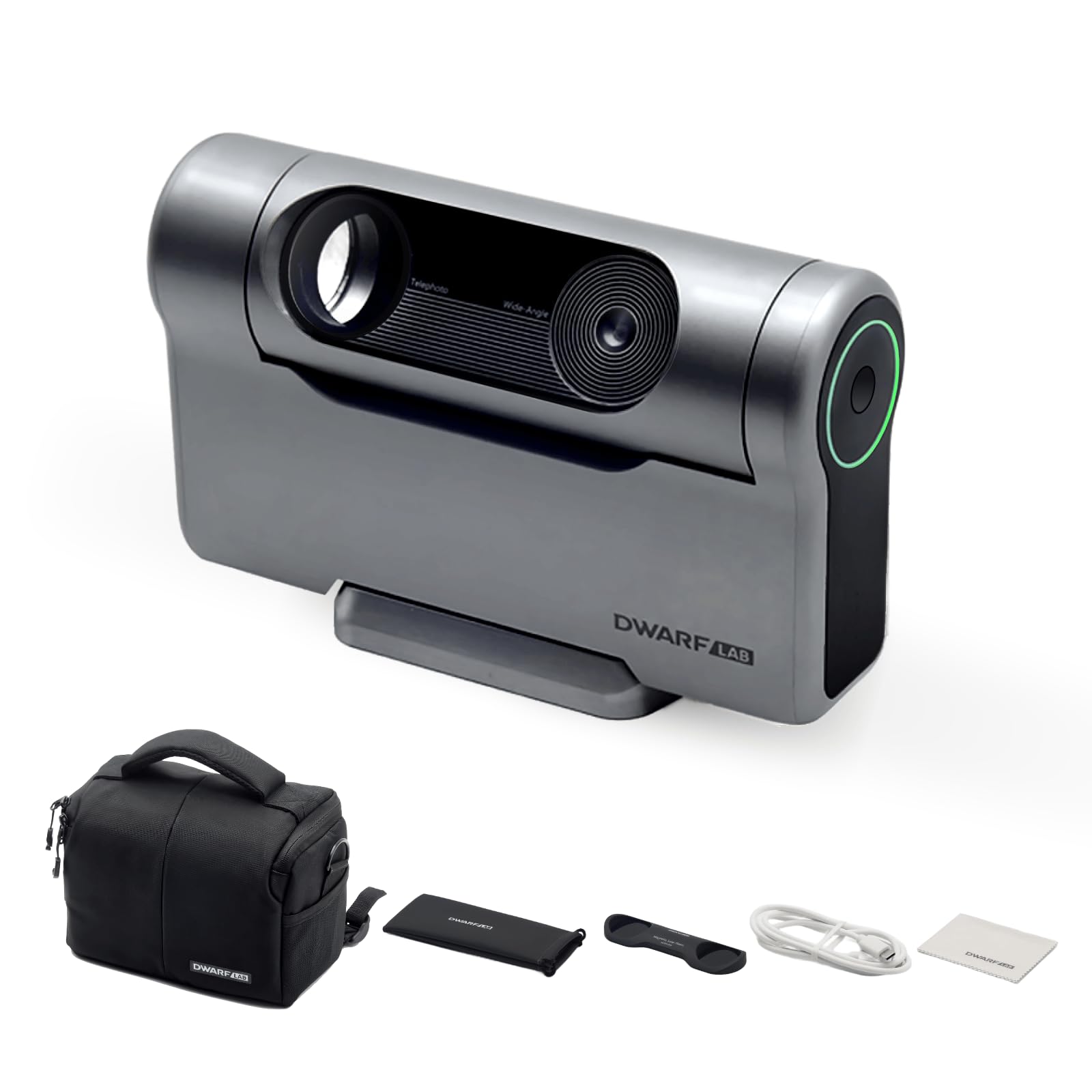
The Dwarf 3 is the one we pack when the trip has more than astronomy in it. It's compact enough for a backpack, and the dual-lens design means it can shoot wildlife and landscapes during the day, then switch to the night sky after dark. That versatility is why it earns a runner-up spot rather than being just a smaller Seestar.

The 4K tracking and EQ mode are the specs that matter after sunset, and the app's cloud processing turns a stack of frames into something shareable without a laptop. The scope finds and follows targets on its own, so you can spend the evening choosing subjects instead of star-hopping.

We liked the dual-lens flexibility most because it gives the scope a second life on cloudy days and family trips. The images that sing are bright nebulae, star fields, and the Moon; a big SCT is the tool for tiny planetary detail.

The software is the trade-off. The app can be glitchy, and connections can drop; when that happens, the fix is usually a restart and a fresh calibration rather than a hardware problem. For a trip where the scope has to share space with camera gear, that trade is easy to accept. The Seestar is the better pure deep-sky machine; the Dwarf 3 is the better companion.

Pros

  • Dual-lens 4K imaging for night and day
  • EQ mode and auto-tracking
  • Cloud processing in the app
  • Compact enough for a backpack

Cons

  • Small aperture limits fine detail on faint targets
Our verdict

The Dwarf 3 is the travel-friendly smart scope we reach for when a trip mixes dark skies with daytime photography, as long as you can live with a smaller-aperture view.

Check Latest Price
3

Best Budget

Dwarf Mini

86 /100
Keeper Score Excellent

Key details

Modes
AZ and EQ
Sensor
1/2.8-inch Sony IMX662
Weight
1.85 lb
Exposure
90 seconds
Check Price on Amazon

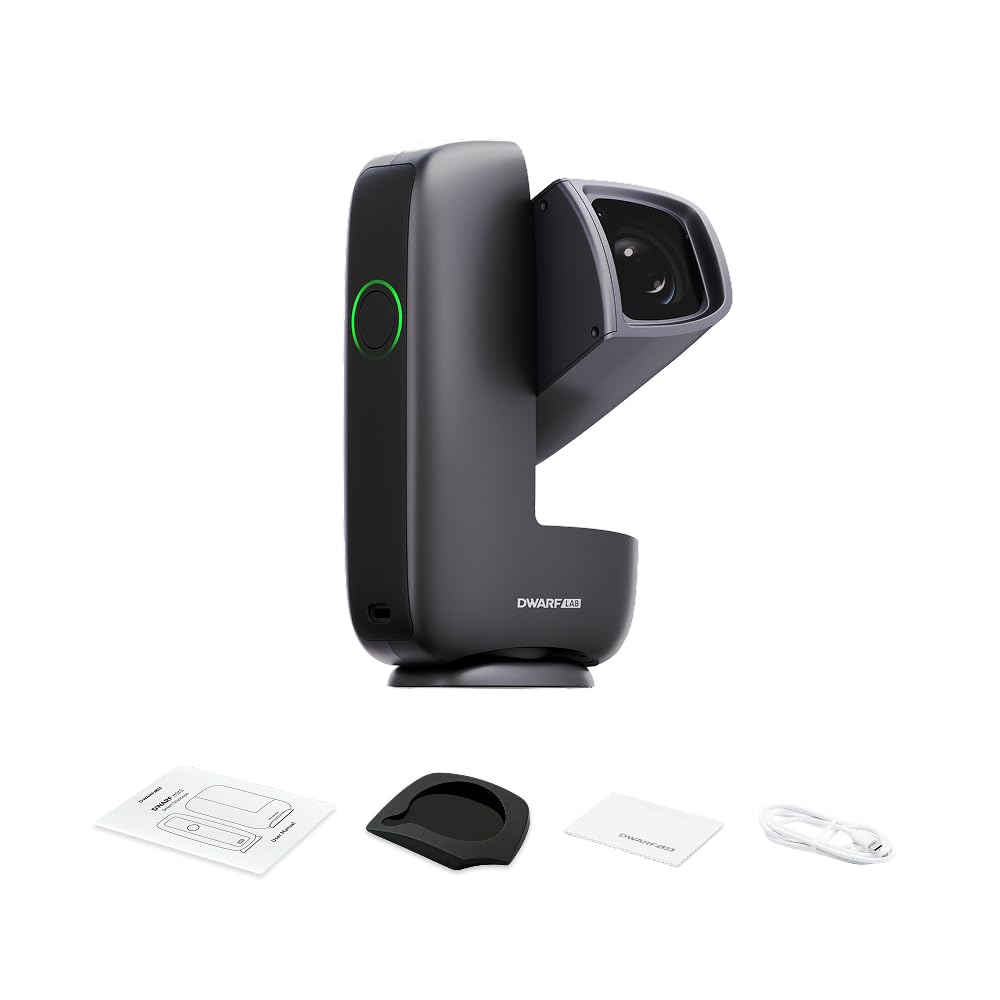
At 1.85 pounds, the Dwarf Mini is the lightest telescope here by a wide margin, and that's exactly why it earns a spot: it's the one you can carry without planning a whole session around it. It slips into a daypack, and the 90-second exposure mode plus EQ tracking let it go after deep-sky targets that a point-and-shoot can't touch.

The small body doesn't mean a stripped-down app. GoTo, tracking, and built-in processing all live on your phone, and the light-pollution filter helps in town. The 90-second exposure mode and EQ tracking are the specs that matter, and they make the workflow feel closer to a smart scope than a toy.

We liked that the app keeps the first night simple: choose a target, let it stack, and save the result. The 1.85-pound body is easy to level on a picnic table, and the all-in-one design means you're not juggling a mount and camera while everyone else is setting up camp.

Against the Dwarf 3, the Mini gives up the daytime lens and some aperture, but it is the lighter, less expensive route to the same app-driven workflow. That's the trade that makes it a strong first smart scope on a budget.

Pros

  • Only 1.85 pounds
  • 90-second exposures with EQ mode
  • Built-in light-pollution filter
  • App-controlled GoTo and processing

Cons

  • Small 1/2.8-inch sensor limits faint-target detail
Our verdict

The Dwarf Mini is the best budget smart scope here for travelers who want app-guided deep-sky images in the lightest possible package.

Check Latest Price
4

Best for Advanced Imaging Rigs

SVBONY SV503 80ED

88 /100
Keeper Score Excellent

Key details

Weight
5.51 lb
Reducer
0.8x field flattener
Aperture
80 mm
Focal Length
560 mm
Check Price on Amazon

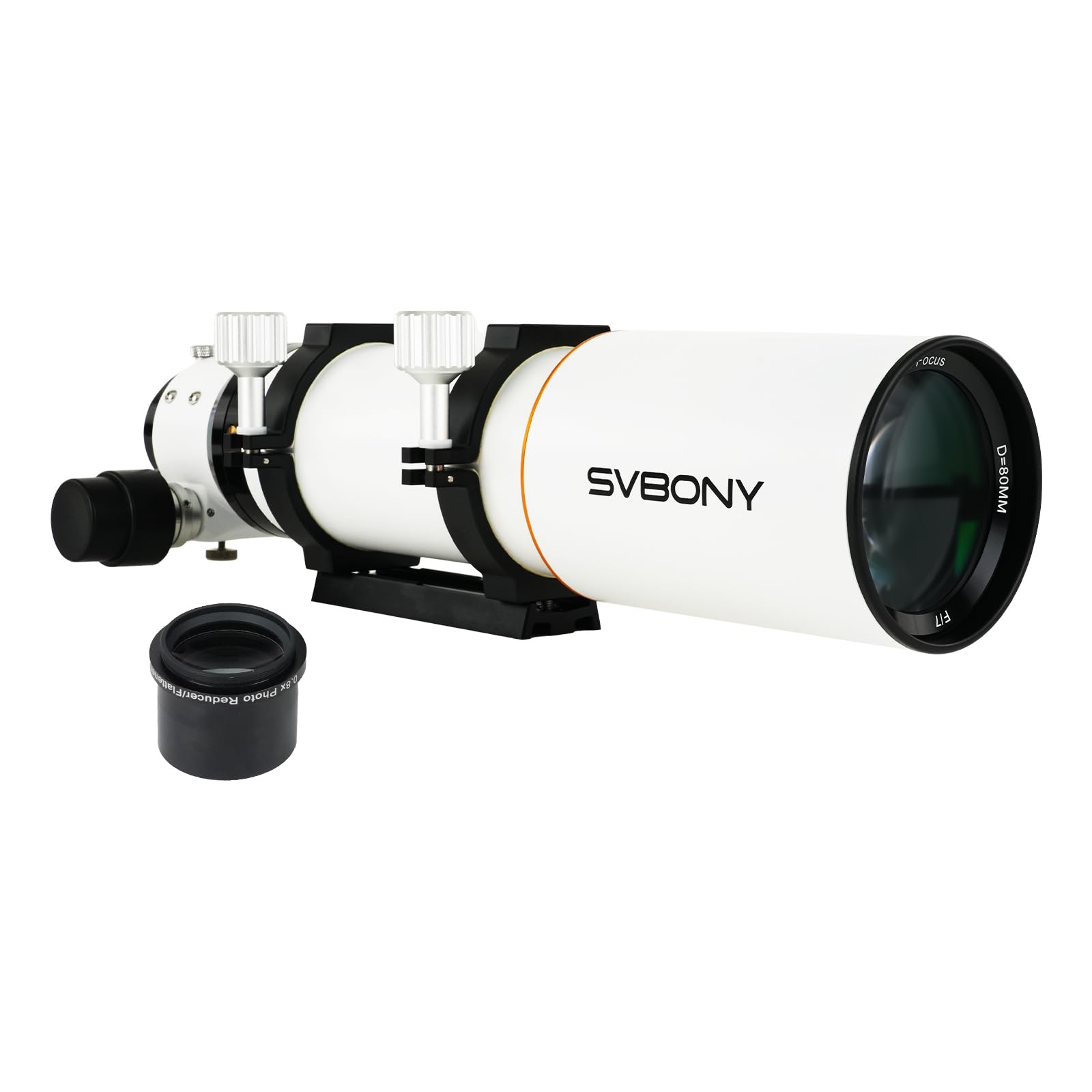
The SV503 arrives as an optical tube, not a telescope you can use on its own. There's no mount, no camera, and no tripod in the box; you supply the tracking mount and imaging train. That's not a knock if you already own them—it's the point.

What you get is an 80mm ED doublet with a 560mm focal length and an included 0.8x field flattener. We think the reducer is the reason to choose this version: it shortens the focal length and flattens the field, which is the difference between round stars at the edges and a frame you crop. The dual-speed focuser has a 1:10 micro-adjustment, and that fine control matters when you're focusing a camera, not an eyepiece.

We were impressed by the build: metal mounting rings, a smooth dual-speed focuser, and a weight that won't overwhelm a smaller equatorial mount. The ED glass is a step up from a plain achromat, and the 80mm aperture is wide enough to frame large nebulae without a mosaic.

This is the pick for someone building a dedicated deep-sky rig around a GoTo equatorial mount. The Seestar and Dwarf are easier, but none of them can match the flexibility of a real camera, filter wheel, and focuser. If you already have that gear, the SV503 is the most capable optical tube here.

Pros

  • 80mm ED glass with 0.8x flattener
  • Dual-speed focuser for precise focus
  • Light enough for smaller mounts
  • Wide-field deep-sky framing

Cons

  • OTA only
  • Faint blue halos on bright stars
Our verdict

The SV503 is the best choice here for someone who already owns a tracking mount and camera and wants a sharp, wide-field ED refractor to build around.

Check Latest Price
5

Best for Planetary Detail

NexStar 8SE

86 /100
Keeper Score Excellent

Key details

Mount
Computerized alt-az
Weight
24 lb
Aperture
8 in (203 mm)
Focal Length
2032 mm
Check Price on Amazon

Eight inches of aperture and a 2032mm focal length put the NexStar 8SE in a different class for planets. The Schmidt-Cassegrain pulls in enough light to show cloud bands on Jupiter and fine lunar detail, and the GoTo mount tracks them while you attach a camera.

The 40,000-object database and SkyAlign make it a friendly visual scope, and the single-fork mount is simpler to set up than a German equatorial. For lunar and planetary imaging, the alt-az tracking keeps the target in the frame while you capture short videos or stacks. For long-exposure deep-sky work, the alt-az design causes field rotation, so it's not the rig for faint nebulae.

We paid close attention to alignment because a GoTo scope is only as good as its pointing. SkyAlign is quick when you have three bright objects and a clear view, but in a bright, restricted suburban sky it can take a few tries. The 8-inch optics reward that patience with the best planetary detail in this set.

The 8SE is the one here for someone who wants a serious visual scope that can also grab planetary images, not a one-tap deep-sky machine. The Seestar is easier; the 8SE shows you more at the eyepiece.

Pros

  • 8-inch aperture for bright planetary detail
  • GoTo tracking with 40k-object database
  • Accepts cameras for lunar and planetary work
  • Solid visual instrument too

Cons

  • Heavy 24-pound setup; power supply not included
Our verdict

The NexStar 8SE is our pick for the buyer who wants a large-aperture GoTo scope for planets and visual observing, with planetary imaging as a bonus.

Check Latest Price
6

Compact Planetary

NexStar 127SLT

84 /100
Keeper Score Excellent

Key details

Mount
Computerized alt-az
Weight
18.1 lb
Aperture
127 mm
Focal Length
1500 mm
Check Price on Amazon

A 1500mm focal length in a 127mm Maksutov-Cassegrain is a lot of reach for a compact GoTo scope, and that's the reason to consider the NexStar 127SLT. The long focal length fills the frame with crater detail, and the GoTo mount tracks the target while you attach a camera.

The 127mm aperture is enough for bright lunar and planetary work, and the 40,000-object database makes it a friendly visual scope too. SkyAlign gets you observing quickly when the sky is clear, and the compact tube is easy to carry outside.

The mount is the limiting factor. The tripod and single-fork mount feel light for the tube, and that shows up as shake when you touch the focuser or try to track a planet at high power. Keep exposures short, use a remote release, and don't touch the scope while it's capturing.

This is a specialist for someone who wants a compact planetary scope and doesn't mind short exposures. The Seestar or Dwarf are the easier all-in-one picks; this one is for the observer who wants a traditional telescope with a long focal length.

Pros

  • 1500mm focal length for lunar and planetary detail
  • GoTo tracking with 40,000-object database
  • Compact 127mm Mak tube
  • Easy SkyAlign setup

Cons

  • Long focal ratio and alt-az mount limit deep-sky work
Our verdict

The NexStar 127SLT is our compact planetary specialist for visual observers who want to try lunar and planetary imaging without a large setup.

Check Latest Price

How We Tested Astrophotography Telescopes Under Real Night Skies

We started with a shortlist of 30-odd scopes and cut it by reading manuals instead of marketing copy: anything that couldn't track a target on its own, anything that only worked with a separately sold mount, and anything priced far past what a first-time imager would spend. That left 12, running from a smart scope small enough to ride in a backpack to a large Schmidt-Cassegrain on a GoTo fork mount.

Testing happened the way owning one works: in my backyard on clear weekends, on a second-floor balcony with a streetlight bleeding into the field of view, and on two dark-sky camping trips where everything had to fit in the trunk and be assembled by headlamp. We timed the run from unboxing to alignment, and again to the first usable image, working solo and following the manual like a new owner would. That's where the friction surfaced — a leveling step nobody would guess, a Wi-Fi handshake that took three tries, a focuser with enough play that fine focus slid out of tune.

Once aligned, we watched each mount for a full session: whether the target stayed centered for 30 minutes, whether stars held round to the edges or smeared into seagulls, and how much built-in processing improved a frame over the raw stack. We shot the same targets from the balcony and from dark sky to see what light pollution actually cost and whether a filter earned its place. Focusing got checked on every scope — some snapped in with a mask, others hunted on autofocus. And we logged every app crash, dropped connection, and dewed-up corrector, because reliability is what turns one good night into a scope you keep using.

Value came last, and we counted it in add-ons: a scope that produces a shareable image on night one is a different purchase than one that needs a camera, a flattener, and a guide setup first.

How to Choose an Astrophotography Telescope

Smart Scope or Traditional Rig

The biggest fork is whether you want the telescope to handle the camera, tracking, and processing, or you want to build a rig from parts. A smart scope like the Seestar S30 Pro is the lower-friction route: it arrives with a camera, motorized mount, and app that stacks and enhances the image. An optical tube like the SVBONY SV503 80ED is the opposite bargain—you supply a tracking mount, camera, and filters, and you get more flexibility in return. If you already own a mount, the tube is the better use of money; if you do not, the all-in-one is usually the faster path to a first image.

Tracking, Mount Type, and Exposure Length

For long deep-sky exposures, the mount has to follow the sky precisely, and an equatorial mount or EQ mode is the cleanest way to avoid field rotation. Alt-az GoTo scopes still track, but the frame slowly rotates around the target, which limits how long you can expose before stars trail at the edges. That makes alt-az a fine choice for the Moon and planets, where short exposures and lucky imaging do the work, and a compromise for faint nebulae. If deep-sky imaging is the goal, prioritize EQ capability over a larger aperture.

Aperture, Focal Length, and Field of View

Aperture gathers light, but focal length decides what fits in the frame. The small smart scopes here are wide-field instruments: they frame nebulae, star clusters, and the Milky Way, and they make the most of a dark sky. A long-focal-length SCT or Mak, like the NexStar 8SE or 127SLT, magnifies planets and lunar craters but sees a much narrower slice of sky. Do not buy the biggest aperture you can afford if it comes with a focal length that will not fit your targets; match the scope to the pictures you want to make.

Portability, Setup, and App Workflow

The scope you actually use is the one that is easy to get outside. The Dwarf Mini is light enough to carry in a daypack, while the NexStar 8SE is a two-trip setup that rewards you with aperture once it is in place. Setup effort matters as much as weight: a smart scope that aligns itself in the app is easier to live with than a traditional GoTo that needs a careful star alignment. Plan for power, too; the NexStar 8SE's batteries are not included, so a long session needs a supply.

What the Specs Do Not Tell You

Two scopes with similar aperture can feel very different after dark because of stability and software. A light tripod can turn a sharp optic into a frustrating one, especially at high power or when you are trying to focus a camera. Apps can also be the weak link: compass calibration, Wi-Fi drops, and clunky menus show up after the sale, not on the spec sheet. Before you commit, decide whether you want to troubleshoot a rig or just capture an image; that answer points to a smart scope or a traditional setup more reliably than any single number.

Frequently Asked Questions

Final Verdict

We recommend the Seestar S30 Pro for most people because it makes the whole chain—finding, tracking, stacking, and sharing—feel like one simple app. The Dwarf 3 is the better travel companion if you want daytime versatility, and the SVBONY SV503 80ED is the pick for anyone who already owns a tracking mount and camera. Choose the NexStar 8SE only if a large aperture for planets and visual observing matters more than one-tap deep-sky convenience.