Best Sony Flashes of 2026

Sony's multi-interface shoe isn't like everyone else's hot shoe, and that's where most flash shopping goes wrong. A cheap speedlight will mount on your camera, fire, and still refuse to talk to it — no TTL, no high-speed sync, no flash-ready confirmation in the viewfinder. Get one that actually speaks Sony's protocol and the whole job gets easier: bounce off the ceiling at a birthday dinner, push the shutter past 1/200 in daylight, and let the camera do the math for you.

My team and I have spent the past six months shooting with 12 flashes on Sony bodies, from palm-size minis that live in a jacket pocket to full-size units with their own radio triggers. The number that mattered least was the guide number, which is quoted at one zoom setting and one ISO and rarely matches how you actually shoot. What separated the good ones was steadier TTL metering, a head that tilts and swivels where you point it, and full-power recycle that doesn't fall apart after 40 pops.

Most of the failures we ran into were about communication, not brightness — a flash that won't hold a radio link or drifts a third of a stop frame to frame will ruin a shoot faster than a dim one. The picks below are the ones that kept talking to the camera.

Keeper Score summarizes customer ratings and review volume. Read it alongside the product details and trade-offs. How the score works.

1

Best Overall

Sony HVL-F60RM2

83 /100
Keeper Score Excellent

Key details

Mount
Sony Multi Interface Shoe
Weight
1.7 lb
Flash Sync
1/400 sec
Guide Number
60
Check Price on Amazon

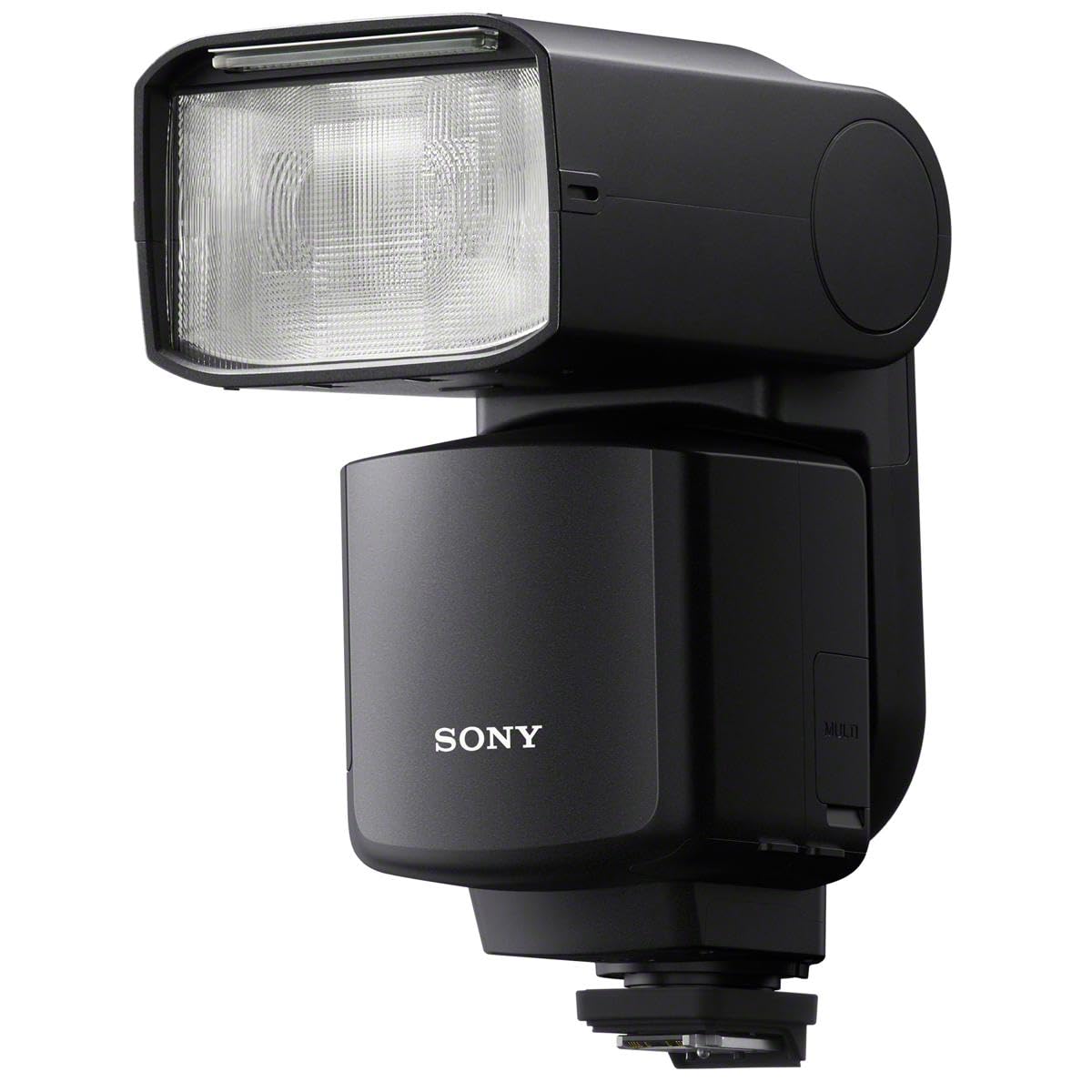
The HVL-F60RM2 is the flash you choose when you want the camera and the light to behave like one system. Sony's Multi Interface Shoe gives it per-frame P-TTL, and the flash follows the camera's face detection for both exposure and white balance. The zoom range runs from 14mm with the wide panel to 200mm, so it covers everything from a tight room to a long lens without swapping modifiers. That integration is the difference between a flash that feels native and one that feels bolted on.

Where it earns its keep is consistency. The 1/400-second sync speed is faster than the 1/200 sec standard on several flashes here, which gives you more room to blend flash with ambient light outdoors. We also appreciate the radio control for off-camera work; it turns the flash into a system piece rather than a one-trick shoe mount. The output is GN60, so bouncing in a reception hall is realistic, and the included bounce adapter and color filters mean you can start shaping light out of the box.

The bundle is complete—stand, case, bounce adapter, filters, and connector cap—so the premium buys a finished kit, not a bare unit. We like that the bounce adapter stores with the flash instead of living in a separate pouch. For a working Sony body, that completeness is easier to live with than a bag of third-party adapters.

Pros

  • Native Sony TTL, face detection, and radio control
  • GN60 output with 14–200mm zoom coverage
  • Fast 1/400 sec sync speed
  • Complete bundle with bounce adapter and filters

Cons

  • Heavy at 1.7 pounds on small bodies
  • Four AA batteries need frequent replacement
Our verdict

We recommend the F60RM2 when you want the shortest path to native TTL, face-linked control, and a 1/400 sec sync on a Sony body.

Check Latest Price
2

Best High-Output

Godox V100 S

90 /100
Keeper Score Outstanding

Key details

Weight
1.51 lb
Flash Sync
1/300s-1/20000s
Max Output
100Ws
Full-power Bursts
70 consecutive
Check Price on Amazon

The V100's headline is 100Ws, but the number that changes how you shoot is 70: it can fire 70 full-power bursts in a row. That stamina is why it earns our high-output pick. In a sequence where the first frame is right and you keep shooting, the flash does not force a pause for the battery to catch up. The 2.3-inch touchscreen also makes power and mode changes quicker than scrolling a small LCD with a wheel.

Godox built this for Sony's hot shoe, with TTL and HSS up to 1/8000 sec. The detachable sub-flash is a clever extra: it gives you a second, smaller light source for fill without adding a second radio receiver. On a Sony A9 III, the global-shutter note matters—TTL with that camera needs HSS—so check your settings before a paid shoot. The V100 is at its best when the flash is doing real work, not just a kiss of fill.

The interface is a step above a basic speedlight. The touchscreen handles mode and power, while the physical controls let you change settings without looking away from the finder. This is a working tool rather than a beginner's first flash, and the depth is there when you want it. For a photographer who already knows what TTL and manual should do, the learning curve is short.

Pros

  • 100Ws output for demanding light
  • 70 full-power bursts without a pause
  • Detachable sub-flash adds fill options
  • Touchscreen and physical controls

Cons

  • 685 g body may feel heavy on small cameras
Our verdict

The V100 is our high-output choice when a shoot depends on repeated full-power bursts; it trades some native Sony polish for 100Ws and a 70-shot burst.

Check Latest Price
3

Best Compact Off-Camera Kit

Godox iT32 + X5S

92 /100
Keeper Score Outstanding

Key details

Weight
5.96 oz
Max Sync
1/8000 sec
Guide Number
18
Included Trigger
X5S
Check Price on Amazon

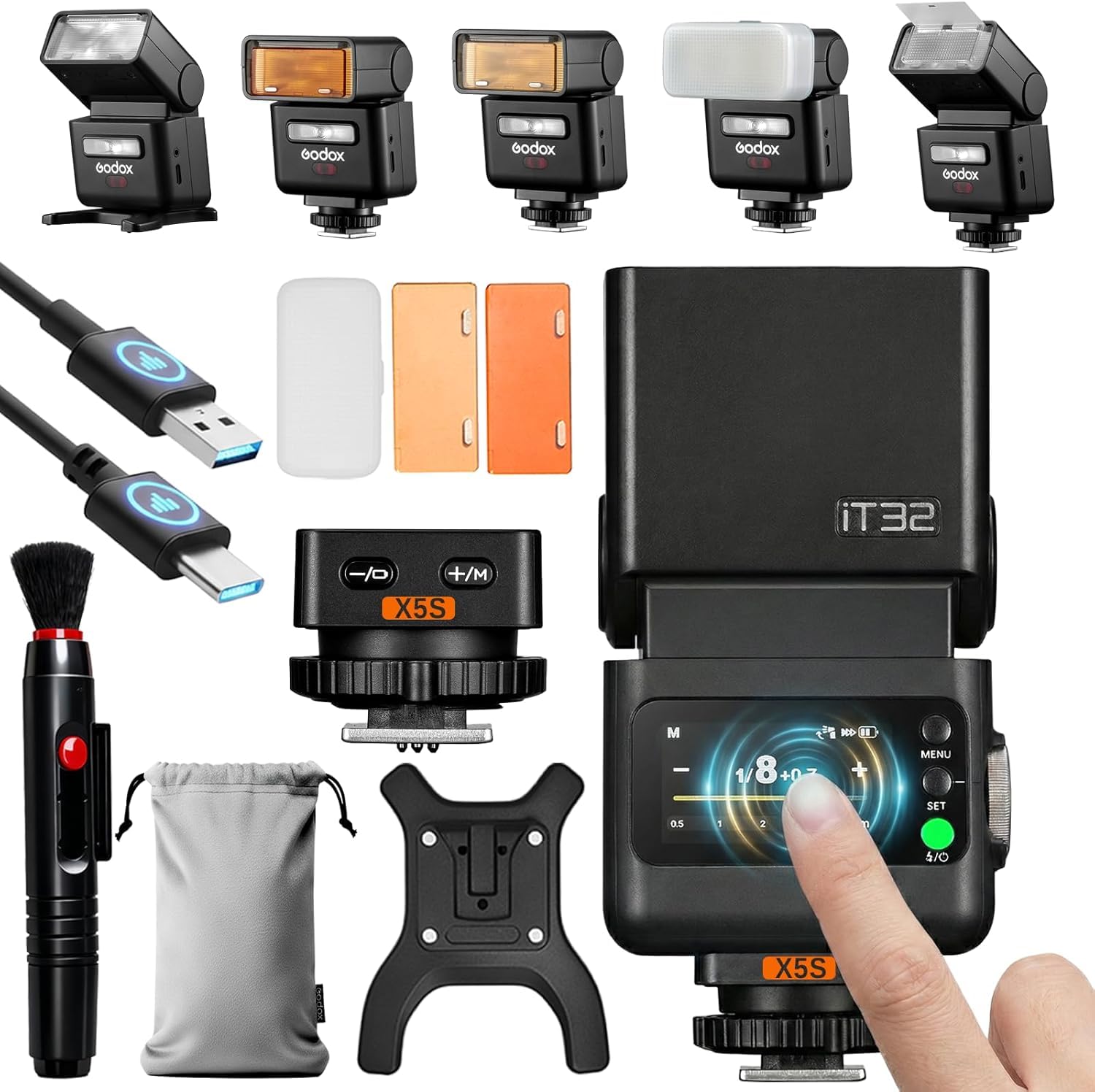
The iT32's best trick is the X5S module. Leave it attached and you have a small on-camera flash; pull it off and the X5S becomes a wireless transmitter for the same flash. That two-in-one design is why it earns a place in a travel bag. At 169 grams, it adds little to a small Sony body, and the magnetic mount makes the change without a fumble.

The flash itself is a TTL/HSS unit with a guide number of 18. The feature set is not small: TTL auto, manual control, 1/8000 sec high-speed sync, and a color touchscreen. The included diffuser and magnetic color filters are the kind of extras that often live in a separate purchase. The same X5S module can be swapped for other mounts, which makes the flash body more adaptable than its size suggests.

We keep the iT32 in the bag for travel and quick off-camera setups because the detachable trigger makes a small kit feel complete. For a portrait session in a small room, a detail shot, or a second light tucked behind a plant, the size and trigger earn their place. The menu takes a little learning, but the touchscreen is clear once you are in. It is a compact tool with a specific job, and it does that job without asking for a bigger bag.

Pros

  • Detachable X5S trigger included
  • TTL and 1/8000 sec HSS
  • 169 g compact body

Cons

  • GN18 output limits large-room use
Our verdict

We keep the iT32 for travel and quick off-camera setups; the detachable X5S trigger turns a 169-gram flash into a small two-piece kit.

Check Latest Price
4

Best Round-Head Value

Neewer Z2PRO-S

88 /100
Keeper Score Excellent

Key details

Max Output
76Ws
Recycle Time
1.5 sec
Battery Capacity
3000mAh
Full-power Flashes
600
Check Price on Amazon

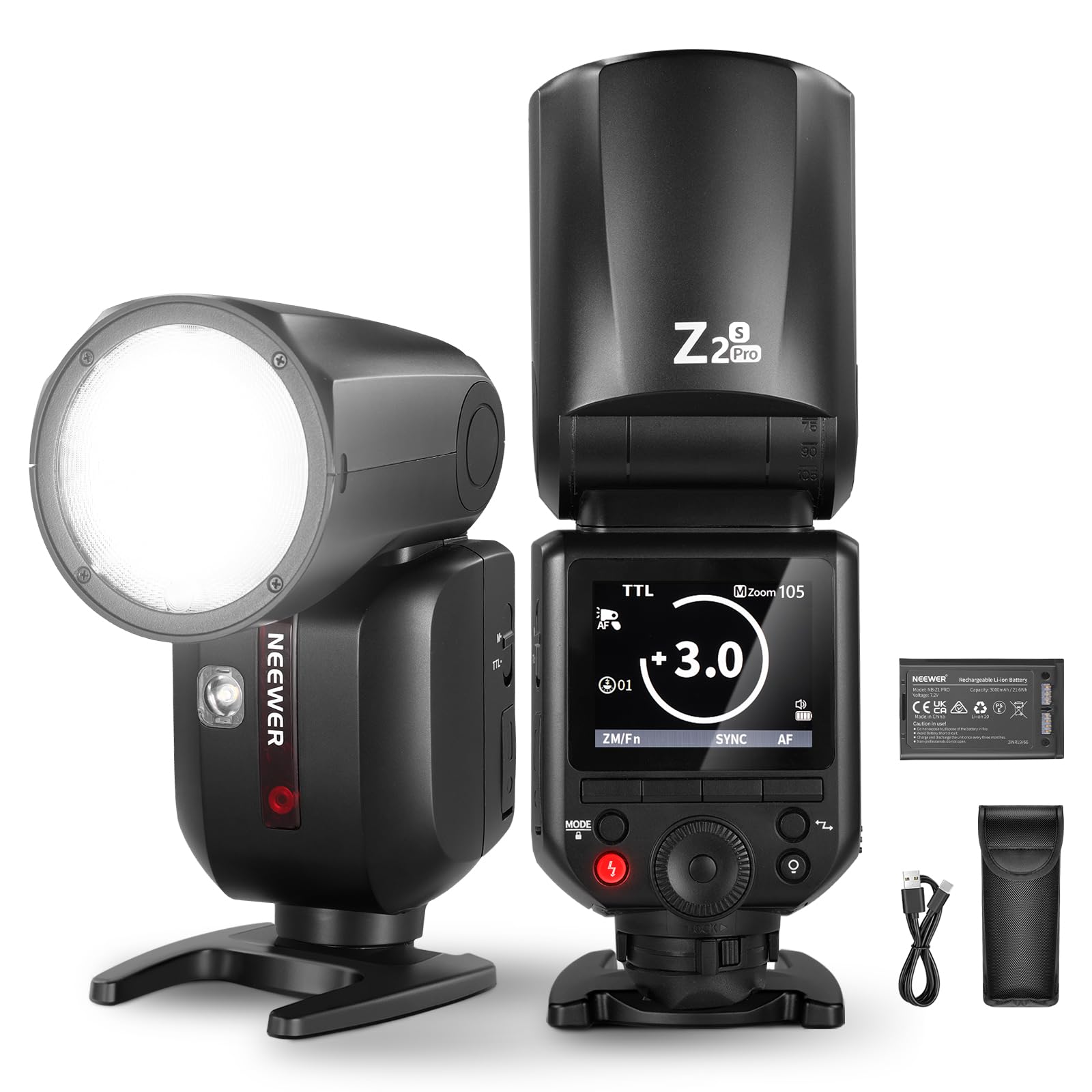
The Z2PRO-S makes a case for the round head. At 76Ws, it has enough output for bounced portraits and small groups, and the circular head gives a softer edge than a rectangular speedlight without an adapter. The 3000mAh battery is rated for 600 full-power flashes, and recycle time is 1.5 seconds. Those are event-flash numbers, not toy numbers.

This is our value pick because it puts the useful parts in the right places. The cooling system is rated for 100 continuous full-power pops, the TCM switch flips between TTL and manual without menu diving, and the 2.4G radio works with Neewer's Q system. More interesting, it can act as a receiver for Godox X S triggers, so it can join a Godox setup rather than forcing a second wireless system. We like that flexibility more than any single spec.

The round head is also the reason to choose it over a plain rectangular unit: the falloff is more even, and magnetic modifiers are easy to add. The battery charges over USB-C, and the included case and stand make it a complete working kit. If you already own Godox triggers, this is the least disruptive way to add a round-head light. It is a neat piece of cross-system thinking.

Pros

  • 76Ws round-head output
  • 600 full-power flashes
  • 1.5 sec recycle time
  • Works as a receiver with Godox X S triggers

Cons

  • 1.1 lb may feel top-heavy on small bodies
Our verdict

We like the Z2PRO-S for round-head event work: 600 full-power flashes, 1.5 sec recycle, and receiver compatibility with Godox X triggers.

Check Latest Price
5

Best Budget Manual

Neewer TT560

89 /100
Keeper Score Excellent

Key details

Power
4 AA batteries
Sync Speed
1/200 sec
Guide Number
38
Manual Power Range
1/128-1/1
Check Price on Amazon

The TT560 is the flash we point to when someone wants to learn manual lighting without buying a dedicated Sony unit. It has a GN38 output, eight manual power steps from 1/128 to full, and a 5600K color temperature. You set the power and the exposure yourself, which slows the process down in a useful way. The learning curve is short because there are fewer settings to hide behind.

The head swivels through a wide arc, so you can bounce off a wall or ceiling, and the single-contact foot fits a long list of cameras. On Sony, the list includes A7III, A7IV, A7R5, A6400, and ZV-E10, but not the ZV-1F, A9 III, A99, A77, or A350. It also works only in mechanical shutter mode on mirrorless bodies with both shutter types, and the sync speed is 1/200 sec. Those are real limits, but they are easy to work around for portraits and product shots.

For a manual flash, the output is the surprise. GN38 is not a toy number, and the 0.1-5 sec recycle is enough for deliberate work. Four AA batteries are the ongoing cost, and the flash can drain them quickly in heavy use. We like it as a second flash for off-camera practice or as a knock-around unit that you do not mind taking to a dusty location. It is a simple tool, and it rewards the person who takes the time to learn it.

Pros

  • GN38 output for manual work
  • Eight manual power steps
  • Swivel head for bounce

Cons

  • No TTL, HSS, or camera-menu control
Our verdict

The TT560 is our manual-learning pick for Sony shooters who accept no TTL or HSS in exchange for GN38 output and simple controls.

Check Latest Price
6

Pocket TTL Fill

Viltrox Vintage Z1 Pro S

89 /100
Keeper Score Excellent

Key details

Weight
4.8 oz
Max Sync
1/8000 sec
Guide Number
12
Recycle Time
1 sec
Check Price on Amazon

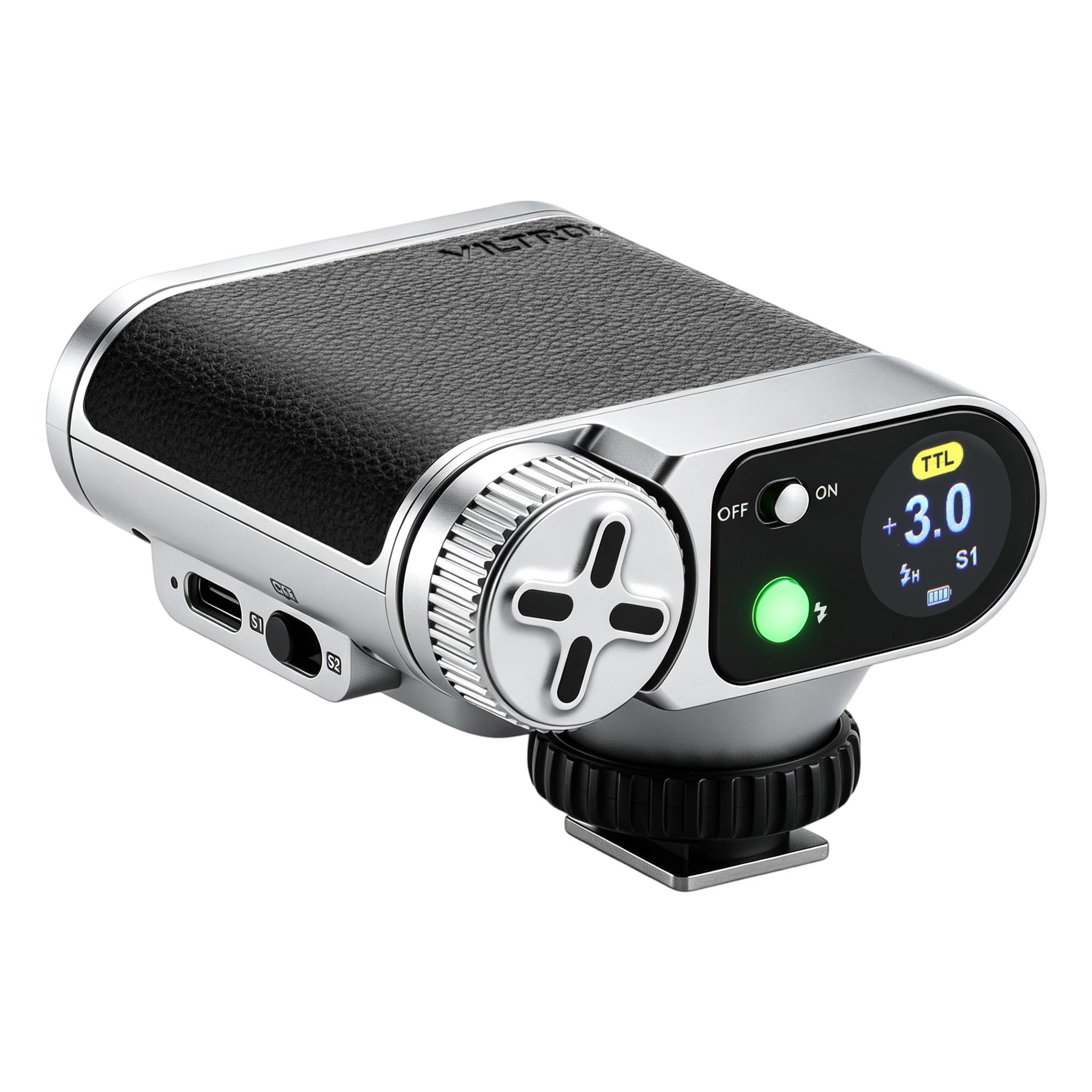
At 136 grams, the Vintage Z1 Pro S is the flash that can live in a jacket pocket and still offer TTL. It is a 24Ws unit with a guide number of 12, a one-second recycle time, and a built-in 800mAh battery. Viltrox rates it for 350 full-power flashes or 10,000 at minimum power. That range makes it a natural second flash: small enough to carry, easy to add without a plan.

The 2.5D curved touchscreen is the most distinctive part. Swipe to switch modes, tap to set power, and the display shows mode, power, and battery status. TTL works with Sony, and manual mode works with other single-contact cameras; the S1/S2 optical modes let it fire as a slave. The 7-stop manual range runs from 1/1 to 1/64, with third-stop tuning.

The output is the limit. GN12 and 24Ws are close-range numbers, so bouncing off a high ceiling or lighting a group at a distance asks more than this flash has. It is at its best as a fill light, a hair light, or a second accent in a small room. The one-second recycle helps it keep up, and the 1/8000 sec HSS gives you room outdoors as long as the flash is close enough.

The Z1 Pro S earns its place because it solves a specific problem: you want TTL and HSS in a body that does not announce itself. The touchscreen is quick, the body disappears in a bag, and the optical slave modes make it useful off-camera without a separate trigger. It is not a replacement for a high-output event flash; it is the one you add for travel, detail work, and a little more light exactly where you need it. The three-year warranty is a nice vote of confidence for a small accessory.

Pros

  • TTL and 1/8000 sec HSS for Sony
  • 1 sec recycle time
  • 136 g compact body

Cons

  • No 2.4G radio for off-camera use
Our verdict

We reach for the Z1 Pro S when a full-size speedlight stays home; it puts TTL and HSS in a 136-gram body.

Check Latest Price
7

Ultralight Close Fill

Ulanzi SL03

85 /100
Keeper Score Excellent

Key details

Weight
1.52 oz
Max Sync
1/250 sec
Guide Number
8
Color Temperature
6500K
Check Price on Amazon

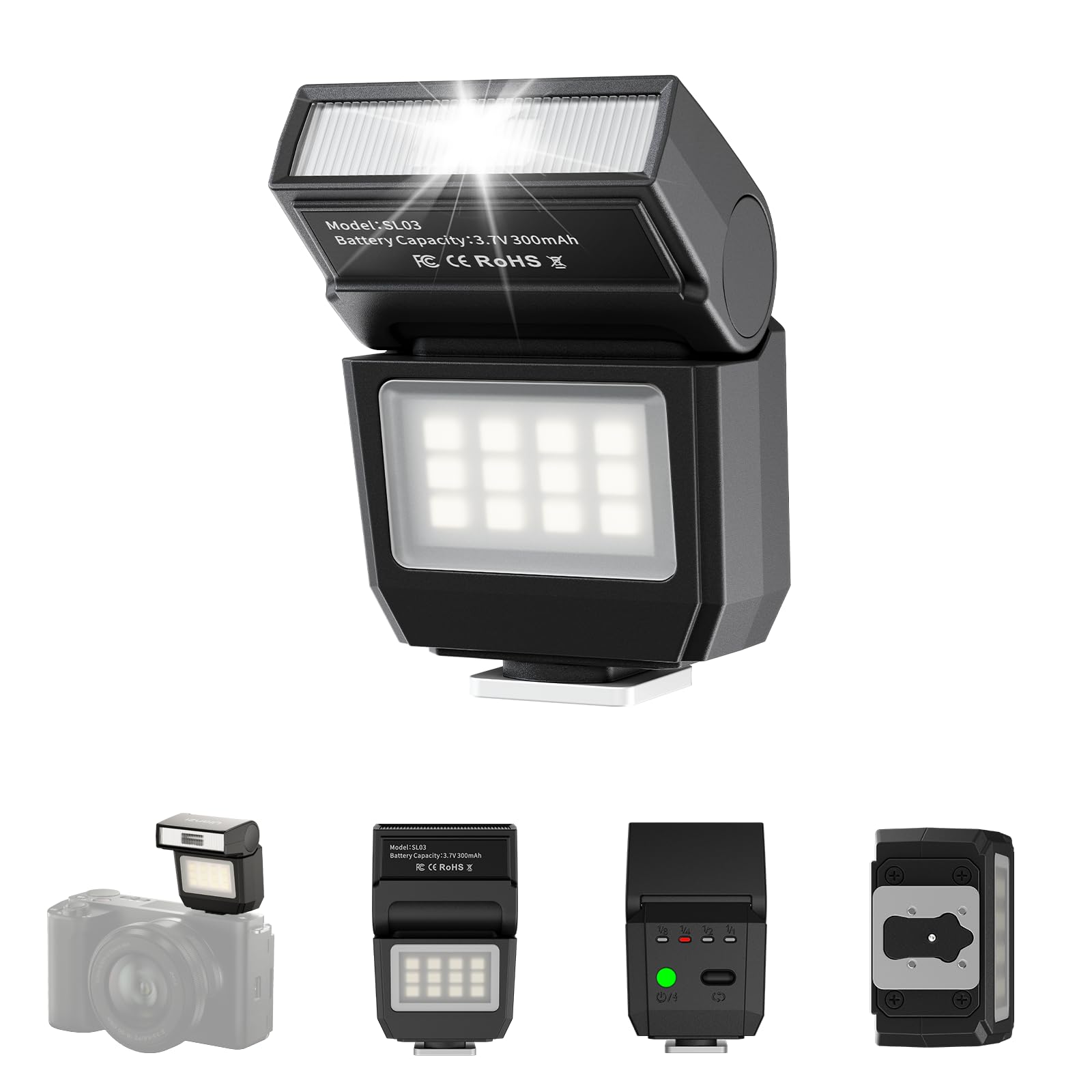
The SL03 weighs 43 grams, which is light enough to leave on a small camera and forget it is there. It is a manual flash with a GN8 output, a 6500K color temperature, CRI 97, and a head that adjusts through 90 degrees. The single-contact foot fits the Sony bodies on its compatibility list, including the A7III, A7IV, A6400, and ZV-E10. At this size, the point is not power; it is having a little more light without a camera bag full of gear.

The SL03 is manual-only, so you set exposure and flash power yourself. It has a built-in fill light function, and the 1/250 sec sync speed keeps things simple indoors. We like the 90-degree head for bouncing off a nearby wall or ceiling, and the 6500K output matches many LED video lights better than a warm speedlight does. It is a close-range tool: a face at a few feet, a product on a table, a detail in shadow.

What earns the SL03 a place is the size-to-usefulness ratio. It is not going to light a reception, but it can lift a close portrait or add a catchlight when the built-in flash is too harsh. The 90-degree head makes it easy to aim, and the USB-C charging means one less cable in the bag. It is a small tool with a narrow job, and it does that job well.

Pros

  • 43 g body disappears in a bag
  • 6500K daylight output
  • 90-degree adjustable head

Cons

  • Manual only, no TTL or HSS
  • Not for ZV-1F, A9 III, or A99
Our verdict

We recommend the SL03 as a 43-gram manual fill light for close portraits and product shots, as long as your Sony body is on its compatibility list.

Check Latest Price

How We Tested Sony-Compatible Flashes

We started with every flash we could find that listed Sony's multi-interface shoe as compatible, then crossed off anything with only a single center contact, since those fire but can't do TTL or high-speed sync. That left 12 units across the price range, from pocket-size minis to full-size speedlights with built-in 2.4G radio triggers. Each one spent six months on a camera rather than on a shelf, and we noted what came in the box — cases, bounce adapters, filters — because those extras are part of what you're paying for.

Every flash went on more than one Sony body so we could check whether the zoom tracked the lens, whether the camera displayed flash-ready and exposure information, and whether TTL exposure drifted from frame to frame. Real shooting meant a dim living room at 9 p.m., a midday backyard portrait where we pushed the shutter to 1/8000 to see if high-speed sync actually held, a birthday dinner bounced off a white ceiling, and a weekend trip where the flash had to fit in a small bag next to a lens. We dialed manual power up and down in the dark to see how quickly each one could be adjusted by feel, and whether the menus or touchscreens made that faster or slower.

Then we leaned on them. Bursts of full-power pops until the head throttled told us about recycle time and heat, and we counted frames before recycle stretched and how long recovery took. A second round compared actual brightness — same wall, same distance, same ISO on every unit — plus a color target to see whether the light stayed neutral shot to shot. Battery life got measured properly: frames per charge, then a stopwatch on the recharge. We also logged every flash that arrived dead, mis-mounted, or dropped its radio connection mid-shoot, because a unit that quits at a wedding is worse than one that's merely dim.

How to Choose a Sony-Compatible Flash

Start With the Shoe and the Control You Need

Sony's Multi Interface Shoe carries the extra contacts that make dedicated TTL, HSS, and camera-menu control possible. A dedicated Sony-mount flash like the HVL-F60RM2 is the lowest-friction choice; Godox, Neewer, and Viltrox also make Sony-dedicated units. Universal single-contact flashes work too, but only in manual mode, and not every one fits every Sony body—check the model list before ordering. We put TTL first when conditions change fast. Manual is fine for studio or repeated setups where you want consistency.

Match Output to Distance and Bounce

Guide number and watt-seconds both describe output, but what matters is how much light reaches the subject after bounce or a modifier. A GN60 flash like the Sony has room to bounce in a hall; a 100Ws unit like the V100 S is built for repeated high-output work. Small flashes with GN8 to GN18 are fill and close-range tools. If you plan to bounce off high ceilings or shoot groups at a distance, buy more output than you think you need; if you mostly shoot portraits at a few feet, a compact flash keeps the bag light.

Battery and Recycle Time Set the Pace

Alkaline AAs are easy to find but expensive over time and slow to recycle; rechargeable AAs or a lithium-ion pack are better for regular work. Full-power recycle time and the number of full-power flashes tell you how the flash behaves in a burst. A unit that fires 600 full-power pops on one charge suits a long event; a compact flash with a smaller battery is better for a few dozen frames. We like a spare battery or a second set of AAs in the bag either way, because a cold flash at the wrong moment is the real failure.

Handling, Mounting, and Off-Camera Growth

Weight matters more on a small Sony body than the spec sheet suggests. A 1.7-pound flash on an A7C changes the balance, while a 136-gram unit disappears in a jacket pocket. Check the hot-shoe lock and how the foot feels when mounted; a loose or fragile shoe is a long-term weak point. For off-camera work, radio is more reliable than optical, and a built-in trigger or included transmitter saves another purchase. If you plan to grow, choose a system you can add to—not just one flash.

Frequently Asked Questions

Final Verdict

For most Sony shooters, the HVL-F60RM2 is the recommendation that removes the most doubt: it speaks the camera's language, syncs at 1/400 sec, and delivers GN60 output without a separate trigger. If your priority is repeated full-power bursts, the Godox V100 S is the stronger tool; if you want a flash that travels in a pocket, the iT32 is the one we pack.