Best Smart Speakers of 2026

A smart speaker is two purchases in one: the thing that plays your music, and the ecosystem you're quietly agreeing to live in for the next few years. Get it right and you have a small box that fills a room, sets itself up without a fight, hears you from across the kitchen, and looks like something you actually want on a shelf. Get it wrong and you own a puck that needs a factory reset every time the router blinks, or one that sounds lovely but won't talk to the speakers you already have.

My team and I spent six months living with 12 of them, from palm-sized units on a nightstand to bookshelf models that anchor a living room, and size and price predicted surprisingly little. Setup is where most of the frustration actually lives, and a modest speaker that connects on the first try beats a fancy one you have to re-pair every week. The ones below are the ones still plugged in.

Keeper Score summarizes customer ratings and review volume. Read it alongside the product details and trade-offs. How the score works.

1

Best Overall

Echo Dot

95 /100
Keeper Score Outstanding

Key details

Connectivity
Wi-Fi and Bluetooth
Voice Assistant
Alexa
Wi-Fi Extension
eero built-in up to 1,000 sq. ft.
Smart-home Sensors
Motion and temperature
Check Price on Amazon

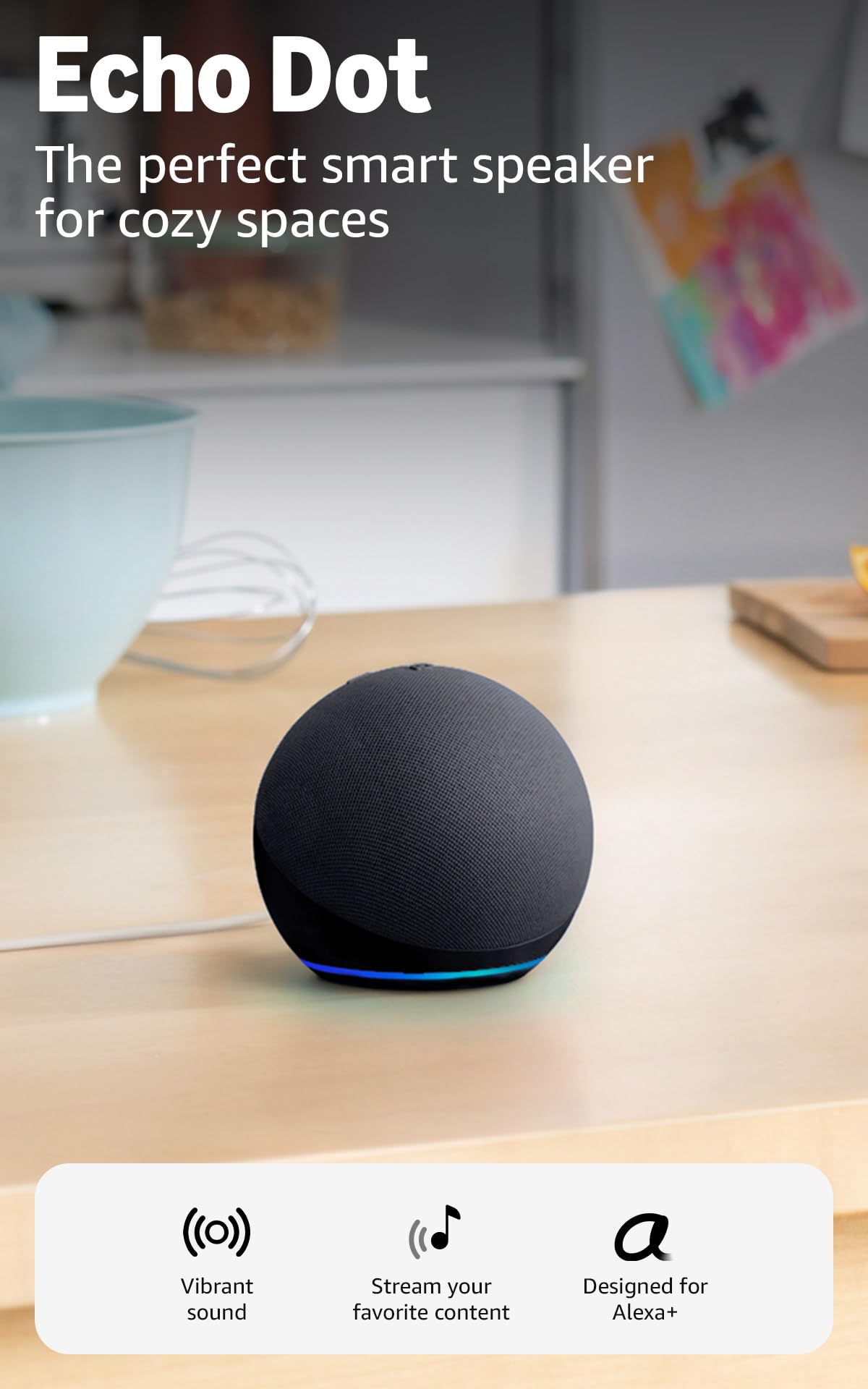
The Echo Dot's most useful trick is the one you notice before the music starts: it can extend an existing eero network by up to 1,000 square feet. It also has motion and temperature sensors built in, so it can trigger lights or a fan without a separate sensor. That makes it more than a voice remote for music; it can cover a dead spot in a bedroom and make a room feel a little smarter. For most people, that combination is why it is our top pick.

As a speaker, the Dot is honest about its size. Vocals are clear, podcasts and audiobooks come through well, and it fills a kitchen or bedroom without strain. It will not give you the bass or scale of the Dot Max or the Era 100, and we do not expect it to; this is the speaker for background listening and voice commands, not a listening chair. Bluetooth and multi-room pairing with other Echo devices make it more flexible than the single box suggests.

Setup is straightforward, and the Alexa app gives you routines, timers, shopping lists, and smart-home control in one place. The Dot asks for very little space and very little attention. It is the speaker we reach for when the job is voice control, routines, and a decent soundtrack without turning the room into an audio setup.

Pros

  • Adds eero Wi-Fi coverage up to 1,000 square feet
  • Built-in motion and temperature sensors
  • Simple Alexa setup and everyday voice control
  • Fits easily in bedrooms and kitchens

Cons

  • Reliability can be inconsistent unit to unit
Our verdict

The Echo Dot is the smart speaker we recommend first for most people: it handles Alexa, music, routines, and basic room sensing in a small, affordable package.
Check Latest Price
2

Best for Medium Rooms

Echo Dot Max

88 /100
Keeper Score Excellent

Key details

Bass
Nearly 2x Echo Dot (2026 release)
Smart-home Hub
Built-in hub with Omnisense
Voice Assistant
Alexa
Wi-Fi Extension
eero built-in up to 1,000 sq. ft.
Check Price on Amazon

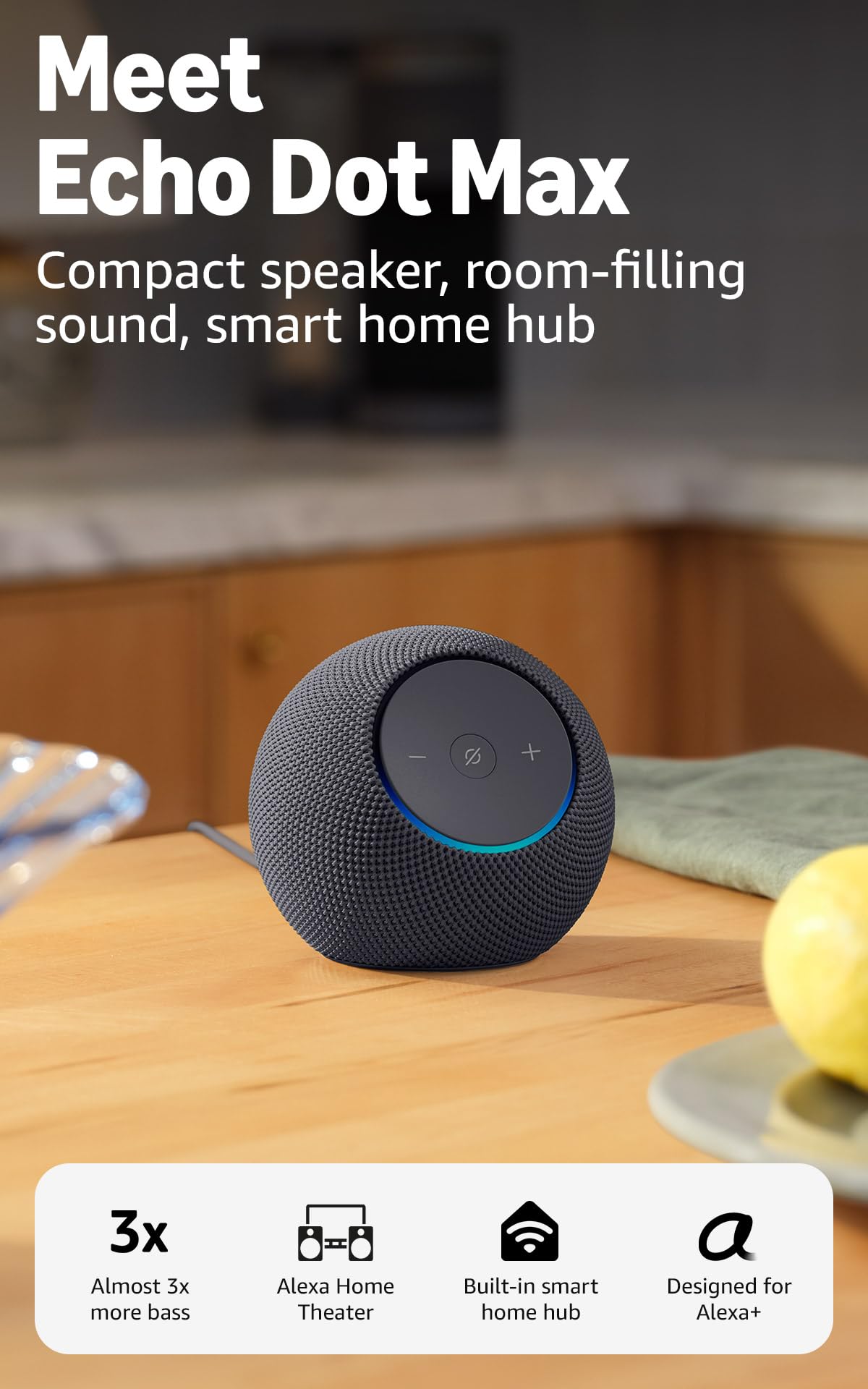
A living room is usually where the standard Echo Dot starts to feel small, and the Echo Dot Max is built to close that gap. It promises nearly twice the bass of the Echo Dot and adapts its sound to the space, so it has the weight for background music and the scale for a medium room. It keeps the Alexa routines, the built-in smart-home hub, and the eero Wi-Fi extension, so it is an upgrade in sound rather than a reset of everything else.

We appreciate the slightly wider cabinet: it still fits on a side table, and the finish looks more substantial than the standard Dot. The sound has more weight and a wider image, but it is not a stereo pair or a soundbar replacement. The ring light sits on top, and from behind the unit it can be hard to see whether Alexa heard you, a small placement annoyance if the speaker faces away from you.

Where it earns its keep is as a one-box Alexa speaker for a medium living room, especially if you do not want a stereo pair. For a bedroom or kitchen, the standard Dot is still the better fit. It is a clear step up in sound, but not a dramatic one.

Pros

  • Nearly twice the bass of the standard Dot
  • Room-aware sound that adapts to the space
  • Built-in smart-home hub with Omnisense
  • eero Wi-Fi extension up to 1,000 square feet

Cons

  • Costs considerably more than the standard Dot
  • Not enough for large open rooms
Our verdict

The Echo Dot Max is the better Alexa speaker for a living room, with deeper bass and room-aware sound, though the standard Dot remains the smarter buy for smaller spaces.

Check Latest Price
3

Best Sound

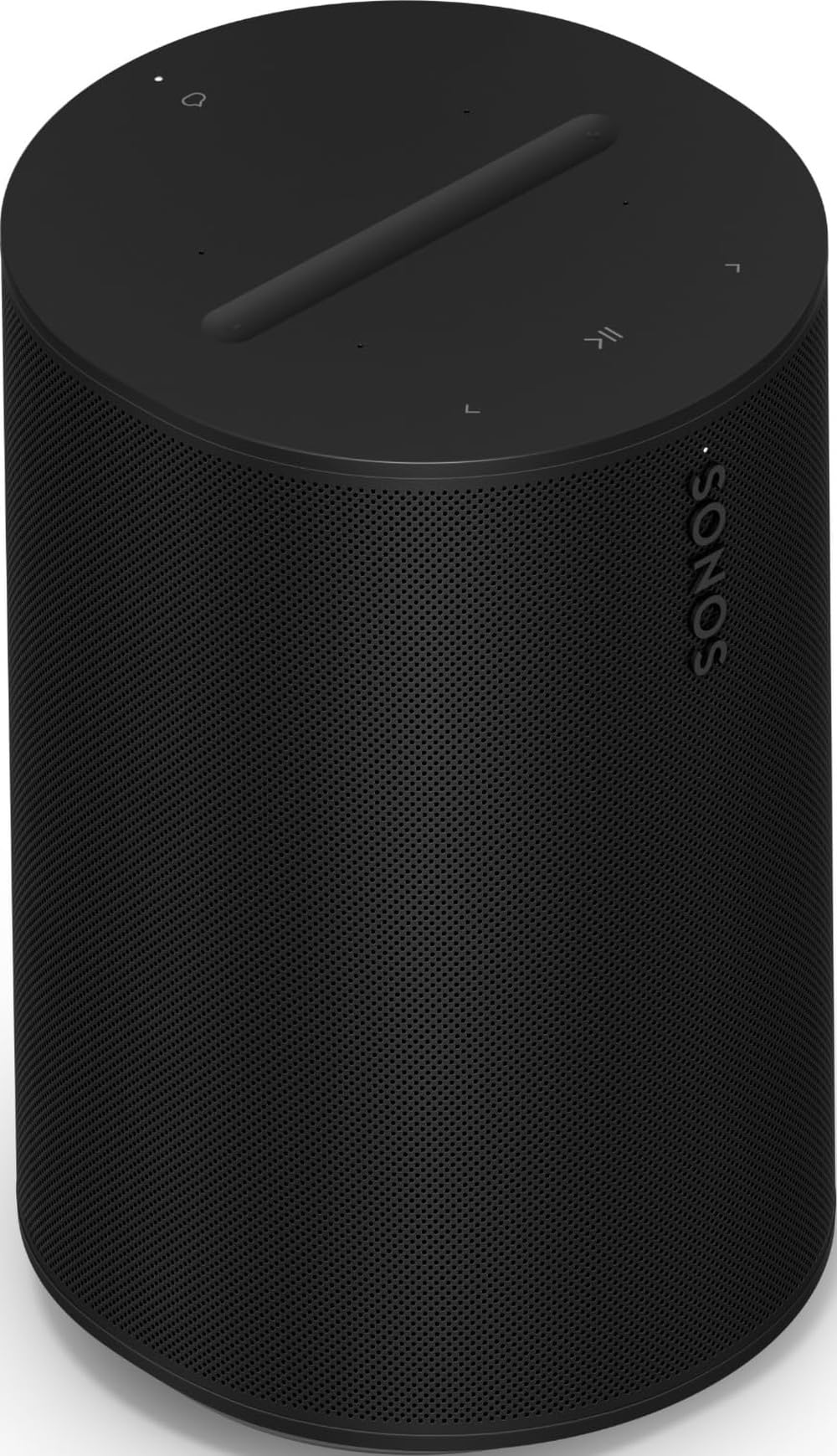
Sonos Era 100

88 /100
Keeper Score Excellent

Key details

Drivers
Dual tweeters; 25% larger midwoofer
Room Tuning
Trueplay
Connectivity
Wi-Fi, Bluetooth, 3.5 mm aux
Voice Control
Alexa
Check Price on Amazon

Two tweeters and a larger midwoofer are the reason the Sonos Era 100 creates stereo separation from a single cabinet. The result is a wider, cleaner sound than the mono Echo speakers here, with fuller bass that stays controlled when you turn it up. Vocals stay clear, and the speaker never sounds like it is straining to fill a den or kitchen.

Trueplay is the feature we appreciate most. The app listens to the room and adjusts the speaker's EQ, which is especially useful on a bookshelf or near a wall where bass can boom. The 3.5 mm input is a practical bonus for a turntable or a computer, and Bluetooth makes quick phone playback easy. Add a second Era 100 and you get a proper stereo pair, though that doubles the cost.

The Era 100 makes the most sense in a den, kitchen, or office where you listen actively and want one speaker to do the job. It is a music-first speaker that happens to have Alexa, and that is exactly how we use it.

Pros

  • Stereo separation from a single cabinet
  • Trueplay room tuning in the Sonos app
  • Wi-Fi, Bluetooth, and 3.5 mm input
  • Pairs with a second unit for stereo

Cons

  • App and Wi-Fi setup can be frustrating
  • No battery; needs a power outlet
Our verdict

The Sonos Era 100 is our pick for the best sound here, with true stereo separation and a wired input; just be ready to spend time with the app.

Check Latest Price
4

Best for Spatial Audio

Bose Lifestyle Ultra

82 /100
Keeper Score Excellent

Key details

Audio
TrueSpatial and CleanBass
Power
90 watts
Connectivity
AirPlay, Google Cast, Bluetooth, Wi-Fi
Voice Assistant
Alexa+
Check Price on Amazon

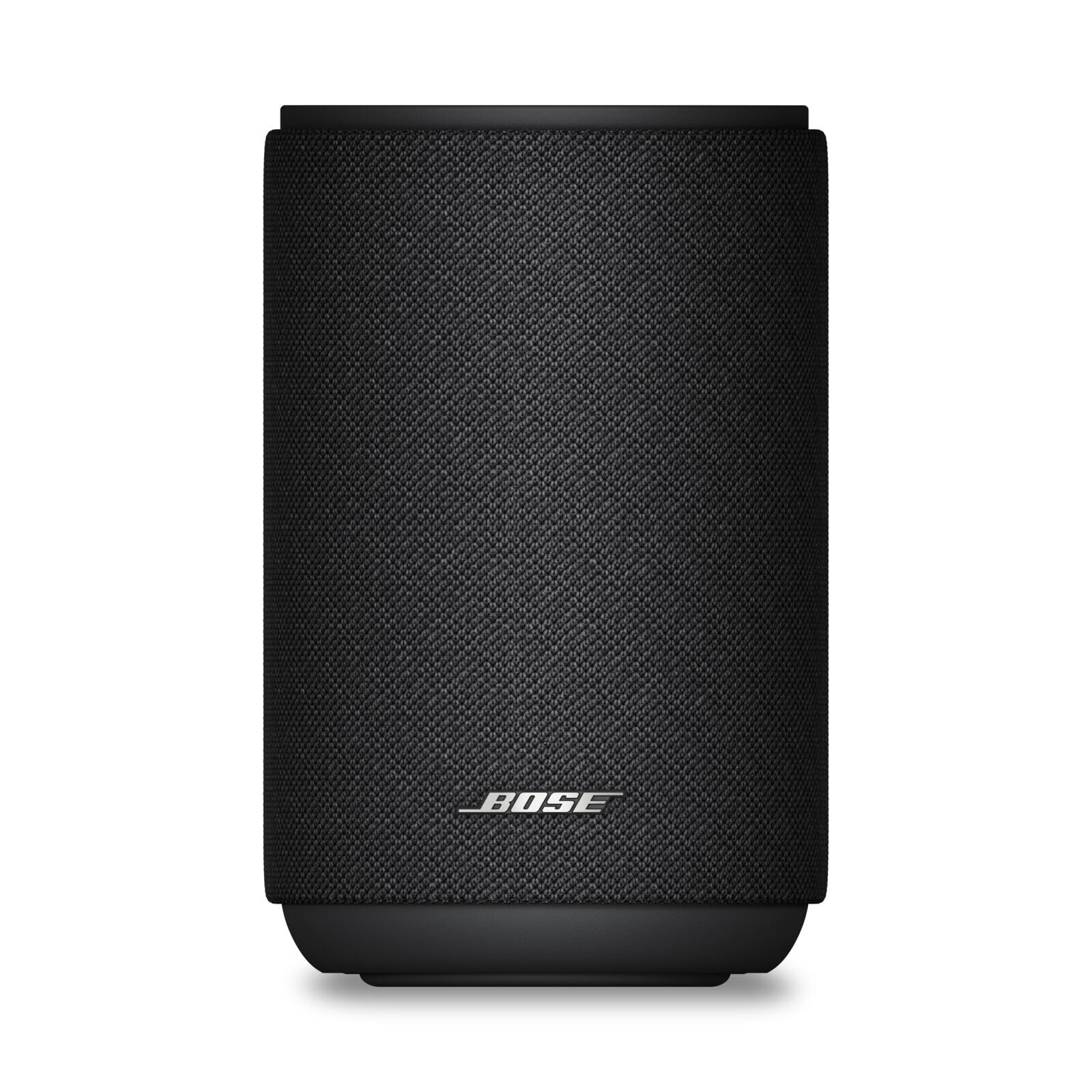
TrueSpatial processing gives the Bose Lifestyle Ultra a wider, more dimensional soundstage than the other speakers here. It pushes music and movie sound past the edges of the cabinet, and CleanBass keeps the low end controlled rather than muddy. If you want one box to make a living room feel bigger, this is the one that does it.

Flexibility is the other reason it earns a spot. It supports Alexa+ voice control, AirPlay, Google Cast, Bluetooth, and Wi-Fi, so it fits an iPhone household and an Android one. It can sit on a table, mount on a wall, or stand on the floor, and the adjustable EQ lets you tune the bass for the room. We like that it does not force you into one ecosystem for streaming.

Where it fits is a den or living room where you want one speaker for movies, music, and more than one casting standard. It can sit on a table, mount on a wall, or stand on the floor, and the adjustable EQ helps it settle into the room. It is not the voice-first kitchen speaker here; the Echo Dot is smaller, simpler, and easier to live with.

Pros

  • Wide, dimensional spatial soundstage
  • Alexa+, AirPlay, Google Cast, and Bluetooth
  • Adjustable EQ and flexible placement
  • 90 watts of room-filling power

Cons

  • Premium price relative to the rest
  • Bluetooth pairing can be inconsistent
Our verdict

The Bose Lifestyle Ultra is the premium pick for a wide, cinematic soundstage and multi-protocol streaming, though you pay for that flexibility.

Check Latest Price
5

Hi-Res Streaming

WiiM Sound Lite

88 /100
Keeper Score Excellent

Key details

Inputs
Wi-Fi, Bluetooth, Ethernet, 3.5 mm aux
Drivers
4-inch woofer, dual 1-inch tweeters
Amplifier
100W peak
Hi-Res Audio
24-bit/192 kHz
Check Price on Amazon

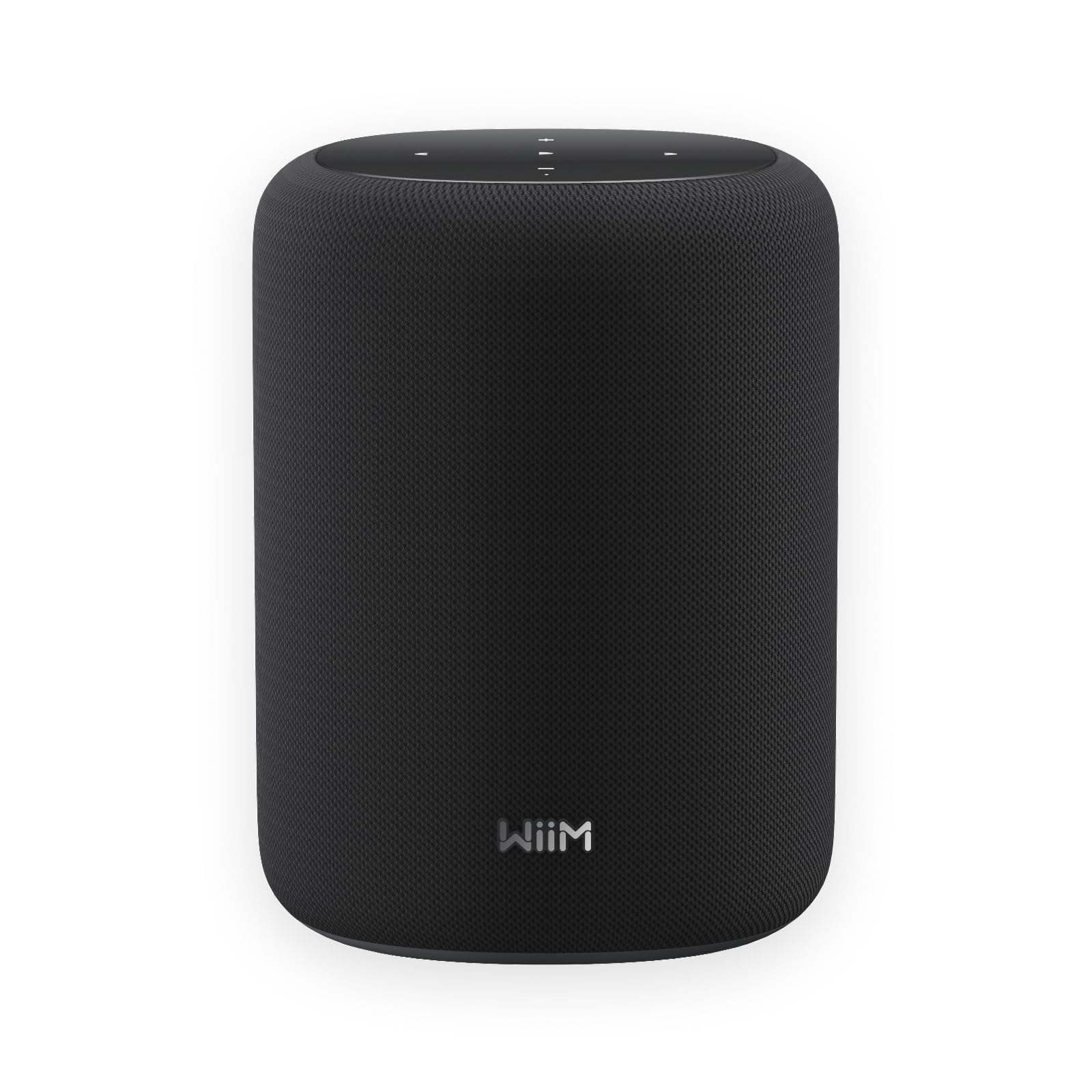
The WiiM Sound Lite leads with numbers: 24-bit/192 kHz hi-res support, a 100W peak amplifier, a 4-inch paper-cone woofer, and dual 1-inch silk-dome tweeters. In a small room it sounds clean and open, with more headroom than the Echo Dot and a more neutral midrange than the Bose. It is a serious little speaker for the money.

What makes it different is the connections. The WiiM Home App supports Google Cast, Spotify/TIDAL/Qobuz Connect, Alexa Cast, DLNA, and Roon/LMS, and the speaker has Ethernet and a 3.5 mm aux input. RoomFit tuning adjusts the sound to the space, and you can pair two for stereo or add a WiiM sub later. That is a lot of flexibility for a single box.

The setting it does not serve is the voice-first kitchen. Voice control runs through Alexa or Google Assistant with compatible devices, so this is not the speaker to choose if you want to call out a timer while your hands are full. It is for the listener who wants hi-res streaming and multi-room options first and is happy to use the app or another device for voice. If that describes you, it is a strong alternative.

Pros

  • 24-bit/192 kHz hi-res streaming
  • 100W peak amplifier with dual tweeters
  • RoomFit tuning and stereo pairing
  • Ethernet, Wi-Fi, Bluetooth, and aux input

Cons

  • No battery; needs a power outlet
Our verdict

The WiiM Sound Lite is a strong hi-res streaming speaker for listeners who want broad connectivity and room tuning, but it is not a voice-first assistant.

Check Latest Price

How We Tested 12 Smart Speakers, Room by Room

We started with every current model from the major speaker makers and voice-assistant platforms, then cut anything we couldn't confirm was still being sold and still receiving software updates. From there we filtered on the things people actually compare: which assistant is built in, whether two units can be paired in stereo or spread across rooms, whether there's a room-tuning feature, whether Bluetooth works as a backup when the network doesn't, and how the manufacturer has treated older models. Twelve made the cut.

Every speaker got the same first hour. We timed, with a stopwatch, how long it took to go from sealed box to a song playing, once on an iPhone and once on an Android phone, without opening the manual. Then we did a factory reset and started over, because that's the step that separates a good setup from a lucky one. For voice recognition, we asked for a timer and the weather from across the room with music at high volume and again with a range hood running, and logged every misfire and every time we had to repeat ourselves.

Sound got the most time. The same handful of tracks — one bass-heavy, one vocal-forward, one sparse acoustic — played on a kitchen counter, a nightstand, and a bookshelf, at low volume for a nearby conversation and cranked to the top to listen for distortion. We ran each room-tuning feature and compared before and after, paired two identical units in stereo, and walked from room to room with one song playing to count dropouts and lag.

The units then stayed in place for six months. We noted how much counter space each one ate, how fast the finish collected dust and fingerprints, and whether it read as furniture or as a gadget. We logged every dropped connection, every app update that changed how something worked, and every time a speaker forgot the network. Value came down to one question at the end: after half a year, would we buy this one again with our own money?

How to Choose a Smart Speaker

Start with the assistant, not the speaker

Your smart-home devices and preferred music service are the first filter. An Alexa household gets the most from Echo speakers, the Sonos Era 100, and the Bose Lifestyle Ultra; a Google household needs to confirm Google Assistant support before buying, because a great speaker that cannot control your lights is the wrong purchase. Make a short list of the services and devices you use, then check that the speaker's assistant handles them. The microphone array matters too: if you plan to call across a room, choose a model designed for far-field voice pickup rather than a desktop-only device.

Match the size to the room, and the placement to the outlet

Compact in a speaker listing usually means it fits a shelf, not that it runs on batteries; every speaker here is corded. A single small speaker is right for a kitchen, bedroom, or desk, while a larger cabinet with more bass earns its space in a living room. If music is the main event, plan for a stereo pair rather than expecting one box to create a wide stage. Place the speaker on a stable surface with a little space around it, and keep it out of a closed cabinet.

Check the connections you will actually use

Wi-Fi is the backbone for voice control, multi-room audio, and streaming services. Bluetooth is the fallback for quick phone playback, while a 3.5 mm input is the one to look for if you have a turntable, a computer, or an older source. AirPlay and Google Cast matter if your household splits between iPhone and Android. A built-in smart-home hub or Wi-Fi extender can replace another box, but only if you already use the compatible ecosystem. Count the sources you need before you pay for extras.

Treat the app and return window as part of the purchase

The speaker is only half of the ownership experience; the app handles setup, room tuning, updates, and multi-room grouping. That is where most of the friction shows up, so budget time for the first setup and test the connection in the room where the speaker will live. If you are buying a pair, set both up before the return window closes. A speaker that sounds great but drops off the network is not a good value, however good the first song sounds.

Frequently Asked Questions

Final Verdict

For most homes, the Echo Dot is the smart speaker to buy first. It puts Alexa, music, timers, routines, and even a little Wi-Fi extension into a small, affordable package, and it asks for very little space or setup. If music matters more than voice, the Sonos Era 100 is the upgrade we choose for fuller stereo sound and a wired input; if you want a bigger Alexa speaker for a living room, the Echo Dot Max makes more sense than stretching the standard Dot. The Bose is for spatial sound first, and the WiiM is for high-res streaming with voice as a secondary convenience.