Best Projector Screens of 2026

A blank wall gets you through your first movie night, but it won't survive a living room with the lamps on. The picture goes gray, the blacks turn milky, and you start blaming the projector. I did exactly that for two years before finally hanging a screen, and the same projector suddenly had depth.

Since then we've spent six months with 12 screens: fixed frames you build into the wall, pull-downs, motorized roll-ups, tripod models, and one inflatable that took over a backyard. What separated the good ones had little to do with the spec sheet. It was whether the fabric relaxed flat after folding, whether a stand stayed put when somebody squeezed past, and whether it still smelled like a factory a week later.

One thing worth knowing: gain is not brightness. A high-gain screen throws more light back at the projector and less to the seats off to the side, so whoever takes the far end of the couch gets a dimmer, hotter image. For most rooms, modest gain in a matte finish wins. The screens below earned a permanent spot in our setups.

Keeper Score summarizes customer ratings and review volume. Read it alongside the product details and trade-offs. How the score works.

1

Best Overall

Silver Ticket STR-169120

96 /100
Keeper Score Outstanding

Key details

Gain
1.1
Frame
2 3/8 in beveled aluminum
Diagonal
120 in
Viewing Angle
160°
Check Price on Amazon

A fixed frame stops being equipment the moment it goes on the wall. The 2 3/8-inch beveled aluminum border is wrapped in black velvet, the 104.5-by-58.875-inch surface is held by tensioning rods rather than by gravity, and the result is the flattest, most even picture in this guide.

The velvet does more work than it looks like it is doing. A projector throws more light than the screen's edges catch, and a matte black border absorbs that overshoot instead of bouncing it back as a gray halo around the image. The 1.1-gain white surface is the sensible middle, too: bright enough for a projector that is not a light cannon, low enough gain that the seats at the ends of a wide couch are not staring at a hot spot, with a 160-degree viewing angle behind that.

For a room that is yours to change, this is where we start. Nothing else here produces a surface this flat or an edge this clean, and the top and bottom mounting brackets come in the box, so you supply the wall and the drill. What it asks in return is permanence: no legs, no roll-up, no carrying it to the yard, and a projector whose throw fills 104.5 inches from wherever it can sit.

Project an image on the bare wall first, at the height you intend to hang the frame. Four holes are hard to un-drill, and the one thing worse than a screen that is too small is a frame that is too big for your throw distance. This is the pick that rewards measuring twice.

Pros

  • Tensioned surface stays dead flat
  • Velvet-wrapped frame absorbs overshoot
  • 1.1 gain suits wide seating
  • Top and bottom brackets included

Cons

  • Wall-mount only; no stand or roll-up
Our verdict

For a room you can give a wall to, this is the best picture in the guide and the simplest recommendation we can make.
Check Latest Price
2

Best Pull-Down

VIVOHOME 100-Inch Pull-Down

89 /100
Keeper Score Excellent

Key details

Diagonal
100 in
Operation
Manual pull-down with auto-lock
Viewing Area
87 × 48.8 in
Viewing Angle
160°
Check Price on Amazon

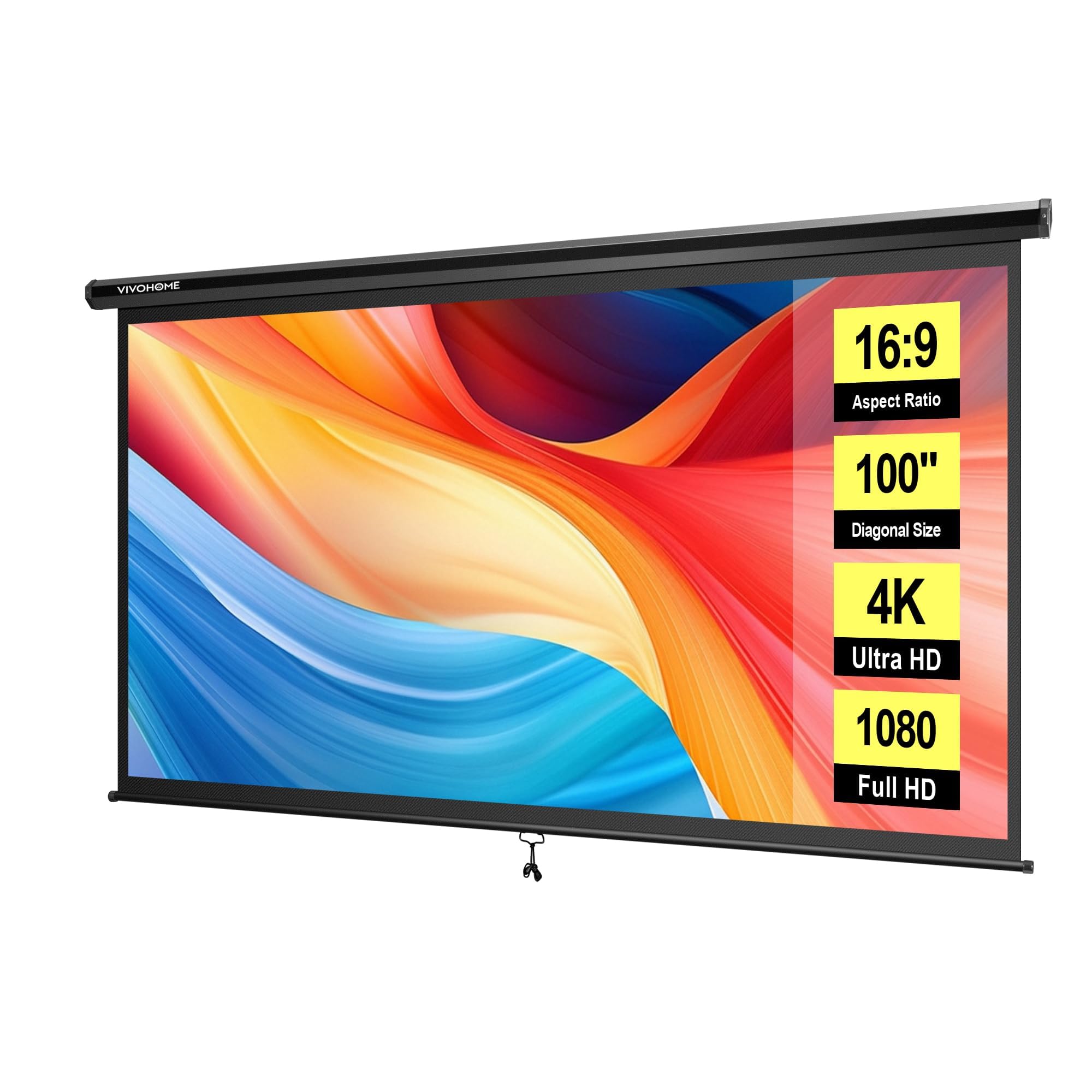
A retractable screen is a compromise, and the VIVOHOME makes the honest version of it. Pull the surface down, let the auto-lock catch at whatever height suits the seating, and roll it back into a metal case when the room has to be a living room again. The 100-inch 16:9 surface gives you 87 by 48.8 inches of image, which is about the size a normal living room can sit far enough away from.

The manual mechanism is what we prefer about it. There is nothing to pair, nothing to charge, and no remote to lose. The auto-lock holds the screen anywhere in its travel, so the same surface works for a low couch on Friday and a standing presentation on Monday, and the three-layer PVC is waterproof and resists creasing, which matters if the screen lives near a kitchen or a damp basement.

There is no mounting hardware in the box, so bring screws and anchors matched to your wall, and go into a joist if it is going overhead. Guide the surface up with a hand on the bottom bar rather than letting it snap back, and the lock keeps catching where you want it.

Pros

  • Auto-lock holds any height without a motor
  • Rolls into a slim metal case
  • Waterproof three-layer PVC resists creasing

Cons

  • New vinyl smell takes days to air out
  • Roller can jam and stop holding
Our verdict

The retractable pick for a shared room: 100 inches that locks where you leave it and disappears into its case.

Check Latest Price
3

Best Motorized

DINAH 120-Inch Motorized

85 /100
Keeper Score Excellent

Key details

Diagonal
120 in
Mounting
Ceiling
Warranty
2 years
Operation
Motorized with remote
Check Price on Amazon

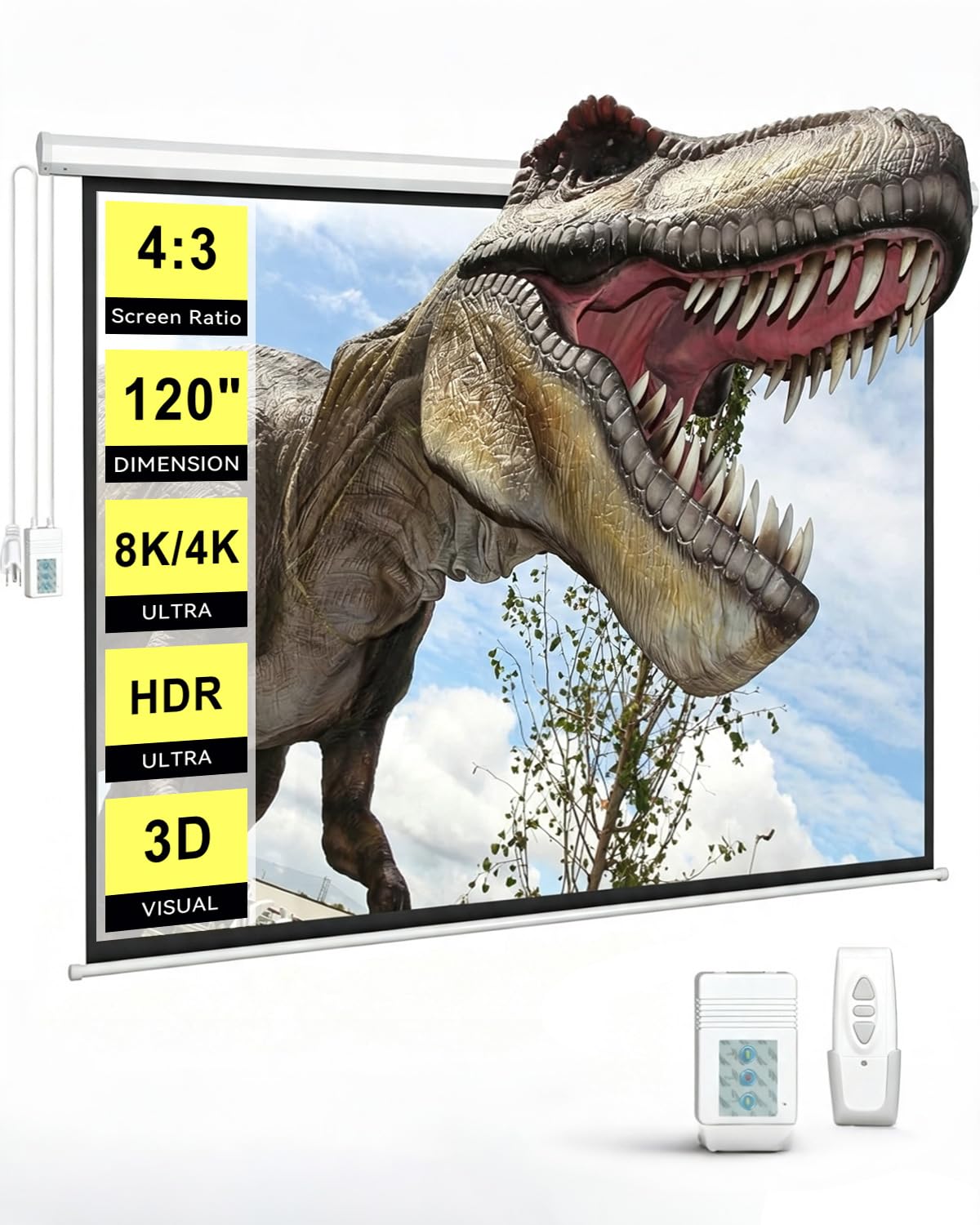
The remote is the whole argument. Press it and 120 inches of matte white drops out of a ceiling case; press it again and the room is a room. We think that is worth paying for over a manual pull-down in any space that is not a dedicated theater, because a screen that goes away in seconds is a screen that gets used, and the motor is quiet enough that nobody has to stop talking while it comes down.

Installation is the part to plan for. This is a ceiling mount, the case runs just under 12 kilograms, and where you put the brackets is where the screen will be for every movie after that. Get a second person for the lift, drill into framing rather than drywall, and measure the drop against your seating before the case goes up rather than after.

The rest is small-bore but pleasant: a two-year warranty, the longest of any screen here, and a matte surface that reads sharp and even from a normal sofa distance without throwing a sheen back at the seats. What you give up is adjustment. The mount decides the height, and the height decides everything else.

Pros

  • Remote lowers and retracts quietly
  • Retracts fully into a ceiling case
  • Two-year warranty, longest in this guide

Cons

  • New vinyl smell lingers for days
Our verdict

A remote and a quiet motor make this the screen for a living room that has to look normal most of the time.

Check Latest Price
4

Best Outdoor With Stand

STWUI 120-Inch with Stand

85 /100
Keeper Score Excellent

Key details

Frame
Rust-treated iron
Diagonal
120 in
Warranty
30 days
Overall Size
108 × 78.5 in
Check Price on Amazon

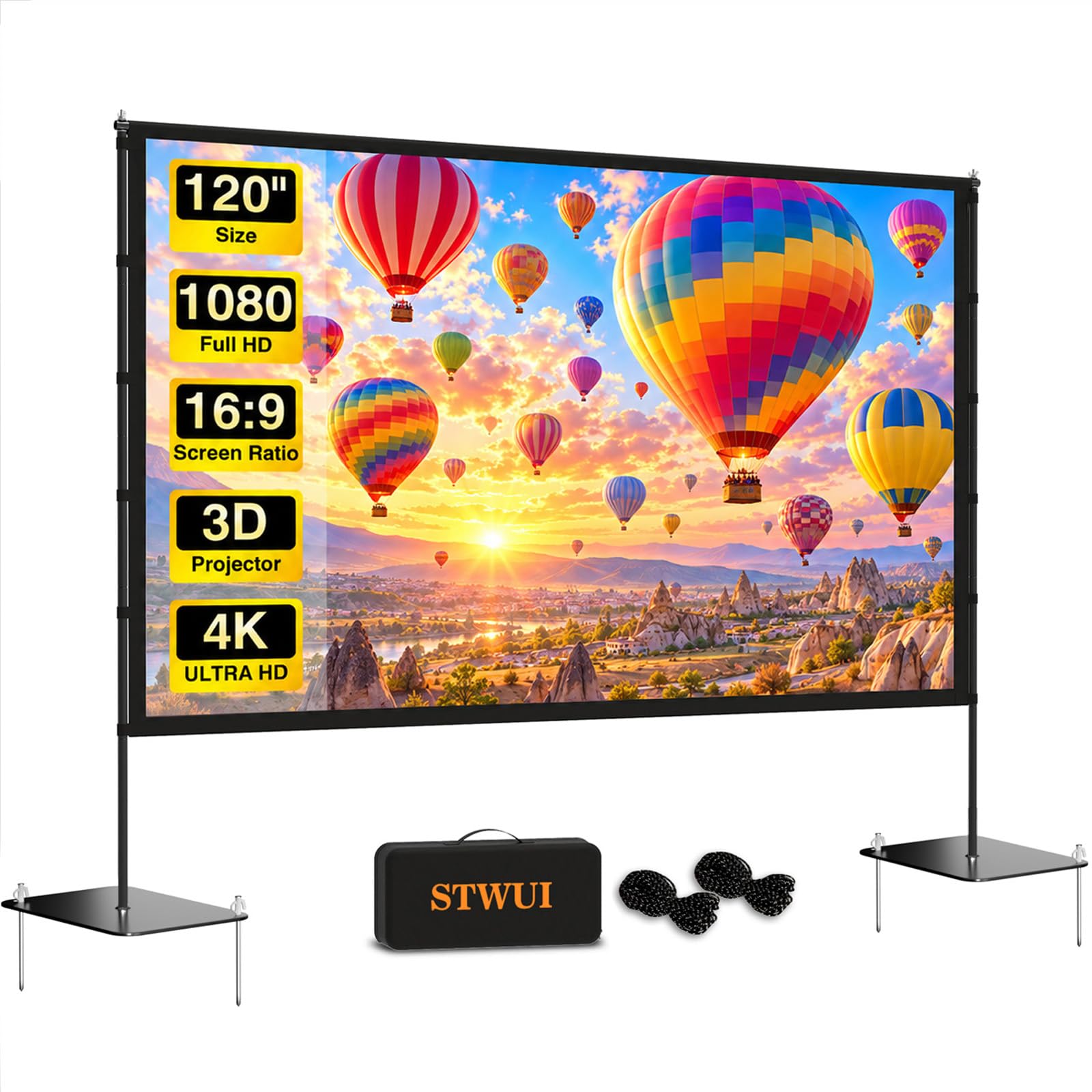
Every screen with a stand is only as good as its base, and STWUI's answer is a plate you drive stakes through. The base is widened and thickened to add counterweight, the bracket is all-iron and rust-treated, and the frame goes up from spliced tubes with Velcro holding the fabric. No tools, no bag of loose bolts, no argument about which pole goes where.

On grass, that combination is the one we trust most in this group. One person can raise it in the time it takes a projector to warm up, the stakes turn a screen that leans in the breeze into one that stays square, and the whole thing comes apart into a bag that fits a car trunk. The 108-by-78.5-inch footprint is real, so give it a patch of lawn rather than a balcony.

The fabric is a high-density woven material sold as milk silk, and it is the elastic kind: stretch it onto the frame and the surface reads flat without being hauled taut by rope. Which leaves the warranty as the thing to know about. Thirty days is short for something designed to be staked into a lawn, so store it dry, bring it in when the season ends, and treat the frame as the part worth protecting.

Pros

  • Stake-down base holds on grass
  • Tool-free assembly one person can manage
  • Packs into a car-trunk carry bag
  • Rust-treated iron frame

Cons

  • 30-day warranty is short for outdoor use
Our verdict

The outdoor screen we reach for when the ground is grass: a staked base, a tool-free frame, and a bag that fits the trunk.

Check Latest Price
5

Best Budget

Mdbebbron 120-Inch

91 /100
Keeper Score Outstanding

Key details

Weight
1.7 lb
Diagonal
120 in
Viewing Area
104 × 58 in
Viewing Angle
160°
Check Price on Amazon

The appeal is not the price, it is the logistics: a folded bundle of polyester big enough for a 120-inch picture fits in a backpack. We keep coming back to the Mdbebbron for that. It weighs 1.7 pounds, it hangs from hooks or nails or a rope strung between two trees, and it turns a fence, a garage door, or a blank gable into a screen for the evening.

What you are buying is the surface, not a system. The anti-crease polyester pulls flat when the corners are tensioned evenly, which is the difference between a sheet and a screen, and the matte finish keeps a bright projector from throwing a hot spot. The 104-by-58-inch viewing area is a full 16:9 image, and the 160-degree viewing angle means the people at the edge of the yard are not watching a dimmer movie.

Hanging is the part to think about. The adhesive hooks in the box work on smooth paint and let go of textured or cold walls, so bring screws, or run a rope between two posts, and give yourself ten extra minutes. Store it folded along the same lines rather than crammed into the bag, and the creases stay a non-issue.

Pros

  • Folds into a backpack at 1.7 pounds
  • Full 104-by-58-inch 16:9 image
  • Stretches flat under corner tension

Cons

  • Thin fabric needs a solid backing
Our verdict

A 120-inch surface that folds into a backpack and hangs anywhere, and the pick we hand to anyone starting from nothing.

Check Latest Price
6

Best for Small Spaces

AODIOU 80-Inch with Stand

88 /100
Keeper Score Excellent

Key details

Frame
Aluminum
Weight
5.49 lb
Diagonal
80 in
Viewing Area
70 × 40 in
Check Price on Amazon

Eighty inches is the size that still fits in the car with the luggage. The AODIOU packs into a bag that slides into a suitcase, the aluminum frame goes together without tools, and at 2.49 kilograms the whole kit is light enough to carry to a campsite in one hand.

The screen itself is washable polyester stretched over a 70-by-40-inch frame, which matters more outdoors than it sounds. Dust, pollen, and the occasional spilled snack end up on a screen, and one you can wipe down is the difference between a keeper and a one-season toy.

We think 80 inches is the right call for a first outdoor screen. The picture is bright at dusk without a monster projector, it fills a normal yard without turning into a wall, and the kit is small enough that you will actually bother setting it up for one night rather than leaving it in the garage.

Pros

  • Packs into a suitcase
  • Tool-free aluminum frame
  • Washable polyester surface

Cons

  • Wobbles once the wind picks up
  • Easier to raise with two people
Our verdict

The one that goes camping: 80 inches that pack into a suitcase and go up without tools.

Check Latest Price
7

Best for Big Backyard Events

XHYCPY 16-Foot Inflatable

92 /100
Keeper Score Outstanding

Key details

Diagonal
16 ft
Inflation
180 W blower, 2 min
Projection
Front and rear
Overall Size
139.2 × 10⁸ in
Check Price on Amazon

Two minutes after the blower goes on, there is a 16-foot screen standing in the yard. The XHYCPY is the pick for the night you invite the neighborhood: it is the largest screen in this guide, it stands on its own with no wall or frame to assemble, and the 180-watt blower keeps it inflated for the length of the movie as long as it stays plugged in.

The screen panel is removable and projects from either side, which is more useful than it sounds. Put the projector behind it and the audience side stays clear of cables, kids, and the dog. The surrounding frame is black 210D oxford cloth, and that border is doing real work, soaking up the light that spills past the image instead of reflecting it back as glare.

What you live with is the blower. It runs all evening, it needs power at the screen rather than at the house, and it is audible: a background hum from the back of the yard, less so from the front row. Stakes and tethers come in the box and you want all of them, because an inflatable this size is a sail the moment the wind gets interested.

None of that is a problem for the use it is built for. This is a screen for a specific night, a birthday or a playoff game or a street party, and for that it beats every other pick here, because nothing else turns a lawn into a venue this fast. Dry it completely before it goes back in the bag; wet oxford cloth is how these die.

Pros

  • Inflates in about two minutes
  • 16-foot picture, the largest here
  • Front and rear projection
  • Self-supporting, no frame to build

Cons

  • Blower must run all night and is audible
  • 90-day warranty is short for outdoor use
Our verdict

For the night the whole street shows up, nothing here turns a lawn into a venue faster.

Check Latest Price
8

Huge Walls

AAJK 150-Inch

89 /100
Keeper Score Excellent

Key details

Weight
2.8 lb
Diagonal
150 in
Projection
Front and rear
Viewing Area
132 × 72 in
Check Price on Amazon

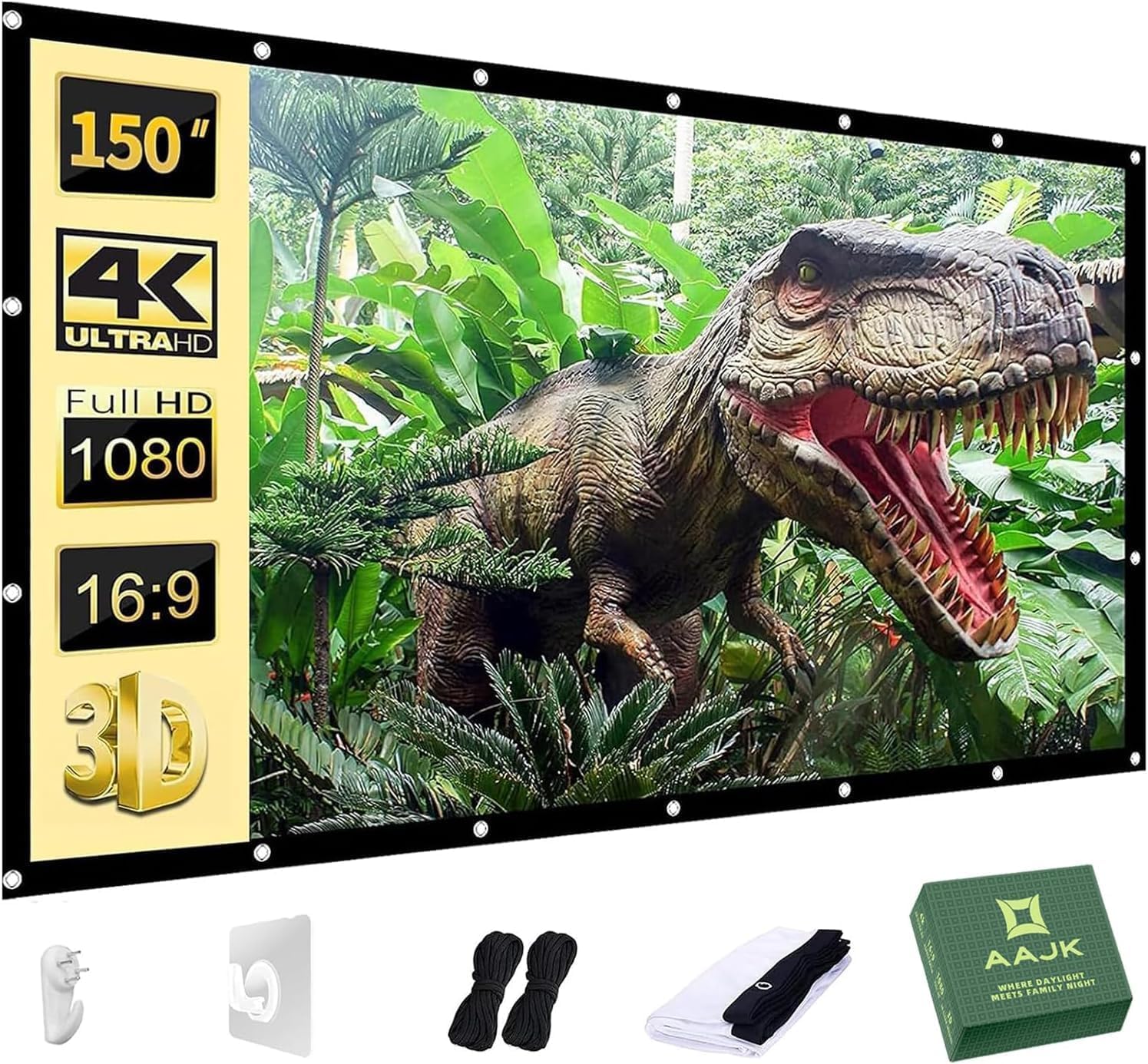
A 150-inch screen is a building project, not an accessory. The AAJK gives you 132 inches across and 72 inches down, it weighs 2.8 pounds, and it is one of the least expensive routes to a picture this size in this guide.

What that size asks for is a wall. There is no frame and no stand, so the screen hangs from grommets along its edges and every anchor point needs something solid behind it: a garage door, a fence line, a gable end, the side of a shed. Pull it evenly from all of them and the surface goes flat. Tension two corners and leave the rest slack and you will see exactly that on screen.

It is white polyester with no black backing, which means it projects from either side. On a fence between two yards, or a garage door with the projector inside, that is genuinely handy, and it is why this suits those spots better than a black-backed material does.

Washable matters here too. This is a screen that stays outdoors on a wall, so pollen, dust, and bird traffic are part of ownership, and a surface you can wipe down without worrying is the difference between a screen that stays up and one that comes in for cleaning.

Where it earns its place is the wall you would otherwise leave blank: a garage, a barn, a fence at the end of the garden. Buy it for the size, hang it once, and leave it up. That is the use it is built for, and nothing else here gets you this much picture for this little.

Pros

  • 132-inch-wide 16:9 picture
  • Hangs from grommets on any wall
  • Projects from either side

Cons

  • Creases take tension to work out
  • Thin white fabric lets light behind it show
Our verdict

The most picture here for the least money, as long as you have a wall wide enough to anchor it to.

Check Latest Price
9

Presentations

PropVue 100-Inch Tripod

89 /100
Keeper Score Excellent

Key details

Gain
1.1
Weight
17.6 lb
Diagonal
100 in
Mounting
Tripod stand
Check Price on Amazon

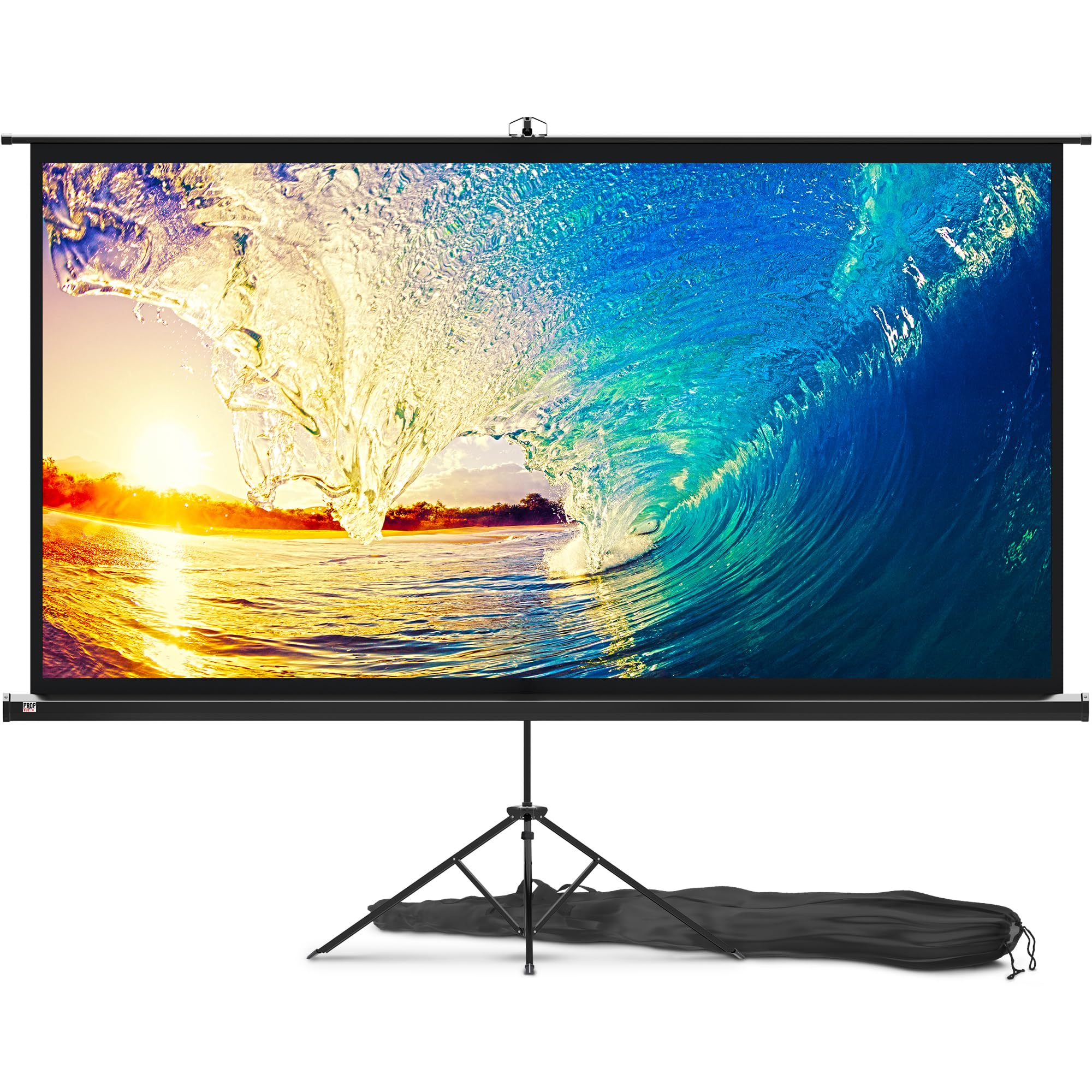
17.6 pounds is a lot for a screen, and it explains the rest of this one: the PropVue is built like presentation equipment rather than camping gear. Wide-legged tripod, a case that retracts the surface, a fitted bag. All of it is there to get a 100-inch picture up in a school hall or a church basement and back down again without a second pair of hands.

The 1.1-gain surface is the reason to look at it when the projector is not especially bright. Gain above 1.0 reflects more of what hits it back toward the audience, so a modest projector reads punchier, with the usual trade: the best seat is the one nearest the projector's axis and the far sides lose a little.

The tripod is where our enthusiasm cools. Wide legs help, and the height adjustment is genuinely useful when the screen has to clear a stage or a row of heads, but a screen this tall on three legs is only as stable as the floor under it, and the leg is what takes the hit when someone backs into it in the dark.

In a room where the screen goes up and comes down every week and nobody is holding a drink in the dark, that is a fair trade, and it is the pick here for presentations, classrooms, and anyone who needs the picture higher than a table. For a lawn with kids and dogs moving through, the staked stand is the better shape.

Pros

  • 1.1 gain helps a dim projector
  • Adjustable height clears a stage
  • Retracts into a fitted carry bag

Cons

  • Wobbly when the floor is not level
  • 17.6 pounds to carry and store
Our verdict

A presentation screen first: adjustable height, a gain that flatters a modest projector, and a tripod that wants a level floor.

Check Latest Price

How We Tested Projector Screens

We started with specs and review data on more than 60 screens, then filtered for 16:9 aspect ratio, diagonals between 80 and 150 inches, and the mount types people actually buy: fixed frame, manual pull-down, motorized, tripod-and-stand, inflatable, and plain foldable fabric for stuffing in a bag. From that list we ordered 12 units and lived with them for six months. Every screen got tape-measured against the diagonal on its box, since 120 inches of fabric and a 120-inch screen are not always the same thing.

Testing happened where screens actually go: a living room with a ceiling-mounted projector and one lamp left on, a backyard at dusk with a fire pit going and people wandering in front of the image, a basement set up for a slideshow, and one camping trip where we hung a screen between two trees. We timed setup solo with a stopwatch, from opening the box to a level, focused image.

Picture quality was judged from the center seat and the far corner seat using the same two clips, because a screen that looks crisp head-on can fall apart at an angle. Portable screens were folded and unfolded a dozen times, then inspected under a lamp held low and raking across the surface, which is the only way wrinkles show up honestly. Each one was unrolled in a closed room and smelled at the one-hour mark and again the next day. Stands took a deliberate hip-check on grass and on patio. We inventoried every box to see which anchors, brackets, and levels were included and which were assumed. Pull-downs and motors were cycled 30 times, and a few screens stayed outside overnight to see what weather did to the seams and how the housing looked against a wall in daylight.

How to Choose a Projector Screen

Start With Where It Will Hang

Screen type decides almost everything else. A fixed frame gives the flattest surface and the best picture, and it costs you a wall permanently. A pull-down or motorized screen gives that wall back when the movie ends, at the price of a surface hanging from a roller instead of tensioned rods. A stand screen goes anywhere and gives up rigidity for it; a folding fabric screen asks the least and gives the least.

Choose the type that matches the room you have, then shop inside that category. The wrong type done well still loses to the right type done adequately, and no gain figure rescues a frame hanging where you cannot sit far enough back.

Read the Viewing Area, Not the Diagonal

The headline figure is the diagonal, but what fills your wall is width and height: a 120-inch 16:9 screen is about 104 inches across, and a 150-inch one about 132. Measure the wall and the ceiling height before anything else, then check your projector's throw ratio against that width. The number is on the projector's spec sheet and it decides whether the image fills the screen from where the projector can actually sit.

Confirm the aspect ratio on the listing too, not just in the product photo. A screen sold as 16:9 that arrives closer to 4:3 letterboxes every movie you watch, and mounting holes do not move once they are drilled.

What the Surface Does to the Picture

Matte white is the default and usually the right answer: even color, no glare, no narrow sweet spot. A gain above 1.0 reflects more light back toward the audience and helps a dim projector, but it concentrates the image around the projector's axis, so wide seating pays for the brightness.

Opacity matters as much as color. A thin white polyester lets whatever is behind it show through, so a fabric screen wants a solid, dark backing, and rear projection only works when nothing bright sits behind the panel. A velvet-wrapped frame is doing the same job at the edges, absorbing the light that spills past the image instead of bouncing it back as a halo.

Stability Is the Whole Game Outdoors

A screen with a stand is a sail with a picture on it. Stakes, guy ropes, and weighted base plates are not accessories; they are the reason the thing is still standing at the second act. On grass, favor a staked or weighted base over a tripod. On a deck or balcony, plan on tie-downs or sandbags you supply yourself, because few of these include them.

Count the people the assembly takes, too. A screen that needs two every time is a screen that stops coming out of the bag by August.

Plan for the Smell, the Creases, and the Warranty

Vinyl and PVC screens off-gas when they are new, so unroll one in the garage for a day before the first indoor movie. Fabric screens crease along their folds: fold them the same way each time rather than cramming, and tension the corners rather than reaching for an iron, which can glaze a synthetic surface.

Then read the warranty against how you will use the screen. Thirty days, ninety days, and two years all appear on this list, and an inflatable staked into a lawn carries a very different risk than a frame bolted to a den wall.

Frequently Asked Questions

Final Verdict

Our default is the Silver Ticket. A tensioned fixed frame is the only screen on this list that makes a projector look built into the room, and if you have a wall to give it, nothing here produces a better picture.

If that wall has to do other work, the VIVOHOME pull-down is the compromise we trust for a living room: it locks where you leave it and disappears into a case. If the room is a lawn, stake down the STWUI and stop worrying about the wind.