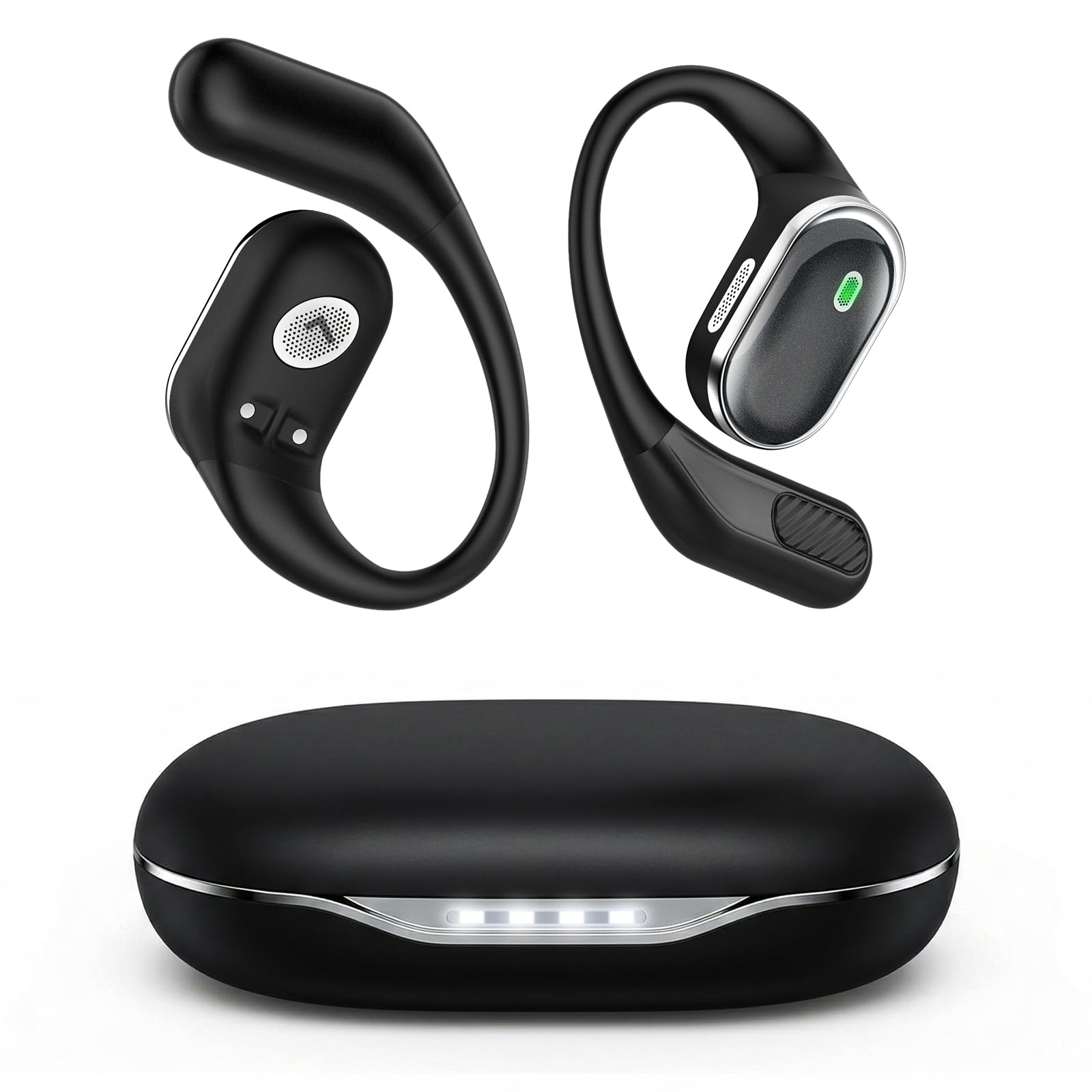
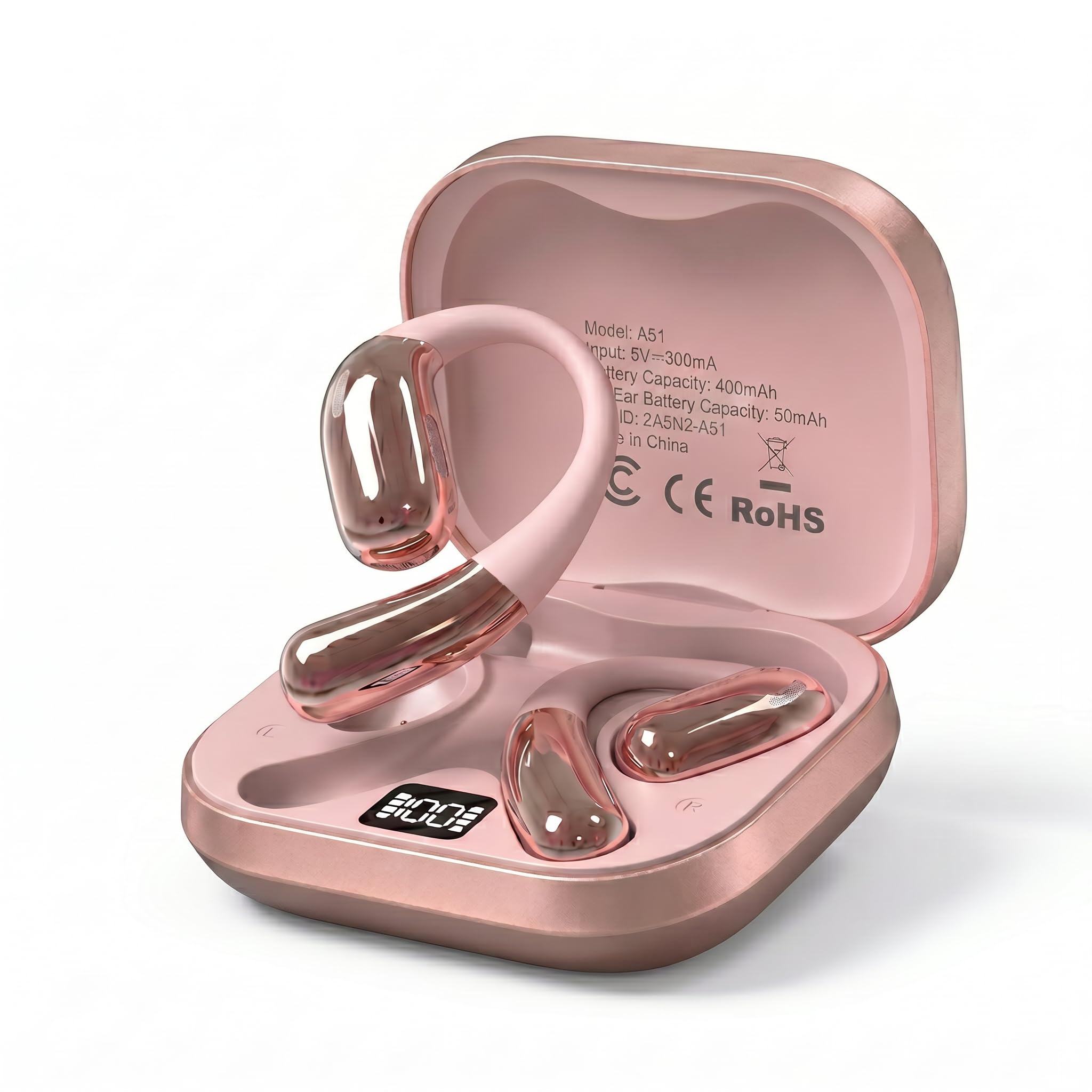
Best Open-Ear Headphones of 2026

Open-ear headphones make a promise that sounds almost too good: music in your ears while the traffic, your running partner, and the gym's front desk still come through. The catch is that nothing seals you off, so the wrong pair leaks every chorus to the next treadmill and turns a headwind into a fight with the volume button. Hook shape, weight, and the way the drivers aim sound at your ear canal rather than past it decide whether you forget you're wearing them.

We've spent six months with 12 pairs — on runs, on the bike, and on far too many video calls. Worth knowing before you scroll: bone conduction models rest on your cheekbones with the ear canal fully open, while air-conduction open-ear sets hover just outside it. Neither is better on its own — the first stays put during hard efforts, the second usually delivers more low end.

The other lesson is that the numbers on the box deserve skepticism, playtime especially. We ran every pair until it died, and the gap between claim and reality settled more of the shortlist than any spec sheet did. The pairs that held up are below.

Keeper Score summarizes customer ratings and review volume. Read it alongside the product details and trade-offs. How the score works.

1

Best Overall

Soundcore V20i

89 /100
Keeper Score Excellent

Key details

Playtime
8 hours, 36 with case
Driver Size
16 millimeters
Fit Adjustment
Four hook positions
Water Resistance
IP55
Check Price on Amazon

The hooks rotate through four positions, and that single detail keeps these at the top of our list. Most open-ear buds give you one fixed angle and hope your ears agree; the V20i lets you swing each arm until the 16mm driver sits where you want it. We noticed the difference most with glasses on, where the arm has to clear a temple without pressing on it. Set once, they stay put through a run.

Sound is fuller than the size suggests. The 16mm drivers are the largest in this guide, and they produce actual bass rather than the midrange hum open designs usually settle for. In a quiet room the tuning is genuinely enjoyable; on a busy street the open design lets traffic in, which is the whole point, though it means you ride the volume higher than you would with sealed buds.

The practical side is well handled too. Bluetooth 5.4 pairs quickly and holds two devices at once, so a laptop call does not force a re-pair with your phone. There are 8 hours in the buds and another 36 in the case, and IP55 shrugs off sweat and light rain. Touch controls are the one compromise: they work, but a wet finger after a sweaty set takes a couple of taps.

Where it runs out of road is output. In a loud gym the music competes with the room, and no amount of adjustment fixes that — it is the trade every open design makes. For the money and the fit, we accept it. If you need to hear cars coming up behind you on a ride, go bone conduction instead.

Pros

  • Four hook positions dial in the fit
  • 16mm drivers give open-ear listening real bass
  • Multipoint Bluetooth 5.4 for phone and laptop
  • 36 hours total from the charging case

Cons

  • Some units arrive with charging or pairing faults
  • No wired fallback when the battery dies
Our verdict

Our default pick: four-position hooks that genuinely fit, 16mm drivers with real bass, and multipoint Bluetooth. Buy these unless bone conduction is the whole point.

Check Latest Price
2

Best Bone Conduction

Shokz OpenRun Pro 2

88 /100
Keeper Score Excellent

Key details

Weight
1.07 oz
Driver Type
Bone conduction plus air conduction
Battery Life
12 hours
Water Resistance
IP55
Check Price on Amazon

This is the most expensive pair here, and it took a ride in traffic to show us why. With the band resting on your cheekbones and your canals completely open, a car coming up behind you is audible well before you would catch it with sealed buds. That is the case for bone conduction, and no pair here makes it more convincingly.

The second-generation trick is a set of air-conduction drivers working alongside the bone-conduction ones, and the result is the fullest sound we have had from a bone-conduction set in this group — actual low end, not just clear vocals. Twelve hours per charge covers a long day, and the two-year warranty is more cover than most of this group offers. That combination is what the price buys.

The caveats are real. The one-piece frame presses in different places on different heads, so the first long session is the real fit test, and 30.3 grams is light at the start of a day and noticeable by the end of one. Neither stopped us reaching for them on rides, but they are why this is a specialist pick rather than the default.

Pros

  • Dual drivers add genuine bass to bone conduction
  • Ears stay fully open to traffic and teammates
  • Twelve hours per charge and a two-year warranty

Cons

  • IP55 only
  • Some units fail inside a year
Our verdict

The best bone-conduction experience here: added air drivers give it bass, 12 hours gives it range, and open ears give you the road. Worth the premium if you ride in traffic.

Check Latest Price
3

Best for All-Day Comfort

OHAYO T10

87 /100
Keeper Score Excellent

Key details

Weight
8 g per earbud
Playtime
10 hours, 40 with case
Driver Size
15 millimeters
Water Resistance
IPX6
Check Price on Amazon

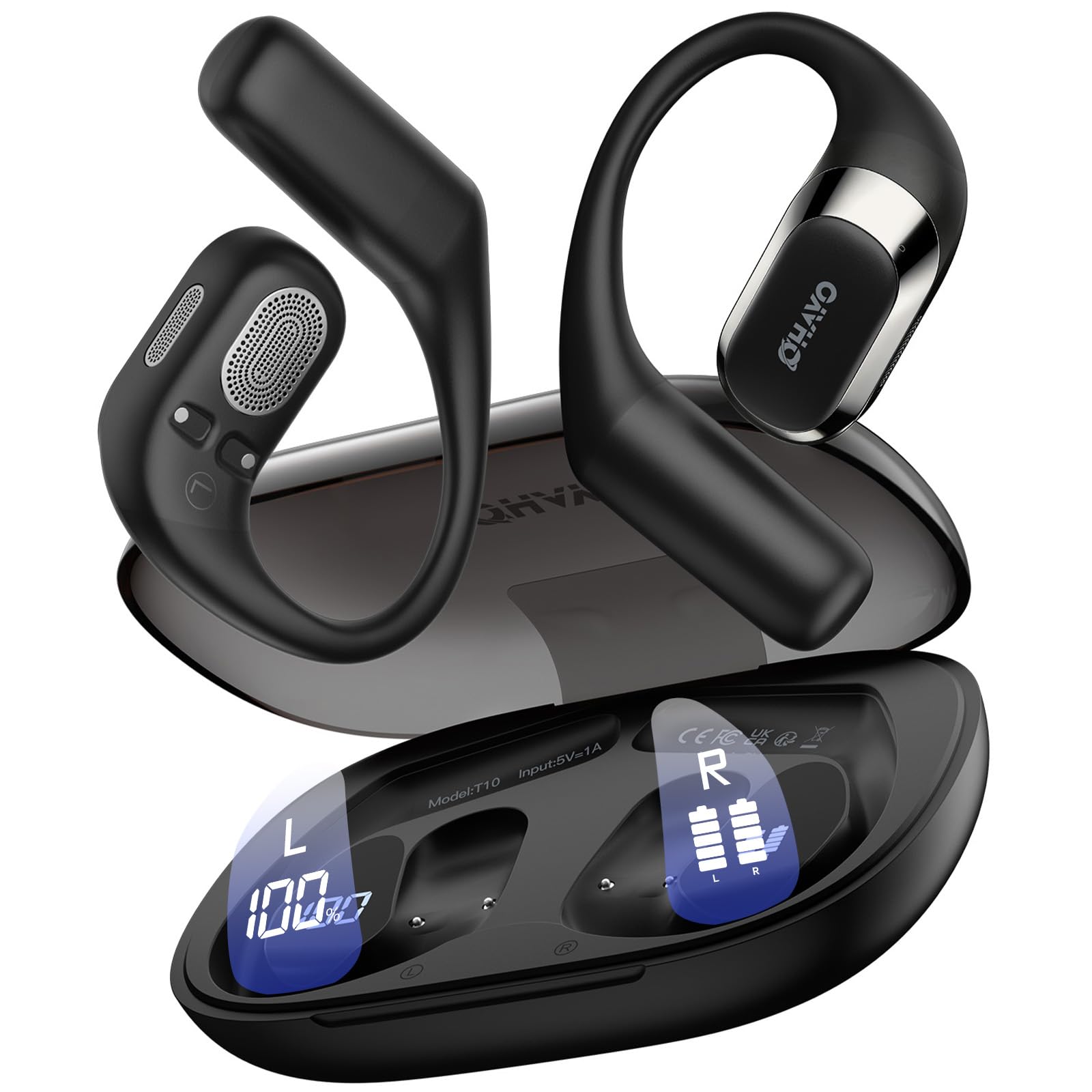
Eight grams per earbud is about the weight of a folded receipt, and it is the whole argument for the T10. Open-ear buds that press or clamp make themselves known by mid-afternoon; these do not. The hook rides over the ear instead of into the canal, and we forgot they were there, which is the highest compliment a comfort pick can get.

The 15mm dual-driver setup in each bud gives more low end than the weight suggests, and IPX6 covers sweat and rain without fuss. Playtime runs 10 hours in the buds and 30 more in the case, so a couple of days of commuting fit between charges. The hook also holds through intervals, which is not guaranteed on a bud this light.

The fit takes a little shuffling the first time — the hook has to land in the right spot above the ear — and the touch panel sits exactly where your fingers go when you adjust it. Small annoyances rather than dealbreakers, and both fade once you have the position worked out.

Pros

  • 8 grams per earbud disappears over a long day
  • 40 hours total with the charging case
  • IPX6 handles sweat and rain

Cons

  • Volume runs out in noisy rooms
  • One earbud can stop charging after a few months
Our verdict

Comfort is the reason to choose these: 8-gram buds, an over-ear hook that stays put, and 40 hours with the case. Start here if open-ear sets usually ache.

Check Latest Price
4

Best Value Bone Conduction

Shokz OpenMove

89 /100
Keeper Score Excellent

Key details

Weight
1.02 oz
Charging
USB-C
Bluetooth
5.1
Battery Life
6 hours
Check Price on Amazon

If the OpenRun Pro 2 is what we take on a long ride, the OpenMove is what we hand someone who wants to try bone conduction without spending much. It is the same wraparound idea — titanium band, ears open, sound through the cheekbones — in a plainer build with a shorter feature list.

What you keep is most of what matters. The band weighs 29 grams and disappears on a run, USB-C charging means one cable for everything in your bag, and physical buttons work with gloves on where touch panels do not. Multipoint pairing holds a laptop and a phone at once. Sound is clear for podcasts and calls and thin for bass-heavy music, which is the bone-conduction trade at any price.

Fit is the variable that decides this one. The band does not adjust, so it comes down to your head: some wearers find it presses after an hour, others forget it is there. Our advice is to give them a full session in the first week, because the band either settles or it does not.

Pros

  • The least expensive bone-conduction pick here
  • USB-C charging, one cable for everything
  • Physical buttons work with gloves
  • Two-year warranty

Cons

  • Six hours per charge, with no case to extend it
Our verdict

Bone conduction for a fraction of the premium picks: open ears, USB-C charging and a two-year warranty. Six hours is the catch, and the band suits some heads better than others.

Check Latest Price
5

Best Battery Life

TRAUSI T6

87 /100
Keeper Score Excellent

Key details

Warranty
90 days
Bluetooth
5.4
Total Playtime
80 hours with case
Water Resistance
IPX7
Check Price on Amazon

Eighty hours is the headline, and it is worth being precise: that is the buds plus the case, not eighty hours in your ears. The listing does not break out a per-charge figure, so treat the case as the battery. For a pair that lives in a gym bag and gets charged when someone remembers, that total is still the biggest in this guide by a wide margin.

IPX7 is the other standout, and it is the highest water rating here. Sweat, rain, a rinse under the tap after a muddy run — the T6 takes it, and because the hook holds the driver outside the canal, there is no wet silicone plugging your ear for the rest of the session.

The rest is competent rather than remarkable. Bluetooth 5.4 pairs fast, the touch panel handles volume and tracks once you learn the taps, and the hook stayed put through intervals. Nothing here feels premium, and nothing feels flimsy.

Put together, the T6 is the pair we reach for when the forecast is grim or the bag is going to sit in a hot car for a week. It is not the best-sounding set here and it is not the most refined, but it is the one we worry about least.

Pros

  • IPX7, the highest water rating in this guide
  • Up to 80 hours with the charging case
  • Bluetooth 5.4 pairs quickly

Cons

  • 90-day warranty is the shortest here
  • Modest maximum volume
Our verdict

The most waterproof pair here and the longest total playtime, for very little money. The 90-day warranty is the catch, so buy with that in mind.

Check Latest Price
6

Best Budget Pick

Tuemvia Open Ear

90 /100
Keeper Score Outstanding

Key details

Playtime
35 hours
Bluetooth
5.0
Case Display
Battery percentage
Check Price on Amazon

The case has a small digital readout showing the exact percentage left, and it is a feature we did not know we wanted until we stopped guessing. Three little bars tell you nothing at 7 a.m. before a run; a number tells you whether you have a day or an hour. It is the kind of detail that costs almost nothing and changes how you use a product.

Everything else is honest budget work. The hooks hold through a workout, the drivers sit outside the canal without wobbling, and 35 hours from the case covers a week of commutes. The link held through a session without dropping, and the earhook stayed comfortable for hours at a stretch.

Two things to know before ordering. It comes in rose gold only, which is either the reason you are clicking or the reason you are not, and there is no stated warranty, so the retailer's return window is your only cover. Water resistance is claimed rather than rated, which is fine for sweat and a rainy walk and not something to test in a pool.

Pros

  • LED readout shows exact battery percentage
  • 35 hours of playtime with the case
  • Secure hook fit during workouts
  • The lowest price in this guide

Cons

  • Bluetooth 5.0 is the oldest here
  • No stated warranty
Our verdict

The cheapest pair here, and an easy first open-ear experiment: a case that shows exact battery percentage, a secure hook, and 35 hours of playtime.

Check Latest Price
7

Helmet-Friendly Listening

PSIER X12

84 /100
Keeper Score Excellent

Key details

Weight
0.81 oz
Playtime
10 hours
Bluetooth
6.0
Water Resistance
IPX5
Check Price on Amazon

If your listening happens under a helmet or a cap, this is the shape to look at. At 23 grams the X12 is the lightest bone-conduction set here, and the difference shows up where it counts: it tucks under a bike helmet, fits beneath a beanie, and hangs around the back of your neck between sessions. The memory-titanium frame bends to your head and stays bent.

The 13mm bone-conduction driver produces clear speech and vocals; bass is the compromise, as it is with every bone-conduction design. The 10-hour rating comes with a condition, measured at 50 percent volume, so plan on less if you listen loud. Bluetooth 6.0 is the newest version in this guide and paired instantly in our testing.

What we like most is the cover: two years of warranty is more than most of this group offers, and it takes the sting out of buying bone conduction from a smaller brand. The plastics feel their price, and that is the main concession. Under a helmet, you will not notice.

Pros

  • 23 grams, the lightest bone-conduction design here
  • Two-year warranty
  • Ten hours of playtime at 50 percent volume
  • Bluetooth 6.0 paired instantly

Cons

  • IPX5 is a modest water rating here
Our verdict

The lightest bone-conduction pick here, with a two-year warranty and 10 hours of playtime. Choose it for helmeted commutes on a budget.

Check Latest Price
8

Glasses Wearers

DECHOYECHO O2

90 /100
Keeper Score Outstanding

Key details

Weight
0.93 oz
Playtime
12 hours
Warranty
12 months
Driver Size
15 millimeters
Check Price on Amazon

There is no charging case, and after a week we stopped missing one. The O2 is a single wraparound band weighing 26.4 grams, with the drivers hanging over the canal rather than in it. It goes on like a headband, comes off the same way, and there is nothing loose to lose in a gym bag.

The titanium frame flexes wide enough to clear glasses, and the physical buttons on the arm are the right choice for anything you will wear with gloves. Dual-device pairing holds a laptop and a phone at once, and the 15mm drivers are generous for the price.

Twelve hours on a charge is the best per-charge figure in this guide, and a two-hour charge refills it, so one cable session covers a week of commutes. The band sheds sweat without complaint, and the listing is upfront that these are built for running and riding rather than the pool.

What we cannot vouch for is longevity: the band and drivers have less of a track record than the Shokz and Soundcore designs here, which is why this sits in also-consider rather than higher up. For a glasses wearer who wants one-piece simplicity and never wants to think about a case, though, it is the most interesting design on the page.

Pros

  • One-piece band, no case to keep track of
  • Flexible frame clears glasses
  • Twelve hours per charge
  • Physical buttons work with gloves

Cons

  • Sweat-resistant only, not waterproof
Our verdict

A glasses-friendly one-piece band with no case to charge and 12 hours of playtime. The right pick if you want simplicity and do not need full waterproofing.

Check Latest Price

How We Tested: Six Months, 12 Pairs, and a Lot of Wind

We built the shortlist from spec sheets and a few hundred customer reviews, filtering for what decides whether a pair gets worn or ends up in a drawer: hook versus bone conduction, a real water-resistance rating rather than the word "sweatproof," multipoint pairing, and believable playtime. Prices stayed spread on purpose. That left 12 pairs, used for six months on three-mile runs, a 45-minute bike commute, weight-room sessions, work calls, and a few long drives.

Sound was judged the least scientifically: the same three tracks and one podcast on every pair at roughly 70 percent volume, listening for clear vocals and whether bass showed up at all. Volume gets tested outdoors, where open designs lose loudness to the air, so we noted where each pair topped out and whether it distorted there. Leakage got the low-tech check — music at 80 percent, a colleague three feet away in a quiet hallway, reporting back what they could hear.

For fit, we shook our heads, sprinted a block, and wore each pair with glasses and under a bike helmet, counting how often we pushed the hooks back. Comfort was a two-hour desk session, with notes on pressure behind the ear and at the temple. Connectivity meant leaving the phone on the kitchen counter and walking to the far end of the apartment, then taking a call mid-podcast on a paired laptop to see how cleanly it switched.

None of these cancel noise the way over-ears do — an open ear is the point — so we treated it as a microphone question, recording voice memos on a windy street and a busy sidewalk and listening back. Durability came from being stored badly: loose in a bag, sweat-soaked, rinsed under a faucet to the rated level. Battery ran from full charge to dead and got checked against the claim, and value was the last call, weighing what the extra money actually bought.

How to Choose Open-Ear Headphones

Bone Conduction or Air Conduction

Bone-conduction sets vibrate against your cheekbones, so nothing covers the ear canal at all. That is the most awareness you can get, and the only style that sits comfortably under a helmet. Air-conduction open buds aim a small driver at the canal from outside, which buys fuller bass, more volume and a lower price at the cost of a little more blockage.

Our rule: bone conduction if traffic or a helmet is part of your week, air conduction if sound quality and budget come first. The Shokz OpenRun Pro 2 is the bone-conduction benchmark here; the Soundcore V20i shows how far air conduction has come.

Fit, Weight and Glasses

Nothing seals, so an open-ear set stays on by shape and weight rather than friction. Adjustable hooks help if you are between sizes — the V20i's four positions are the most flexible here — while a one-piece titanium band cannot be resized, so head shape decides.

Weight matters more than it looks: 8 grams per earbud disappears for a whole day, 30 grams announces itself by evening. If you wear glasses, check that the arm clears your temple without pressing; the DECHOYECHO O2's flexible band and the V20i's rotating hooks both manage it.

Per-Charge Hours Versus Case Hours

Two numbers get confused in every listing: playtime per charge, and total playtime with the case. A cased pair with 8 hours in the buds and 36 in the case suits commuters who remember to charge; a one-piece band with 12 hours and no case suits people who do not.

The TRAUSI T6's 80 hours is the total with the case, not one session. If you wear them for a full shift, buy on per-charge hours. If they live in a bag, buy on the total.

Sweat, Rain and IP Ratings

IPX4 handles sweat and drizzle, IPX5 adds low-pressure spray, IP55 and IPX6 cover heavier sweat and rain, and IPX7 survives a brief dunking. None of these is a swimming headphone. The trap is a title that says waterproof with no number behind it, so check the rating rather than the adjective.

If you sweat heavily or run in the rain, pay for IPX6 or better: the TRAUSI T6 at IPX7 and the OHAYO T10 at IPX6 are the strongest here, while the IP55 sets are fine for gym work and dry weather.

Volume Headroom and Noisy Rooms

An open design lets the world in, which is the point until you are in a loud gym or beside a bus. Then the music competes, you push the volume up, and listening becomes tiring in a way sealed buds never are.

If most of your listening happens in noise, prioritise headroom — the Soundcore V20i's 16mm drivers and the Shokz OpenRun Pro 2's dual drivers both play louder and fuller than the budget picks. If it happens on quiet runs and in the office, almost any of these will do.

Frequently Asked Questions

Final Verdict

The Soundcore V20i is the pair we point most people toward. Four hook positions solve the fit lottery that sinks cheaper open-ear buds, the 16mm drivers deliver bass you can feel, and multipoint keeps a phone and a laptop connected without fuss. Step up to the Shokz OpenRun Pro 2 only when bone conduction is the actual requirement: traffic on a ride, a helmet, or ears that reject anything sitting over the canal. On a tighter budget, the Shokz OpenMove gets you the same open-ear awareness for a good deal less.