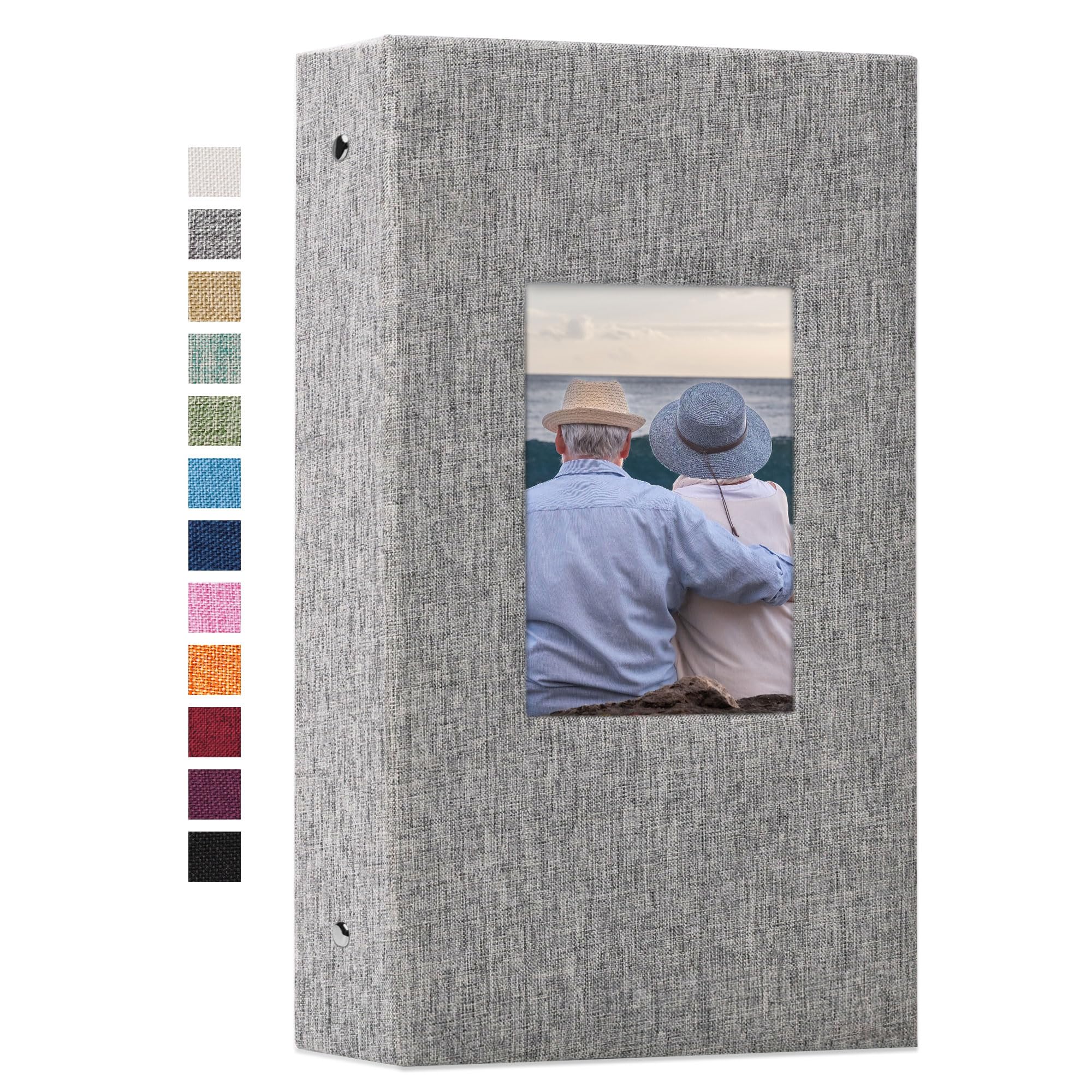
Best Photo Albums of 2026

Every family has the box: a shoebox, a tote in the closet, a drawer that jams halfway, all of it full of prints from birthdays nobody labeled. Sorting them is the easy part. Getting them into something that will keep them flat and in order for another thirty years is where people stall — and the album that actually does it is rarely the prettiest one on the shelf.

We've spent the past six months filling 14 albums — slip-in, magnetic, ring-bound, linen, leather, one that claims a thousand pockets — with real prints, then living with them. The number most shoppers fixate on is capacity, and it's the most misleading spec in the category. Pocket counts describe photos, not pages, so the biggest album is often a brick that won't sit on a shelf, and a horizontal-only page turns every portrait shot sideways.

What separates a keeper is what happens to the prints months later: no sliding out of undersized pockets, no curling at the edges, no sticky residue from a page that grabbed too hard. The albums below are the ones that still looked and worked like new after all that handling — some for the coffee table, some for the closet shelf, one for a stack of 8x10s that never fit anywhere else.

Keeper Score summarizes customer ratings and review volume. Read it alongside the product details and trade-offs. How the score works.

1

Best Overall

RECUTMS 600-Pocket Album

96 /100
Keeper Score Outstanding

Key details

Pages
120 pages
Capacity
600 4x6 photos
Dimensions
13.6 x 13.2 x 2.4 inches
Page Layout
5 pockets per page (3 horizontal, 2 vertical)
Check Price on Amazon

Five pockets per page is the detail that makes the RECUTMS album work for us. With three horizontal and two vertical slots, the 600-photo capacity is not just a big number; it uses the page efficiently while leaving room for both landscape and portrait prints. We also like the black acid-free pages behind clear pockets: the prints read cleanly, and the album feels more considered than the usual basic sleeve book. The PU leather cover has a button-grain texture and stitching that make it presentable on a coffee table, which matters if the album is going to sit out rather than live in a closet.

Capacity is the reason to choose this one, but the structure is what sold us. It is a 60-sheet, 120-page album, so filling it is a project rather than an afternoon; for a wedding set, a childhood archive, or years of family snapshots, that is exactly the point. The pages are sized for standard 4x6 prints, and the dual orientation means you do not have to rotate every photo or leave gaps when you mix vertical and horizontal shots. The stiff cover and binding let it stand on a shelf without slumping, which is more than we can say for flimsier albums.

The 600 capacity is a commitment; if you have only a hundred prints, a smaller album makes more sense. But for the reader with a shoebox of loose 4x6s, this is the one we reach for first. It turns a pile into a book without asking you to sort by orientation or buy three albums to cover a decade.

Pros

  • Five pockets per page use space well
  • Holds both horizontal and vertical 4x6 prints
  • Sturdy cover stands on a shelf
  • Acid-free pockets protect prints

Cons

  • Large 13.6-inch square footprint
Our verdict

For most families, this is the album we recommend: 600 pockets, a five-per-page layout that handles both orientations, and a cover that looks better than the price suggests.

Check Latest Price
2

Best for Mixed Print Sizes

Pioneer Magnetic 3-Ring Album

93 /100
Keeper Score Outstanding

Key details

Cover
Leatherette
Binding
3-ring refillable
Page Size
8.25 x 10.5 inches
Page Capacity
100 pages (50 sheets)
Check Price on Amazon

The Pioneer magnetic album is not a straight 4x6 grid, and that is precisely why it earns a place here. Its 8.25 x 10.5-inch self-stick pages take wallet prints, 4x6, 5x7, 6x8, and other sizes you can crop or arrange by hand. The clear overlay presses down over the print, so you can reposition a favorite without leaving a sleeve-sized hole in the layout. For a wedding album with a few enlargements, a travel book with ticket stubs, or a family history where the print sizes are all over the place, that flexibility is more useful than another 300-pocket book.

We like the three-ring binding just as much. It accepts refills, so the album can grow instead of being frozen at 100 pages, and pages can be moved when you want to reorder a section. The leatherette cover and gold stamping give it an old-school look that suits the format; this is an album that feels at home on a bookshelf, not just in a craft bin.

The adhesive is the part to watch. Self-stick pages can lose tack or grab unevenly, so smooth the overlay from the center out and keep heavy embellishments off the page. For standard prints and occasional rearranging, we think the trade is worth it; the Pioneer is the pick when print sizes vary and a pocket page would force you to trim or waste space.

Pros

  • Accepts mixed print sizes including 6x8
  • Refillable three-ring binding
  • Repositionable self-stick pages
  • Classic leatherette cover

Cons

  • Not sized for true 8x10 prints
Our verdict

We choose this one when print sizes are mixed and you want to rearrange pages later; the refillable magnetic format is the most flexible here.

Check Latest Price
3

Best Budget

Pioneer STC-504 Pocket Album

93 /100
Keeper Score Outstanding

Key details

Binding
3-ring refillable
Capacity
504 4x6 photos
Dimensions
8.5 x 2.25 x 13.5 inches
Page Layout
3 horizontal 4x6 photos per page
Check Price on Amazon

The Pioneer STC-504 is the album we point to when the goal is simple: get a lot of 4x6 prints out of the shoebox without spending much. It holds 504 photos, opens on a three-ring binding, and accepts refill pages, so you can add sections or reorder pages instead of starting over. The burgundy cover is plain, but plain is fine when the point is capacity and a low entry cost. We like that it gives you high-volume storage with room to grow, which is rare at this end of the range.

Three horizontal prints per page is a sensible layout for landscape-heavy snapshots, and the ring binding lets you work on one section at a time. That is the kind of small mechanical advantage that matters when you are inserting hundreds of prints; you are less likely to fight the spine or bend a page corner. The album also sits at a friendly size for a bookshelf, at 8.5 x 13.5 inches, so it does not demand the deep, square footprint of the largest albums here.

The ring binding and refill pages make this a working archive rather than a display piece. If you want to organize by year and keep adding, it is the most practical low-cost route in this group. It is a shelf album, not a scrapbook, and that focus is why the capacity stays affordable.

Pros

  • Holds 504 4x6 prints
  • Refillable three-ring binder
  • Slim bookshelf footprint

Cons

  • Thin sleeves can let prints shift
  • Some photos are fussy to insert
Our verdict

We see this as the value pick for a big pile of 4x6 prints: 504 pockets, a refillable ring binding, and a low-cost route to getting years of snapshots organized.

Check Latest Price
4

Best for Custom Layouts

HoneyTolly Self-Adhesive Album

95 /100
Keeper Score Outstanding

Key details

Cover
Linen
Pages
40 pages (20 sheets)
Capacity
120 photos
Page Size
10.8 x 8.6 inches
Check Price on Amazon

A trip or a baby's first year rarely produces a neat stack of identical prints. The HoneyTolly self-adhesive album is built for that mess: its 10.8 x 8.6-inch pages take 3x5, 4x6, 5x7, 6x8, and larger prints, and you can trim or arrange them without being locked into a pocket grid. The linen cover and included metallic pen give it a more personal, scrapbook-like feel than a standard slip-in album. We think that makes it a better gift than another generic sleeve book, especially if you plan to add a few notes or ticket stubs.

We like the 40-page format for a focused project. It holds up to 120 photos, which suits a honeymoon, a first year, or a single family trip. The pages are acid-free and the overlay is meant to protect prints from dust and fading, which is the right priority for a book you plan to keep. The included pen is a small extra, but it makes the album feel ready to use rather than like a bare component.

Self-adhesive pages reward a deliberate approach: work from one corner, smooth the overlay as you go, and keep heavy embellishments to a minimum. That is a fair exchange for the freedom to mix sizes. For a curated book where the layout matters, this is the one we choose.

Pros

  • Takes 3x5 up to 8x10 prints
  • Self-adhesive pages allow custom layouts
  • Linen cover with included pen
  • Acid-free pages protect prints

Cons

  • Only 40 pages, so not for large archives
Our verdict

For a curated trip or baby book with mixed print sizes, we like this self-adhesive album; its 40 pages keep the project focused, and the linen cover makes it gift-ready.

Check Latest Price
5

Best High-Capacity

potricher 1,000-Pocket Album

95 /100
Keeper Score Outstanding

Key details

Pages
200 pages
Capacity
1,000 4x6 photos
Dimensions
14.2 x 13.2 x 3.3 inches
Page Layout
5 pockets per page
Check Price on Amazon

A thousand pockets is not a typo, and it is the reason to consider the potricher album. With 100 sheets and 200 pages, it holds 1,000 4x6 prints, five per page, with three horizontal and two vertical slots. That makes it the closest thing here to a one-book family archive: you can keep years of snapshots together instead of splitting them across three or four smaller albums. The linen hardcover and front window give it a cleaner, more deliberate look than a plain ring binder.

The front window is a small feature we appreciate more than expected. You can slide in a 5x5-inch photo and change it when the album's theme changes, which makes the book feel personal without adding a label or a sticker. The pages are acid-free and dustproof, and the hardcover is meant to protect the contents on a shelf.

What we like most is that the capacity does not come at the expense of the page layout. Five pockets per page, with both orientations, keeps the book organized rather than turning it into a loose pile behind plastic. The trade is commitment: filling 1,000 pockets takes time, and the album rewards someone who wants one long-term archive. For a single trip or a small family, a 300-pocket book is easier to handle.

Pros

  • Holds 1,000 4x6 photos
  • Five pockets per page in both orientations
  • Changeable front window photo
  • Acid-free, dustproof pages

Cons

  • Very large 14.2-inch footprint
Our verdict

If you want one book for a thousand 4x6 prints, this is the one we recommend; the five-per-page layout keeps a huge archive manageable and organized.

Check Latest Price
6

Best Compact

Fintie 112-Pocket Album

96 /100
Keeper Score Outstanding

Key details

Pages
28 pages
Capacity
112 4x6 photos
Dimensions
8.94 x 7.13 x 1.46 inches
Page Layout
4 photos per page
Check Price on Amazon

The Fintie album is the one we reach for when the album needs to leave the house. It holds 112 4x6 photos in 28 pages, four per page, and measures roughly 8.94 x 7.13 x 1.46 inches, so it slips into a tote or a diaper bag without behaving like a full-size archive. The vintage brown PU leather cover and compact shape make it feel more like a brag book than a storage box. For grandparents, a wedding slideshow prop, or a small travel keepsake, that portability is the whole point.

The pages are clear PVC pockets, and the album opens like a book with a small inside pocket for extra prints. We like that the pocket holds a few spares until you have time to insert them; it is a tiny detail, but it keeps loose photos from migrating through your bag. The cover has a soft, slightly vintage look that suits the compact format, and the 112-photo capacity is enough for a focused collection without turning the book into a brick.

The compact size is the point, not a compromise: it is for a focused collection, a gift, or a travel book rather than a lifetime archive. If you want to carry a hundred prints to show friends, this is the easiest album here to hand around.

Pros

  • Holds 112 4x6 photos
  • Compact enough for a tote
  • Inside pocket for spare prints
  • Vintage-look PU leather cover

Cons

  • Tight pockets can be fussy with some prints
Our verdict

We keep this compact album in mind for gifts and travel: 112 photos, a wallet-friendly shape, and a cover that feels nicer than the price suggests.

Check Latest Price
7

Slim Shelf Storage

Vienrose 300-Pocket Album

93 /100
Keeper Score Outstanding

Key details

Pages
100 pages
Capacity
300 4x6 photos
Dimensions
13 x 7.1 x 2 inches
Page Layout
3 horizontal photos per page
Check Price on Amazon

A 13-inch-tall album with a 7.1-inch-wide cover is a different kind of large: the Vienrose 300-pocket book holds a serious number of 4x6 prints without the square, deep footprint of the 600- and 1,000-pocket albums here. The linen hardcover and front window give it a clean, retro look, and the 100 pages hold three horizontal prints per page. For someone with a standard bookshelf and a few years of family photos, that shape is easier to live with than a giant archive.

The front window is one of those details that makes a basic album feel personal. It takes a 4x6-inch photo, so you can customize the cover without a label or a separate frame. The pages are acid-free and PVC-free, which is the right baseline for prints you want to keep, and the linen cover has a texture that reads warmer than slick leather. We also like that the album is thin enough to pull off a shelf one-handed.

The 300-photo capacity is a sensible middle ground. It is enough for a wedding, a baby's first years, or a focused family archive, but not so much that the book becomes a project you never finish. The horizontal-only layout suits standard landscape prints; if you shoot a lot of vertical portraits, you will either rotate them or leave slots unused. That is the main compromise, and it is worth knowing before you buy.

We think the Vienrose is the best shelf-friendly compromise in this group: more capacity than a compact brag book, less bulk than the giant archives, and a cover that looks considered. It is the one we choose when the album will live in a living room or hallway and needs to earn its space.

Pros

  • Slim 2-inch spine
  • Holds 300 4x6 photos
  • Linen cover with front window
  • Acid-free and PVC-free pages

Cons

  • Tight pockets can tear if prints are forced
Our verdict

Our pick for a standard bookshelf: 300 photos in a slim linen hardcover, with a front window that makes a simple album feel personal.

Check Latest Price

How We Filled, Shook, and Judged 14 Photo Albums

We started with every album that came up for 4x6 prints, then filtered out anything with a vague page count, no acid-free claim, or a stated capacity that didn't match its page size. That left 14 albums in three formats — slip-in pockets, magnetic self-stick pages, and ring binders — spanning budget to gift-worthy. Format mattered more than brand: pocket albums and magnetic albums are solving different problems.

Each one got the same job lot of prints: a wedding set, two vacations, a folder of school photos, and a handful of 5x7 and 8x10 enlargements. I timed how long a page took to fill, checked whether vertical pockets turned portraits sideways, and counted what each album actually held versus what the cover promised. Two were deliberately overfilled to see where the pages sagged and whether the rings or spine pulled.

Over six months, the filled albums lived where albums live — stacked on a shelf, carried in a tote on a two-hour drive, left on a coffee table within reach of a four-year-old. Every few weeks I held each one upside down and shook it to see what slid out, checked page edges for curling and cover corners for scuffing, and peeled back a sample of prints from the self-stick pages to see whether the adhesive held or left residue. Slip-in albums lost photos at the top of the page first; the magnetic ones ranged from forgiving and repositionable to permanent on first contact.

Last, we judged appearance where it counts — on a shelf, next to a sofa, and wrapped as a gift — and did the math on cost per stored photo, which rearranges the value ranking more than list price does.

How to Choose a Photo Album

Start With the Page Format

Slip-in pocket pages are the straightforward choice for standard 4x6 prints: you slide each photo into a sleeve and move on. They keep adhesive away from the image and make a large batch quick to file. Self-adhesive pages are better when the print sizes vary or you want to crop, overlap, or add notes. The trade is fussiness: you need to smooth the overlay carefully, and the tack may not hold heavy embellishments. We reach for pocket pages for a family archive and self-adhesive pages for a curated trip or baby book.

Match Capacity to the Collection

A 200- or 300-pocket album is a comfortable size for a wedding, a single trip, or a few years of family photos. A 500- or 600-pocket book is the better default for a shoebox of loose prints, while 1,000 pockets suits someone consolidating a long family history. Capacity has a physical cost: the biggest albums are several inches thick and need a deep, sturdy shelf. Measure the shelf before you commit to the largest size, and remember that a partially filled giant album is harder to handle than a full mid-size one.

Check the Page Layout

Look at how many prints fit on a page and which way they face. Three horizontal slots per page is common for landscape snapshots; four or five pockets per page often add vertical slots so portraits do not have to be rotated. A bi-directional page is more useful if you shoot a mix. Also check whether pages load from the top or the side: top-loading pockets tend to hold prints more securely, while side-loading pages can let a print drift toward the open edge.

Look Past the Cover

Acid-free and PVC-free pages are the baseline for prints you want to keep. A linen or leather-look cover affects how the album feels on a shelf, but the page seams and pocket plastic matter more for daily use. Thin sleeves can tear at the seam or let prints slide; stiff pages can be hard to turn when full. We prefer a cover that holds its shape and pages that flex without creasing. None of that guarantees a print will last forever, but it gives the album a better chance.

Choose Extras You Will Actually Use

A front window, memo lines, an included pen, or a set of stickers can make an album more personal, but each one adds cost or complexity. A cover window is worth it if the album will be given as a gift or left out; memo lines help if you like captions; a pen and stickers are a nice start for a self-adhesive book. We prefer to pay for sturdier pages than for extras that sit unused.

Frequently Asked Questions

Final Verdict

For most people, the RECUTMS 600-pocket album is the one to buy. It holds a family-sized collection, treats horizontal and portrait prints equally, and has a sturdy cover that can live on a shelf. If you are short on shelf space, choose the slimmer Vienrose 300-pocket instead; if your prints are a mix of sizes, the refillable Pioneer magnetic album is the more useful format.