Best Macro Lenses of 2026

Macro photography changes the rules as soon as you get close. At 1:1 the depth of field collapses to a sliver of a millimeter, so a breeze or an unsteady hand is enough to soften the whole frame. That's why the lens matters more here than almost anywhere else — magnification, working distance, and how a lens behaves at its closest focus decide whether you get a keeper or a card full of near-misses.

I learned that the hard way, chasing one bee around a flowerbed for an afternoon. I've gotten pickier since — my team and I spent six months shooting with eight macro lenses. Sharpness wide open, autofocus that hunts at close range, and stabilization you can actually feel separated the great ones from the merely fine.

Focal length is really a working-distance decision. A shorter macro puts you nose-to-petal, which is fine for coins and hopeless for skittish insects, while a longer one gives you room to light the subject without your own lens throwing a shadow. The picks below sit at both ends of that.

Keeper Score summarizes customer ratings and review volume. Read it alongside the product details and trade-offs. How the score works.

1

Best Overall

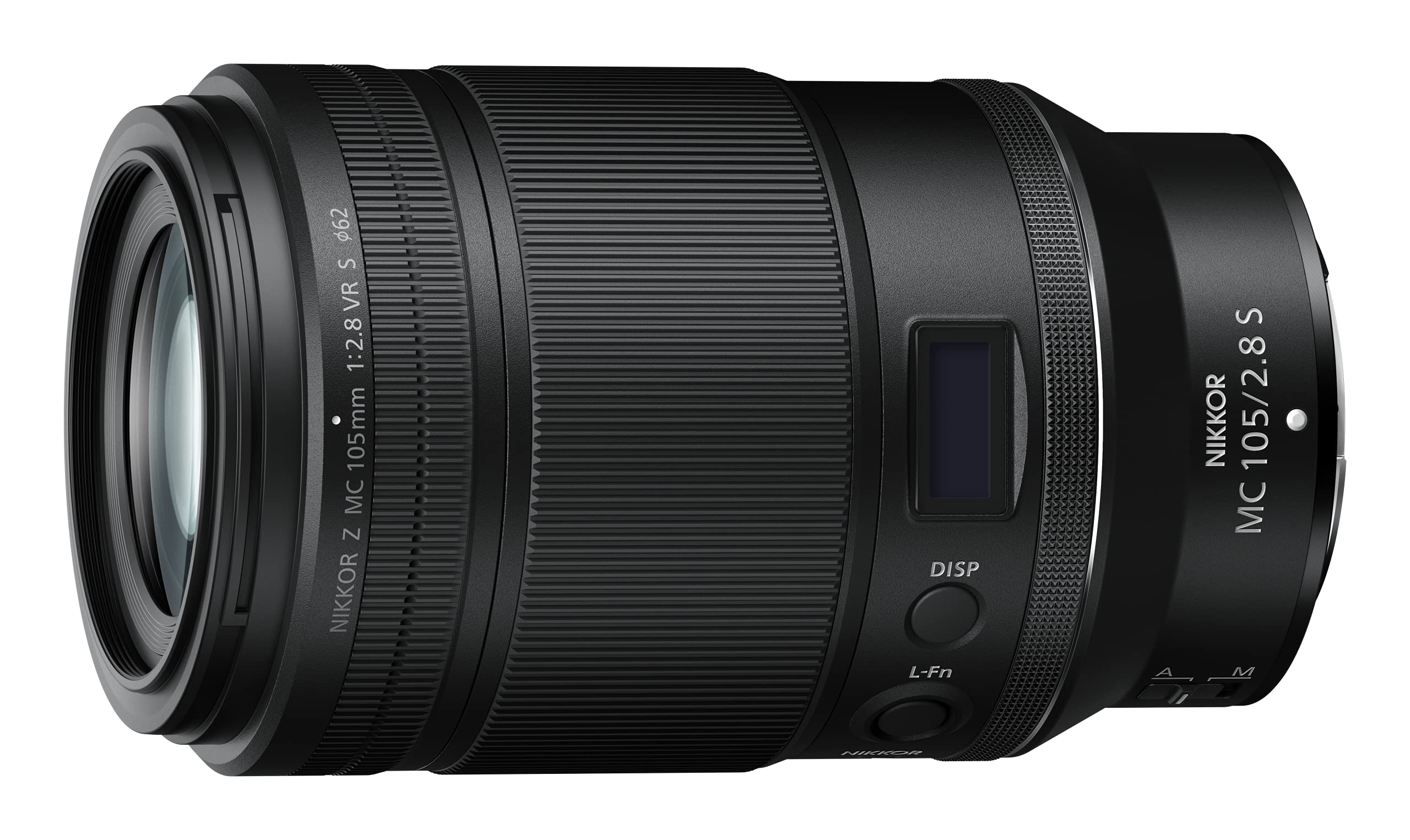
Nikon NIKKOR Z MC 105mm f/2.8 VR S

93 /100
Keeper Score Outstanding

Key details

Mount
Nikon Z
Weight
1.4 lb
Image Stabilization
Lens-based VR
Maximum Magnification
1:1
Check Price on Amazon

Stabilization is what settled this one for us. At life size every small shake is magnified along with the subject, and the Z MC 105mm puts VR in the lens rather than leaving the job to the body, so the viewfinder steadies while you lean in over a beetle and your hit rate at 1:1 climbs without a tripod. Add 105mm of working distance, a constant f/2.8 and a price below the other full-macro autofocus lenses here, and it becomes the obvious default.

Optically it earns the place. Detail holds into the corners, which matters more in macro than almost anywhere else because the edges of the frame are often where the texture lives — the ridged edge of a leaf, the far side of a coin. The nine-blade aperture and the 105mm compression turn it into a proper portrait lens between close-up sessions, and the barrel is sealed well enough that a damp morning isn't a worry.

Autofocus is the part to go in knowing about. It moves in small, deliberate steps and settles, which is exactly right when the plane of focus is a millimeter deep, and feels unhurried next to a telephoto zoom. Take over by hand and the ring is geared for fine work. At 1.4 pounds it balances on a mid-size Z body without dragging at the mount, and the 62mm filter thread is common enough that a polarizer you already own will fit.

Pros

  • 1:1 magnification with lens-based VR
  • Sharpness holds into the corners
  • 105mm keeps you clear of the subject
  • Priced below the other full-macro autofocus lenses here

Cons

  • Autofocus is deliberate and slow-feeling at close range
Our verdict

We recommend this one to most macro shooters: true 1:1, lens-based stabilization, and corner-to-corner sharpness for less money than the other full-magnification autofocus lenses here.

Check Latest Price
2

Best for Sony E-Mount

Sony FE 90mm f/2.8 Macro G OSS

90 /100
Keeper Score Outstanding

Key details

Mount
Sony E
Weight
1.33 lb
Maximum Magnification
1.0x
Minimum Focus Distance
0.92 ft (0.28 m)
Check Price on Amazon

The focus ring slides back toward the body to disengage autofocus, and that single movement is the most useful thing this lens does for close-up work. Push it forward and you're on autofocus for a portrait; slide it back and you're focusing by hand on a mushroom cap without diving into a menu. On a tripod at 1:1, it's the control you reach for constantly.

Optically there's little to argue with, and this is the macro lens we recommend to anyone already in Sony's system. The 90mm reaches 1.0x at a minimum focus distance of 0.92 feet, which leaves a little breathing room between the front element and the subject, and resolution holds into the corners, so a tight crop still shows structure rather than mush. Optical Steady Shot helps more than you might expect when you're braced over a flower with the camera at chest height.

Autofocus is the least settled part. When it locks it's quick and quiet, but at close range it can slide past the plane you wanted and take a beat to come back — the nature of autofocus when the depth of field is a sliver rather than a defect. It's the reason the manual clutch matters as much as it does here.

Build quietly beats expectations: the barrel is sealed against dust and moisture, the focus hold button sits under your thumb, and 602 grams rides all day on a wrist strap.

Pros

  • Slide-back ring switches to manual instantly
  • 1.0x magnification at 0.92 ft
  • Corner sharpness with Optical Steady Shot
  • Dust- and moisture-resistant barrel

Cons

  • Autofocus can drift off the plane at close range
Our verdict

For Sony E shooters this is the macro lens we point to first: the slide-back focus ring alone makes close-up work faster, and the optics hold up everywhere in the frame.

Check Latest Price
3

Best for Canon RF

Canon RF 100mm f/2.8 L Macro IS USM

91 /100
Keeper Score Outstanding

Key details

Mount
Canon RF
Weight
1.61 lb
Maximum Aperture
f/2.8
Maximum Magnification
1.4x
Check Price on Amazon

Past life size is the reason to look here. The RF 100mm tops out at 1.4x, so a housefly's eye can fill the frame without a bellows or a stack of extension tubes, and you keep autofocus while you do it. That extra 40 percent over a standard 1:1 macro sounds modest on paper and stops sounding modest the first time you want the texture on a wing.

The rest of the lens is built for the same kind of work: L-series sealing, hybrid stabilization rated to five stops that corrects the shift as well as the shake you get with the camera inches from the subject, and a 100mm focal length that keeps a working gap in front of the glass. The spherical aberration ring is the odd one out — turn it one way for smooth, creamy background blur, the other for a busier rendering with more bite. It rewards a particular taste rather than answering a need.

Where it lands for us: for Canon RF shooters who need to go past life size with autofocus, nothing else in this guide does the job. The magnification and the stabilization are what you're paying for, and they earn it in the studio and in the field. Autofocus is quick and confident in normal use and slows at the limits, which is what you want a macro lens to do.

Pros

  • 1.4x magnification goes past life size
  • Hybrid IS rated to five stops
  • Spherical aberration ring shapes bokeh
  • Sealed L-series build

Cons

  • Premium price against the 1:1 lenses here
Our verdict

The Canon RF macro we recommend when 1:1 isn't close enough: 1.4x magnification, hybrid stabilization, and a bokeh ring that genuinely changes the picture.

Check Latest Price
4

Best for Fujifilm X

Laowa 65mm f/2.8 2X Ultra Macro APO

90 /100
Keeper Score Outstanding

Key details

Mount
Fujifilm X
Focus Type
Manual focus
Maximum Magnification
2x
Minimum Focus Distance
6.69 in
Check Price on Amazon

Two-to-one magnification at a price well below the autofocus lenses here, and on Fujifilm's APS-C bodies the 65mm behaves like a 97.5mm lens — long enough to work around a skittish subject, wide enough to show what it's sitting on. What we didn't expect at this price is an apochromatic optical design: 14 elements in 10 groups, with color fringing kept out of high-contrast edges like a beetle's shell. That combination is the argument, and it holds up.

Focusing is entirely manual, and the ring is long and smooth enough that fine adjustment at 2x is a pleasure rather than a fight. There are no electrical contacts, so magnification and aperture are set on the barrel — a workflow that sounds fussy on paper and becomes second nature within a session, especially with peaking switched on.

The build is the other surprise: all metal, with a nine-blade diaphragm and engraved markings you can read at a glance in the field. Where it bites is the obvious place — at 2x on anything that moves, manual focus means a low keeper rate until you learn to set the magnification first and rock the camera rather than turn the ring.

Pros

  • 2x magnification at a budget price
  • Apochromatic design controls color fringing
  • Long, smooth focus ring for fine work
  • All-metal build

Cons

  • Manual focus only, with aperture set on the barrel
Our verdict

We recommend it to Fujifilm shooters who want 2x magnification and don't mind focusing by hand; nothing else here gets that close for the money.

Check Latest Price
5

Extreme Magnification

Canon MP-E 65mm f/2.8 1-5x Macro

84 /100
Keeper Score Excellent

Key details

Mount
Canon EF
Weight
1.57 lb
Focus Type
Manual focus
Magnification Range
1x to 5x
Check Price on Amazon

Its minimum magnification is 1x — where most macro lenses stop — and it runs to 5x, which puts a few millimeters of subject across the whole frame. Nothing else here works like that, and nothing else here asks as much of the person holding it.

We think it earns its place for exactly that reason: as a single lens for the extreme end, it has no equivalent in this group, and the results when everything is steady are extraordinary. The process is the price. Focus is manual with no assistance, and at 5x the depth of field is a sliver that no aperture really fixes — stopping down to f/16 buys a little and diffraction takes some of it back.

The lens helps where it can. A removable metal tripod ring carries the weight at the balance point instead of hanging it off the camera mount, and the 10-elements-in-8-groups construction keeps the image clean at magnifications where every flaw shows. At 710 grams it's a lens you mount on the tripod rather than the camera, which is precisely what the collar is for.

The first hour with it is mostly misses, and that's the design working as intended rather than a fault. Buy it for a project you care about, not for a walk in the woods.

Pros

  • 1x to 5x magnification in one lens
  • Removable tripod collar balances the rig
  • Very sharp close-up results when supported

Cons

  • Needs solid support at the highest magnifications
Our verdict

We keep it in the guide for one job: 1x to 5x in a single manual lens, for photographers who will build a tripod-and-rail workflow around it.

Check Latest Price
6

Budget 2x Macro

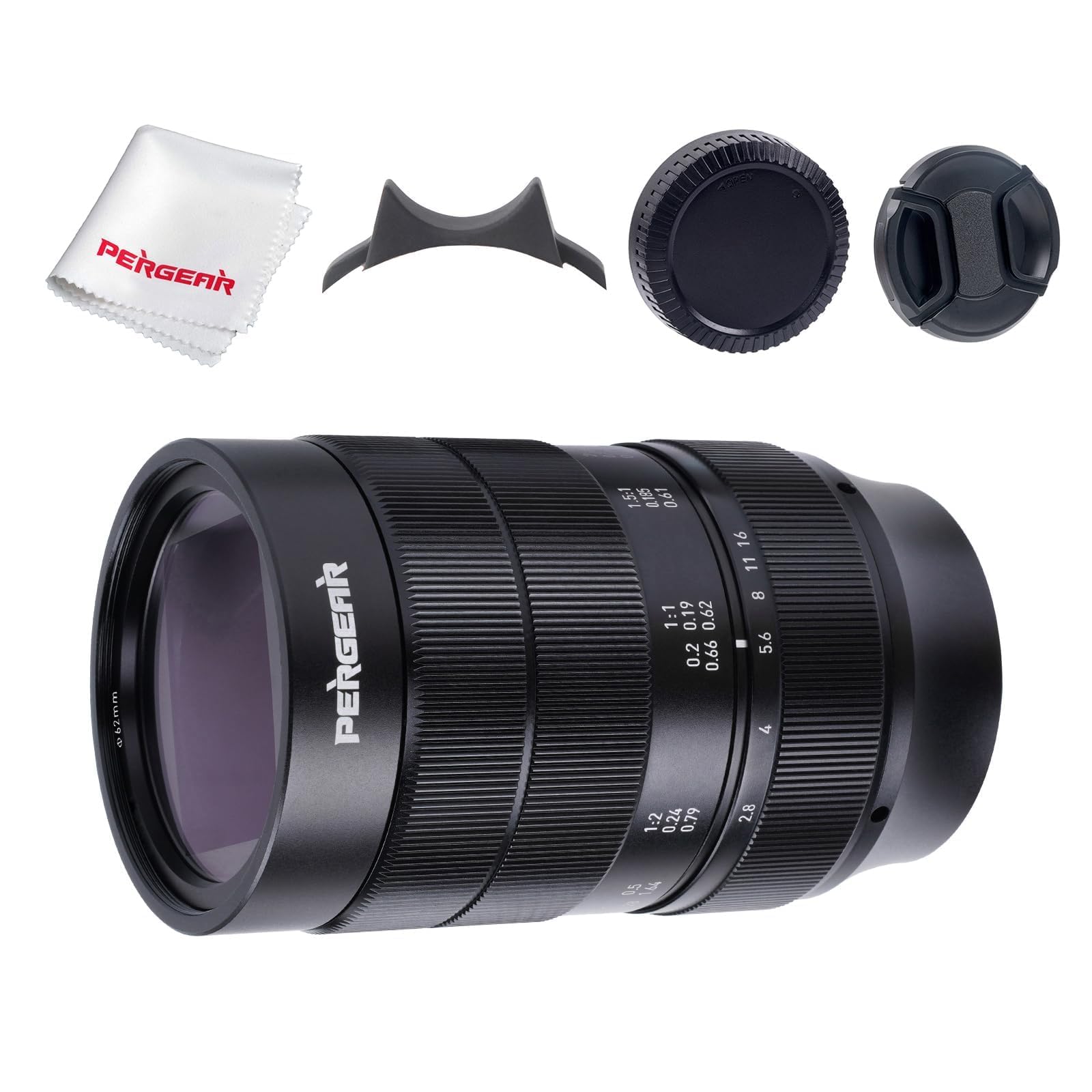
Pergear 60mm f/2.8 II Ultra-Macro

82 /100
Keeper Score Excellent

Key details

Mount
Sony E
Maximum Aperture
f/2.8
Maximum Magnification
2x
Minimum Focus Distance
19.1 cm
Check Price on Amazon

The aperture ring doesn't click, which tells you who this lens is partly for. A de-clicked ring lets you open and close the iris smoothly mid-clip, and that's a small thing that's rare at this end of the market. Around it sits a full-frame Sony E 60mm with 2x magnification, a ten-blade diaphragm and a 19.1 cm minimum focus distance.

The glass is more ambitious than the price suggests: 10 elements in 7 groups, three of them high-refractive-index, plus multi-layer coating to keep flare down when you're working under a flash. It's a full-frame lens, so it covers the whole sensor on an A7-series body rather than leaning on a crop.

Where it makes sense for us is as a first 2x lens. If you want to find out whether super-macro suits you before spending real money, this is the least expensive way in, and the manual focus is part of the lesson rather than something you'll resent. Bear in mind that 60mm at 2x puts the front of the lens very close to your subject, so a diffused flash matters more here than it would on a 100mm.

Pros

  • 2x magnification at the lowest price here
  • De-clicked aperture ring for smooth iris changes
  • Ten-blade diaphragm and multi-layer coating

Cons

  • Manual focus only
  • Very short working distance at 2x
Our verdict

We recommend it as a first 2x lens for Sony E: cheap, compact, and manual enough to teach you the technique before you spend more.

Check Latest Price

How We Chose and Tested the Best Macro Lenses

We built the shortlist by pulling every current macro lens for the major mirrorless and DSLR mounts, then narrowing by magnification — including a couple that push past 1:1 — plus focal length and price, so the group ran from third-party budget glass to first-party pro glass. Eight lenses made the cut, and each one stayed in rotation for six months rather than a single weekend.

Testing happened where macro actually happens: kitchen tables covered in coins, watch dials, stamps, and fabric, backyard gardens at dawn when the dew and the insects are still slow, and a windowsill tripod on rainy days with printed text and a millimeter ruler taped to the wall. We also carried each lens on ordinary walks to see how it handled handheld.

At closest focus we shot the same subjects wide open, mid-aperture, and at f/11, then compared center and corner crops for sharpness. The ruler told us real magnification and how close we genuinely had to get; the hood came off when it started shadowing the subject. To judge autofocus we tracked a moving beetle and counted how often the lens racked through its full range and gave up. For aberration we photographed backlit fern edges and chrome highlights, looking for colored fringing and the hazy glow of an overcorrected highlight wide open, then checked whether stopping down cleared it. Handheld stability got the blunt test: five frames at 1:1 and a slow shutter, keepers counted. Along the way we noted focus-ring travel, whether the barrel extends as you close in, and what actually ships in the box.

How to Choose a Macro Lens

Magnification comes first

A true macro lens reaches 1:1, meaning the subject lands on the sensor at life size. Plenty of lenses wear a Macro badge and stop at 0.5x, which is pleasant close focusing but a different thing — a half-size frame of a coin leaves you cropping to make up the difference, and cropping is not magnification. Past life size, 1.4x and 2x buy detail no crop can recover.

Decide the number before anything else. 1:1 handles most flowers, products and insects; 2x and beyond is for textures, compound eyes and scales, and it comes with a much narrower set of working conditions.

Focal length sets your working distance

Sixty to 65mm keeps the lens small and the perspective wide, but at 2x you'll be close enough that your own hood shadows the subject. Ninety to 105mm gives you room to light the shot and to approach without spooking anything that can fly, at the cost of size and usually money.

On APS-C, multiply by 1.5 — the Laowa 65mm behaves like a 97.5mm lens on a Fujifilm body, which is why it feels longer than its badge suggests.

Autofocus or manual focus

Autofocus is genuinely useful handheld, for focus bracketing on a tripod, and for the portraits you'll shoot between macro sessions. It's least useful at the highest magnifications, where the AF window is a sliver and the lens hunts. Manual lenses cost less and give you a long, geared ring for fine adjustment, but they ask you to set the magnification first and rock the camera to find focus.

If your subjects move, pay for autofocus; if they sit still, manual isn't the compromise it sounds like.

Support and light beat stabilization

Lens or in-body stabilization helps most at moderate magnification, in the half second before you press the shutter. It doesn't freeze a bee. Past 1:1 a tripod and a focusing rail do more for sharpness than any stabilizer, and a diffused flash does more again — it freezes motion and lets you close the aperture without dragging the shutter into blur.

Budget for light and support before you budget for a longer lens.

Match the mount, then the budget

A macro lens is only useful on the camera it mounts on. Canon RF bodies take RF lenses, Nikon Z takes Z, Sony E takes E, Fujifilm X takes X, and the manual-focus lenses in this guide are sold in specific mounts, so check the mount named in the listing rather than the brand on the barrel.

If you're choosing a system rather than a lens, remember that bodies come and go while a good macro stays in the bag for a decade.

Frequently Asked Questions

Final Verdict

The Nikon NIKKOR Z MC 105mm f/2.8 VR S is the macro lens we recommend to most people, because it does the three things that matter — life-size magnification, real stabilization, and sharpness into the corners — at the lowest price of the full-macro autofocus lenses here.

If you shoot Canon RF and need to go past life size, the RF 100mm's 1.4x and hybrid IS are worth the premium. On Fujifilm X, the Laowa 65mm gets you to 2x for far less, provided you're content focusing by hand.