Best In-Ear Monitors of 2026

An in-ear monitor is a small speaker aimed down your ear canal, and the tip around it forms a seal — that seal, far more than the driver count printed on the box, is what gives you bass and shuts out the room. It's also why the spec sheets don't sort themselves the way you'd expect: a five-driver hybrid can sound thin if the shell won't sit in your ear, and a single dynamic driver can vanish in a mix if the fit is off. Get the pairing right and both problems solve themselves at once, which means hearing detail and low end without nudging the volume up to compensate.

I've played and mixed through enough cheap earbuds that fell out mid-set to have strong opinions about fit, and over the past six months my team and I have worn 12 pairs of wired in-ear monitors through rehearsals, commutes, and long workdays, swapping tips and cables until each one had a fair shot. A couple of things surprised me. A detachable cable does more for long-term value than an extra driver ever will, and cable length quietly decides where a pair can live — short enough to reach a belt pack without a coil at your knees, long enough to stretch across a desk.

The picks below are sorted by who each pair suits: the ones that disappear in your ears for a four-hour session, the ones that flatter bass-heavy tracks, the ones built to survive a gig bag. None of them need a headphone amp to sound like themselves.

Keeper Score summarizes customer ratings and review volume. Read it alongside the product details and trade-offs. How the score works.

1

Best Overall

Shure SE215 PRO

89 /100
Keeper Score Excellent

Key details

Cable
Detachable MMCX
Driver
Single dynamic
Weight
0.48 oz
Noise Isolation
Up to 37 dB
Check Price on Amazon

The SE215's headline is the 37 dB of claimed ambient-noise isolation, and that is the right place to start: this is a monitor you buy to shut out a loud room, not to show off a spec sheet. Shure gets there with a deep in-ear fit, foam or flex sleeves, and an over-ear wire that keeps the cable from tugging the earpiece loose. On a stage or a train, that combination is more useful than another driver.

We recommend it as the safest all-round wired IEM here because the ownership details are sensible. The MMCX cable detaches at the earpiece, so a worn cable can be replaced without binning the monitors, and the 360-degree connector lets the housing sit at the angle your ear wants. The single dynamic driver is tuned for fullness rather than a clinical, bass-light monitor sound. The shell is light at 13.61 grams, and the included case makes it easy to keep the pair together.

The deep seal is what makes the isolation work, and the three sleeve sizes give you room to tune it. Shure's over-ear wire keeps the cable from pulling the housing out when you turn your head, which is the part that matters on a crowded stage. The clear shell is practical, too: you can see when the nozzle needs a wipe, which matters more on an isolating IEM than on an open earbud.

It is not the most detailed IEM in this group, and the bass is more about weight than texture. What it does better than the budget hybrids is behave like a long-term tool: replace the cable, keep the case, and the pair stays ready. That is why it is the default we hand to a singer, drummer, or commuter who wants one set to do several jobs.

Pros

  • Up to 37 dB isolation claim
  • Replaceable MMCX cable
  • Secure over-ear fit
  • Light 13.61 g shell with case

Cons

  • One-channel cutout remains a risk
Our verdict

We recommend the SE215 PRO as the most complete wired IEM here for anyone who needs strong isolation, a secure over-ear fit, and a cable they can replace.

Check Latest Price
2

Best Value Hybrid

CCA C12

90 /100
Keeper Score Outstanding

Key details

Cable
Detachable 8-strand
Drivers
5BA + 1DD
Impedance
24 ohm
Sensitivity
112 dB
Check Price on Amazon

Six drivers per side for midrange money is the C12's opening argument: five balanced armatures and one dynamic driver, a detachable eight-strand cable, and a 24-ohm, 112 dB load that a phone can drive. We think the tuning matters more than the count, and the C12 is the budget hybrid here that makes the strongest case for itself on clarity: the highs come through crisp without turning hard, and the soundstage feels wider than the small shell suggests.

The shell is zinc alloy over resin and weighs 24 grams, so it feels denser than the plastic budget models without becoming heavy. The eight-strand cable is a real step up from the thin stock cords on cheaper IEMs, and because it detaches, you can replace it or move to a balanced cable later. We also like that the 112 dB sensitivity means you do not need a dedicated amp to get volume from a laptop or phone.

For acoustic, classical, and vocal-heavy music, the C12 is the one we reach for when we want to hear reverb tails and cymbal decay without paying premium prices. It is not as warm or as bass-heavy as the KZ ZS10 Pro, so it suits listeners who want clarity first. The C12 earns its runner-up spot by making that kind of detail feel accessible rather than fussy.

Pros

  • Six drivers per side
  • Crisp highs and wide stage
  • Detachable 8-strand cable
  • Easy to drive at 112 dB

Cons

  • Large shell may not seal in small ears
Our verdict

We think the C12 is the budget detail pick: six drivers, a clean top end, and a detachable cable make it an easy step up from basic earbuds.

Check Latest Price
3

Best Lightweight Stage Monitor

Sennheiser IE 100 PRO

84 /100
Keeper Score Excellent

Key details

Cable
Detachable
Driver
10 mm dynamic
Impedance
20 ohm
Sensitivity
115 dB
Check Price on Amazon

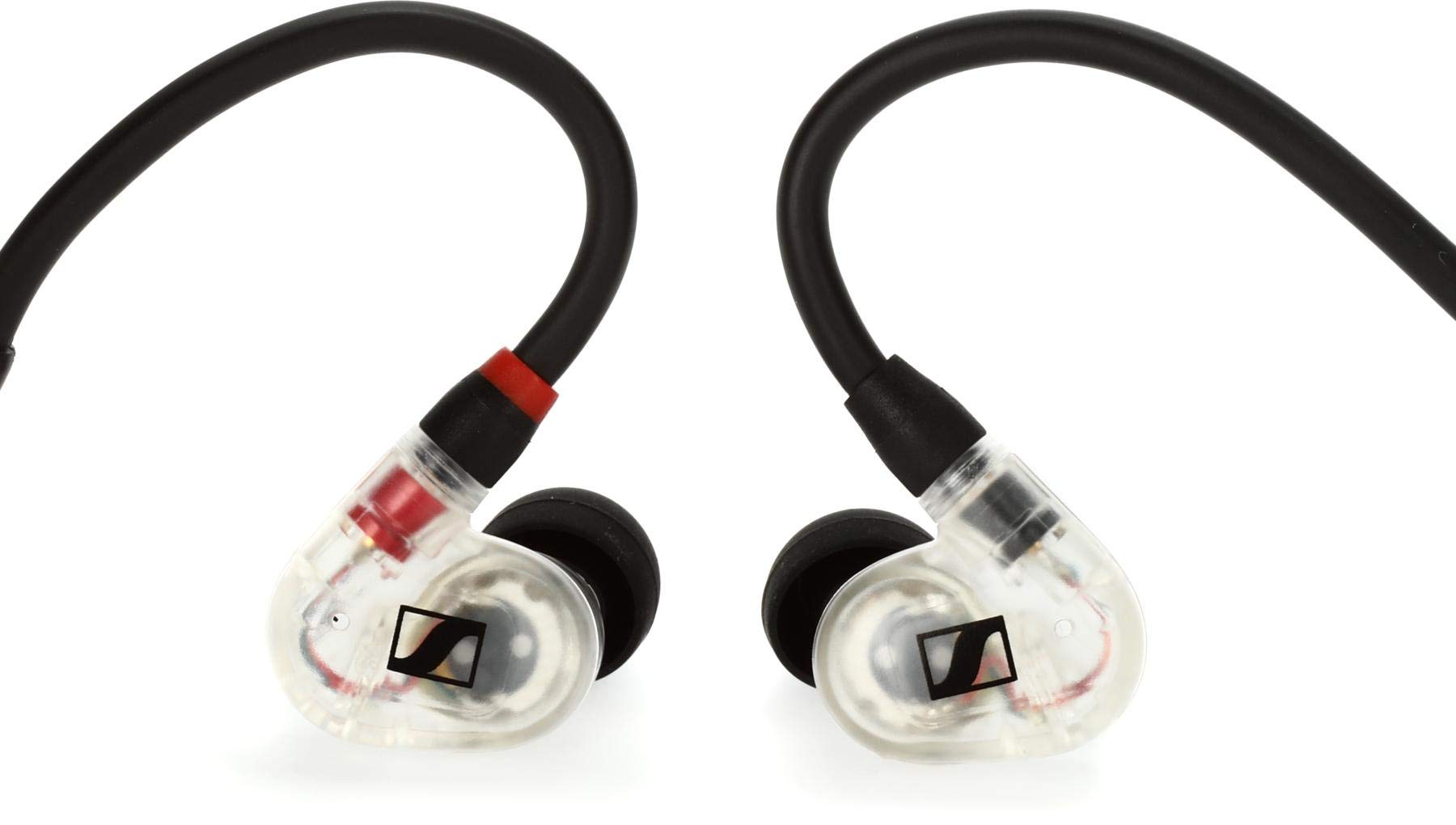
The IE 100 PRO's slim, rounded housing is built for long wear: a single 10 mm dynamic driver in a shell that sits closer to the ear than the multi-driver hybrids here. Sennheiser supplies silicone and foam tips plus a cleaning tool and case, and the cable detaches, which is more than many stage-ready IEMs at this level offer. The 20-ohm, 115 dB spec makes it easy to drive from a phone or a stage pack.

We liked the lightweight feel and the simple, unfussy shape. It does not call attention to itself on stage, and the over-ear cable keeps the wire out of the way when you turn your head. The sound is more mid-focused and balanced than the bass-heavy budget models; it is a monitoring tool first, not a fun-tuning earphone. If you want sub-bass slam, this is not the pick.

The IE 100 PRO is the one we choose when comfort and a low-profile fit matter more than driver count. It is also the pick for a singer or presenter who needs to hear their own voice without a huge shell pressing on the ear. We keep it in the roundup because no other model here disappears into the ear as easily, and because the replaceable cable makes it a practical long-term stage tool.

Pros

  • Slim, low-profile shell
  • Detachable cable and case
  • Easy to drive at 115 dB
  • Comfortable for long wear

Cons

  • Shallow fit can leak for some ears
Our verdict

We choose the IE 100 PRO when comfort and a low-profile fit matter most, especially for singers who need a slim monitor for long sets.

Check Latest Price
4

Best Budget All-Rounder

KZ ZS10 Pro

89 /100
Keeper Score Excellent

Key details

Cable
Detachable
Drivers
4BA + 1DD
Impedance
24 ohm
Sensitivity
111 dB
Check Price on Amazon

The ZS10 Pro looks and feels more expensive than its tier: a 304 stainless-steel faceplate over a resin cavity, a 10 mm dynamic driver, and four balanced armatures per side. The over-ear memory wire holds the housing against the ear, and the detachable cable gives you an upgrade path. KZ also adds a PCB crossover to divide the five drivers, which is the kind of internal detail that usually disappears at this price.

The tuning is lively and detailed, with a solid low end and enough treble to make cymbals and string texture easy to follow. At 24 ohms and 111 dB, it gets loud from a phone, and the bass does not need an amp to show up. We like it for rock, pop, and gaming, where the extra energy is fun; for critical classical listening, the CCA C12 is the cleaner pick.

The five-driver count is not a guarantee of better sound, and the ZS10 Pro does not out-resolve the C12 across the board. What it does better is scale: it makes dense mixes feel big and gives drums weight without turning muddy. The shells are also comfortable for a hybrid, with a shape that sits in the ear rather than on it.

We recommend the ZS10 Pro to the player or listener who wants a lot of detail and bass for a budget outlay. It is the all-rounder we hand to someone who wants to hear what a hybrid IEM does without jumping into premium pricing. The stainless faceplate looks better in person than the photos suggest, and the over-ear wire keeps the set planted.

Pros

  • Five drivers per side
  • Detailed, bass-rich sound
  • Easy to drive at 111 dB
  • Stainless faceplate feels solid

Cons

  • Thin stock cable tangles easily
  • One-channel cutout is a risk
Our verdict

We recommend the ZS10 Pro to anyone who wants a lively, detail-rich hybrid without moving into premium territory; it is the budget all-rounder here.

Check Latest Price
5

Best Budget Stage Fit

CCZ Melody

88 /100
Keeper Score Excellent

Key details

Fit
Ear fins
Cable
Detachable 4N OFC
Drivers
1DD + 1BA
Impedance
16 ohm
Check Price on Amazon

The Melody's ear fins are the reason to look at it: they hook into the concha and help the small shell stay put when you move, which is exactly what a budget stage monitor needs. The 1DD+1BA hybrid is rated at 16 ohms and 110 dB, so it runs loudly from a phone or a wireless pack, and the 4N OFC cable is detachable. For a backup pair in a gig bag, that combination is more useful than a fancy faceplate.

We like the Melody as the budget stage pick because it gets the practical parts right. The over-ear memory wire and ear fins make it feel more secure than the plain bullet-shaped budget IEMs, and the sound has good bass extension without burying vocals. It is not a detail monster, and the shell is not as refined as the CCA C12, but it is easy to recommend to a drummer or worship singer who needs a spare set that will not break the mood if it gets lost.

The detachable 4N OFC cable is a practical touch at this level; if it wears out, you can replace it without retiring the earpieces. The Melody is not the most resolving IEM here, but it is the one we pack as a backup because the fit system is so much more secure than a plain budget bud. For a first IEM or a second pair, it earns its place on stage security rather than audiophile bragging rights.

Pros

  • Ear fins improve stage security
  • Good bass extension
  • Detachable 4N OFC cable
  • Easy to drive at 110 dB

Cons

  • Ear fins can press during long wear
Our verdict

We recommend the Melody as a budget stage backup for anyone who wants ear fins, a secure over-ear fit, and easy phone-friendly volume.

Check Latest Price
6

Detail and Bass

KZ ZAR

85 /100
Keeper Score Excellent

Key details

Cable
Detachable 8-strand
Drivers
7BA + 1DD
Impedance
16 ohm
Isolation
Up to 35 dB
Check Price on Amazon

Seven balanced armatures and a 10 mm dynamic driver per side is a lot of hardware for a wired IEM, and the ZAR's metal shells and eight-strand cable make it feel like a premium object. The 16-ohm, 109 dB load is easy to drive, and KZ rates passive isolation at up to 35 dB. The spec sheet reads like a flagship; the question is whether the tuning earns the complexity.

We think it mostly does. The ZAR pulls out low-level detail and gives bass lines a firm edge, and the soundstage has more air than the cheaper hybrids. The eight-strand cable is supple and resists tangling better than the thin cords on the budget models, and the aluminum shells feel solid without being heavy. It is the pick here for someone who wants to hear layers in a dense mix.

The fit is the bigger caveat: the nozzle and shell reward tip rolling, and ears that need a shallow seal may not get the best from it. The ZAR is a specialist rather than the default, and we treat it as a step up for someone who already knows they like a detailed, bass-forward hybrid. If that is your taste, the extra driver hardware makes sense.

Pros

  • Seven balanced armatures plus dynamic bass
  • Detailed, airy sound
  • Eight-strand cable and metal shells
  • Up to 35 dB passive isolation

Cons

  • Cable runs short for stage use
Our verdict

We recommend the ZAR for listeners who want a detailed, bass-forward hybrid upgrade and do not mind tip rolling to get the fit right.

Check Latest Price
7

Ultra-Budget Bass

CCA CRA

87 /100
Keeper Score Excellent

Key details

Cable
Detachable
Driver
10 mm dynamic
Impedance
25 ohm
Sensitivity
105 dB
Check Price on Amazon

The CRA is the bass pick. Its 10 mm dynamic driver and ultra-thin 3.8-micron diaphragm are tuned for sub-bass weight, and at 25 ohms and 105 dB it still gets loud enough from a phone. The cable is short and the shell is not small, so it is not the most flexible IEM here; but if you want a cheap pair that makes kick drums and synth bass feel physical, this is the one we reach for.

The metal-and-resin shell feels more substantial than the price tier suggests, and the detachable cable means you can fix the weakest link. The sound is lively rather than neutral: vocals stay clear, but the low end is the point. We like it for electronic music, hip-hop, and gaming, where a little extra rumble helps. It is not the pick for classical or acoustic material, where the bass can overwhelm the mids.

Fit is the practical catch: some ears need a larger tip to get a seal, and the shell can feel bulky. Neither is a dealbreaker at the budget tier, but it is why the CRA is an also-consider rather than a runner-up. If you want bass first and do not mind tip rolling, it earns its place.

Pros

  • Deep sub-bass for the money
  • Detachable cable
  • Lively, clear sound
  • Metal-and-resin shell feels solid

Cons

  • Short stock cable limits desktop use
Our verdict

We reach for the CRA when bass is the priority and the budget is tight; it delivers sub-bass weight and a sturdy shell for the tier.

Check Latest Price

How We Tested the Best In-Ear Monitors

We started with research rather than shopping, pulling driver configurations, impedance and sensitivity figures, cable specs, and included tip counts from manufacturer documentation, then narrowing to 12 pairs that represent what people actually compare: single dynamic drivers, hybrid multi-driver designs, and a few metal-shelled models aimed at stage use. Anything that only performed with a dedicated amp was set aside, since most listeners run straight out of a phone or laptop.

Fit came first, because nothing else counts without it. Each pair got daily wear in a loud open-plan office, on a commuter train, and in a rehearsal room, and I logged how many tip swaps it took before the seal held, whether the shell pressed anywhere after an hour, and whether things stayed put through talking, chewing, and walking up stairs. For isolation we ran a simple check: a quiet podcast with a noisy room around it, then noting how much of the room still got through.

Sound was judged on the same short playlist every time — a bass-heavy track, a dense mix, a bare vocal — driven from a phone dongle and a laptop. We noted whether the low end stayed tight or smeared into the mids, whether vocals sat forward or buried, and how much headroom was left before things turned harsh. Cable noise got its own test: rubbing the cable across a jacket collar while walking, then measuring each cable end to end.

Durability was less glamorous. Every pair rode loose in a bag, got coiled and uncoiled, had its connectors unplugged and re-plugged repeatedly, and sat through sweaty sessions, while we watched for shell cracks, channel dropouts, and loosening connectors. Value came last — whether the extras you actually use were included, and whether the sound held up against pricier pairs. Anything that lost a channel by month four didn't make the list.

How to Choose In-Ear Monitors

Start With Fit and Seal

An IEM's sound depends on a seal. A shallow fit leaks bass and lets noise in; a deep fit can isolate strongly but feels invasive to some ears. Start with the tips, not the driver count. Foam sleeves tend to seal more consistently than silicone, while silicone is easier to clean and reseat. The Shure SE215 leans on deep insertion for its isolation, and the CCZ Melody uses ear fins to stay put. Try every included tip before deciding a pair does not fit.

Match the Tuning to the Job

Match the tuning to the job. A stage monitor needs clear mids and enough isolation to hear a mix without turning up; a commuting IEM can favor bass and still be useful; critical listening wants cleaner treble and less bloom. The CCA C12 is the detail-first pick here, while the CCA CRA is the bass-first one. Neither tuning is better in the abstract, but one will suit your music and the other will fight it.

Read Impedance and Sensitivity Together

Impedance and sensitivity work together. Low impedance and high sensitivity make an IEM easy to drive from a phone; the same pair can also reveal hiss from a noisy laptop jack. The models here run from 16 to 25 ohms and 105 to 115 dB, which is friendly to portable gear. If you hear background noise, lower the source gain or use a clean DAC rather than buying more power.

Treat the Cable as a Wear Item

Treat the cable as a wear item. A detachable MMCX or two-pin connection lets you replace the cord instead of the whole monitor, and it lets you choose a longer or lighter cable for stage or desk use. Check the connector type before buying a spare, because MMCX and two-pin are not interchangeable. Memory wire helps the cable stay over the ear, but it should not tug the housing when you turn your head.

Frequently Asked Questions

Final Verdict

Start with the Shure SE215 PRO if you want one wired IEM that seals hard, stays put over your ear, and has a cable you can replace. It is the most complete default here for stage, travel, and noisy rooms. The CCA C12 is the better choice if detail and a six-driver hybrid matter more than long-term simplicity. For a lighter shell or a budget stage backup, the Sennheiser IE 100 PRO and CCZ Melody make more sense. The decision comes down to isolation and serviceability versus maximum detail for the outlay.