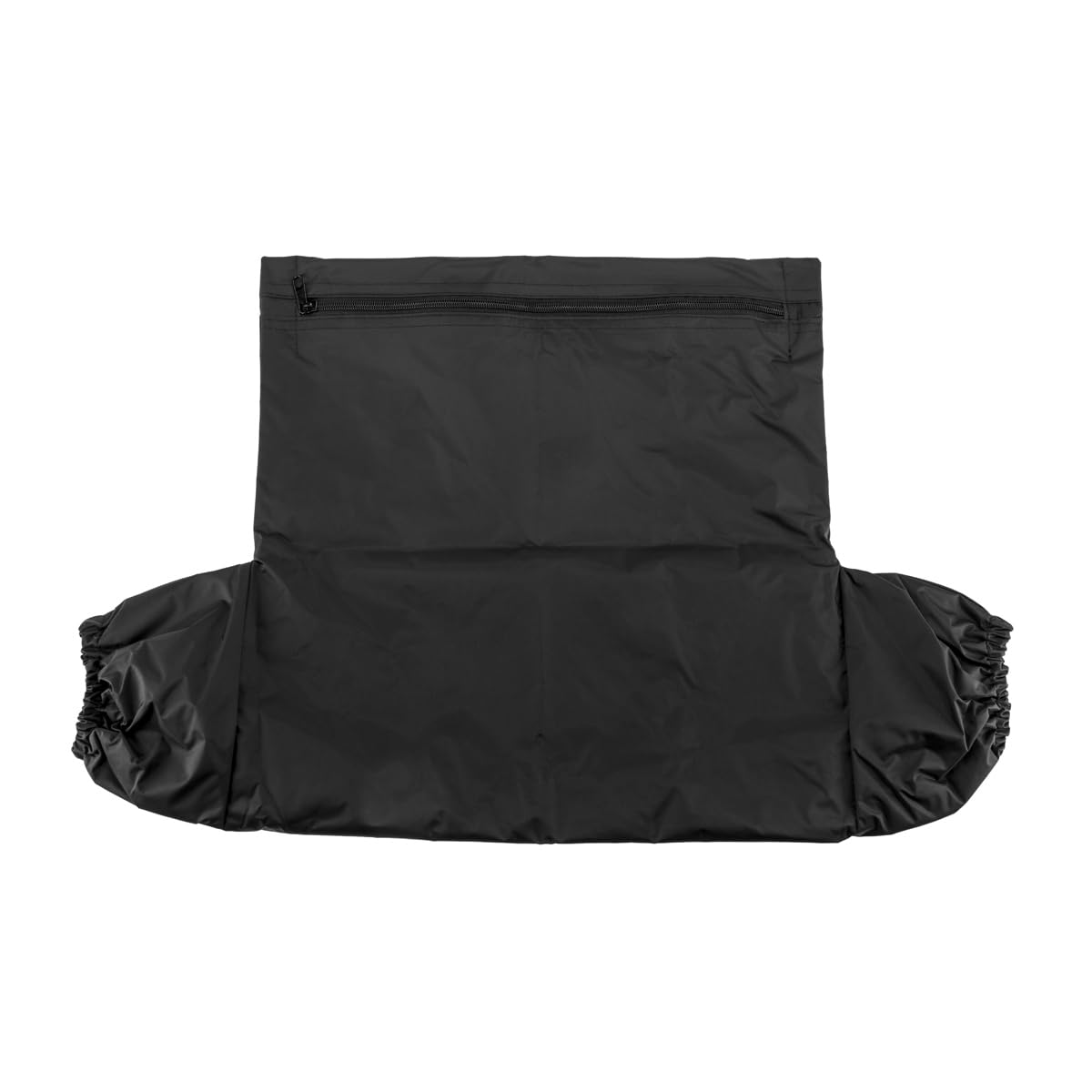
Best Film Changing Bags of 2026

A light leak doesn't announce itself. You load a roll in what feels like total darkness, develop it, and only then find the pale stripe along one edge where a seam gave way. I've fogged film that way in a hotel bathroom with a towel stuffed under the door. A changing bag is supposed to make that whole ritual portable — a darkroom you can fold up and put on a shelf — but only if the fabric, the seams, and the closure genuinely hold.

Size is the spec people fixate on, and it's rarely what fails them; a bag can swallow a sheet-film holder and still fight you because the arm holes sit too high or the zipper binds at a corner. We spent four months with 14 bags, from compact 16-inch models up to oversize 27-inch ones, loading 35mm reels and 4x5 holders, and what separated the good ones was how they felt once your hands were inside. The picks below are the ones that never fogged a frame.

Keeper Score summarizes customer ratings and review volume. Read it alongside the product details and trade-offs. How the score works.

1

Best Overall

VANZAVANZU Changing Bag

92 /100
Keeper Score Outstanding

Key details

Weight
7.05 oz
Closure
Sealed zipper
Material
Cotton, anti-static
Unfolded Size
23.3" x 23.3"
Check Price on Amazon

Loading a two-reel tank in the dark is mostly a question of elbow room. The VANZAVANZU gives you enough of it: at 23.3 inches square you can set the tank down in front of you, start a leader on a reel, and stack both reels without the fabric pulling at your wrists.

That balance is why it's the pick we point most people to. The body is thick cotton rather than a thin synthetic shell, and the thickness is the first thing we noticed — the bag holds its shape while your hands are inside instead of collapsing onto your knuckles. It's also sold as anti-static, which is the property that keeps dust from settling on a negative you've just loaded.

The closure is a zip backed by a sealed layer rather than a bare zip stitched straight into a panel, so the light-blocking is built into the body rather than sprayed on. At 200 g it disappears into a camera bag between sessions, and there's no rigid frame, so you'll want a table to work on — true of every bag here.

Sheet film is where it starts to feel tight. A 4x5 session fits, but the holders eat the spare space quickly, and that's the point where the two biggest bags in this group, the eTone and the Paterson, start to make sense.

Pros

  • Thick cotton holds its shape while you load
  • 23.3-inch square fits a two-reel tank comfortably
  • Sealed zip closure across the opening
  • Anti-static fabric helps keep dust off negatives

Cons

  • Elastic cuffs stop at the wrist on larger arms
Our verdict

For most people loading film at home, this is the one: thick cotton, a sealed zip, and enough room for a two-reel tank without paying for a tent.

Check Latest Price
2

Best for Large Tanks

eTone Oversize Changing Bag

88 /100
Keeper Score Excellent

Key details

Weight
7.76 oz
Closure
Zipper and velcro
Material
Polyester taffeta, silver-lined
Unfolded Size
27.3" x 28.26"
Check Price on Amazon

27.3 by 28.26 inches is the biggest working area in this group, and that's what makes the eTone the bag for anyone loading more than one tank at a time. Set a Paterson tank down in front of you and there's still space to lay out a second reel, a bottle opener, and a pair of scissors beside it — the clutter that otherwise ends up under your knees.

What surprised us is the weight. At 0.22 kg it's the lightest bag here, and it folds down to roughly fist size, so it travels in a camera bag without a fight. The body is a double layer: a polyester taffeta shell with a silver-toned lining inside, and it's that second layer doing the light-blocking work rather than a single skin of fabric.

The closure is a zip under a velcro flap, and the flap stops short of the zip's ends. That leaves the two bottom corners relying on the zip alone — the spot to look at before you trust the bag with a roll you can't reshoot. Otherwise the build is deliberately plain: no frame, nothing inside to get in the way while your hands are hunting for a reel. It's more bag than a single-reel 35mm shooter needs.

Pros

  • Largest working area in this group
  • 0.22 kg and folds to fist size
  • Double-layer body with a silver-toned lining

Cons

  • Velcro flap stops short of the zip ends
Our verdict

Buy it if your sessions involve more than one tank or sheet film — no other bag here gives your hands this much room, and it still folds to fist size.

Check Latest Price
3

Best for Two-Tank Sessions

Paterson Changing Bag

89 /100
Keeper Score Excellent

Key details

Fabric
Double layer
Closure
Double zipper
Compartments
2
Unfolded Size
27.5" x 27.5"
Check Price on Amazon

Two zips, two layers of fabric, and 27.5 inches on each side: the Paterson is the most expensive bag here, and the only one in this group built for someone running two tanks in a single session. A large development tank and a pair of loaded reels fit at the same time with room left over, which is a different order of space from the 23-inch bags.

Paterson describes the fabric as broad and soft, with the stated aim of keeping your hands from sweating, and the thickness behind that claim is real. We found the soft body stays off your wrists once the bag warms up, which is worth more than it sounds twenty minutes into a session, when a thin shell has gone clammy against your forearms.

Compared with the smallest bag here, the Adorama, it's a different object altogether: that one is a drawer-sized pouch for a single reel, and this is the bag you keep set up on a table through a whole session rather than folding away afterwards.

Pros

  • 27.5-inch square fits a large tank and two reels
  • Double-layer fabric with a soft, broad feel
  • Double zip seals the opening twice

Cons

  • Double zips are slower to work in the dark
Our verdict

Worth the extra money for anyone running two tanks at once; the double fabric and double zip are built for long sessions, not quick single-reel loads.

Check Latest Price
4

Travel and Storage

KDIMSY Changing Bag

86 /100
Keeper Score Excellent

Key details

Cuffs
Double elastic layer
Weight
13.8 oz
Material
Oxford, anti-static
Unfolded Size
23.6" x 21.6"
Check Price on Amazon

The KDIMSY stacks its light-blocking: a zip with a velcro flap behind it, and two elastic layers at each wrist instead of one. That's more sealing at the cuff than we expected at this size, and it's why the openings feel snug the first time you push a hand through.

At 23.6 by 21.6 inches it's shorter in one direction than the top pick, and that shows when a two-reel Paterson tank goes in. It fits and you can turn it, but your hands end up working around the tank rather than beside it; stainless reels and single tanks leave plenty of slack.

Where it earns its place is packing. The shell is Oxford cloth, the weight is 0.39 kg, and it folds down to about fist size, so it lives in a camera bag between trips and nobody notices it's there. If you develop on the road, or in a flat where the bag goes back in a drawer after every session, that's the argument for it over a bigger square.

Pros

  • Double elastic layers seal each wrist
  • Anti-static fabric helps keep dust off film
  • Folds to fist size and weighs 0.39 kg

Cons

  • Tighter than a square bag around a two-reel tank
Our verdict

A sensible choice for a small flat or a travel kit: doubled cuffs, anti-static fabric, and it folds away to almost nothing between sessions.

Check Latest Price
5

Bulk Loading

Adorama Small Changing Bag

80 /100
Keeper Score Excellent

Key details

Cuffs
Elastic wrist bands
Closure
Nylon zippers
Packed Size
8" x 9" x 0.75"
Interior Size
16" x 17"
Check Price on Amazon

16 by 17 inches is the smallest opening in this group, and it's sized for one job at a time: a single reel, a bulk loader, or a cassette that's lost its leader and needs coaxing back in.

It earns its place on exactly those jobs. The nylon zips run smoothly enough to work by feel, and what we kept coming back to is how little space it takes up: folded to 8 by 9 by 0.75 inches and 4.5 ounces, it fits in a drawer or a jacket pocket and comes out when you need it.

The cuffs are elastic wrist bands rather than long sleeves, so more of your forearm stays outside the bag. Run a light inside before the first roll and look at where the bands meet the body; if the elastic has gone slack, that's the moment to replace the bag rather than the moment to load film you care about.

Pros

  • Packs to 8 x 9 x 0.75 inches
  • Suited to single reels and bulk loading

Cons

  • Little spare room around a two-reel tank
Our verdict

Get this for bulk loading and one-reel sessions, where drawer space and a bag that's always with you matter more than elbow room.

Check Latest Price

How We Tested Film Changing Bags

We read through the specs and owner reviews of a few dozen bags, then narrowed to 14 based on fabric (thick cotton versus coated nylon), whether the body was single or double layered, how the arm holes were built, and whether the closure was a zipper or a drawstring. Sizes ran from a small 16-by-17-inch bag meant for bulk loaders up to a 27-inch model.

Every bag got used the way a changing bag actually gets used: on a kitchen counter after dark, on a hotel bed while traveling, in a car, and once on a picnic table because the roll had to come out. The light test was identical for each one — a phone with the flashlight on inside, closure sealed, room lights killed, then several minutes of staring at the seams, the zipper tape, and where the arm holes meet the body, looking for glow. After that we loaded film for real and noted every time a hand came out empty because something had shifted out of reach.

Zippers got their own attention, since a binding zipper is the difference between a two-minute load and a twenty-minute one: we opened and closed each bag 30 times, including around the stitched corners, and logged every snag. We slid hands in and out 20 times in a row to see whether the arm holes gaped or the elastic went slack, and checked whether the lining turned tacky against sweaty hands. Then we compared stitching, seam allowance, and fabric weight against what each bag cost.

How to Choose a Film Changing Bag

Size It to the Tank You Actually Own

Work out what goes inside before you look at dimensions. A single 35mm or 120 reel, a bulk loader, and a cassette need surprisingly little room, and the Adorama's 16 by 17 inches covers exactly that. A two-reel Paterson tank is a different job: you want the 23-inch square bags at minimum, and if you're running two tanks in one sitting, go to the 27-inch ones. Sheet film holders are greedier still, because you're laying them flat as well as handling them.

When you're unsure, size up. A bag that's too big costs you a little packing space; a bag that's too small costs you a fogged roll and a bad mood.

Read the Closure Before Anything Else

Light gets in at the openings, so the closure description matters more than the fabric weight. A plain zip, a zip under a velcro flap, and a zip with a sealed layer behind it are three different levels of protection, and the price rarely tells you which you're getting. Double zips add a second barrier and a second thing to negotiate in the dark, which is why some photographers prefer one good zip to two ordinary ones.

The cuffs deserve the same reading. Two elastic layers seal better than one; an elastic band that sits at the wrist is cooler and more comfortable but leaves the seal doing more work with more of your forearm outside the bag.

Fabric, Static, and Your Hands

The fabric decides two things you notice every session: whether the bag collapses onto your hands, and whether dust ends up on your negatives. Thick cotton and dense double-layer fabric hold their shape, so you're working inside a space rather than under a cloth, while thin shells fold smaller and sag onto your knuckles.

Anti-static material earns its place in a dry room, since static is what pulls dust onto a negative you've just loaded. Sweat-free claims are worth taking with some salt, but a broad, soft fabric does feel better after twenty minutes than a crisp nylon one.

Packing, Storage, and Where You'll Work

All of these fold or flatten, and the lightest here is about 0.22 kg, so weight is rarely the deciding factor. The surface you work on often is. A 27-inch bag needs 27 inches of clear table, which rules out a lot of small kitchens and just about every hotel room desk.

If the bag lives in a drawer between sessions, favour the ones that fold to roughly fist size. If it lives on a table during a session, favour the biggest one you can leave out — you'll only set it up and take it down once a week either way.

Frequently Asked Questions

Final Verdict

If you're not sure which bag you need, buy the VANZAVANZU. It's thick enough to hold its shape, sealed well enough to trust, and big enough for the two-reel tank most home developers end up using. Move to the eTone if your sessions involve sheet film or more than one tank at a time, and to the Paterson if you're running two large tanks in a sitting and want the extra fabric and the double zip.

The Adorama stays the right small bag for bulk loading and single reels, where drawer space matters more than elbow room.