Best Digital Otoscopes of 2026

Ear trouble never picks a convenient hour. The first time my daughter woke up crying and tugging at one ear, it was Sunday night and urgent care had a longer wait than the drive there. What I wanted was a look inside — just enough to know whether to wait until morning or get in the car. That's what a digital otoscope actually gives you: a view you can see clearly, and share with a clinician if you need to.

Over the past four months, my team and I worked through 14 of them, from app-connected cameras that plug into a phone to self-contained units with their own screens. The numbers that matter aren't the ones in the titles. A 3.9mm lens sits more comfortably in most ears than a 4.3mm one, and a gyroscope that keeps the picture upright counts for far more than megapixels once you're holding a camera steady inside a squirming toddler.

Light control turns out to matter just as much — a bright LED bouncing off the eardrum can white out the exact spot you're trying to see. The picks below are the ones that made all of this feel simple, whether you're checking a child, a partner, or the dog.

Keeper Score summarizes customer ratings and review volume. Read it alongside the product details and trade-offs. How the score works.

1

Best Overall

Anykit Digital Otoscope

90 /100
Keeper Score Outstanding

Key details

Probe
3.9 mm
Screen
4.5 inches
Storage
32GB card included
Stabilization
Gyroscope
Check Price on Amazon

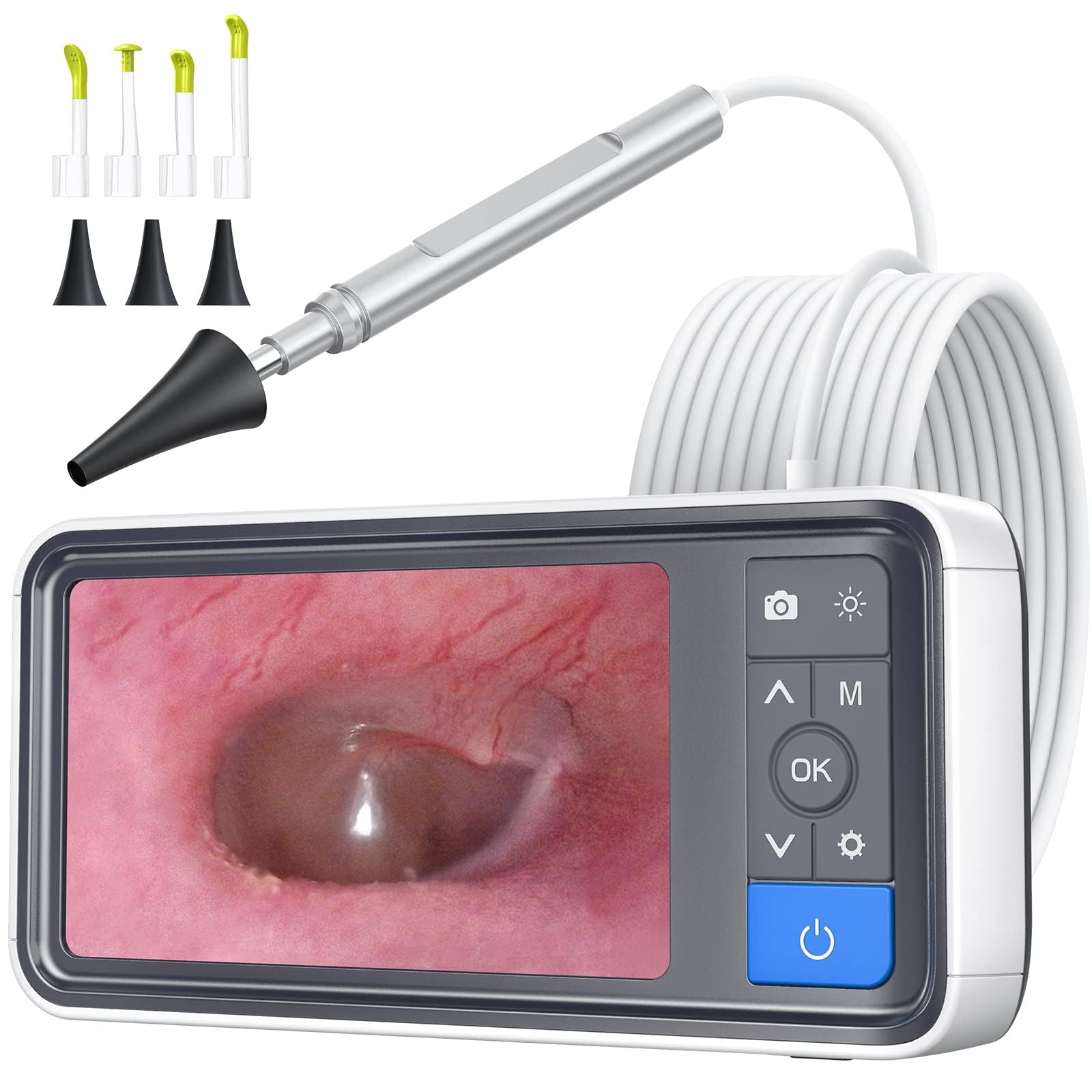
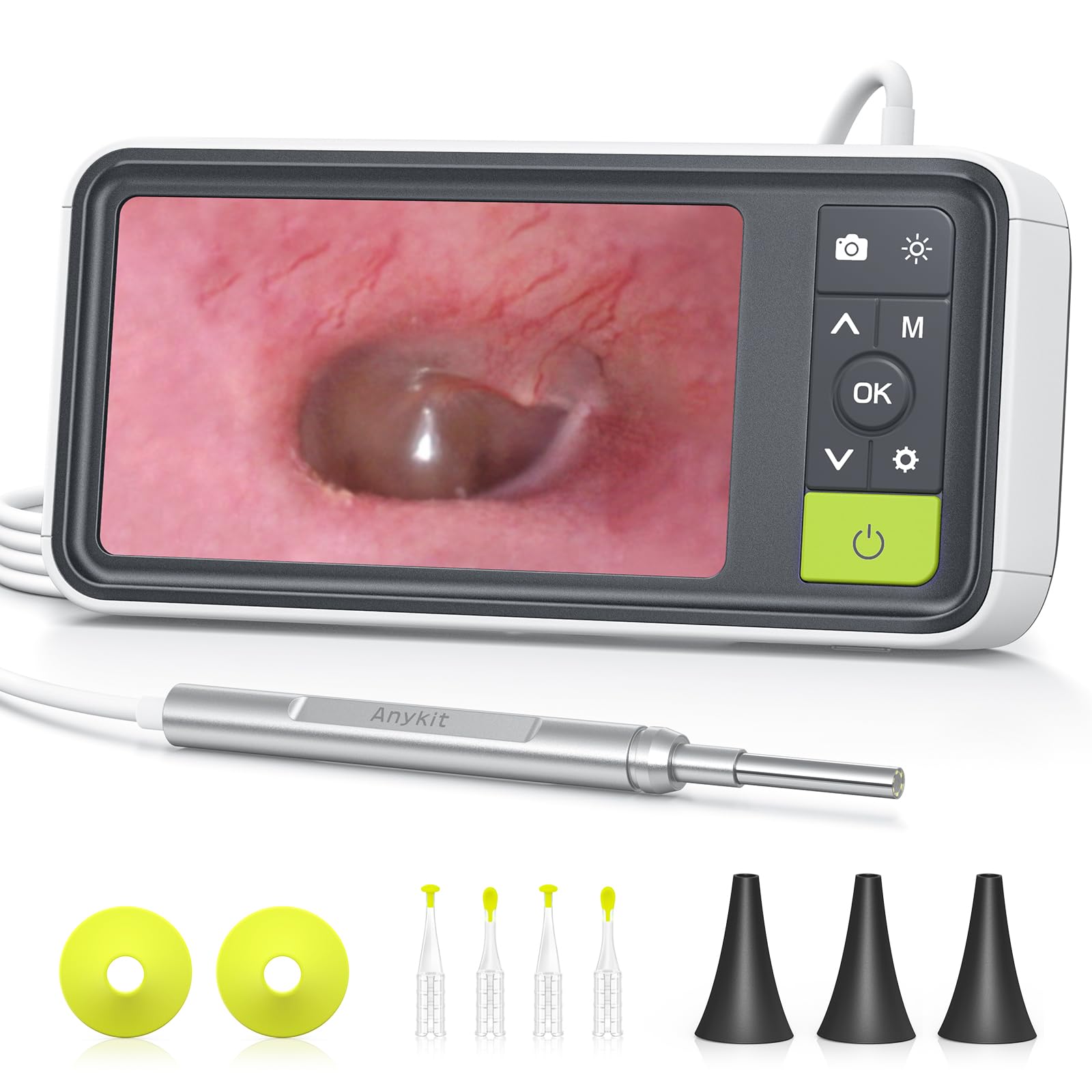
The Anykit Digital Otoscope is the one we reach for first because the exam happens on the device itself. Its 4.5-inch screen turns on without an app, a Wi-Fi pairing screen, or a phone balanced on your knee. That sounds like a small convenience until you are trying to hold a steady view inside an ear; fewer steps make a real difference. For most households, that independence is what earns it the top spot here.

The gyroscope is the feature we appreciate most. As you tilt the probe, the image stays upright instead of rolling with your hand, so you spend less time figuring out which way is up. Six adjustable LEDs light the canal, and the 3.9mm lens is the same slim size the phone-tethered models use. Photos and video save to the included 32GB card, which makes it easy to keep a dated record for a doctor's visit.

It is a home-base tool rather than a pocket accessory, and the screen and gyroscope are the reasons to choose it over the phone-tethered scopes. If you want the lowest-cost way to see inside an ear, the AnyScope is the better fit.

Pros

  • No app or phone needed
  • Gyroscope keeps the image upright
  • 32GB card for photos and video
  • Slim 3.9mm probe

Cons

  • Costs more than budget picks
Our verdict

We recommend the Anykit for most homes because its no-app screen and gyroscope make steady ear checks simple, even if it costs more than the budget picks.
Check Latest Price
2

Best Budget

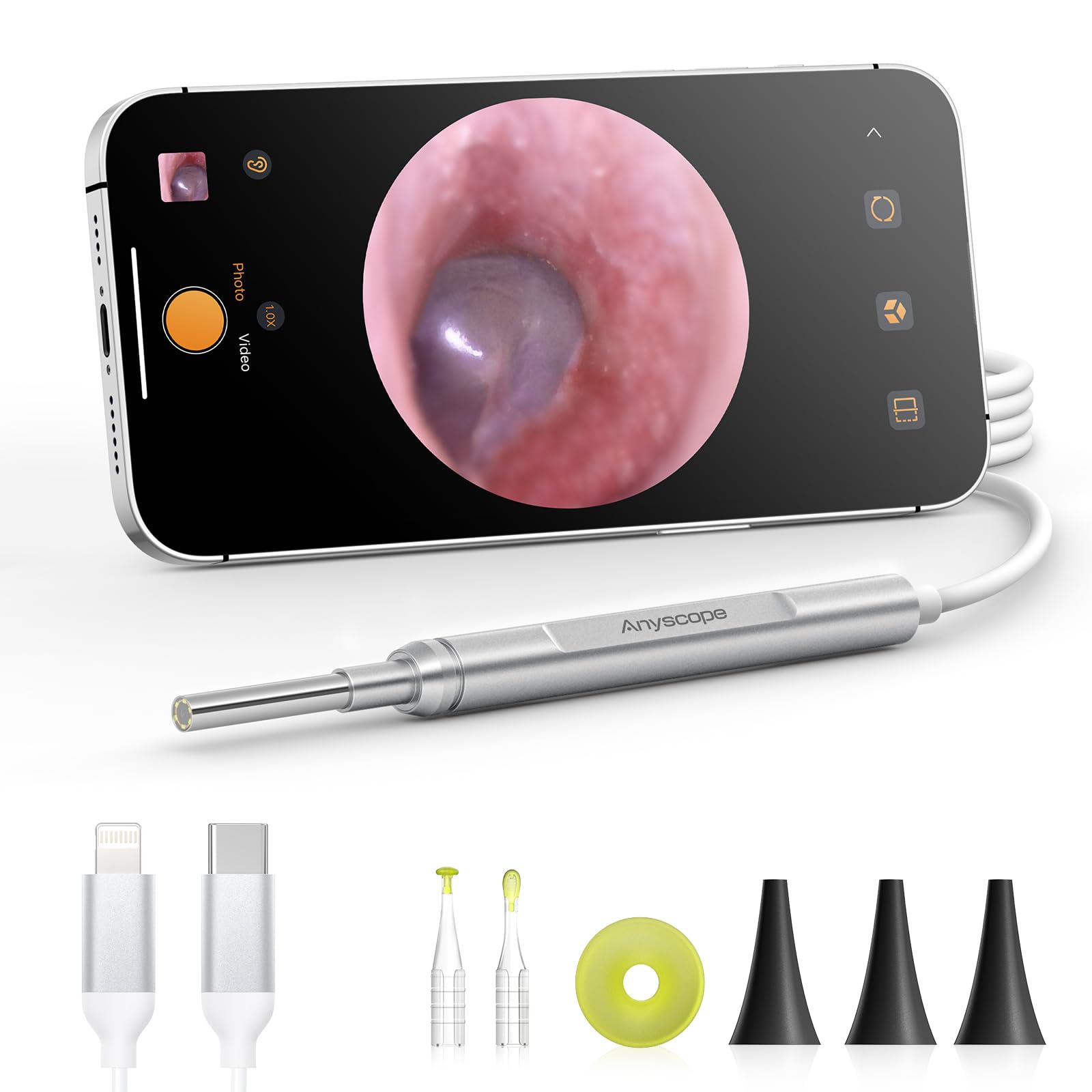
AnyScope Digital Otoscope

83 /100
Keeper Score Excellent

Key details

Probe
3.9 mm
Capture
Photos and video to phone
Connection
Wired to phone
Compatibility
iOS 9.0+ / Android 8.0+
Check Price on Amazon

The AnyScope Digital Otoscope is the budget route: a 3.9mm camera on a cable that plugs into your phone, with an app that opens to a live view. It works with iPhone iOS 9.0+ and Android 8.0+ with OTG and UVC support; it does not work with a PC. The kit includes a speculum and a protective cover, plus a small earwax removal set.

We think it is the right pick if you already have a phone and want to spend the least. Setup is genuinely plug-and-play: install the app, connect the cable, and the image appears. The split-screen mode is handy for comparing a new view with an older photo. Image quality is the compromise. The camera can produce a clear view when you hold it steady, but sharpness falls off if the probe moves or the light reflects.

Because the scope draws power from the phone, there is no battery in the handle to charge. That makes it a drawer-ready tool, though it also means your phone is doing the work. The app can ask for broad photo-library access, which is worth deciding about before you install it. If you want a standalone screen, step up to the Anykit or the ScopeAround MS450.

Pros

  • Low-cost way into phone otoscopy
  • Plug-and-play with iPhone and Android
  • 3.9mm lens and protective speculum
  • Split-screen comparison

Cons

  • Needs your phone and app to view
Our verdict

The AnyScope is the budget pick we point to when you already have a phone and want a plug-and-play view without paying for a separate screen.

Check Latest Price
3

Best Wireless

ScopeAround WiFi Otoscope

86 /100
Keeper Score Excellent

Key details

Probe
3.9 mm
Lighting
6 LEDs
Connection
Wi-Fi to phone
View Angle
70 degrees
Check Price on Amazon

The ScopeAround WiFi Otoscope is the one we choose when the point is to show someone else what you see. It streams a live image to your phone over its own Wi-Fi, so you can hand the phone to a partner or set it on the counter while you position the probe. The 3.9mm lens, 70-degree view, and six LEDs give you a wide, bright look. We like that freedom, but the connection is the part to watch.

The Wi-Fi link can be finicky. It can drop or need reconnecting, and the app may not reconnect on the first try. When it is connected, the picture is clear enough to see wax, redness, or the eardrum, and the split-screen mode lets you compare with an earlier photo. The overheat protection is reassuring during longer sessions.

That wireless design is the reason to choose it. For a parent who wants a second set of eyes, or for a household that already shares photos from a phone, this is the most natural fit in the group. If you want a screen in your hand, the Anykit is the safer default.

Pros

  • Wireless Wi-Fi connection to phone
  • 70-degree view and six LEDs
  • Split-screen comparison
  • Overheat protection

Cons

  • No built-in screen; phone and app required
Our verdict

Choose the ScopeAround WiFi if you want to hand a live ear view to someone else; just be ready to reconnect if the Wi-Fi link stumbles.

Check Latest Price
4

Best Wired USB-C

Teslong USB-C Otoscope

86 /100
Keeper Score Excellent

Key details

Probe
4.3 mm
Camera
Waterproof
Connection
USB-C wired
Compatibility
USB-C iPhone, iPad, Android
Check Price on Amazon

The Teslong USB-C Otoscope is the wired option: a 4.3mm camera on a cable, with a waterproof tip and six LEDs. It uses an all-in-one adapter for USB-C and Micro-USB, and the kit includes three specula, five ear picks, and a hard case. There is no Wi-Fi pairing and no battery to charge in the scope.

The waterproof camera is easier to wipe down after use, and the case keeps the tips together. The 4.3mm lens is a touch wider than the 3.9mm probes on the other picks. The picture is clear when you keep the tip centered, and the six LEDs give you enough light to work without washing out the view. The cable is the whole interface, so there is no app pairing to troubleshoot.

The Teslong is the one we hand to someone who wants a cable and nothing else. It is the simplest wired setup for a USB-C Android phone or an iPhone 15, and the waterproof tip is a nice bonus for cleaning. Check your phone against the compatibility list before you buy, and keep the return window open. If you want a built-in screen, choose a different pick.

Pros

  • Wired USB-C connection
  • Waterproof camera tip
  • 4.3mm lens with six LEDs
  • Case and ear picks included

Cons

  • Connection can fail on some phones
  • No PC, Mac, or Linux support
Our verdict

The Teslong is our wired USB-C pick for Android and iPhone 15 users who want a simple cable, a waterproof tip, and no Wi-Fi pairing.

Check Latest Price
5

Best Wide-Angle View

ScopeAround MS450 Otoscope

87 /100
Keeper Score Excellent

Key details

Probe
3.9 mm
Screen
4.5-inch IPS
Storage
32GB card included
Stabilization
Gyroscope
Check Price on Amazon

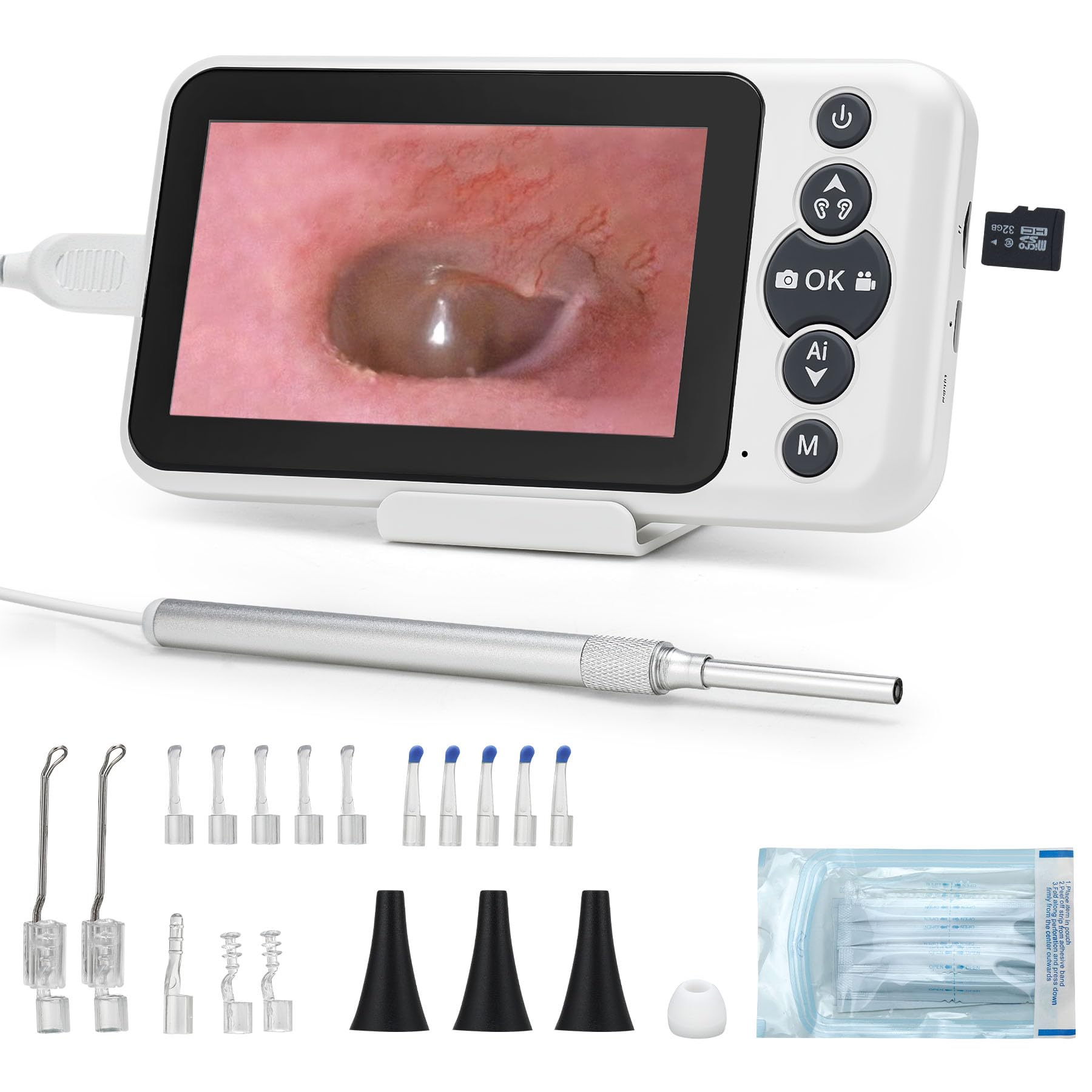
The ScopeAround MS450 Otoscope is the no-app alternative with a wider view. Its 4.5-inch IPS screen and 70-degree angle show more of the canal at once, which makes it easier to spot a wax edge or a red patch without hunting around. The gyroscope keeps the image upright as you rotate the probe. It includes a 32GB card and a full accessory kit: ear spoons, specula, and Q-tips.

We think this is the pick for someone who wants the Anykit formula, screen, no app, gyroscope, but a wider field of view and a lower price. The catch is control. The camera orientation takes practice; the image does not always point where you expect when you first insert the tip. Once you get used to the angle, the wide view is genuinely helpful for seeing the canal walls.

The included card and accessory kit make it a complete package. The IPS screen is easy to see from a short distance, and the wide view is the reason to choose it over the narrower probes. For a household that wants a screen-based scope without the top-pick price, this is the value alternative.

Pros

  • 4.5-inch IPS screen, no app needed
  • 70-degree view
  • Gyroscope stabilization
  • 32GB card and accessory kit

Cons

  • Cable can crack or fray over time
Our verdict

The ScopeAround MS450 is the no-app screen scope for a wider view, and we like it for anyone who wants the Anykit idea without the top-pick price.

Check Latest Price
6

Best Compact

Aertnelz Q2 Otoscope

86 /100
Keeper Score Excellent

Key details

Tips
12 silicone tips
Screen
1.21 inches
Connection
USB-C / PC viewing
Magnification
3X
Check Price on Amazon

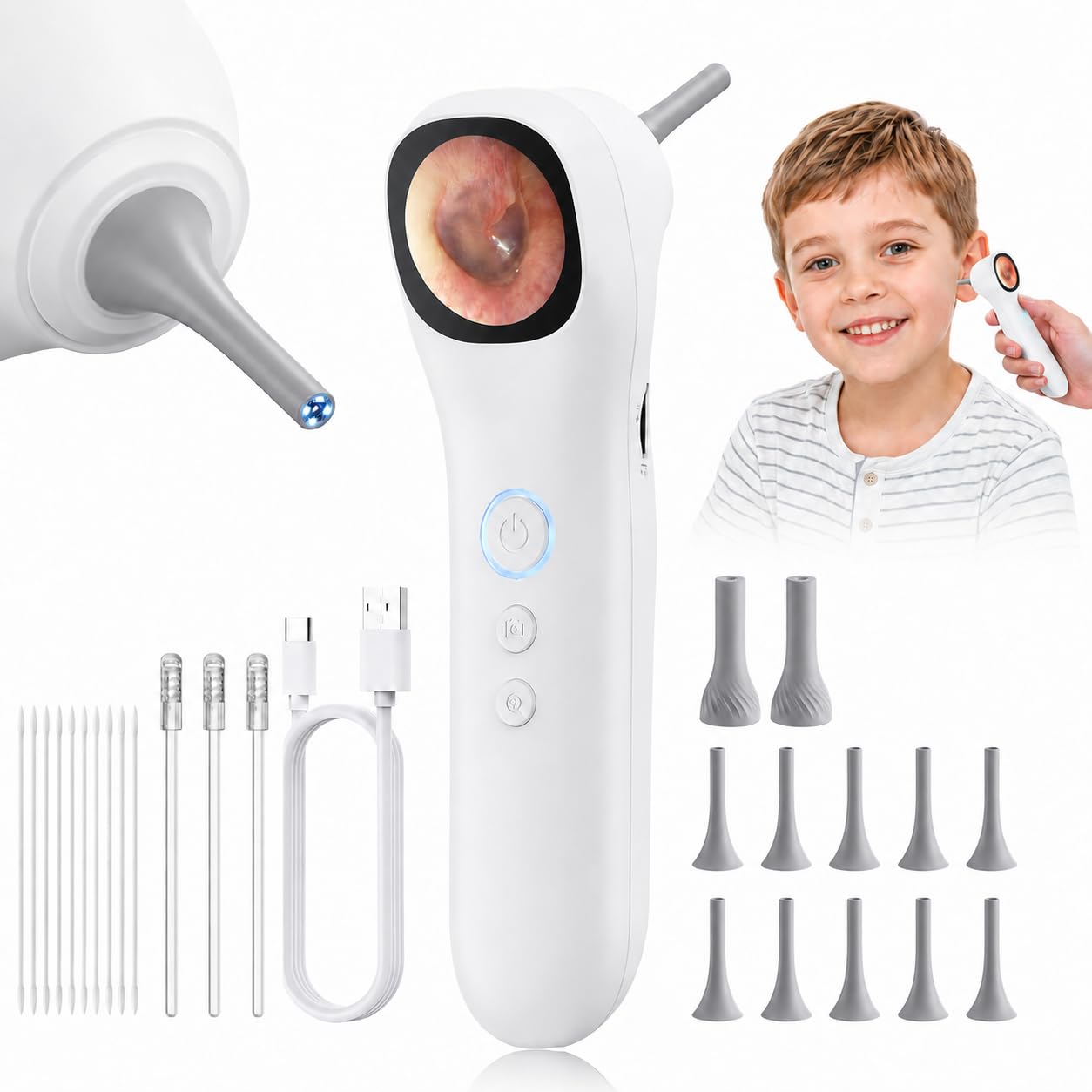
The Aertnelz Q2 Otoscope is the pocket-sized oddball of the group. Its 1.21-inch screen sits right on the handle, so you can take a quick look without a phone, and the 3X magnification and four LEDs help you get close. It comes with 12 silicone tips and two probe tips for ear, nose, oral, dental, and skin checks. It also supports USB-C PC viewing.

We like it for travel and quick checks: it is small, it does not need an app, and the extra tips make it useful beyond ears. The 12-tip set is more than the other kits here, which matters if you share it. The 1.21-inch screen keeps the handle compact, so it slips into a bag more easily than the 4.5-inch models.

Our take: this is the one for a glovebox or a travel bag, or for someone who wants one tool for ears, nose, and mouth. It is not the one for a child who will not hold still; the bigger screens are easier to share and steady. If you want a dedicated ear scope, the AnyScope is the better fit.

Pros

  • Built-in 1.21-inch screen
  • 3X magnification and four LEDs
  • 12 silicone tips and two probe tips
  • USB-C PC viewing

Cons

  • Tiny screen limits detailed viewing
Our verdict

The Aertnelz Q2 is the compact multi-use pick we take for quick checks; its tiny screen is handy for travel but not for detailed exams.

Check Latest Price
7

Long Battery Sessions

JYTONE Digital Otoscope

85 /100
Keeper Score Excellent

Key details

Probe
3.9 mm
Screen
4.5 inches
Battery
3000mAh
Storage
32GB card included
Check Price on Amazon

The JYTONE Digital Otoscope is built for longer sessions. Its 3000mAh battery is rated for 4 to 5 hours of continuous use, and the 4.5-inch screen means you do not need a phone at all. The 3.9mm probe and 6-axis gyroscope keep the view steady, and a 32GB card is included.

The no-app design is the same appeal as our top pick: turn it on and look. The difference is battery life. If you check several people in one sitting, the larger battery is the reason to choose this one. The 4.5-inch screen is also easy to share with someone standing next to you.

The 32GB card holds photos and video on the device, so you can keep a record without tying up your phone. The screen is a fixed 4.5-inch panel, so you are not using phone storage or battery for the exam. That makes it a self-contained tool for a household that wants one device to do the whole job.

Our pick for a long battery is the JYTONE. It makes sense for a household that wants a screen-based scope and does not want to think about charging between quick checks. If you want the top pick's gyroscope and screen, the Anykit is the default; if you want something pocketable, the AnyScope is the better fit.

Pros

  • 3000mAh battery rated 4 to 5 hours
  • 4.5-inch screen, no app or Wi-Fi
  • 6-axis gyroscope
  • 32GB card included

Cons

  • Heavier than phone-tethered scopes
Our verdict

The JYTONE is the long-battery standalone screen we choose for a household that checks several people and does not want to charge between quick looks.

Check Latest Price

How We Tested Digital Otoscopes (and What Tripped Most of Them Up)

We started with every digital otoscope we could find that had a camera tip slim enough to be reasonable in an ear canal, then cut anything that relied on an app with a shaky update history, anything whose listing couldn't say plainly which phones it worked with, and anything that couldn't capture a photo or video. That left 14 units, which we used for four months on adults, on kids, and on one tolerant dog.

Most of the testing happened on a bathroom counter after showers and on the living room couch with a child who did not want to sit still. We timed how long it took from opening the box to a first usable image on both an iPhone and an Android phone, then timed it again after the device had gone to sleep, because reconnecting is where these tend to fall apart. We watched for glare — whether the LEDs washed out the eardrum or let us tell wax from skin — and whether the image stayed upright when we tilted the tip, which is the difference between a steady view and a spinning one.

Connectivity got its own pass: we carried the wireless units to the far end of the house and behind a closed door to see whether the feed stuttered or dropped. For durability, each scope went back into a bathroom drawer between uses, took a waist-high drop onto tile, and had its lens wiped down after every session, since earwax is hard on coatings. We also counted what came in the box — tips, storage, memory — because a scope that needs extras bought separately isn't the value it appears to be.

How to Choose a Digital Otoscope

Pick your viewing method first

Screen or phone is the decision that shapes everything else. A built-in screen like the 4.5-inch panel on our top pick is the simplest to use one-handed, and it keeps your phone free. A phone-tethered scope is smaller and cheaper, but you are relying on an app, a cable or Wi-Fi link, and your phone's battery. Wireless Wi-Fi models are the easiest to share with a second person, as long as the connection behaves.

Match the method to the room. If you check ears in a hurry, often with a moving child, a screen is worth the extra bulk. If you want a low-cost tool for occasional checks and already have your phone in hand, a wired model like the AnyScope makes more sense.

Look for steadiness, not just resolution

Image quality is not only a camera number. A 3.9mm lens, bright LEDs, and a gyroscope do more for a usable view than a bigger resolution claim, because the ear canal is small and your hand is never perfectly still. The gyroscope on the Anykit and ScopeAround MS450 keeps the image upright as you rotate the probe; that is the feature we notice most in real use.

Check the tip size and the light controls. A 3.9mm probe is the slim size most of these picks use, while the Teslong's 4.3mm lens is a touch wider. Adjustable brightness helps when wax reflects the light. If the image looks soft, steady the tip and clean the lens before blaming the camera.

Check the connection against your phone

Compatibility is the most common place a good scope goes wrong. USB-C is not a universal answer: the Teslong is built for USB-C iPhone, iPad, and Android devices but does not support PC, Mac, or Linux, and connection can fail on some phones. The AnyScope lists iPhone iOS 9.0+ and Android 8.0+ with OTG and UVC support. Before you buy, match the connector and software to the phone you will actually use.

Buy from a seller with a return window you can live with, and test the connection the day it arrives. If you want to avoid the phone entirely, choose a screen-based model; that removes the compatibility question from the exam.

Plan for cleaning, storage, and sharing

Earwax and skin oils end up on the tip, so cleaning needs to be easy. A waterproof camera like the Teslong's is simpler to wipe down, and replaceable silicone tips are easier to keep hygienic than a bare probe. The 32GB cards on the screen models let you keep photos and video on the device instead of filling your phone.

Think about who will use it. A shared household scope needs enough tips to give each person a fresh one, and a screen makes it easier to show a doctor or partner what you found. Store it with the tip protected; a hard case is a small detail that keeps the lens clean between checks.

Frequently Asked Questions

Final Verdict

The Anykit Digital Otoscope is our pick for most homes because the 4.5-inch screen and gyroscope turn a fiddly phone-based check into a one-device job. You do not need an app, a Wi-Fi pairing screen, or a free hand for your phone, and the 32GB card keeps a record you can show a doctor.

If you want the lowest-cost way in, the AnyScope plugs into the phone you already own. If you want wireless sharing, choose the ScopeAround WiFi; if you prefer a cable, the Teslong is the wired USB-C option. The decision comes down to whether you want the screen in your hand or the phone you already know.