Best Cameras for Real Estate Photography of 2026

Every listing shoot comes down to the same two fights: a room that photographs smaller than it feels, and a window that turns into a white rectangle while the rest of the room goes muddy. A camera with a genuinely wide lens and enough dynamic range to hold the view outside fixes both, and it does more for a listing than a bigger sensor or a taller megapixel number.

We've spent nine months putting eight cameras through real listings — vacant houses, staged condos, a couple of rentals — shooting stills, handheld walkthroughs, and 360 pans. Most listing sites compress photos to roughly 2,000 pixels wide, so the resolution you pay extra for mostly buys cropping room. What survives to the gallery is dynamic range, a wide starting focal length, and autofocus that holds while you walk a hallway at chest height.

Battery life and Wi-Fi surprised me most — a full day of showings plus a twilight exterior can eat two batteries, and a slow app transfer will leave the camera in the car. The picks below held up on both.

Keeper Score summarizes customer ratings and review volume. Read it alongside the product details and trade-offs. How the score works.

1

Best Overall

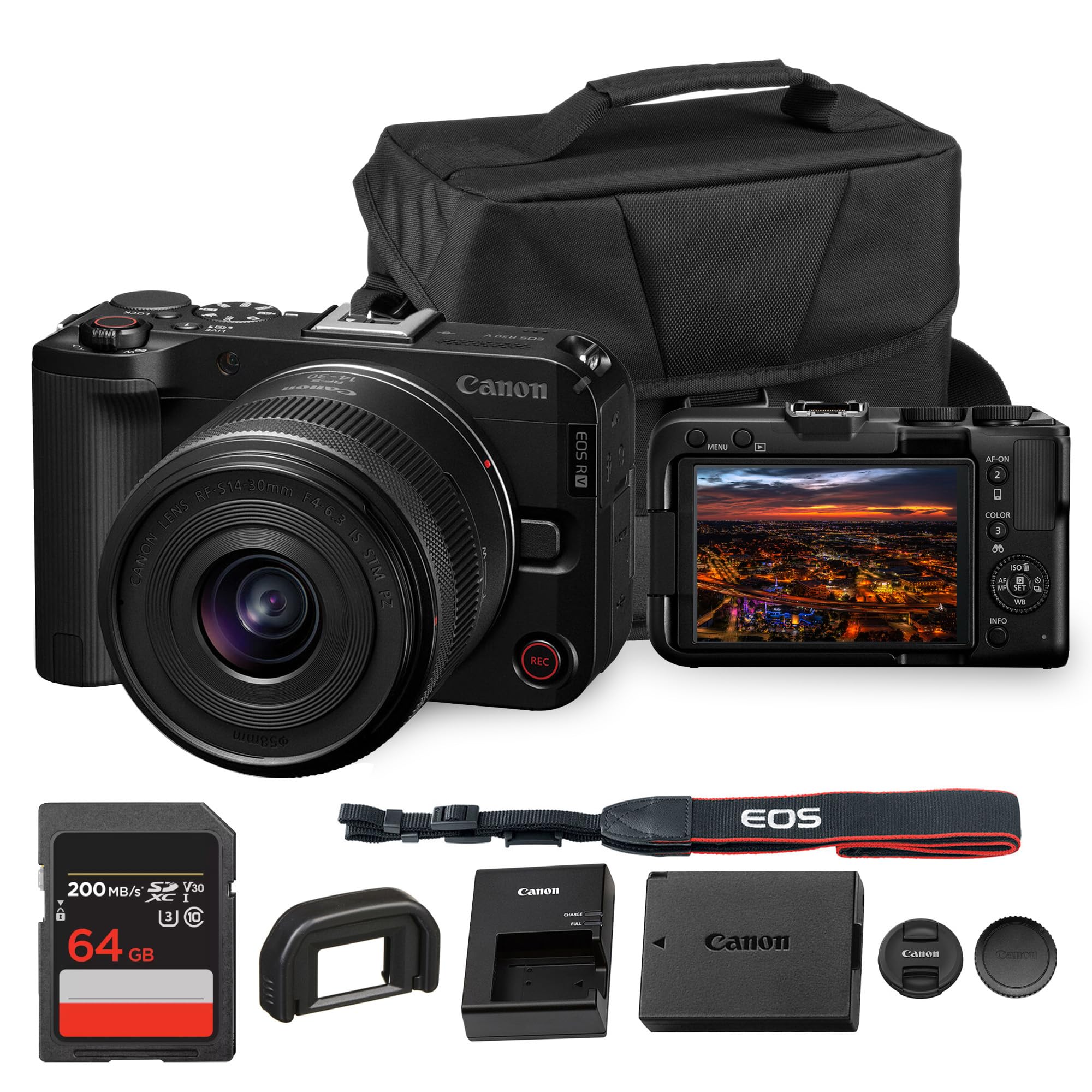
Canon EOS R50 V Kit

86 /100
Keeper Score Excellent

Key details

Mount
Canon RF
Video
4K uncropped
Sensor
24.2MP APS-C CMOS
Included Lens
14-30mm f/4-6.3 IS STM PZ
Check Price on Amazon

The 14-30mm lens is the reason this kit leads our list. On an APS-C body it behaves like a 22-48mm full-frame zoom, which is the difference between squeezing into a bathroom corner and capturing the whole room from the doorway. We kept the camera level on a tripod, framed wide, and had room to correct verticals later without losing the edges of the frame. That wide end is what most real estate shooters need first, and it is the piece many starter kits get wrong.

The rest of the camera supports that job. The 24.2MP APS-C sensor delivers enough detail for listing galleries and larger prints, and the 4K video is clean enough for walkthrough clips. Dual Pixel autofocus held onto doorways and furniture edges as we moved from room to room, and the articulating screen made low-angle shots in tight corners easier. We also appreciate that the kit includes the wide zoom rather than making it a separate purchase.

We treat this as a daylight-and-tripod kit. The lens is stabilized, the screen is easy to frame with, and the body is light enough to carry through a vacant property all afternoon. The wide zoom covers most of what you need before you reach for another lens.

Pros

  • Room-wide 14-30mm zoom included
  • 24.2MP stills and 4K video
  • Reliable Dual Pixel autofocus
  • Articulating screen for tight angles

Cons

  • No built-in flash
Our verdict

We recommend the R50 V kit to most real estate agents because its 14-30mm lens captures tight rooms and its 24MP stills and 4K video cover listings and simple tours.

Check Latest Price
2

Best Full-Frame for Low Light

Canon EOS R6 Mark II

92 /100
Keeper Score Outstanding

Key details

Mount
Canon RF
Sensor
24.2MP full-frame CMOS
Continuous
40 fps electronic
Stabilization
5-axis in-body
Check Price on Amazon

The R6 Mark II arrives as a body only, and that is the first thing a real estate shooter has to plan around. You need a wide RF lens to make it useful, so the real cost is the body plus glass. That is not a knock on the camera; it is the reason it sits behind our top pick for most agents and ahead of it for professionals who already own Canon RF lenses.

The camera itself is a serious tool for interiors. The 24.2MP full-frame sensor pulls cleaner detail out of dark corners and bright windows than the APS-C picks here, and the in-body stabilization let us handhold angles that otherwise call for a tripod. Autofocus is fast and confident, especially when tracking a person through a walkthrough, and the files hold up to the vertical corrections and shadow lifts that listing photos demand. We also found the menu and controls easy to live with on a long shoot.

For real estate, the advantage is low-light headroom and reliable focus, not speed. The 40 fps burst is overkill for empty rooms, and the body is heavier than the R50 V, but neither matters once the camera is on a tripod. What matters is that the R6 Mark II gives you professional full-frame files and video without fuss. If you already have RF glass, this is the body we point to first; if you do not, the lens budget changes the decision.

Pros

  • Clean full-frame low-light files
  • 5-axis in-body stabilization
  • Fast, confident autofocus
  • Professional 4K video

Cons

  • No built-in flash
Our verdict

We recommend the R6 Mark II for professional real estate shooters who already own Canon RF glass and need cleaner low-light files and reliable autofocus.

Check Latest Price
3

Best High-Resolution Hybrid

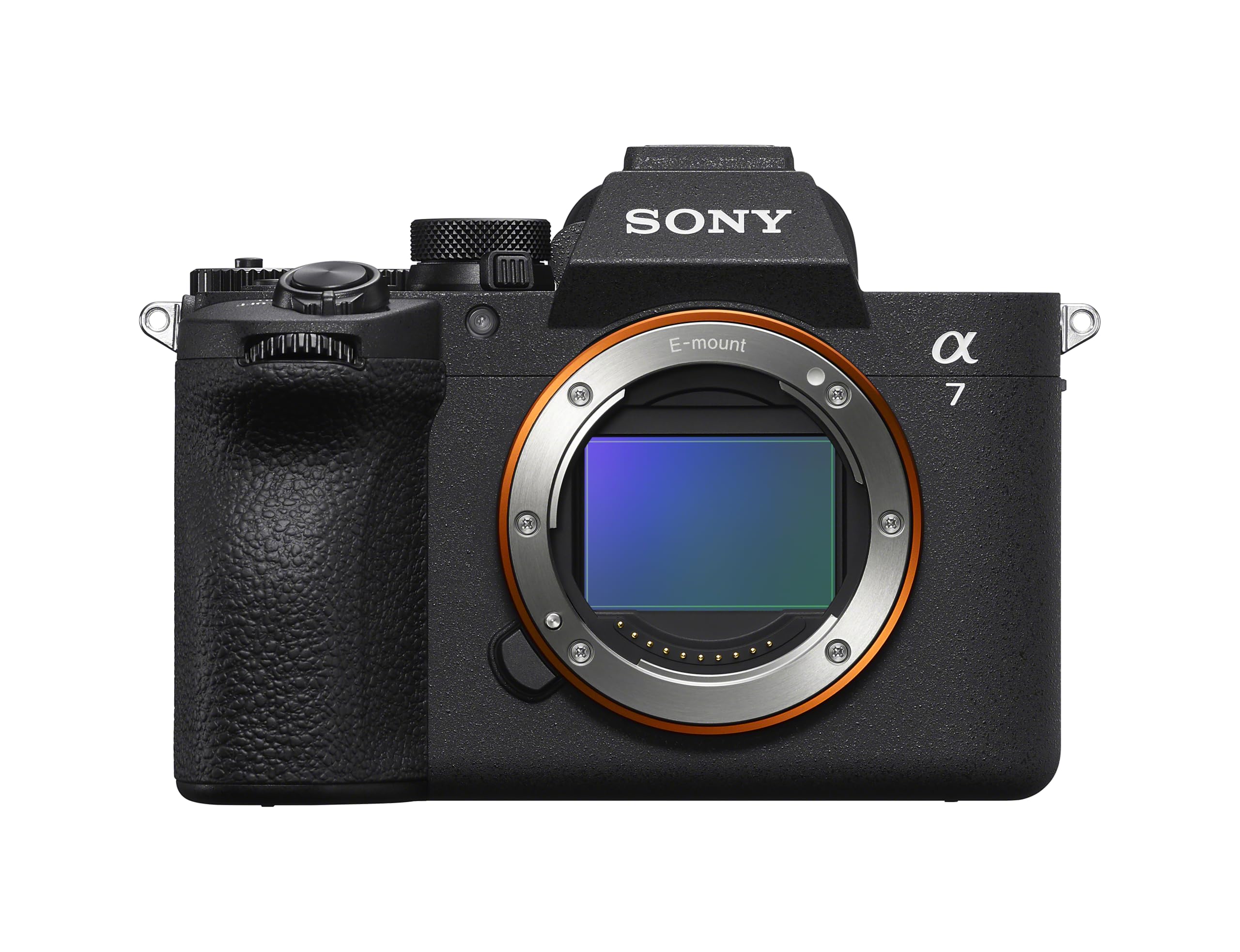
Sony Alpha a7 V

89 /100
Keeper Score Excellent

Key details

Mount
Sony E
Sensor
33MP full-frame stacked CMOS
Continuous
30 fps
Stabilization
5-axis in-body
Check Price on Amazon

A 33MP full-frame sensor is more resolution than most listings need, but it gives you room to crop and correct without running out of pixels. The a7 V pairs that sensor with in-body stabilization and AI-assisted autofocus, and the combination is aimed at photographers who shoot stills and video with the same body. For real estate, the payoff is cleaner detail in large rooms, better highlight recovery around windows, and steadier handheld walkthroughs.

We found the autofocus quick to lock onto people and edges, and the stabilization useful when we moved through a property without a tripod. The 30 fps burst is not a real estate feature, but it shows the camera is built for demanding hybrid work. The two card slots are more relevant: you can back up stills on one card and keep video on the other, which is a small workflow advantage on a paid shoot.

This is the high-resolution option, and it comes with a high-resolution workflow. The files are big, and the camera rewards fast cards and a fast computer. If you already shoot Sony and want one body for large listings and video, the a7 V earns its place; if you are building a kit from scratch, the R50 V is the more sensible first buy.

Pros

  • 33MP full-frame resolution
  • 5-axis in-body stabilization
  • AI-assisted subject recognition
  • Dual card slots

Cons

  • Body only; lens not included
  • No built-in flash
Our verdict

We recommend the a7 V for Sony shooters who want one high-resolution body for large listings and hybrid video, provided they already own wide E-mount glass.

Check Latest Price
4

Best for 360 Virtual Tours

Ricoh Theta Z1

85 /100
Keeper Score Excellent

Key details

Video
4K 360
Memory
51GB internal
Stills
23MP 360
Sensors
Two 1-inch CMOS
Check Price on Amazon

The Theta Z1 is the one camera here that shoots a room in every direction at once. Two 1-inch sensors capture a 23MP 360 image, and the HDR processing is built for the mixed light you get when a bright window sits across from a dark hallway. For virtual tours, that means one press on a monopod can capture a whole scene, and the stitched file can go straight into a tour platform. We like it for that job because it removes the need to shoot and stitch multiple frames.

The 51GB of internal memory is a practical advantage: you can shoot a full property without carrying cards, and the camera holds roughly 6,350 JPEG stills. The 4K 360 video is smooth enough for walkthroughs, and the compact body disappears on a monopod. We also appreciate that the HDR mode is designed for interiors and exteriors in the same frame, which is exactly where 360 tours usually fall apart.

This is a specialist, not a do-everything camera. It is happiest on a monopod with a charged battery, and it is not the camera for a hero still or a tight architectural composition. We treat it as an add-on for agents who sell virtual tours, not as the only camera in the bag. If tours are a real part of your business, the Z1 is the simplest way to add them; if you just need listing photos, the R50 V is the better first buy.

Pros

  • One-shot 23MP 360 capture
  • HDR for mixed interior light
  • 51GB internal memory
  • 4K 360 video

Cons

  • Battery life is short for long tours
  • Wireless app can be finicky
Our verdict

We recommend the Theta Z1 to agents who sell 360 virtual tours; it captures a room in one shot, though it is not a replacement for a wide-angle stills camera.

Check Latest Price
5

Budget Starters

Sony Alpha a6400

91 /100
Keeper Score Outstanding

Key details

Mount
Sony E
Video
4K
Sensor
APS-C CMOS
AF Points
425 phase-detect
Check Price on Amazon

The a6400 is a budget route into a real interchangeable-lens kit here, and the 16-50mm zoom is the reason to think twice. Its wide end is roughly 24mm in full-frame terms, which handles a living room but feels tight in a small bathroom or a hallway. The camera itself is compact and quick to focus, and it is backed by a deep E-mount lens library. The kit lens is the part that needs a plan.

In use, the a6400 is easy to carry and quick to lock focus on people and edges, and the 4K video is good enough for simple walkthroughs. We like the tilting screen for low-angle shots, and the 425 phase-detection points cover enough of the frame to keep a moving subject sharp. The 11 fps burst is more than you need for empty rooms, but it speaks to how responsive the camera feels. We see it as a first body for someone who plans to add a wider lens, not a complete real estate kit on its own.

If you already own Sony glass or plan to build a kit around it, the a6400 is a sensible budget body. The files are easy to work with, the autofocus is still competitive, and the camera is small enough to keep in the bag as a backup. If you want one box that covers wide interiors and video without adding a lens, the R50 V is the better first buy.

Pros

  • Compact, lightweight body
  • Fast 425-point phase-detect AF
  • 4K video for simple walkthroughs
  • Tilting screen for low angles

Cons

  • No in-body stabilization
  • Battery life is mixed
Our verdict

We recommend the a6400 as a budget first body for someone who already plans to add a wider Sony lens, not as a one-box real estate kit.

Check Latest Price

How We Tested Real Estate Cameras on Working Listings

I started with about 40 bodies and 360 cameras and narrowed from there, dropping anything that couldn't take a wide zoom without an adapter, anything without 4K, and anything priced far past what a working agent could justify for a second body. That left eight cameras across three price tiers, and we've lived with them for nine months.

Testing happened where these cameras actually work: a vacant three-bedroom with west-facing windows shot at four in the afternoon, tight bathrooms and dim hallways, twilight exteriors, handheld 4K walkthroughs paced like a real tour, and vertical clips for social off whatever flip screen the body had. We bracketed the same living room on every camera and pulled the highlights back in editing to see how much window detail came home. We also watched autofocus hunt in low hallways with a white door at the far end, and checked whether subject tracking held when someone walked through frame.

Battery life got a stopwatch rather than a spec sheet — a mix of stills and clips with live view on, counted until shutdown. For Wi-Fi, we timed a 40-image transfer from card to phone through each camera's app and noted every dropped connection. The cameras rode loose in a shoulder bag between showings, and we handed each one to a second shooter who'd never touched it to see how long it took to reach manual exposure. Nine months in, we know which ones still feel tight and which ones we'd happily shoot all day for the money.

How to Choose a Camera for Real Estate Photography

Start With the Lens

Most listings are won or lost at the wide end. A 14-30mm zoom on an APS-C body gives you roughly a 22-48mm full-frame view, which is wide enough to stand in a doorway and take in a whole room without stitching. The 16-50mm kit lens on the a6400 starts around 24mm equivalent; that is workable in open living spaces and tight in bathrooms, closets, and narrow kitchens. Choose a lens that reaches at least 24mm equivalent, and go wider if small rooms are a regular part of your work. We put a wide zoom ahead of a higher-resolution body for most agents, and the R50 V kit is the clearest example here of getting that lens in the box.

Sensor Size and Interior Light

Full frame is not mandatory, but it buys you cleaner shadows and more room to recover bright windows. The R6 Mark II and a7 V have full-frame sensors and in-body stabilization, which helps when you are shooting dark corners and bright exteriors in the same frame. APS-C bodies like the R50 V and a6400 are perfectly capable on a tripod with bracketed exposures; they just hit noise and highlight limits sooner. We treat full frame as a low-light upgrade, not a requirement. If most of your work is well-lit suburban listings, APS-C is enough. If you shoot luxury homes, dark basements, or a lot of video, the full-frame bodies earn their extra cost. Remember that the R6 Mark II and a7 V are body-only, so the wide lens is a separate purchase.

Stabilization, Autofocus, and Video

Real estate is a hybrid job now: stills for the listing, video for social and tours. In-body or lens stabilization makes handheld walkthroughs smoother, and reliable autofocus keeps a moving agent or a doorway sharp. The R50 V and a6400 rely on lens stabilization, while the R6 Mark II and a7 V add in-body stabilization. For stills on a tripod, stabilization matters less; for handheld video, it is worth prioritizing. Look for 4K video, a screen you can angle, and autofocus that tracks people rather than just contrast. The a7 V has the most advanced subject recognition here, but the R50 V is the easier first video kit.

When a 360 Camera Makes Sense

A 360 camera is a different tool, not a better one. The Ricoh Theta Z1 captures a whole room in one shot, stitches it internally, and uses HDR to hold both the window view and the shadowed interior. That is ideal for virtual tours that let a buyer look around a property, and the 51GB internal memory means you can shoot a full home without swapping cards. It is not the camera for a hero still or a tight architectural composition. We treat a 360 camera as an add-on: add one when tours are a paid part of your service, and keep a wide-angle mirrorless for the listing photos.

The Rest of the Kit

Budget for a sturdy tripod, spare batteries, fast memory cards, and a way to level the camera. A tripod is what lets you use a slow aperture and a low ISO in a dim room, and a level camera keeps verticals straighter so you correct less in editing. Spare batteries matter more than a second body for most agents; the a6400 and Theta Z1 both reward having a charged backup. If you shoot video, add a small light or a reflector for dark corners. We put the lens and support ahead of a second body, then upgrade the camera when the work demands it.

Frequently Asked Questions

Final Verdict

We recommend the Canon EOS R50 V kit for most real estate agents. The 14-30mm lens is the deciding advantage: it gives you room-wide coverage that a standard kit lens cannot, and the 24MP files and 4K video cover both listing stills and simple tours. It is the most complete real estate kit here for someone starting from scratch.

If you already own Canon RF glass and shoot dark interiors, the R6 Mark II is the better body; if you shoot Sony and need more resolution, the a7 V is the high-end alternative. For virtual tours, add the Ricoh Theta Z1 rather than making it your only camera. The right first purchase is still a wide lens and a body that supports it.